
District · West Bengal
Cooch Behar
Cooch Behar lies in the northern part of West Bengal, in the plains between the wider Dooars region and Assam, with Bangladesh along its southern and eastern borders.
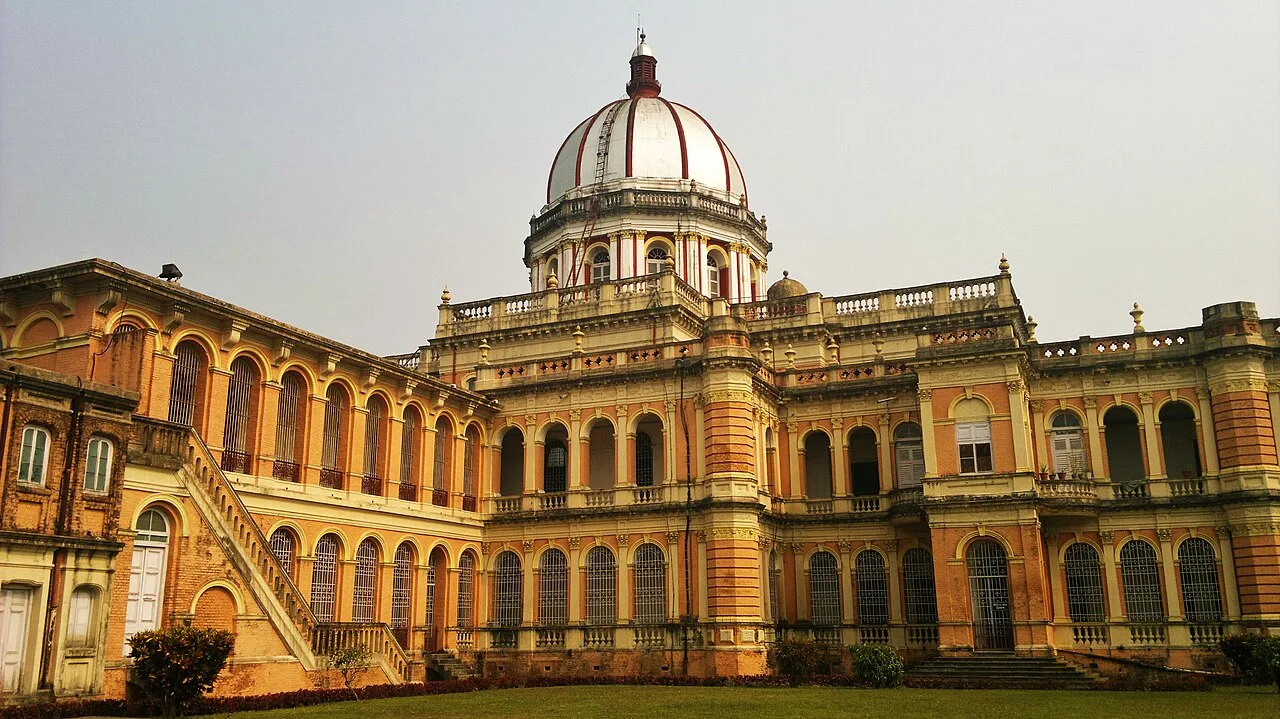
Cooch Behar lies in the flat, fertile plains of northern West Bengal, where rivers including the Torsa and Kaljani shape a landscape of fields, wetlands and settlements. The district meets Bangladesh and Assam, and its setting connects Bengal’s riverine lowlands with the routes towards the eastern Himalayan foothills. Its history is closely tied to the Koch kingdom and the princely state of Cooch Behar, which joined India in 1949. In Cooch Behar city, the palace built during the Maharaja-era remains a prominent reminder of that past, with European classical design alongside Indian influences. Today, the district’s character is a mix of an administrative town, agricultural countryside and longstanding regional traditions.
Cooch Behar lies in the northern part of West Bengal, in the plains between the wider Dooars region and Assam, with Bangladesh along its southern and eastern borders. It is best known for its association with the Koch kingdom and for Cooch Behar Palace, a prominent landmark in the district headquarters. The district offers a different pace from the hill destinations of northern Bengal: its history, riverine plains and town life are central to a visit. It can suit travellers interested in regional heritage or as part of a broader North Bengal journey. The published places listed here are not a complete record of local sites.
The district's history is closely tied to the Koch kingdom, which took shape in the early sixteenth century under Biswa Singha. His successors, including Nara Narayan, expanded Koch power across parts of what are now northern Bengal and Assam. Over time, the kingdom was divided and its influence changed, but Cooch Behar remained an important seat of Koch rule. In the eighteenth century, the ruler entered into a relationship with the East India Company, and Cooch Behar subsequently became a princely state under British paramountcy. The royal family continued to govern internal affairs while the state was linked to British India. After independence, Cooch Behar acceded to India in 1949 and was incorporated into West Bengal in 1950, becoming a district of the state. The palace in Cooch Behar city reflects the later princely period and the court's engagement with architectural styles beyond the region. The district's present identity therefore combines the legacy of the Koch rulers, the history of a princely state and its place in modern West Bengal.
Rice, freshwater fish, seasonal vegetables and greens are familiar parts of meals in Cooch Behar and the wider North Bengal region. Across West Bengal, popular dishes include macher jhol, fish curry, and shorshe ilish, hilsa in mustard sauce, when the fish is available. Rajbanshi food traditions also form part of the region’s cultural landscape, though menus vary between communities and households. Luchi with alur dom and Bengali sweets such as mishti doi, rosogolla and sandesh can be found more broadly across the state. Small eateries may cook a limited daily menu, so it is worth asking what is fresh.
Cooch Behar and the wider North Bengal region have traditions of practical household craft, including bamboo and cane work and woven mats. Shitalpati-style mats, made from the stems of the murta plant, are associated with parts of the region; availability and production vary from place to place. Handloom weaving and other locally made goods may also be encountered in markets, but particular products are not present everywhere. Visitors interested in crafts can ask locally about makers and market days, since small-scale work may be sold through community networks rather than dedicated shops.
Ras Mela, held in Cooch Behar city in the late autumn, is among the district's best-known annual events and is associated with worship of Madan Mohan. The fair draws visitors from nearby areas and can make the city busier, so arranging a room ahead is sensible during the season. Durga Puja and Kali Puja are also observed, while Eid and other festivals reflect the district's varied communities. Dates shift each year according to the calendar, and the scale of celebrations can vary between towns and villages.
Elsewhere in West Bengal
Cooch Behar is largely a low-lying, fertile plain in northern Bengal, crossed by rivers and smaller waterways including the Torsa, Raidak and Kaljani. Fields, settlements and river channels shape much of the district's scenery; it has no hill terrain or coastline. River levels and wet-season conditions can affect rural roads and journeys between smaller settlements. The landscape is generally open and accessible by road, while travel beyond the main town may take longer during heavy rain or when local roads are waterlogged.
The district has a humid subtropical climate. Summer is generally warm and humid, and the monsoon brings frequent heavy rain that can disrupt road travel and make low-lying areas wet. Winter is usually cooler and comparatively drier, making it a comfortable season for exploring the town and countryside. The months from late autumn through winter are often the most convenient for a visit, though festival periods can be busy. Pack light, breathable clothing for warmer months, rain protection during the monsoon, and a light warm layer for winter evenings. Comfortable shoes are useful in every season.
New Cooch Behar is the principal railway station for the city and district. Bagdogra Airport, near Siliguri, is the nearest operating airport; onward travel requires a road journey, and actual distances and journey times depend on the route. Cooch Behar is connected by road with Siliguri and other North Bengal towns, as well as routes towards Assam. Buses and private vehicles serve intercity journeys. Within the city, auto-rickshaws, cycle rickshaws and taxis are useful; for places beyond town, arrange transport locally. Check current services locally before travelling.
Cooch Behar city is the main base for district travel, with road connections to nearby towns and onward routes towards Alipurduar, Jalpaiguri and Assam. Local buses serve some routes, while shared vehicles, auto-rickshaws and taxis can help with shorter journeys or places beyond regular bus coverage. For a flexible day trip, visitors can arrange a car locally. Services and road conditions are less predictable in rural areas, especially during the monsoon, so allow extra time and confirm onward transport before setting out. There is no need for boat travel for the listed destination.
2 days: Cooch Behar Palace; sleep both nights in Cooch Behar city. 3 days: Cooch Behar Palace; sleep each night in Cooch Behar city, allowing a slower visit and time for local exploration.
Cooch Behar city is the most practical base for visiting Cooch Behar Palace and for finding local transport. It has a range of ordinary hotels and guesthouses, with simpler accommodation options also available. Smaller towns may have fewer choices, so travellers planning to stay outside the district headquarters should check availability in advance. Homestays and government lodges may be found in the wider region, but their presence and services vary; confirm current arrangements before relying on them. Book early if travelling during Ras Mela.
Town visits are generally straightforward, but take care on busy roads and use reputable local transport. Monsoon rain can leave rural roads waterlogged or slow, while fog may reduce visibility in winter. Use bottled or properly treated drinking water and take normal precautions against insects. Mobile connectivity is usually more reliable in towns than in some rural areas. The district is largely plains rather than hill or wilderness terrain, though conditions near rivers can change after rain. Follow local advice around riverbanks and any restricted border areas; check official sources for current access rules before travelling. No special permit is generally needed for an ordinary visit to the listed town attraction.
- Alipurduarabout 43 km
- Dhubri · Assamabout 60 km
- Jalpaiguriabout 79 km
- Kokrajhar · Assamabout 89 km
- West Garo Hills · Meghalayaabout 115 km
- Kalimpongabout 119 km
- Pakyong · Sikkimabout 122 km
- Goalpara · Assamabout 129 km
Straight-line distance between the centres of each district's destinations; road distance is longer.
Q: How many days should I spend in Cooch Behar? A: Two days can cover the listed palace at an unhurried pace; allow longer if you want to explore the wider district. Q: When is the best time to visit? A: Late autumn and winter are generally the most comfortable seasons. Expect rain and possible travel disruption during the monsoon. Q: Where is the best base? A: Cooch Behar city is the most convenient base for the palace and local transport. Q: How do I get to Cooch Behar? A: The district is reachable by rail and road. For air travel, check current services to nearby regional airports and continue by road or rail. Q: Is Cooch Behar suitable for families or elderly travellers? A: The town and its main attraction can suit families and many older visitors, though allow for uneven walking surfaces, crowds during festivals and weather-related travel delays.
This page draws on our 1 destination guides for Cooch Behar and is updated as our team checks it.
Be the first to share photos, stories, advice or a helpful contact for Cooch Behar.
Loading…