
District · West Bengal
Paschim Medinipur
Paschim Medinipur offers a view of southwestern West Bengal beyond its larger cities: cultivated plains, laterite country and forest-fringe settlements sit alongside busy market and transport towns.
Paschim Medinipur lies in southwestern West Bengal, where fertile agricultural plains meet the undulating, red laterite terrain and wooded edges of the Chota Nagpur plateau. The Kangsabati and other rivers and streams shape the landscape, supporting farming as well as settlements that range from the district town of Medinipur to smaller market towns and villages. The area has a long history within the wider Medinipur region, whose people and institutions played a notable part in India’s freedom movement. Its character is shaped by Bengali rural life, forest-fringe communities and a strong tradition of local arts and crafts. Visitors can encounter both busy transport hubs, especially around Kharagpur, and quieter village landscapes.
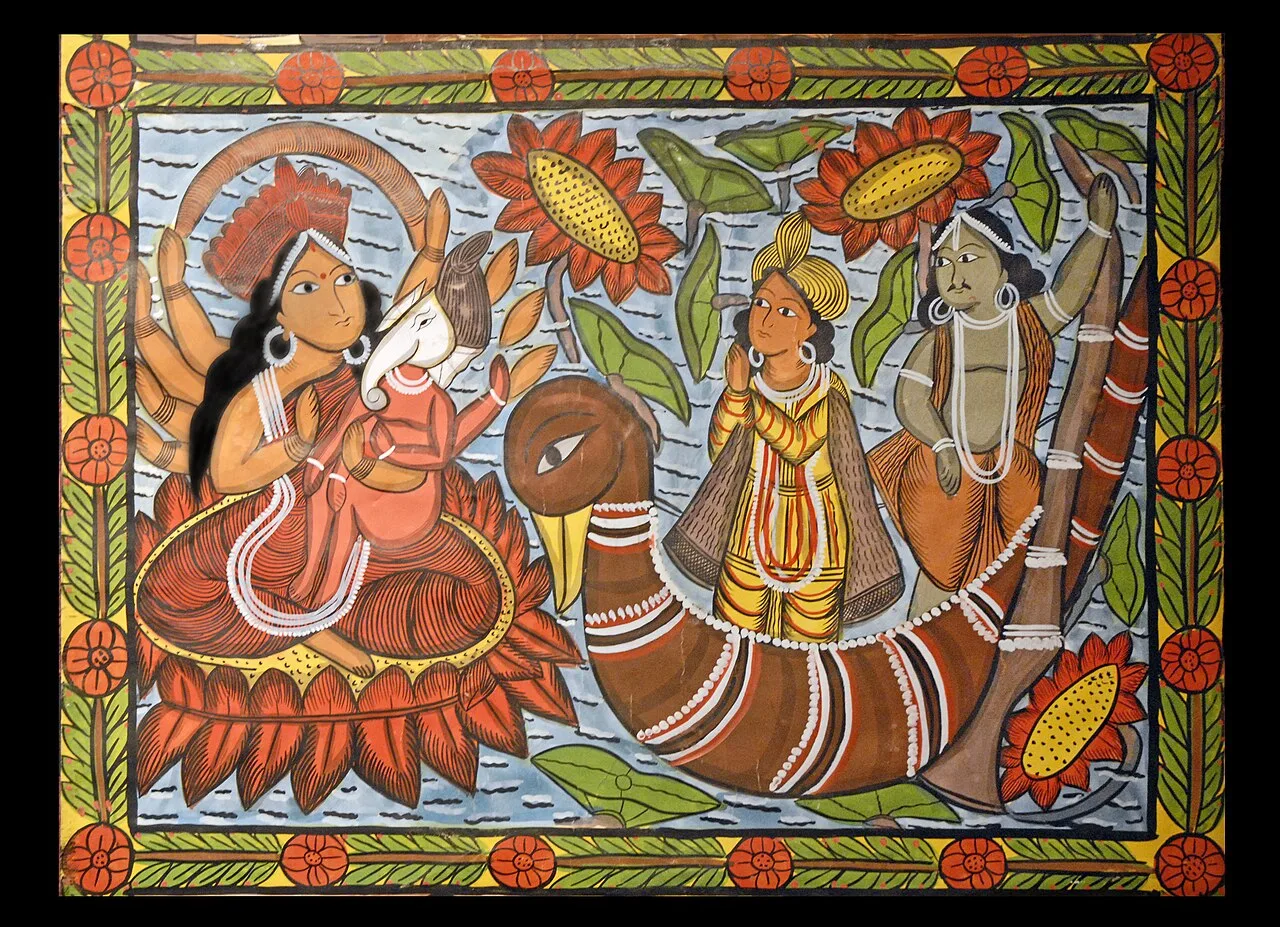
Paschim Medinipur offers a view of southwestern West Bengal beyond its larger cities: cultivated plains, laterite country and forest-fringe settlements sit alongside busy market and transport towns. It is best known for its rural cultural traditions and its place in the history of the wider Medinipur region, including its contribution to India’s freedom movement. The district’s most distinctive visitor experience is Naya, where Patua (Chitrakar) artists paint narrative patachitra scrolls and sing the stories they depict. Kharagpur and Medinipur provide practical gateways, while the countryside rewards travellers who allow time for slower road journeys and local encounters.
The district forms part of the historically important Medinipur region, positioned between Bengal and Odisha and shaped by changing political and cultural influences. The wider area passed through the authority of regional kingdoms and, in later centuries, the Bengal Sultanate and Mughal administration; local control and boundaries shifted over time. The East India Company extended its power into the region in the eighteenth century, and Medinipur became an important colonial administrative centre. The late-eighteenth-century Chuar uprisings in the Jungle Mahals reflected resistance to colonial revenue and administrative policies. In the late nineteenth and early twentieth centuries, people from the Medinipur region took part in nationalist activity and the freedom movement. After independence, the area remained within undivided Midnapore district, one of the largest districts in West Bengal. On 1 January 2002, Midnapore was divided into Paschim Medinipur and Purba Medinipur. The district’s history is also carried in local cultural traditions, including the work of Patua artists in Pingla.
Rice and fish are staples across much of the district, with everyday meals often including fish curry, seasonal vegetables, lentils and mustard-based flavours. These are part of broader Bengali food traditions rather than dishes unique to Paschim Medinipur. In villages, home cooking may be easier to find than a broad choice of restaurants; in places such as Naya, ask a host or guide about arranging a meal. Sweets such as rosogolla, sandesh and mishti doi are enjoyed across West Bengal. Carry drinking water when travelling between rural stops.
Naya, in Pingla block, is known for its Patua or Chitrakar families, who paint patachitra narrative scrolls and traditionally sing the stories shown in their images. The village holds an annual patachitra fair, though dates and arrangements can vary. Another craft associated with the district is madur mat weaving, especially around Sabang, where mats are made from madurkathi reeds. These are living traditions supported by local artisans and communities. Visitors interested in buying work can ask about its maker and production, and should check locally which workshops or stalls are open.
Durga Puja in autumn and Kali Puja later in the season are widely celebrated, with local gatherings and busier town centres. Rural communities also observe seasonal and religious fairs, whose scale and timing vary by place. Naya is known for an annual patachitra festival, often held in the cooler part of the year; visitors can meet artists and see scroll painting and performance, but should confirm the current schedule locally. Festival periods can bring more visitors to villages and towns, so nearby rooms and transport may be busier than usual.
Elsewhere in West Bengal
The district’s landscape changes from fertile, settled plains to gently undulating red laterite ground and wooded forest-fringe areas toward the west. The Kangsabati and other rivers and streams support agriculture and settlements, while smaller roads cross fields, village areas and patches of woodland. There is no coastline in Paschim Medinipur. Travel between towns is generally straightforward by road, but reaching smaller villages can take longer, especially in wet weather when rural roads may be muddy or uneven. The countryside is best explored with flexible plans.
Summer, broadly from March into early June, can be hot, so plan outdoor visits for the cooler parts of the day and carry water and sun protection. The monsoon usually runs from June into September; rain can make village roads slower and some journeys less comfortable. Winter, from around November to February, is generally the most pleasant season for sightseeing and visiting Naya. October and the early spring months can also suit travel, though conditions vary. Pack light, breathable clothing, a hat and sunscreen; bring rain protection during the monsoon and a light layer for winter evenings.
Kharagpur Junction is a major rail gateway to the district, while Medinipur railway station serves the district town. Netaji Subhas Chandra Bose International Airport in Kolkata is the main air gateway; from there, onward travel is by rail or road. National Highway 16 connects the Kharagpur area with Kolkata and other parts of eastern India, and state roads link towns and villages across the district. Buses, shared vehicles, auto-rickshaws and hired cars are useful for local travel, but services may be less frequent in rural areas. For Naya, plan the final leg by road and arrange local transport in advance. Check current services locally before setting out.
Kharagpur and Medinipur are the main transport hubs, with road links connecting them to smaller towns and villages. Buses serve many routes, while shared vehicles and auto-rickshaws can help with shorter journeys; availability is less predictable outside town centres. Taxis or hired cars are useful for visiting rural places such as Naya, particularly if combining several stops, and it is sensible to arrange the return journey in advance. There are no coastal or sightseeing boat routes relevant to the listed destination. Check local services before setting out, especially during rain or festival periods.
2 days: Naya (Pingla Patachitra Village); sleep night 1 in the Pingla area or Medinipur. 3 days: Naya (Pingla Patachitra Village), with time for a slower village visit; sleep night 1 in Medinipur and night 2 in the Pingla area or Medinipur.
Medinipur is a practical base for visitors who want town services and road connections, while Kharagpur suits those arriving by rail or using it as a transport hub. For a visit focused on Naya, staying in the Pingla area can reduce repeated road travel, though accommodation choices may be limited and should be arranged ahead. Towns generally offer hotels and guesthouses; homestays may be available near village attractions. Government lodges and dharamshalas can be options in some places, but availability and facilities vary.
Carry drinking water and use reliable sources, particularly during hot weather; take sun and rain protection appropriate to the season. Rural roads may be narrow, uneven or slow after heavy rain, so allow extra time and avoid assuming that transport will be available for a late return. In forest-fringe areas, keep to settled routes and follow local advice about wildlife. Mobile connectivity can be weaker in some villages than in towns. Crowds may increase around festivals. Ordinary visits to the listed destination do not generally require special permits, but confirm any current requirements with official local authorities before travel.
Q: How many days should I spend in Paschim Medinipur? A: Two days can suit a focused visit to Naya; allow three days for a more relaxed pace and easier travel between your base and the village. Q: When is the best time to visit? A: November to February is generally comfortable for sightseeing. Monsoon travel can be slower, especially on rural roads. Q: What is the best base for visiting Naya? A: Medinipur offers more town services, while the Pingla area is convenient for a visit centred on Naya; arrange village-area accommodation ahead. Q: How do I get to the district? A: Kharagpur Junction and Medinipur station are rail gateways. Kolkata is the main air gateway, with onward travel by rail or road; continue to Naya by road. Q: Is the district suitable for families or elderly travellers? A: Yes, with planning. Choose a comfortable road transfer, allow time for uneven village roads and confirm accommodation and transport needs in advance.
This page draws on our 1 destination guides for Paschim Medinipur and is updated as our team checks it.
Be the first to share photos, stories, advice or a helpful contact for Paschim Medinipur.
Loading…