
District · West Bengal
Howrah
Howrah lies on the western side of the Hooghly River, opposite Kolkata, and is part of the wider Kolkata metropolitan region.
Howrah lies on the western bank of the Hooghly River, facing Kolkata, and forms part of the densely settled lower Ganges plain. Its landscape combines urban neighbourhoods and long-established industrial areas with riverbanks, ponds and pockets of open countryside. The district grew as a transport and manufacturing centre alongside Kolkata, shaped by river crossings, railways, jute mills and other industries. Its character is both metropolitan and devotional: the Acharya Jagadish Chandra Bose Indian Botanic Garden in Shibpur preserves a major botanical collection, while Belur Math is an important centre of the Ramakrishna movement. Across Howrah, busy markets and transport hubs sit alongside historic religious institutions and the everyday life of the river.
Howrah lies on the western side of the Hooghly River, opposite Kolkata, and is part of the wider Kolkata metropolitan region. It offers travellers a chance to combine the area’s religious and botanical landmarks with a sense of the city’s industrial and riverfront history. The district is best known to visitors for Belur Math, headquarters of the Ramakrishna Math and Ramakrishna Mission, and the Acharya Jagadish Chandra Bose Indian Botanic Garden, noted for its historic plant collections and great banyan tree. Howrah is also a major rail and road gateway to southern and western parts of West Bengal. The listed attractions are not a complete inventory of local sites.
The territory now within Howrah district formed part of the wider historical region of southern Bengal. Parts of that region are associated with Bhurshut, a kingdom whose boundaries and influence changed over time and do not match the present district. The East India Company’s expansion in Bengal brought the area into the orbit of colonial administration and commerce. The Acharya Jagadish Chandra Bose Indian Botanic Garden was established by the Company in 1787, before the modern district was formed. Howrah district was constituted in 1843, during British rule. Railways and industry helped transform the area in the 19th century: the first passenger train in eastern India ran from Howrah to Hooghly in 1854, and mills and factories later developed along the Hooghly. Howrah grew as a major transport and industrial centre across the river from Kolkata. Belur Math became the headquarters of the Ramakrishna Math and Ramakrishna Mission, giving the district a lasting religious and cultural association.
2 destination guides
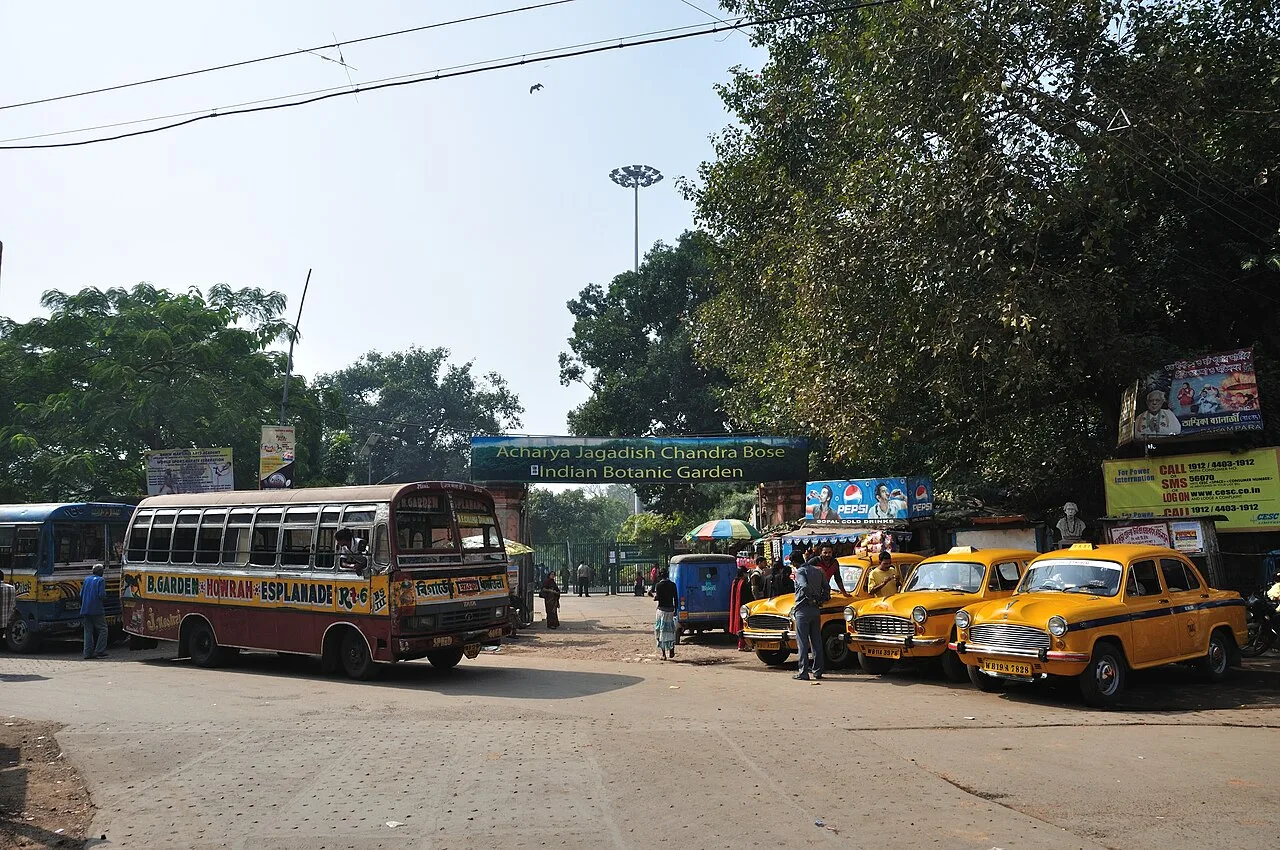
Acharya Jagadish Chandra Bose Indian Botanic Garden
The Acharya Jagadish Chandra Bose Indian Botanic Garden is a botanical garden in Shibpur, Howrah, near Kolkata. Visitors come to see its diverse collection of rare plants.
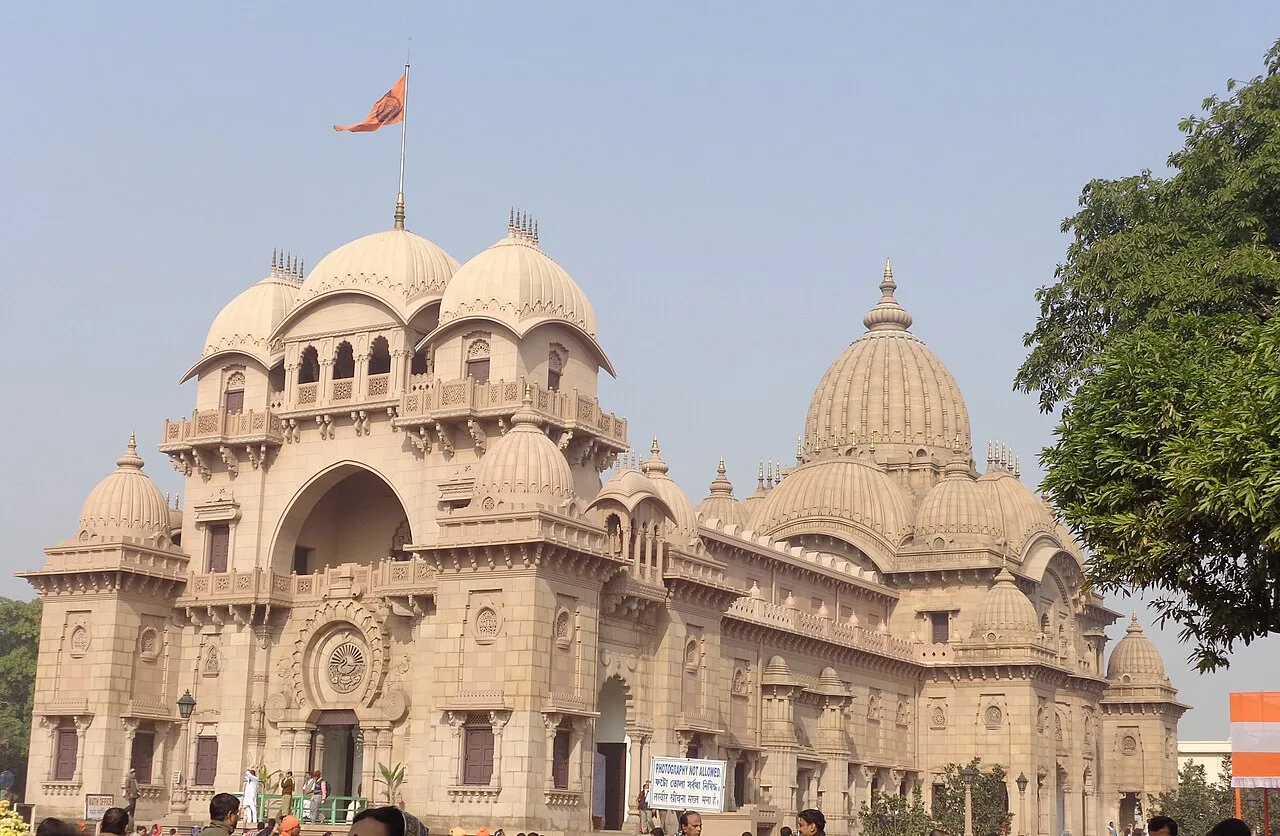
Belur Math
Belur Math, in Howrah district, is the headquarters of the Ramakrishna Math and Ramakrishna Mission. Visitors come to see its temple, whose design draws on several religious traditions.
Howrah shares the wider culinary traditions of Bengal, where rice and fish are staples and meals often include vegetables, lentils and mustard-seasoned dishes. Macher jhol, or fish curry, is common across the region; shorshe ilish is a celebrated preparation when hilsa is available. In the city, visitors can look for luchi with alur dom, kathi rolls and phuchka, as well as Bengali sweets such as mishti doi, rosogolla and sandesh. These dishes are regional rather than exclusive to Howrah. Menus at smaller eateries can be limited, so it is worth asking what has been freshly prepared that day.
Howrah is better known for its industry and transport links than for a single widely recognised craft tradition. It sits within a state with rich handloom and artisan practices, including cotton weaving, kantha embroidery, terracotta work and shola-pith decoration. These traditions are associated with different parts of Bengal and should not be taken as uniquely Howrah crafts; what is available locally varies by market and maker. Visitors may find handloom textiles and small craft goods in urban shops, while specialist pieces are more reliably sought in the regions known for their production.
Durga Puja is the most prominent seasonal celebration in Howrah and the wider Kolkata region, usually falling in autumn. Kali Puja and Diwali follow later in the autumn, while Saraswati Puja is commonly observed in winter. Belur Math draws visitors for religious observances and celebrations associated with the Ramakrishna tradition throughout the year. Rath Yatra is also celebrated in parts of the region, generally in the monsoon season. Major festival periods bring larger crowds, busier roads and increased demand for rooms, especially around Durga Puja; booking accommodation ahead is sensible.
Elsewhere in West Bengal
Howrah is largely a flat, low-lying alluvial plain on the western bank of the Hooghly River. The Hooghly shapes the district’s riverfront, ferry connections and links with Kolkata; the Rupnarayan and other waterways are also part of the wider drainage network. Built-up and industrial areas are prominent near the river and transport corridors, while the district’s outer areas include agricultural land and smaller settlements. There are no hill or coastal routes here. The level terrain generally makes short journeys straightforward, but heavy monsoon rain can cause waterlogging and slow road travel.
Howrah has a humid climate, with a hot, often sticky summer, a rainy monsoon season and a comparatively cooler, drier winter. Summer heat builds before the monsoon, which usually brings frequent heavy showers and the possibility of waterlogging. Winter, broadly from late autumn into early spring, is usually the most comfortable period for walking around the garden and visiting Belur Math. October to March is generally a good time to plan a visit, though festival periods can be busy. Pack light, breathable clothing, comfortable walking shoes, sun protection and water; take an umbrella or rain protection during the monsoon.
Howrah Junction is the district’s principal railway gateway, with extensive connections to Kolkata and destinations across India. Netaji Subhas Chandra Bose International Airport in Kolkata is the nearest major airport for most visitors. Road access is available from Kolkata and other parts of West Bengal, with major highways connecting the wider region; routes within the district can be busy, especially near bridges and city centres. Local travel is possible by suburban train, bus, taxi, auto-rickshaw and, where useful, river ferry. Choose transport according to the destination, since cross-river journeys can affect route and travel time. Check current services locally before setting out.
Howrah is served by major rail, road and bus links, with Howrah railway station acting as a key gateway. Roads and bridges connect the district with Kolkata, and ferries cross the Hooghly where services operate. Local buses, auto-rickshaws and taxis can be used to travel between Howrah’s neighbourhoods and the listed sights; routes and service levels vary by area and time. The garden in Shibpur and Belur Math are on different parts of the district’s river corridor, so allow for traffic when travelling between them. Check current ferry and road conditions locally, particularly during heavy rain.
2 days: Day 1, Acharya Jagadish Chandra Bose Indian Botanic Garden; sleep in Howrah. Day 2, Belur Math; sleep in Howrah or Kolkata. 3 days: Day 1, Belur Math; sleep in Howrah. Day 2, Acharya Jagadish Chandra Bose Indian Botanic Garden; sleep in Howrah. Day 3, keep the day flexible for rest or onward travel; sleep in Howrah or Kolkata.
Howrah city is a practical base for rail connections and visits to both listed destinations. Staying near Belur can suit visitors giving more time to Belur Math, while central Kolkata is another option for a wider choice of accommodation across the river. Hotels and guesthouses are the most usual choices; homestays may be available in the wider area but are less predictable. Dharamshalas associated with religious institutions may have their own access rules and facilities. Confirm location, transport access and arrangements before booking.
Expect busy traffic around Howrah and the river crossings, and allow extra time during festivals or heavy rain. Low-lying roads can become waterlogged in the monsoon; check local conditions before setting out. Use established ferry services and follow crew instructions, and take care near river edges. Drink safe, sealed or properly filtered water and carry any medicines you need. Mobile connectivity is generally available in urban areas but can vary. The listed sights do not ordinarily require a special travel permit; confirm current entry and access rules with official sources before visiting.
- Kolkataabout 5 km
- North 24 Parganasabout 7 km
- Hooghlyabout 36 km
- Purba Bardhamanabout 69 km
- Nadiaabout 92 km
- South 24 Parganasabout 105 km
- Purba Medinipurabout 129 km
- Bankuraabout 137 km
Straight-line distance between the centres of each district's destinations; road distance is longer.
Q: How many days should I spend in Howrah? A: Two days can cover the Acharya Jagadish Chandra Bose Indian Botanic Garden and Belur Math at an unhurried pace; allow longer if you want rest or onward travel. Q: When is the best time to visit? A: October to March is generally the most comfortable period. Festival seasons are lively but can bring larger crowds. Q: Where is the best base? A: Howrah is convenient for both listed sights and rail connections; Kolkata is another useful base across the river. Q: How do I get to Howrah? A: Howrah is a major rail and road gateway. Visitors can also reach it from Kolkata by road or river crossings; the nearest major airport is in Kolkata. Q: Is Howrah suitable for families or elderly travellers? A: Yes, though traffic, crowds and walking distances can be tiring. Plan breaks, check access arrangements at each sight and take extra care during monsoon rain.
This page draws on our 2 destination guides for Howrah and is updated as our team checks it.
Be the first to share photos, stories, advice or a helpful contact for Howrah.
Loading…