
District · Bihar
Bhagalpur
Bhagalpur is an important eastern Bihar city on the Ganges and a practical base for exploring the riverine countryside and historic sites of the surrounding region.
Bhagalpur lies on the southern bank of the Ganges, amid fertile alluvial plains shaped by the river and its smaller channels. The district’s riverine landscape, agricultural hinterland and busy urban centre give it a character distinct from Bihar’s more rugged southern districts. Its history reaches back to the ancient region of Anga, with the old settlement of Champa associated with the area. The best-known nearby archaeological site is Vikramshila, the remains of a major Buddhist monastic university at Antichak. Bhagalpur is also widely known for silk weaving and is a useful base for exploring places across the surrounding region, including Mandar Hill in neighbouring Banka district.
Bhagalpur is an important eastern Bihar city on the Ganges and a practical base for exploring the riverine countryside and historic sites of the surrounding region. It is best known for silk weaving and its association with ancient Anga, whose old settlement of Champa is linked with the area. The district’s principal heritage attraction is Vikramshila, the remains of a major Buddhist monastic university near Antichak. Bhagalpur also offers a view of everyday life in a busy regional centre set among fertile plains. Mandar Hill is a possible extension, though it lies in neighbouring Banka district.
The area is associated with Anga, one of the ancient kingdoms of northern India; Champa, its important old settlement, is linked with the Bhagalpur region. The territory later came under the influence of larger powers, including the Mauryas and Guptas, though control and boundaries shifted over time. Vikramshila was established under the Pala ruler Dharmapala, probably in the late eighth century, and became a prominent Buddhist centre before its destruction during the upheavals of the late twelfth century. In the medieval period, the region formed part of changing eastern Indian kingdoms and later came under Mughal authority. The East India Company extended its control here in the eighteenth century, and Bhagalpur developed as a colonial administrative centre. It was part of the Bengal administrative sphere before Bihar became a separate province in 1912. After Independence it became part of Bihar; the present district’s boundaries have changed, including the separation of Banka district in 1991. Silk weaving remains a notable part of its economic and cultural identity.
2 destination guides
Mandar Hill
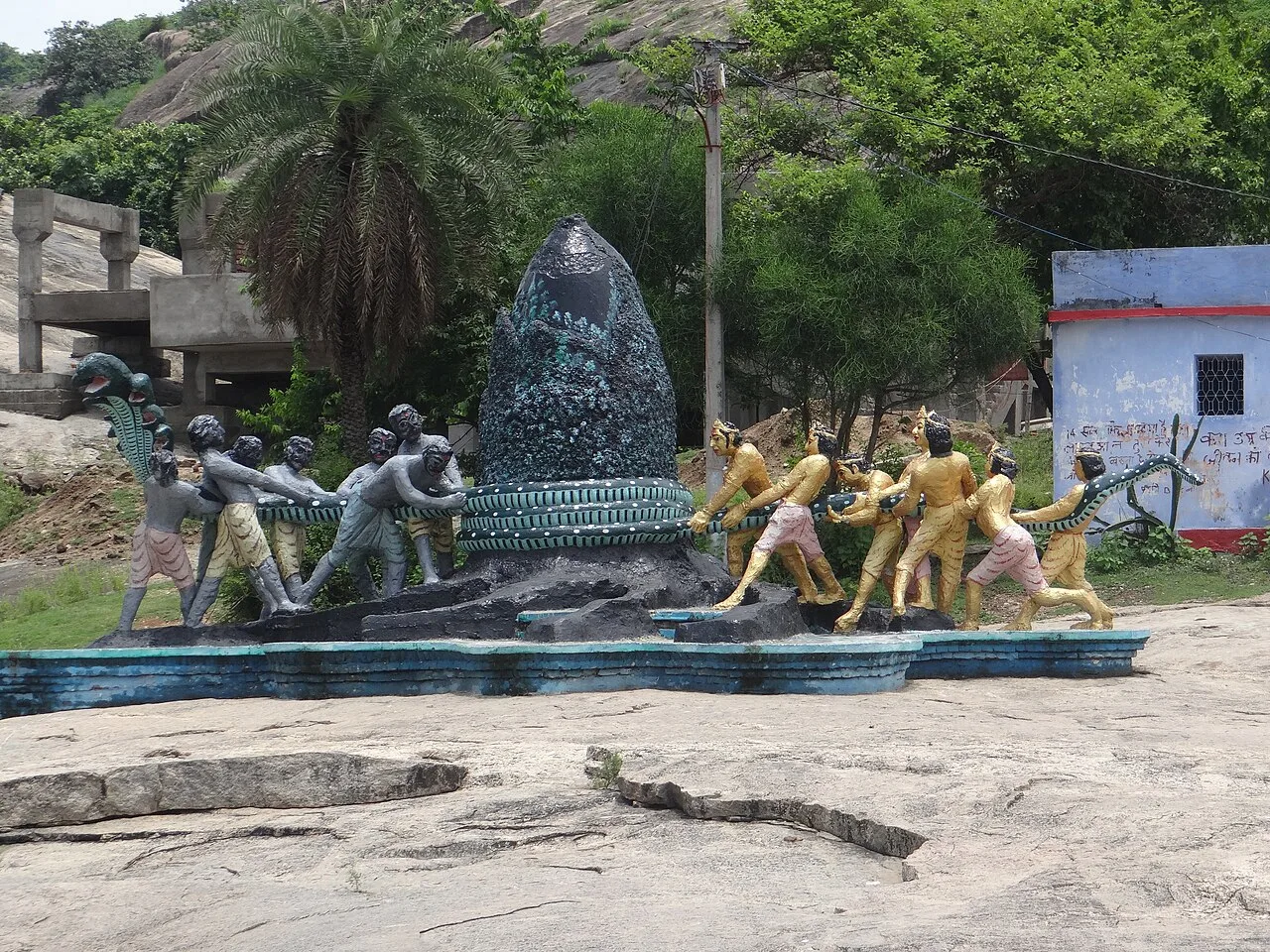
Mandar Hill, also called Mandar Parvat, is a roughly 700-foot hill at Bounsi in Bihar’s Banka district. Hindus and Jains visit it as a place of pilgrimage.
Vikramshila University Ruins
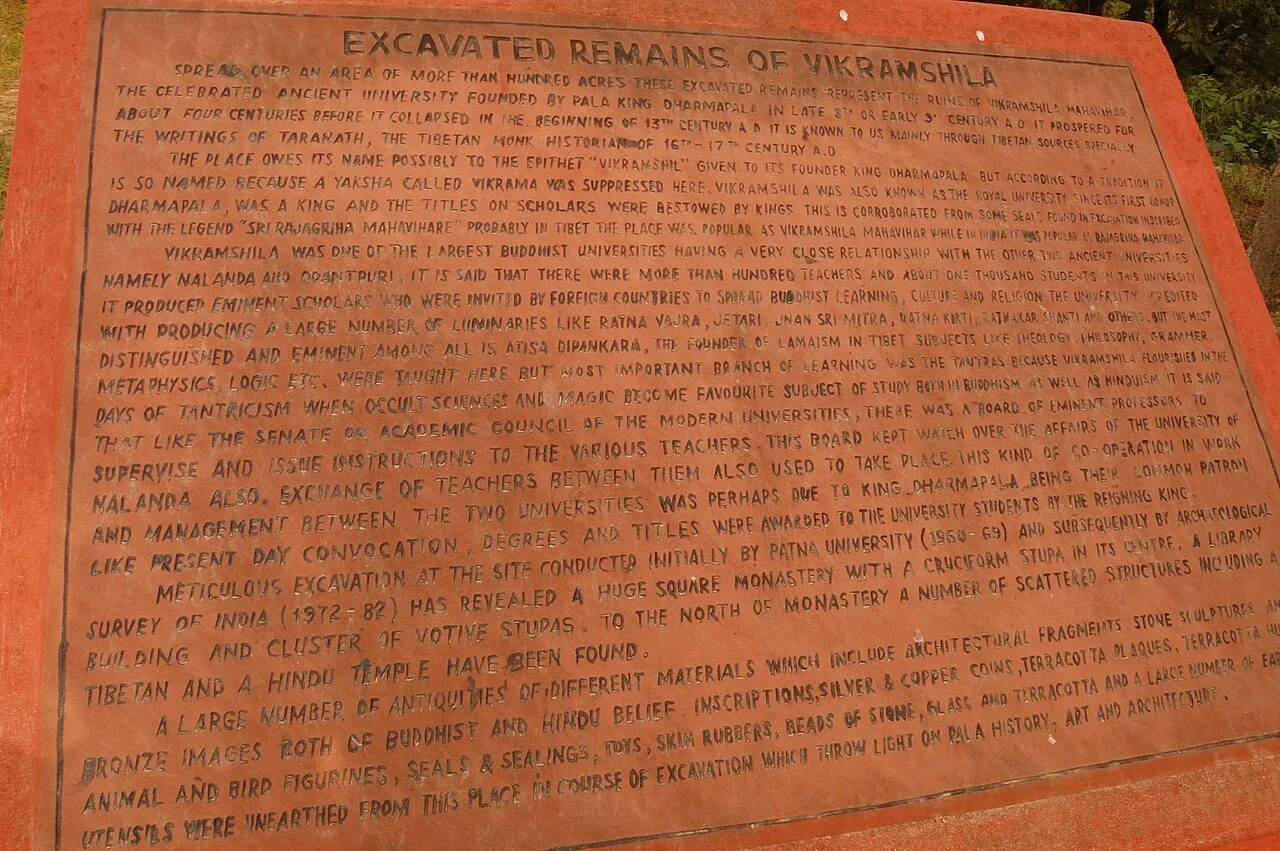
Vikramshila University Ruins mark a major Buddhist centre of learning in Bihar. Visitors come to explore the site and learn about its scholars and place in Buddhist education.
Food in Bhagalpur reflects wider Bihari traditions, with everyday meals often built around rice or roti, lentils, seasonal vegetables and pickles. Litti chokha, sattu paratha and chana ghugni are familiar regional favourites; sweets such as thekua, malpua and khaja are also found across Bihar. The Ganges and its tributaries support local fish-eating traditions, though menus vary by household and season. Makhana is associated especially with Mithila, rather than being particular to Bhagalpur. Small eateries may prepare a limited selection each day, so ask what is fresh. At remote sites, carry water and snacks.
Bhagalpur is strongly associated with silk, especially the weaving and trading of Bhagalpuri silk fabrics. The city’s silk industry draws on regional knowledge of spinning, dyeing and handloom weaving, though production methods and availability vary. Manjusha art is another well-known tradition of the Bhagalpur region. Its vivid painted forms are linked to the local story of Bihula and Bishahari, the snake goddess, and are traditionally made for ritual and festive contexts. Visitors interested in either craft can ask local shops or cultural organisations about current makers and where work is produced.
Chhath is widely observed in Bihar, with worship and gatherings along riverbanks and ponds, especially during its spring and autumn observances. Durga Puja, Kali Puja, Holi and Diwali are also celebrated in Bhagalpur and nearby towns. Makar Sankranti brings regional fairs and pilgrim activity, including events around Mandar Hill in neighbouring Banka district. These occasions can make riverfronts, roads and market areas busier, while accommodation may be more sought after in towns hosting large gatherings. Visitors planning around a festival should check local conditions and reserve a stay ahead where possible.
Elsewhere in Bihar
Bhagalpur occupies fertile alluvial plains along the southern bank of the Ganges. The main river and smaller channels shape farming, settlement and local routes; low-lying areas can be affected by seasonal flooding or waterlogged roads. The district is largely level, with the terrain rising gradually toward the southern uplands. Vikramshila lies in the riverine countryside near Antichak. Mandar Hill, a notable rocky hill and pilgrimage site, is in neighbouring Banka district rather than Bhagalpur. Travel between sites therefore moves from the open Ganges plain toward a different, more elevated landscape.
Summer is generally hot, with strong sun and conditions that can make midday sightseeing tiring. The monsoon, usually spanning the middle part of the year, brings heavy showers, humid weather and the possibility of flooding or disrupted rural roads. Winter is cooler and usually more comfortable for exploring archaeological remains and travelling between towns. October to March is generally the most suitable period to visit, while checking local river and road conditions remains important. Pack light, breathable clothing for warm weather, a sun hat and water bottle; take rain protection in the monsoon and a light warm layer for winter mornings and evenings.
Bhagalpur Junction is the district’s principal railway station, with rail connections to other cities in Bihar and beyond. Deoghar Airport is a nearby operating airport; travellers may also consider Patna or Gaya airports depending on their route and available services. Roads connect Bhagalpur with towns across the region, including Munger and Kahalgaon, while buses and private vehicles serve longer journeys. For Vikramshila and other outlying sites, arrange a taxi or use local buses and shared vehicles where available; services can be limited, so plan the return journey in advance. Check current transport services locally before setting out.
Bhagalpur city is the main transport hub, with roads linking it to Kahalgaon and other towns in the district, as well as routes toward Munger and Banka. Local buses, shared vehicles and auto-rickshaws serve common routes, but services to rural sites can be less frequent. A taxi or hired vehicle is a practical option for Vikramshila and for combining it with a journey to Mandar Hill in neighbouring Banka. Boats operate on parts of the Ganges for local purposes, but should not be assumed to provide a dependable sightseeing connection. Confirm return transport locally, especially for outlying sites.
Bhagalpur city is the most practical base for rail connections, services and visits to Vikramshila; hotels and guesthouses are generally the main options. Kahalgaon can suit travellers who want to stay closer to the Vikramshila area, though the choice of accommodation may be more limited. For Mandar Hill, which is in Banka district, Bounsi can be a convenient base; travellers may also return to Bhagalpur. Smaller towns may have basic lodgings or dharamshalas, but availability and standards vary. Confirm facilities and access before relying on a stay outside the city.
Use sun protection and carry drinking water, particularly when visiting exposed archaeological remains in warm weather. During the monsoon, check for flooding, waterlogged roads and changes to local access before travelling. Riverbanks can have unstable edges and strong currents; avoid entering the water and use only locally authorised boat operators where available. Rural roads may be uneven, and night travel can be difficult where lighting and connectivity are limited. Keep valuables secure in crowded markets and festival areas. Carry essential medicines and confirm local medical facilities for remote outings. Check with site authorities or local officials about any access restrictions or permits before setting out.
- Sahibganj · Jharkhandabout 63 km
- Purniaabout 65 km
- Deoghar · Jharkhandabout 76 km
- Mungerabout 83 km
- Dumka · Jharkhandabout 92 km
- Malda · West Bengalabout 100 km
- Birbhum · West Bengalabout 144 km
- Giridih · Jharkhandabout 149 km
Straight-line distance between the centres of each district's destinations; road distance is longer.
Q: How many days should I spend in Bhagalpur? A: Two days can cover Vikramshila and a visit to Mandar Hill in neighbouring Banka; three days allow a slower pace and an overnight stop near the hill. Q: When is the best time to visit? A: October to March is generally most comfortable. Monsoon travel may be affected by rain, flooding or road conditions. Q: What is the best base for visiting the sights? A: Bhagalpur city is the most convenient general base; Kahalgaon is closer to Vikramshila, while Bounsi can suit a visit to Mandar Hill. Q: How do I get to Bhagalpur? A: Bhagalpur Junction is the main rail station. Road services connect the city with towns in Bihar, and travellers can consider nearby Deoghar Airport or other airports according to their route and current services. Q: Is Bhagalpur suitable for families or elderly travellers? A: Yes, with planning. Choose road transport for outlying sites, allow time for uneven paths at archaeological remains, and check access and facilities in advance.
This page draws on our 2 destination guides for Bhagalpur and is updated as our team checks it.
Be the first to share photos, stories, advice or a helpful contact for Bhagalpur.
Loading…