
District · Bihar
Kaimur
Kaimur is in western Bihar, at the meeting point of the state’s agricultural plains and the wooded, rocky uplands of the Kaimur plateau.
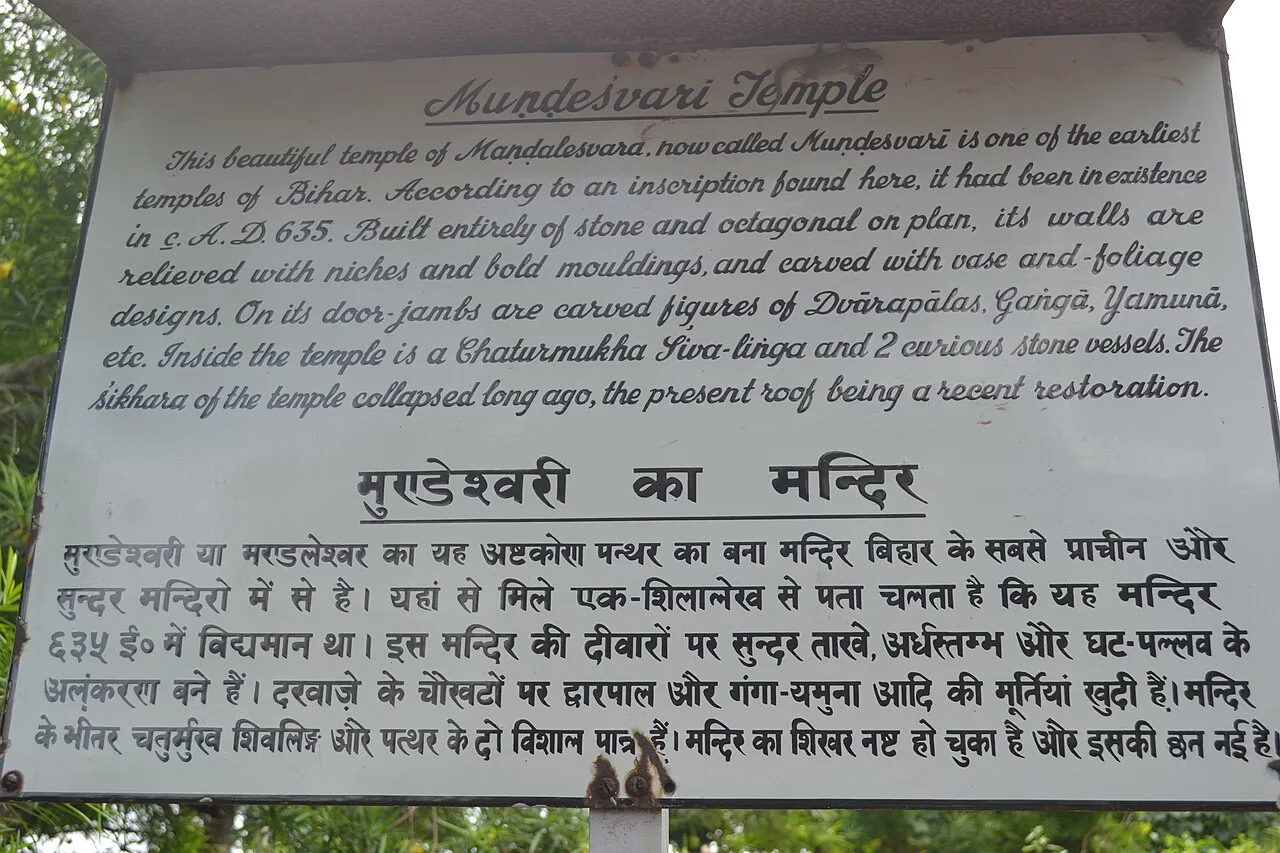
Kaimur lies in western Bihar, where the agricultural plains meet the wooded slopes and rocky heights of the Kaimur plateau. Bhabua, the district headquarters, provides a practical base for exploring a landscape of villages, farmland and hilltop sacred sites. Its best-known landmark is Mundeshwari Devi Temple at Ramgarh village, set on Mundeshwari Hill. This ancient Hindu shrine anchors the district’s religious heritage and offers a strong sense of the plateau’s setting. Kaimur belongs to the Bhojpuri-speaking cultural region, with close connections to neighbouring eastern Uttar Pradesh. Its appeal lies in this combination of living pilgrimage traditions, rural settlements and contrasting plains-and-plateau scenery.
Kaimur is in western Bihar, at the meeting point of the state’s agricultural plains and the wooded, rocky uplands of the Kaimur plateau. Its best-known landmark is Mundeshwari Devi Temple, a Hindu shrine on Mundeshwari Hill that draws pilgrims and gives visitors a close encounter with the district’s religious heritage. Bhabua, the district headquarters, is a practical base for exploring nearby rural settlements and hill country. Kaimur is part of the Bhojpuri-speaking region, with cultural links across the border into eastern Uttar Pradesh. Travellers come for this mix of pilgrimage, village life and contrasting plains-and-plateau scenery.
The area now called Kaimur has belonged to changing political landscapes of south Bihar. In ancient and early medieval times, it lay within the wider sphere of powers centred on Magadha and the middle Ganga valley; boundaries and local authority shifted over the centuries. The region later came under successive Sultanate and Mughal-era administrations, although the history of present-day Kaimur should not be treated as a continuous district history. The Mundeshwari Devi Temple at Ramgarh is an important record of long-standing religious activity in the hills; its exact early chronology is discussed in historical and archaeological accounts. During British rule, the area was administered within the larger Shahabad district of the Bengal Presidency and later Bihar. Bhabua developed as an administrative centre within that region. After Independence, the area was part of Rohtas district. Kaimur district was formed in 1991, with Bhabua as its headquarters.
Food in Kaimur draws on the wider Bhojpuri and Bihari kitchen rather than a separately documented district cuisine. Look for litti chokha, with roasted dough balls and mashed vegetables, and sattu paratha made with roasted gram flour. Chana ghugni is another familiar regional preparation, while thekua and malpua belong to Bihar’s broader sweet-making traditions. Everyday meals commonly centre on rice or roti, dal and seasonal vegetables. Ask small eateries what has been freshly cooked, as menus may be limited. For trips to hilltop or remote sites, carry drinking water and snacks rather than relying on restaurants nearby.
Kaimur is better approached through the everyday material culture of the Bhojpuri region than through claims of a distinctive district-wide craft speciality. In local markets, ask about locally made pottery, baskets and other practical household goods, and check where pieces were produced. Bihar’s better-known art traditions include Madhubani painting from Mithila and sujani embroidery associated particularly with the Muzaffarpur region; neither should be presented as native to Kaimur. Buying directly from an identified maker, where possible, helps distinguish handmade work from general souvenir merchandise.
Chhath, celebrated in the Bhojpuri region in autumn and again in spring, is a major observance, with worshippers gathering at water bodies and public spaces. Holi in spring and Diwali in autumn are widely observed. At Mundeshwari Temple, Navratri and Ram Navami periods can bring increased numbers of pilgrims and visitors. These religious occasions may make local roads and temple approaches busier, and accommodation in Bhabua can be more sought after. Festival practices and crowd levels vary from year to year, so travellers planning around a major observance should check locally.
Elsewhere in Bihar
Kaimur spans cultivated lowlands and the rocky, forested heights of the Kaimur plateau. The district’s terrain rises towards the plateau edge, with hills and wooded slopes shaping access to rural settlements and sacred sites such as Mundeshwari Temple. The Karmanasa and other local waterways form part of the wider drainage of the region, while the Son lies near the district’s broader plateau setting. Roads across the plains are generally more straightforward than routes approaching hill sites, where conditions can be uneven. The contrast between farmland and uplands is a defining feature of travel here.
Summers are generally hot, and midday travel can be tiring, especially on exposed roads and hill approaches. The monsoon brings greener scenery but also rain, occasional slippery ground and possible disruption on rural roads. Winter is usually the most comfortable season for exploring, with cooler mornings and evenings. October to March is generally a good period to visit, while festival dates can bring extra crowds. Pack light, breathable clothing for warm weather, a warmer layer for winter evenings, sun protection and sturdy footwear for uneven ground. Carry rain protection during the monsoon and drinking water on outings.
Varanasi’s Lal Bahadur Shastri Airport is a convenient air gateway for western Bihar. Bhabua Road railway station, at Mohania, is a useful rail entry point for Kaimur; Sasaram Junction is another option for reaching Mundeshwari Temple. Mohania lies on the main Delhi–Kolkata road corridor, with onward road connections to Bhabua and the district’s villages. Buses and shared vehicles connect principal settlements, while taxis or hired cars are more practical for combining rural and hill sites. Arrange onward and return transport before visiting places with limited facilities. Check current services locally.
Mohania, also known as Mohania town, is an important road and rail gateway, with road links onward to Bhabua and other settlements. Local buses, shared vehicles and auto-rickshaws serve principal towns and some rural routes, though services may be less frequent outside main corridors. A taxi or hired car is useful for combining Bhabua with hill and village sites, including Mundeshwari Temple. The final approach to a hill site may involve uneven paths or steps. Confirm the return journey in advance, particularly when travelling beyond the main towns, and check current road conditions locally.
2 days: Mundeshwari Temple; sleep in Bhabua each night. 3 days: Mundeshwari Temple (allowing a slower visit); sleep in Bhabua each night.
Bhabua is the most practical base for visiting Mundeshwari Temple and travelling around the district. Mohania can suit visitors arriving by rail or road who want to stay near the main transport corridor. Accommodation options are generally concentrated in the larger towns and may include modest hotels and guesthouses; facilities can be limited in rural areas near the hills. Pilgrim-oriented lodging or dharamshalas may be available, but arrangements and services vary. Book ahead during major religious occasions and confirm facilities directly, especially if you need particular accessibility or transport support.
Wear sturdy footwear on the hill approach to Mundeshwari Temple, and take care on uneven or slippery ground, especially after rain. Carry drinking water, sun protection and any personal medicines; use treated or sealed drinking water when unsure of local supplies. Rural roads may be narrow or rough, and monsoon weather can affect travel, so avoid rushing and confirm return transport. Wildlife may be present in wooded areas; keep a respectful distance and do not feed animals. Mobile coverage and services can be limited away from towns. Expect larger crowds around festivals and follow local directions. Check with official sources if you believe a particular site requires permission; do not assume access rules.
- Rohtasabout 46 km
- Sonbhadra · Uttar Pradeshabout 64 km
- Varanasi · Uttar Pradeshabout 66 km
- Buxarabout 77 km
- Chandauli · Uttar Pradeshabout 85 km
- Mirzapur · Uttar Pradeshabout 90 km
- Aurangabadabout 94 km
- Jaunpur · Uttar Pradeshabout 123 km
Straight-line distance between the centres of each district's destinations; road distance is longer.
Q: How many days should I spend in Kaimur? A: Two days can suit a visit focused on Mundeshwari Temple; three days allow a slower pace and more time for local travel. Q: When is the best time to visit? A: October to March is generally the most comfortable period. Monsoon visits can be scenic but rain may affect roads and paths. Q: What is the best base for visiting the district? A: Bhabua is a practical base for Mundeshwari Temple and other district travel. Mohania is useful for transport connections. Q: How do I get to Kaimur? A: Varanasi airport is a convenient air gateway, while Bhabua Road station at Mohania is a useful rail entry point. Continue by road to Bhabua and local sites. Q: Is Kaimur suitable for families or elderly travellers? A: Yes, with planning. The temple approach includes uneven ground and may be challenging for visitors with limited mobility; arrange suitable transport and allow extra time.
This page draws on our 1 destination guides for Kaimur and is updated as our team checks it.
Be the first to share photos, stories, advice or a helpful contact for Kaimur.
Loading…