
District · Uttar Pradesh
Chandauli
Chandauli offers a quieter, rural counterpoint to nearby Varanasi and a glimpse of eastern Uttar Pradesh’s Ganga-valley landscape.
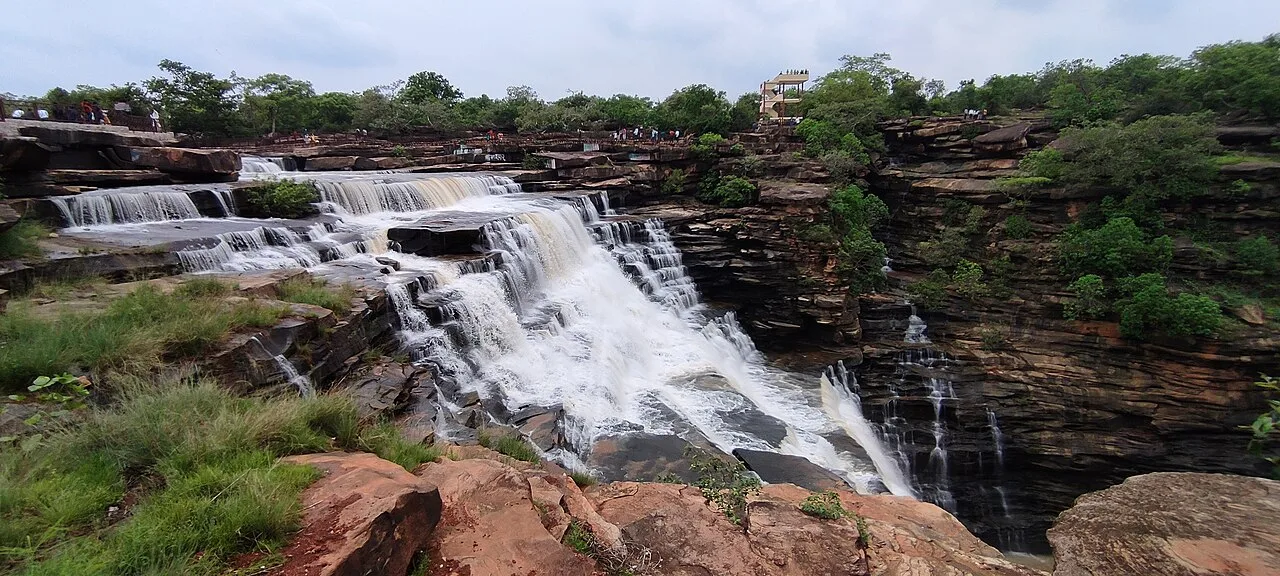
Chandauli lies in eastern Uttar Pradesh, adjoining Varanasi and the Bihar border. Its landscape shifts from fertile agricultural plains near the Ganga to wooded hills and rocky terrain along the Kaimur range in the south. Rice cultivation is central to the district’s rural character, while Pt. Deen Dayal Upadhyaya Junction, historically known as Mughalsarai, gives it an important railway identity. Created from Varanasi district in 1997, Chandauli shares the wider region’s cultural connections with the Ganga valley. Chandra Prabha Wildlife Sanctuary is a major natural attraction, with forests and the Rajdari and Devdari waterfalls offering a contrast to the cultivated plains and busy transport settlements.
Chandauli offers a quieter, rural counterpoint to nearby Varanasi and a glimpse of eastern Uttar Pradesh’s Ganga-valley landscape. It is known for rice cultivation, its railway hub at Pt. Deen Dayal Upadhyaya Junction (formerly Mughalsarai), and the forests and waterfalls of Chandra Prabha Wildlife Sanctuary in the south. The district’s terrain ranges from cultivated plains to the wooded, rocky Kaimur hills, making it useful for travellers seeking both countryside and nature. Its position near Varanasi and the Bihar border also makes it a practical stop or short excursion within a wider regional journey.
Chandauli’s history is best understood within the wider Kashi and Ganga-valley region; historical boundaries do not always correspond to today’s district. The ancient Kashi mahajanapada was followed by periods of Mauryan and Gupta influence, while medieval Kashi was associated with the Gahadavala kingdom centred on Varanasi. Later political changes brought the region under successive north Indian powers. Under British rule, the area was administered as part of the Varanasi district. Railway development gave Mughalsarai, now Pt. Deen Dayal Upadhyaya Junction, a significant role as a major junction on routes linking eastern India with the north. The surrounding countryside remained largely agricultural, with settlements tied to local markets and transport corridors. Chandauli was created as a separate district from Varanasi in 1997. Its modern identity therefore combines a recent administrative history with older cultural and economic connections to Varanasi, the Ganga valley and neighbouring Bihar.
Food in Chandauli belongs broadly to the eastern Uttar Pradesh culinary region, with rice, wheat rotis, dal and seasonal vegetables forming everyday meals. Kachori-sabzi, jalebi and other freshly prepared snacks are familiar choices at local eateries. Nearby Varanasi provides a useful guide to the wider region’s celebrated flavours: tamatar chaat, thick lassi, Banarasi paan and winter malaiyyo are associated especially with that city rather than uniquely with Chandauli. Small establishments may offer only a short daily menu, so ask what has just been cooked. For street food, favour busy stalls serving freshly prepared dishes.
Chandauli sits within the wider cultural orbit of Varanasi, whose Banarasi silk weaving and brocade traditions are among the region’s best-known crafts. Silk saris with zari work are therefore relevant regional purchases, but should not automatically be described as made in Chandauli. Varanasi is also associated with wooden toys and other decorative woodcraft. Travellers seeking these traditions will generally find a broader selection in Varanasi’s weaving neighbourhoods and markets. Ask sellers where an item was produced and whether it is handwoven, power-loomed or handmade before buying.
Holi, Diwali and Dussehra are observed across the district, generally in spring and autumn. Chhath, usually celebrated in autumn, is especially familiar across eastern Uttar Pradesh and neighbouring Bihar, though customs and gathering sizes vary by locality. Local fairs and religious gatherings may take place around temples and seasonal events; schedules are not uniform. Larger festival periods can bring crowds to market areas, transport hubs and riverbanks, and accommodation may be busier, particularly around Varanasi. Travellers should check local event information and arrange a room ahead during major regional celebrations.
Elsewhere in Uttar Pradesh
The northern and central parts of Chandauli are largely fertile, cultivated plains associated with the Ganga valley. Farther south, the ground rises into the wooded and rocky Kaimur range, where Chandra Prabha Wildlife Sanctuary protects forested terrain and includes the Rajdari and Devdari waterfalls. Seasonal streams and uneven tracks make travel in the hill area different from journeys between towns on the plains. Rural roads can be narrow, and reaching forest attractions may require a private vehicle and some planning. The contrast between farmland, transport settlements and southern forest country is a defining feature of the district.
Chandauli has hot summers, a monsoon season and cooler, generally drier winters. Summer heat can make midday travel and walking in exposed areas tiring. Monsoon rains bring greener countryside but may make rural and forest roads muddy or difficult, and conditions around streams and waterfalls can change. The cooler months, broadly from autumn through winter and into early spring, are usually the most comfortable time to explore. Pack light, breathable clothing for warm days, a warmer layer for winter evenings, sun protection and sturdy footwear. In the rainy season, carry rain protection and check local road and sanctuary conditions before setting out.
Lal Bahadur Shastri International Airport at Varanasi is the main nearby airport for reaching Chandauli. Pt. Deen Dayal Upadhyaya Junction, also widely known as Mughalsarai, is a major railway gateway within the district. Road connections link Chandauli with Varanasi and neighbouring Bihar, with onward travel by bus, taxi or hired vehicle. Auto-rickshaws and shared vehicles serve towns and shorter local routes, though availability varies outside built-up areas. For Chandra Prabha Wildlife Sanctuary and the southern hill areas, arranging onward and return transport in advance is sensible. Check current services locally.
Roads connect Chandauli’s towns with Varanasi and neighbouring Bihar, while Pt. Deen Dayal Upadhyaya Junction is a major rail gateway. Local buses, shared vehicles and auto-rickshaws operate on many town and rural routes, but services may be less frequent outside built-up areas. Taxis or a hired vehicle are more practical for visiting Chandra Prabha Wildlife Sanctuary and the southern hills, especially if you need a return journey the same day. Confirm onward transport locally rather than relying on a fixed service. There is no need to plan around boat travel for the district’s main listed attraction.
2 days: Chandra Prabha Wildlife Sanctuary; sleep both nights in Chandauli town. 3 days: Chandra Prabha Wildlife Sanctuary; sleep the first night in Chandauli town and the second in the Pt. Deen Dayal Upadhyaya Junction (Mughalsarai) area.
Chandauli town is a practical base for a visit to the sanctuary, while the Pt. Deen Dayal Upadhyaya Junction (Mughalsarai) area suits travellers arriving by rail or continuing onward. Larger settlements generally have hotels and basic guesthouses; dharamshalas may also be available, while homestay options can be limited. Stay choices are fewer near the southern hill and forest areas, so do not assume there will be lodging close to the sanctuary. Check current availability locally and plan your return transport before choosing a remote base.
In the southern hills, wear sturdy footwear, stay on accessible paths and follow forest staff instructions; do not approach or feed wildlife. Waterfall and stream conditions can become hazardous after rain, and forest roads may be rough or muddy. Use safe drinking water and carry essential medicines, as services are more limited outside towns. Mobile connectivity can be unreliable in wooded areas, so tell someone your plan and arrange return transport in advance. Crowds can affect travel during festivals. Check current access rules with forest authorities before visiting; confirm officially whether any permissions or restrictions apply.
- Varanasiabout 52 km
- Jaunpurabout 59 km
- Buxar · Biharabout 73 km
- Kaimur · Biharabout 85 km
- Mirzapurabout 85 km
- Gorakhpurabout 120 km
- Rohtas · Biharabout 124 km
- Sonbhadraabout 125 km
Straight-line distance between the centres of each district's destinations; road distance is longer.
Q: How many days should I spend in Chandauli? A: Two days can suit a focused visit to Chandra Prabha Wildlife Sanctuary; allow a third day if you want a slower pace or easier onward travel. Q: When is the best time to visit? A: The cooler months from autumn through winter and early spring are generally most comfortable. Check conditions during the monsoon before travelling to the hills. Q: Where is the best base? A: Chandauli town is a practical base for the sanctuary, while the Pt. Deen Dayal Upadhyaya Junction area is convenient for rail connections. Q: How do I get to Chandauli? A: Reach Pt. Deen Dayal Upadhyaya Junction by rail or fly to Varanasi and continue by road. Arrange onward transport to the sanctuary locally. Q: Is Chandauli suitable for families or elderly travellers? A: Town-based travel can suit many visitors, but uneven terrain, limited facilities and road conditions near the sanctuary may be challenging. Plan a vehicle and choose activities to suit mobility.
This page draws on our 1 destination guides for Chandauli and is updated as our team checks it.
Be the first to share photos, stories, advice or a helpful contact for Chandauli.
Loading…