
District · Uttar Pradesh
Lakhimpur Kheri
Lakhimpur Kheri lies in the Terai belt of northern Uttar Pradesh, along the Nepal border.
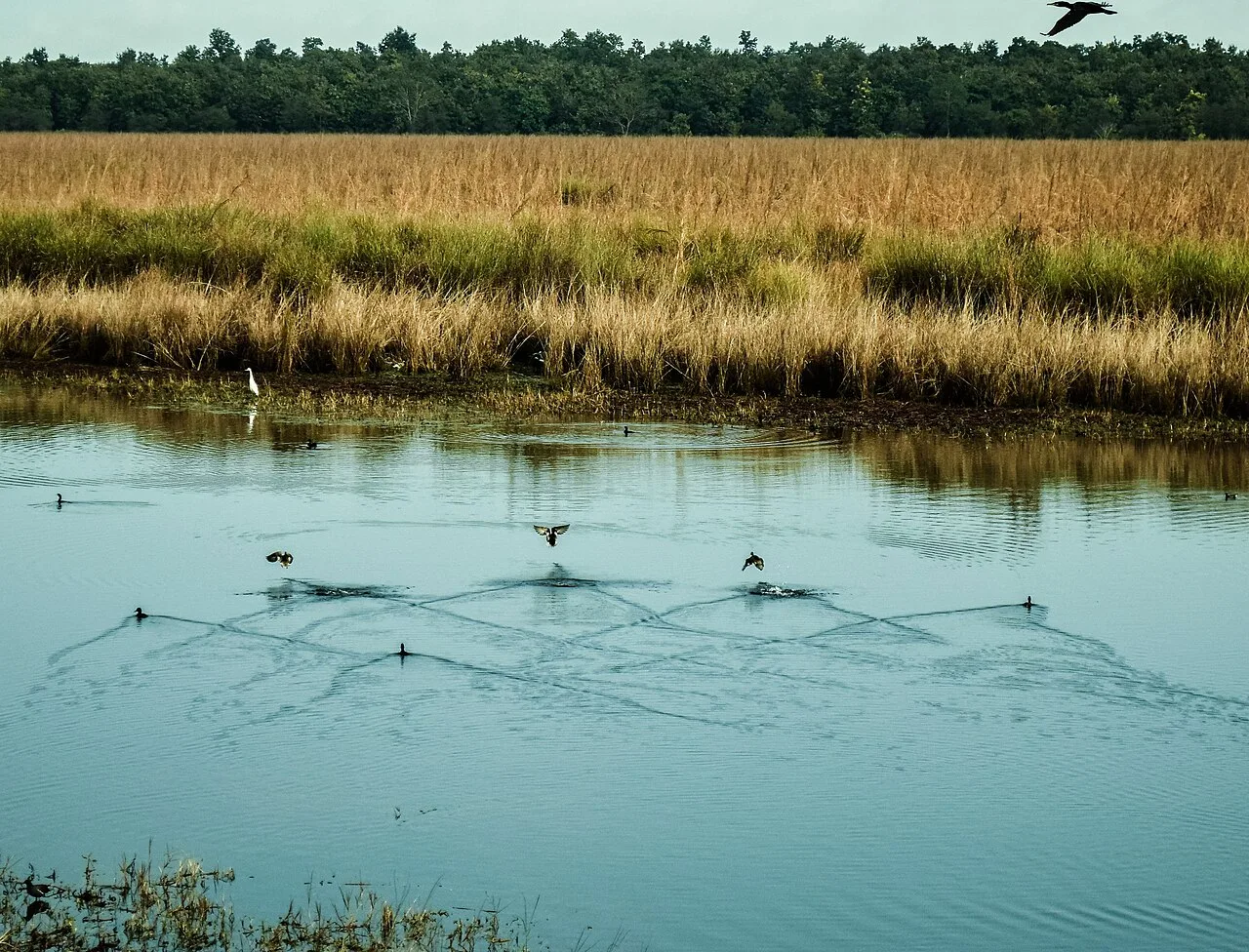
Lakhimpur Kheri lies in the Terai plains of northern Uttar Pradesh, along the Nepal border. Its landscape combines fertile farmland, riverine lowlands, marshes and patches of grassland and forest. Dudhwa National Park and Kishanpur Wildlife Sanctuary protect important habitats for wildlife, giving the district a strong conservation identity alongside its agricultural character. Rice, wheat and sugarcane are prominent crops, and the countryside is shaped by farming as well as forest-edge communities. The area’s history reflects life on a changing frontier of forests, settlements and cross-border connections. Tharu communities are part of the district’s cultural landscape, particularly near the Nepal border, while Lakhimpur town serves as its principal administrative and commercial centre.
Lakhimpur Kheri lies in the Terai belt of northern Uttar Pradesh, along the Nepal border. It is best known to travellers for Dudhwa National Park, whose marshes, grasslands and forests support wildlife in a distinctive lowland landscape. The district offers a contrast to Uttar Pradesh’s larger cities: travel here is shaped by forest edges, river plains and small towns rather than dense urban sightseeing. It can suit visitors seeking a nature-focused trip, especially those interested in protected-area experiences.
The district’s past is tied to the forested Terai frontier, where settlement, agriculture and local estates developed alongside extensive woodland and riverine tracts. The area lay within the broader sphere of Awadh before the British annexed the kingdom in 1856. As British administration expanded, the district was organised under colonial rule; historical accounts commonly date its formation to 1856, with Kheri as the early headquarters. The headquarters shifted to Lakhimpur in 1890, and the district came to be known as Lakhimpur Kheri. The region was affected by the upheaval surrounding the 1857 uprising, as were other parts of Awadh, though local accounts vary. British rule brought changes to land administration, forestry and transport, while the Terai remained relatively rural. After India’s independence in 1947, the district became part of Uttar Pradesh. Its history is not represented by one continuous sequence of major dynasties: the changing political boundaries and local histories of the Terai are more useful context for understanding the region.
Everyday food in Lakhimpur Kheri reflects the wider Terai and Uttar Pradesh region: meals commonly centre on rice or wheat breads, lentils, seasonal vegetables and dairy. The surrounding agricultural landscape also makes sugarcane familiar, though dishes and availability vary by season and household. Awadhi food traditions influence the wider region, but Lucknow specialities such as kebabs and biryani should not be assumed to represent everyday district cuisine. In towns, ask what has been freshly prepared; smaller eateries may offer a limited daily menu. For street food, choose busy stalls where items are cooked fresh.
There is no single widely documented craft that defines Lakhimpur Kheri. Among Tharu communities of the Terai, traditional making can include practical basketry and household articles woven from locally available plant materials such as bamboo or cane. These skills are part of everyday material culture, and should not be mistaken for a guaranteed tourist-market product. Uttar Pradesh has many better-known craft traditions, but they are associated with particular regions and are not necessarily made locally. Visitors interested in Tharu arts and crafts can ask locally about community-led cultural initiatives and current opportunities to see or purchase work.
Holi, Diwali, Dussehra, Navratri and Eid are observed in towns and villages, reflecting the district’s diverse communities and wider Uttar Pradesh traditions. Rural fairs and seasonal gatherings may take place around religious occasions, but their scale and dates vary locally. The main festival season generally falls from autumn into winter, with Holi in spring. Town centres can be busier during major celebrations, and local accommodation may be more sought after around those periods. Dudhwa visits also draw travellers during the cooler wildlife season, so it is sensible to arrange a stay ahead of busy holiday periods.
Elsewhere in Uttar Pradesh
Lakhimpur Kheri is a largely flat Terai district, with fertile alluvial plains, wetlands, grasslands and patches of forest rather than hills. Rivers and smaller waterways, including the Sharda and its tributaries, shape the countryside and can affect local routes. Dudhwa National Park lies in the northern part of the district near the Nepal border, within a landscape of marshy grasslands and forest. Roads connect the towns and park approaches, but travel beyond them can be slower, particularly in wet weather. The open, low-lying terrain makes seasonal conditions important when planning journeys.
Summer is generally hot, while the monsoon brings heavy showers, humid conditions and the possibility of waterlogged roads. Winter is cooler and often more comfortable for exploring, though mornings can be misty. November to March is usually the most pleasant period for a district visit and for planning time around Dudhwa; check current park access and seasonal arrangements before travelling. Pack light, breathable clothing for warmer days, a warmer layer for winter mornings, and rain protection during the monsoon. Comfortable closed footwear, sun protection and insect repellent are useful in rural and forest-edge areas.
Lakhimpur is the district’s principal railway access point and a useful onward hub for travel by road. Bareilly Airport is the nearest operating airport by map proximity; actual road journeys are longer, and travellers may also compare connections through Lucknow. Roads link Lakhimpur with towns across the district and with larger centres in Uttar Pradesh. For Dudhwa National Park, Palia Kalan is an important local gateway; arrange onward transport in advance, as services may be limited near forest areas. Buses, shared vehicles and taxis serve town-to-town routes, while a hired vehicle can help with rural travel. Check current transport and park services locally before setting out.
Lakhimpur town and Palia Kalan are useful road hubs for reaching the district’s towns and Dudhwa’s approaches. Local and inter-town buses serve some routes, while shared jeeps and autos may be available for shorter journeys; services can be less frequent in rural areas. For a park visit, arranging a vehicle through an authorised local operator or accommodation can simplify access, subject to park rules. Taxis offer more flexibility between towns and the park area. Roads may be slower during the monsoon, and public transport should not be assumed to reach every forest gate or rural stop.
2 days: Dudhwa National Park; sleep near Dudhwa on night one. 3 days: Dudhwa National Park; sleep near Dudhwa on nights one and two. 4 days: Dudhwa National Park; sleep near Dudhwa on nights one and two, then in Palia Kalan on night three.
Palia Kalan is a practical base for visitors focusing on Dudhwa, while Lakhimpur town offers a broader town base for district travel. Near the park, accommodation is generally oriented toward nature visits and may include lodges and simpler guest stays. Towns have hotels and some basic guesthouses; homestays may be available but should be checked locally. Dharamshalas can be found in some towns. Choice is more limited outside the main centres, so confirm availability before setting out, particularly during the cooler travel season and holiday periods.
Dudhwa is a protected wildlife area: follow park staff and vehicle rules, keep a safe distance from animals, and do not walk or stop outside authorised areas. Confirm current entry and safari arrangements through official park channels before travel, since access is regulated and can vary by season. Carry drinking water and use sealed or treated water where its safety is uncertain; insect repellent and sun protection are useful. Rural roads may be rough or waterlogged during the monsoon, and mobile coverage can be patchy near forests. Allow extra travel time, especially for visitors with mobility needs, and check local conditions before departure.
- Bahraichabout 48 km
- Pilibhitabout 64 km
- Champawat · Uttarakhandabout 110 km
- Udham Singh Nagar · Uttarakhandabout 135 km
- Nainital · Uttarakhandabout 150 km
- Almora · Uttarakhandabout 160 km
- Shravastiabout 174 km
- Pithoragarh · Uttarakhandabout 174 km
Straight-line distance between the centres of each district's destinations; road distance is longer.
Q: How many days should I spend in Lakhimpur Kheri? A: Two or three days can suit a focused visit to Dudhwa National Park; allow more time if you want a slower pace or are travelling across the district. Q: When is the best time to visit? A: November to March is generally comfortable. Check official information for current Dudhwa access and seasonal arrangements. Q: What is the best base for Dudhwa? A: Palia Kalan is a practical base for the park area; Lakhimpur town is useful for a wider district stay. Q: How can I get to the district? A: Lakhimpur Kheri can be reached by road and rail connections serving its towns. Plan onward travel to Dudhwa separately, as local services may be limited. Q: Is the district suitable for families or elderly travellers? A: It can be, with advance planning. Choose suitable accommodation and transport, allow extra time on rural roads, and follow park guidance; some wildlife experiences may involve uneven access or extended vehicle journeys.
This page draws on our 1 destination guides for Lakhimpur Kheri and is updated as our team checks it.
Be the first to share photos, stories, advice or a helpful contact for Lakhimpur Kheri.
Loading…