
District · Uttar Pradesh
Kushinagar
Kushinagar is in eastern Uttar Pradesh, within the Bhojpuri-speaking cultural region and the fertile Terai plains.
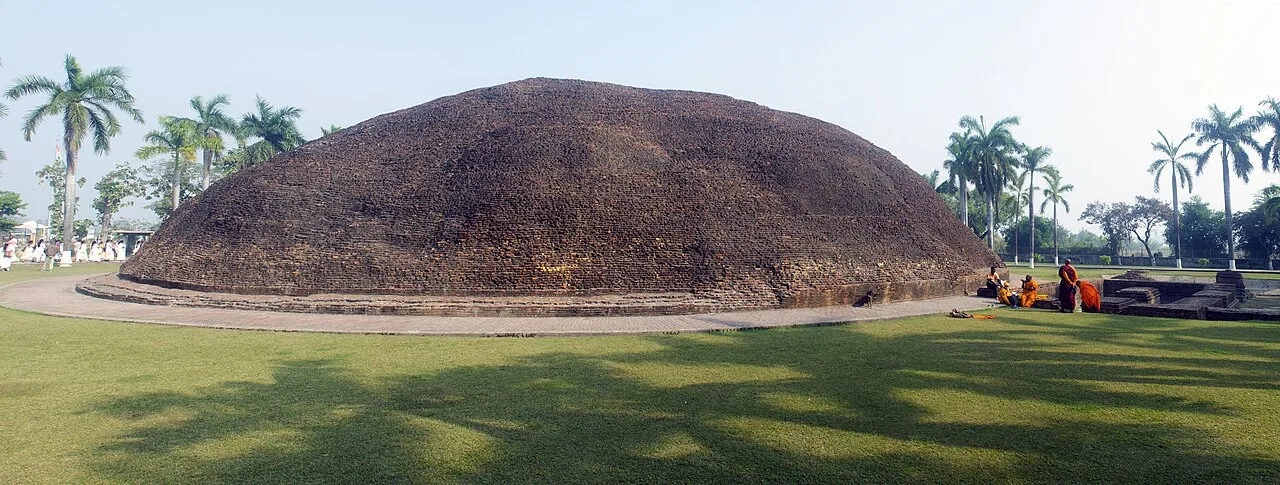
Kushinagar district lies in the low-lying Terai plains of eastern Uttar Pradesh, a landscape shaped by rivers, fertile fields and the wider Gandak basin. Its best-known place is Kushinagar, revered in Buddhist tradition as the site where the Buddha attained parinirvana. The Mahaparinirvana Temple and Ramabhar Stupa anchor a pilgrimage landscape that draws visitors from India and Buddhist communities around the world. The town’s modern character reflects this international connection, while the surrounding district remains part of the Bhojpuri-speaking cultural region of eastern Uttar Pradesh. Kushinagar is both a place of religious reflection and a working rural district, with agriculture and everyday village life beyond its major sacred sites.
Kushinagar is in eastern Uttar Pradesh, within the Bhojpuri-speaking cultural region and the fertile Terai plains. It is best known in Buddhist tradition as the place where the Buddha attained parinirvana. The Mahaparinirvana Temple and Ramabhar Stupa are central to its pilgrimage landscape, drawing visitors from India and Buddhist communities around the world. The district offers a chance to visit these sacred sites while also seeing a working rural region of farms and villages. Its international Buddhist connections sit alongside the everyday life of a small district town, making Kushinagar a place for both religious reflection and a broader view of eastern Uttar Pradesh.
Kushinagar is associated with ancient Kushinara, a town of the Malla people, whose territory was among the small republics of northern India. Buddhist tradition records Kushinara as the place where the Buddha attained parinirvana. The area later formed part of the wider political worlds shaped by expanding kingdoms in the Gangetic plain, including the Mauryan and Gupta periods. The Buddhist sites were important places of pilgrimage, though their prominence changed over the centuries as political and religious centres shifted. Archaeological investigations and identification of the ancient remains in the 19th century helped renew attention to Kushinagar as a Buddhist heritage site. In the colonial period, the surrounding region came under British administration as control expanded across eastern Uttar Pradesh in the early 19th century. The modern district was carved out of Deoria district in 1994, initially as Padrauna district, and was renamed Kushinagar in 1997. Its modern identity brings together the ancient pilgrimage centre, district administration and predominantly rural communities.
3 destination guides · 1 on the map
Kushinagar Buddhist Site
The Kushinagar Buddhist Site is a pilgrimage destination associated with Gautama Buddha’s parinirvana. Visitors come to this Uttar Pradesh town because of its importance in Buddhist belief.
Mahaparinirvana Temple
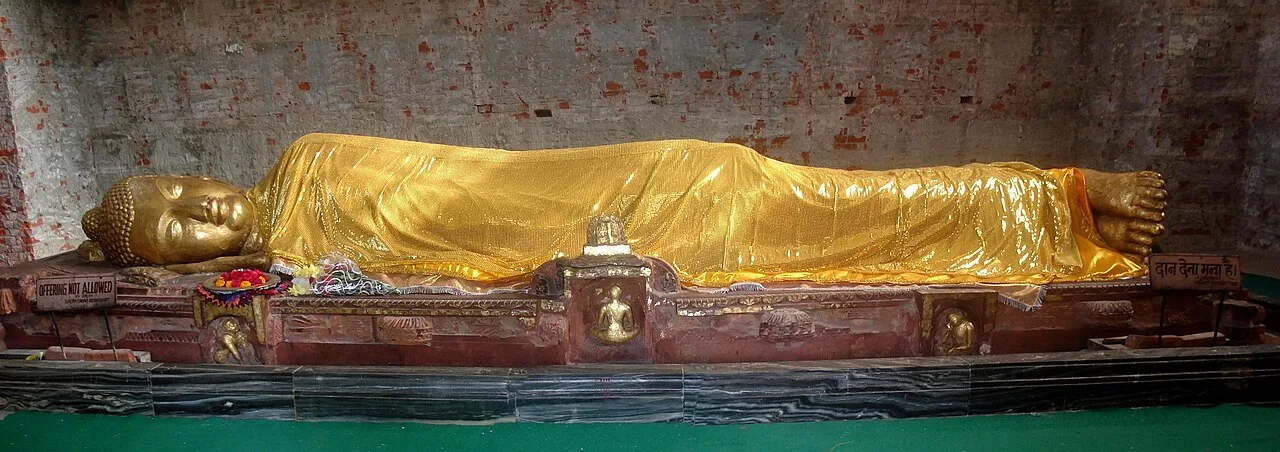
Set in Kushinagar district, Uttar Pradesh, Mahaparinirvana Temple is a sacred place. Visitors come to it as a temple and site of religious significance.
Ramabhar Stupa
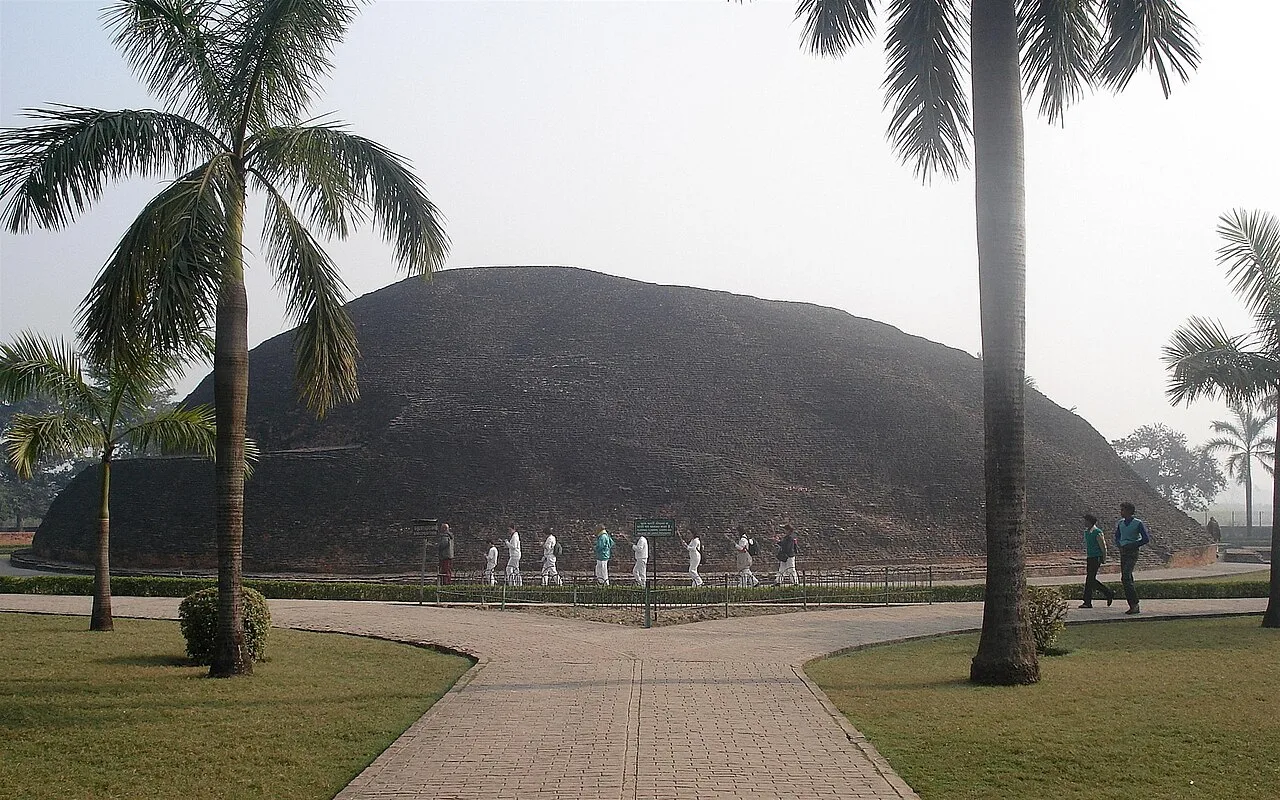
Ramabhar Stupa is a heritage site in Kushinagar district, Uttar Pradesh. Visitors may come to see a place recognised for its heritage significance.
Food in Kushinagar reflects the home-style cooking of eastern Uttar Pradesh and the wider Bhojpuri region. Rice, wheat breads, lentils and seasonal vegetables are everyday staples; simple vegetarian meals are readily found near the Buddhist pilgrimage sites. Litti chokha is associated with the broader Bhojpuri food region, though it is not exclusive to this district. Across Uttar Pradesh, visitors may also encounter snacks such as kachori-sabzi and sweets, but availability varies locally. Ask what has been freshly prepared, since smaller eateries may offer a limited daily menu. At street stalls, choose busy places where food is cooked fresh.
Kushinagar is better known as a Buddhist pilgrimage destination than for a widely documented district-specific craft. In the wider eastern Uttar Pradesh region, visitors may encounter pottery, handloom weaving and practical work in bamboo or cane, though availability varies and these traditions are not exclusive to Kushinagar. Around pilgrimage sites, shops also sell Buddhist images, prayer items and souvenirs; these are part of the visitor trade rather than evidence of a distinct local craft tradition. Ask sellers about an item’s maker and place of origin if provenance matters.
Buddha Purnima, usually in spring, is an important observance for Buddhist pilgrims and communities connected with Kushinagar. Buddhist gatherings and pilgrimage activity may also increase at other points in the year, depending on religious calendars and tour groups. Across the wider eastern Uttar Pradesh region, Holi in spring, Diwali in autumn and Makar Sankranti in winter are widely observed. These regional festivals can affect local transport and business hours. Visitor numbers and demand for rooms may rise around major Buddhist observances, so arranging accommodation ahead is sensible, especially if travelling with a group.
Elsewhere in Uttar Pradesh
Kushinagar lies in the low-lying Terai plains of eastern Uttar Pradesh, within the wider Gandak basin. The terrain is mostly level and shaped by fertile alluvial soils, cultivated fields, villages and waterways. There are no major hills or coastal areas in the district. Seasonal rain can leave some rural roads wet or waterlogged, while fields and smaller waterways shape routes between settlements. The main Buddhist sites are within and around Kushinagar town, so travel is generally across open plain rather than through difficult terrain. Rural journeys can take longer during the monsoon or when local roads are in poor condition.
Summer is generally hot, and travel in the middle of the day can feel tiring. The monsoon, usually from June into September, brings heavy rain at times and can make some roads wet or waterlogged. Winter is cooler and can bring morning fog, which may affect road and rail journeys. October to March is generally the most comfortable period for sightseeing, while spring visits can coincide with Buddhist observances but may be warmer. Pack light, breathable clothing for warm weather, a light layer for winter mornings and evenings, comfortable walking shoes, sun protection and rain gear if travelling during the monsoon.
Kushinagar International Airport serves the town, though flight availability may vary. Deoria Sadar is a nearby railway station; Gorakhpur is a larger regional rail hub with broader connections. Roads link Kushinagar with Gorakhpur, Deoria and other eastern Uttar Pradesh towns, and buses and private coaches serve regional routes. UPSRTC services include air-conditioned options on some routes. From the town, taxis and auto-rickshaws can help visitors reach the Buddhist sites, which are spread around the local area. Check current services locally before travelling.
Roads connect Kushinagar town with Gorakhpur, Deoria, Padrauna and other towns in eastern Uttar Pradesh. Buses and shared vehicles serve regional routes, though frequency and availability can vary. Within the town and between the Buddhist sites, auto-rickshaws and taxis are practical options; visitors can also ask locally about shared transport. The sites are spread around the local area, so allow time for transfers rather than assuming they are all immediately adjacent. For rural journeys, confirm the return transport before setting out, particularly in the evening or during wet weather.
2 days: Kushinagar Buddhist Site → Mahaparinirvana Temple → Ramabhar Stupa; sleep Night 1 in Kushinagar town. 3 days: Kushinagar Buddhist Site → Mahaparinirvana Temple → Ramabhar Stupa, with a slower visit to the sites; sleep Nights 1 and 2 in Kushinagar town.
Kushinagar town is the most convenient base for visiting the Buddhist sites, especially on a short circuit. It has hotels and guesthouses, including options used by pilgrims and tour groups; simple lodging and dharamshalas may also be available. For a wider regional itinerary, Gorakhpur offers a larger choice of accommodation and transport connections, but requires road travel to Kushinagar. Availability can vary with pilgrimage seasons and group visits, so book ahead during busy periods. Check facilities and access needs directly before choosing a stay.
The main sites are in generally level terrain, but paths and surfaces can be uneven, so wear suitable footwear and take care if mobility is limited. Summer heat calls for sun protection and regular water; use sealed or safely treated drinking water. Monsoon rain may cause waterlogging or slower rural road journeys, while winter fog can reduce visibility. Road conditions and traffic vary, and connectivity may be less reliable outside town. Keep valuables secure in crowded areas. No special permit is generally associated with visits to the listed sites, but confirm current access rules with official or local sources if conditions change.
- Gorakhpurabout 53 km
- West Champaran · Biharabout 71 km
- East Champaran · Biharabout 74 km
- Chandauliabout 131 km
- Buxar · Biharabout 132 km
- Vaishali · Biharabout 146 km
- Jaunpurabout 163 km
- Saran · Biharabout 173 km
Straight-line distance between the centres of each district's destinations; road distance is longer.
Q: How many days should I spend in Kushinagar? A: Two days allows time for the main Buddhist sites at an unhurried pace; a third day gives more flexibility. Q: When is the best time to visit? A: October to March is generally the most comfortable for sightseeing, though spring is meaningful for Buddhist observances. Q: Where is the best base? A: Kushinagar town is the most convenient base for visiting the local Buddhist sites. Q: How do I get to Kushinagar? A: The town is served by Kushinagar International Airport, though flights may vary. Deoria Sadar and the larger Gorakhpur rail hub are rail options, with onward road connections. Q: Is Kushinagar suitable for families or elderly travellers? A: Yes, visits can be taken at a gentle pace, but check walking surfaces and access needs in advance and plan for heat, rain or winter fog.
This page draws on our 3 destination guides for Kushinagar and is updated as our team checks it.
Be the first to share photos, stories, advice or a helpful contact for Kushinagar.
Loading…