
District · Uttar Pradesh
Varanasi
Varanasi district is an important cultural and pilgrimage region in eastern Uttar Pradesh, centred on the historic city of Varanasi, also known as Kashi or Banaras.
Varanasi district lies on the fertile Gangetic plain of eastern Uttar Pradesh, with the Ganga shaping its landscape and cultural life. Varanasi city, also known as Kashi or Banaras, is a longstanding centre of Hindu pilgrimage, learning and religious practice. Its riverfront ghats, including Assi, Panchganga and Harishchandra, connect dense neighbourhoods with the river. Northeast of the city, Sarnath preserves a major Buddhist landscape associated with the Buddha’s first sermon; Dhamek and Chaukhandi stupas are prominent landmarks. Tulsi Manas Mandir adds to the city’s devotional heritage, while Bharat Kala Bhavan at Banaras Hindu University offers another perspective on its artistic character. Beyond the urban core, the district includes villages and cultivated countryside.
Varanasi district is an important cultural and pilgrimage region in eastern Uttar Pradesh, centred on the historic city of Varanasi, also known as Kashi or Banaras. Visitors come for the Ganga and its riverfront ghats, Hindu temples and living religious traditions, as well as the Buddhist heritage of Sarnath, where the Buddha is traditionally associated with his first sermon. The district also offers a university museum, a riverside fort and cultivated countryside beyond the city. Its sights bring together religious practice, art and long histories, while the close-packed lanes and active riverfront make everyday city life part of the experience.
Varanasi is associated with the ancient region of Kashi and has been a centre of learning and pilgrimage for many centuries. Nearby Sarnath became an important Buddhist site after the Buddha’s first sermon; Emperor Ashoka, in the third century BCE, supported Buddhist monuments there. Sarnath’s institutions and monuments developed further in later periods, including under the Guptas, before the site experienced decline and damage. Varanasi continued as a centre of Hindu scholarship and worship under successive regional powers. The Gahadavala dynasty held influence in the region during the eleventh and twelfth centuries. From the early modern period, the Banaras rulers governed a wider territory, and the city’s temples and riverfront institutions grew under their patronage. British influence expanded in the eighteenth century; Banaras became a princely state under British paramountcy, while the city and surrounding areas were administered through changing colonial arrangements. After independence, the princely state joined India in 1949. Varanasi district’s administrative boundaries and governance developed through subsequent changes in Uttar Pradesh.
14 destination guides · 12 on the map
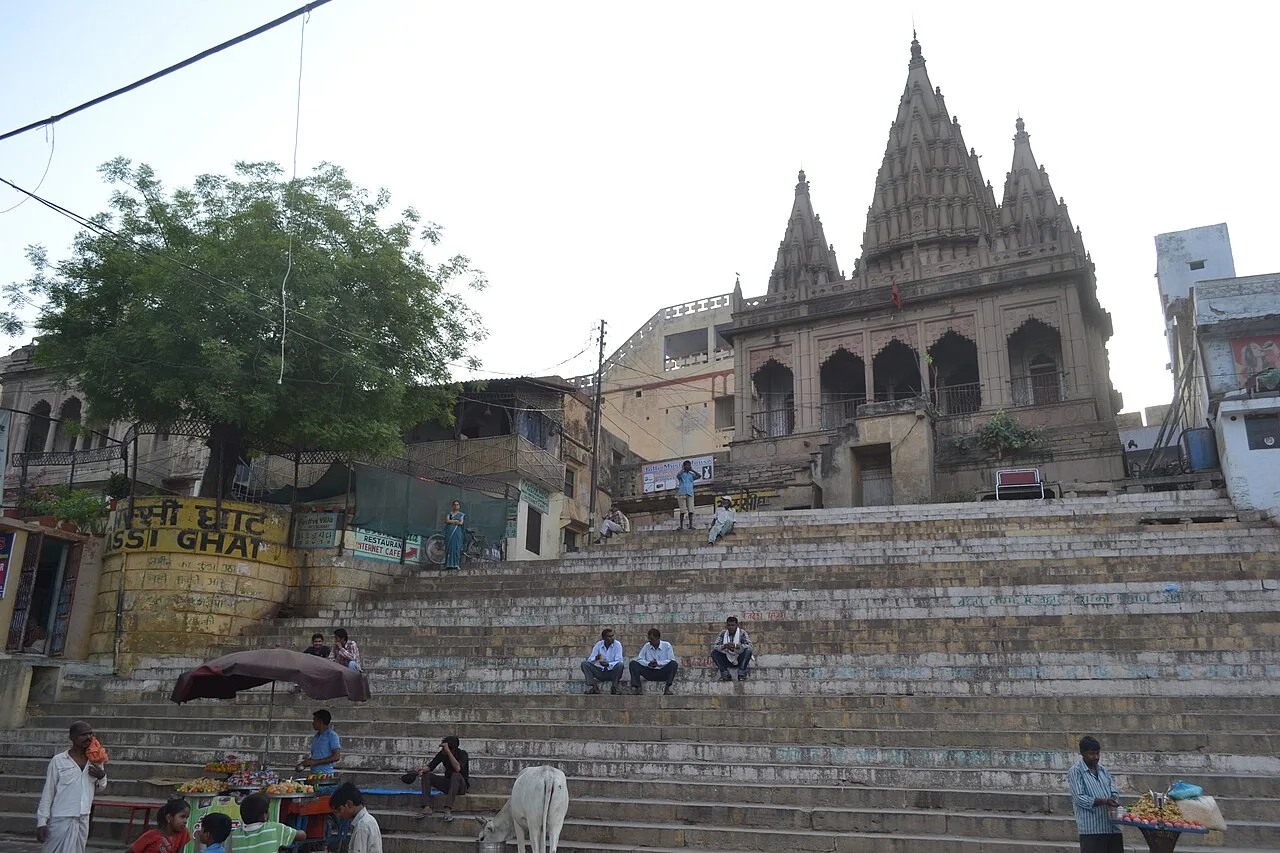
Assi Ghat
Assi Ghat is the southernmost ghat in Varanasi, Uttar Pradesh. Visitors know it as a place where foreign students, researchers and tourists stay, and where the morning cultural and spiritual event Subah-e-Banaras takes place.
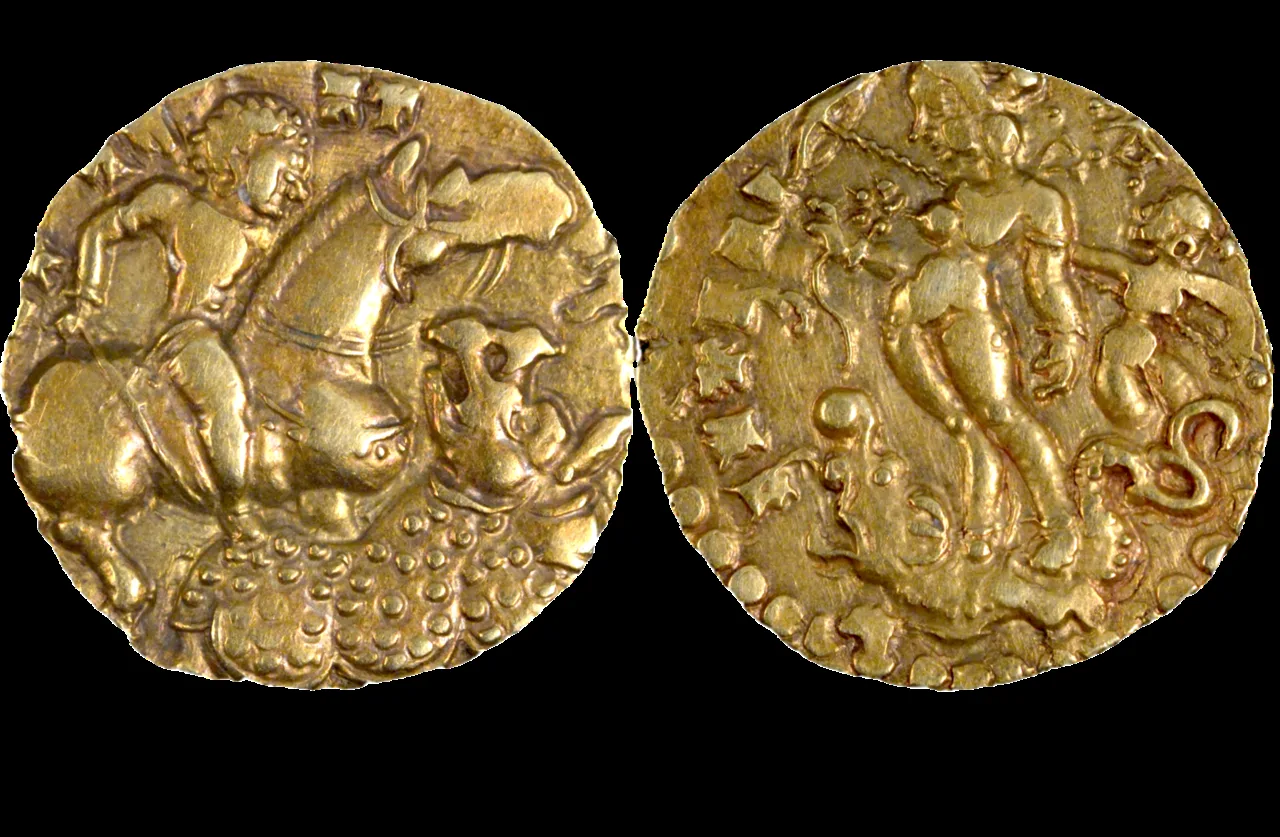
Bharat Kala Bhavan
Bharat Kala Bhavan is a university museum within Banaras Hindu University in Varanasi. Visitors can learn about its contribution to knowledge of Indian art and culture and its place among the university’s and city’s attractions.
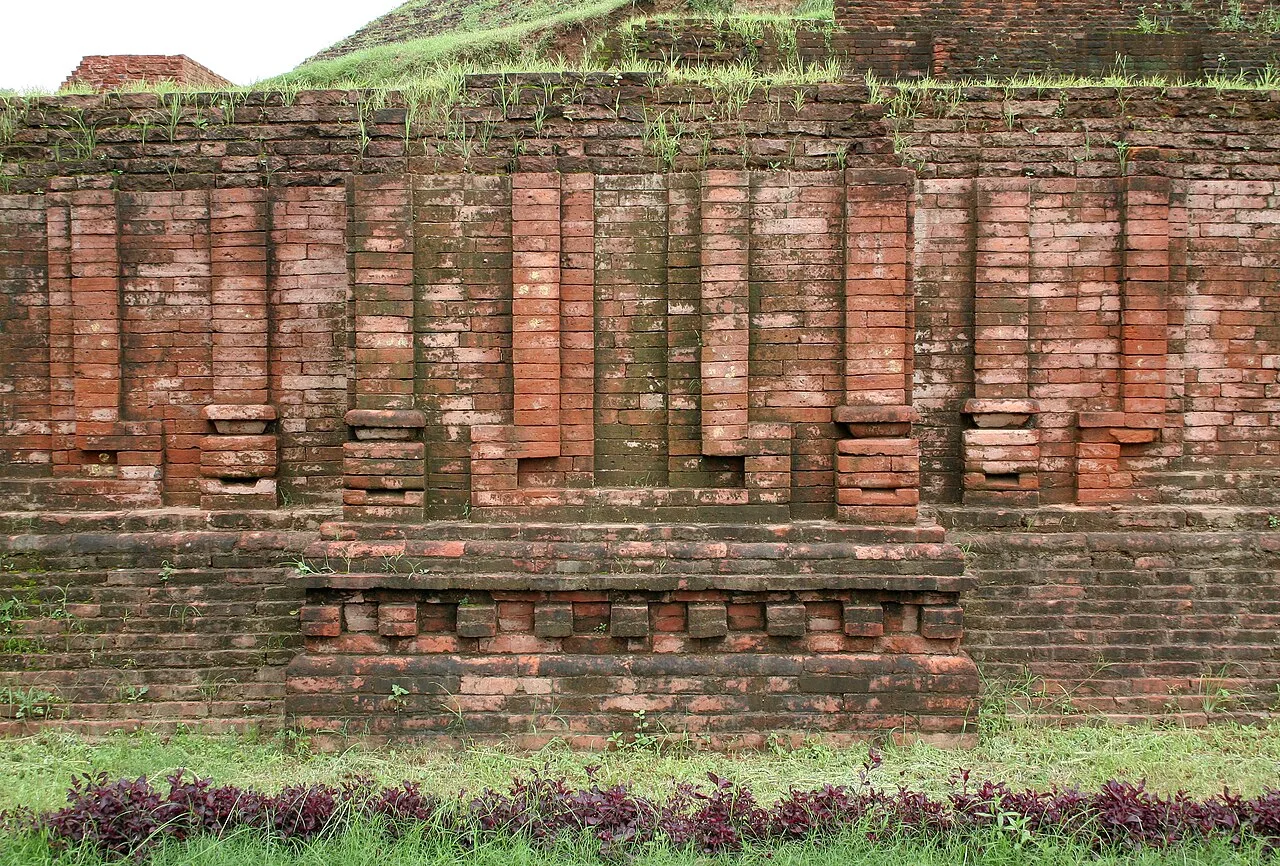
Chaukhandi Stupa
Chaukhandi Stupa is a Buddhist monument at Sarnath in Uttar Pradesh’s Varanasi district. Visitors come to see this nationally important site, recognised by the Archaeological Survey of India in 2019.
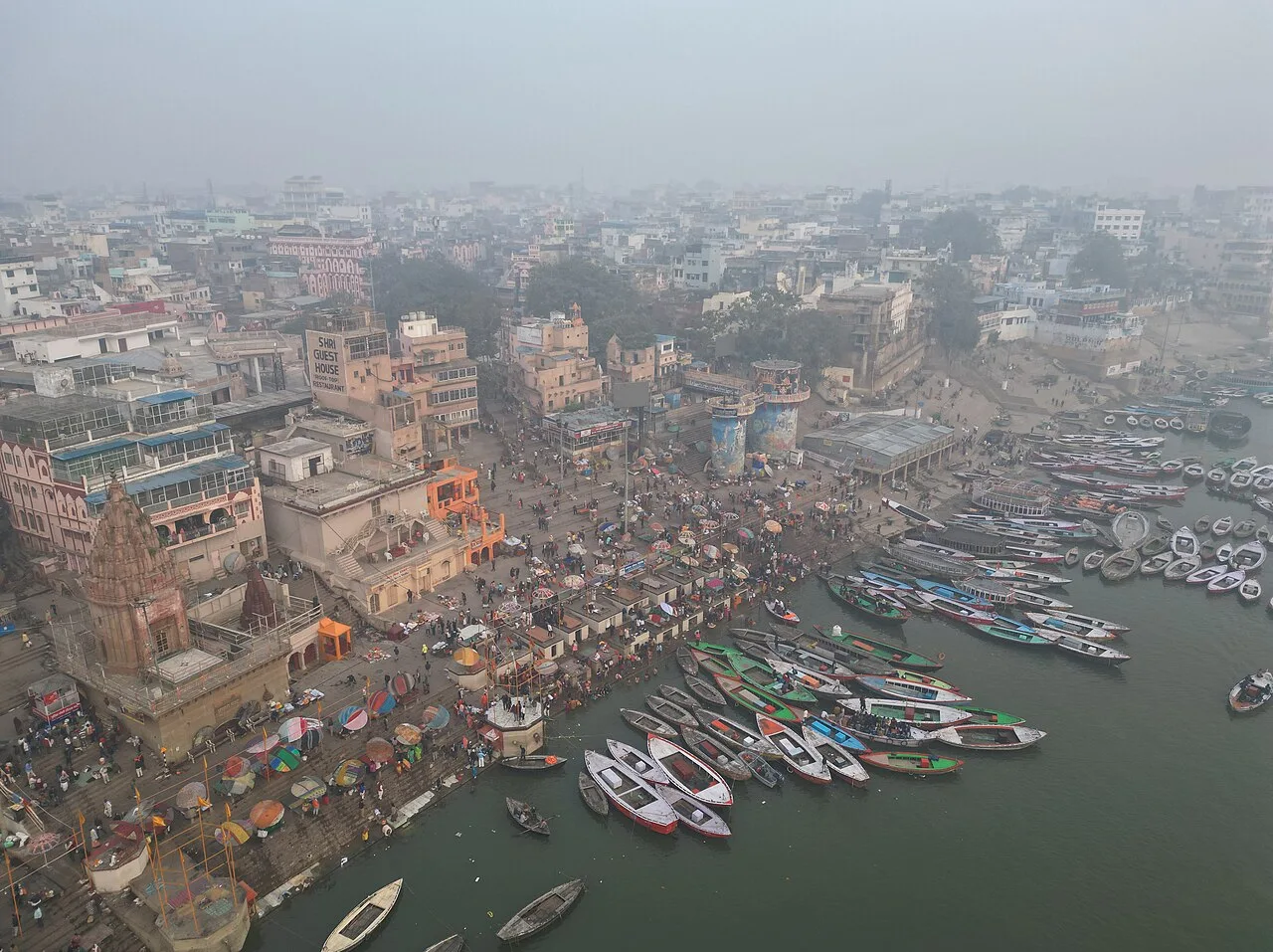
Dashashwamedh Ghat
A prominent riverside ghat in Varanasi, Dashashwamedh is visited for its connection to Hindu legends and the city’s history, as well as its position beside the Ganges and near Vishwanath Temple.
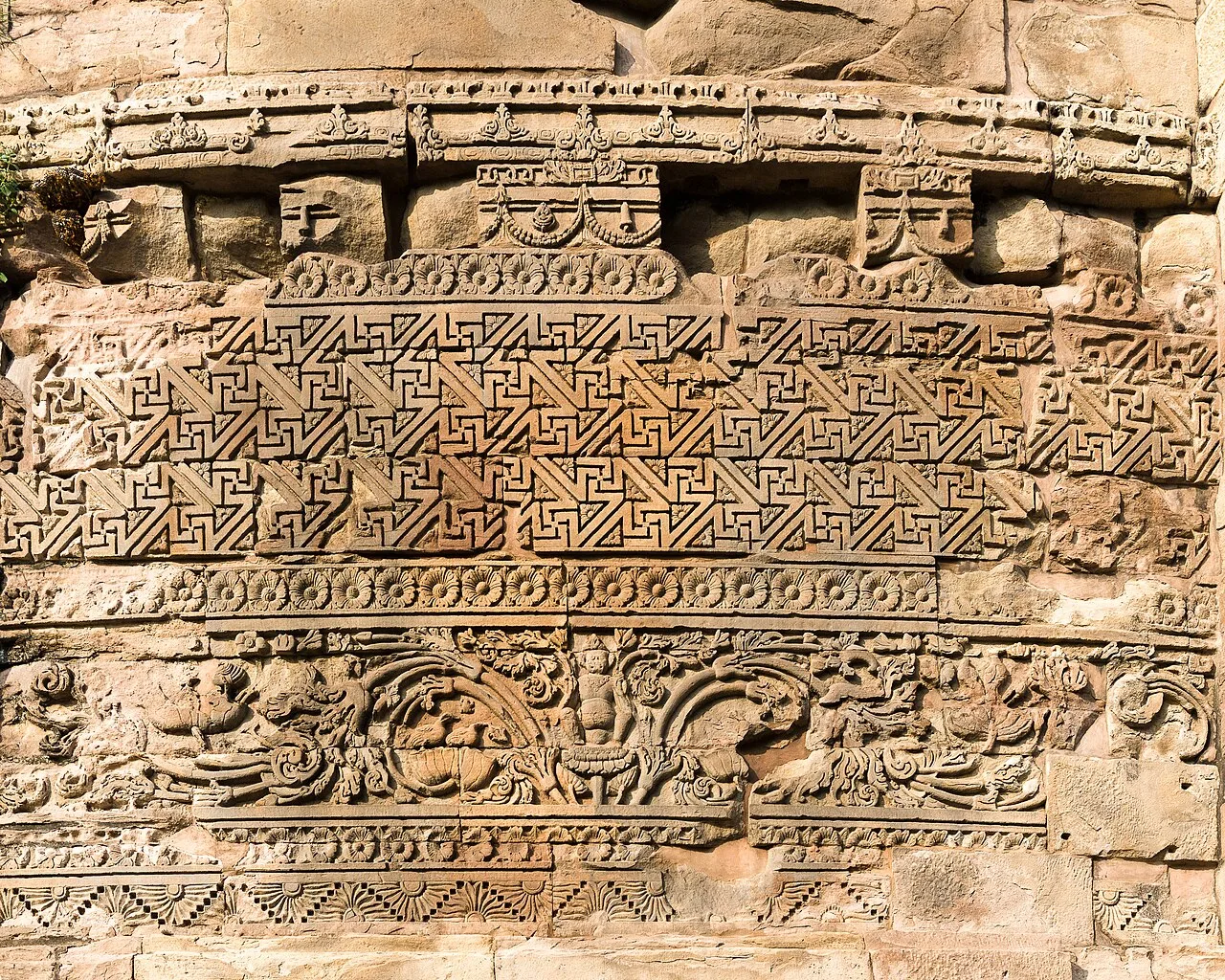
Dhamek Stupa
Dhamek Stupa is a large Buddhist monument at Sarnath in Uttar Pradesh, associated with the Buddha’s first teaching and visited as an important pilgrimage place.
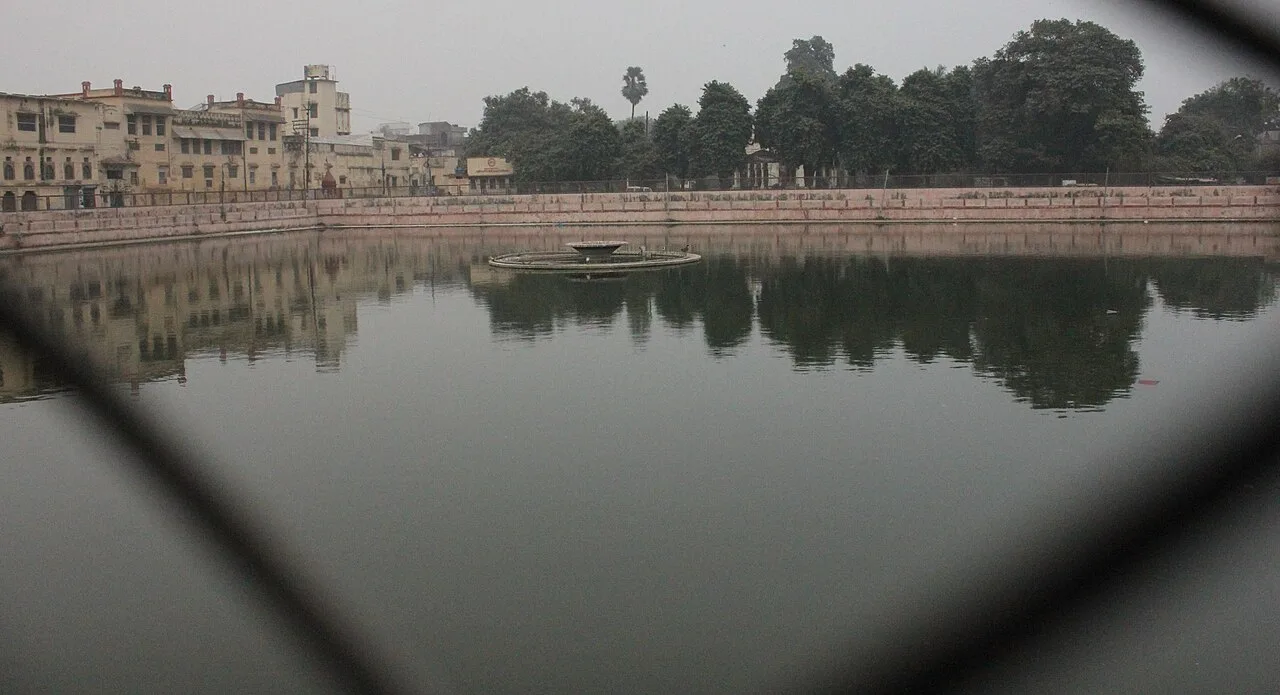
Durga Kund Mandir
Durga Kund Mandir is a Hindu shrine to Durga in Varanasi district, Uttar Pradesh. People visit for its religious significance and its place among the city’s well-known temples.
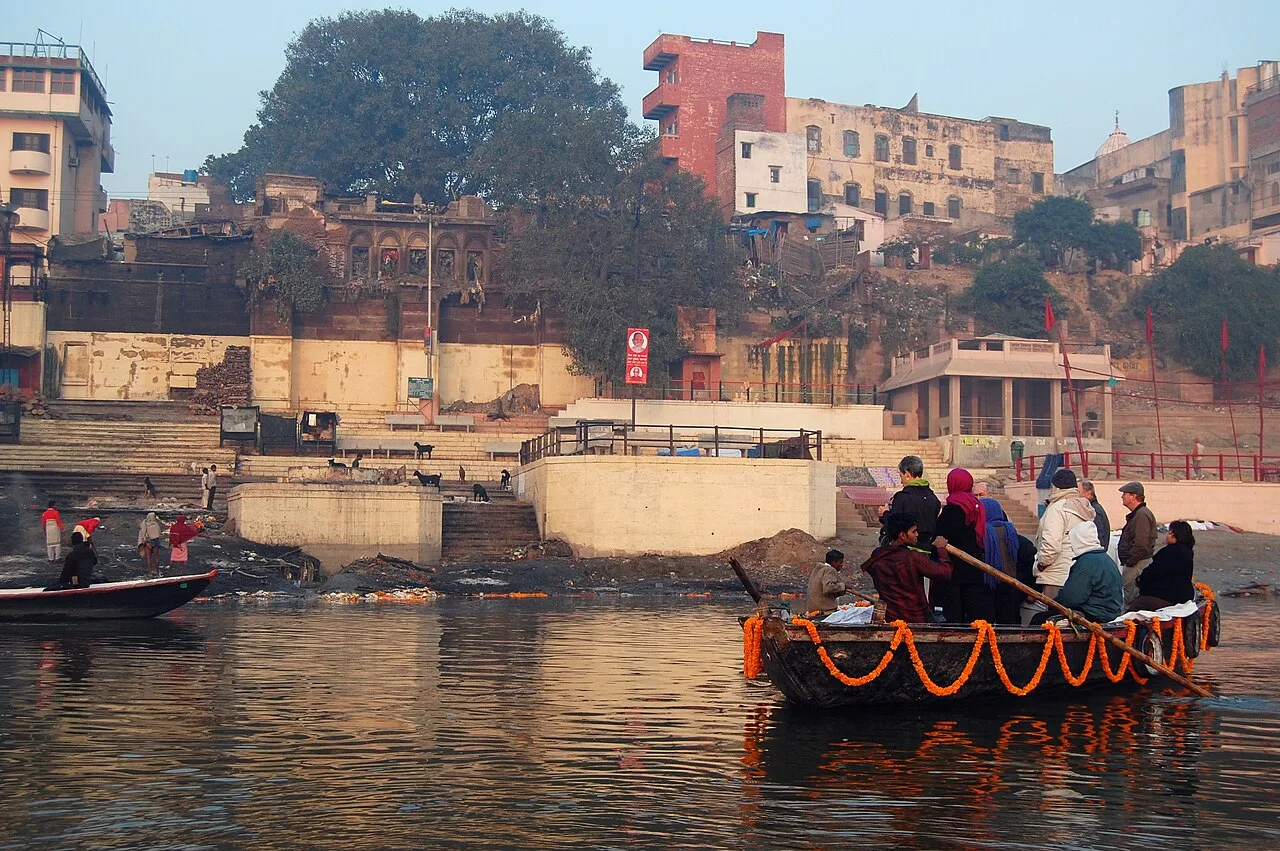
Harishchandra Ghat
Located in Uttar Pradesh’s Varanasi district, Harishchandra Ghat is recognised as a heritage site. Visitors may be interested in seeing it because of this heritage designation.
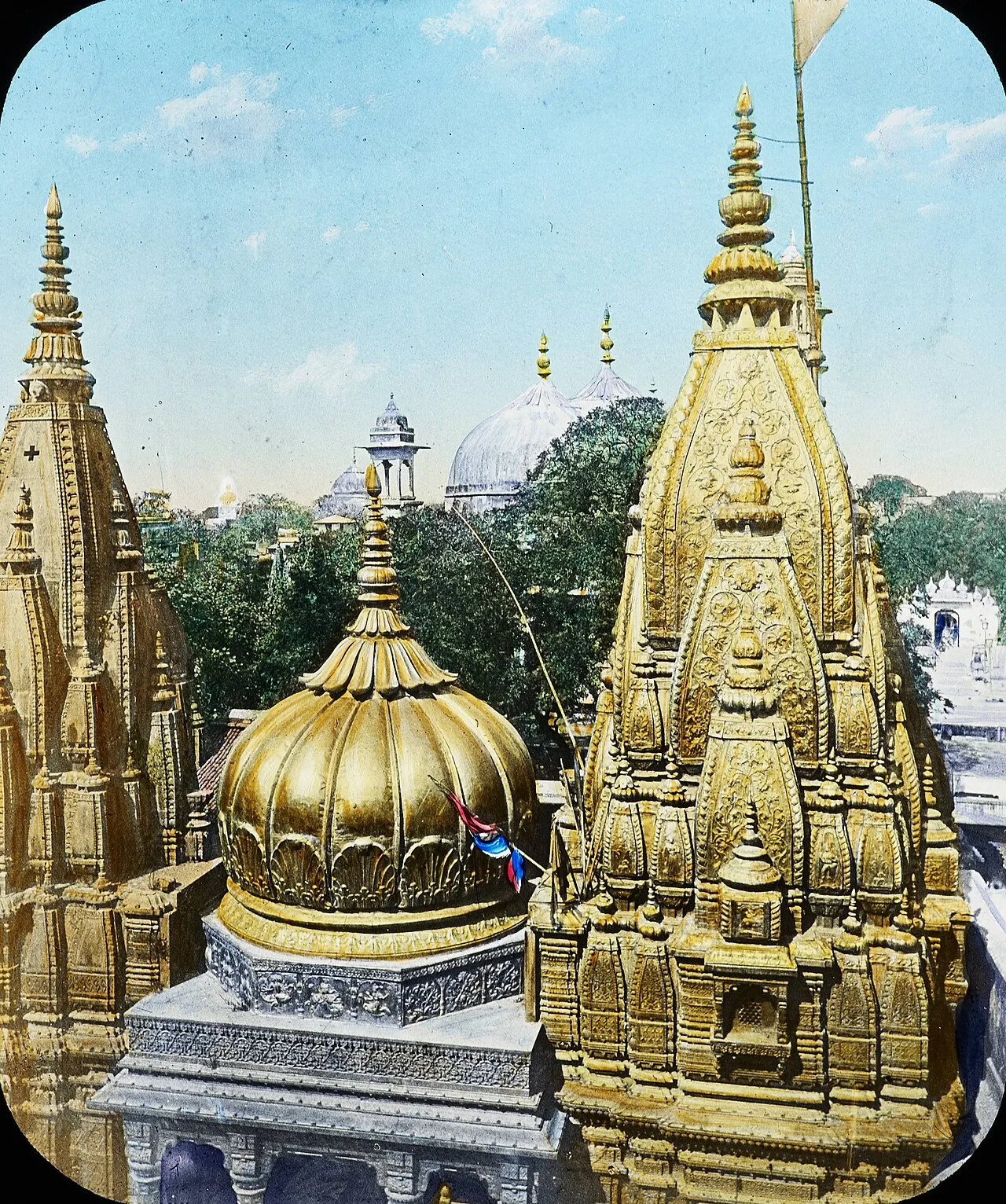
Kashi Vishwanath Temple
Kashi Vishwanath Temple is a Shiva shrine in Varanasi and one of the twelve Jyotirlinga sites. Hindu pilgrims visit to worship Shiva, revered here as Vishwanath or Vishweshwara.
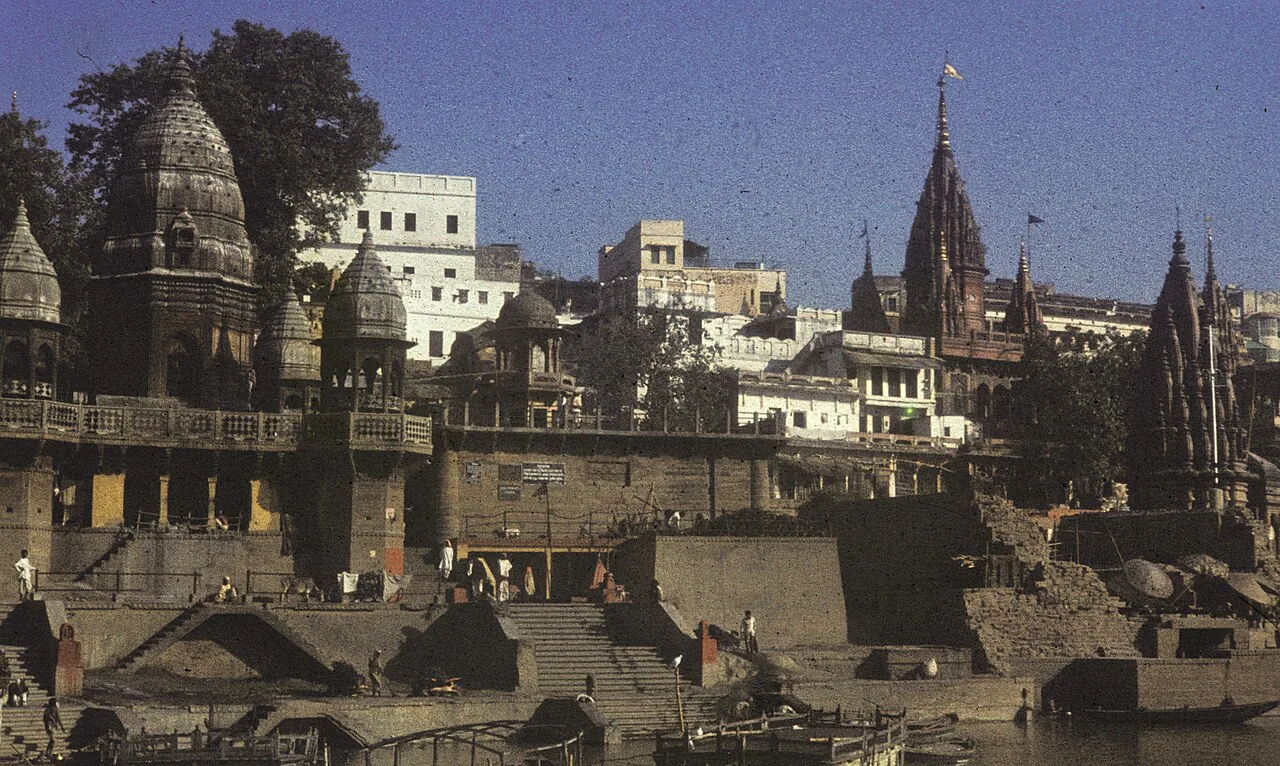
Manikarnika Ghat
Manikarnika Ghat is a sacred Ganges-side site in Varanasi, Uttar Pradesh, visited for Hindu rites and cremations and revered for beliefs about moksha.
Varanasi’s food traditions are especially rewarding at breakfast and in its snack shops. Kachori-sabzi pairs fried breads with spiced vegetable curry, while tamatar chaat is a distinctive local favourite built around cooked, seasoned tomatoes. Thick lassi served in kulhads, or earthen cups, is another familiar treat. In winter, look for malaiyyo, a delicate, airy milk sweet whose availability depends on the season. Banarasi paan is closely associated with the city; ask about its ingredients, particularly tobacco or areca nut. Choose busy stalls preparing food freshly, and ask what has been made that day rather than expecting an extensive menu.
Banarasi silk weaving is the district’s best-known craft tradition, particularly saris and brocades with intricate floral patterns and zari ornament. Weaving communities in and around Varanasi sustain skills passed through generations, although shops sell both handwoven and machine-made textiles. Ask about the fibre, weaving method and provenance before buying. Wooden toys and lacquered decorative objects are also associated with Varanasi and the surrounding region. For a broader introduction to artistic heritage, Bharat Kala Bhavan at Banaras Hindu University provides a useful complement to exploring textile shops and craft workshops.
Maha Shivaratri, usually in February or March, draws worshippers to Shiva temples, while Holi brings neighbourhood celebrations in spring. Dev Deepawali, observed around the Kartik full moon after Diwali, is marked by lamps along the riverfront and can bring very large crowds. The Ganga Mahotsav is generally held in the autumn, with cultural programmes and increased visitor activity. Chhath, usually in autumn, is observed at riverbanks and ponds. During major festival periods, roads and ghats become busier, access may be restricted, and accommodation in Varanasi can fill early; book ahead and allow extra travel time.
In this district
Elsewhere in Uttar Pradesh
The district lies on the flat, fertile Gangetic plain. The Ganga is its defining river, with Varanasi’s ghats stepping down to the water; the Varuna and Assi streams are reflected in local place names and drainage. Sarnath sits on the plain northeast of the city. There are no significant hills or extensive forests in the district, and much of the countryside is cultivated. The river, dense urban lanes and broad agricultural surroundings shape different kinds of travel: walking is often most practical near the ghats, while road journeys connect the city with Sarnath, Ramnagar and rural settlements. Monsoon conditions can affect riverfront access and local roads.
Varanasi has hot summers, a monsoon season and cooler winters. Summer, broadly from spring into early monsoon, can make midday sightseeing tiring; carry sun protection, light clothing and water. Monsoon rains usually arrive in summer and continue into the early autumn, bringing humidity and the possibility of waterlogged streets or changing river conditions. Winter, from late autumn through early spring, is generally the most comfortable period for walking and outdoor visits, though mornings and evenings can be cool or foggy. October to March is a useful broad window for a visit. Pack comfortable walking shoes, modest clothing for religious sites, a light warm layer for winter and rain protection during the monsoon.
Lal Bahadur Shastri International Airport serves Varanasi. Major rail gateways include Varanasi Junction, also called Varanasi Cantt, and Banaras station, formerly Manduadih; choose according to your train and accommodation. National highways connect the district with Prayagraj, Lucknow and other regional centres, with government and private buses providing road options. Within the city, taxis, auto-rickshaws and e-rickshaws cover many journeys, while narrow lanes near the ghats often require walking. Sarnath can be reached by road from the city. Allow extra time for congestion, festivals and riverfront access restrictions, and check current services locally.
Varanasi’s railway stations and central neighbourhoods are linked by roads, with buses, auto-rickshaws, e-rickshaws and taxis serving many parts of the city. Sarnath and Ramnagar can be reached by road; local buses and shared vehicles may be available, while taxis offer a more direct option. Narrow lanes around the ghats are often inaccessible to vehicles, so expect to walk and allow time for crowds and traffic. Boats operate on the Ganga, but routes and access can vary with river conditions and local rules. Check current arrangements locally, especially during festivals or high water.
2 days: Dashashwamedh Ghat → Kashi Vishwanath Temple → Manikarnika Ghat → Panchganga Ghat; then Assi Ghat → Harishchandra Ghat → Tulsi Manas Mandir → Durga Kund Mandir. Sleep both nights in Varanasi. 3 days: Sarnath Buddhist Site → Dhamek Stupa → Chaukhandi Stupa; then Dashashwamedh Ghat → Kashi Vishwanath Temple → Manikarnika Ghat → Panchganga Ghat; then Assi Ghat → Sankat Mochan Hanuman Temple → Bharat Kala Bhavan. Sleep all nights in Varanasi. 4 days: Sarnath Buddhist Site → Dhamek Stupa → Chaukhandi Stupa; then Dashashwamedh Ghat → Kashi Vishwanath Temple → Manikarnika Ghat → Panchganga Ghat; then Assi Ghat → Harishchandra Ghat → Tulsi Manas Mandir → Durga Kund Mandir → Sankat Mochan Hanuman Temple → Bharat Kala Bhavan; then Ramnagar Fort. Sleep all nights in Varanasi.
Varanasi city is the most practical base for the ghats, temples, museums and day visits to Sarnath and Ramnagar. Accommodation ranges from hotels and guesthouses to homestays and dharamshalas; some properties are in narrow lanes where luggage access may be difficult. Staying near the riverfront offers close access to the ghats, while areas around major roads and transport hubs can be easier for vehicle pick-up. Sarnath has a quieter setting and some lodging, but visitors generally find a wider choice of stays in Varanasi. Book ahead for major festivals.
Expect uneven steps, slippery riverfront surfaces and dense crowds around the ghats and temples; keep valuables secure and follow local instructions. River currents can be strong, so avoid swimming and use caution when boarding boats. Drink treated or sealed water and take precautions against summer heat and monsoon rain. Roads can be congested, and narrow lanes may not admit vehicles; allow extra time and use care when walking near traffic. Mobile connectivity is generally available in the city but may be unreliable in crowded areas. Be respectful at cremation ghats and do not photograph people without permission. Check current access rules locally; ordinary sightseeing does not usually require a protected-area permit.
- Mirzapurabout 37 km
- Chandauliabout 52 km
- Jaunpurabout 60 km
- Kaimur · Biharabout 66 km
- Sonbhadraabout 80 km
- Buxar · Biharabout 102 km
- Rohtas · Biharabout 112 km
- Prayagrajabout 118 km
Straight-line distance between the centres of each district's destinations; road distance is longer.
Q: How many days should I spend in Varanasi district? A: Two days allow time for major city sights; three or four days provide room for Sarnath, museums and Ramnagar. Q: When is the best time to visit? A: October to March is generally the most comfortable season for outdoor sightseeing, though festival periods are busier. Q: Where is the best base for sightseeing? A: Varanasi city is the most convenient base for the ghats, temples and trips to Sarnath and Ramnagar. Q: How do I get to the district? A: Lal Bahadur Shastri International Airport, Varanasi’s railway stations and regional road links connect the district with other parts of India. Q: Is Varanasi suitable for families or elderly travellers? A: Yes, with planning; crowds, steps, uneven lanes and limited vehicle access near the ghats can make some visits tiring.
This page draws on our 14 destination guides for Varanasi and is updated as our team checks it.
Be the first to share photos, stories, advice or a helpful contact for Varanasi.
Loading…