
District · Uttar Pradesh
Gautam Buddh Nagar
Gautam Buddh Nagar is a western Uttar Pradesh district on the edge of Delhi and part of the National Capital Region.
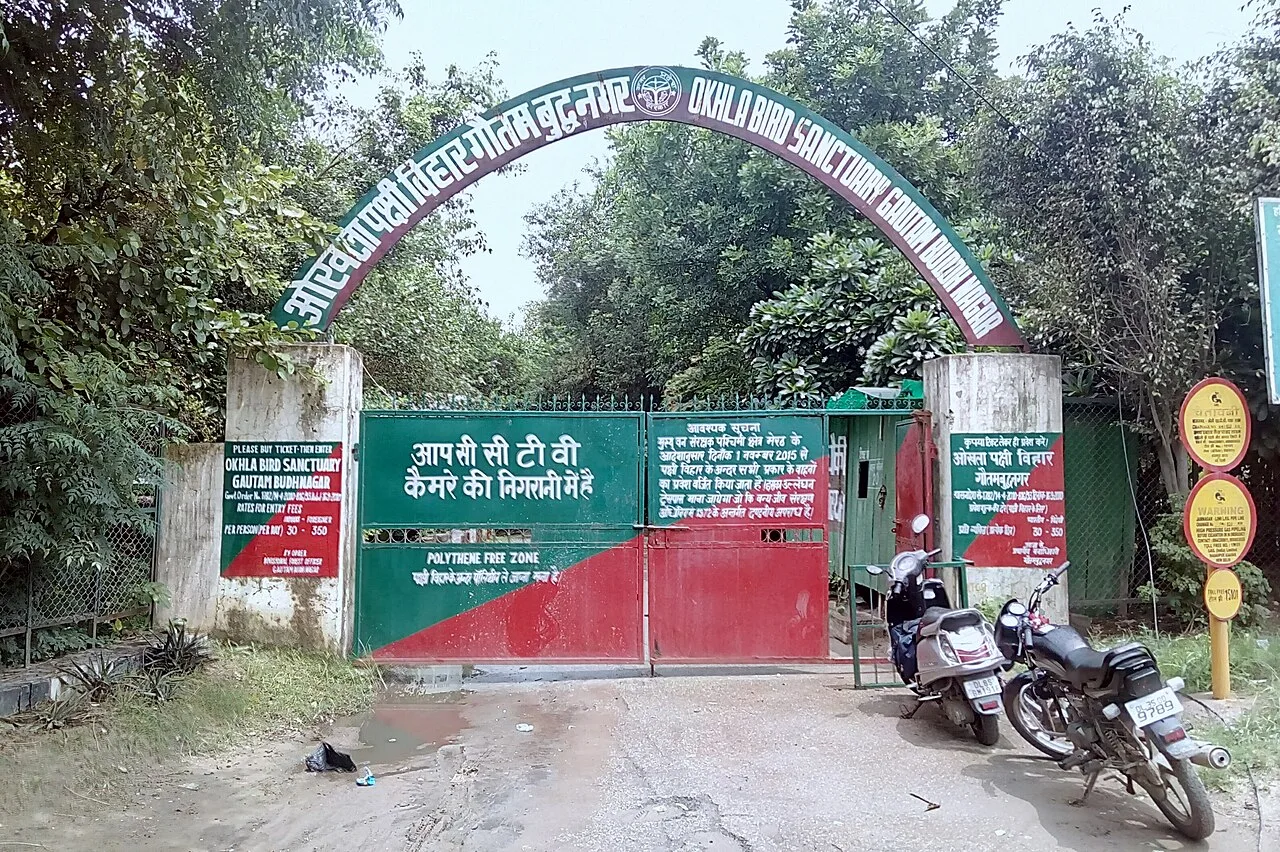
Gautam Buddh Nagar lies in western Uttar Pradesh, adjoining Delhi, where the Yamuna and Hindon shape a landscape of riverbanks, wetlands and alluvial plains. Its best-known urban centres, Noida and Greater Noida, combine planned neighbourhoods, business districts and industrial estates, while villages and farmland remain part of the district’s character. Created in 1997 and named after Gautama Buddha, the district has grown rapidly within the National Capital Region. Okhla Bird Sanctuary, centred on the Yamuna at the Okhla barrage, offers a contrasting waterside environment important for resident and migratory birds. The district is best understood through this meeting of metropolitan development, older rural settlements and vulnerable river habitats.
Gautam Buddh Nagar is a western Uttar Pradesh district on the edge of Delhi and part of the National Capital Region. Its urban centres, Noida and Greater Noida, are known for planned neighbourhoods, business districts and industrial estates, while villages and farmland remain part of the surrounding landscape. The district’s most distinctive nature outing is Okhla Bird Sanctuary, where the Yamuna and its wetlands provide habitat for resident and migratory birds. A visit offers a view of how a fast-growing metropolitan region meets older rural settlements and vulnerable river environments. It suits travellers interested in urban development, birdlife and the changing landscapes of the Delhi region.
The area that now forms Gautam Buddh Nagar has long been part of the wider western Uttar Pradesh and Delhi-Doab region, where settlements and agricultural life developed around fertile alluvial land and river systems. Over many centuries, the wider region came under successive powers, including the Delhi Sultanate and the Mughal Empire; the fortunes of individual villages were tied to changing regional administrations rather than to a single local capital. Under British rule, settlements in the present district were administered through larger surrounding districts. After independence, the area became part of Uttar Pradesh. Noida was established in 1976 under the New Okhla Industrial Development Authority, marking a major shift toward planned urban and industrial growth. Greater Noida followed as a planned development area. Gautam Buddh Nagar district was created in 1997 from parts of the surrounding districts and named after Gautama Buddha. Its recent history has been shaped by rapid expansion within the National Capital Region, alongside the continuing presence of villages, farmland and river habitats.
Food in Gautam Buddh Nagar reflects western Uttar Pradesh and the wider Delhi region rather than a single distinctive district cuisine. Wheat rotis, parathas, dal, seasonal vegetables, curd and pickles are familiar everyday choices. Markets and neighbourhood eateries offer samosas, kachori-sabzi, jalebi and several varieties of chaat, while lassi and milk-based sweets reflect broader north Indian tastes. Noida and Greater Noida also have diverse restaurant scenes shaped by their migrant populations. Awadhi kebabs and biryani may appear on menus, but belong to a wider Uttar Pradesh tradition. Choose busy stalls preparing food freshly.
Gautam Buddh Nagar is better known for its modern urban and industrial economy than for a single widely recognised heritage craft. For regional context, nearby Khurja in Bulandshahr district is an established centre of glazed pottery and ceramics, including tableware and decorative pieces. Embroidery, woven textiles and woodwork sold in Noida may come from elsewhere in Uttar Pradesh or across India, so a local shop does not establish local origin. Ask sellers where an item was made and whether they can identify its artisan or workshop.
Residents celebrate major North Indian festivals including Holi, Diwali, Navratri, Eid and, in some communities, Chhath. These are observed across Noida, Greater Noida and village neighbourhoods, with local customs varying by community. Holi and Diwali usually bring busy markets and increased travel; Navratri and Eid can also draw crowds around places of worship and shopping areas. Chhath observances near water may make some riverfront areas busier during the season. Large exhibitions, conventions and business events in the wider Noida–Greater Noida area can also tighten room availability, so visitors should check the local events calendar.
Elsewhere in Uttar Pradesh
The district is largely level, with alluvial plains, cultivated land and densely built-up urban areas rather than hills or extensive forests. The Yamuna forms its western edge, while the Hindon and associated low-lying areas shape parts of the local landscape. Wetlands around the Okhla barrage support birdlife and offer a contrast to the surrounding roads and development. Rivers, seasonal waterlogging and expanding construction can influence routes, especially during the monsoon. Distances between neighbourhoods may feel longer in traffic, so plan travel by area rather than expecting a compact, walkable sightseeing circuit.
Gautam Buddh Nagar has hot summers, a monsoon season and cool winters. Summer days can be intensely hot, so outdoor visits are more comfortable early or later in the day, with sun protection and water. Monsoon weather brings humidity and rain, and some roads or low-lying areas may be affected by waterlogging. Winter is generally the most comfortable season for visiting, including birdwatching at Okhla Bird Sanctuary, though mornings can be chilly, foggy or affected by poor air quality. October to March is usually a practical travel window. Pack light clothing for warmer months, a rain layer in the monsoon, and warm layers for winter mornings.
Indira Gandhi International Airport in Delhi is an established air gateway for Gautam Buddh Nagar. Hazrat Nizamuddin railway station is useful for reaching the Okhla Bird Sanctuary side of Noida, though the most convenient station depends on your destination. Road access includes links from Delhi, the Noida–Greater Noida Expressway and the Yamuna Expressway. Delhi Metro services connect parts of Noida with Delhi, while the Aqua Line links Noida and Greater Noida. Buses, taxis, auto-rickshaws and e-rickshaws cover onward journeys; allow for traffic and transfers between networks. Check current services locally.
Noida and Greater Noida are connected by major roads, including the Noida–Greater Noida Expressway, while the Yamuna Expressway serves onward regional journeys. Delhi Metro connects parts of Noida with Delhi, and the Aqua Line links Noida with Greater Noida; transfers may be needed depending on your destination. Local buses, taxis, auto-rickshaws and e-rickshaws are available, but coverage and frequency vary by neighbourhood. For Okhla Bird Sanctuary, check the most convenient metro or road approach for your starting point. Traffic can be heavy, so allow extra time and confirm current services locally.
2 days: Okhla Bird Sanctuary; sleep in Noida. 3 days: Okhla Bird Sanctuary; sleep in Noida on both nights, allowing a slower visit and time to explore the district at your own pace.
Noida is the most convenient base for visiting Okhla Bird Sanctuary and for travellers connecting with Delhi. Greater Noida can suit visitors whose plans centre on that side of the district or on events and business venues there. Accommodation ranges from hotels and serviced apartments to guesthouses; homestays and dharamshalas may be available in some localities, but choice varies. For either base, check the location against your planned journeys, since traffic and transfers can make cross-district trips take longer than expected.
Urban areas have extensive services, but traffic, crowded roads and uneven footpaths call for care, especially when crossing streets or travelling with children and older visitors. Summer heat requires water, sun protection and breaks; monsoon showers can cause waterlogging, while winter fog and poor air quality may affect travel. At Okhla Bird Sanctuary, keep to permitted visitor areas, avoid feeding or disturbing birds, and check current entry rules with official sources before visiting. No special permit requirement is assumed here; confirm any rules officially. Use sealed or treated drinking water, and expect mobile connectivity to be stronger in built-up areas than at some river edges.
- South East Delhi · Delhiabout 5 km
- East Delhi · Delhiabout 6 km
- New Delhi · Delhiabout 10 km
- Central Delhi · Delhiabout 12 km
- South Delhi · Delhiabout 12 km
- Faridabad · Haryanaabout 16 km
- North Delhi · Delhiabout 18 km
- Gurugram · Haryanaabout 29 km
Straight-line distance between the centres of each district's destinations; road distance is longer.
Q: How many days should I spend in Gautam Buddh Nagar? A: One or two days can cover Okhla Bird Sanctuary and allow time for local travel; add a day if you want a slower pace. Q: When is the best time to visit? A: October to March is generally the most comfortable period, with winter also a good season for birdwatching. Q: Where is the best base for a visit? A: Noida is convenient for Okhla Bird Sanctuary and links with Delhi; Greater Noida suits plans focused on that side of the district. Q: How do I get to the district? A: Delhi’s Indira Gandhi International Airport is an established air gateway. Rail and metro choices depend on your destination; road links connect the district with Delhi and nearby areas. Q: Is the district suitable for families or elderly travellers? A: Yes, especially with transport planned in advance. Choose comfortable travel times, allow for traffic, and take care with heat, winter air quality and uneven walking surfaces.
This page draws on our 1 destination guides for Gautam Buddh Nagar and is updated as our team checks it.
Be the first to share photos, stories, advice or a helpful contact for Gautam Buddh Nagar.
Loading…