
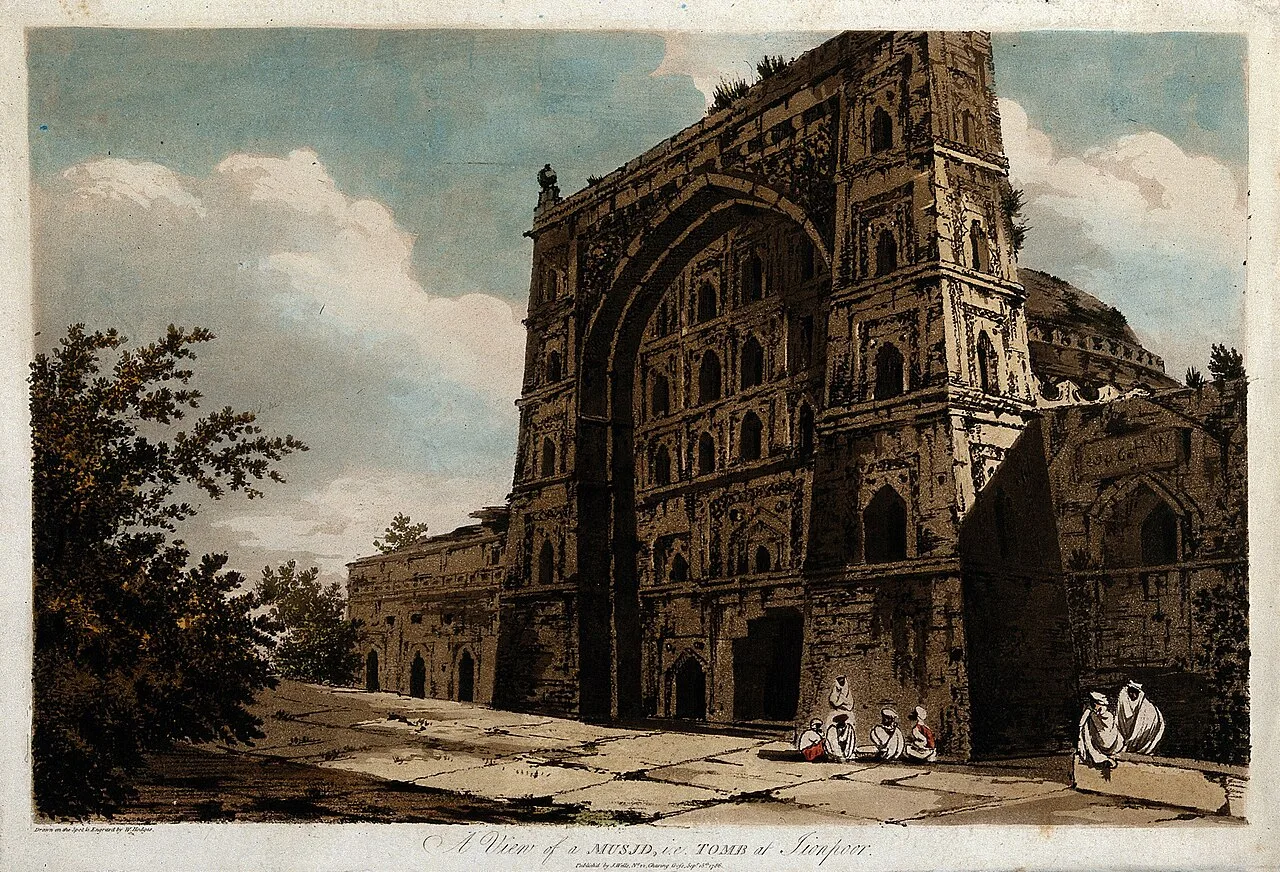
District · Uttar Pradesh
Jaunpur
Jaunpur offers a compact introduction to eastern Uttar Pradesh’s history and everyday life.
Jaunpur district lies in the fertile plains of eastern Uttar Pradesh, where the Gomti River winds through a landscape of cultivated fields, towns and villages. Its character reflects both rural life and a prominent medieval past. Jaunpur became the capital of the Sharqi sultanate, whose legacy is visible in landmarks such as Atala Mosque. Later Mughal-era works include Shahi Bridge over the Gomti. These monuments give the district a distinctive architectural identity, while Jaunpur town remains a regional centre for trade and transport. Visitors will find a place shaped by successive periods of history, set within the wider cultural landscape of eastern Uttar Pradesh.
Jaunpur offers a compact introduction to eastern Uttar Pradesh’s history and everyday life. Set in the fertile plains around the Gomti River, the district is known chiefly for the architectural legacy of the Sharqi sultanate, especially Atala Mosque, and for the Mughal-era Shahi Bridge. Jaunpur town is also a regional centre for trade and transport, making it a practical base for exploring the area. Visitors can combine medieval monuments with a sense of the working town and its surrounding agricultural landscape. Its location within the wider cultural region of eastern Uttar Pradesh makes Jaunpur a useful stop for travellers moving between Varanasi and other regional centres.
Jaunpur’s best-known historical period began in the late 14th century, when the Delhi Sultanate’s Tughlaq ruler Firoz Shah Tughlaq established or developed the city and named it after Muhammad bin Tughluq, also known as Jauna Khan. In the political changes that followed, Malik Sarwar founded the Sharqi dynasty, and Jaunpur became the capital of an independent sultanate. From the 15th century, the Sharqi rulers sponsored mosques and other buildings whose distinctive architectural forms remain a defining feature of the town. The sultanate was absorbed by the Lodi rulers of Delhi in the late 15th century. Jaunpur subsequently came under Mughal rule; the Shahi Bridge over the Gomti is associated with the Mughal period and the administration of Akbar. In the later 18th century, control in the region shifted through the changing relationship between the East India Company, the rulers of Awadh and the Banaras estate. Under British rule, Jaunpur was administered as a district. After independence it became part of Uttar Pradesh, retaining its role as a regional town amid predominantly agricultural surroundings.
2 destination guides
Atala Mosque
Atala Mosque, a 15th-century place of worship in Jaunpur, Uttar Pradesh, is visited by those wishing to see a historic mosque near the city’s Shahi Qila and Jama Mosque.
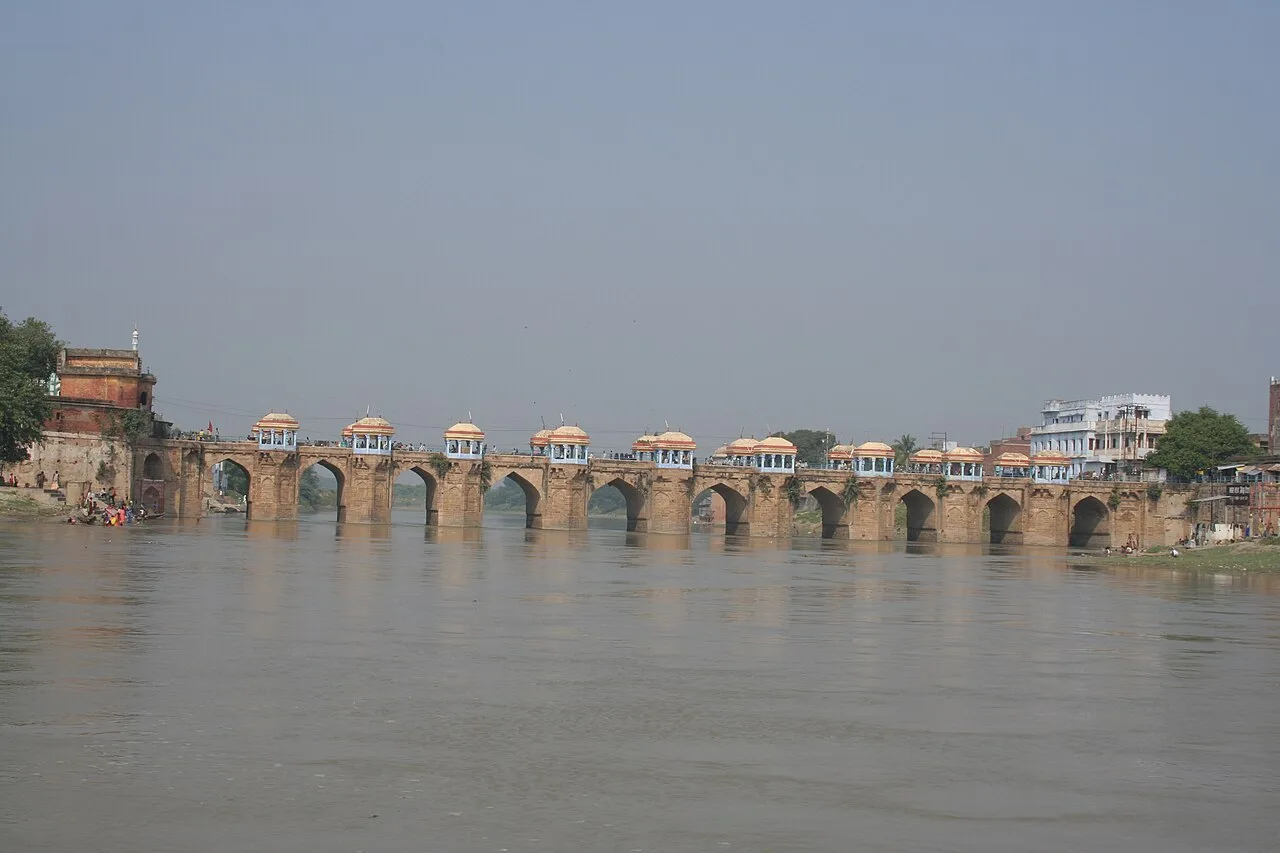
Shahi Bridge
Shahi Bridge is a 16th-century crossing over the Gomti in Jaunpur, Uttar Pradesh. Visitors come to see the historic bridge, which is also known by several other names.
Jaunpur is particularly associated with imarti, a deep-fried, syrup-soaked sweet often sold by local sweet shops. Everyday meals across the district draw on the wider eastern Uttar Pradesh repertoire: rice or roti with dal, vegetables and seasonal produce, alongside savoury snacks. Food varies between towns and villages, so ask what has been made fresh that day. Varanasi’s kachori-sabzi, tamatar chaat and paan belong to the broader regional food scene, but are not exclusive to Jaunpur. At street stalls, choose busy places where food is prepared freshly in front of you; many small eateries serve a limited daily menu.
Jaunpur’s most visible artistic legacy is its historic architecture: the district’s Sharqi-era monuments and Mughal bridge show the skill of regional builders and masonry workers. Across eastern Uttar Pradesh, handloom weaving, pottery and basketry are longstanding craft traditions, though what is made and sold varies from place to place. Jaunpur does not have a single widely documented signature craft that should be assumed available throughout the district. Local markets may offer everyday handmade goods, while the monuments provide the clearest view of the area’s historic architectural workmanship.
Holi and Diwali are widely observed, while Eid celebrations follow the Islamic calendar and can bring busy periods to Jaunpur town. Muharram is marked by processions and observances in some communities. Chhath, celebrated in the autumn, is important across parts of eastern Uttar Pradesh and may draw people to riverbanks and other water edges. Dussehra festivities also take place in the region. Crowds and local traffic can increase around major celebrations, and accommodation in town may be in greater demand. Festival dates vary each year, so check the calendar when planning a visit.
Elsewhere in Uttar Pradesh
Jaunpur lies in the level, fertile plains of eastern Uttar Pradesh. The Gomti River flows through the district and crosses Jaunpur town beneath the Shahi Bridge. Fields, villages and settled areas dominate the landscape; there are no major hill ranges or extensive forest areas to shape the usual visitor routes. Flat terrain generally makes road travel straightforward, though conditions can change during the monsoon, when rain may affect rural roads and riverbanks. In town, traffic and built-up streets, rather than difficult terrain, are the main considerations when moving between sights.
Jaunpur has hot summers, a monsoon season and cooler winters. Summer can make outdoor sightseeing tiring, particularly around the middle of the day. Monsoon rains bring greener fields but can also make roads wet or slow travel. Winter is generally the most comfortable season for exploring the town and its monuments. The cooler months, roughly from November to February, are a good choice for many visitors; the post-monsoon period can also be pleasant. Pack light, breathable clothing for warm weather, a light layer for winter evenings, sun protection and a rain jacket or umbrella during the monsoon. Check the forecast before travelling.
Jaunpur Junction is the principal railway station serving Jaunpur town, with rail connections to other cities in Uttar Pradesh and beyond. The nearest major operating airport is Lal Bahadur Shastri International Airport in Varanasi; continue from there by road or rail. Road links connect Jaunpur with Varanasi, Azamgarh, Sultanpur and other regional centres. Within town, auto-rickshaws and cycle-rickshaws are useful for short trips, while taxis or hired cars can suit visits beyond the centre. Allow extra time for road journeys, especially when travelling between towns. Check current rail, flight and local transport services locally before setting out.
Jaunpur town is the most convenient place to move between the district’s listed sights. Auto-rickshaws and cycle-rickshaws can be useful for short journeys; taxis or hired cars offer more flexibility. Local buses and shared vehicles connect Jaunpur with nearby towns and regional centres, though services and road conditions can vary. For visits beyond the town, arrange transport locally and allow extra time, especially during busy periods or the monsoon. The Gomti is part of the town’s landscape, but visitors should not assume that passenger boats are available as regular transport.
2 days: Atala Mosque → Shahi Bridge; sleep in Jaunpur town. 3 days: Atala Mosque → Shahi Bridge, with a relaxed additional day in Jaunpur town; sleep in Jaunpur town each night.
Jaunpur town is the most practical base for visiting both listed destinations and for accessing local transport. It generally offers hotels and other basic visitor accommodation, with more choice than smaller settlements in the district. Travellers making a slower regional journey may find guesthouses, dharamshalas or simple lodgings in nearby towns, but availability and standards vary. Homestays and government lodges should not be assumed to be available everywhere; confirm arrangements before setting out, particularly during major festivals or other busy travel periods.
Jaunpur’s listed sights are in a settled, mostly level area, but watch for traffic, uneven surfaces and steps around older buildings. Dress respectfully at places of worship and avoid disrupting prayer or ceremonies. Carry drinking water from a reliable source, use sun protection in hot weather and take care on wet roads and near riverbanks during the monsoon. Road journeys can take longer than expected, and connectivity may be less reliable outside town, so keep essential travel details accessible. Families and visitors with limited mobility should check access conditions at the monuments locally. No special permit is generally associated with visiting these town sights.
- Chandauliabout 59 km
- Varanasiabout 60 km
- Mirzapurabout 67 km
- Prayagrajabout 91 km
- Kaimur · Biharabout 123 km
- Ayodhyaabout 126 km
- Buxar · Biharabout 131 km
- Raebareliabout 132 km
Straight-line distance between the centres of each district's destinations; road distance is longer.
Q: How many days should I spend in Jaunpur? A: Two days are enough for the two listed sights at an unhurried pace; a third day allows more time in town. Q: When is the best time to visit? A: The cooler months, roughly November to February, are usually the most comfortable for sightseeing. Q: What is the best base for visiting the sights? A: Jaunpur town is the most practical base for both Atala Mosque and Shahi Bridge. Q: How do I get to Jaunpur? A: Jaunpur Junction serves the town by rail. The nearest major operating airport is Lal Bahadur Shastri International Airport in Varanasi; continue by road or rail. Q: Is Jaunpur suitable for families or elderly travellers? A: Yes, though traffic, steps and uneven surfaces at older monuments may require care; check access needs locally.
This page draws on our 2 destination guides for Jaunpur and is updated as our team checks it.
Be the first to share photos, stories, advice or a helpful contact for Jaunpur.
Loading…