
Vikramshila University Ruins
Vikramshila University Ruins mark a major Buddhist centre of learning in Bihar. Visitors come to explore the site and learn about its scholars and place in Buddhist education.
Key facts · verified by Ghumoopedia editors
- Type of place
- Heritage monument
- Best time to visit
- October to March
- Nearest railway station
- Bhagalpur Junction · about 30 km (straight line)
- Nearest airport
- Deoghar Airport · about 115 km (straight line)
- Verified
- 21 Nov 2026
Plan a trip from Vikramshila University Ruins — a day-by-day route through places nearby.
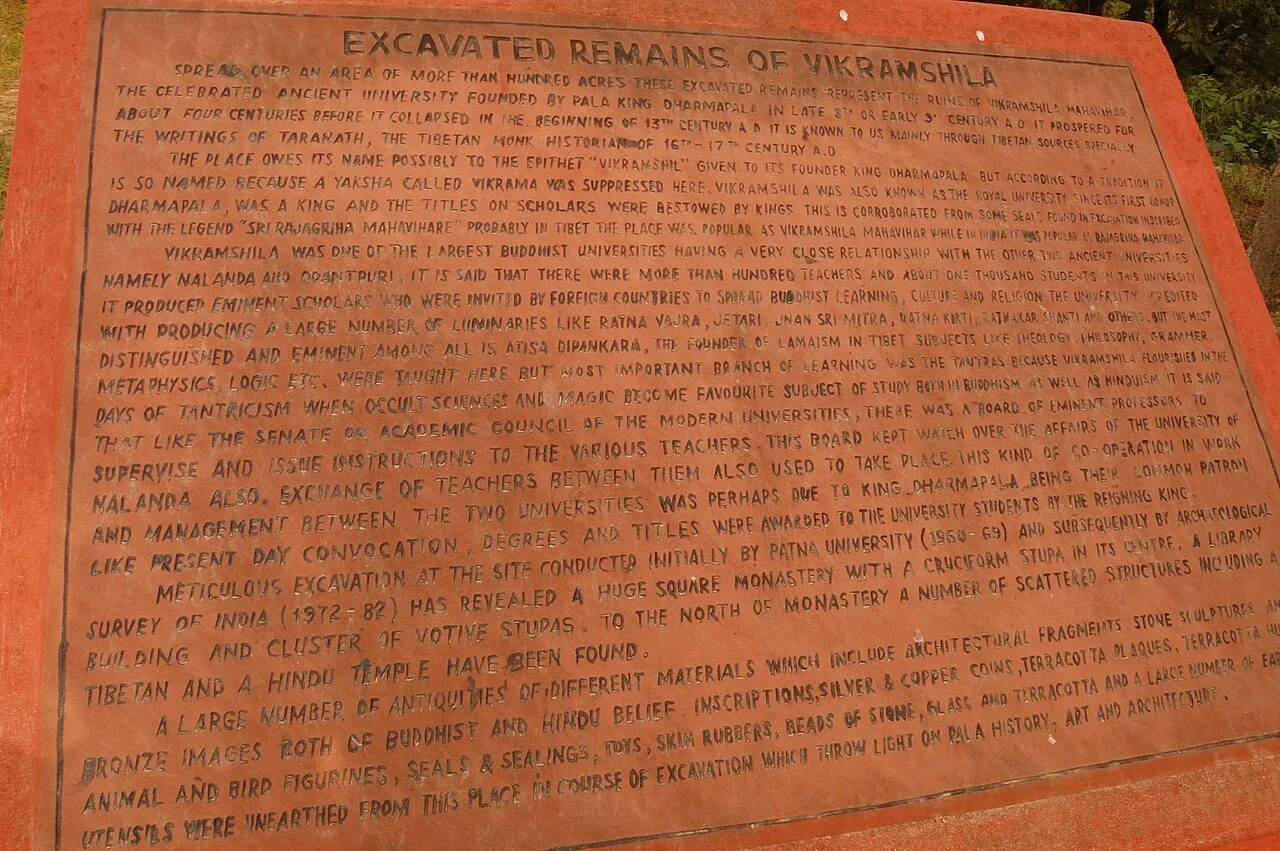
The remains of Vikramshila stand at Antichak, near Kahalgaon, in Bihar’s Bhagalpur district. The site marks a Buddhist residential centre of learning, founded under Pala ruler Dharmapala in the closing years of the eighth century or opening years of the ninth. In its era, Vikramshila ranked among India’s three leading Buddhist mahaviharas, alongside Nalanda and Odantapuri. It was a major institution, with a faculty exceeding one hundred and a student body of roughly a thousand. Its establishment is attributed to Dharmapala as a response to concerns that standards of scholarship at Nalanda had weakened. The institution nurtured notable thinkers, including Atiśa and Ratnākaraśānti, who were invited abroad to teach Buddhist knowledge, culture and faith. Around 1193, Muhammad bin Bakhtiyar Khalji’s forces destroyed Vikramshila. The ruins recall a centre whose scholars travelled abroad. Bihar is the heart of ancient Magadha — the land of the Buddha's enlightenment, the Mahavihara of Nalanda, the Mauryan capital Pataliputra, Jain tirthankara Mahavira and the Maithili and Bhojpuri cultures. Bihar has very hot summers from April to June, a monsoon from June to September that can flood low-lying areas, and cool, pleasant winters from November to February with foggy mornings in December and January. The usual best time to visit is October to March. Timings, fees and access arrangements must be confirmed locally. For official information, see Bihar Tourism at https://tourism.bihar.gov.in.
Why it matters
Vikramshila was one of the major Buddhist monastic universities of the Pala period, alongside Nalanda and Odantapuri. Founded under the Pala emperor Dharmapala, it became a centre for Buddhist study and teaching, with scholars including Atiśa and Ratnākaraśānti associated with its intellectual tradition. Its location at Antichak, in Bhagalpur district, gives the ruins particular importance to Bihar’s Buddhist and archaeological heritage. The site also helps visitors understand the network of monasteries that connected eastern India with Buddhist communities beyond the region. The excavated remains are identified with an Archaeological Survey of India-protected monument; visitors should check locally for current management and conservation arrangements.
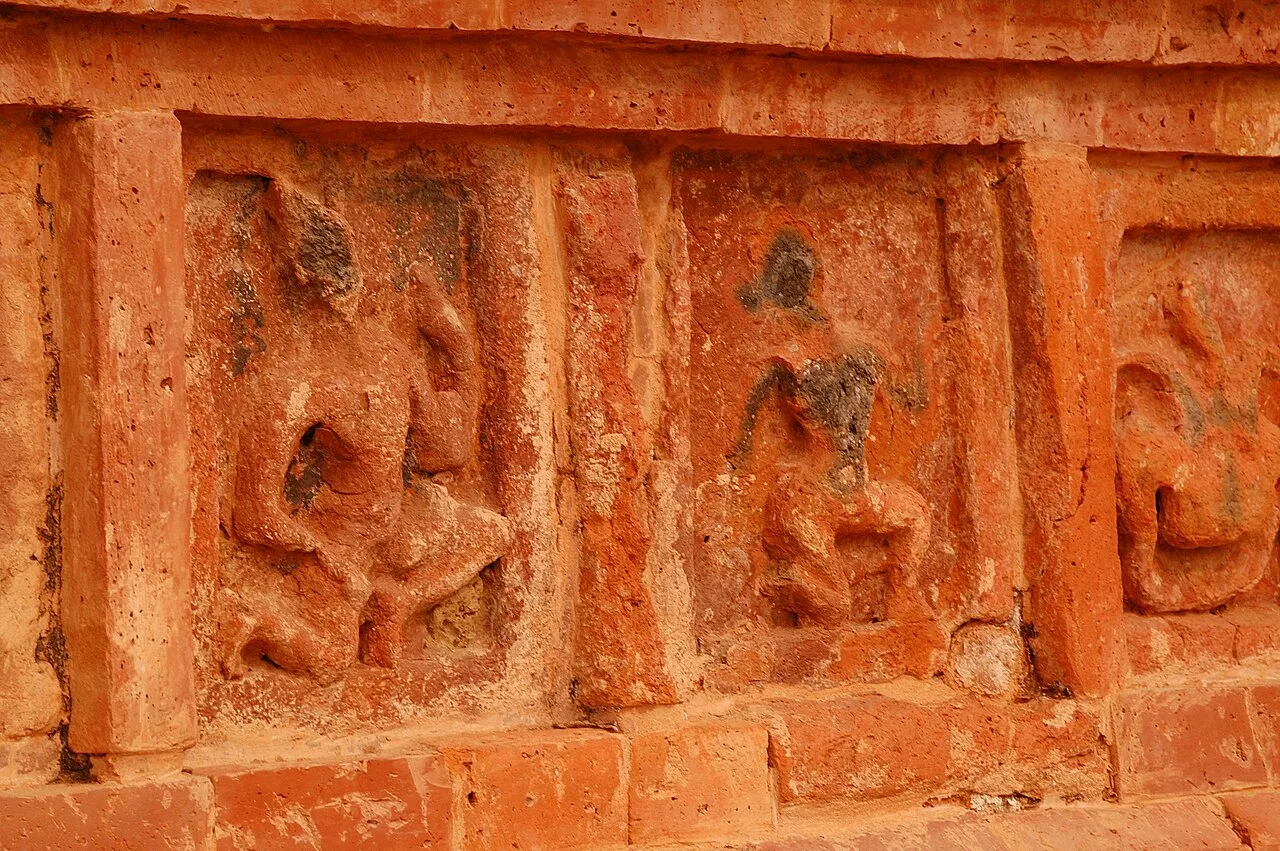
Vikramshila was established by the Pala emperor Dharmapala, traditionally dated to the late eighth or early ninth century CE. Historical accounts describe it as a major Buddhist mahavihara, or monastic centre of learning, and associate its foundation with concern about the standard of scholarship at Nalanda. It became known for Buddhist teaching and debate, and for scholars such as Atiśa and Ratnākaraśānti. Accounts describe a substantial community of teachers and students, although reported numbers should be treated as historical estimates rather than a modern census. The institution flourished under the Pala dynasty, when Buddhist monasteries received royal support across eastern India. Its teachers and graduates helped carry Buddhist learning abroad, including to Tibet. Vikramshila was destroyed by forces led by Muhammad bin Bakhtiyar Khalji around 1193, bringing its institutional life to an end. The site is now identified with remains near Antichak village in Bhagalpur district. Archaeological excavations brought the buried complex to wider attention and revealed the plan of its monastery and central religious structures. The exposed ruins are now conserved as an archaeological heritage site; visitors should rely on current site interpretation for details of excavation and conservation.
Origin stories & folklore
There is no widely documented local origin legend about the ruins that can be confidently presented as established folklore. The site’s reputation is instead rooted in historical accounts of its scholars, monastic community and role in Buddhist learning. Later Buddhist traditions particularly remember Atiśa, who studied at Vikramshila before travelling to Tibet and becoming an influential teacher there. His story is sometimes retold in devotional settings, but it belongs to the history and religious memory of Buddhism rather than a verified tale about the founding of the buildings. Visitors may encounter local explanations or beliefs about the site; treat these as oral tradition and ask who is sharing them rather than assuming they are archaeological fact.
Architecture & design
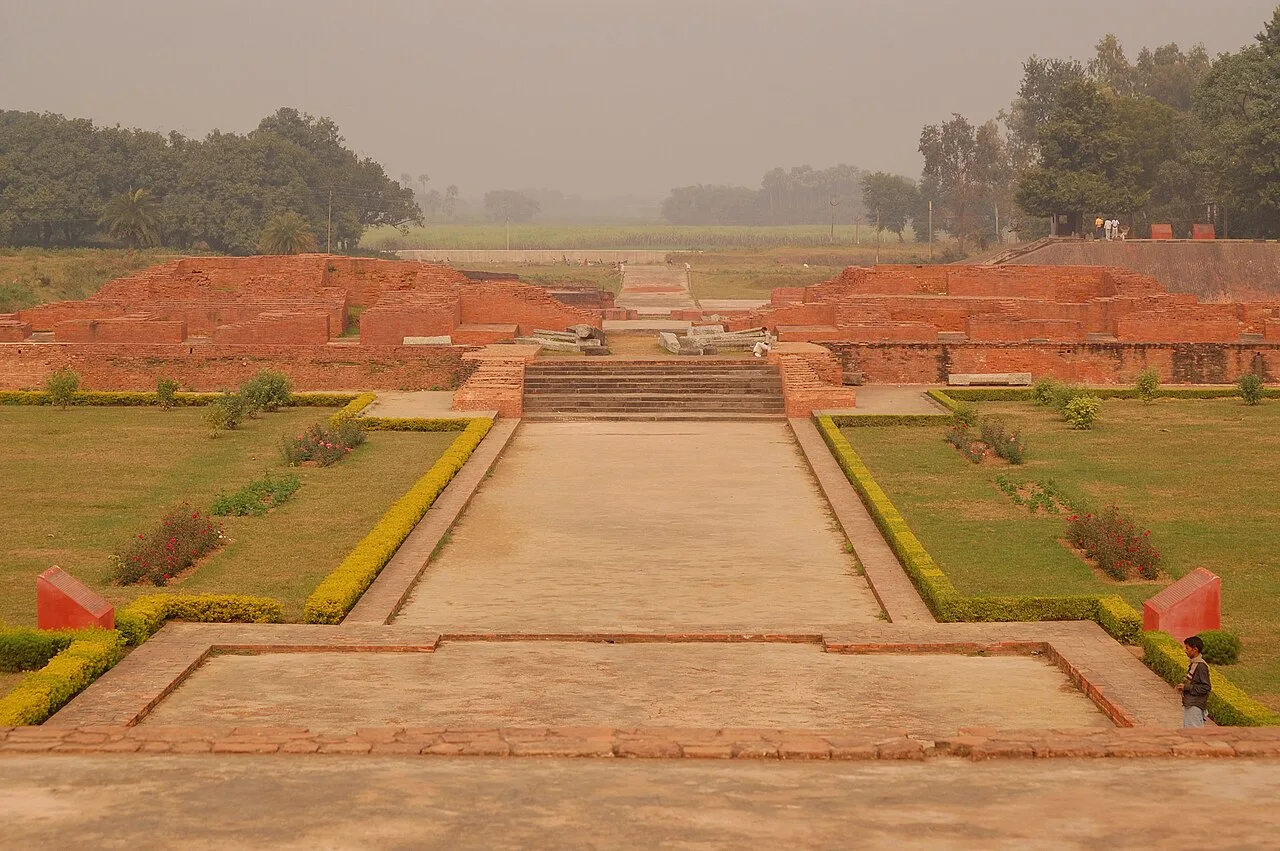
The excavated complex is organised around a large, roughly square monastery with monastic cells arranged along its sides and an open central courtyard. At the centre stands a prominent cruciform brick stupa, whose projecting arms create a cross-shaped plan when viewed from above. The remains show how worship, teaching and residential life were brought together within one institution. Brick is the principal visible building material, with stone and sculptural elements also represented among the finds. The surviving foundations and low walls make the layout easier to understand from ground level than the former height or appearance of the buildings. Interpretive boards, where available, can help visitors distinguish the monastery, courtyard and central shrine. Much of the original superstructure has not survived, so the present ruins should be understood as archaeological remains, not as a complete standing university.
Important objects & sculptures
Look for the central stupa’s exposed brick plan and the traces of the monastery’s cells and courtyard. Archaeological finds associated with Vikramshila include stone and terracotta sculptures, decorative terracotta plaques, and fragments of architectural ornament. These objects help convey the religious imagery and craft traditions of the institution, though not every find is necessarily displayed in place. Inscriptions and sculptural material can also provide clues about religious practice and patronage; check site labels for verified identifications. Displays and access to finds may change, and some objects may be housed elsewhere rather than among the open-air ruins. Do not touch, climb on or remove fragments from the remains.
Explore Vikramshila University Ruins slowly and read the interpretation boards, use the official audio guide where available or hire an authorised guide to understand its history. Check opening days, ticket counters and camera rules in advance; many monuments and museums close on one weekday and on some public holidays. Early morning gives softer light, cooler air and smaller crowds. A comfortable itinerary is one main visit in the morning, a local meal at midday and a short nearby stop before an afternoon return. Use the district list on this site to find other places in Bhagalpur, but check the route and its condition before combining stops. If a festival or fair is on — such as Chhath or the Sonepur fair — roads and stays can be busy, and the experience can be unforgettable. Leave no litter: many sites are protected by the communities around them.
Suggested itineraries
Half day: Arrive at the ruins, spend 1–2 hours viewing the monastery and central stupa, read site interpretation, then take a short rest before returning to Kahalgaon or Bhagalpur. Full day: Visit the ruins in the morning for 2–3 hours, pause for a meal in Kahalgaon or Bhagalpur, then choose a nearby river or heritage stop such as the Vikramshila Gangetic Dolphin Sanctuary, allowing time for the return journey. Gentler option: Focus on the most accessible viewpoints near the entrance, take frequent seated breaks, and skip any uneven or longer sections.
The ruins are a historic Buddhist site within a living region shaped by the languages and customs of Bhagalpur district. Angika and Hindi are widely used locally, alongside other languages spoken in Bihar. Bhagalpur is also known for its silk-weaving tradition, which visitors may encounter in local shops and markets. The archaeological grounds are not a place to expect regular performances or a monastic community today. Buddhist visitors may come for reflection, while local families and school groups visit as part of regional heritage. Keep a respectful tone around worshippers, guides and community members, and ask before photographing people. Everyday customs and food reflect the wider district rather than a single tradition specific to the ruins.
Festivals & events
Buddha Purnima, usually in April or May, is observed by Buddhist communities in the region, though visitors should not assume that a public event is held at the ruins. Chhath, usually observed in the autumn and again in spring, is an important festival across Bihar; riverfront areas can become especially busy during observances. Local fairs and religious gatherings may also take place around Bhagalpur and nearby towns at different points in the year. These occasions can affect road traffic, accommodation and the availability of local transport. Check with local tourism or community sources before planning around a festival, and follow any instructions at the monument.
Local food in Bihar includes litti chokha, sattu paratha, khaja (a layered sweet from Silao), tilkut and anarsa from Gaya, makhana (fox nuts) from the Mithila region, chana ghugni, malpua and thekua. Ask what is fresh that day; many small eateries cook a limited daily menu. Vegetarian travellers eat very well across this region, and most towns also have non-vegetarian options. Remote sites may have no restaurant at all. Carry water and snacks, eat a proper breakfast before long drives, and ask your accommodation for a packed lunch if you are heading out early. Try a home-cooked or dhaba meal when you can — it is often the best food on the route. Choose busy, clean places, drink sealed or filtered water, and carry your packaging back with you.
Shopping & local experiences
Bhagalpur is well known for silk weaving, so visitors can look for locally made silk textiles in the city’s shops and markets. Ask about the fabric, weaving and care requirements, and compare items before buying. Kahalgaon may have everyday shops, but do not expect a large souvenir market beside the ruins. There is no need to buy or collect archaeological fragments; removing material from the site is harmful and may be prohibited. For a local food experience, look for regional meals in Bhagalpur or Kahalgaon, checking ingredients and availability with vendors.
October to March
The nearest principal railway station by straight-line distance is Bhagalpur Junction, roughly 30 km away. The nearest operating airport by straight-line distance is Deoghar Airport, roughly 115 km away. These figures are calculated from map coordinates — actual road distance is longer. Patna Junction, Rajendra Nagar Terminal and Gaya Junction are the main rail gateways, and Patna and Gaya have airports; Varanasi airport serves the west of the state. For the final leg, Bihar State Road Transport Corporation (BSRTC) buses, private coaches and shared jeeps and autos link district towns; shared jeeps usually leave early in the morning. A private taxi gives more flexibility for remote sites. When comparing train, bus and flight, count the complete door-to-door time: a flight saves the most time only if the onward road transfer is short, while an overnight train can save a hotel night. Book your return before you leave, because seats fill quickly on weekends, festivals and holidays. Current train numbers, timings, return services and fares are not listed here; check IRCTC and NTES for trains and the airline's own schedule for flights. No permit is needed to visit Bihar. Buddhist circuit sites such as Bodh Gaya, Rajgir, Nalanda and Vaishali welcome visitors of all backgrounds; dress modestly at temples, monasteries and dargahs. The Sonepur fair, Chhath Puja and the Rajgir Mahotsav draw very large crowds, so book transport and stays well ahead.
Confirm onward and return timings on IRCTC / NTES, the state bus operator or your airline before travel. A dash means current timings or fares have not been verified.
Getting around
Kahalgaon is the nearest useful town for arranging the final leg to Antichak. Depending on availability, visitors may use local buses, shared jeeps or autos, or hire a taxi from Kahalgaon or Bhagalpur. Confirm the return arrangement before setting out, particularly if using shared transport, since services to a rural site may be limited later in the day. The complex is best explored on foot, so wear comfortable footwear and allow time for walking between visible remains. Ask locally about vehicle access and parking; do not assume that a vehicle can reach every part of the site.
Hours, tickets & permissions
Entry arrangements, opening days, ticketing, camera rules and any restrictions can change. Confirm current hours and fees with the managing authority before travelling; do not assume that access is available on every day or that all parts of the excavated area are open. There may be rules about photography, tripods, food, large bags or entry during conservation work. Carry identification if requested by the authority, and follow notices at the entrance. Dress respectfully for a heritage and religious site, and avoid climbing on structures or crossing barriers.
Facilities
Facilities at the archaeological site may be limited. Toilets, drinking water, shaded seating, food stalls and guide services should be checked locally rather than assumed to be available or open. Carry water and any snacks you need, and take rubbish away if bins are not provided. Kahalgaon and Bhagalpur are more reliable places to look for meals, shops, cash facilities and onward transport. Parking arrangements may be available near the site, but confirm on arrival. An authorised guide or clear interpretation boards can add context; ask about credentials and current availability before starting a visit.
Accessibility
The site is an open archaeological complex with exposed foundations, uneven ground and stretches that require walking outdoors. Surfaces may be dusty, rough or muddy after rain, and shade can be limited. The central remains are not a modern indoor museum layout, and visitors should not expect lifts or continuous step-free paths. Wheelchair and stroller access may therefore be difficult beyond the entrance or firmer paths; ask locally about current ground conditions and accessible viewing areas. Older visitors or anyone with limited mobility may prefer a shorter visit, sturdy footwear, a companion and frequent rests. Avoid climbing on walls or crossing barriers.
No permit is needed to visit Bihar. Buddhist circuit sites such as Bodh Gaya, Rajgir, Nalanda and Vaishali welcome visitors of all backgrounds; dress modestly at temples, monasteries and dargahs. The Sonepur fair, Chhath Puja and the Rajgir Mahotsav draw very large crowds, so book transport and stays well ahead. Carry a photo ID at all times and save the emergency number 112 and your accommodation's contact offline. Heat in summer and fog in winter are the main weather risks; carry water and allow extra travel time on foggy December–January mornings. Respect community rules, private property and posted instructions. Follow local guidance if access changes.
Photography
Early morning often offers softer light, cooler conditions and fewer visitors; the brick remains can also photograph well in low-angle light. From public paths, look for views that show the central stupa in relation to the monastery plan. Follow signs or staff instructions on cameras, tripods and restricted areas, as rules can change. Do not fly a drone without confirming applicable aviation rules and obtaining any required permissions. Ask before photographing visitors, workers or religious observances, and avoid posing on or touching the ruins for a picture.
Choose a stay by the full journey to Vikramshila University Ruins, not just the district name. Patna, Gaya and Bodh Gaya offer the widest choice, from pilgrim dharamshalas to international hotels; monastery guesthouses in Bodh Gaya are good value. In summer, check air-conditioning or coolers; in December and January, check hot water. Book in advance for weekends, festivals and the peak season (October to March). Confirm the exact location, meals included, check-in time and cancellation terms in writing. Avoid sending money to unverified contacts or touts at stations. Carry some cash, as card and digital payments can be unreliable in remote areas.
The Vikramshila Gangetic Dolphin Sanctuary along the Ganga is a nearby nature interest, though sightings and access are not guaranteed. Kahalgaon is the closest town for local services and a meal. Bhagalpur offers additional places to explore, including Kuppa Ghat and the silk markets associated with the city’s weaving tradition. Ajgaibinath Temple at Sultanganj is another regional religious site that may be considered as a separate stop, subject to route and travel time. Check local road conditions before combining places, and avoid assuming that river activities or sanctuary access operate on a fixed schedule.
For couples, Vikramshila University Ruins rewards a slow pace: arrive early for soft light and fewer crowds, share a local meal and keep the evening free. Sunset on the Ganga at a Patna ghat or an evening under the Bodhi tree's descendant at Bodh Gaya is quietly memorable. Public displays of affection can be frowned upon in conservative communities and at religious sites, so be discreet. Keep a buffer in your itinerary, because weather and road conditions can delay plans.
Q: How much time should I allow for Vikramshila? A: Allow a few hours to explore the main remains at a relaxed pace, including time to read interpretation and rest. Q: When is the best season to visit? A: October to March is generally more comfortable in Bihar; summer can be very hot and monsoon weather may affect access. Q: Is there an entry ticket, and what are the rules? A: Entry arrangements and camera rules can change. Confirm current requirements and fees with the managing authority before travelling. Q: Is the site suitable for children and older visitors? A: It can be rewarding for both, but the open ground is uneven and shade may be limited. Keep children close to the remains and plan rests for older visitors. Q: Can I stay near the ruins? A: Check accommodation availability in Kahalgaon or Bhagalpur; Bhagalpur generally offers a wider choice of services.
Be the first to share photos, stories, advice or a helpful contact for Vikramshila University Ruins.
Loading…