
Ghumoopedia — Explore, Discover, Experience
Sign in
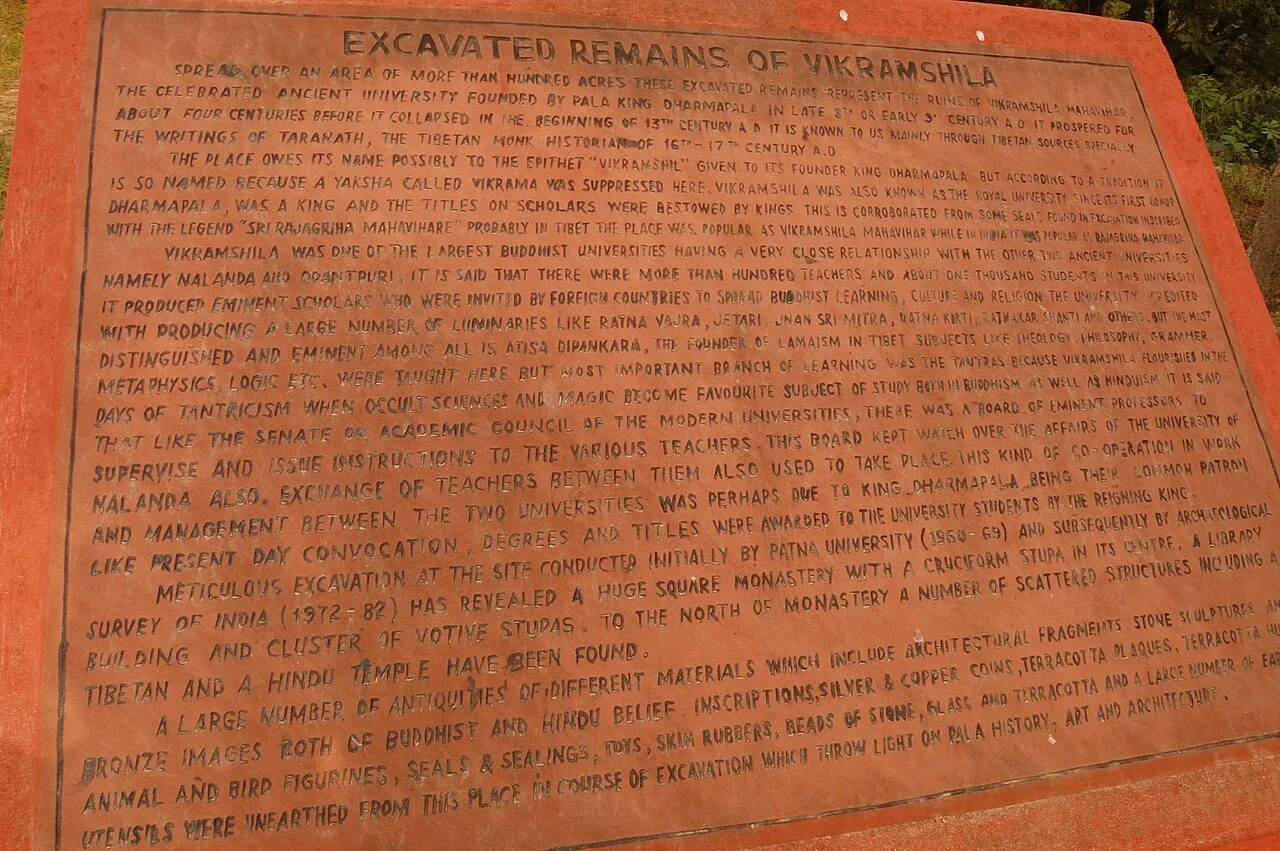
Vikramshila University Ruins, near Kahalgaon

City guide · Bihar

Kahalgaon

Kahalgaon is a small municipality in Bhagalpur district, set beside the Ganges in eastern Bihar. Its importance comes from a distinctive mix of Buddhist heritage, river ecology and modern energy production.

Famous for

  • Vikramashila ruins
  • Gangetic dolphin sanctuary
  • Kahalgaon power station
  • Bateshwar Sthan
  • Ganges river scenery
In the city
1
District
Bhagalpur

Why Kahalgaon matters

Kahalgaon is a small municipality in Bhagalpur district, set beside the Ganges in eastern Bihar. Its importance comes from a distinctive mix of Buddhist heritage, river ecology and modern energy production. The town is best known to visitors as a base for exploring Vikramashila, the remains of a major Pala-era Buddhist learning centre at Antichak, about 13 kilometres away. A nearby archaeological museum adds context to the site.

The river is central to Kahalgaon’s identity. The Vikramshila Gangetic Dolphin Sanctuary protects a stretch of the Ganges that includes the town’s riverfront, while the Kahalgaon Super Thermal Power Station is a major local industrial presence. Bateshwar Sthan, a Shiva temple by the river, draws worshippers, especially during Shravana. Together, these places make Kahalgaon a destination for history, religious visits and nature interest, as well as a working town serving nearby settlements. Its older name, Colgong, and local tradition linking its name to the sage Ashtavakra add layers to its story.

Famous for: crafts, trade & products

Kahalgaon is not widely identified as a centre for a particular textile, handicraft or GI-tagged product. Its best-known institutions and industries are instead connected with heritage and power generation. The Kahalgaon Super Thermal Power Station, operated by NTPC, is a large coal-fired facility near the town and an important part of the regional economy. S.S.V. College is a local higher-education institution.

For visitors, the most distinctive local heritage is Vikramashila, the ruined Buddhist monastic complex at Antichak, and its nearby archaeological museum. The river sanctuary is associated with the conservation of endangered Gangetic dolphins, though sightings are not guaranteed and wildlife should be observed responsibly. Bateshwar Sthan is a notable religious destination on the Ganges. Everyday shopping is concentrated in Kahalgaon’s town centre and market streets, where visitors can look for routine provisions and regional snacks; there is no single documented specialist craft market or signature local product to seek out. For a wider choice of goods and services, Bhagalpur is the nearest larger city.

History

Kahalgaon’s history is closely linked to Vikramashila, a major Buddhist mahavihara founded by Pala ruler Dharmapala in the late eighth or early ninth century. It became an important centre for Buddhist study alongside institutions such as Nalanda. Its scholars included Atisa Dipankara, later associated with the spread of Buddhist learning in Tibet. The remains at Antichak preserve the scale of this former centre, whose central temple was surrounded by smaller shrines.

In the early sixteenth century, Husain Shah Sharqi of Jaunpur is said to have taken refuge at Kahalgaon after losing his capital to Sikandar Lodi. The area also holds the mausoleum of Ghiyasuddin Mahmud Shah, the last independent sultan of Bengal, who died here after defeat by Sher Shah. Known in the colonial period as Colgong, the town appeared in J. M. W. Turner’s 1839 engraving of the Ganges. Modern development includes S.S.V. College, established in 1969, and NTPC’s Kahalgaon Super Thermal Power Station, set up in 1985.

Food, festivals & culture

Hindi and Angika are commonly heard in Kahalgaon and the surrounding area; Urdu is also used by some residents. Everyday food reflects wider Bihar and eastern Indian cooking rather than a uniquely documented Kahalgaon speciality. Visitors may encounter staples such as rice, lentils, seasonal vegetables and sattu-based dishes, along with familiar regional snacks and sweets in local markets. Ask locally about seasonal or home-style preparations.

Chhath, observed chiefly in October or November, is an important festival across Bihar, with worship and offerings often centred on riverbanks. Holi in spring, Diwali in autumn and Durga Puja are also observed. Shravana, usually falling in July and August, brings increased devotional activity at Bateshwar Sthan, a Shiva temple beside the Ganges. Hindu temples and local mosques are part of the town’s religious landscape. Angika folk traditions, devotional singing and music heard during festivals form part of local cultural life; performances and celebrations vary by season and community.

Visiting the city

October to March is generally the most comfortable period to visit, with cooler weather for the ruins and riverfront. Summer can be very hot, while monsoon conditions may affect travel and river access. The nearest airfield is Bhagalpur Airport; scheduled commercial services may be limited, so check current flights and connections before planning. Deoghar Airport is another regional option. Kahalgaon Railway Station is the town’s main rail stop.

Auto-rickshaws and local road transport are useful for getting around town; arrange onward transport to Antichak, about 13 kilometres away, and confirm return options in advance. Explore the town centre and station area for everyday services, then visit the Ganges riverfront, Bateshwar Sthan and Shivkumari Hill. Allow time for the Vikramashila ruins and archaeological museum. Dolphin viewing is best treated as a wildlife experience, not a guaranteed sighting; follow local conservation guidance.

Attractions

Places to visit in Kahalgaon

Sights within about 12 km of each other, even when they fall in different districts.

Map

Kahalgaon on the map

  1. 1Vikramshila University Ruins

Bihar

Other cities to explore