
Uppada Jamdani Weaving Village
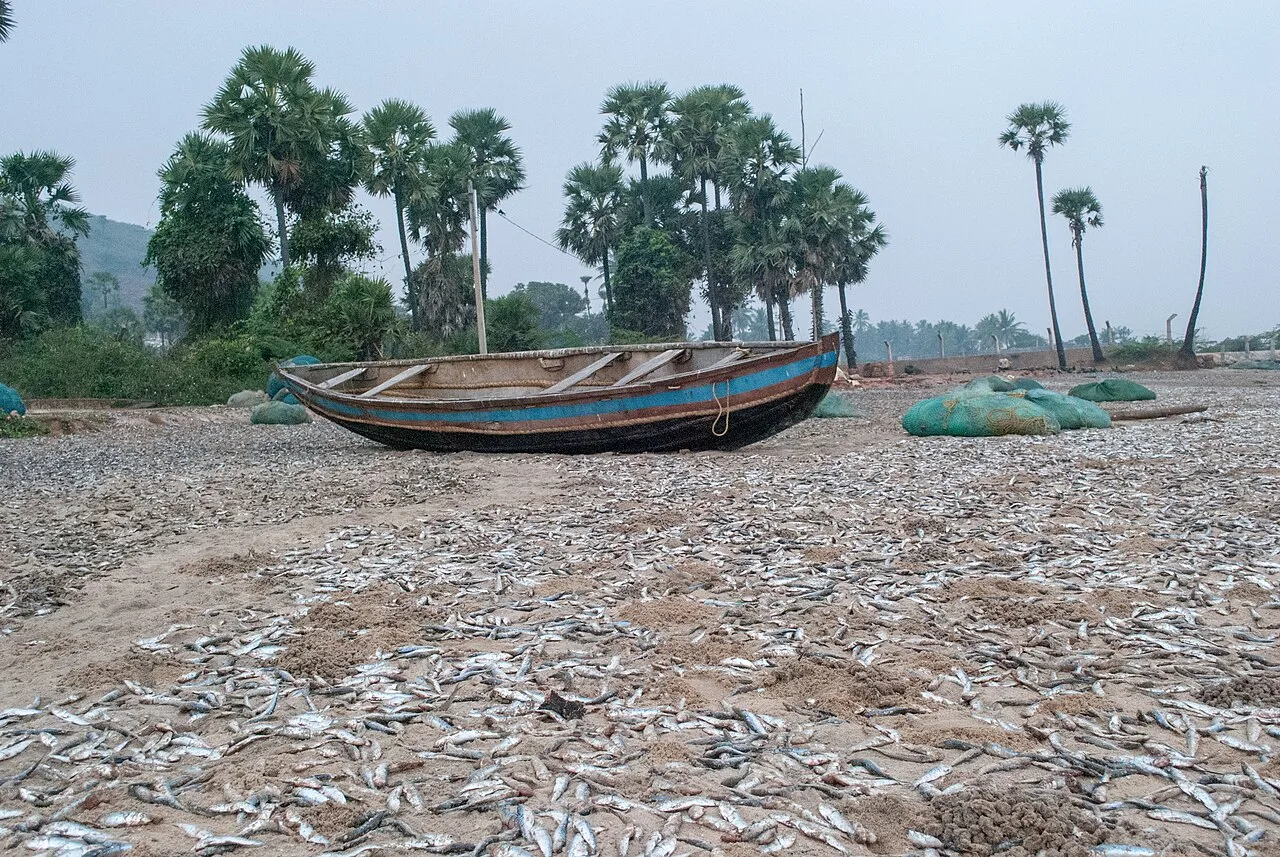
Uppada is a village in Andhra Pradesh known for its handwoven Jamdani sari, which has geographical-indication status, and for its prawn fishery. Visitors come for its weaving tradition and fishing connection.
Key facts · verified by Ghumoopedia editors
- Type of place
- Community & living culture
- Best time to visit
- November to February; Araku and Horsley Hills are pleasant for much of the year
- Nearest railway station
- Kakinada Town · about 15 km (straight line)
- Nearest airport
- Rajahmundry Airport · about 55 km (straight line)
- Verified
- 21 Nov 2026
Plan a trip from Uppada Jamdani Weaving Village — a day-by-day route through places nearby.
Located in Andhra Pradesh’s Kakinada district, Uppada falls within Kothapalli mandal and the Kakinada revenue division. The village is associated with both textile-making and fishing. Its distinctive craft is the Uppada Jamdani sari, made by hand in the village. The sari has geographical-indication recognition in Andhra Pradesh, connecting its name with its place of production. The weaving tradition is a reason for visitors to take an interest in Uppada. Uppada is also known as a fishery station for prawns. Its local associations thus include both the making of Jamdani saris and prawn fishing. Andhra Pradesh stretches from the beaches and harbour hills of Visakhapatnam through the lush Godavari–Krishna delta to the sacred hills of Tirumala and the granite gorge of Gandikota, with ancient Buddhist sites at Amaravati and Nagarjunakonda, the forts of Kondaveedu and Chandragiri and the cave systems of Belum and Borra. The coast is hot and humid from March to June, the southwest monsoon brings rain from June to September, and October to December can bring cyclones off the Bay of Bengal. The pleasant season is November to February; the Eastern Ghat hills around Araku stay cooler. The usual best time to visit is November to February; Araku and Horsley Hills are pleasant for much of the year. For official information, see Andhra Pradesh Tourism at https://aptourism.gov.in.
Why it matters
Uppada is a coastal village in Kothapalli mandal, Kakinada district, known for its handwoven Uppada Jamdani sari. The weaving tradition gives the village a distinctive place in Andhra Pradesh’s handloom heritage and supports livelihoods in local households and weaving groups. Uppada Jamdani sari is recognised as a Geographical Indication (GI) product of Andhra Pradesh; this recognition identifies its association with the region and does not mean every sari sold under a similar name is necessarily locally made. The village is also associated with coastal fishing, including prawn fisheries. There is no basis here to describe Uppada as a UNESCO site or an ASI-protected monument. Visitors come primarily to understand a living craft, rather than to visit a ticketed heritage complex.
Uppada’s best-known history is tied to handloom weaving and the development of its Jamdani-style saris. Jamdani is a patterned weaving tradition in which motifs are worked into the cloth on the loom; the name and technique are also associated with historic textile traditions elsewhere in India. In Uppada, generations of weavers have adapted and sustained the craft through household production and cooperative activity. The Uppada Jamdani sari’s Geographical Indication recognition later gave formal recognition to its regional association. Weaving continues as a working livelihood, although household participation, production methods and market access can change over time. Buyers may encounter both handloom products and goods described using similar labels, making it sensible to ask makers or registered cooperatives about origin and authenticity. The village itself is not a preserved historic site with a documented sequence of monumental buildings; its heritage is chiefly expressed through skills, working looms and the knowledge passed between weavers.
Origin stories & folklore
As in many handloom communities, families may share stories about how particular motifs, techniques or household skills came to be passed down. Treat these as local memories or family traditions rather than as a single verified account of the craft’s beginnings. Visitors can ask a weaver whether they are comfortable sharing such stories, but should not press for private or restricted knowledge. The sari’s GI recognition is a formal geographical designation, not a confirmation of any folklore about its origin. Listening respectfully to different accounts is a better approach than expecting one fixed legend.
The heart of a visit to Uppada Jamdani Weaving Village is meeting the weavers at work. Watch the stages that come before the loom — dyeing, warping and, in ikat villages, tying and resist-dyeing the yarn so the pattern appears as it is woven — and then the steady rhythm of the loom itself. A single sari can take days or weeks. Many households and cooperative societies welcome visitors who show genuine interest, but this is a working village, not a museum: ask before entering a home or workshop, keep visits short during busy hours, and accept that some families may be away at fairs or markets. Buying directly from the maker or a registered cooperative is the best way to support the craft. Where a product carries a Geographical Indication (GI) tag or a handloom mark, ask for it; prices for handmade work reflect the time and skill involved, so bargain gently, if at all. Some workshops offer short hands-on sessions — ask locally rather than expecting a fixed schedule.
Suggested itineraries
Half day: Arrange a workshop visit; spend about 1–2 hours learning about yarn preparation, patterning and the loom; allow time to browse or buy from a maker or cooperative; finish with a short local meal or coastal stop if conditions permit. Full day: Begin with a pre-arranged weaving visit; take a break in Kakinada; visit a nearby attraction such as Coringa Wildlife Sanctuary or a local temple, confirming access and travel arrangements; return to Uppada for a direct purchase if the maker is available. Gentler option: Arrange a vehicle drop close to one accessible workshop, sit for a brief demonstration, and avoid combining the visit with longer walks or uneven coastal ground.
The village’s living culture is closely connected to handloom work, household skills and the rhythms of a coastal settlement. Weaving involves careful preparation of yarn and patient work at the loom; the pattern develops through the interaction of threads rather than being simply printed onto finished cloth. Telugu is the principal regional language, though visitors may find that some makers or traders also communicate in other languages. Andhra Pradesh’s music, dance and festive traditions are part of the wider cultural setting, but performances should not be expected as a regular attraction in the village. Everyday customs vary by household. Ask before entering a home or workshop, and let residents decide whether they have time to explain their work.
Local communities
Weavers and their families are central to Uppada’s identity, with work taking place in household settings and through cooperative or market networks. The craft depends on skills in yarn preparation, loom operation, pattern work, finishing and selling; not every household necessarily undertakes every stage. Fishing and related coastal livelihoods, including prawn fisheries, are also part of the local economy. Traders and cooperatives connect makers with buyers beyond the village. Avoid assuming that all residents weave or that a particular community has only one occupation. Visitors can support local livelihoods by buying directly from makers or a registered cooperative, asking about the item’s origin and paying respectfully for handmade work.
Festivals & events
Sankranti, usually in January, is a major harvest-season festival across Andhra Pradesh, while Ugadi in spring and Dasara in autumn are also widely observed. Local religious and community celebrations may take place in and around Uppada, but their schedules and scale can vary; confirm locally before planning around a particular event. Kakinada and nearby towns may host fairs or public celebrations at festival times. These periods can bring busier roads, crowded markets and limited availability at workshops, while some families may close workspaces or travel. Be considerate around ceremonies and ask before photographing people or religious observances.
Village food in Andhra Pradesh is home cooking: Andhra meals on a banana leaf with fiery gongura and avakaya pickles, pesarattu with upma, pulihora, Rayalaseema ragi sangati, fresh seafood along the coast, bandar laddu and pootharekulu sweets, and Tirupati laddu prasadam. Uppada Jamdani Weaving Village itself may have only tea stalls and small eateries, so ask your host or guide where to eat, or arrange a home-cooked meal in advance — it is often the highlight of a village visit. Carry water and a snack if you plan to spend the whole day, and eat your main meal in the nearest town if no local option is open.
Shopping & local experiences
The main purchase to look for is an Uppada Jamdani sari or other locally woven textile, bought directly from a maker or registered cooperative where possible. Ask who made the item, where it was woven and whether a GI tag or handloom mark applies; check the product and its documentation rather than relying only on a verbal label. Handmade pieces reflect skilled labour, so bargain gently, if at all. Availability and designs vary, and not every household keeps stock for visitors. Kakinada markets may offer broader shopping and local food, but distinguish regional goods from products made in Uppada.
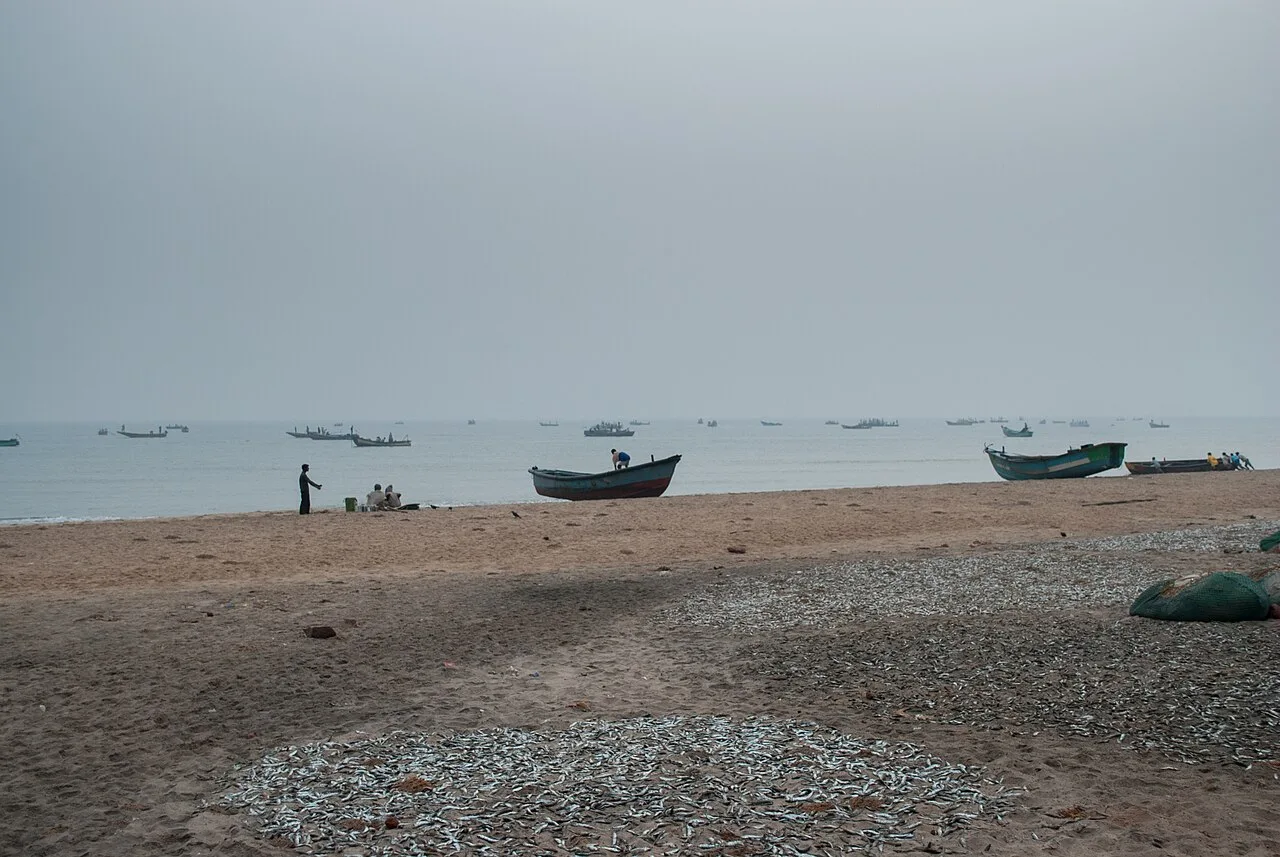
Uppada lies on Andhra Pradesh’s Bay of Bengal coast, in a generally flat, humid landscape shaped by the sea and the wider Godavari delta region. The village is associated with coastal fishing, including prawn fisheries. Sea conditions, shore access and weather can change, and visitors should follow local advice near the water. The nearby Coringa Wildlife Sanctuary protects mangrove habitat around the Godavari estuary; it is a separate nature destination, not a feature to assume lies within the weaving village. Coastal vegetation and birdlife vary with season and habitat, and sightings are never guaranteed. The hot season is typically from March to June, with monsoon rain from June to September and possible cyclonic weather later in the year. November to February is generally more comfortable for a visit.
November to February; Araku and Horsley Hills are pleasant for much of the year
The nearest principal railway station by straight-line distance is Kakinada Town, roughly 15 km away. The nearest operating airport by straight-line distance is Rajahmundry Airport, roughly 55 km away. These figures are calculated from map coordinates — actual road distance is longer. Visakhapatnam, Vijayawada and Tirupati are the main rail and air gateways; Rajahmundry serves the Godavari districts, and Renigunta is the railhead for Tirumala. Uppada Jamdani Weaving Village is a village, so the last stretch is by road: APSRTC buses (one of India's largest fleets), private sleeper coaches between the cities, and app cabs in Visakhapatnam, Vijayawada and Tirupati reach the nearest town, and from there a shared auto, local bus or reserved taxi covers the final few kilometres. Village roads can be narrow and unpaved; a taxi hired for the day from the nearest town is the simplest way to combine Uppada Jamdani Weaving Village with nearby sights and get back before dark. When comparing train, bus and flight, count the complete door-to-door time: a flight saves the most time only if the onward road transfer is short, while an overnight train can save a hotel night. Book your return before you leave, because seats fill quickly on weekends, festivals and holidays. Current train numbers, timings, return services and fares are not listed here; check IRCTC and NTES for trains and the airline's own schedule for flights. No permit is needed to visit Andhra Pradesh. For Tirumala, book darshan in advance on the official TTD website — Special Entry Darshan tickets sell out weeks ahead, and the free sarva darshan queue can take many hours; the TTD dress code (dhoti or kurta-pyjama for men, saree or salwar for women) is enforced inside the temple. Forest areas such as Papikondalu and Maredumilli may need forest-department entry permission, and boats on the Godavari are run by licensed operators.
Confirm onward and return timings on IRCTC / NTES, the state bus operator or your airline before travel. A dash means current timings or fares have not been verified.
Getting around
On arrival in the Kakinada area, local buses, shared autos and reserved taxis can help cover the road journey to Uppada; the final option depends on current services and where a workshop visit is arranged. Within the village, walking between nearby homes or workspaces may be practical, but ask your host to guide you rather than entering courtyards uninvited. Autos or a locally arranged vehicle may be useful for visitors who prefer not to walk. Check parking and drop-off arrangements with the workshop or cooperative in advance. There is no need to expect boat transport for a weaving visit.
Hours, tickets & permissions
Uppada is a working village rather than a single gated attraction, and there is no standard visitor schedule or central entry point to rely on. Workshop access depends on the household, cooperative or seller, and visitors should arrange permission locally before arriving. No general ticket or camera-fee policy is established for the village; individual sites or events may have their own conditions. Confirm current workshop availability, any applicable fees and local access rules with the people managing the visit. Do not assume that a loom will be operating whenever you arrive.
Facilities
Facilities are those of a working village, not a purpose-built visitor centre. Toilets, drinking water, food options and seating may be available at nearby businesses or through a host, but should be checked in advance. Do not assume that every workshop has visitor facilities. Kakinada has a wider range of shops, banks, accommodation and services; cash access and card acceptance in the village can vary. Guided explanations are usually arranged directly with a weaver, cooperative or local contact rather than through a permanent guide desk. Confirm parking, meal arrangements and restroom access before setting out.
Accessibility
The village has ordinary local roads and working household spaces, rather than a dedicated accessible visitor route. Surfaces, thresholds and loom areas can be uneven or narrow, and a workshop may require stepping into a private home. Wheelchair and stroller access cannot be assumed; ask the host about the specific entrance and space before visiting. Walking distances depend on which homes or cooperatives agree to receive visitors. Coastal heat, humidity and limited shade can make standing for long periods tiring, especially for older visitors. A pre-arranged vehicle, short visit and seated demonstration may make the experience easier, but facilities vary.
No permit is needed to visit Andhra Pradesh. For Tirumala, book darshan in advance on the official TTD website — Special Entry Darshan tickets sell out weeks ahead, and the free sarva darshan queue can take many hours; the TTD dress code (dhoti or kurta-pyjama for men, saree or salwar for women) is enforced inside the temple. Forest areas such as Papikondalu and Maredumilli may need forest-department entry permission, and boats on the Godavari are run by licensed operators. Carry a photo ID, some cash (card and UPI acceptance varies in villages) and a charged phone with offline maps; save the emergency number 112 and your host's contact. Heat in summer and heavy rain in the monsoon are the main weather risks; carry water, avoid midday sun and allow extra time when village roads flood. Respect local customs: dress modestly, remove footwear where asked, and always ask before photographing people, homes or rituals.
Visitor rules
Ask permission before entering a home, workshop or private yard, and follow the host’s instructions around looms and yarn. Keep the visit considerate and brief if work is busy; do not touch materials or machinery without invitation. Wear practical, respectful clothing suited to a warm coastal climate and use footwear that is easy to remove if requested. Carry waste out and avoid single-use plastic where possible. Do not block work areas, interrupt household routines or pressure residents to demonstrate. Respect any restricted spaces and local directions, especially during religious or community events.
Photography
Ask before photographing weavers, household members, children, looms or work in progress; some people may prefer not to be photographed. A close view of the weaving process is possible only with the maker’s consent and without obstructing work. Soft morning or late-afternoon light can be comfortable for outdoor views, while indoor light varies by workshop. Do not photograph private areas or rituals without permission. Drone use may be restricted by aviation rules, local authorities or the property owner, so do not fly one without checking current requirements and obtaining consent.
Most visitors see Uppada Jamdani Weaving Village on a day trip from the nearest town, which has the widest choice of hotels. A few villages have homestays or heritage stays; otherwise base yourself in the district town and hire a taxi for the day. Confirm the booking and the exact location before you travel, because village addresses can be hard to find.
Kakinada is the nearest major town for services and a useful base for exploring the district. Coringa Wildlife Sanctuary, known for its mangrove habitat near the Godavari estuary, is a separate nature visit; check its current access arrangements before travelling. Hope Island and Kakinada’s coastal areas are other regional options, subject to weather and local transport conditions. Inland, Samalkot is known for the Kumararama Bhimeswara temple, and Draksharamam for the Bhimeswara temple. These visits require separate travel planning, and religious sites may have their own visitor etiquette and access rules. Confirm road conditions and opening arrangements locally.
For couples, Uppada Jamdani Weaving Village is a chance to slow down: spend an unhurried morning with the makers, choose a piece together directly from the family that made it, share a home-cooked meal and keep the afternoon free. Stay in a nearby homestay or heritage property to make it a quiet overnight escape.
Q: How much time should I allow for a visit? A: A few hours can cover a pre-arranged workshop visit and browsing. Allow a full day if combining it with Kakinada or another nearby attraction. Q: When is a comfortable season to visit? A: November to February is generally more comfortable. Summer is hot and humid, and monsoon or cyclone-season weather can disrupt coastal travel. Q: Is there an entry ticket? A: Uppada is a village, not a single ticketed attraction. Workshop access depends on the host; confirm any conditions or fees directly. Q: Is the visit suitable for children and elderly visitors? A: It can be, with a short, supervised visit, but loom areas may be narrow and surfaces uneven. Arrange seating and vehicle access in advance. Q: Where should I stay nearby? A: Kakinada is the practical base for a wider choice of accommodation and services. Confirm lodging and transport locally before travelling.
Be the first to share photos, stories, advice or a helpful contact for Uppada Jamdani Weaving Village.
Loading…