
Adina Mosque
Adina Mosque is a Sultanate-era imperial mosque in Pandua, West Bengal. Visitors come to explore its monumental architecture and learn about the ambitions of the Bengal Sultanate.
Key facts · verified by Ghumoopedia editors
- Type of place
- Temple / pilgrimage site
- Best time to visit
- October to March for the plains and coast; March to May and October to December for the Darjeeling hills
- Nearest railway station
- Malda Town · about 15 km (straight line)
- Nearest airport
- Bagdogra Airport (Siliguri) · about 170 km (straight line)
- Verified
- 21 Nov 2026
Plan a trip from Adina Mosque — a day-by-day route through places nearby.
Built in Pandua, Malda district, West Bengal, Adina Mosque served as the Bengal Sultanate’s imperial mosque. Sultan Sikandar Shah commissioned it in 1373, and construction was completed in 1375. He was later buried inside the building. At the time, it was the largest mosque in the Indian subcontinent and the largest structure of its kind. The mosque’s scale reflected the early Bengal Sultanate’s imperial ambitions. The sultanate had defeated the Delhi Sultanate twice, in 1353 and 1359, during the Ekdala Wars. Its layout recalls the hypostyle form of Damascus’s Umayyad Mosque, an arrangement used as Islam was introduced to new regions. Its vast dimensions set it apart from other mosques across the subcontinent in that period. The site is designated a Monument of National Importance. West Bengal stretches from the Himalayan tea gardens of Darjeeling to the mangrove delta of the Sundarbans, with Kolkata's colonial architecture, the terracotta temples of Bishnupur, Tagore's Santiniketan and the Nawabi heritage of Murshidabad. The plains are hot and humid from March to June, receive heavy monsoon rain from June to September and are pleasant from November to February; the Darjeeling hills are cool year-round and cold in winter, and the coast and Sundarbans can be hit by cyclones in May and October–November. The usual best time to visit is October to March for the plains and coast; March to May and October to December for the Darjeeling hills. Timings, fees and access arrangements must be confirmed locally. For official information, see West Bengal Tourism at https://wbtourism.gov.in.
Why it matters
Adina Mosque is a major monument of the Bengal Sultanate at Pandua, in Malda district, West Bengal. Commissioned under Sultan Sikandar Shah in the late fourteenth century, it served as an imperial congregational mosque and expressed the ambitions of the early sultanate. The site is important to the architectural and political history of medieval Bengal, as well as to the region’s layered religious heritage. The guide source describes it as the largest mosque in the Indian subcontinent at the time of its completion; this claim refers to its historical scale. The Archaeological Survey of India recognises Adina Mosque as a Monument of National Importance. It is now a historic ruin rather than a complete functioning mosque, and visitors should respect any areas still used for worship.
Adina Mosque was commissioned by Sultan Sikandar Shah of the Bengal Sultanate in 1373 and completed in 1375, according to the established historical account. It was built at Pandua, then an important political centre of the sultanate, during a period when Bengal’s rulers were asserting independence and imperial authority. Its scale and form are understood in that political context: the mosque provided a setting for congregational worship and a prominent statement of royal power. Sikandar Shah was later buried within the complex. The building drew on architectural ideas associated with large hypostyle mosques, while developing a distinct regional character through its materials and construction. After political centres shifted and the building ceased to serve its original role at the same scale, it fell into ruin. As with many medieval monuments, its fabric has weathered, and some parts are damaged or incomplete. The Archaeological Survey of India protects the site as a Monument of National Importance. Visitors can see the surviving structure, but should not assume that all sections are accessible or that current conservation work is always under way; check on-site notices for present arrangements.
Origin stories & folklore
There is no single well-documented origin legend for Adina Mosque that can be presented as established fact. Popular accounts sometimes connect parts of the monument with materials from earlier religious buildings. Reused architectural fragments are visible at some medieval sites in Bengal, but claims about the exact source and circumstances of particular pieces should be treated cautiously unless supported by archaeological evidence. Sikandar Shah’s burial within the complex is part of the historical account, not a supernatural tale. Local stories and interpretations may be shared by residents or guides, but they can vary. Visitors can listen respectfully while distinguishing oral tradition from documented history, and should avoid treating speculation about the site’s past as settled fact.
Architecture & design
Adina Mosque is a large, rectangular congregational mosque ruin built during the Bengal Sultanate. Its plan centres on an open courtyard, with covered arcades and a substantial western prayer hall. Rows of supports once carried the roofed areas, giving the interior a hypostyle character. The overall conception has been compared with the hypostyle form of the Umayyad Mosque in Damascus, though the building also reflects local building practices and Bengal’s medieval architectural setting. Brick forms much of the structure, with stone used in important architectural elements and details. The surviving walls, arches, piers and openings allow visitors to read the scale and organisation of the complex, even where roofs and sections have disappeared. The western side was the principal prayer area, oriented towards Mecca, and the complex included a burial associated with Sikandar Shah. Carved details and masonry show a mix of decorative influences. The ruin’s open, exposed layout makes its proportions easier to appreciate, but uneven ground and fragile fabric require care.
Important objects & sculptures
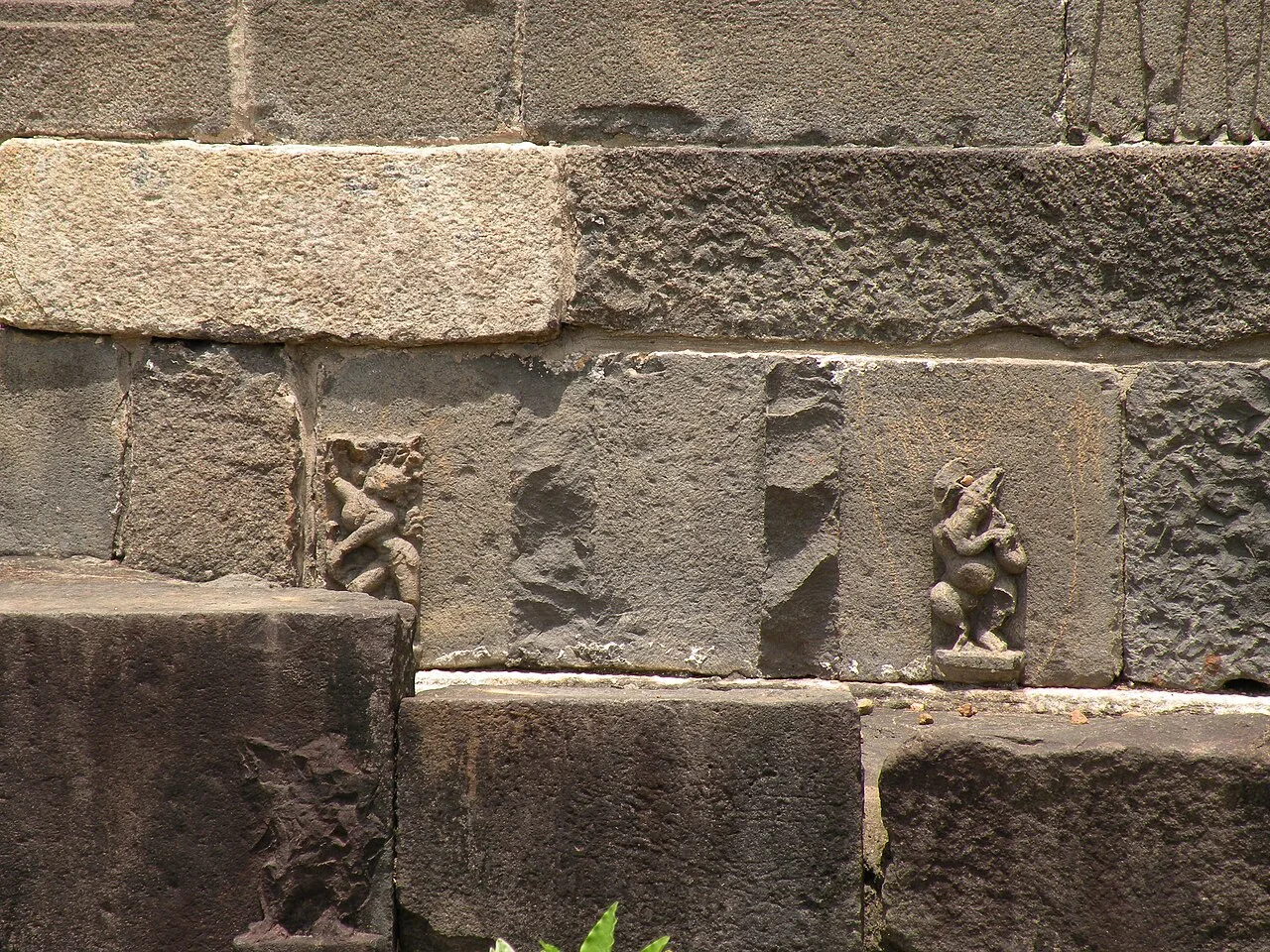
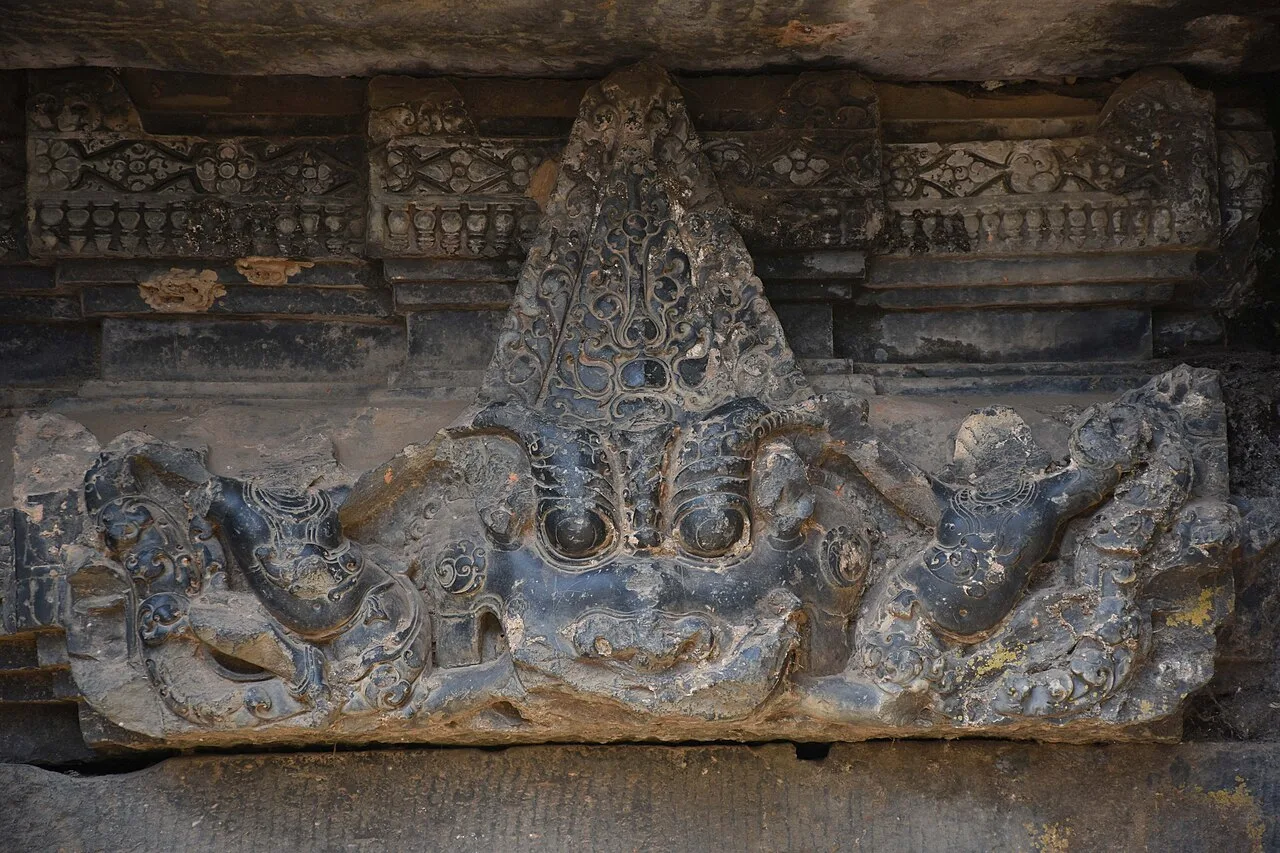
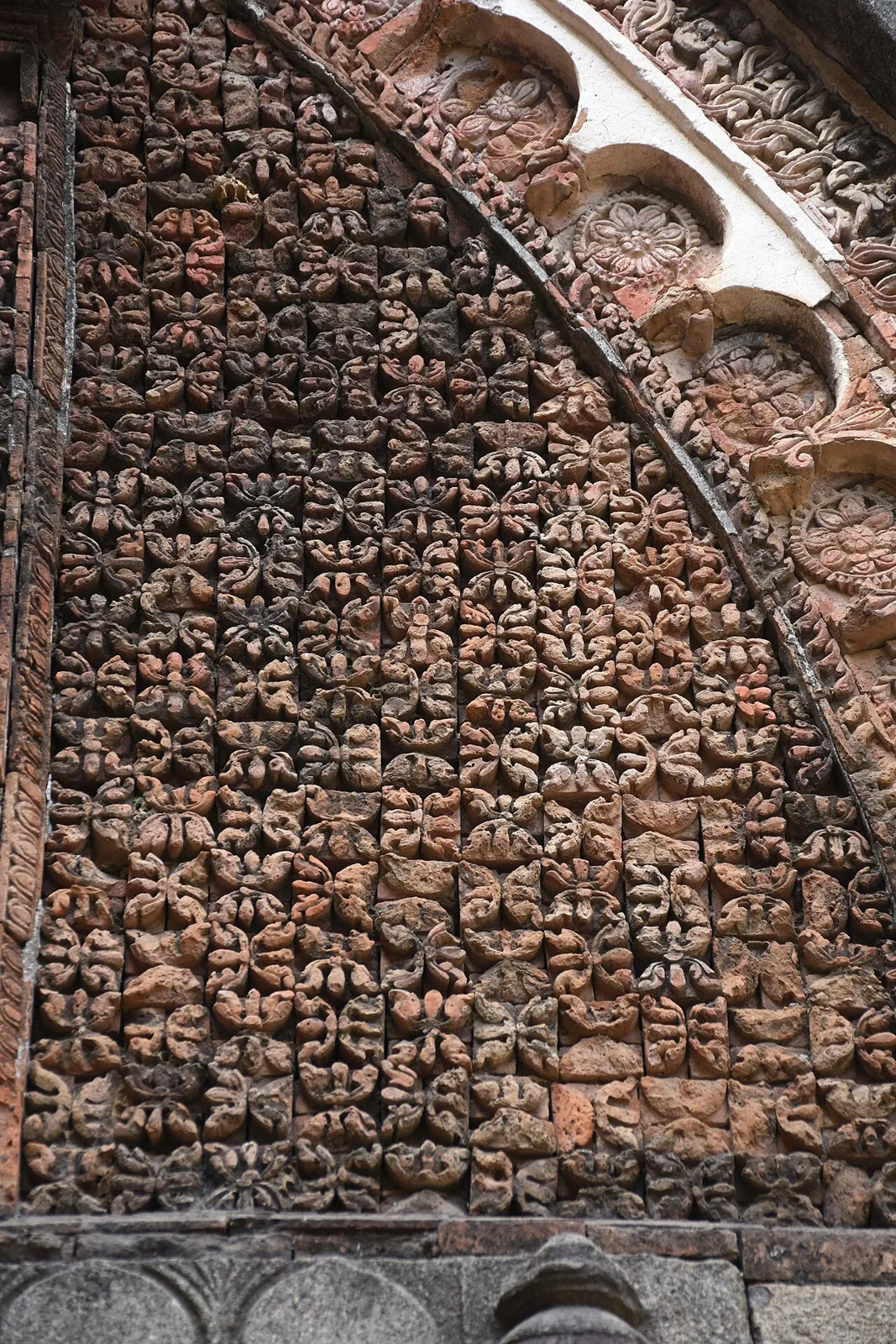
The most notable things to look for are architectural rather than portable objects: surviving arches, piers, wall surfaces, carved stone details and traces of the mosque’s original layout. Look for differences between brickwork and stone elements, and for decorative fragments incorporated into the remaining fabric. The western prayer hall and the area associated with Sikandar Shah’s burial are significant parts of the complex, though access to particular sections may be restricted. Inscriptions and historical details may be weathered, incomplete or not easily legible to visitors. Do not touch, climb on or remove fragments from the structure. There is no need to expect a museum-style display of idols or a collection of movable artefacts at the site.
Religious significance
Adina Mosque was built as a congregational mosque for Muslim worshippers under the Bengal Sultanate. Its prayer hall was oriented towards Mecca, and its original purpose was communal Islamic prayer, especially the Friday congregation. Sikandar Shah’s burial within the complex also gives the site a funerary dimension. Today, the monument is primarily visited as a protected historic ruin; the presence and form of worship can vary, so visitors should ask caretakers whether any area is in active religious use. Muslims and others may value the site as a landmark of Bengal’s Islamic history, while historians and local communities also regard it as part of the region’s shared heritage. Observe quietly and follow any guidance offered at the site.
Visit Adina Mosque with time to observe daily prayers and rituals respectfully. Dress modestly with arms and legs covered; at many dargahs and mosques both men and women cover their heads — follow the caretakers' guidance. Ask caretakers which areas are open to visitors, and beware of unofficial 'guides' or agents offering quick darshan for a fee. A comfortable itinerary is one main visit in the morning, a local meal at midday and a short nearby stop before an afternoon return. Use the district list on this site to find other places in Malda, but check the route and its condition before combining stops. If a festival is on — such as Durga Puja, Kali Puja or the Poush Mela at Santiniketan — roads and stays can be busy, and the experience can be unforgettable. Leave no litter: many sites are protected by the communities around them.
Suggested itineraries
Half day: Travel from Malda Town to Adina Mosque; spend 1–2 hours exploring the surviving structure at an unhurried pace; take a short nearby stop if roads and time allow; return to Malda Town. Full day: Visit Adina Mosque in the morning; take a meal in or near Malda; continue to Eklakhi Mausoleum and Qutb Shahi Mosque in Pandua if access and road conditions permit; return to Malda before evening. Gentler option: Arrange a vehicle close to the site entrance, explore the most accessible areas with frequent rests, and skip additional stops rather than rushing.
Pandua and the wider Malda region have a predominantly Bengali cultural setting, with Bengali widely spoken; Hindi and Urdu may also be understood by some residents and visitors. The area’s heritage reflects centuries of Sultanate history alongside other regional traditions. At the monument, local custodians, worshippers where present, residents and visitors may share the space, so quiet and considerate conduct is important. Modest clothing is a respectful choice, particularly if any area is being used for prayer. This is a historic ruin, not a performance venue, and visitors should not expect scheduled music or dance. Ask before photographing people, and treat oral accounts from local residents as valuable perspectives while distinguishing them from documented history.
Festivals & events
Eid al-Fitr and Eid al-Adha are important observances for Muslim communities across the region, though visitors should not assume that public celebrations or special prayers take place within the protected ruins. Durga Puja and Kali Puja are widely observed in the wider Malda area, usually in the autumn, and may bring busy roads, markets and accommodation. Local fairs and religious events can vary from year to year. During major observances, be especially mindful of worshippers and follow any temporary access guidance. Check locally before planning a visit around a festival, as the monument’s visitor arrangements may differ from activity elsewhere in the district.
Local food in West Bengal includes macher jhol (fish curry), shorshe ilish (hilsa in mustard), kosha mangsho, luchi with alur dom, kathi rolls and phuchka in Kolkata, mishti doi, rosogolla and sandesh; in the Darjeeling hills, momos, thukpa, shaphaley and first-flush Darjeeling tea. Ask what is fresh that day; many small eateries cook a limited daily menu. Vegetarian travellers eat well across the state, and most towns also have fish and meat dishes. Remote sites may have no restaurant at all. Carry water and snacks, eat a proper breakfast before long drives, and ask your accommodation for a packed lunch if you are heading out early. If prasad or langar is offered, accept it according to local custom. Choose busy, clean places, drink sealed or filtered water, and carry your packaging back with you.
Shopping & local experiences
For everyday shopping and food, look in Pandua or Malda Town rather than expecting a large market at the monument. Malda is known for mangoes, particularly in season, and local markets may offer fresh fruit and regional snacks. Visitors can browse for ordinary Bengal handloom goods, sweets and practical travel supplies, but availability varies by shop and season. Do not buy carved stone or purported fragments from the monument; removing or trading archaeological material is inappropriate and may be illegal. Carry reusable water containers where practical and dispose of packaging responsibly.
October to March for the plains and coast; March to May and October to December for the Darjeeling hills
The nearest principal railway station by straight-line distance is Malda Town, roughly 15 km away. The nearest operating airport by straight-line distance is Bagdogra Airport (Siliguri), roughly 170 km away. These figures are calculated from map coordinates — actual road distance is longer. Howrah, Sealdah and Kolkata stations and Kolkata airport serve the south; New Jalpaiguri station and Bagdogra airport near Siliguri are the gateways to the Darjeeling hills and the Dooars. For the final leg, West Bengal Transport Corporation, North Bengal State Transport and South Bengal State Transport buses, private buses and shared jeeps in the hills link district towns. A private taxi gives more flexibility for remote sites. When comparing train, bus and flight, count the complete door-to-door time: a flight saves the most time only if the onward road transfer is short, while an overnight train can save a hotel night. Book your return before you leave, because seats fill quickly on weekends, festivals and holidays. Current train numbers, timings, return services and fares are not listed here; check IRCTC and NTES for trains and the airline's own schedule for flights. No permit is needed for Indian citizens to visit West Bengal. Entry to the Sundarbans Tiger Reserve needs a forest permit, usually arranged through a registered boat operator or the forest office at Sajnekhali or Canning; trekking in Singalila National Park (Sandakphu) needs an entry permit and a registered guide from Maneybhanjan. Durga Puja in October brings huge crowds to Kolkata, so book transport and stays well ahead.
Confirm onward and return timings on IRCTC / NTES, the state bus operator or your airline before travel. A dash means current timings or fares have not been verified.
Getting around
Malda Town is the principal rail gateway for the district. From there, visitors can arrange a taxi or other local vehicle to reach the Adina complex at Pandua; confirm the return arrangement before setting out. Local buses may serve routes in the district, but stops and onward connections can require local advice. Auto-rickshaws or shared vehicles may be available around nearby settlements, though availability can vary. The monument itself is best explored on foot, over uneven ground. Ask the driver or local residents about the current approach road and suitable drop-off point. Check parking conditions locally, particularly on busy days.
Hours, tickets & permissions
Entry arrangements may depend on the managing authority and on conservation or religious activity at the site. Tickets, permissions, camera rules, identity requirements and access to particular parts can change, so confirm current hours and fees with the Archaeological Survey of India or the local site staff before travelling. Do not assume that every section is open to visitors. Modest dress is respectful, and caretakers may ask visitors to observe additional rules in areas used for prayer. Follow posted notices and staff instructions.
Facilities
Facilities at the monument may be limited. Toilets, drinking water, shade, seating, visitor information and formal guiding services should be checked locally rather than assumed. Food options are more likely in nearby settlements or Malda Town than within the complex; carry water and any necessary medicines. Parking may be available near the entrance, but capacity and arrangements can vary. ATMs and a wider choice of shops and services are best sought in Malda Town. If you want a guide, ask site staff or a trusted local source about authorised options and agree on the scope of the visit beforehand.
Accessibility
Adina Mosque is an extensive ruin, and exploring it involves walking across uneven ground, potentially loose surfaces and areas without continuous shade. Surviving thresholds, changes in level and damaged sections can make movement difficult. Wheelchair access throughout the complex should not be assumed, and strollers may be challenging to use. Older visitors or anyone with limited mobility may prefer to visit with a companion, take frequent rests and stay on the clearest paths. There may be limited seating and little shelter from sun or rain. Check current access conditions with site staff before travelling, and do not enter unstable or restricted areas.
No permit is needed for Indian citizens to visit West Bengal. Entry to the Sundarbans Tiger Reserve needs a forest permit, usually arranged through a registered boat operator or the forest office at Sajnekhali or Canning; trekking in Singalila National Park (Sandakphu) needs an entry permit and a registered guide from Maneybhanjan. Durga Puja in October brings huge crowds to Kolkata, so book transport and stays well ahead. Carry a photo ID at all times and save the emergency number 112 and your accommodation's contact offline. Heat in summer and heavy rain in the monsoon are the main weather risks; carry water, avoid midday sun and allow extra time when roads flood. Watch your belongings in crowds and on public transport, and follow posted instructions.
Visitor rules
Dress modestly, covering arms and legs, and follow caretakers’ guidance about head coverings or footwear if any area is being used for worship. Keep voices low and do not interrupt prayer or other religious activity. Stay on permitted paths; climbing walls, sitting on fragile masonry or entering closed sections can damage the monument and endanger visitors. Do not remove stones, carvings or other material, and take litter away with you. Photography may be restricted in particular areas or during worship. Follow posted notices and instructions from the managing authority, and do not use plastic irresponsibly.
Photography
Soft morning or late-afternoon light can bring out the texture of the brickwork and the scale of the remaining arches. From permitted paths, frame the courtyard and surviving walls without climbing on masonry or entering restricted sections. Handheld photography may be allowed, but rules can change and special restrictions may apply during prayer or conservation work; check notices and ask staff. Seek permission before photographing worshippers, caretakers or local residents. Drone use requires appropriate authorisation and should not be attempted merely because the site is open to visitors. Avoid blocking paths or disturbing others for a photograph.
Choose a stay by the full journey to Adina Mosque, not just the district name. Kolkata offers the widest choice; on the coast, Digha and Mandarmani have many hotels, and the Sundarbans have eco-resorts and boat stays near Pakhiralay and Bali island. In summer, check air-conditioning; in the monsoon, check that the property is accessible if roads flood. Book in advance for weekends, festivals and the peak season (October to March for the plains and coast; March to May and October to December for the Darjeeling hills). Confirm the exact location, meals included, check-in time and cancellation terms in writing. Avoid sending money to unverified contacts or touts at stations. Carry some cash, as card and digital payments can be unreliable in remote areas.
In Pandua, Eklakhi Mausoleum and Qutb Shahi Mosque are other notable historic monuments that visitors may consider combining with Adina Mosque; check their current access and the route between them. Malda district also contains the historic remains of Gaur, including Bara Sona Mosque, Dakhil Darwaza, Lattan Mosque and Firoz Minar. These sites are spread across the district, so confirm road conditions and allow enough travel time rather than treating them as a quick walk from Adina. Malda Museum in English Bazar offers a different way to explore regional history; check its current opening arrangements before planning a visit.
For couples, Adina Mosque rewards a slow pace: arrive early for soft light and fewer crowds, share a local meal and keep the evening free. A toy-train ride in the Darjeeling hills, a boat on the Hooghly at sunset or an evening of adda over tea in Kolkata makes the trip memorable. Public displays of affection can be frowned upon in conservative communities and at religious sites, so be discreet. Keep a buffer in your itinerary, because weather and road conditions can delay plans.
Q: How much time should I allow for Adina Mosque? A: Allow around one to two hours to explore at a relaxed pace, with extra time for travel from Malda Town or nearby monuments. Q: When is a comfortable season to visit? A: October to March is generally more comfortable for the plains of West Bengal. Summer can be hot, and monsoon rain may affect roads and walking conditions. Q: Is there an entry ticket, and are all areas open? A: Entry rules and access can change. Confirm current ticket, fee and access arrangements with the managing authority or site staff before travelling. Q: Is the site suitable for children and elderly visitors? A: Families can visit, but the ruin has uneven ground and limited shade. Supervise children closely, and older visitors may prefer a companion and a shorter route. Q: Where can I stay nearby? A: Malda Town is the main base for accommodation and services in the district. Check current lodging availability and transport arrangements before your visit.
Be the first to share photos, stories, advice or a helpful contact for Adina Mosque.
Loading…