
Garh Panchkot
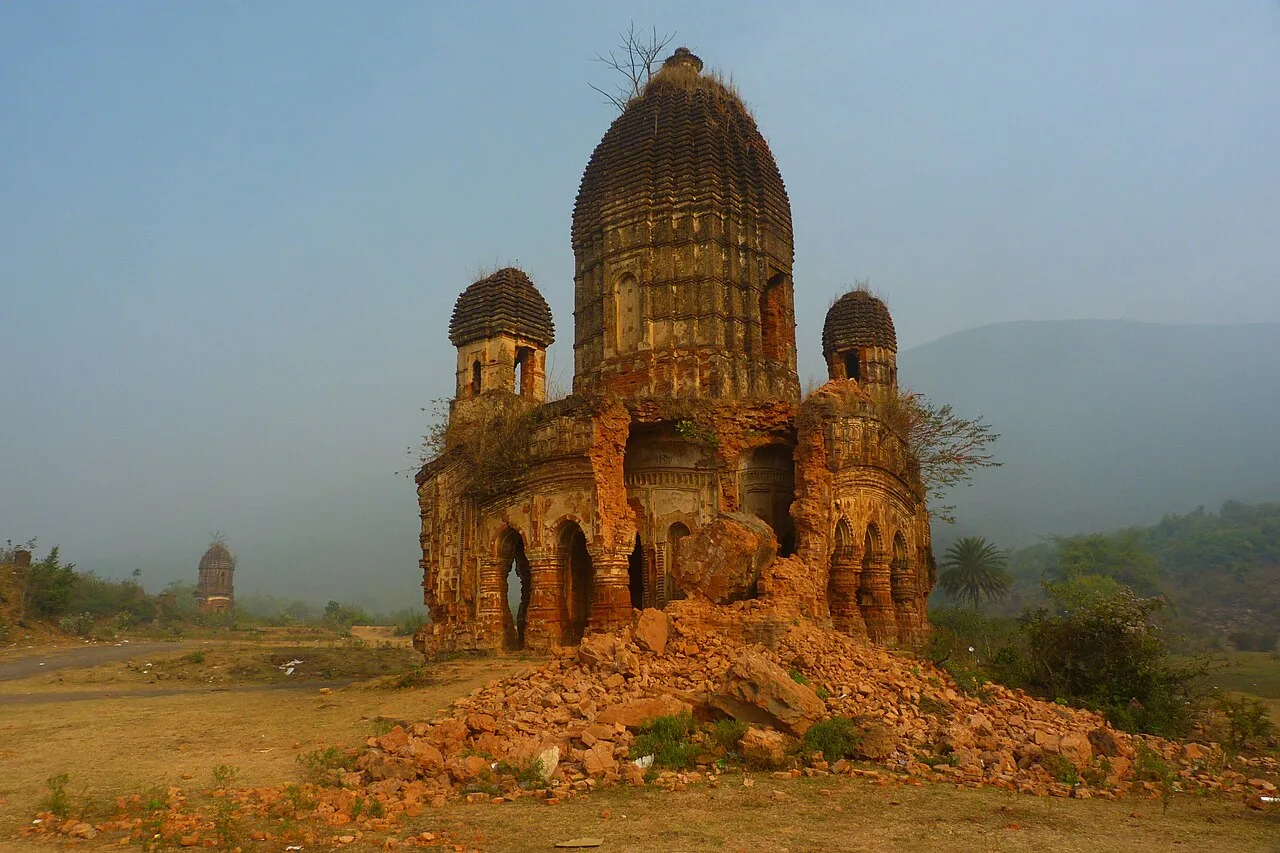
Garh Panchkot is the remains of a fort in Purulia district, West Bengal. Visitors come to view the ruins at the foot of Panchet Hill and learn the meaning of its name.
Key facts · verified by Ghumoopedia editors
- Type of place
- Heritage monument
- Best time to visit
- October to March for the plains and coast; March to May and October to December for the Darjeeling hills
- Nearest railway station
- Asansol Junction · about 25 km (straight line)
- Nearest airport
- Durgapur (Kazi Nazrul Islam) Airport · about 50 km (straight line)
- Verified
- 21 Nov 2026
Plan a trip from Garh Panchkot — a day-by-day route through places nearby.
The name Garh Panchkot means Fort of the Five Clans. The place is a ruined fort in the eastern part of India, situated at the base of Panchet Hill in Purulia district, West Bengal. Its identity is tied to both the fort remains and its name. Garh Panchkot describes a fort associated with five clans; the ruins are the feature visitors come to see. The site’s setting is defined by its position beneath Panchet Hill, within Purulia district. These details place Garh Panchkot in West Bengal and in eastern India. The available description identifies it as a ruined fort, rather than a standing fort, and gives its location at the foothills of Panchet Hill. West Bengal stretches from the Himalayan tea gardens of Darjeeling to the mangrove delta of the Sundarbans, with Kolkata's colonial architecture, the terracotta temples of Bishnupur, Tagore's Santiniketan and the Nawabi heritage of Murshidabad. The plains are hot and humid from March to June, receive heavy monsoon rain from June to September and are pleasant from November to February; the Darjeeling hills are cool year-round and cold in winter, and the coast and Sundarbans can be hit by cyclones in May and October–November. The usual best time to visit is October to March for the plains and coast; March to May and October to December for the Darjeeling hills. Timings, fees and access arrangements must be confirmed locally. For official information, see West Bengal Tourism at https://wbtourism.gov.in.
Why it matters
Garh Panchkot is a ruined fort-and-temple site at the foothills of Panchet Hill in Purulia district, West Bengal. Its name is commonly understood as “Fort of the Five Clans,” though explanations of the name vary. The remains are associated with the history of the Panchkot Raj and offer a glimpse of the region’s former political and religious landscape. The site is also valued locally for its setting beside the hill and its links to stories of the area’s past. No UNESCO or Archaeological Survey of India designation is confirmed here; visitors should check with the relevant authorities for current information about protection and conservation.
Garh Panchkot was a stronghold of the Panchkot Raj, a regional kingdom whose history is associated with the area around present-day Purulia and Panchet Hill. Accounts of the dynasty’s early origins vary, so the fort’s foundation should not be assigned a precise date without a reliable local or archival source. The surviving remains indicate that the site included both defensive and religious structures, serving a settlement as well as its rulers. In the eighteenth century, the region was affected by Maratha raids, remembered in Bengal as Bargi incursions. These attacks are commonly linked in historical accounts and local memory with the decline and abandonment of the fort, though the sequence of damage and later occupation is not fully established by the visible ruins alone. The complex subsequently fell into disrepair. Today, visitors encounter scattered remains rather than an intact fortification. No comprehensive modern restoration is confirmed here; conservation, access and interpretation arrangements may change, so check locally before visiting.
Origin stories & folklore
The name Garh Panchkot is often explained as “Fort of the Five Clans,” and local explanations connect it with the communities or groups associated with the old kingdom. The precise origin of the name is not consistently established, and versions of the story may differ between local accounts. Memories of the Bargi raids also feature in regional storytelling: the ruined buildings are sometimes linked to the flight of the royal household and the abandonment of the stronghold. These accounts are part of local historical tradition, not a substitute for documented evidence. Visitors can ask residents or an authorised local guide about the versions told in the area.
Architecture & design
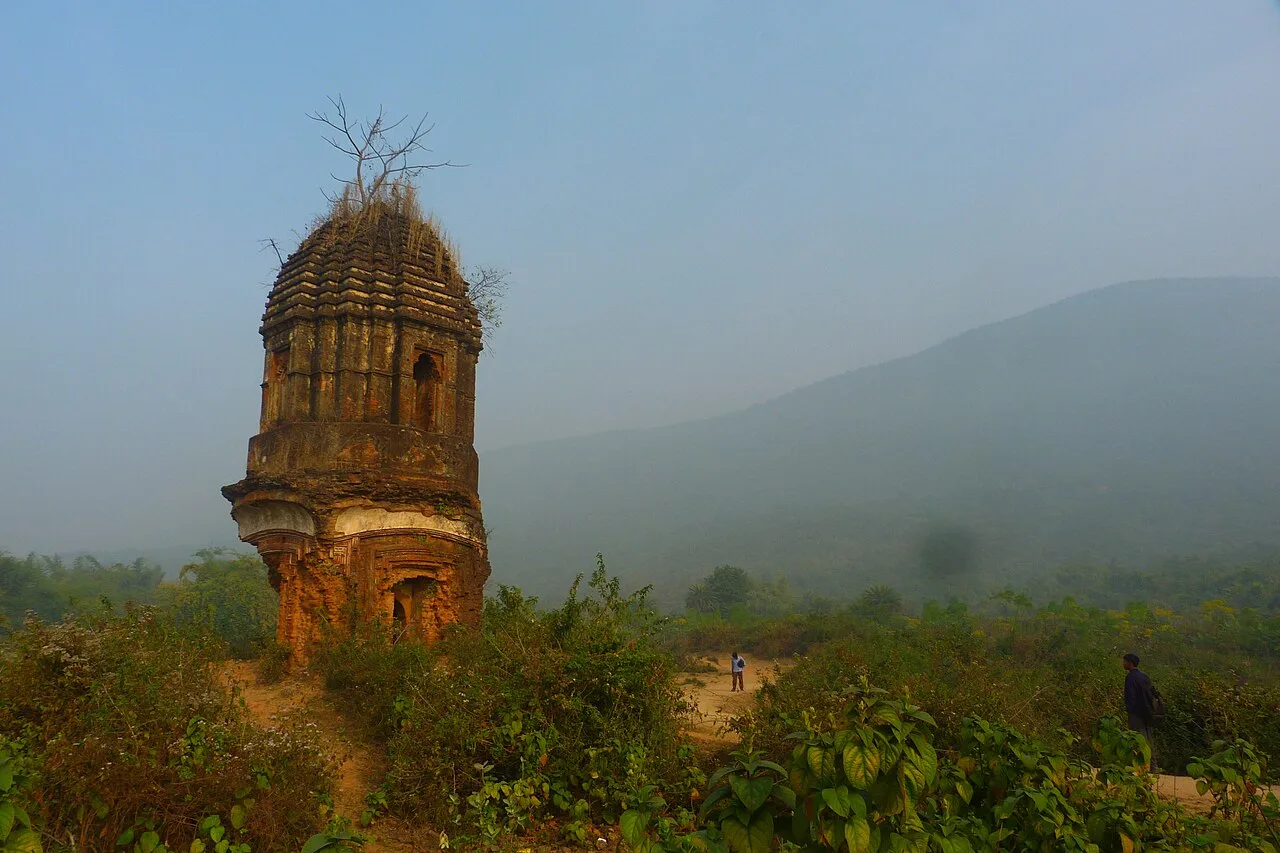
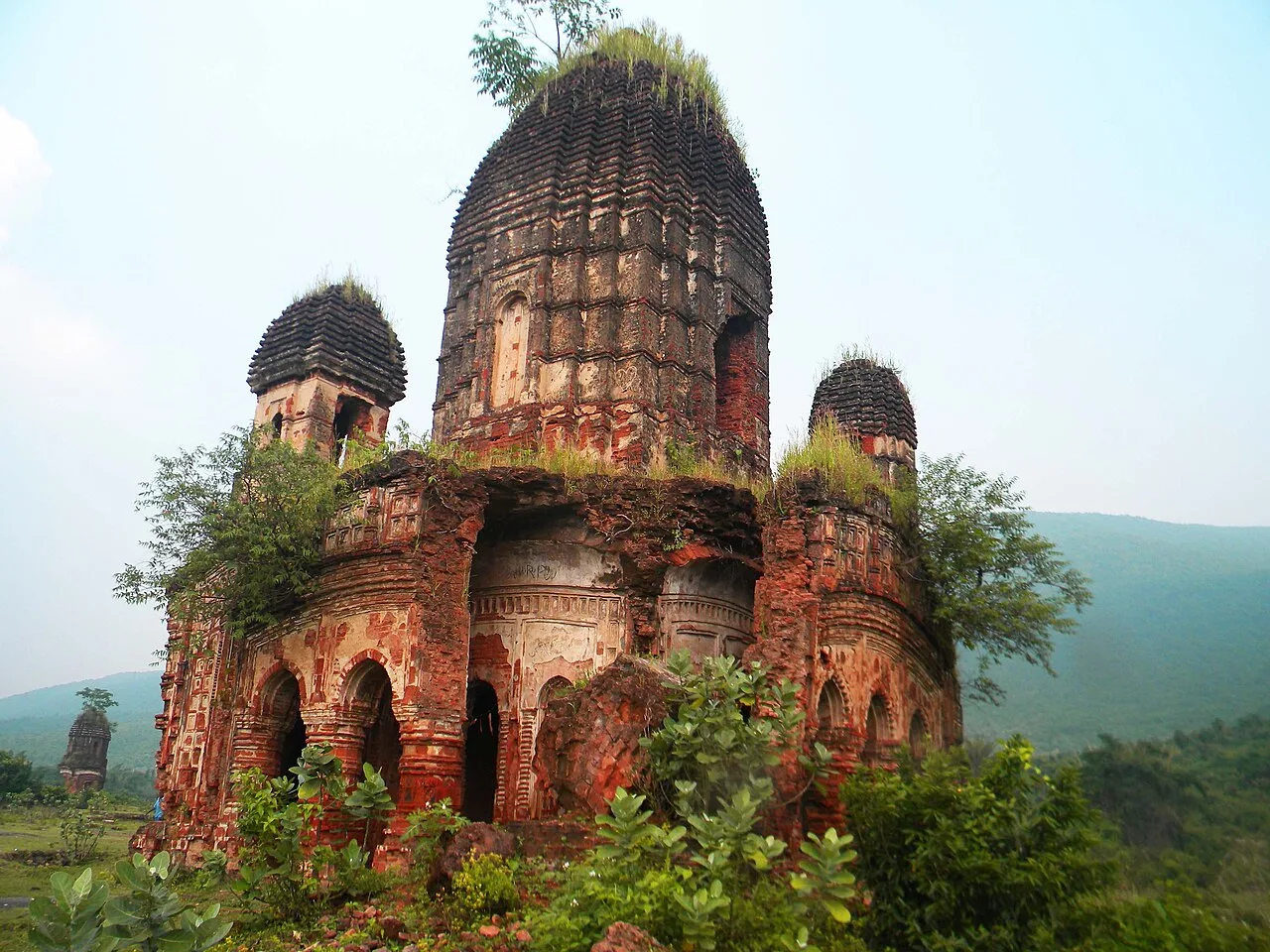
Garh Panchkot is a dispersed ruin complex rather than a complete, enclosed fort that can be followed as a single intact structure. Its remains lie near the base of Panchet Hill, with ruined religious and residential or defensive structures associated with the former Panchkot Raj. A temple ruin is among the features visitors commonly seek out; descriptions of its form vary, so surviving portions are best read on site rather than reconstructed from assumption. Weathering, vegetation and gaps in the masonry make the original plan difficult to determine. The setting suggests a relationship between the stronghold, the nearby hill and the surrounding landscape, but the extent of the original walls and buildings is not fully clear. Look closely without climbing on unstable masonry, removing fragments or disturbing the structures.
Important objects & sculptures
The most important things to look for are the surviving sections of masonry and the remains of the temple and other built structures. Their worn surfaces and incomplete forms offer clues to how the complex changed over time, but many features are too damaged to identify confidently. Do not assume that loose stone or brick fragments are souvenirs; they may be part of the archaeological fabric. No substantial public collection or interpretation gallery is confirmed here, and specific inscriptions, sculptures or idols should not be expected unless verified locally. If a guide or information board is available, use it to distinguish documented features from local interpretation.
Explore Garh Panchkot slowly and read the interpretation boards, use the official audio guide where available or hire an authorised guide to understand its history. Hill forts involve steep climbs on uneven stone steps; start early, carry water and descend well before dark. Early morning gives softer light, cooler air and smaller crowds. A comfortable itinerary is one main visit in the morning, a local meal at midday and a short nearby stop before an afternoon return. Use the district list on this site to find other places in Purulia, but check the route and its condition before combining stops. If a festival is on — such as Durga Puja, Kali Puja or the Poush Mela at Santiniketan — roads and stays can be busy, and the experience can be unforgettable. Leave no litter: many sites are protected by the communities around them.
Suggested itineraries
Half day: Walk through the accessible ruins (about 1–2 hours), pause for views of Panchet Hill, then have a meal nearby before returning. Full day: Explore the ruins at an unhurried pace (about 2–3 hours), take a meal break, then visit Panchet Dam or another nearby stop if road conditions and transport allow. Gentler option: Stay near the easiest-to-reach remains and enjoy the setting without attempting uneven paths or climbs; arrange vehicle access and a return pickup in advance.
Garh Panchkot sits within a culturally varied part of Purulia, where Bengali is widely used and Santali, Kurmali and other regional languages may also be heard. The wider district is known for traditions including Jhumur music and dance, Tusu and Bhadu songs, and Purulia Chhau. These are living traditions of the region, not performances guaranteed at the fort. Everyday customs and dress vary between communities and occasions. Ask before photographing people, especially during worship or community events, and treat any active shrine with care. Local residents and guides can offer context that the ruins themselves do not provide.
Festivals & events
Purulia’s seasonal and community celebrations include Tusu and Bhadu observances, while Durga Puja and Kali Puja are widely marked in the region. Purulia Chhau performances may be organised at cultural events, but they are not a regular attraction at Garh Panchkot itself. Festival periods vary by local calendar and organiser; check locally for events rather than planning around an assumed programme. Nearby towns and villages can be busier during major celebrations, and accommodation or road travel may be less straightforward. Be respectful around processions, shrines and community gatherings, and follow local guidance on photography.
Local food in West Bengal includes macher jhol (fish curry), shorshe ilish (hilsa in mustard), kosha mangsho, luchi with alur dom, kathi rolls and phuchka in Kolkata, mishti doi, rosogolla and sandesh; in the Darjeeling hills, momos, thukpa, shaphaley and first-flush Darjeeling tea. Ask what is fresh that day; many small eateries cook a limited daily menu. Vegetarian travellers eat well across the state, and most towns also have fish and meat dishes. Remote sites may have no restaurant at all. Carry water and snacks, eat a proper breakfast before long drives, and ask your accommodation for a packed lunch if you are heading out early. Try a home-cooked or local thali meal when you can — it is often the best food on the route. Choose busy, clean places, drink sealed or filtered water, and carry your packaging back with you.
Shopping & local experiences
There may be few dedicated shops at the ruins, so do not count on finding a particular souvenir on site. In nearby markets, look for locally made handicrafts and regional products, asking sellers about their origin rather than assuming an item is made locally. Purulia is associated with Chhau masks and other craft traditions, though availability varies. Local eateries can be a good way to try Bengali and regional food; ask about ingredients and what is freshly prepared. Buy responsibly and never take stones, fragments or other material from the historic site.
October to March for the plains and coast; March to May and October to December for the Darjeeling hills
The nearest principal railway station by straight-line distance is Asansol Junction, roughly 25 km away. The nearest operating airport by straight-line distance is Durgapur (Kazi Nazrul Islam) Airport, roughly 50 km away. These figures are calculated from map coordinates — actual road distance is longer. Howrah, Sealdah and Kolkata stations and Kolkata airport serve the south; New Jalpaiguri station and Bagdogra airport near Siliguri are the gateways to the Darjeeling hills and the Dooars. For the final leg, West Bengal Transport Corporation, North Bengal State Transport and South Bengal State Transport buses, private buses and shared jeeps in the hills link district towns. A private taxi gives more flexibility for remote sites. When comparing train, bus and flight, count the complete door-to-door time: a flight saves the most time only if the onward road transfer is short, while an overnight train can save a hotel night. Book your return before you leave, because seats fill quickly on weekends, festivals and holidays. Current train numbers, timings, return services and fares are not listed here; check IRCTC and NTES for trains and the airline's own schedule for flights. No permit is needed for Indian citizens to visit West Bengal. Entry to the Sundarbans Tiger Reserve needs a forest permit, usually arranged through a registered boat operator or the forest office at Sajnekhali or Canning; trekking in Singalila National Park (Sandakphu) needs an entry permit and a registered guide from Maneybhanjan. Durga Puja in October brings huge crowds to Kolkata, so book transport and stays well ahead.
Confirm onward and return timings on IRCTC / NTES, the state bus operator or your airline before travel. A dash means current timings or fares have not been verified.
Getting around
Garh Panchkot is a rural site, so arrange the final leg from a nearby town with a local taxi or other locally available vehicle; availability can vary. Shared vehicles or local buses may serve parts of the wider area, but do not assume they stop at the entrance or run frequently. Ask your driver where the vehicle can wait and agree on a return plan before exploring. Parking arrangements should be checked locally. Inside the complex, expect to move on foot over uneven ground; there is no need for boats within the site.
Hours, tickets & permissions
Entry arrangements, opening periods and any restrictions can change, and there may not be a staffed ticket office at the ruins. Do not assume that tickets, permits, camera charges, dress rules or identification requirements apply—or that entry is unrestricted. Confirm current hours and fees with the managing authority or a reliable local source before travelling. If visiting a shrine or a managed part of the site, follow posted instructions and requests from staff or local caretakers.
Facilities
Facilities at the ruins may be limited. Toilets, drinking water, food stalls, seating and rubbish bins are not guaranteed on site, so carry water and take litter away. Basic food or refreshments may be available in the wider area, but check locally and do not rely on a particular stall being open. Parking and local guiding arrangements can vary by season and day. ATMs and broader services are more likely to be found in nearby towns than at the monument; plan essential needs before setting out.
Accessibility
The site is uneven and partly overgrown, with broken masonry, rough paths and possible steps or slopes. Walking distances between visible remains can add up, and shade may be limited in exposed sections. Conditions can become slippery after rain. Wheelchair and stroller access should not be assumed, and the ruins may be difficult for visitors with limited balance or mobility. Older visitors or anyone who tires easily may prefer a short visit to the most accessible area, with a companion and rest breaks. Avoid climbing on walls or attempting steep, unstable sections.
No permit is needed for Indian citizens to visit West Bengal. Entry to the Sundarbans Tiger Reserve needs a forest permit, usually arranged through a registered boat operator or the forest office at Sajnekhali or Canning; trekking in Singalila National Park (Sandakphu) needs an entry permit and a registered guide from Maneybhanjan. Durga Puja in October brings huge crowds to Kolkata, so book transport and stays well ahead. Carry a photo ID at all times and save the emergency number 112 and your accommodation's contact offline. Heat in summer and heavy rain in the monsoon are the main weather risks; carry water, avoid midday sun and allow extra time when roads flood. On forts, keep away from unfenced edges, especially in mist or rain, and do not climb after dark.
Photography
Early morning or later afternoon usually offers softer light and can make the hill-and-ruin setting easier to photograph. From accessible ground, frame the remains with Panchet Hill rather than standing on fragile masonry. Ordinary handheld photography is generally a reasonable expectation outdoors, but check for local restrictions at shrines or managed areas. Drone use may require permissions and can disturb visitors, residents or wildlife; do not fly without confirming the rules. Ask before photographing people, ceremonies or worshippers.
Choose a stay by the full journey to Garh Panchkot, not just the district name. Kolkata offers the widest choice; on the coast, Digha and Mandarmani have many hotels, and the Sundarbans have eco-resorts and boat stays near Pakhiralay and Bali island. In summer, check air-conditioning; in the monsoon, check that the property is accessible if roads flood. Book in advance for weekends, festivals and the peak season (October to March for the plains and coast; March to May and October to December for the Darjeeling hills). Confirm the exact location, meals included, check-in time and cancellation terms in writing. Avoid sending money to unverified contacts or touts at stations. Carry some cash, as card and digital payments can be unreliable in remote areas.
Panchet Dam is a prominent nearby landscape stop and can be combined if transport and access conditions permit. Within Purulia district, Joychandi Pahar, the Baranti area, Deulghata’s temple remains and the Ajodhya Hills are other recognised places to consider, though they may require separate travel planning. The wider region also has additional dams and hill scenery; verify road conditions and travel times before combining destinations. These are not all immediate neighbours of the fort, so choose stops according to your route rather than assuming they can be covered on foot.
For couples, Garh Panchkot rewards a slow pace: arrive early for soft light and fewer crowds, share a local meal and keep the evening free. A toy-train ride in the Darjeeling hills, a boat on the Hooghly at sunset or an evening of adda over tea in Kolkata makes the trip memorable. Public displays of affection can be frowned upon in conservative communities and at religious sites, so be discreet. Keep a buffer in your itinerary, because weather and road conditions can delay plans.
Q: How much time should I allow for a visit? A: A few hours is usually enough to see accessible remains at an unhurried pace; allow longer if combining another stop. Q: When is a comfortable season to visit? A: The cooler months, broadly October to March, are generally more comfortable for exploring the ruins outdoors. Check weather and road conditions. Q: Is there an entry ticket? A: Check with the managing authority or locally before visiting. Q: Is the site suitable for children and older visitors? A: Families can visit with care, but uneven ground and damaged structures require supervision. Visitors with limited mobility may prefer a short, gentle visit. Q: Can I stay near Garh Panchkot? A: Accommodation may be available in the wider area, but availability and facilities vary. Confirm a place to stay in advance, especially during busy periods.
Be the first to share photos, stories, advice or a helpful contact for Garh Panchkot.
Loading…