
Mayapur
Mayapur is a pilgrimage settlement in Nadia district, West Bengal, within Nabadwip CD block and Krishnanagar Sadar subdivision. Visitors come for its religious importance to Gaudiya Vaishnavas.
Key facts · verified by Ghumoopedia editors
- Type of place
- Temple / pilgrimage site
- Best time to visit
- October to March for the plains and coast; March to May and October to December for the Darjeeling hills
- Nearest railway station
- Krishnanagar City Junction · about 10 km (straight line)
- Verified
- 21 Nov 2026
Plan a trip from Mayapur — a day-by-day route through places nearby.
Mayapur, also rendered Mayāpura, is a pilgrimage town in Nadia district, West Bengal. Administratively, it lies within Nabadwip CD block and the Krishnanagar Sadar subdivision. The Jalangi meets the Bhagirathi in the area. The Bhagirathi is a distributary of the Ganges, placing the town at the meeting of these two rivers. Mayapur is spiritually significant to followers and devotees of Gaudiya Vaishnavism. Its religious importance is closely connected with this tradition, and forms a central part of its identity as a pilgrimage town. West Bengal stretches from the Himalayan tea gardens of Darjeeling to the mangrove delta of the Sundarbans, with Kolkata's colonial architecture, the terracotta temples of Bishnupur, Tagore's Santiniketan and the Nawabi heritage of Murshidabad. The plains are hot and humid from March to June, receive heavy monsoon rain from June to September and are pleasant from November to February; the Darjeeling hills are cool year-round and cold in winter, and the coast and Sundarbans can be hit by cyclones in May and October–November. The usual best time to visit is October to March for the plains and coast; March to May and October to December for the Darjeeling hills. Timings, fees and access arrangements must be confirmed locally. For official information, see West Bengal Tourism at https://wbtourism.gov.in.
Why it matters
Mayapur is a major pilgrimage centre for Gaudiya Vaishnavas, followers of a devotional tradition centred on Krishna and associated with Chaitanya Mahaprabhu. The town lies in Nadia district near the confluence of the Jalangi and Bhagirathi rivers, across from Nabadwip, another important centre in the tradition. ISKCON, the International Society for Krishna Consciousness, has its international headquarters here, drawing pilgrims from India and abroad. Devotees regard Mayapur as Chaitanya’s birthplace and an important place for prayer, learning and pilgrimage. Its importance is principally religious and cultural; visitors should not assume that the town’s temples have UNESCO or Archaeological Survey of India monument status.
Mayapur’s history is closely linked to Chaitanya Mahaprabhu, the Bengali Vaishnava teacher and devotional reformer traditionally said to have been born in the region in 1486. His followers developed a tradition of pilgrimage around places associated with his life and teachings. The identification of the present-day Mayapur site as his birthplace became especially influential through the work of Gaudiya Vaishnava leaders in the late nineteenth and early twentieth centuries, including Bhaktivinoda Thakur and Bhaktisiddhanta Saraswati. Their efforts helped establish Mayapur as a centre for organised pilgrimage and religious study. In 1966, A. C. Bhaktivedanta Swami Prabhupada founded ISKCON, which later established its international headquarters and a large temple complex in Mayapur. The organisation’s growth brought pilgrims and residents from many countries, as well as new accommodation, educational and community facilities. The landscape and river channels in this deltaic region have changed over time, and the town’s religious and built environment continues to develop. The present complex includes contemporary buildings alongside shrines and spaces shaped by ongoing devotional use. For historical details about particular structures, consult their managing institutions, since dates and attributions may differ between accounts.
Origin stories & folklore
According to Gaudiya Vaishnava belief and local tradition, Mayapur is the birthplace of Chaitanya Mahaprabhu, revered by devotees as an incarnation of Krishna who taught congregational chanting of the divine names. Pilgrims visit places identified with his childhood and early devotional life, although the precise identification of historic locations has been discussed and developed over time by religious scholars and leaders. Stories associated with the wider Nabadwip area describe Chaitanya and his companions singing and dancing in devotion. These accounts are part of a living religious tradition rather than claims that can be verified as ordinary historical records. Visitors can learn about them respectfully through temple displays, guides or devotional literature.
Architecture & design
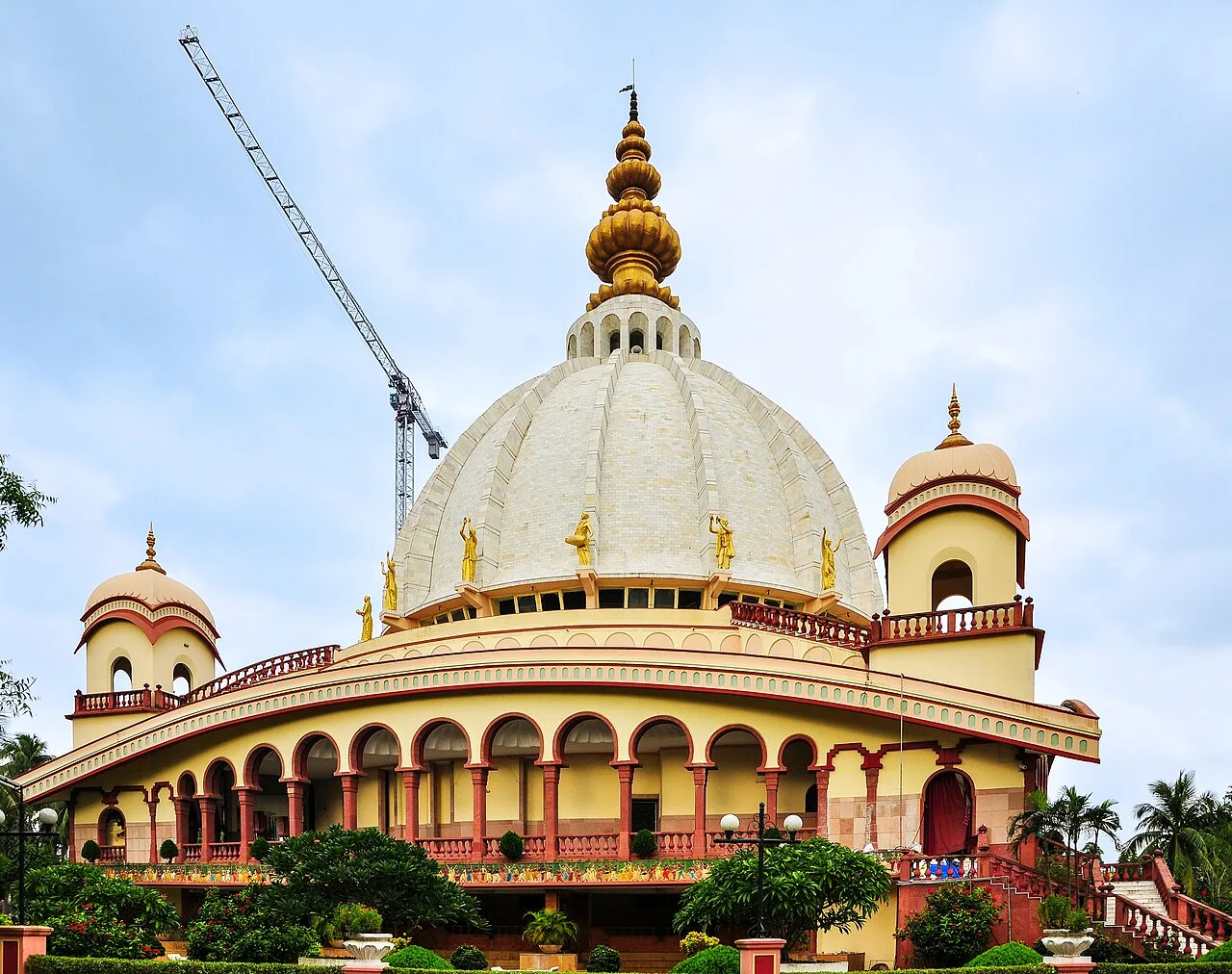
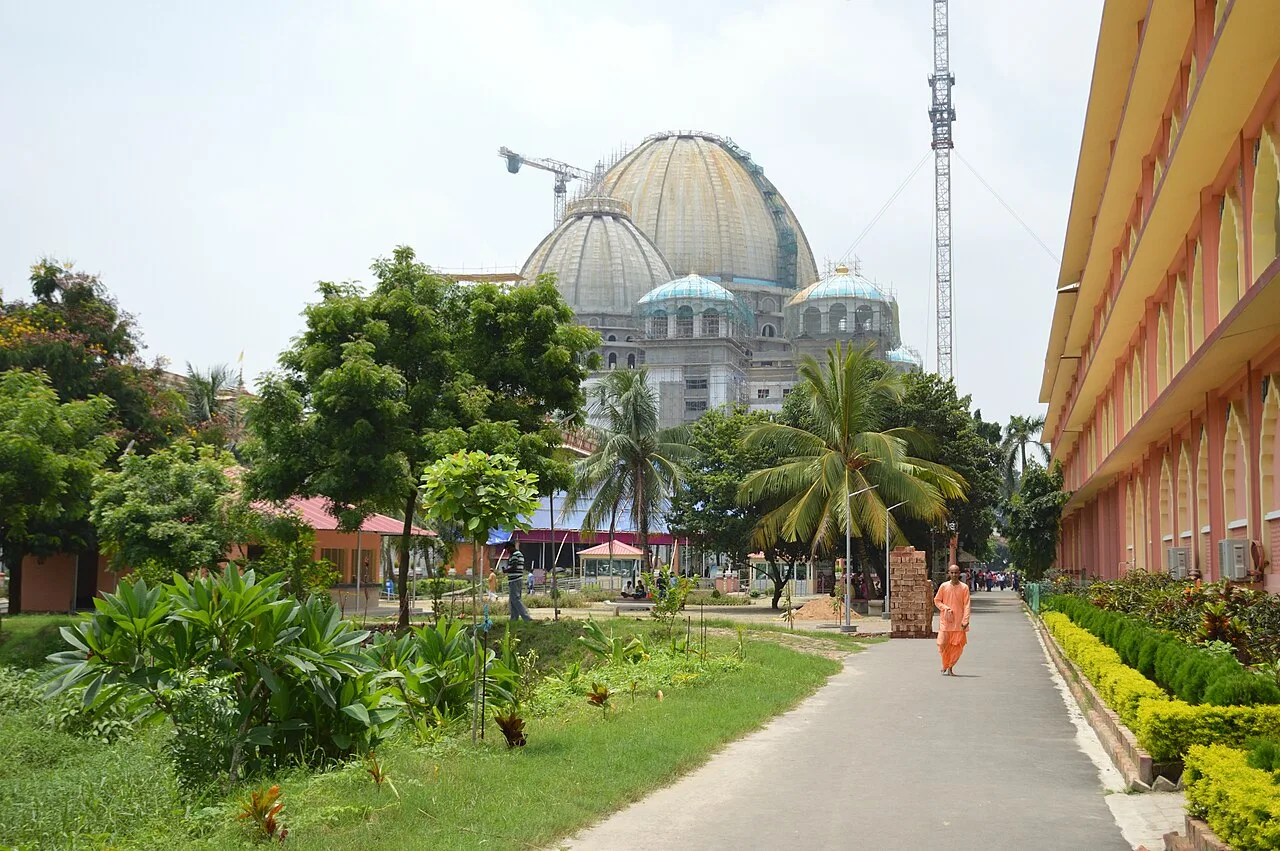
Mayapur’s best-known built landmark is the extensive ISKCON temple campus, where contemporary construction sits alongside devotional spaces designed for worship, pilgrimage and community gatherings. The Sri Mayapur Chandrodaya Mandir complex includes large halls, shrines, courtyards and facilities for visitors. Its buildings combine modern structural methods with forms and decoration inspired by Indian temple traditions; materials and finishes vary between structures. The Temple of the Vedic Planetarium, developed as part of the campus, is a prominent large-scale project with a substantial central dome and planned educational displays. Other notable structures include the Pushpa Samadhi Mandir, associated with A. C. Bhaktivedanta Swami Prabhupada. The campus layout supports processions and movement between worship areas, though access to individual interiors may be controlled. Mayapur also has smaller temples and local religious buildings beyond the main complex. Riverine conditions, seasonal rain and ongoing development influence the surrounding built environment; visitors should follow current signs and use designated paths.
Important objects & sculptures
Within the ISKCON complex, visitors may encounter the deities of Radha-Madhava and the Pancha-tattva, central to worship there; arrangements and access to shrine areas are managed by the temple. The Pushpa Samadhi Mandir commemorates A. C. Bhaktivedanta Swami Prabhupada and contains devotional displays associated with his life and work. Temple halls may also have paintings, reliefs or exhibits illustrating episodes from Vaishnava texts and the lives of devotional teachers. Displays can change, and some objects are visible only from designated areas. Ask temple staff before approaching a shrine or interpreting an object, and do not touch offerings, images or ritual items unless invited.
Religious significance
Mayapur is a central pilgrimage destination for Gaudiya Vaishnavas, whose devotional practice honours Krishna and the teachings of Chaitanya Mahaprabhu. Many devotees regard Chaitanya as Krishna appearing in a form that teaches devotion through congregational chanting. Worship commonly includes kirtan, the singing of divine names, prayer, offerings and listening to religious teachings. Visitors may see devotees circumambulating sacred spaces or taking part in services, but practices and access vary between temples. For pilgrims, Mayapur is both a place associated with Chaitanya’s life and a living centre of worship and study. Non-Hindu visitors are often welcome in designated areas, subject to each institution’s rules; observe quietly and ask before entering restricted spaces.
Visit Mayapur with time to observe daily prayers and rituals respectfully. Follow the posted rules on footwear, photography, phones, head covering and dress, and avoid interrupting worshippers; popular temples may have separate queues, dress codes or mobile-phone deposit counters. Ask caretakers which areas are open to visitors, and beware of unofficial 'guides' or agents offering quick darshan for a fee. A comfortable itinerary is one main visit in the morning, a local meal at midday and a short nearby stop before an afternoon return. Use the district list on this site to find other places in Nadia, but check the route and its condition before combining stops. If a festival is on — such as Durga Puja, Kali Puja or the Poush Mela at Santiniketan — roads and stays can be busy, and the experience can be unforgettable. Leave no litter: many sites are protected by the communities around them.
Suggested itineraries
Half day: Allow about 3–4 hours for the main temple campus, a service or kirtan if available, and a meal nearby. Full day: Allow about 6–8 hours for the main campus, a relaxed meal, a visit to a nearby Nabadwip shrine or riverside area, and time to return. Gentler option: Spend 2–3 hours at one accessible temple area, take seated breaks, and arrange a vehicle between stops rather than attempting a long walking circuit.
Mayapur’s daily life brings together Bengali residents, Indian pilgrims and international devotees, particularly around the ISKCON campus. Bengali and Hindi are widely useful, while English is commonly used in the international religious community; languages heard among visitors vary. Kirtan and devotional singing are prominent, and religious talks, study and communal service form part of the town’s living traditions. Visitors will see a range of clothing, from everyday local dress to modest garments worn for worship. Customs differ by temple, but removing footwear before entering shrine areas and behaving quietly during services are common expectations. The town’s food and hospitality reflect both Bengali traditions and the vegetarian practices of many pilgrims.
Festivals & events
Gaura Purnima, celebrating Chaitanya Mahaprabhu’s appearance, is Mayapur’s major annual festival and usually falls in February or March. The associated Navadvipa Mandal Parikrama brings groups of pilgrims to sacred places around the region. Janmashtami, celebrating Krishna’s birth, is generally observed in August or September, while Ratha-yatra processions take place during the summer season. Kartik, usually in October or November, is also an important devotional period. Festival days can bring large crowds, traffic delays and high demand for accommodation; check local arrangements and allow extra time.
Local food in West Bengal includes macher jhol (fish curry), shorshe ilish (hilsa in mustard), kosha mangsho, luchi with alur dom, kathi rolls and phuchka in Kolkata, mishti doi, rosogolla and sandesh; in the Darjeeling hills, momos, thukpa, shaphaley and first-flush Darjeeling tea. Ask what is fresh that day; many small eateries cook a limited daily menu. Vegetarian travellers eat well across the state, and most towns also have fish and meat dishes. Remote sites may have no restaurant at all. Carry water and snacks, eat a proper breakfast before long drives, and ask your accommodation for a packed lunch if you are heading out early. If prasad or langar is offered, accept it according to local custom. Choose busy, clean places, drink sealed or filtered water, and carry your packaging back with you.
Shopping & local experiences
Look for devotional books, prayer beads, clothing and small religious keepsakes at shops around the temple campus; check that any item is permitted in the place you plan to visit. Local stalls may sell simple offerings and everyday pilgrimage supplies. Bengali sweets and vegetarian snacks are common food experiences, while nearby Santipur is known for handloom textiles and Krishnanagar’s Ghurni neighbourhood for clay figures. Ask about materials and production before buying, and avoid purchasing wildlife products or objects claimed to be ancient without reliable provenance. Carry purchases in reusable bags and dispose of packaging responsibly.
October to March for the plains and coast; March to May and October to December for the Darjeeling hills
The nearest principal railway station by straight-line distance is Krishnanagar City Junction, roughly 10 km away. The nearest operating airport by straight-line distance is Netaji Subhas Chandra Bose International Airport, Kolkata, roughly 85 km away. These figures are calculated from map coordinates — actual road distance is longer. Howrah, Sealdah and Kolkata stations and Kolkata airport serve the south; New Jalpaiguri station and Bagdogra airport near Siliguri are the gateways to the Darjeeling hills and the Dooars. For the final leg, West Bengal Transport Corporation, North Bengal State Transport and South Bengal State Transport buses, private buses and shared jeeps in the hills link district towns. A private taxi gives more flexibility for remote sites. When comparing train, bus and flight, count the complete door-to-door time: a flight saves the most time only if the onward road transfer is short, while an overnight train can save a hotel night. Book your return before you leave, because seats fill quickly on weekends, festivals and holidays. Current train numbers, timings, return services and fares are not listed here; check IRCTC and NTES for trains and the airline's own schedule for flights. No permit is needed for Indian citizens to visit West Bengal. Entry to the Sundarbans Tiger Reserve needs a forest permit, usually arranged through a registered boat operator or the forest office at Sajnekhali or Canning; trekking in Singalila National Park (Sandakphu) needs an entry permit and a registered guide from Maneybhanjan. Durga Puja in October brings huge crowds to Kolkata, so book transport and stays well ahead.
Confirm onward and return timings on IRCTC / NTES, the state bus operator or your airline before travel. A dash means current timings or fares have not been verified.
Getting around
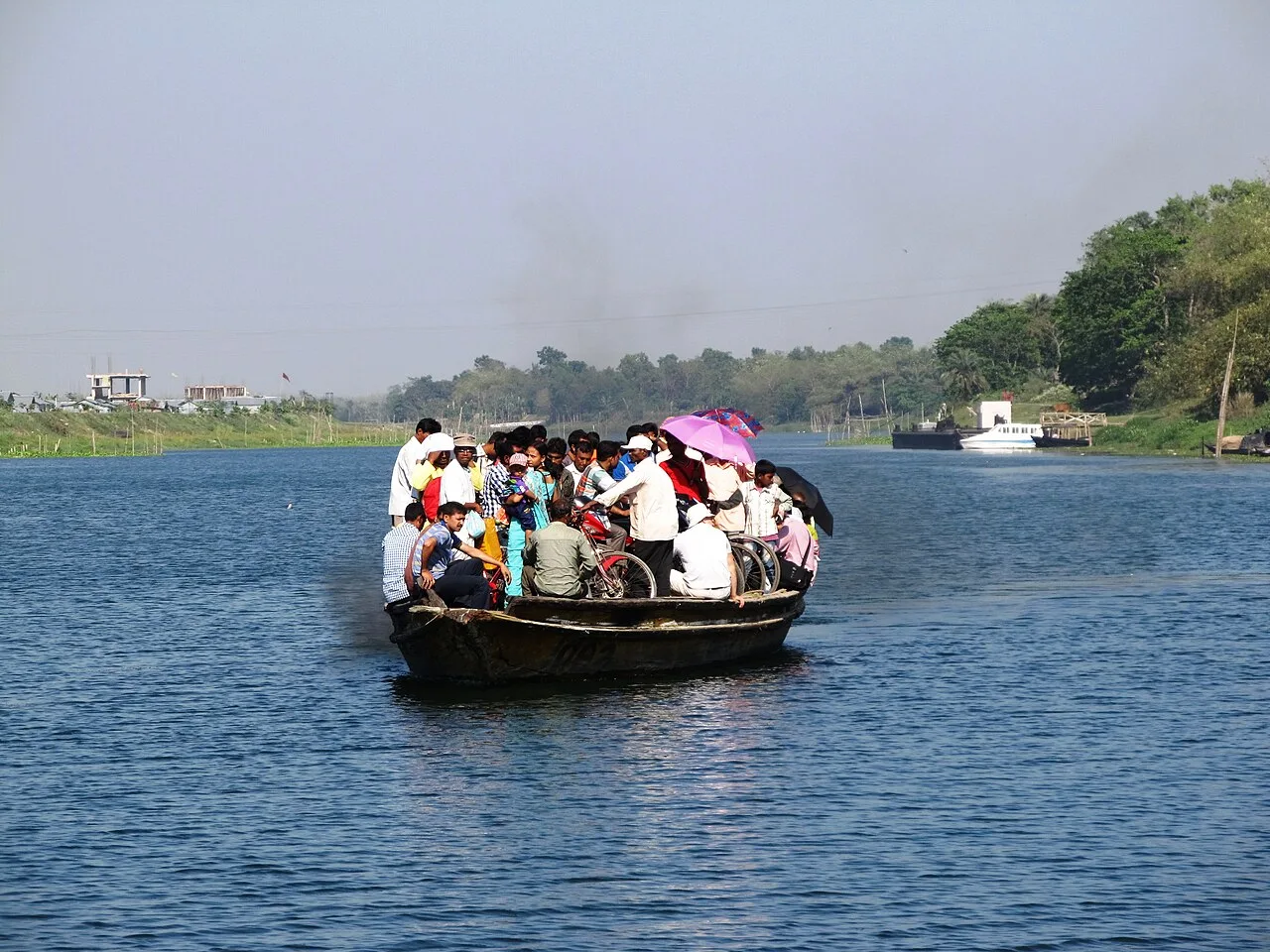
Mayapur is spread across a pilgrimage area, so visitors commonly combine walking with local autos, cycle-rickshaws or taxis. Private vehicles can be useful for reaching sites beyond the main temple campus, but parking and vehicle access may be restricted or congested during festivals. Local buses and shared transport serve parts of Nadia district; routes and availability vary. River crossings by local boat or ferry may be possible on some routes, but service and safety depend on conditions, so check locally rather than relying on a crossing. Agree on the destination before setting out and allow extra time for crowded roads.
Hours, tickets & permissions
Entry arrangements differ between the main ISKCON campus and other temples or shrines. Some areas may be open to general visitors while inner sanctums, services or special events have separate access rules. Tickets, permits, identity checks, camera restrictions, footwear storage and dress requirements may apply depending on the venue and occasion. Confirm current visiting hours, entry conditions and any fees directly with the managing temple or its official information channels before travelling. Festival arrangements can change normal access.
Facilities
The main ISKCON campus usually has visitor facilities such as toilets, drinking-water points, food options and places to rest; availability and access can vary. Shops and simple meals are commonly found around the pilgrimage area. Parking may be available, though restrictions or congestion can affect it on busy days. ATMs and broader services are more reliably found in larger nearby towns, so carry a suitable payment option and any essential medicines. Official information desks or temple staff may help with directions; check locally for current facilities and whether a guide is authorised.
Accessibility
The main campus covers a broad area, and visiting it can involve substantial walking between buildings, queues and open courtyards. Surfaces and paths may vary, while rain, heat and crowds can make movement harder. Steps may occur at entrances or within individual temples; do not assume every shrine has step-free access, ramps or lifts. Shade and places to sit are available in some areas but not necessarily along every route. Wheelchair and stroller suitability depends on the specific building and current conditions, so contact the managing temple ahead of a visit. Older visitors may find a shorter, single-site visit and vehicle transfers more comfortable.
No permit is needed for Indian citizens to visit West Bengal. Entry to the Sundarbans Tiger Reserve needs a forest permit, usually arranged through a registered boat operator or the forest office at Sajnekhali or Canning; trekking in Singalila National Park (Sandakphu) needs an entry permit and a registered guide from Maneybhanjan. Durga Puja in October brings huge crowds to Kolkata, so book transport and stays well ahead. Carry a photo ID at all times and save the emergency number 112 and your accommodation's contact offline. Heat in summer and heavy rain in the monsoon are the main weather risks; carry water, avoid midday sun and allow extra time when roads flood. Watch your belongings in crowds and on public transport, and follow posted instructions.
Visitor rules
Follow signs and instructions from temple staff, remove footwear where required and dress modestly, with shoulders and knees covered where requested. Keep voices low during worship, do not enter restricted areas, and avoid interrupting prayers or touching deities, offerings and ritual objects. Food and drink may be restricted in shrine spaces. Use designated bins and avoid littering or single-use plastic where possible. Phone use, head coverings and photography rules differ by venue and can change during services or festivals; check before entering. Do not pay unofficial agents who promise special access or faster darshan.
Photography
Photography rules vary across Mayapur’s temples and may be stricter inside shrines, during worship or at special events. Check posted notices and ask staff before taking pictures; never photograph people in prayer at close range without permission. Outdoor courtyards and river views can be attractive in softer morning or late-afternoon light, but stay within visitor areas. Do not use a flash where prohibited. Drone use may be restricted by temple authorities and aviation rules, so do not fly one without confirming permission and legal requirements. Put the camera away if asked.
Choose a stay by the full journey to Mayapur, not just the district name. Kolkata offers the widest choice; on the coast, Digha and Mandarmani have many hotels, and the Sundarbans have eco-resorts and boat stays near Pakhiralay and Bali island. In summer, check air-conditioning; in the monsoon, check that the property is accessible if roads flood. Book in advance for weekends, festivals and the peak season (October to March for the plains and coast; March to May and October to December for the Darjeeling hills). Confirm the exact location, meals included, check-in time and cancellation terms in writing. Avoid sending money to unverified contacts or touts at stations. Carry some cash, as card and digital payments can be unreliable in remote areas.
Across the river, Nabadwip is another important centre of Gaudiya Vaishnava pilgrimage, with temples and sites associated with Chaitanya’s life. Yogapith and Srivas Angan are among the places visited by pilgrims in the wider Nabadwip area; confirm routes and access locally. Ballal Dhipi, near Bamunpukur, is an archaeological mound in Nadia district that visitors may combine with a wider regional trip. Krishnanagar is known for its historic town centre and the clay-art neighbourhood of Ghurni. Santipur, also in Nadia, is associated with handloom weaving and has religious sites. Travel times and river or road access vary, so avoid packing too many stops into one day.
For couples, Mayapur rewards a slow pace: arrive early for soft light and fewer crowds, share a local meal and keep the evening free. A toy-train ride in the Darjeeling hills, a boat on the Hooghly at sunset or an evening of adda over tea in Kolkata makes the trip memorable. Public displays of affection can be frowned upon in conservative communities and at religious sites, so be discreet. Keep a buffer in your itinerary, because weather and road conditions can delay plans.
Q: How much time should I allow for Mayapur? A: A few hours can cover one main temple visit; allow most of a day for a slower visit and a nearby stop. Q: When is the best season to visit? A: October to March is generally more comfortable in the plains; festival periods are lively but crowded. Q: Is there an entry fee? A: Entry rules vary by temple and area. Confirm current access and any fees with the managing authority. Q: Can children and elderly visitors come? A: Yes, but expect walking, queues and crowds. Plan breaks and check step-free access for specific buildings. Q: Where can I stay nearby? A: Mayapur has pilgrim accommodation and other lodging options, with broader choices in nearby towns; book ahead for major festivals.
Be the first to share photos, stories, advice or a helpful contact for Mayapur.
Loading…