
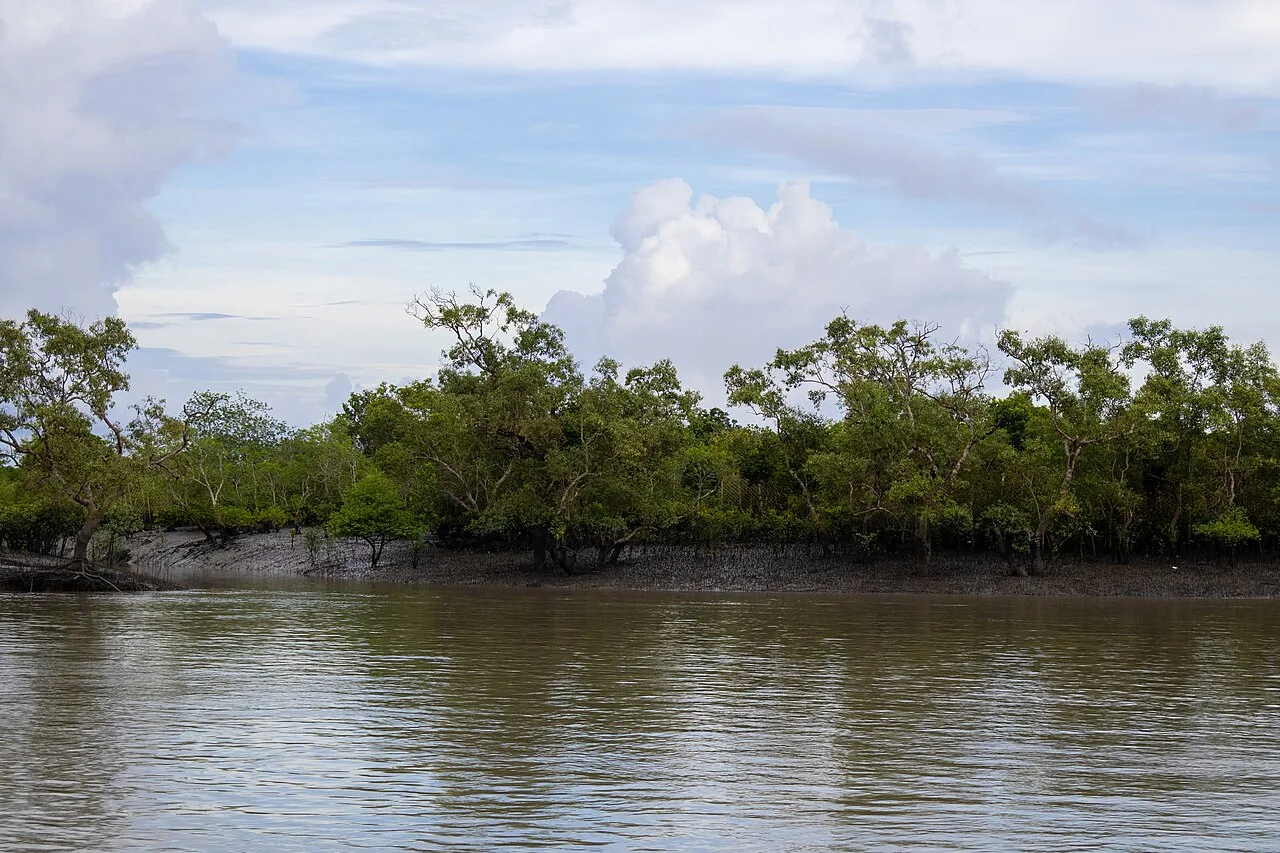
Sundarbans National Park
In West Bengal’s Ganges Delta, Sundarbans National Park protects mangrove habitat and Bengal tigers. Visitors come to explore its distinctive landscape and learn about its rich variety of wildlife.
Key facts · verified by Ghumoopedia editors
- Type of place
- National park / sanctuary
- Best time to visit
- October to March for the plains and coast; March to May and October to December for the Darjeeling hills
- Nearest railway station
- Canning · about 60 km (straight line)
- Verified
- 21 Nov 2026
Plan a trip from Sundarbans National Park — a day-by-day route through places nearby.
Sundarbans National Park lies in South 24 Parganas district, West Bengal, within the Sundarbans of the Ganges Delta. It adjoins Bangladesh’s Sundarban Reserve Forest and is situated to the south-west of Bangladesh. Mangroves spread across much of the delta, which is one of the largest reserves for Bengal tigers. Its animal life also includes many birds, reptiles and invertebrates, among them the salt-water crocodile. The forest and its wildlife are key reasons people visit the area. The park became the central zone of Sundarban Tiger Reserve in 1973, then received wildlife sanctuary status in 1977. It was formally made a national park on 4 May 1984. UNESCO added it to the World Heritage list in 1987, and it has held Ramsar site status since 2019. From 10 November 2001, it has also been recognised within the World Network of Biosphere Reserves under the Man and Biosphere Reserve designation. Forest administration in the Sundarbans began with the creation of a management division in 1869. In 1875, a substantial area of mangroves was made reserved forest under the Forest Act, 1865 (Act VIII of 1865); the remaining forest was reserved the following year. Administration then passed from the civil district authorities to the Forest Department. A forest division, the basic unit for management and administration, was set up in 1879, with its headquarters at Khulna in Bangladesh. The first management plan covered 1893–1898. In 1911, the region was described as unexplored waste country and left out of the census. It extended roughly 266 kilometres from the Hugli’s mouth to the Meghna’s mouth. West Bengal stretches from the Himalayan tea gardens of Darjeeling to the mangrove delta of the Sundarbans, with Kolkata's colonial architecture, the terracotta temples of Bishnupur, Tagore's Santiniketan and the Nawabi heritage of Murshidabad. The plains are hot and humid from March to June, receive heavy monsoon rain from June to September and are pleasant from November to February; the Darjeeling hills are cool year-round and cold in winter, and the coast and Sundarbans can be hit by cyclones in May and October–November. The usual best time to visit is October to March for the plains and coast; March to May and October to December for the Darjeeling hills. Timings, fees and access arrangements must be confirmed locally. For official information, see West Bengal Tourism at https://wbtourism.gov.in.
Why it matters
Sundarbans National Park, in South 24 Parganas, is the Indian core of the Sundarbans Tiger Reserve and part of the Ganges Delta’s extensive mangrove landscape. The park is important for conserving Bengal tigers and other wildlife adapted to tidal, brackish-water forests. UNESCO inscribed Sundarbans National Park on the World Heritage List in 1987. The area has also been recognised as a Ramsar site since 2019 and as part of the World Network of Biosphere Reserves since 2001. These designations recognise its ecological value, while the surrounding waterways and settlements also make it a significant landscape for local livelihoods and conservation.
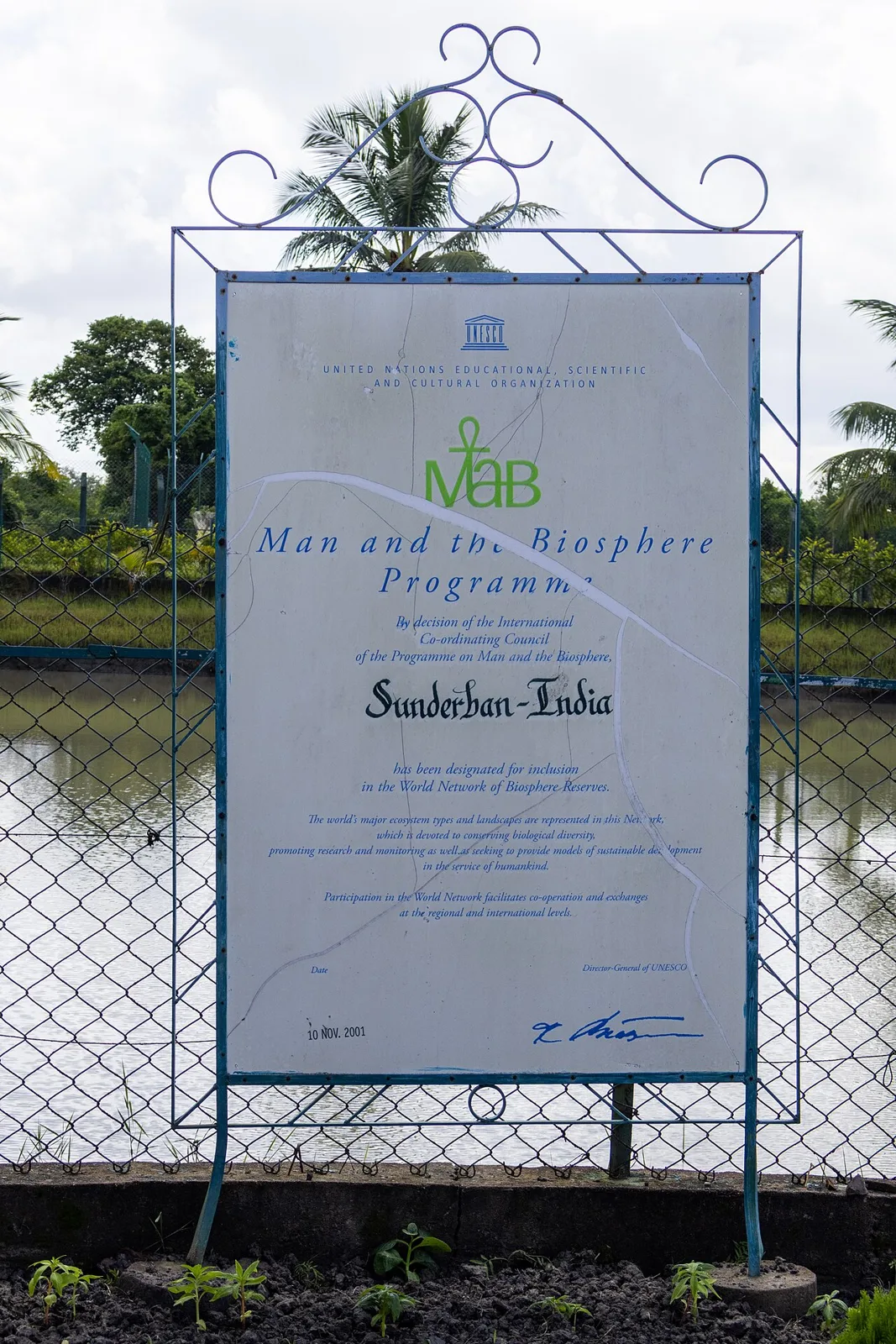
The Sundarbans is a natural delta landscape, not a built monument. Formal forest administration developed during the nineteenth century: a forest management division with jurisdiction over the area was established in 1869. In 1875, a large portion of the mangroves was declared reserved forest under the Forest Act of 1865; the remaining forest was reserved the following year and placed under the Forest Department. A forest division was created in 1879, with its headquarters at Khulna, now in Bangladesh. The first management plan covered 1893–1898. In 1911, the region was described in official records as largely unexamined and was excluded from the census. In the twentieth century, the present national park area became the core of the Sundarban Tiger Reserve in 1973 and a wildlife sanctuary in 1977. It was declared a national park on 4 May 1984. UNESCO inscribed it as a World Heritage Site in 1987; it became part of the World Network of Biosphere Reserves in 2001 and a Ramsar site in 2019. Conservation and management continue to be shaped by forest protection, tidal conditions and the needs of nearby communities.
Spend unhurried time at Sundarbans National Park: walk the marked paths, use official viewpoints and ask locally whether a guide, entry ticket or forest permission is needed. In the Sundarbans, stay on the boat or inside fenced watchtowers — tigers and crocodiles live here, and stepping onto the mud banks is forbidden. Wildlife sightings are never guaranteed — patience and quiet improve your chances. A comfortable itinerary is one main visit in the morning, a local meal at midday and a short nearby stop before an afternoon return. Use the district list on this site to find other places in South 24 Parganas, but check the route and its condition before combining stops. If a festival is on — such as Durga Puja, Kali Puja or the Poush Mela at Santiniketan — roads and stays can be busy, and the experience can be unforgettable. Leave no litter: many sites are protected by the communities around them.
Suggested itineraries
Half day: Reach an authorised launch point, take a permitted boat route to an official viewpoint or watchtower, then return to the gateway village; allow several hours, depending on tides and route. Full day: Start from a gateway village, take an authorised boat through approved creeks and viewpoints, pause for a meal arranged with your operator, then return before travel conditions or daylight become a concern. Gentler option: Arrange a shorter boat outing with easy boarding support, minimise transfers, and view the mangroves from the boat or an accessible official viewpoint; confirm steps and boarding arrangements in advance.
Life around the Sundarbans is closely connected to rivers, tides, forests and seasonal work. Bengali is widely spoken, alongside local speech varieties. River songs such as bhatiyali and folk performances, including Bonbibi narratives, reflect the region’s working landscapes and beliefs. Bonbibi is honoured in local traditions associated with people who enter forest areas, though access to the protected park itself is regulated. Everyday dress and customs vary between villages and communities. Visitors can learn about local culture through community-run experiences and respectful conversation, without treating rituals or residents as attractions or seeking access to private or restricted practices.
Local communities
Villages around the Sundarbans include Bengali-speaking communities whose livelihoods may involve fishing, farming, small businesses, boat services and tourism. Some residents have traditionally worked as honey collectors, known as mouals, or as forest-resource gatherers; such activities are subject to forest rules and are not a visitor activity. Boat crews, guides and homestay operators also support tourism. The protected forest and inhabited islands are distinct places, and visitors should not assume that residents can enter restricted areas freely. Ask before photographing people, respect local guidance, and choose operators who follow conservation and safety requirements.
Festivals & events
Bonbibi observances and folk performances take place in communities around the Sundarbans, with timing varying by village and local custom. Durga Puja and Kali Puja are widely celebrated in the region, generally in autumn, and can bring busy roads, crowded markets and high demand for accommodation. The Gangasagar Mela takes place on Sagar Island in South 24 Parganas around the winter pilgrimage season; it is a separate destination and may affect regional travel. Festival programmes and access arrangements change, so check locally before planning a boat trip or combining visits.
Local food in West Bengal includes macher jhol (fish curry), shorshe ilish (hilsa in mustard), kosha mangsho, luchi with alur dom, kathi rolls and phuchka in Kolkata, mishti doi, rosogolla and sandesh; in the Darjeeling hills, momos, thukpa, shaphaley and first-flush Darjeeling tea. Ask what is fresh that day; many small eateries cook a limited daily menu. Vegetarian travellers eat well across the state, and most towns also have fish and meat dishes. Remote sites may have no restaurant at all. Carry water and snacks, eat a proper breakfast before long drives, and ask your accommodation for a packed lunch if you are heading out early. Try a home-cooked or local thali meal when you can — it is often the best food on the route. Choose busy, clean places, drink sealed or filtered water, and carry your packaging back with you.
Shopping & local experiences
Look for locally made handicrafts, woven items, small keepsakes and packaged regional foods in gateway villages and markets, where available. Products and availability vary, so ask about materials and buy from local sellers when possible. Honey is associated with the region, but purchase only from a traceable, lawful source; do not collect forest products yourself. Small shops may have limited stock, so do not rely on finding specialist supplies after arrival. Avoid souvenirs made from wildlife, shells or other protected natural materials, and carry reusable bags to reduce waste.
The park protects a tidal mangrove ecosystem on the Ganges Delta, shaped by shifting channels, creeks, mudflats and brackish water. Mangrove plants, including species adapted to saline, waterlogged soils, help stabilise the banks and provide habitat for wildlife. The Sundarbans is recognised for its Bengal tiger population; salt-water crocodiles, deer, fishing cats, reptiles and many invertebrates also occur in the wider landscape. Birdlife includes waterbirds and forest species, with sightings varying by season, tide and location. This is a dynamic, protected habitat rather than a conventional walking park. Wildlife encounters are never guaranteed, and visitors should observe from authorised boats and viewpoints without disturbing animals.
October to March for the plains and coast; March to May and October to December for the Darjeeling hills
The nearest principal railway station by straight-line distance is Canning, roughly 60 km away. The nearest operating airport by straight-line distance is Netaji Subhas Chandra Bose International Airport, Kolkata, roughly 100 km away. These figures are calculated from map coordinates — actual road distance is longer. Howrah, Sealdah and Kolkata stations and Kolkata airport serve the south; New Jalpaiguri station and Bagdogra airport near Siliguri are the gateways to the Darjeeling hills and the Dooars. The final leg is by boat or ferry; tours usually start from Godkhali, Sonakhali or Canning, and boat movement depends on the tides. When comparing train, bus and flight, count the complete door-to-door time: a flight saves the most time only if the onward road transfer is short, while an overnight train can save a hotel night. Book your return before you leave, because seats fill quickly on weekends, festivals and holidays. Current train numbers, timings, return services and fares are not listed here; check IRCTC and NTES for trains and the airline's own schedule for flights. No permit is needed for Indian citizens to visit West Bengal. Entry to the Sundarbans Tiger Reserve needs a forest permit, usually arranged through a registered boat operator or the forest office at Sajnekhali or Canning; trekking in Singalila National Park (Sandakphu) needs an entry permit and a registered guide from Maneybhanjan. Durga Puja in October brings huge crowds to Kolkata, so book transport and stays well ahead.
Confirm onward and return timings on IRCTC / NTES, the state bus operator or your airline before travel. A dash means current timings or fares have not been verified.
Getting around
The final approach is usually to a river launch point such as Godkhali, Sonakhali or Canning, followed by a boat or ferry; services depend on tides and local conditions. Autos, local buses and hired cars may be available for reaching gateway villages, while taxis can be arranged from larger towns or Kolkata. Inside the park, movement is by authorised boat rather than road or independent walking. Check where your boat departs and how you will return before setting out. Parking may be available near some launch points, but facilities and space vary; confirm locally.
Hours, tickets & permissions
Access is controlled by the Forest Department and may require an entry ticket, forest permission, an authorised boat and, in some cases, a registered guide. Camera or other equipment rules may apply, and requirements can differ by route or season. Carry identification if requested and follow the instructions of the managing authority and boat operator. Entry arrangements, available routes, current hours and fees can change with weather, tides and conservation needs; confirm them with the Forest Department or a reliable local operator before travelling.
Facilities
Facilities vary between gateway villages, boat jetties and visitor sites. Toilets, drinking water, meals, parking and small shops may be available near commonly used launch points, but should not be assumed at every stop. Tour operators usually arrange boats and may provide a guide or meals; check exactly what is included. Accommodation is available in some gateway settlements and islands. ATMs and reliable mobile connectivity can be limited away from larger towns, so plan essentials before departure and confirm current facilities locally.
Accessibility
The visit generally involves road travel to a jetty, boarding a boat and remaining aboard for much of the excursion. Boat steps, narrow gangways, uneven jetties and changing water levels can make boarding difficult for wheelchair users, people with limited mobility and older visitors. Some official viewpoints or watchtowers may involve steps and walking on uneven ground; distances and shade vary. Strollers may be impractical on boats and at jetties. Ask the operator about the specific boat, boarding assistance, toilets and route before booking, and allow extra time for transfers. Heat, humidity and limited shade can add to the effort.
No permit is needed for Indian citizens to visit West Bengal. Entry to the Sundarbans Tiger Reserve needs a forest permit, usually arranged through a registered boat operator or the forest office at Sajnekhali or Canning; trekking in Singalila National Park (Sandakphu) needs an entry permit and a registered guide from Maneybhanjan. Durga Puja in October brings huge crowds to Kolkata, so book transport and stays well ahead. Carry a photo ID at all times and save the emergency number 112 and your accommodation's contact offline. Heat in summer and heavy rain in the monsoon are the main weather risks; carry water, avoid midday sun and allow extra time when roads flood. Stay on marked paths, keep away from cliff edges and fast water, and never approach wild animals.
Visitor rules
Follow Forest Department instructions and remain on authorised boats, routes and official visitor areas. Do not step onto mudbanks or enter restricted forest zones: tigers and crocodiles live here, and landing is prohibited in many areas. Keep quiet, do not feed or approach wildlife, and take all litter back with you; avoid single-use plastic where possible. Wear practical, modest clothing and secure footwear for jetties and boat boarding. Photography may be restricted in some places or subject to equipment rules. Do not disturb residents, rituals or other visitors, and follow your guide’s safety directions.
Photography
Soft morning or late-afternoon light can bring out the textures of mangrove roots, waterways and village landscapes, but conditions depend on weather and the boat route. Photograph only from authorised boats and viewpoints, and do not expect wildlife sightings. Check current camera rules and any equipment restrictions with the managing authority or operator. Do not use a drone unless you have explicit official permission; protected-area and aviation rules may apply. Avoid flash or behaviour that disturbs animals, and ask people before taking their photographs. Respect privacy and local ceremonies.
Choose a stay by the full journey to Sundarbans National Park, not just the district name. Kolkata offers the widest choice; on the coast, Digha and Mandarmani have many hotels, and the Sundarbans have eco-resorts and boat stays near Pakhiralay and Bali island. In summer, check air-conditioning; in the monsoon, check that the property is accessible if roads flood. Book in advance for weekends, festivals and the peak season (October to March for the plains and coast; March to May and October to December for the Darjeeling hills). Confirm the exact location, meals included, check-in time and cancellation terms in writing. Avoid sending money to unverified contacts or touts at stations. Carry some cash, as card and digital payments can be unreliable in remote areas.
Sajnekhali, Sudhanyakhali and Dobanki are recognised visitor areas within the wider Sundarbans, but access depends on permits, boat routes and current conditions. The Bhagabatpur Crocodile Project is another known destination in the Sundarbans region; check whether it can be included on your authorised itinerary. Gosaba and Canning are useful gateway towns, though they are not substitutes for park entry. Bakkhali and Henry Island are coastal destinations in South 24 Parganas that may suit a separate trip; check road conditions and travel time before combining them with a Sundarbans visit.
For couples, Sundarbans National Park rewards a slow pace: arrive early for soft light and fewer crowds, share a local meal and keep the evening free. A toy-train ride in the Darjeeling hills, a boat on the Hooghly at sunset or an evening of adda over tea in Kolkata makes the trip memorable. Public displays of affection can be frowned upon in conservative communities and at religious sites, so be discreet. Keep a buffer in your itinerary, because weather and road conditions can delay plans.
Q: How much time should I allow for a visit? A: Allow at least a substantial part of a day for the boat journey and authorised viewpoints; a full day or overnight stay can make travel less rushed. Q: When is a good season to visit? A: October to March is generally the more comfortable season for the plains and coast, but weather, tides and access conditions still vary. Q: Can I enter the park without a permit or boat? A: Entry is regulated. Check current Forest Department permissions, tickets, route rules and boat arrangements before travelling. Q: Is the visit suitable for children and older visitors? A: It can be, but boat boarding, heat and limited facilities may be challenging. Choose a suitable operator and check assistance and safety arrangements in advance. Q: Where can I stay nearby? A: Accommodation is available in some gateway villages and islands. Confirm location, transfers, meals and access arrangements with the property before booking.
Be the first to share photos, stories, advice or a helpful contact for Sundarbans National Park.
Loading…