
District · Andaman and Nicobar Islands
Nicobar
Nicobar district forms the southern part of the Andaman and Nicobar Islands, between the Bay of Bengal and the Andaman Sea, and includes Great Nicobar, India’s southernmost major island.
Nicobar district comprises a southern chain of islands in the Andaman and Nicobar archipelago, between the Bay of Bengal and the Andaman Sea. Its largest island, Great Nicobar, has dense tropical rainforest, rugged terrain, rivers and coastal habitats; Indira Point marks the southernmost point of India. The islands are home to Indigenous Nicobarese communities and the Shompen, a Particularly Vulnerable Tribal Group. Their histories and ways of life are distinct from those of the Andaman Islands. The 2004 Indian Ocean tsunami severely affected parts of the Nicobars, including Great Nicobar. Much of the district is ecologically sensitive, and access to many areas is restricted; it is not a conventional open-to-visitors destination.
Nicobar district forms the southern part of the Andaman and Nicobar Islands, between the Bay of Bengal and the Andaman Sea, and includes Great Nicobar, India’s southernmost major island. It is known for rainforest, coastal habitats and Indigenous Nicobarese communities, as well as the Shompen, a Particularly Vulnerable Tribal Group. Indira Point marks the southernmost point of India’s territory. The district’s ecological and cultural importance is inseparable from restrictions intended to protect its communities and environments. For most travellers, Nicobar is not an open sightseeing destination: visits require careful official checks and may not be possible.
Nicobar’s Indigenous communities have distinct histories and cultural traditions, formed through long-standing island life and connections across the Bay of Bengal. The islands appear in historical accounts and are associated with the name Nakkavaram in Chola-era records. European powers later asserted claims over the islands; Danish efforts to establish a lasting settlement were unsuccessful, and Britain took control in the nineteenth century. During the Second World War, Japanese forces occupied the Andaman and Nicobar Islands. After the war, the islands returned to British administration and became part of independent India. The Andaman and Nicobar Islands became a Union Territory in 1956. Nicobar was constituted as a separate district in 1974. The 2004 Indian Ocean tsunami caused severe loss and damage in parts of the district, including Great Nicobar, and reshaped settlements and coastlines. Administration and access today reflect both the needs of island communities and the protection of Indigenous peoples and sensitive habitats.
4 destination guides
Campbell Bay National Park
Campbell Bay National Park is a remote protected area on Great Nicobar, forming part of the Great Nicobar Biosphere Reserve. Visitors come to experience the island’s natural surroundings.
Car Nicobar
Car Nicobar is the northernmost island in the Nicobar group and one of Nicobar district’s administrative divisions. Its geographical position and administrative role may interest travellers learning about the islands.
Great Nicobar Island
Great Nicobar is an Indian island in the Nicobar group, distinguished by its size and far-southern position. Its location north of Sumatra is another point of geographical interest.
Indira Point
Indira Point is a village on Great Nicobar in the Nicobar district, marking the southern edge of Indian territory. Visitors come to see this remote geographic landmark.
Food traditions in the Nicobars reflect island life, local ingredients and the wider Andaman and Nicobar region. Fish and other seafood are important, often served with rice, while coconut features in cooking and drinks. Across the islands, food traditions also reflect the Bengali, Tamil and Malayali communities who settled in the archipelago; dishes may include fish curry, crab, prawns and grilled lobster. Menus can be limited, and what is available depends on the island and the day. These regional examples should not be taken as a guarantee of restaurant access or availability in the Nicobar district, where services are sparse and travel is restricted.
Nicobarese craft traditions include practical work such as weaving mats and baskets from plant materials, alongside skilled construction of wooden canoes. These traditions are closely connected to community life and the islands’ natural environment, rather than being simply souvenirs for visitors. Craft practices and materials can vary between communities, and access to Indigenous settlements is restricted. Travellers should not assume that crafts are available for purchase or seek to photograph makers without consent. In the wider Andaman and Nicobar Islands, craft offerings may also include work by settler communities, but these should not be presented as uniquely Nicobarese.
Christian festivals, especially Christmas, are observed by many Nicobarese communities, alongside community ceremonies whose customs and timing vary by island and village. Some traditional events are private or community-led rather than visitor festivals, so travellers should not assume they can attend. Celebrations generally do not create the broad tourist crowds seen at major mainland fairs, but accommodation and transport are already limited and may be further constrained by local arrangements. Check with the administration before planning around an event, and respect community invitations and restrictions.
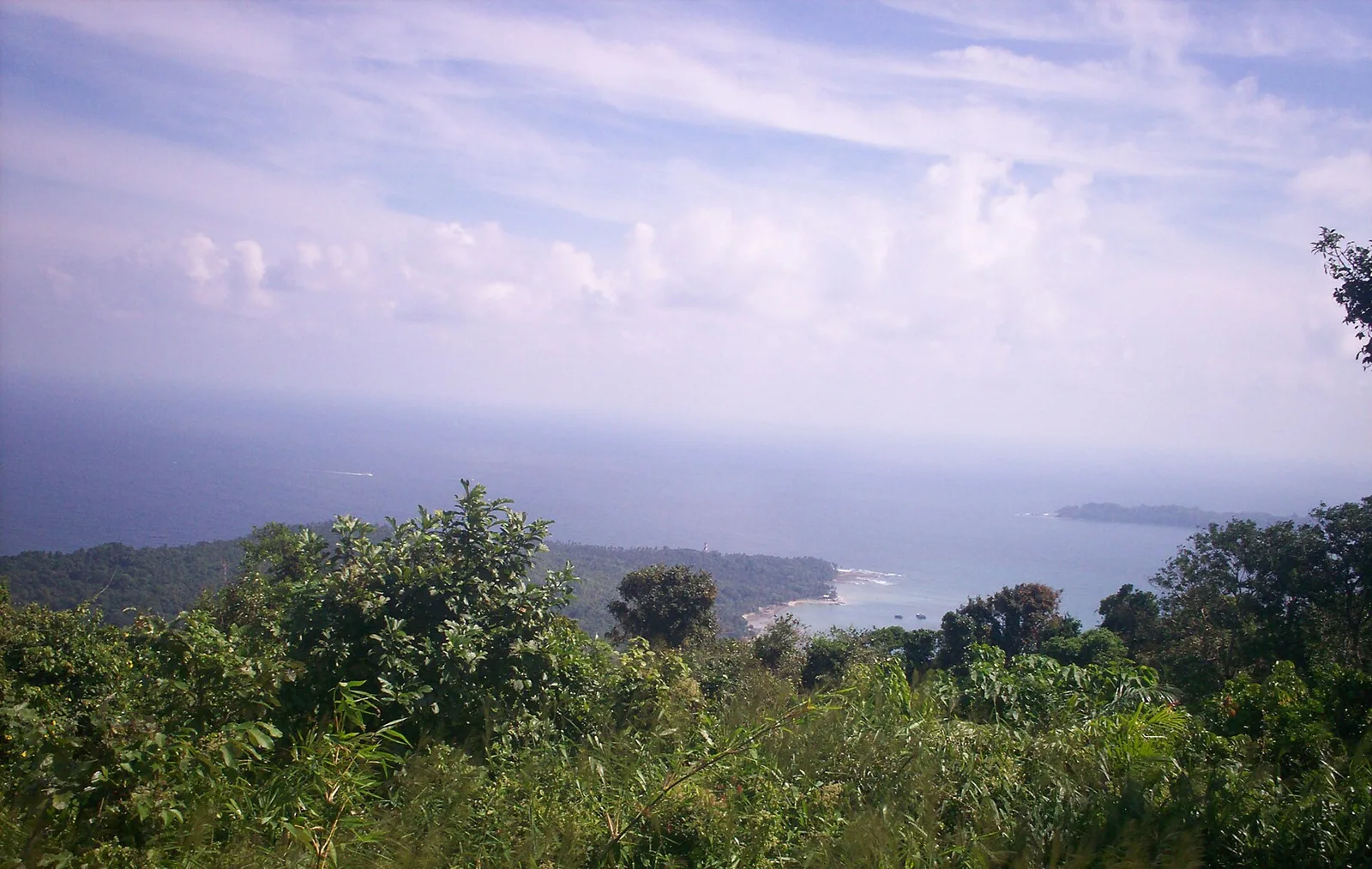
The district is a scattered island chain with forested interiors, hills, rivers and coastlines. Great Nicobar has rugged terrain and extensive tropical rainforest; low-lying coastal areas and beaches are especially vulnerable to storms and erosion. Car Nicobar is lower and more settled, with a distinct coastal landscape. Campbell Bay lies on Great Nicobar, while Indira Point is on its southern coast. Few roads serve the inhabited areas, and forest, protected land and sea crossings separate places. Landscape and conservation rules make overland travel and access to remote sites limited.
Nicobar has a tropical, humid climate, with warm conditions through the year. The southwest monsoon brings heavy rain and rough seas, while the later northeast monsoon can also bring unsettled weather. The comparatively drier period, broadly from January to April, is generally the more suitable season to consider travel, though showers and changes to sea services remain possible. Confirm conditions and transport before setting out. Pack light, breathable clothing, rain protection, sun protection, insect repellent and any personal medicines. Sturdy footwear is useful where movement on foot is permitted.
The main air gateway to the Andaman and Nicobar Islands is Veer Savarkar International Airport in Sri Vijaya Puram. There is no railway in the islands; mainland rail journeys connect only to ports with onward sea travel. Passenger ships sail to Sri Vijaya Puram from mainland ports, while inter-island services are limited and can change. Reaching the Nicobars is not a routine tourist journey: entry is regulated, permits may be required, and some areas are closed to visitors to protect Indigenous communities and ecosystems. Roads and local transport are limited, especially away from settled areas. Check current permissions and services locally before planning travel.
Transport within Nicobar is limited and varies by island. Roads serve parts of settled areas, including around Campbell Bay and on Car Nicobar, but there is no comprehensive road network linking the district’s islands. Local vehicles may be available by arrangement; do not assume regular buses, shared jeeps or taxis. Boats and inter-island services are limited, weather-dependent and subject to change. There is no routine tourist transport to many remote or protected places. Confirm current services and official access permissions before making any ground or sea journey.
2 days: Car Nicobar; overnight in an officially approved stay on Car Nicobar, only if entry and accommodation are confirmed. 3 days: Great Nicobar Island → Campbell Bay National Park; overnight in Campbell Bay, subject to access approval and available transport. 4 days: Great Nicobar Island → Campbell Bay National Park → Indira Point; overnight in Campbell Bay, only if each visit is specifically authorized. These are conditional outlines, not standard visitor itineraries.
Campbell Bay is the most practical base to ask about for an authorized visit to Great Nicobar, but lodging choices are limited and must be confirmed in advance. Accommodation on Car Nicobar is also not something visitors should assume will be available. Government or administrative lodging may be restricted to eligible guests; modest private stays may be limited. Do not plan on finding a hotel, homestay or dharamshala on arrival. Confirm both permission to visit and a confirmed place to stay through official channels before travelling.
Check official access rules before planning: entry permissions and protected-area restrictions apply in parts of Nicobar, and rules can differ by island and location. Confirm requirements with the Andaman and Nicobar Administration; do not rely on old advice or attempt entry into tribal reserves. Heavy rain, rough seas, coastal erosion and limited roads can disrupt travel. Mobile coverage and medical facilities are limited, especially away from settled areas. Carry essential medicines, use safe drinking water, and follow local guidance around wildlife and forest areas. Arrange transport and accommodation in advance and avoid travelling alone in remote places.
All districts of Andaman and Nicobar Islands
Q: How many days should I allow for Nicobar? A: There is no standard tourist itinerary. Allow time only after official access, transport and accommodation are confirmed; a visit may not be possible. Q: What is the best time to visit? A: January to April is generally comparatively drier, but weather and sea conditions can still affect travel. Q: What is the best base? A: Campbell Bay is the practical base to enquire about for authorized visits to Great Nicobar; lodging is limited and must be confirmed. Q: How do I get to Nicobar? A: The main air gateway is Sri Vijaya Puram. Reaching Nicobar requires separate, limited onward arrangements and official permission; it is not a routine tourist journey. Q: Is Nicobar suitable for families or elderly travellers? A: It is not an easy conventional holiday destination. Limited healthcare, transport and accommodation, along with access restrictions, make it unsuitable for many visitors.
This page draws on our 4 destination guides for Nicobar and is updated as our team checks it.
Be the first to share photos, stories, advice or a helpful contact for Nicobar.
Loading…