
Gooty Fort
Gooty Fort is a ruined hill fort in Gooty, Andhra Pradesh, also known as Ravadurg and Gutti Kota. Visitors come to see the remains and its hilltop location.
Key facts · verified by Ghumoopedia editors
- Type of place
- Heritage monument
- Best time to visit
- November to February; Araku and Horsley Hills are pleasant for much of the year
- Nearest railway station
- Anantapur · about 50 km (straight line)
- Nearest airport
- Kurnool (Uyyalawada Narasimha Reddy) Airport · about 87 km (straight line)
- Verified
- 21 Nov 2026
Plan a trip from Gooty Fort — a day-by-day route through places nearby.
The fort stands on a hill in Gooty, a town in Andhra Pradesh’s Anantapur district. Ravadurg and Gutti Kota are two other names used for the site. Its ruins are a reminder of the fort’s present condition. Gooty Fort is recognised as a monument of national importance protected by the central government. The town and fort share the name Gooty, while the hilltop position sets the fort apart within the town. Its ruined state and official status are central features of the site. Andhra Pradesh stretches from the beaches and harbour hills of Visakhapatnam through the lush Godavari–Krishna delta to the sacred hills of Tirumala and the granite gorge of Gandikota, with ancient Buddhist sites at Amaravati and Nagarjunakonda, the forts of Kondaveedu and Chandragiri and the cave systems of Belum and Borra. The coast is hot and humid from March to June, the southwest monsoon brings rain from June to September, and October to December can bring cyclones off the Bay of Bengal. The pleasant season is November to February; the Eastern Ghat hills around Araku stay cooler. The usual best time to visit is November to February; Araku and Horsley Hills are pleasant for much of the year. Timings, fees and access arrangements must be confirmed locally. For official information, see Andhra Pradesh Tourism at https://aptourism.gov.in.
Why it matters
Gooty Fort, also called Ravadurg and Gutti Kota, is a hilltop fort ruin overlooking the town of Gooty in Andhra Pradesh’s Anantapur district. Its position and surviving defensive remains offer a tangible record of the region’s changing military and political history. The fort is a centrally protected monument of national importance, as recorded in the existing guide; protection places it within the national heritage framework. Its importance is also local: the fort is a prominent landmark and part of Gooty’s historic landscape. It is best understood as a layered historic site rather than as a fully preserved palace or museum. Visitors should respect protected structures and follow any conservation notices on site.
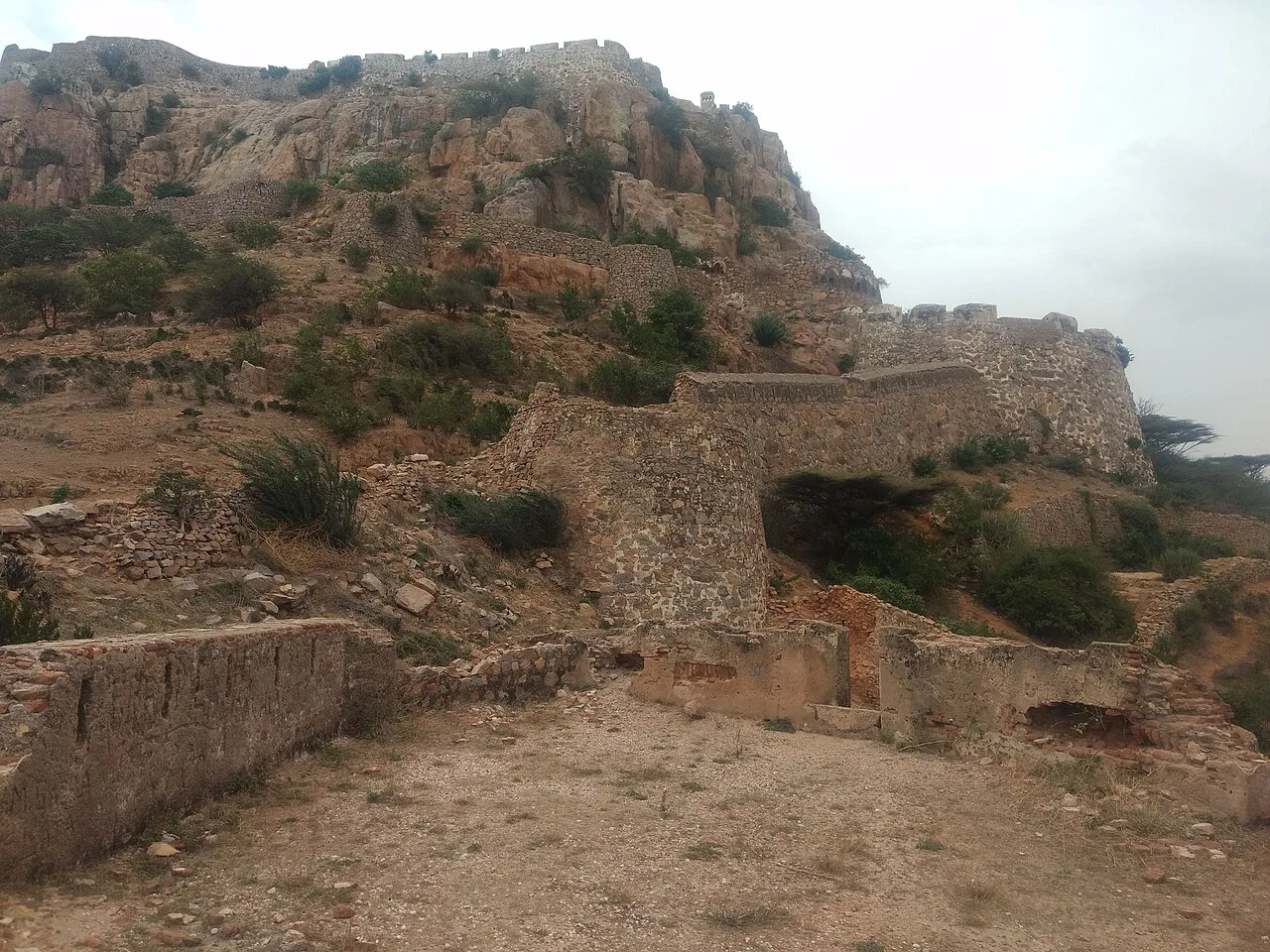
Gooty Fort occupies a rocky hill above the town and appears to have developed over more than one period. The origins and dates of its earliest defensive works are not established clearly enough to assign a single builder or founding year with confidence. The fort’s history reflects the succession of powers that contested parts of the Deccan and Rayalaseema region. Historical accounts associate it with the Maratha chief Morari Rao, who used the stronghold as a base. In the eighteenth century, the fort changed hands during conflicts involving Mysore’s ruler Hyder Ali and other regional powers. Its military value came from its elevated position and defensible approaches, although changing political and military conditions eventually reduced its strategic role. The fort later became a ruin rather than a continuously occupied seat of government. Today it is recognized as a centrally protected monument of national importance. Its surviving walls and structures are vulnerable to weathering, and visitors should not climb on or remove any historic fabric. For details on current conservation work, consult the Archaeological Survey of India or notices at the site.
Origin stories & folklore
No single, well-documented foundation legend for Gooty Fort can be stated confidently. The names Ravadurg and Gutti Kota are alternate names associated with the fort, rather than proof of a particular origin story. As with many old hill forts, visitors may hear oral stories about concealed treasure, hidden passages or secret stores. Such tales should be treated as folklore unless supported by reliable historical or archaeological evidence. The hill’s commanding position may also inspire stories about watchmen seeing approaching forces from far away, but the fort’s strategic setting is evident without relying on legend. Ask local residents about the stories they have heard, while distinguishing oral tradition from established history.
Architecture & design
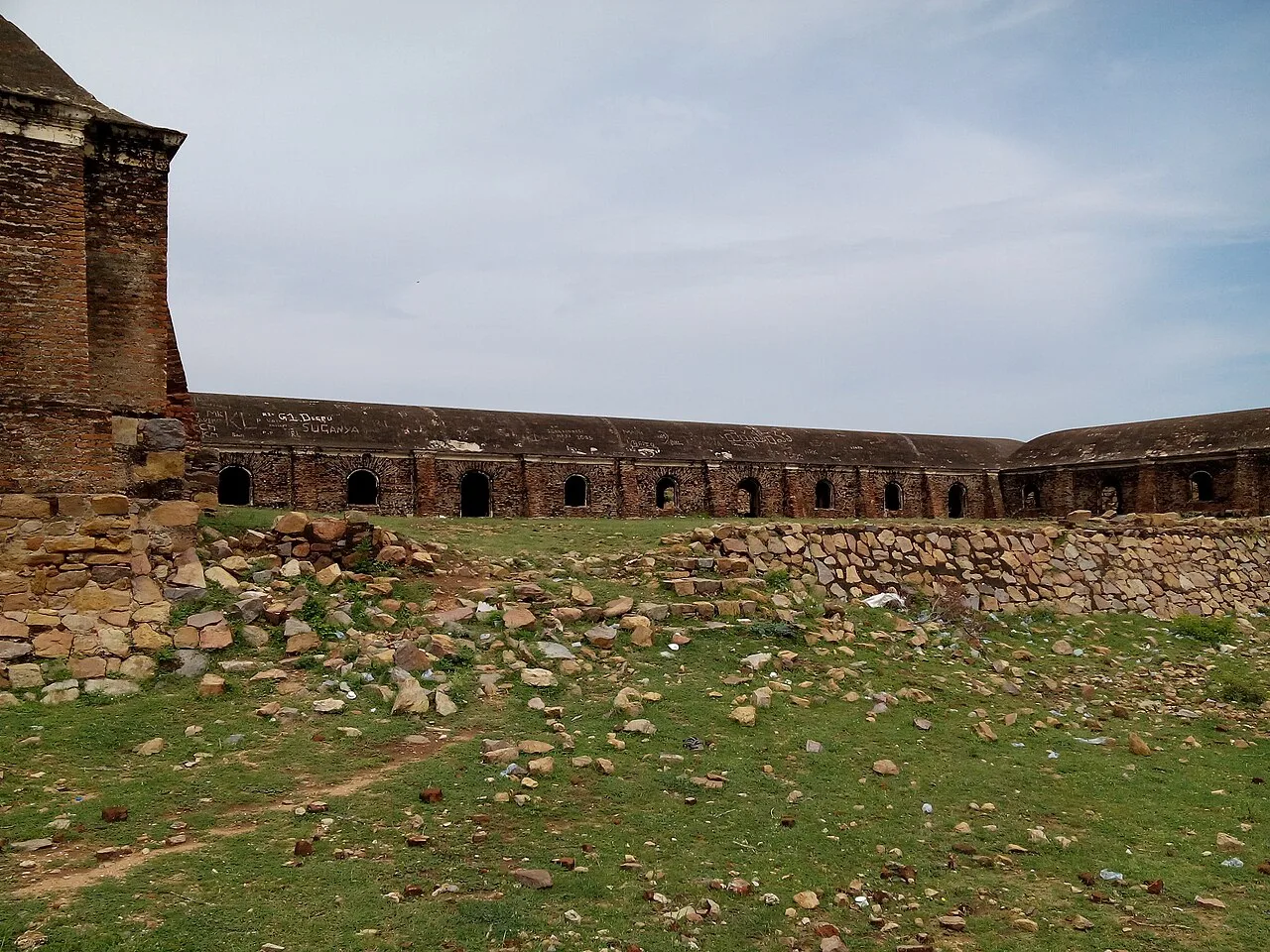
The fort is arranged across a steep, rocky hill, with defensive walls and masonry following the contours of the terrain. Its irregular layout reflects the practical demands of protecting a hilltop position rather than a formal, symmetrical plan. Surviving features include sections of stone ramparts, gateways, bastion-like projections and remains of structures within the fortified area. The ascent and internal routes use rough stone steps and uneven paths; the climb itself gives a sense of how the height helped defend the site. Water storage was essential to a fort on an exposed hill, and visitors may see remains of cisterns or other water-holding features. Much of the complex is now ruinous, and weathering has softened or damaged details. It is not a complete palace complex: the surviving architecture is chiefly valued for its defensive setting, construction and relationship to the hill.
Important objects & sculptures
Gooty Fort is an open ruin rather than a museum with a curated collection. Look for surviving stonework at gateways and along the ramparts, changes in masonry, and remains of structures and water-storage features within the fortified area. These fragments help explain how the hilltop was organised and defended. Carved details or inscriptions may be difficult to identify, weathered, or not clearly interpreted for visitors; do not assume that every marked stone is an inscription. No objects should be touched, moved or taken away. Read any interpretation boards on site, and ask an authorised guide if one is available to help distinguish historic features from later damage or repairs.
Explore Gooty Fort slowly and read the interpretation boards, use the official audio guide where available or hire an authorised guide to understand its history. Forts involve steep climbs on uneven stone steps; start early, carry water and descend well before dark. Early morning gives softer light, cooler air and smaller crowds. A comfortable itinerary is one main visit in the morning, a local meal at midday and a short nearby stop before an afternoon return. Use the district list on this site to find other places in Anantapur, but check the route and its condition before combining stops. If a festival is on — such as the Tirumala Brahmotsavam, the Godavari and Krishna Pushkarams, Sankranti or the Visakha Utsav — roads and stays can be busy, and the experience can be unforgettable. Leave no litter: many sites are protected by the communities around them.
Suggested itineraries
Half day: Reach the fort approach, allow about 2–3 hours to climb at a steady pace, explore the accessible ruins and viewpoints, then return to Gooty town for a meal. Full day: Visit the fort in the morning, take a relaxed meal in Gooty, then travel to Tadipatri to see its historic temple architecture if road conditions and time permit. Gentler option: Enjoy views of the hill from town, explore Gooty at street level and skip the steep climb; arrange transport and rest stops as needed.
Gooty is a living town as well as the setting for a historic monument. Telugu is widely spoken in the area, alongside other languages used by residents and travellers. Daily life in town follows local customs and the broader cultural rhythms of Anantapur district, including visits to temples, family gatherings and seasonal celebrations. The fort is not known as a regular venue for a specific music or dance tradition, and visitors should not expect staged performances. Dress at the site is generally informal, but modest clothing is considerate, particularly if visiting a place of worship nearby. Be courteous to residents, avoid disturbing worshippers, and ask permission before photographing people or private activities.
Festivals & events
Gooty and the wider region observe major Telugu festivals such as Sankranti, Ugadi and Dasara, usually in January, spring and autumn respectively; observances vary by community and local calendar. Temple festivals and fairs may also take place in nearby towns, but there is no single annual festival at the fort that visitors should assume will be held. Festival periods can bring more activity on local roads and greater demand for transport or accommodation. Check locally for events during your visit, and allow extra time if a nearby celebration is under way. Be respectful around processions and rituals, and do not enter restricted areas to take photographs.
Local food in Andhra Pradesh includes Andhra meals on a banana leaf with fiery gongura and avakaya pickles, pesarattu with upma, pulihora, Rayalaseema ragi sangati, fresh seafood along the coast, bandar laddu and pootharekulu sweets, and Tirupati laddu prasadam. Ask what is fresh that day; many small eateries cook a limited daily menu. Andhra food is famously spicy — ask for 'medium' if you are unsure, and cool down with curd rice. In Tirupati and other temple towns the food is strictly vegetarian. Remote sites may have no restaurant at all. Carry water and snacks, eat a proper breakfast before long drives, and ask your accommodation for a packed lunch if you are heading out early. Try a home-cooked or local thali meal when you can — it is often the best food on the route. Choose busy, clean places, drink sealed or filtered water, and carry your packaging back with you.
Shopping & local experiences
Gooty town is a practical place to look for everyday snacks, provisions and locally prepared meals rather than specialist fort souvenirs. Small shops and markets may offer regional food products or household goods; availability varies, so ask residents where local produce is sold. Anantapur and other larger towns provide more shopping options. There may be no official shop at the fort, and visitors should be cautious about buying objects claimed to be archaeological finds. Choose locally made goods where available, and avoid purchasing antiquities, carved fragments or anything removed from a protected site.
November to February; Araku and Horsley Hills are pleasant for much of the year
The nearest principal railway station by straight-line distance is Anantapur, roughly 50 km away. The nearest operating airport by straight-line distance is Kurnool (Uyyalawada Narasimha Reddy) Airport, roughly 87 km away. These figures are calculated from map coordinates — actual road distance is longer. Visakhapatnam, Vijayawada and Tirupati are the main rail and air gateways; Rajahmundry serves the Godavari districts, and Renigunta is the railhead for Tirumala. APSRTC buses connect the district towns, and shared autos cover the last stretch to most temples and beaches; for Papikondalu and Araku, book the packaged boat or road trip from Rajahmundry or Visakhapatnam. When comparing train, bus and flight, count the complete door-to-door time: a flight saves the most time only if the onward road transfer is short, while an overnight train can save a hotel night. Book your return before you leave, because seats fill quickly on weekends, festivals and holidays. Current train numbers, timings, return services and fares are not listed here; check IRCTC and NTES for trains and the airline's own schedule for flights. No permit is needed to visit Andhra Pradesh. For Tirumala, book darshan in advance on the official TTD website — Special Entry Darshan tickets sell out weeks ahead, and the free sarva darshan queue can take many hours; the TTD dress code (dhoti or kurta-pyjama for men, saree or salwar for women) is enforced inside the temple. Forest areas such as Papikondalu and Maredumilli may need forest-department entry permission, and boats on the Godavari are run by licensed operators.
Confirm onward and return timings on IRCTC / NTES, the state bus operator or your airline before travel. A dash means current timings or fares have not been verified.
Getting around
Gooty is served by road and rail connections, and local buses and auto-rickshaws can help visitors reach the town’s central areas. From town, ask locally about the current drop-off point and approach to the fort; the final ascent is on foot over uneven terrain. Taxis or hired cars can be useful for reaching Gooty from other district towns or for combining stops, while parking availability near the approach should be checked locally. Shared autos may operate on local routes, but service and routes can vary. Carry water for the climb and arrange your return transport before beginning the walk.
Hours, tickets & permissions
Entry arrangements can change with conservation work, weather, security needs or local management. A ticket, permit or camera restriction may apply, and rules can differ for groups or commercial photography. Do not assume that access is unrestricted simply because parts of the fort are visible from town. Confirm current opening arrangements, entry requirements and any fees with the Archaeological Survey of India or the relevant local authority before setting out. Follow signs and staff instructions, and do not enter closed or unstable sections.
Facilities
Facilities on the hill may be limited. Do not rely on toilets, drinking-water points, food stalls, seating or shade being available at the fort; check locally before the climb and carry water. Gooty town usually offers basic food options and everyday services, while a wider choice of supplies may be available in larger towns. Parking, interpretation boards and authorised guides may be available near the approach, but provision can vary. ATMs and other services are more likely to be found in town than on the hill. Take litter back with you.
Accessibility
The fort involves a steep uphill walk over rough, uneven stone steps and paths. The distance and effort depend on the point of entry and how far visitors explore, and the exposed hill offers limited shade in places. The route is not suitable for wheelchairs or most strollers, and there are no grounds to assume that ramps or lifts are provided. Older visitors and anyone with balance, heart or mobility concerns should assess the climb carefully and avoid unstable sections. Take breaks, wear shoes with good grip and turn back if the path or weather feels unsafe. A town-level visit with views of the hill is a gentler alternative.
No permit is needed to visit Andhra Pradesh. For Tirumala, book darshan in advance on the official TTD website — Special Entry Darshan tickets sell out weeks ahead, and the free sarva darshan queue can take many hours; the TTD dress code (dhoti or kurta-pyjama for men, saree or salwar for women) is enforced inside the temple. Forest areas such as Papikondalu and Maredumilli may need forest-department entry permission, and boats on the Godavari are run by licensed operators. Carry a photo ID at all times and save the emergency number 112 and your accommodation's contact offline. Heat in summer and heavy rain in the monsoon are the main weather risks; carry water, avoid midday sun and allow extra time when roads flood. On forts, keep away from unfenced edges, especially in mist or rain, and do not climb after dark.
Photography
Early morning generally offers softer light, cooler conditions and clearer views; late-day light can also suit the stonework, but plan to descend well before dark. Photography of the ruins and landscape is usually appropriate where access is permitted, though current camera or commercial-use rules should be checked with the managing authority. Do not climb walls or enter closed structures for a better angle. Drone use may be restricted by heritage, aviation or security rules, so obtain the necessary permissions rather than flying on assumption. Ask before photographing residents, worshippers or rituals.
Choose a stay by the full journey to Gooty Fort, not just the district name. Visakhapatnam, Vijayawada and Tirupati offer the widest choice; Araku has AP Tourism resorts and tribal homestays, and Rajahmundry is the base for Godavari cruises. In summer, check air-conditioning; in the monsoon, check that the property is accessible if roads flood. Book in advance for weekends, festivals and the peak season (November to February; Araku and Horsley Hills are pleasant for much of the year). Confirm the exact location, meals included, check-in time and cancellation terms in writing. Avoid sending money to unverified contacts or touts at stations. Carry some cash, as card and digital payments can be unreliable in remote areas.
Within the wider Anantapur region, Tadipatri is known for historic temples, including Chintala Venkataramana Temple and Bugga Ramalingeswara Temple. Anantapur town offers additional services and a base for exploring the district. Penukonda Fort and Lepakshi are worthwhile heritage destinations in the neighbouring Sri Sathya Sai district, but require separate route planning and should not be treated as a quick detour from Gooty. Check road conditions, site access and travel time before combining destinations. The district and administrative boundaries have changed over time, so confirm current local details when planning a multi-stop trip.
For couples, Gooty Fort rewards a slow pace: arrive early for soft light and fewer crowds, share a local meal and keep the evening free. A sunrise over the Araku valley, a Godavari cruise at dusk from Rajahmundry or a walk along Rushikonda beach makes the trip memorable. Public displays of affection can be frowned upon in conservative communities and at religious sites, so be discreet. Keep a buffer in your itinerary, because weather and road conditions can delay plans.
Q: How much time should I allow for Gooty Fort? A: Allow a few hours for the climb and a careful visit; the time depends on fitness, weather and how much of the ruin is accessible. Q: When is a comfortable season to visit? A: November to February is generally more comfortable for travel in Andhra Pradesh. Start early to reduce exposure to heat. Q: Is there an entry ticket or permit? A: Entry rules and any fees can change. Confirm current requirements with the Archaeological Survey of India or the local managing authority. Q: Is the fort suitable for children or elderly visitors? A: The steep, uneven climb can be tiring and is not suitable for everyone. Supervise children closely; less mobile visitors can enjoy views from town instead. Q: Can I stay near the fort? A: Gooty may have basic local accommodation, but options can be limited. Check availability in advance or consider staying in a larger nearby town.
Be the first to share photos, stories, advice or a helpful contact for Gooty Fort.
Loading…