
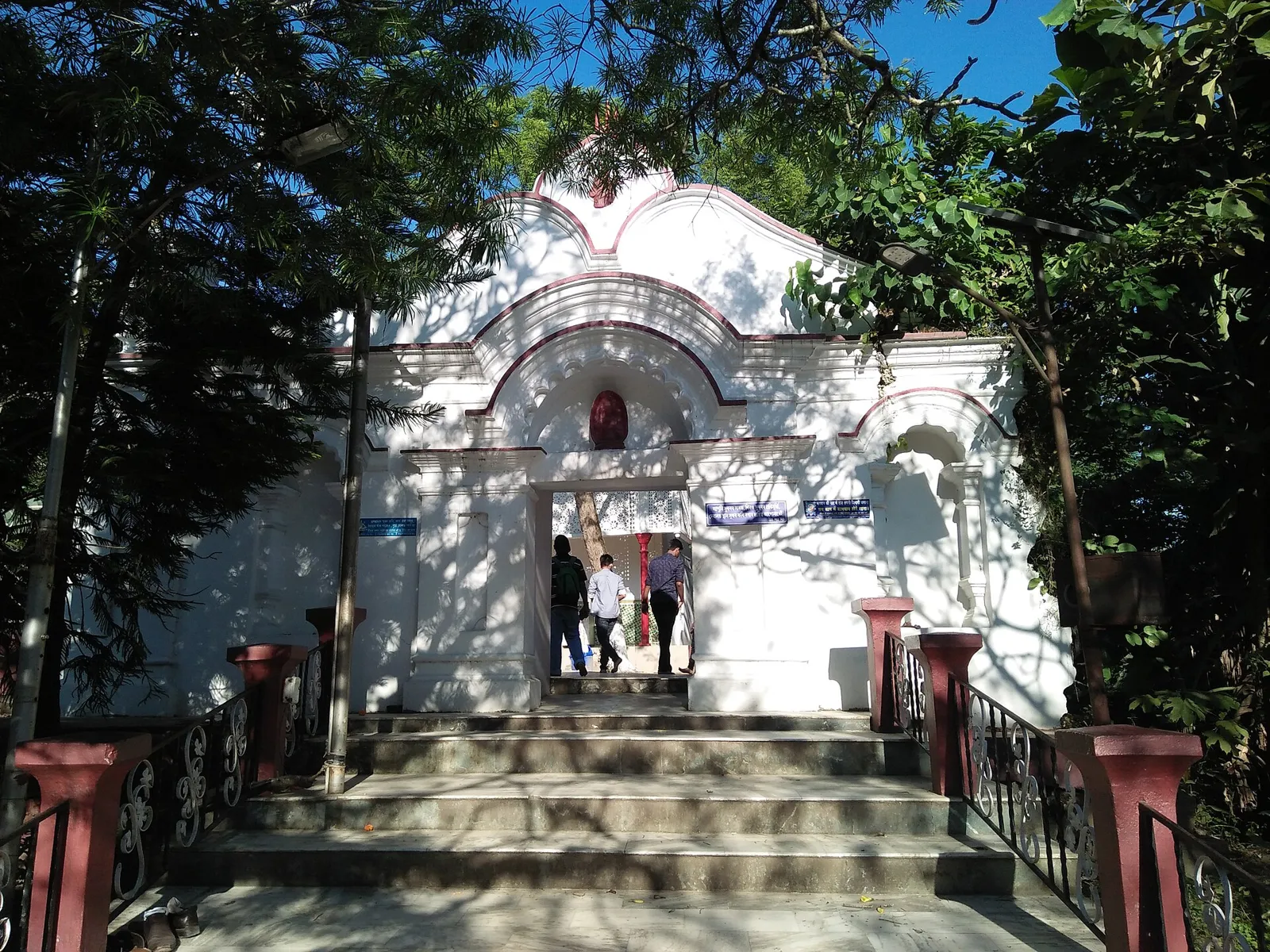
Umananda Temple
Umananda Temple is a Shiva shrine on Umananda Island in the Brahmaputra, Assam. Visitors come to see the temple and reach the island by country boat.
Key facts · verified by Ghumoopedia editors
- Type of place
- Temple / pilgrimage site
- Best time to visit
- October to April
- Nearest railway station
- Guwahati · about 5 km (straight line)
- Verified
- 21 Nov 2026
Plan a trip from Umananda Temple — a day-by-day route through places nearby.
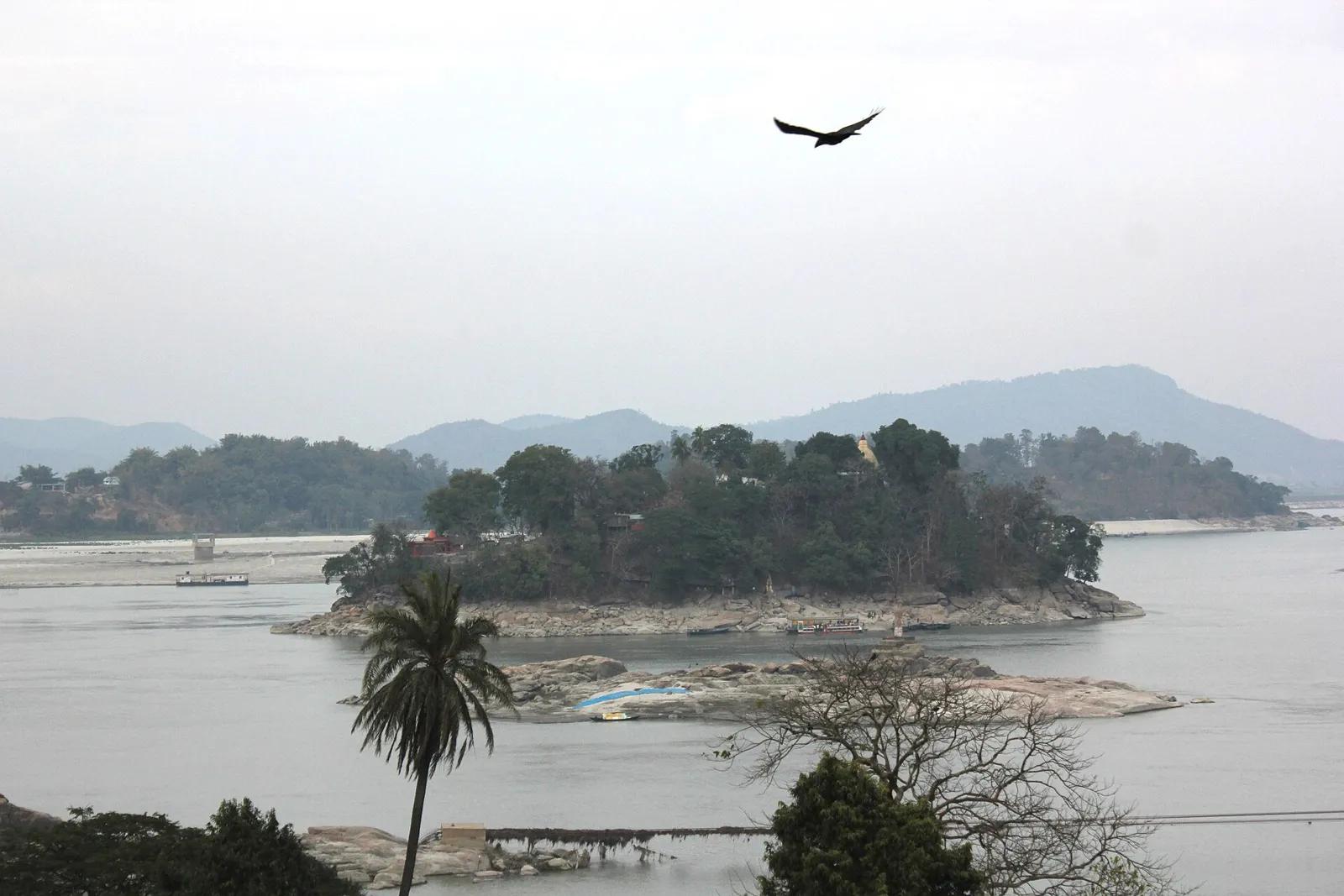
In Assam’s Kamrup Metropolitan district, Umananda Devaloi is dedicated to Shiva. The shrine stands on Umananda Island, also known as Peacock Island, in the Brahmaputra at Guwahati, across from the Kamrup Deputy Commissioner’s office and Kachari Ghat. The island is described as the world’s smallest inhabited river island. Country boats carry visitors from the Brahmaputra’s bank to the island. The temple is built on a hill called Bhasmacala. Ahom King Gadadhar Singha ordered its construction in 1694 CE, and the 1897 Assam earthquake brought the building down. Assam’s Vaishnavite satras, Ahom heritage, Bihu festivals and silk-weaving traditions shape everyday life well beyond the major monuments. The Brahmaputra plains are hot and humid from April to September, with heavy monsoon rain and seasonal floods. Winters are mild and pleasant, with morning fog along the river. The usual best time to visit is October to April. Days are short in Northeast India: the sun can set before 5 pm in winter, so plan to reach and leave Umananda Temple in daylight. Timings, fees and access arrangements must be confirmed locally. For official information, see Assam Tourism at https://tourism.assam.gov.in.
Why it matters
Umananda Temple is a living Shiva shrine on Umananda Island in the Brahmaputra, within Guwahati in Kamrup Metropolitan district. Its island setting makes worship and access closely tied to the river, and the temple is an important local pilgrimage destination as well as a distinctive part of Guwahati’s religious landscape. It is associated with the Ahom period and is visited by devotees and travellers exploring the city. The island is popularly described as the world’s smallest inhabited river island, though this description is not an official designation. No UNESCO or Archaeological Survey of India recognition is confirmed here; check current heritage information with the relevant authorities.
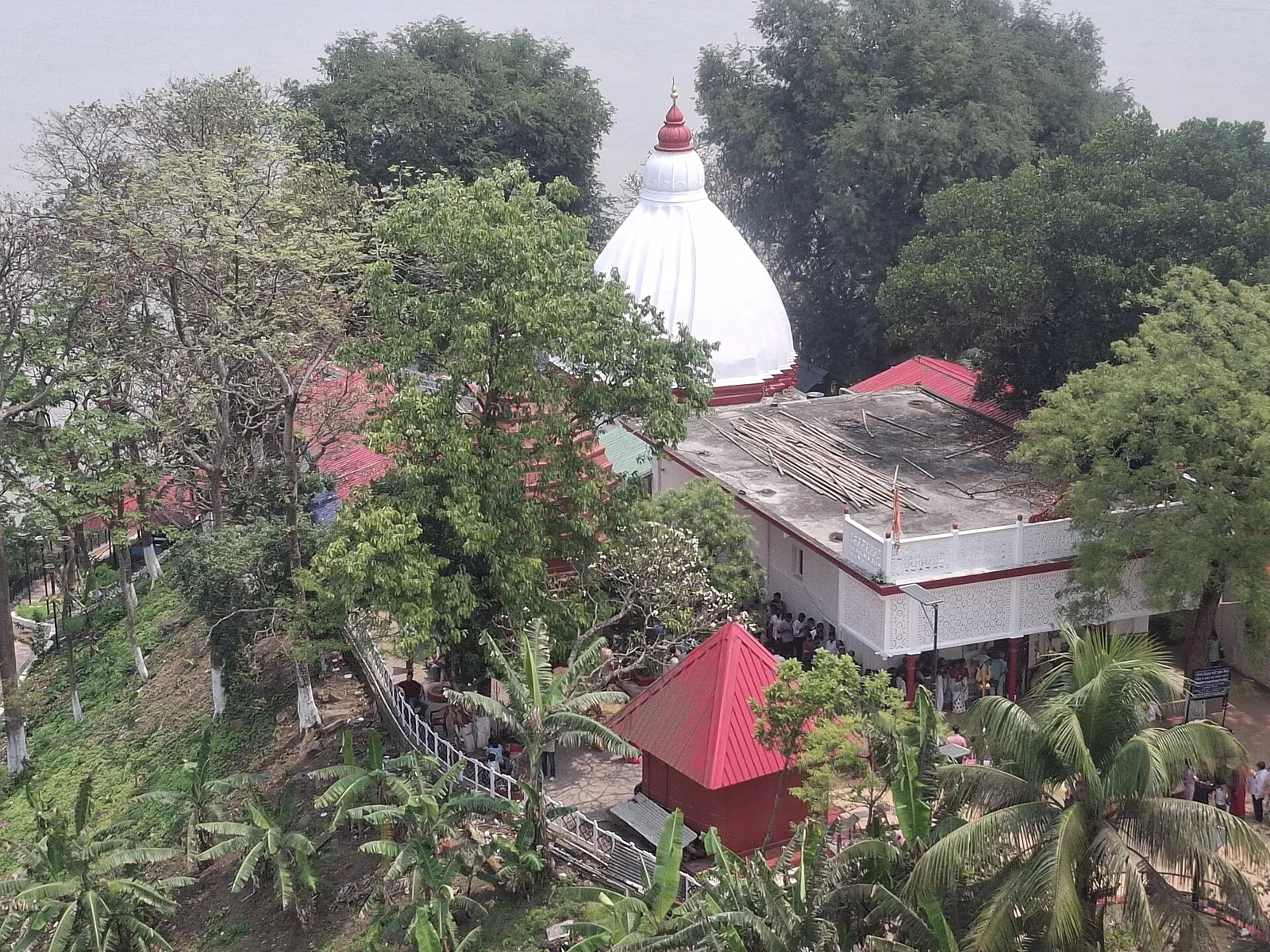
The temple is traditionally dated to 1694 CE. Accounts attribute its construction to the Ahom king Gadadhar Singha, who is said to have ordered a shrine to Shiva on the hill known as Bhasmacala, on Umananda Island. The site became part of Guwahati’s religious life, drawing worshippers to a sanctuary reached by crossing the Brahmaputra. The temple was badly damaged in the 1897 Assam earthquake. It was subsequently repaired or rebuilt, with accounts commonly crediting a local merchant with the work; details and dates of that restoration are not consistently recorded. The present shrine therefore reflects both its Ahom-period origin and later repairs. The island’s river setting has continued to shape the visitor experience, including the need to use boats for the final approach. Umananda remains an active place of worship rather than solely a historic monument. For current information about conservation status, management and any restoration work, consult the temple authorities or relevant government heritage offices.
Origin stories & folklore
According to local tradition, Shiva chose the hill on Umananda Island as a place of retreat and created it for the pleasure of his consort, Uma, another name for Parvati. The name Umananda is popularly explained through Uma and ananda, or joy. The hill is also called Bhasmacala; one belief connects its name with Shiva reducing Kamadeva, the god of love, to ashes. Stories vary in their details, and these accounts belong to religious tradition rather than verified history. Visitors may hear versions from worshippers or local guides. They are best understood as part of the living sacred meaning of the island, rather than as a single authoritative account.
Architecture & design
The temple stands on the rocky height of Bhasmacala, above the Brahmaputra, and is approached from the island’s landing area by a walk and steps. The shrine is compact, with masonry construction and a towered roof; its present appearance includes the effects of repairs following the 1897 earthquake. The temple’s setting is a defining architectural feature: the hill, river and small island form a close precinct around the sanctuary. Sculpted images and decorative details associated with Hindu deities can be seen around the shrine and on nearby rock surfaces. The site is not a large complex of monumental halls; its scale and uneven terrain are characteristic of a hilltop shrine. Visitors should follow barriers and caretaker directions, since not every surface or area is necessarily open for close inspection.
Important objects & sculptures
The principal focus is the Shiva shrine and its sacred image, approached as a place of worship rather than a museum display. Visitors may notice carved or sculpted figures associated with Hindu deities on the temple and surrounding rock, including familiar forms such as Ganesha and other gods. Their condition and visibility can vary, and the island’s surfaces are exposed to weather. Offerings placed by devotees are part of current worship, not permanent exhibits; do not handle or move them. No major public collection or securely documented set of inscriptions is identified here. Ask a caretaker before approaching carvings or photographing details, and do not climb on, rub or mark the stonework.
Religious significance
Umananda is a Hindu temple dedicated to Shiva. Devotees visit to offer prayers and flowers, make offerings, and seek darshan of the deity. The shrine is especially meaningful as an active place of worship set apart on an island in the Brahmaputra; for many visitors, the boat crossing is part of the pilgrimage experience. Worship practices may vary by day and occasion, and visitors should allow priests and worshippers to carry out rituals without interruption. The temple is also connected in local belief with Uma or Parvati and with stories explaining the sacred name of the hill. Non-Hindu visitors are generally best guided by posted instructions and the directions of temple staff, particularly around the sanctum and ritual spaces.
Visit Umananda Temple with time to observe daily rituals respectfully. Follow the posted rules on footwear, photography and dress, walk clockwise around Buddhist shrines and prayer wheels, and avoid interrupting worshippers. Ask caretakers which areas are open to visitors. A comfortable itinerary is one main visit in the morning, a local meal at midday and a short nearby stop before an afternoon return. Use the district list on this site to find other places in Kamrup Metropolitan, but check the actual road route and its condition before combining stops. If a festival is on, local roads and stays can be busy — and the experience can be unforgettable. Leave no litter: many sites in Assam are protected by the communities who own them.
Suggested itineraries
Half day: Reach Kachari Ghat, confirm the boat crossing, visit Umananda Temple and allow time for the return journey (about 3–4 hours overall, depending on access and waiting). Full day: Visit Umananda Temple in the morning, return to Guwahati for a local meal, then choose one nearby stop such as Assam State Museum or Ugratara Temple (about 6–8 hours, including transfers). Gentler option: Ask locally about the boat and landing conditions; make the crossing only if comfortable, take the island paths slowly and keep the visit to the accessible areas indicated by staff.
The temple belongs to the wider cultural life of Guwahati and Assam, where Assamese and other regional languages are heard alongside Hindi and English. The island setting brings together pilgrimage, river travel and everyday city life. Visitors may encounter Assamese customs of prayer and offerings, and local people can advise on respectful conduct. Assam’s Bihu celebrations, music, dance and textile traditions are part of the broader regional culture, though they are not necessarily performed at the temple. Dress in a manner suitable for a place of worship, speak quietly near rituals and ask before photographing people. The river and its changing conditions remain an important part of how residents and visitors experience the shrine.
Festivals & events
Maha Shivaratri is the principal annual occasion associated with Shiva worship at Umananda, and it can draw increased numbers of devotees to the island. Mondays and the Hindu month of Shravan may also be important periods for Shiva worship, though the scale of observance can vary. Bihu festivals are celebrated across Assam and may affect travel and accommodation in Guwahati, but should not be assumed to be temple events. During busy religious occasions, boat access, landing areas and paths may feel crowded. Confirm local arrangements before setting out, and allow extra time for the crossing and for worshippers to move through the site.
Local food in Assam includes masor tenga (a tangy fish curry), khar, duck with ash gourd, pitha rice cakes, aloo pitika and, of course, Assam tea. Ask what is fresh that day; many small eateries cook a limited daily menu. Pork, beef, fish and fermented ingredients are common in tribal cuisines, so vegetarian travellers should explain their needs clearly — rice, dal, vegetables and eggs are usually possible in towns. Remote sites may have no restaurant at all. Carry water and snacks, eat a proper breakfast before long drives, and ask your accommodation for a packed lunch if you are heading out early. If food or prasad is offered at the shrine, accept it according to local custom. Choose busy, clean places and carry your packaging back to town.
Shopping & local experiences
Guwahati markets and shops are a better place to look for souvenirs than the island, where retail facilities may be limited. Assam is known for silk textiles, including Muga, Eri and Pat silk; check labels and buy from a reputable seller. Handwoven gamusa cloth, bamboo or cane products, and locally made handicrafts are other regional items to explore. Ask about provenance and materials, and avoid buying objects presented as archaeological or temple antiquities. For food, look for Assamese meals and local snacks in the city. Carry purchases back responsibly and do not leave packaging on the island.
October to April
The nearest principal railway station by straight-line distance is Guwahati, roughly 5 km away. The nearest operating airport by straight-line distance is Lokpriya Gopinath Bordoloi International Airport, Guwahati, roughly 20 km away. These figures are calculated from map coordinates, so actual road distance and travel time are longer. Guwahati is the main rail and air hub for the region, and most long-distance journeys connect through it. For the final leg, Assam State Transport Corporation (ASTC) and private Volvo/sleeper coaches link district towns; shared taxis usually leave early in the morning and depart only when full. A private taxi gives more flexibility for remote sites. When comparing train, bus and flight, count the complete door-to-door time: a flight saves the most time only if the onward road transfer is short, while an overnight train to Guwahati plus a road journey can save a hotel night. Book your return before you leave, because seats on shared vehicles and the few daily flights fill quickly. Current train numbers, timings, return services and fares are not listed here; check IRCTC and NTES for trains and the airline’s own schedule for flights. No Inner Line Permit is needed to visit Assam.
Confirm onward and return timings on IRCTC / NTES, the state bus operator or your airline before travel. A dash means current timings or fares have not been verified.
Getting around
From central Guwahati, reach the Brahmaputra riverbank near Kachari Ghat, opposite the Deputy Commissioner’s office, and ask locally about boat access to Umananda Island. Country boats are described as serving the crossing, but services, boarding points and conditions may change, so confirm on arrival. Taxis, auto-rickshaws and local buses can be useful for reaching the riverfront; availability and stopping points vary. Parking is a local matter near the ghat, so check before leaving a vehicle. Once on the island, expect to continue on foot over uneven paths and steps. Boat travel is weather- and river-dependent.
Hours, tickets & permissions
Entry arrangements may depend on temple worship, boat access, weather and local management. Visitors may encounter rules about footwear, access to the sanctum, photography, offerings or entry to particular areas. Tickets, camera charges, permits and identification requirements should not be assumed; check locally before travelling. Confirm current visiting hours and any fees with the temple’s managing authority or the boat operator, since arrangements can change. Plan the island visit in daylight and leave enough time for the return crossing.
Facilities
Facilities on the island may be limited and can vary with visitor numbers and local arrangements. Basic services such as toilets or drinking water should be checked on arrival rather than assumed. Food options are more likely to be found back in Guwahati than on the island, so carry water in a reusable bottle and avoid bringing unnecessary packaging. Parking, ATMs, shops and more extensive visitor services are generally easier to find in the city near the riverfront. Guides may be available locally, but availability is not guaranteed. Confirm boat arrangements and any facility needs before crossing.
Accessibility
Reaching the temple involves a boat crossing and, after landing, a walk over uneven ground and steps on a hill. The route can be tiring, and shade may be limited in exposed areas. These conditions may make the visit difficult for wheelchair users, people using strollers and visitors with limited mobility; do not assume ramps, lifts or step-free access. Older visitors may wish to travel with a companion, take frequent rests and check the landing and path conditions before boarding. River levels, weather and crowding can affect how straightforward the crossing and approach feel. Ask temple staff or boat operators about current conditions.
No Inner Line Permit is needed to visit Assam. Carry a photo ID at all times; checkpoints are common. Save the emergency number 112 and your accommodation’s contact offline. Heat, humidity and sudden downpours are the main weather risks; carry water and rain protection. Respect community rules, private property and posted instructions. Avoid long road journeys after dark and during heavy rain. Check official advisories for the region before travel, and follow local guidance if access changes.
Visitor rules
Follow instructions from temple staff and boat operators, and keep clear of ritual areas unless invited closer. Remove footwear where required and dress respectfully for a place of worship. Do not enter restricted spaces, touch sacred objects without permission, interrupt prayers or leave litter. Avoid single-use plastics and take waste back to the mainland if disposal facilities are not available. Photography may be restricted in the sanctum or during worship; ask before taking pictures. Be cautious on steps and near the river, and do not climb on or damage carvings and rock surfaces.
Photography
The river, island and temple can be visually striking in soft morning light, while the open setting may also produce strong glare later in the day. Check locally whether photography is permitted inside the shrine or during rituals, and ask before photographing worshippers, priests or offerings. Do not use flash if it could disturb worship. Drone use may require permissions and can raise safety, privacy and religious-site concerns; do not fly one without confirming applicable rules. Keep cameras secure during the boat crossing and avoid stepping into restricted areas for a viewpoint.
Choose a stay by the full journey to Umananda Temple, not just the district name. Main towns in Kamrup Metropolitan usually offer hotels, state tourism lodges and homestays with better transport, meals and medical access, while village homestays offer a closer connection to local life. In the plains and valleys, check fans or air-conditioning and mosquito nets in summer. Book in advance for weekends, festival dates and the peak season (October to April). Confirm the exact location, meals included, check-in time and cancellation terms in writing. Many homestays accept payment on arrival; avoid sending money to unverified contacts. Mobile network and digital payments can be unreliable in remote areas, so carry some cash.
Within Guwahati, visitors may combine the island visit with Kamakhya Temple, Ugratara Temple, Navagraha Temple or Sukreswar Temple, each a separate religious site with its own visitor practices. Assam State Museum offers a cultural and historical stop in the city. The Brahmaputra riverfront and central Guwahati are also nearby options, though access and travel time depend on the chosen route and traffic. Kamakhya is a significant additional pilgrimage destination, but it is not on Umananda Island. Check road conditions, opening arrangements and the order of stops locally before planning a full day.
For couples, Umananda Temple rewards a slow pace: arrive early for soft light and fewer crowds, share a local meal and keep the evening free. Public displays of affection can be frowned upon in conservative communities and at religious sites, so be discreet. A homestay can make the trip memorable — confirm privacy, hot water and transport back. Keep a buffer day in your itinerary, because weather and road closures can delay plans in Assam.
Q: How much time should I allow for Umananda Temple? A: Allow at least a half-day for reaching the ghat, the boat crossing, the temple visit and the return; waiting conditions can vary. Q: When is a good season to visit? A: October to April is generally a comfortable period in Guwahati. Monsoon rain and river conditions can affect access, so check locally. Q: Is entry free, and are there rules? A: Do not assume current fees or access arrangements. Confirm with the temple authority and follow instructions about footwear, photography and restricted areas. Q: Can children or elderly visitors go? A: They can visit if comfortable with a boat crossing, uneven paths and steps. Check conditions and consider mobility needs before setting out. Q: Where can I stay nearby? A: Guwahati has accommodation options across the city. Choose a location convenient for the riverfront and confirm transport to the ghat.
Be the first to share photos, stories, advice or a helpful contact for Umananda Temple.
Loading…