
Mahabodhi Temple
The Mahabodhi Temple is a Buddhist sanctuary in Bodh Gaya, Bihar, associated with the Buddha’s enlightenment. Pilgrims visit its sacred tree and Vajrasana, while the complex is recognised as a UNESCO World Heritage Site.
Key facts · verified by Ghumoopedia editors
- Type of place
- Temple / pilgrimage site
- Best time to visit
- October to March
- Nearest railway station
- Gaya Junction · about 10 km (straight line)
- Nearest airport
- Gaya Airport · about 5 km (straight line)
- Verified
- 21 Nov 2026
Plan a trip from Mahabodhi Temple — a day-by-day route through places nearby.
Situated in Bodh Gaya, within Bihar’s Gaya district, the Mahabodhi Temple is also known as the Mahābodhi Mahāvihāra. Its name means Great Awakening Temple. Buddhist tradition identifies this as the place where the Buddha attained enlightenment. A tree in the complex is believed to descend from the Bodhi Tree associated with that event. Buddhists have made the site a destination for pilgrimage for more than two thousand years, and it is regarded as their most sacred and respected place of pilgrimage. The complex is listed as a UNESCO World Heritage Site. The site’s history reaches back to the Mauryan era, when archaeological evidence shows that Buddhists were already honouring this location. Some features are linked to Ashoka, who died around 232 BCE. Within the temple stands the Vajrasana, dated to the third century BCE. The building visible today largely belongs to the sixth century CE, though it may have been constructed earlier. Its fabric may also retain substantial portions of a structure from the second or third century CE. Major repair and restoration work has taken place since the nineteenth century. The temple’s survival is notable because its principal construction uses brick with a stucco coating, rather than the more enduring material of stone. Only a small amount of its original sculptural ornament is thought to remain. Many early carved pieces have been transferred to the museum next to the temple. The stone railing, decorated with carvings and once surrounding the central building, has in places been recreated with copies. Two prominent towers with straight sides rise within the complex. They are shikharas, and the taller one stands more than 55 metres high. Together with the Vajrasana and the sacred tree, these structures form part of the setting that draws Buddhist pilgrims to Mahabodhi. Bihar is the heart of ancient Magadha — the land of the Buddha's enlightenment, the Mahavihara of Nalanda, the Mauryan capital Pataliputra, Jain tirthankara Mahavira and the Maithili and Bhojpuri cultures. Bihar has very hot summers from April to June, a monsoon from June to September that can flood low-lying areas, and cool, pleasant winters from November to February with foggy mornings in December and January. The usual best time to visit is October to March. Timings, fees and access arrangements must be confirmed locally. For official information, see Bihar Tourism at https://tourism.bihar.gov.in.
Why it matters
The Mahabodhi Temple stands at the place where, according to Buddhist belief, Siddhartha Gautama attained enlightenment and became the Buddha. It is in Bodh Gaya, in Bihar’s Gaya district, and is a major pilgrimage destination for Buddhists from India and many other countries. The complex includes the Vajrasana, or Diamond Throne, and a tree believed to descend from the Bodhi Tree associated with the Buddha’s awakening. The site is also important to the history of Buddhist worship and sacred architecture in South Asia. UNESCO inscribed the Mahabodhi Temple Complex as a World Heritage Site in 2002. Archaeological evidence indicates Buddhist veneration here from at least the Mauryan period; some elements are associated with the reign of Ashoka.
Buddhist tradition identifies Bodh Gaya as the place where Siddhartha Gautama attained enlightenment beneath a Bodhi Tree. Archaeological evidence suggests that the site was venerated from at least the Mauryan period, and the Vajrasana within the complex is dated to the third century BCE. Ashoka, the Mauryan ruler who supported Buddhism, is associated with early monuments and activity at the site, though the visible temple has a more complex building history. The main brick temple is generally dated to around the fifth or sixth century CE, while it may incorporate earlier work. Its design and religious importance drew visitors and support across successive periods. The site’s fortunes changed over time, and its buildings and sculptures experienced damage, burial and repair. Restoration and archaeological work became especially significant from the nineteenth century onward. Some sculptural pieces were moved to the museum beside the temple for preservation; portions of the stone railing around the main structure have been replaced by replicas. The present complex therefore brings together ancient remains, restored architecture and later conservation. UNESCO inscribed it as a World Heritage Site in 2002.
Origin stories & folklore
According to Buddhist tradition, Siddhartha Gautama sat in meditation beneath a tree at Bodh Gaya and attained enlightenment, becoming the Buddha. The tree now growing beside the temple is believed to descend from the original Bodhi Tree, though the tree has been renewed over the centuries. The Vajrasana, or Diamond Throne, is revered as the precise seat of the Buddha’s awakening. Buddhist accounts also describe the Buddha spending time in meditation at several places around the Bodhi Tree after enlightenment; these are associated with features and shrines within the wider complex. These accounts are sacred traditions for practitioners, rather than claims that can be independently established through archaeology.
Architecture & design
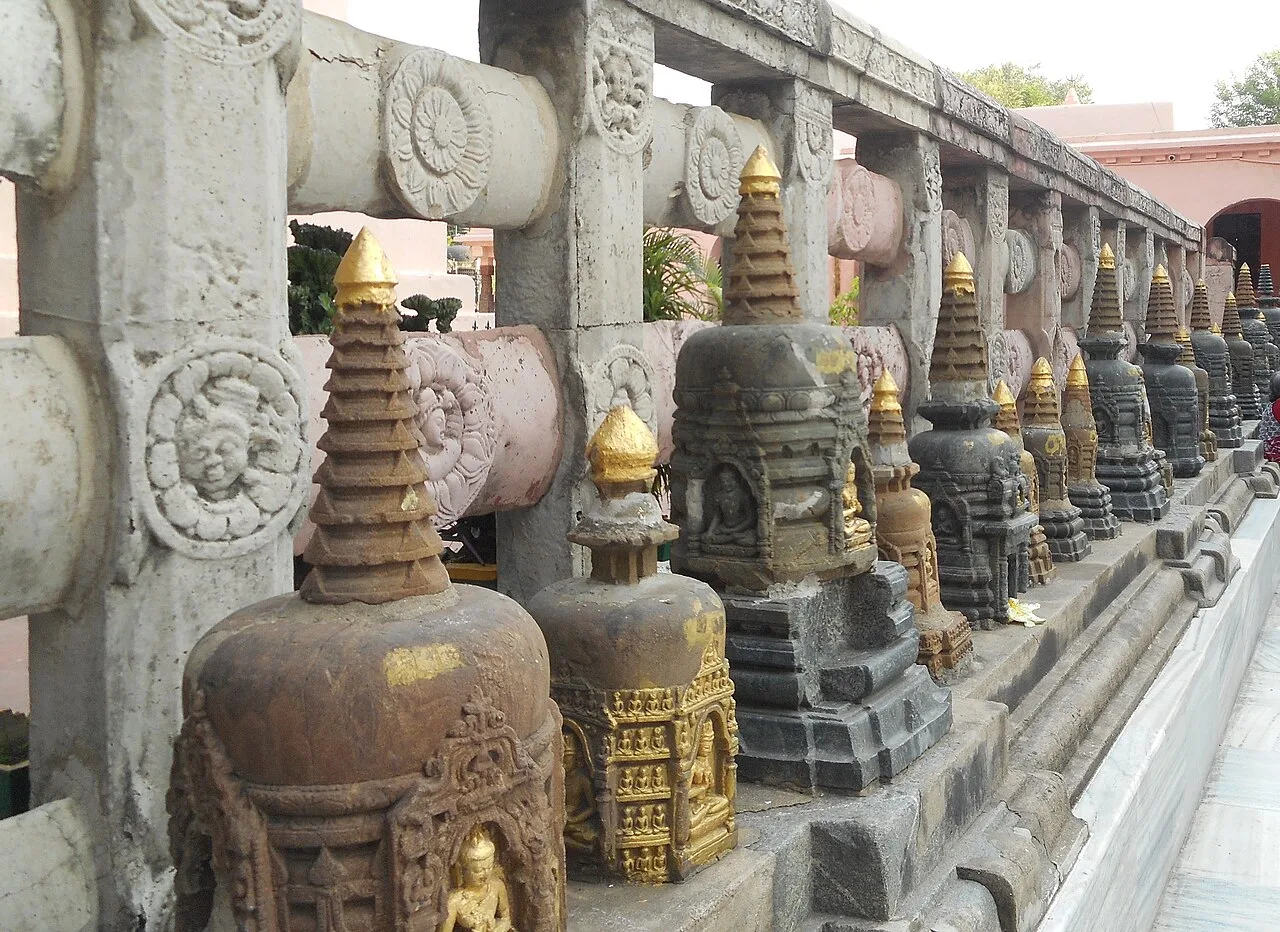
The complex is centred on a tall, pyramidal brick temple with a stepped profile and a prominent shikhara tower rising more than 55 metres. Smaller towers and shrines contribute to the vertical composition. The main structure is built principally of brick, historically finished with stucco, and is notable for the survival of substantial brickwork despite the relative fragility of these materials. Its layout focuses attention on the sanctum and the Vajrasana, with the Bodhi Tree close by. A stone railing once enclosed the sacred area; parts of the original carved railing are preserved elsewhere, while replicas stand around the temple. The complex also includes votive stupas, smaller shrines and meditation areas added or altered over time. Its present appearance reflects ancient construction, rebuilding and modern conservation, rather than a single untouched building phase.
Important objects & sculptures
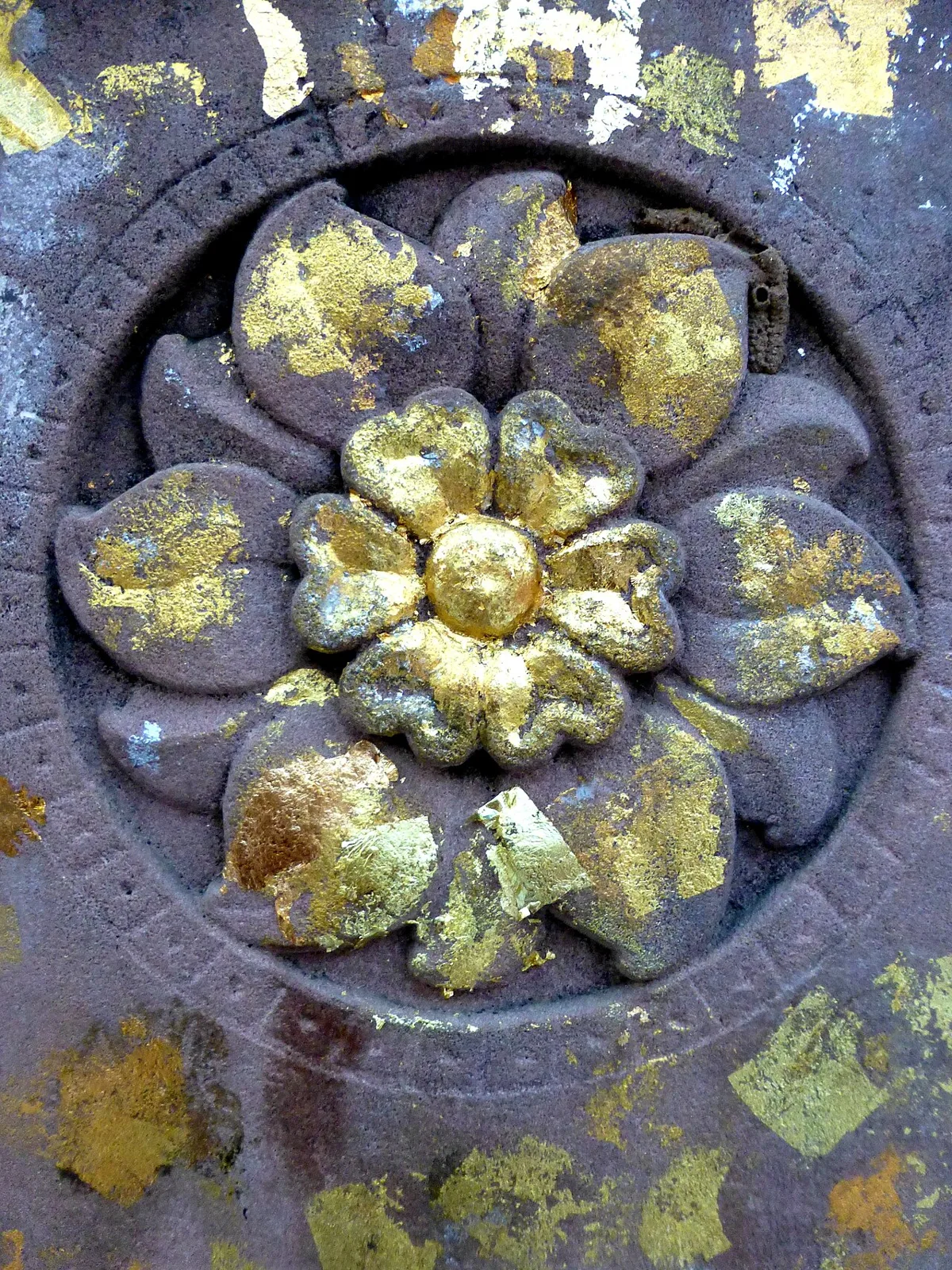
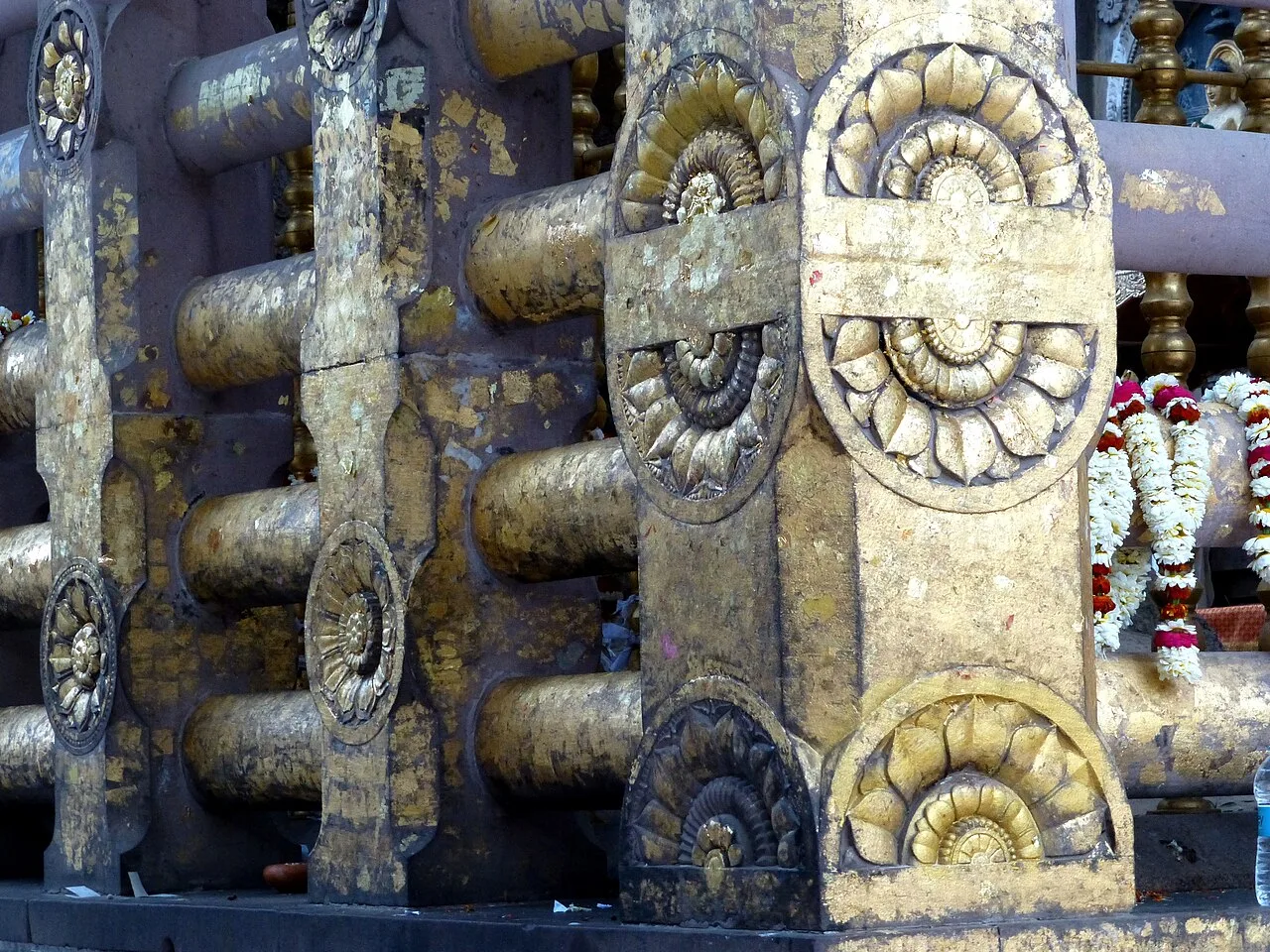
Look for the Vajrasana, the stone Diamond Throne associated with the Buddha’s meditation and traditionally dated to the Mauryan period. The Bodhi Tree beside the temple is itself a focus of devotion, although the living tree has been renewed over time. The complex contains images of the Buddha, votive stupas and carved architectural details from different periods. The stone railing is notable for its sculptural panels and historical importance; some original sections have been moved to the nearby museum, and replicas are displayed around the main structure. Visitors interested in older sculpture can ask locally about access to the museum collection. Inscriptions and archaeological finds also help document the site’s long history.
Religious significance
The Mahabodhi Temple is a central Buddhist pilgrimage site, revered across traditions because of its association with the Buddha’s enlightenment. Worshippers may meditate, chant, make offerings, walk around the sacred areas in reverential circumambulation, or sit quietly near the Bodhi Tree. Monks and lay visitors from many countries come to practise and pay respects. Forms of prayer and observance vary by Buddhist tradition and by individual; visitors should avoid treating active worship as a performance. The temple is also meaningful to people beyond the Buddhist community as a place of historical and spiritual importance. Follow signs and guidance from temple staff, and leave space for worshippers to carry out their practices without interruption.
Visit Mahabodhi Temple with time to observe daily prayers and rituals respectfully. Follow the posted rules on footwear, photography, head covering and dress, and avoid interrupting worshippers. Ask caretakers which areas are open to visitors, and beware of unofficial 'guides' asking for donations. A comfortable itinerary is one main visit in the morning, a local meal at midday and a short nearby stop before an afternoon return. Use the district list on this site to find other places in Gaya, but check the route and its condition before combining stops. If a festival or fair is on — such as Chhath or the Sonepur fair — roads and stays can be busy, and the experience can be unforgettable. Leave no litter: many sites are protected by the communities around them.
Suggested itineraries
Half day: Allow about 2–3 hours for the Mahabodhi Temple, the Vajrasana and Bodhi Tree, a quiet period for observation, and a nearby meal. Full day: Spend the morning at the temple; take a midday break; then visit the Great Buddha Statue and selected monasteries or shrines in Bodh Gaya before returning. Gentler option: Visit the temple at an unhurried pace, sit for a rest in an appropriate area, and limit additional stops; check locally for the least strenuous route and available seating.
Bodh Gaya is an international Buddhist centre, and visitors may encounter monks, pilgrims and religious communities from across Asia and beyond. Robes, prayer beads, chanting and periods of silent meditation are part of the living devotional atmosphere, though customs differ between traditions. Hindi and Magahi are widely used locally, while English and other languages may be heard among visitors and at religious institutions. The wider region also reflects Bihar’s varied local cultures and foodways. Approach people and ceremonies respectfully, ask before taking portraits, and remember that the temple is an active place of worship as well as a heritage attraction.
Festivals & events
Buddha Purnima, usually observed in spring, draws pilgrims for prayers and commemorations of the Buddha’s life. Buddhist communities also hold observances connected with the monastic calendar, including robe-offering ceremonies in the post-monsoon season; arrangements vary by community. Large teachings or special religious gatherings may be organised from time to time, so crowd levels can change substantially. Chhath, observed in the wider Bihar region in autumn and at other points in the lunar calendar, can affect travel and accommodation locally. During major observances, expect fuller pathways and allow extra time; check current local arrangements before planning around a festival.
Local food in Bihar includes litti chokha, sattu paratha, khaja (a layered sweet from Silao), tilkut and anarsa from Gaya, makhana (fox nuts) from the Mithila region, chana ghugni, malpua and thekua. Ask what is fresh that day; many small eateries cook a limited daily menu. Vegetarian travellers eat very well across this region, and most towns also have non-vegetarian options. Remote sites may have no restaurant at all. Carry water and snacks, eat a proper breakfast before long drives, and ask your accommodation for a packed lunch if you are heading out early. If prasad or langar is offered, accept it according to local custom. Choose busy, clean places, drink sealed or filtered water, and carry your packaging back with you.
Shopping & local experiences
Small shops around the pilgrimage area sell prayer beads, Buddhist flags, books, devotional images, incense and souvenirs; quality and provenance vary, so compare items before buying. Look for locally made crafts where available and avoid purchasing antiquities or objects presented as archaeological finds. Bodh Gaya has eateries serving regional Bihar food alongside options for international visitors. Try local dishes from a clean, well-reviewed establishment and ask about ingredients if you have dietary needs. Carry purchases in reusable bags where practical and follow any restrictions on offerings or materials brought into the temple.
October to March
The nearest principal railway station by straight-line distance is Gaya Junction, roughly 10 km away. The nearest operating airport by straight-line distance is Gaya Airport, roughly 5 km away. These figures are calculated from map coordinates — actual road distance is longer. Patna Junction, Rajendra Nagar Terminal and Gaya Junction are the main rail gateways, and Patna and Gaya have airports; Varanasi airport serves the west of the state. For the final leg, Bihar State Road Transport Corporation (BSRTC) buses, private coaches and shared jeeps and autos link district towns; shared jeeps usually leave early in the morning. A private taxi gives more flexibility for remote sites. When comparing train, bus and flight, count the complete door-to-door time: a flight saves the most time only if the onward road transfer is short, while an overnight train can save a hotel night. Book your return before you leave, because seats fill quickly on weekends, festivals and holidays. Current train numbers, timings, return services and fares are not listed here; check IRCTC and NTES for trains and the airline's own schedule for flights. No permit is needed to visit Bihar. Buddhist circuit sites such as Bodh Gaya, Rajgir, Nalanda and Vaishali welcome visitors of all backgrounds; dress modestly at temples, monasteries and dargahs. The Sonepur fair, Chhath Puja and the Rajgir Mahotsav draw very large crowds, so book transport and stays well ahead.
Confirm onward and return timings on IRCTC / NTES, the state bus operator or your airline before travel. A dash means current timings or fares have not been verified.
Getting around
Bodh Gaya is served by auto-rickshaws, taxis and local vehicles, with connections to Gaya town and its transport hubs. Local buses and shared vehicles may also be available, but routes and frequency can vary; check locally before relying on them. The temple is in the central pilgrimage area, where some visitors walk between monasteries, shrines, shops and eateries. Traffic and pedestrian activity can be busy, especially during religious gatherings. Ask your driver about a suitable drop-off and parking point, since vehicle access close to the complex may be restricted or altered by security arrangements.
Hours, tickets & permissions
Entry arrangements may include security screening and rules for footwear, bags, photography or access to particular areas. Tickets, permits or separate charges may apply to some facilities or activities, and requirements can change. Dress modestly and follow notices at the entrance; identification may be requested under current security procedures. The temple complex and associated facilities can have different access arrangements. Confirm current opening hours, entry conditions and any fees with the temple authorities or the relevant managing authority before visiting.
Facilities
Facilities in the wider Bodh Gaya pilgrimage area usually include eateries, small shops, accommodation and local transport. Toilets and drinking-water points may be available in or near the complex, but provision and access can vary; check on arrival and carry water in a reusable bottle where permitted. Parking and drop-off arrangements are subject to local traffic and security controls. Guides may be available, but confirm their credentials and any charges before agreeing to a service. ATMs and more extensive services can be found in the town area; do not assume every facility is open or accessible during special events.
Accessibility
Visiting involves walking across a busy temple complex, and surfaces may be uneven or crowded. Paths, thresholds and steps can make some areas difficult for wheelchair users, people using walking aids, older visitors and families with strollers. Do not assume that every shrine or viewing point has step-free access; ask temple staff about the route currently available. Shade and places to pause may be limited or occupied during busy periods, so plan rests and avoid rushing. A companion can help with footwear and belongings where permitted. Consider focusing on the main accessible viewpoints if a full circuit is tiring.
No permit is needed to visit Bihar. Buddhist circuit sites such as Bodh Gaya, Rajgir, Nalanda and Vaishali welcome visitors of all backgrounds; dress modestly at temples, monasteries and dargahs. The Sonepur fair, Chhath Puja and the Rajgir Mahotsav draw very large crowds, so book transport and stays well ahead. Carry a photo ID at all times and save the emergency number 112 and your accommodation's contact offline. Heat in summer and fog in winter are the main weather risks; carry water and allow extra travel time on foggy December–January mornings. Respect community rules, private property and posted instructions. Follow local guidance if access changes.
Visitor rules
Follow posted instructions and directions from temple staff, including any security screening and restrictions on bags or access. Remove footwear where required and dress modestly. Keep voices low, do not touch or climb on monuments, and avoid obstructing worshippers or processions. Photography may be limited in particular areas; ask or check signs before taking pictures. Do not enter cordoned-off spaces, disturb offerings, or leave litter. Plastic and other items may be restricted under site rules, so check notices and use designated bins. Avoid giving money to people soliciting donations unless you have verified the recipient.
Photography
Soft morning or late-afternoon light can bring out the brickwork and the temple’s silhouette, while the Bodhi Tree and surrounding sacred spaces offer quieter subjects when visitor flow allows. Photography rules can differ across the complex and may change; check signs and ask staff before using a camera, especially near the sanctum or during worship. Be considerate when photographing monks, pilgrims and ceremonies, and obtain permission for close portraits. Drones should not be flown without explicit authorisation and must comply with applicable aviation and site restrictions.
Choose a stay by the full journey to Mahabodhi Temple, not just the district name. Patna, Gaya and Bodh Gaya offer the widest choice, from pilgrim dharamshalas to international hotels; monastery guesthouses in Bodh Gaya are good value. In summer, check air-conditioning or coolers; in December and January, check hot water. Book in advance for weekends, festivals and the peak season (October to March). Confirm the exact location, meals included, check-in time and cancellation terms in writing. Avoid sending money to unverified contacts or touts at stations. Carry some cash, as card and digital payments can be unreliable in remote areas.
Within Bodh Gaya, visitors can combine the temple with the Great Buddha Statue and Buddhist monasteries established by communities from different countries. These include distinctive places of worship and cultural centres, though access and opening arrangements vary. In Gaya town, Vishnupad Temple is an important Hindu pilgrimage site with a different religious tradition and its own visitor customs. The Dungeshwari Cave Temples, associated in Buddhist tradition with the Buddha’s period of austerity, are another possible excursion; check road conditions and transport locally. Allow extra time for travel between sites and avoid overloading a day during busy festival periods.
For couples, Mahabodhi Temple rewards a slow pace: arrive early for soft light and fewer crowds, share a local meal and keep the evening free. Sunset on the Ganga at a Patna ghat or an evening under the Bodhi tree's descendant at Bodh Gaya is quietly memorable. Public displays of affection can be frowned upon in conservative communities and at religious sites, so be discreet. Keep a buffer in your itinerary, because weather and road conditions can delay plans.
Q: How much time should I allow for a visit? A: Allow a few hours to see the main temple area without rushing; add time for meditation, ceremonies or nearby sites. Q: When is a comfortable season to visit? A: October to March is generally more comfortable in Bihar, though winter mornings can be foggy and festival periods busier. Q: Is entry free, and do I need a permit? A: Entry rules and any fees or permits can change. Check current requirements with the temple authorities before travelling. Q: Can children and older visitors visit? A: Yes, but expect walking, crowds and potentially uneven surfaces. Plan breaks and check access conditions for anyone with limited mobility. Q: Can I stay near the temple? A: Bodh Gaya has accommodation options near the pilgrimage area, from which visitors can reach the temple on foot or by local transport; book ahead during major observances.
Be the first to share photos, stories, advice or a helpful contact for Mahabodhi Temple.
Loading…