
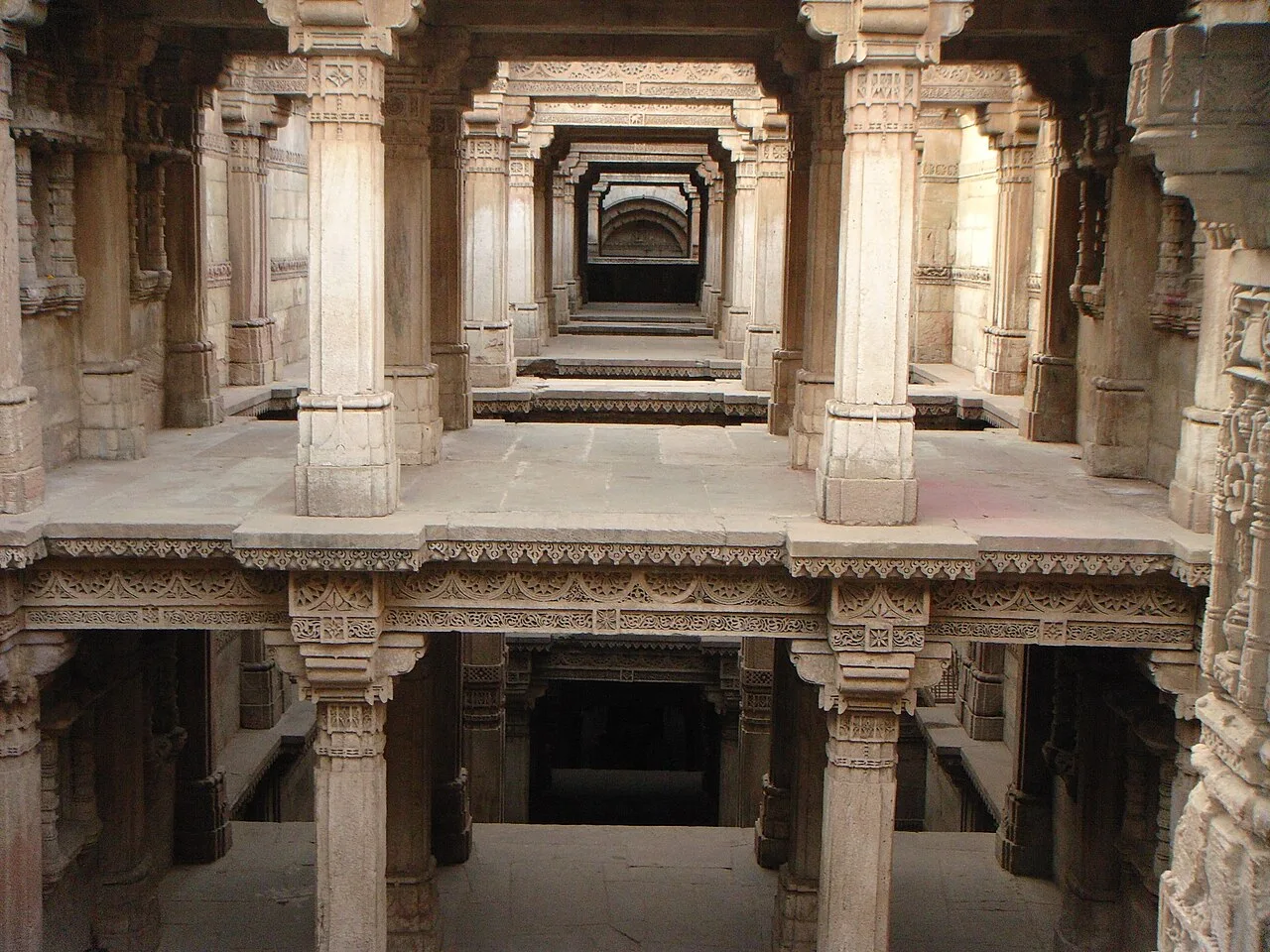
Adalaj Stepwell
Adalaj Stepwell, also known as Rudabai Stepwell, is a sandstone structure in Gujarat’s Gandhinagar district. Visitors come to see its Solanki-style design and its connection to Rana Veer Singh.
Key facts · verified by Ghumoopedia editors
- Type of place
- Heritage monument
- Best time to visit
- November to February
- Nearest railway station
- Gandhinagar Capital · about 10 km (straight line)
- Verified
- 21 Nov 2026
Plan a trip from Adalaj Stepwell — a day-by-day route through places nearby.
Also called Rudabai Stepwell, the structure is located in Adalaj, a small town near Gandhinagar, Gujarat’s capital. It is visited for its sandstone construction and architectural design. The stepwell dates to 1498 and was built in memory of Rana Veer Singh, who belonged to the Vaghela dynasty. Sandstone is the material used for the structure, while its architectural form follows the Solanki style. Its location, commemorative purpose and design describe the main features associated with the site. Gujarat combines Harappan cities at Dholavira and Lothal, the stepwells and Sultanate mosques of Ahmedabad and Patan, the Jain hills of Palitana and Girnar, Gandhi's Sabarmati Ashram, the Asiatic lions of Gir and the white salt desert and craft villages of Kutch. Gujarat is very hot from March to June (Kutch and north Gujarat often exceed 42°C), receives monsoon rain from late June to September, heaviest in the south and the Dangs, and is pleasant and dry from November to February with cold desert nights in Kutch. The usual best time to visit is November to February. Timings, fees and access arrangements must be confirmed locally. For official information, see Gujarat Tourism at https://www.gujarattourism.com.
Why it matters
Adalaj Stepwell, also known as Rudabai Stepwell, is an important example of Gujarat’s historic water architecture. Located in Adalaj, near Gandhinagar, it served both practical and social purposes: collecting and storing water while offering a shaded place for people to gather. Its carved sandstone and blend of architectural influences make it a notable heritage site in the region. The monument is protected by the Archaeological Survey of India; it is not a UNESCO World Heritage Site. It also forms part of a wider Gujarat tradition of stepwells, seen at sites such as Patan and Ahmedabad. Visitors should treat it as a historic structure and follow any conservation rules posted on site.
The stepwell is traditionally dated to 1498. According to the established account reflected in local histories, Rana Veer Singh of the Vaghela dynasty began its construction in his memory. After the region came under the rule of Sultan Mahmud Begada, the project was completed. The site is associated with Queen Rudabai, which is why it is also called Rudabai Stepwell. Accounts of the circumstances surrounding its construction vary, and dramatic details are best treated as local tradition rather than independently verified history. Built when stepwells were essential sources of water in Gujarat’s dry climate, the structure provided access to water through a descending series of levels. Its shaded galleries also offered respite from heat and a place for community activity. The building’s stonework reflects both regional Hindu architectural traditions and Islamic design influences of the period. It has remained a landmark of Adalaj and is now protected as a monument by the Archaeological Survey of India. Conservation and visitor access are subject to the managing authority’s rules; check locally for current arrangements.
Origin stories & folklore
According to local tradition, Queen Rudabai was connected with the stepwell’s completion after her husband, Rana Veer Singh, was killed in conflict with Sultan Mahmud Begada. Stories differ in their details. One widely repeated version says the sultan agreed to complete the well and then sought to marry the queen. In the tale, Rudabai entered the stepwell and died there rather than accept the marriage. This story gives the monument its association with her name, but it should be understood as legend, not as a fully verified historical account. The stepwell’s inscriptions and architectural evidence are more reliable sources for understanding its documented history.
Architecture & design
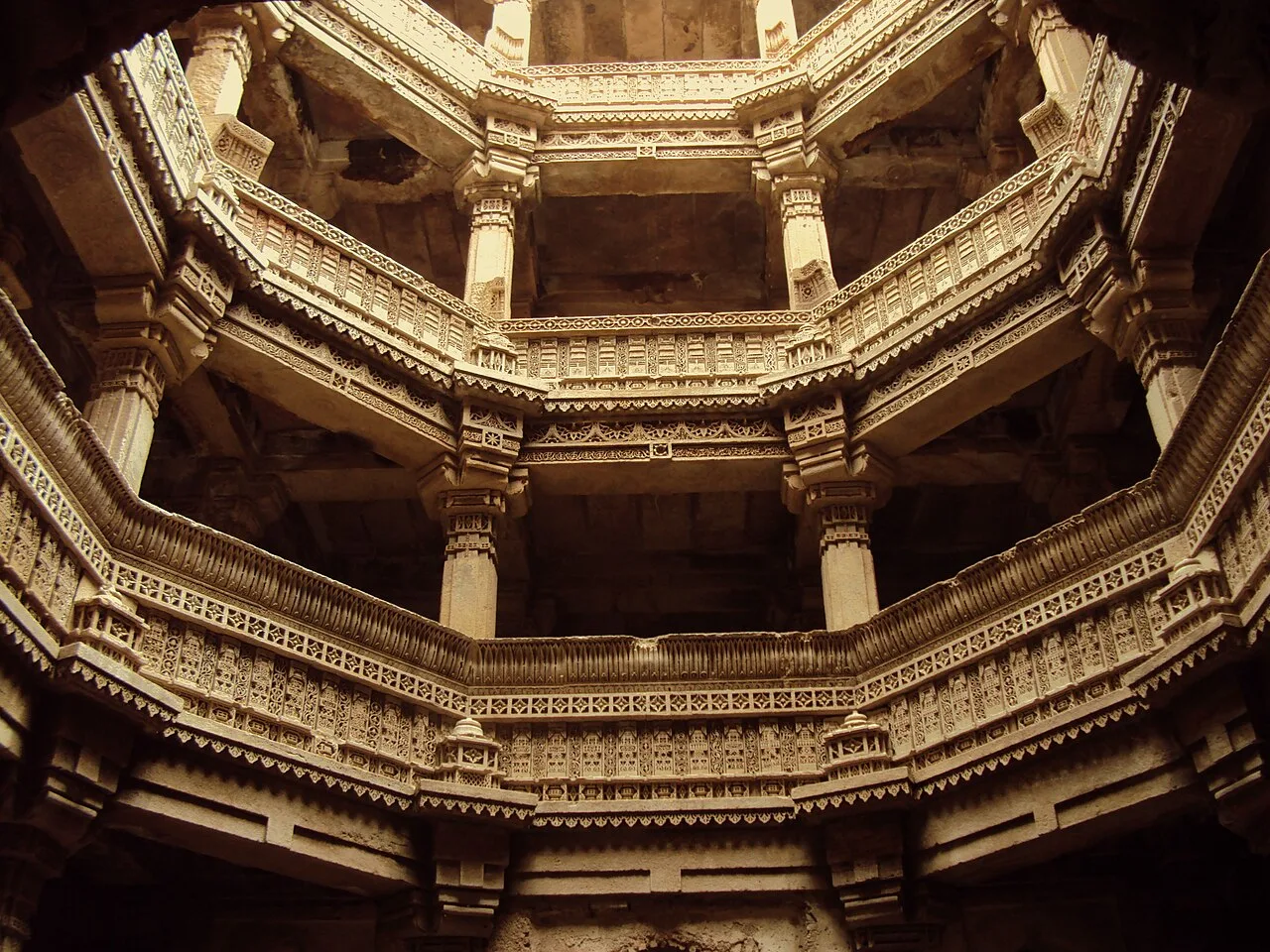
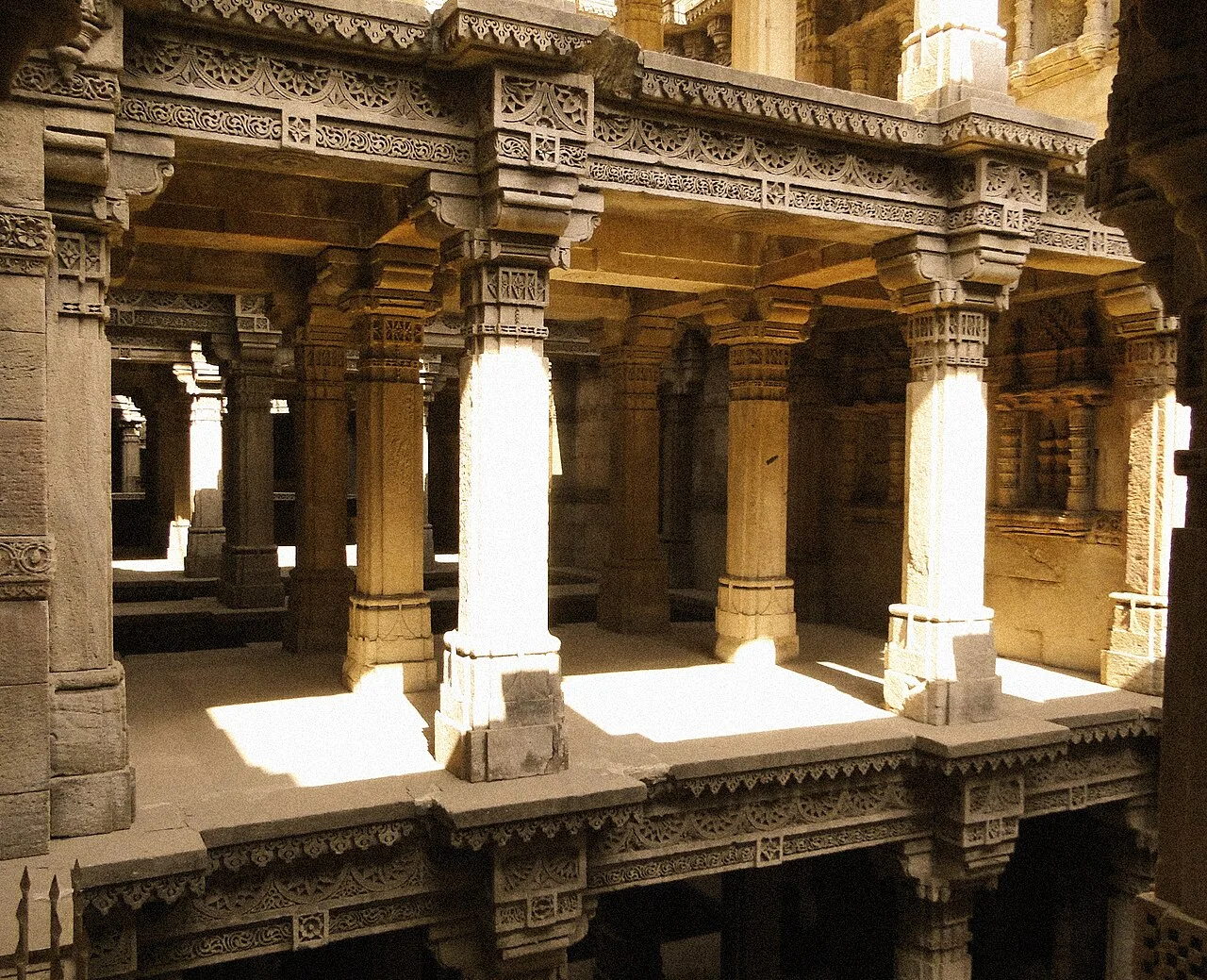
Adalaj Stepwell is a sandstone structure in a regional style often described as Solanki, with Islamic architectural influences. Its plan descends through several levels to the well shaft, with stairways, landings and pillared galleries creating a gradual route downwards. The deep, partly enclosed design helped provide shade and access to stored water in a hot, dry climate. An octagonal opening above the well allows light and air into the structure. Carved columns, beams and wall surfaces carry intricate ornament, while the arrangement of entrances and platforms links the upper courtyard with the lower levels. The stonework and changing views as visitors descend are central to the experience. The stairs and lower galleries are historic fabric, so visitors should follow barriers and staff instructions and avoid touching or climbing on carvings.
Important objects & sculptures
Look for the richly carved sandstone columns, brackets, beams and panels along the descending levels. Their decoration includes floral and geometric patterns, figures and motifs drawn from religious and everyday imagery. The stepwell is also noted for carved representations of deities and symbolic forms; visitors may find that details are easier to see from the landings than from the stairs. The octagonal well opening and its surrounding stonework are important features to observe. Inscriptions associated with the monument are cited in accounts of its history, but their location or legibility may not be obvious during a visit. Do not touch carvings or rely on unverified interpretations; an authorised guide or on-site interpretation can provide context.
Explore Adalaj Stepwell slowly and read the interpretation boards, use the official audio guide where available or hire an authorised guide to understand its history. Check opening days, ticket counters and camera rules in advance; many monuments and museums close on one weekday and on some public holidays. Early morning gives softer light, cooler air and smaller crowds. A comfortable itinerary is one main visit in the morning, a local meal at midday and a short nearby stop before an afternoon return. Use the district list on this site to find other places in Gandhinagar, but check the route and its condition before combining stops. If a festival is on — such as Navratri garba, the Rann Utsav or Uttarayan kite flying — roads and stays can be busy, and the experience can be unforgettable. Leave no litter: many sites are protected by the communities around them.
Suggested itineraries
Half day: Spend about 1–2 hours exploring the stepwell and reading available interpretation; allow time for a nearby meal and return travel. Full day: Visit Adalaj Stepwell in the morning; take a meal break; continue to Akshardham in Gandhinagar or Indroda Nature Park, checking access and travel arrangements in advance. Gentler option: View the upper levels and accessible areas at an unhurried pace, rest between short walks, and skip the descent if the stairs feel difficult.
Adalaj Stepwell is a historic monument rather than a venue for regular performances or ritual events. Its setting reflects Gujarat’s long relationship with water conservation and shared community spaces. Gujarati is widely spoken in the area, alongside Hindi; English may be understood by some tourism staff and guides. Visitors may encounter local families, school groups and domestic travellers, especially during holiday periods. Navratri garba, traditional Gujarati music and dance, and regional foods are part of the wider cultural life of Gandhinagar and Ahmedabad, but should not be assumed to take place at the stepwell itself. Dress comfortably and respectfully, keep noise low, and avoid disturbing other visitors or any activity taking place.
Festivals & events
Navratri, usually in the autumn, is widely celebrated in Gandhinagar and Ahmedabad with garba and community events. Uttarayan, the kite-flying festival in January, brings activity across the region. These festivals are not necessarily held at Adalaj Stepwell, but they can make nearby roads, accommodation and city attractions busier. Other local religious and cultural events may also affect travel plans. Confirm event details locally before visiting, and allow extra time for transport if travelling during a major festival period. Respect any restrictions at the monument and do not assume that festival activities are permitted within the protected structure.
Local food in Gujarat includes dhokla, khandvi, thepla, fafda-jalebi, undhiyu in winter, the Gujarati thali, Kutchi dabeli, Surti locho and ponk, kadhi-khichdi, and sweets such as mohanthal and shrikhand; much of Gujarat's food is vegetarian and lightly sweet. Ask what is fresh that day; many small eateries cook a limited daily menu. Vegetarian travellers eat superbly here; non-vegetarian food is available in cities but limited in pilgrimage towns such as Palitana, Dwarka and Ambaji, where it may be banned. Remote sites may have no restaurant at all. Carry water and snacks, eat a proper breakfast before long drives, and ask your accommodation for a packed lunch if you are heading out early. Try a home-cooked or local thali meal when you can — it is often the best food on the route. Choose busy, clean places, drink sealed or filtered water, and carry your packaging back with you.
Shopping & local experiences
Adalaj itself is not primarily a shopping destination. In Gandhinagar and Ahmedabad, visitors can look for Gujarati textiles, embroidered work, bandhani tie-dye, handicrafts and regionally made souvenirs. Choose reputable sellers and ask about the origin of goods, especially for items presented as handmade. Local eateries and markets offer opportunities to try Gujarati snacks and meals; availability varies by neighbourhood. Do not buy or remove stone fragments, antiquities or objects presented as part of the monument. For a quieter visit, browse markets outside peak festival periods and carry reusable bags where practical.
November to February
The nearest principal railway station by straight-line distance is Gandhinagar Capital, roughly 10 km away. The nearest operating airport by straight-line distance is Sardar Vallabhbhai Patel International Airport, Ahmedabad, roughly 10 km away. These figures are calculated from map coordinates — actual road distance is longer. Ahmedabad, Vadodara, Surat and Rajkot are the main rail and air gateways; Bhuj serves Kutch, and Veraval, Junagadh, Dwarka and Porbandar serve Saurashtra. For the final leg, Gujarat State Road Transport Corporation (GSRTC) buses, private sleeper coaches and shared chhakdas and autos in rural areas link district towns. A private taxi gives more flexibility for remote sites. When comparing train, bus and flight, count the complete door-to-door time: a flight saves the most time only if the onward road transfer is short, while an overnight train can save a hotel night. Book your return before you leave, because seats fill quickly on weekends, festivals and holidays. Current train numbers, timings, return services and fares are not listed here; check IRCTC and NTES for trains and the airline's own schedule for flights. No permit is needed to visit Gujarat. Gujarat is a dry state: alcohol sale and consumption are prohibited except with a liquor permit, which visitors from outside the state can apply for at authorised hotel liquor shops with ID — never carry alcohol across the state border without one. Lion safaris in Gir and entry to parts of the Rann of Kutch near the border need advance online booking or a permit, and the White Rann around Dhordo is busiest during the Rann Utsav (roughly November to February).
Confirm onward and return timings on IRCTC / NTES, the state bus operator or your airline before travel. A dash means current timings or fares have not been verified.
Getting around
Adalaj is reached by road from Gandhinagar and Ahmedabad. On arrival, local autos and taxis may be available, while a pre-arranged taxi can be useful for a return journey or for combining nearby stops. Local buses may serve parts of the area, but routes and service should be checked before setting out. The monument is explored on foot, including stairs and uneven stone surfaces; allow time to move carefully. Check locally where visitor parking is permitted and avoid blocking access roads or nearby homes. Carry water for the journey, while keeping food and drink away from sensitive areas of the monument.
Hours, tickets & permissions
Entry arrangements may include a ticket, restrictions on certain activities, or separate rules for photography and equipment. Requirements can change, and rules may differ during public holidays, maintenance or special events. Carry identification if requested by the managing authority, and follow posted notices about access to the lower levels. There is no general dress code known to apply, but modest, practical clothing and secure footwear are sensible. Confirm current opening hours, entry rules and fees with the Archaeological Survey of India or the on-site authority before travelling.
Facilities
Facilities at the monument and in nearby Adalaj may include visitor parking, toilets, drinking water and small food options, but availability and condition can vary; check locally. More restaurants, shops, ATMs and accommodation choices are generally easier to find in Gandhinagar or Ahmedabad. An authorised guide or interpretation material may be available, though visitors should not assume a guide service is operating on arrival. Bring water and any essentials you need, and take litter away with you. Follow site notices about food, drink and the use of facilities within the protected area.
Accessibility
The visit involves walking on stone surfaces and, to explore the lower levels, descending stairs. Steps may be steep or uneven, and the galleries can be dimmer than the open courtyard. Shade is available within parts of the structure, but the approach and upper areas may be exposed to sun. Wheelchair users and visitors with strollers may be able to see some of the upper setting but should not expect access to the lower stepwell; confirm current arrangements with the site authority. Older visitors and anyone with balance, breathing or mobility concerns should take care, use available rest points and avoid descending if it feels unsafe.
No permit is needed to visit Gujarat. Gujarat is a dry state: alcohol sale and consumption are prohibited except with a liquor permit, which visitors from outside the state can apply for at authorised hotel liquor shops with ID — never carry alcohol across the state border without one. Lion safaris in Gir and entry to parts of the Rann of Kutch near the border need advance online booking or a permit, and the White Rann around Dhordo is busiest during the Rann Utsav (roughly November to February). Carry a photo ID at all times and save the emergency number 112 and your accommodation's contact offline. Heat in summer and heavy rain in the monsoon are the main weather risks; carry water, avoid midday sun and allow extra time when roads flood. Watch your belongings in crowds and on public transport, and follow posted instructions.
Photography
Early morning often offers gentler light and a quieter visit; light changes across the carved stone as the sun moves. The upper courtyard and landings provide views into the stepwell, but take care not to obstruct stairs or other visitors while framing a photograph. Personal photography may be allowed subject to current site rules; check for any restrictions or separate camera requirements before shooting. Do not use a drone without the required permissions and confirmation from the relevant authorities. Ask before photographing people, and avoid flash or disruptive behaviour in enclosed areas.
Choose a stay by the full journey to Adalaj Stepwell, not just the district name. Ahmedabad, Vadodara, Rajkot and Bhuj offer the widest choice; pilgrim towns have dharamshalas and trust guesthouses, and Gir has resorts near Sasan Gir. In summer, check air-conditioning; in the monsoon, check that the property is accessible if roads flood. Book in advance for weekends, festivals and the peak season (November to February). Confirm the exact location, meals included, check-in time and cancellation terms in writing. Avoid sending money to unverified contacts or touts at stations. Carry some cash, as card and digital payments can be unreliable in remote areas.
In Gandhinagar, Akshardham is a major cultural and religious complex, while Indroda Nature Park offers a different kind of outing. Both can be considered for a separate stop, but check their own entry rules and travel arrangements. Ahmedabad, a short regional journey away, has historic sites including the old city and Sabarmati Ashram; allow adequate time rather than trying to fit everything into a brief visit. Nearby options can be combined according to interest, mobility and road conditions. Confirm that each attraction is open to visitors on the day, as access arrangements can change.
For couples, Adalaj Stepwell rewards a slow pace: arrive early for soft light and fewer crowds, share a local meal and keep the evening free. A full-moon night on the White Rann, sunset at Shivrajpur or an evening on the Sabarmati Riverfront makes the trip memorable. Public displays of affection can be frowned upon in conservative communities and at religious sites, so be discreet. Keep a buffer in your itinerary, because weather and road conditions can delay plans.
Q: How much time should I allow for Adalaj Stepwell? A: Allow about one to two hours for a careful visit, with extra time for travel or a guided explanation. Q: What is the best season to visit? A: November to February is generally more comfortable for exploring Gujarat; carry water and plan for heat in warmer months. Q: Is there an entry fee or are there special entry rules? A: Entry rules and fees can change. Confirm current requirements with the managing authority before your visit. Q: Is the stepwell suitable for children and older visitors? A: The upper area may suit a short visit, but the lower levels involve stairs that can be steep or uneven. Supervise children and assess mobility before descending. Q: Where can I stay nearby? A: Gandhinagar and Ahmedabad offer a broader choice of accommodation than Adalaj; check location and transport options when booking.
Be the first to share photos, stories, advice or a helpful contact for Adalaj Stepwell.
Loading…