
District · Gujarat
Gandhinagar
Gandhinagar offers a different perspective on Gujarat: a planned state capital set among villages, farmland and older settlements in the north-central plains.
Gandhinagar district lies in the plains of north-central Gujarat, with the Sabarmati River shaping its landscape. Its best-known urban centre, Gandhinagar, is Gujarat’s planned capital, characterised by broad roads, organised sectors and substantial greenery. Beyond the administrative city are villages, farmland and older settlements that reveal a longer history than the modern capital suggests. Adalaj Stepwell, also known as Rudabai Stepwell, preserves the region’s tradition of combining water infrastructure with elaborate architecture. Swaminarayan Akshardham represents a more recent expression of Hindu religious architecture and devotion. Together, these landmarks give the district a distinctive balance of planned urban life, historic craftsmanship and living religious traditions.
Gandhinagar offers a different perspective on Gujarat: a planned state capital set among villages, farmland and older settlements in the north-central plains. Its broad roads, ordered sectors and greenery reflect its modern civic role, while nearby Adalaj Stepwell preserves an earlier tradition of water engineering and carved architecture. Swaminarayan Akshardham is a prominent centre of contemporary Hindu devotion. The district is a practical extension to a visit to Ahmedabad, but its two principal sights are separate stops rather than a single walkable circuit. Travellers come for this contrast between planned urban life, historic craftsmanship and living religious traditions.
The Gandhinagar area forms part of the wider north Gujarat region, whose political history included the Maitrakas, the Chaulukya or Solanki rulers, the Gujarat Sultanate, the Mughals and later Maratha powers. Their influence is part of the region’s broader history; individual sites and settlements have their own local histories. Adalaj Stepwell, built in the fifteenth century, reflects the importance of storing water in a dry climate and the period’s architectural traditions. British rule brought the wider region into the Bombay Presidency. Gujarat became a separate state on 1 May 1960, and Gandhinagar was developed as its planned capital after Ahmedabad served as the initial capital. Construction began in the 1960s, and the capital shifted to Gandhinagar in 1970. Gandhinagar district was formed in 1964. The modern city’s sector plan and government institutions contrast with the older villages and historic structures that remain in the surrounding district.
2 destination guides
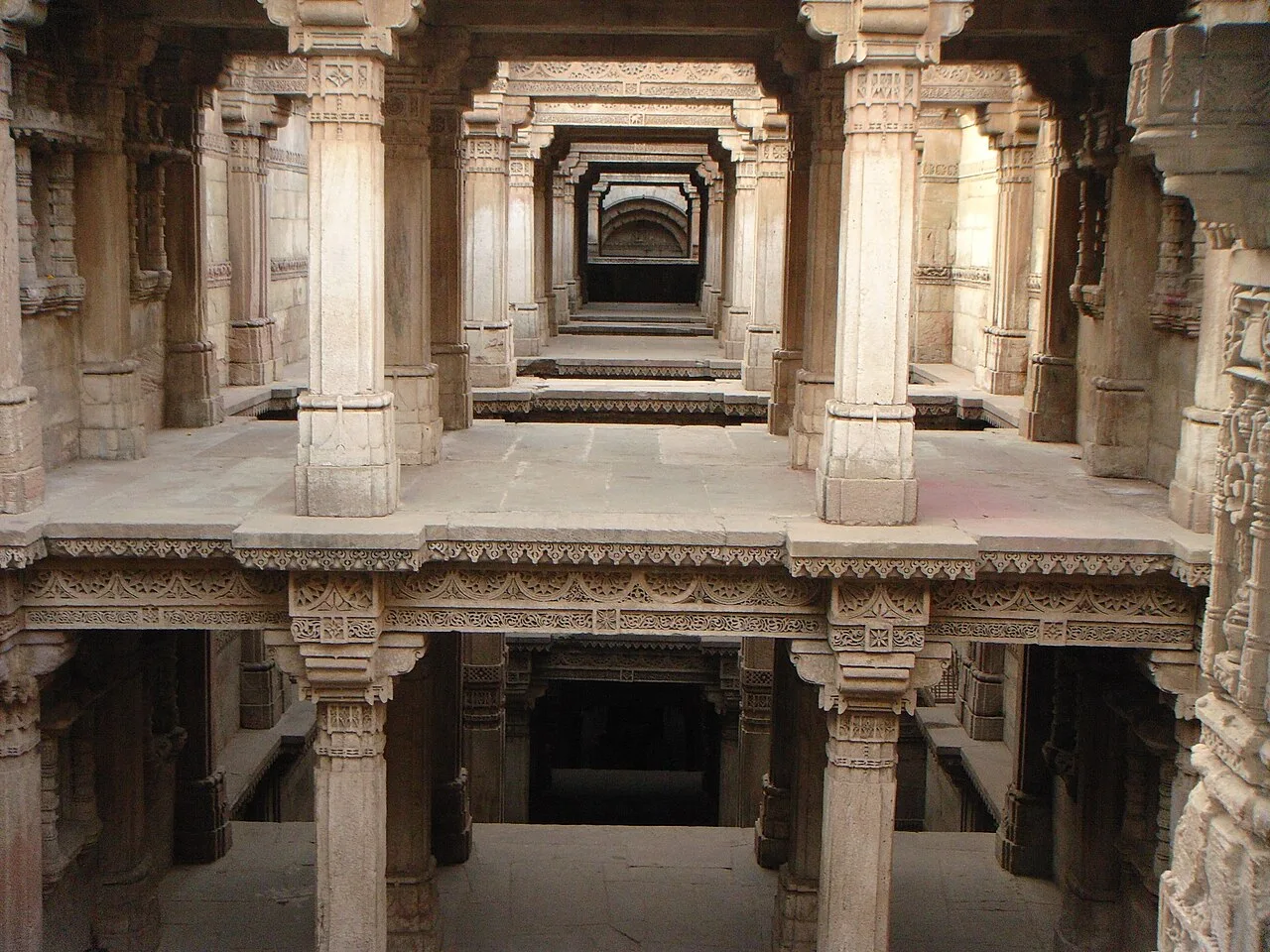
Adalaj Stepwell
Adalaj Stepwell, also known as Rudabai Stepwell, is a sandstone structure in Gujarat’s Gandhinagar district. Visitors come to see its Solanki-style design and its connection to Rana Veer Singh.
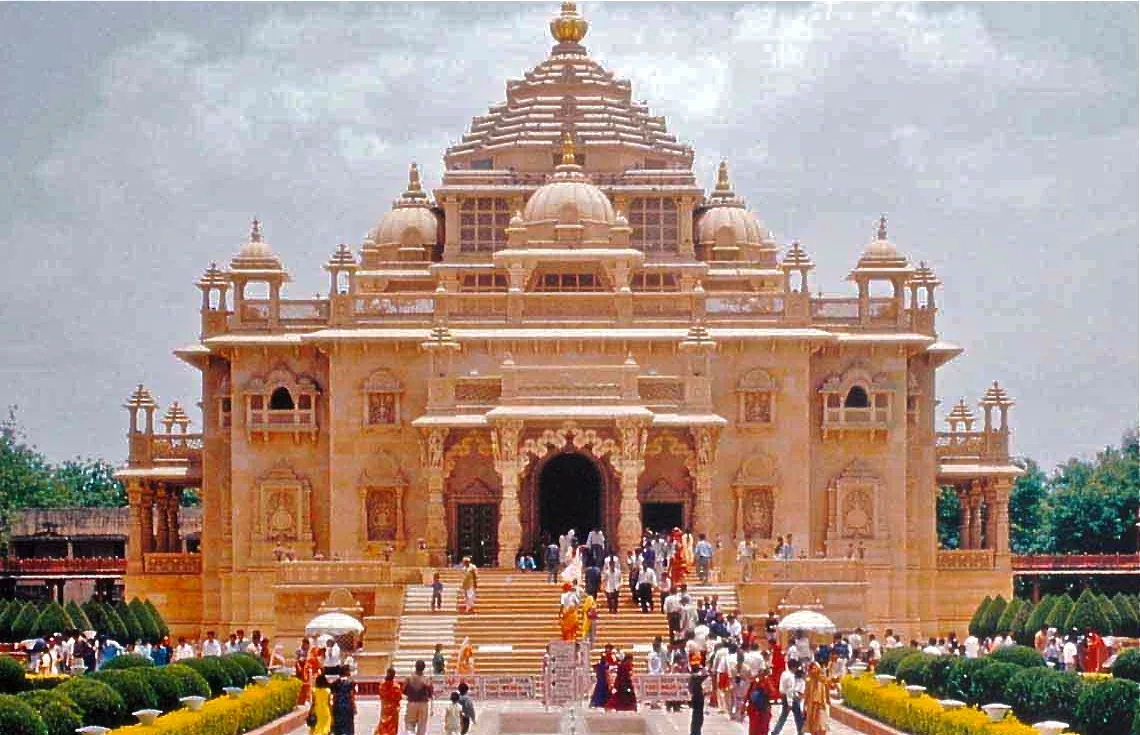
Swaminarayan Akshardham
This Hindu temple complex in Gandhinagar, Gujarat, draws visitors interested in Swaminarayan’s teachings, BAPS traditions and its central shrine built from pink sandstone.
Food in Gandhinagar draws on the wider Gujarati tradition, with plentiful vegetarian choices and a balance of sweet, sour and savoury flavours. Dhokla, khandvi and thepla are familiar snacks or light meals, while fafda with jalebi is a popular pairing. A Gujarati thali offers a useful introduction to everyday cooking, usually bringing together breads, vegetables, dal or kadhi, rice and accompaniments. Kadhi-khichdi is a comforting option, and undhiyu is particularly associated with winter. Sweets include mohanthal and shrikhand. These are regional rather than district-exclusive specialities; ask smaller eateries what has been prepared fresh that day.
The district’s most visible craftsmanship is architectural: Adalaj Stepwell showcases intricate stone carving, while Akshardham demonstrates the continuing importance of carved stone in religious architecture. For textiles and decorative crafts, Gandhinagar sits within Gujarat’s much broader craft landscape. Bandhani tie-dye, embroidery and handwoven textiles are regional traditions rather than specialities exclusive to this district. Patola is especially associated with Patan, elsewhere in Gujarat. When shopping, ask about an item’s place of production and whether it is handmade rather than assuming that goods sold locally were made nearby.
Navratri, usually held in September or October, is widely celebrated across Gujarat with devotional music and garba dancing; celebrations and related events can increase demand for rooms, especially in urban areas. Diwali, generally in October or November, brings family gatherings and busy travel periods. Uttarayan, the kite festival in January, is celebrated across the region and can make city streets and accommodation busier. Swaminarayan Akshardham also draws visitors for religious occasions and school or holiday travel. Festival dates vary each year, so check local calendars and arrange accommodation ahead during popular periods.
Elsewhere in Gujarat
The district lies in the generally level plains of north-central Gujarat. The Sabarmati River is its defining watercourse, though its appearance and flow vary by season. Around Gandhinagar, planned green spaces and tree-lined sectors sit alongside built-up areas; farther out, villages and cultivated land shape the view. There are no coastal areas or major hill ranges in the district. The mostly flat terrain makes road travel straightforward, but the separate locations of the city, Adalaj and other settlements mean visitors should plan transfers rather than expect a compact sightseeing route.
Gandhinagar has hot summers, a monsoon season that usually falls in the middle part of the year, and milder, drier winters. Summer heat can make midday sightseeing tiring, while monsoon showers may affect road journeys and leave stepwell surfaces slippery. Winter, broadly from November to February, is generally the most comfortable season for exploring outdoors. The post-monsoon months can also be pleasant, depending on conditions. Pack light clothing, sun protection and water in warmer months; carry a compact rain layer during the monsoon. In winter, bring a light layer for cooler mornings and evenings.
Sardar Vallabhbhai Patel International Airport in Ahmedabad is the main nearby air gateway. Gandhinagar Capital is a useful railway station for the city, while Ahmedabad Junction provides additional rail connections. Road links connect Gandhinagar with Ahmedabad and other parts of Gujarat, with buses, taxis and private vehicles offering onward travel. Within the district, local buses, auto-rickshaws and taxis are practical options, depending on the route. Akshardham and Adalaj Stepwell are separate stops, so plan transfers rather than assuming they form a walkable sightseeing circuit. Check current services locally.
Gandhinagar is linked by road with Ahmedabad and other parts of Gujarat. Local buses, auto-rickshaws and taxis can be useful within the city, while taxis or private vehicles offer more direct transfers between Gandhinagar, Adalaj and outlying villages. Bus coverage and convenience vary by route, so check locally before relying on public transport for a specific stop. Shared vehicles may operate on some local routes but should not be assumed to serve every attraction. The district’s main sights are not all within walking distance of one another; allow for road traffic and arrange onward transport in advance when needed.
2 days: Swaminarayan Akshardham → Adalaj Stepwell; sleep in Gandhinagar on night 1. 3 days: Adalaj Stepwell → Swaminarayan Akshardham; sleep in Gandhinagar on nights 1 and 2, allowing a slower visit and time for transfers.
Gandhinagar is the most convenient base for visiting both listed sights and offers a range of hotels and guest accommodation. Ahmedabad is another practical base for travellers combining the district with the larger city, though it involves additional road travel. In and around smaller settlements, accommodation options may be more limited; confirm availability before setting out. Homestays, government lodges and dharamshalas may be available in the wider region, but facilities and access vary. Choose a base according to your transport plans and check current services directly.
The district is mostly level and urban or agricultural, but summer heat calls for shade, water and breaks. Take care on wet or uneven steps at Adalaj Stepwell, and follow posted guidance at religious sites. Use clean drinking water and take ordinary precautions in crowded places, especially during festivals. Road conditions and congestion vary, so allow flexibility and use reputable transport. Mobile connectivity is generally available in urban areas but may be less dependable in rural stretches. No special travel permit is generally required for these listed public destinations; confirm current access and site rules through official sources before visiting.
- Ahmedabadabout 20 km
- Mehsanaabout 67 km
- Khedaabout 73 km
- Patanabout 91 km
- Sabarkanthaabout 109 km
- Vadodaraabout 115 km
- Panchmahalabout 122 km
- Surendranagarabout 125 km
Straight-line distance between the centres of each district's destinations; road distance is longer.
Q: How many days should I spend in Gandhinagar district? A: Two days are enough for a relaxed visit to Swaminarayan Akshardham and Adalaj Stepwell; allow a third day if you prefer a slower pace or need more transfer time. Q: When is the best time to visit? A: Winter, broadly November to February, is usually the most comfortable season for outdoor sightseeing. Q: Where is the best base? A: Gandhinagar is convenient for both listed sights; Ahmedabad can suit travellers combining the district with a wider city visit. Q: How do I get to Gandhinagar? A: Sardar Vallabhbhai Patel International Airport and Ahmedabad Junction are useful gateways, with road connections onward to Gandhinagar; Gandhinagar Capital also serves the city by rail. Q: Is the district suitable for families or elderly travellers? A: Yes, with planning. Arrange transfers between sights, allow rest in hot weather, and consider the steps and uneven surfaces at Adalaj Stepwell.
This page draws on our 2 destination guides for Gandhinagar and is updated as our team checks it.
Be the first to share photos, stories, advice or a helpful contact for Gandhinagar.
Loading…