
District · Gujarat
Rajkot
Rajkot district offers an introduction to Saurashtra, a peninsula region of western Gujarat shaped by Kathiawadi culture, trade and princely-state history.
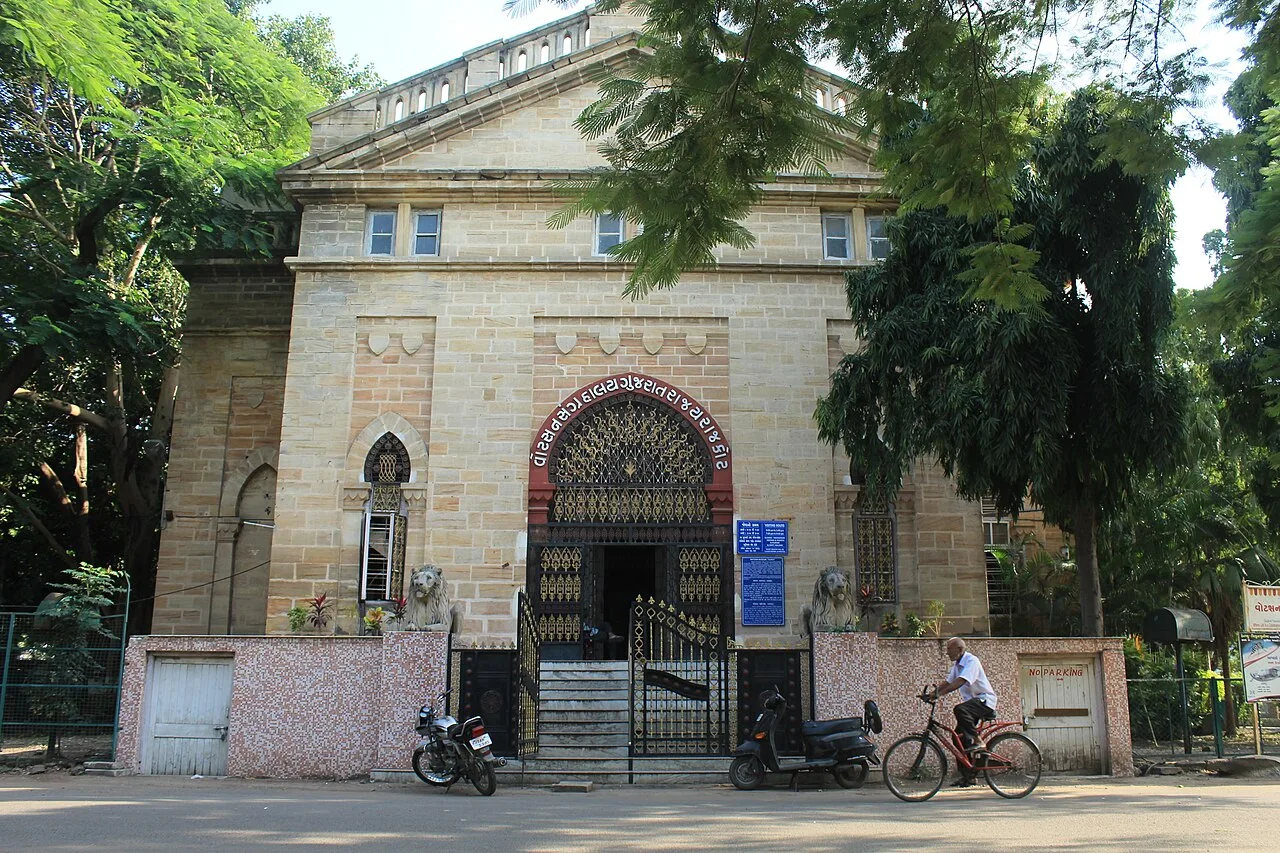
Rajkot district lies in Gujarat’s Saurashtra region, where semi-arid plains, cultivated land and seasonal rivers frame a landscape of busy towns and villages. Rajkot city, its administrative centre, combines a princely past with a strong commercial and manufacturing identity. The former State of Rajkot was founded by Jadeja Rajputs, and the Watson Museum preserves objects connected with that history alongside collections illuminating the wider region. The city also has an important association with Mahatma Gandhi, who spent his school years here. Beyond individual monuments, the district’s character emerges through its markets, Gujarati-speaking neighbourhoods and everyday Kathiawadi traditions, offering an urban gateway to the cultural landscape of Saurashtra.
Rajkot district offers an introduction to Saurashtra, a peninsula region of western Gujarat shaped by Kathiawadi culture, trade and princely-state history. Rajkot city is the district’s administrative and commercial centre, with road and rail links that make it a practical base for exploring the surrounding region. The city is associated with the Jadeja princely state and with Mahatma Gandhi, who spent part of his schooling here. At the Watson Museum, visitors can see collections relating to the princely past and the wider history of Saurashtra. Markets, Gujarati-speaking neighbourhoods and local food traditions add an everyday cultural dimension to a visit.
Rajkot’s recorded princely history is associated with the Jadeja Rajputs. The State of Rajkot was founded in the early seventeenth century, during a period when several regional houses held authority across Kathiawar. Over subsequent centuries, Saurashtra remained a patchwork of princely states rather than a single kingdom. During British rule, many of these states were linked through the Kathiawar political administration, while their rulers retained varying degrees of local authority. Rajkot became an important administrative and commercial centre. Mahatma Gandhi spent part of his school education in the city, an association reflected in its place in accounts of his early life. The Watson Museum, established in the colonial period and named for political agent Colonel John Watson, preserves objects connected with Rajkot’s princely history and the region. After India’s independence, the princely states of Kathiawar joined the Indian Union and were brought together in Saurashtra State. Rajkot became part of Bombay State when it was formed, and then of Gujarat when that state was created in 1960. District boundaries and administration have since been subject to change.
Food in Rajkot draws strongly on the vegetarian traditions of Saurashtra, often described as Kathiawadi cooking. Bajra rotla, sev tameta, garlic-rich potato preparations, khichdi and kadhi are familiar regional choices, commonly accompanied by pickles, chutneys and chaas. Flavours can be robust and spicy; not every dish follows the lightly sweet profile associated with Gujarati food. Fafda-jalebi, dhokla, thepla and Gujarati thalis are widely available, while winter brings seasonal preparations such as undhiyu. Sweets may include mohanthal and shrikhand. At smaller eateries, ask what has been freshly prepared, since daily menus can be limited.
Rajkot is associated with single-ikat silk weaving, often sold as Rajkot patola. Its technique differs from the double-ikat patola tradition of Patan, so buyers should ask about the weave and place of production rather than treating the names as interchangeable. Across the wider Saurashtra region, bandhani tie-dye textiles, embroidery and beadwork contribute to a colourful clothing and decorative tradition. Rajkot’s textile shops provide opportunities to explore these regional styles, though goods on sale may come from elsewhere in Gujarat. Ask whether pieces are handmade or machine-produced.
Navratri, usually held in autumn, is widely celebrated in Rajkot and across Gujarat with devotional events and garba dancing; popular venues can become crowded. Janmashtami, generally in late summer, is also observed in the city and the wider Saurashtra region. Diwali, usually in autumn, brings family gatherings, decorations and busy markets. Dates follow religious calendars and shift from year to year. During major festival periods, transport and central areas may be busier, and accommodation can be more sought after, so booking ahead is sensible.
Elsewhere in Gujarat
Rajkot district is inland, with semi-arid plains, cultivated fields and low, locally rocky terrain rather than a coastal landscape. The Aji River passes through Rajkot city, while seasonal streams and reservoirs are important features of the wider area. Vegetation is generally more open and dry than in wetter parts of Gujarat, and the appearance of fields changes with the monsoon. Most travel is by road across settled countryside, with distances between towns and villages best planned in advance. Rural routes may be slower than main highways, especially during heavy monsoon showers.
Rajkot has a generally dry climate, with hot summers, a monsoon season and milder winters. Summer, broadly from March to June, can make daytime outdoor visits tiring; carry sun protection and water. The monsoon, usually from June into September, brings rain that can refresh the countryside but may affect rural road conditions. Winter, from about November to February, is usually the most comfortable season for sightseeing. October and the cooler winter months are also good choices, though festival periods can be busy. Pack light, breathable clothing for warm weather, a sun hat, and a light layer for cooler evenings; take rain protection during the monsoon.
Rajkot International Airport at Hirasar is the main airport serving the district, while Rajkot Junction is a principal railway arrival point. Arrange an onward taxi or check available airport bus connections before travelling. Road links connect Rajkot with Ahmedabad, Jamnagar, Junagadh and other Saurashtra centres; Gujarat State Road Transport Corporation and private buses serve many intercity routes. Within Rajkot city, auto-rickshaws, taxis and city buses are practical options. For villages or several stops outside the city, a hired vehicle can simplify travel. Check current services locally.
Rajkot city is the main local transport hub. Auto-rickshaws, taxis and city buses can be useful for getting around urban areas, while hired cars offer more flexibility for visits beyond the city. State-run and private buses connect Rajkot with other towns in the district and Saurashtra, though village services may be less frequent. Shared vehicles may operate on some local routes, but confirm their availability locally. For several rural stops in one day, arrange a vehicle in advance. Roads vary in condition, and monsoon rain can slow travel; check current services and route conditions before setting out.
2 days: Watson Museum; sleep in Rajkot on both nights. 3 days: Watson Museum at a relaxed pace; sleep in Rajkot each night, allowing time for the city and nearby countryside.
Rajkot city is the most practical base for visiting the Watson Museum and arranging onward transport. It has a broad range of hotels and guesthouses, with some simpler accommodation options also available. Travellers making longer excursions around the district can still use Rajkot as a base, or seek lodging in a larger town near their route; choices may be more limited outside the city. Homestays, government lodges and dharamshalas may be available in some places, but facilities and access vary. Confirm availability and suitability before travelling, especially during festivals.
Use sun protection and carry drinking water, particularly during hot weather or rural outings. Choose sealed or reliably treated water if unsure about local supplies, and take care with food hygiene. Main roads connect the district’s towns, but village roads can be uneven, poorly lit or slower after monsoon rain; avoid rushing and limit night driving where possible. Urban areas can be crowded during festivals, so keep valuables secure. Mobile connectivity is generally available around towns but may be weaker in rural areas. There are no routine special permits known to be required for ordinary district travel; confirm any current restrictions with official local authorities.
- Junagadhabout 93 km
- Surendranagarabout 100 km
- Jamnagarabout 101 km
- Bhavnagarabout 130 km
- Porbandarabout 144 km
- Gir Somnathabout 162 km
- Kutchabout 191 km
- Ahmedabadabout 200 km
Straight-line distance between the centres of each district's destinations; road distance is longer.
Q: How many days should I spend in Rajkot district? A: Two days can cover Rajkot city and the Watson Museum; allow three days if you want a slower visit or time for nearby countryside. Q: When is the best time to visit? A: The cooler months, broadly November to February, are usually most comfortable. The monsoon can bring rain, while summer is hot. Q: What is the best base for visiting? A: Rajkot city is the most convenient base for the Watson Museum, local transport and onward connections. Q: How do I get to Rajkot district? A: Rajkot International Airport at Hirasar serves the district, and Rajkot Junction is a major rail arrival point. Buses and roads connect Rajkot with other Gujarat cities and Saurashtra towns. Q: Is Rajkot suitable for families or elderly travellers? A: Yes, especially with Rajkot city as a base. Choose transport suited to mobility needs, plan for heat, and check access arrangements at individual sites.
This page draws on our 1 destination guides for Rajkot and is updated as our team checks it.
Be the first to share photos, stories, advice or a helpful contact for Rajkot.
Loading…