
District · Gujarat
Porbandar
Porbandar district occupies a distinctive stretch of Gujarat’s Arabian Sea coast in Saurashtra, linking a historic port city with fishing communities, coastal wetlands and a dry inland region.
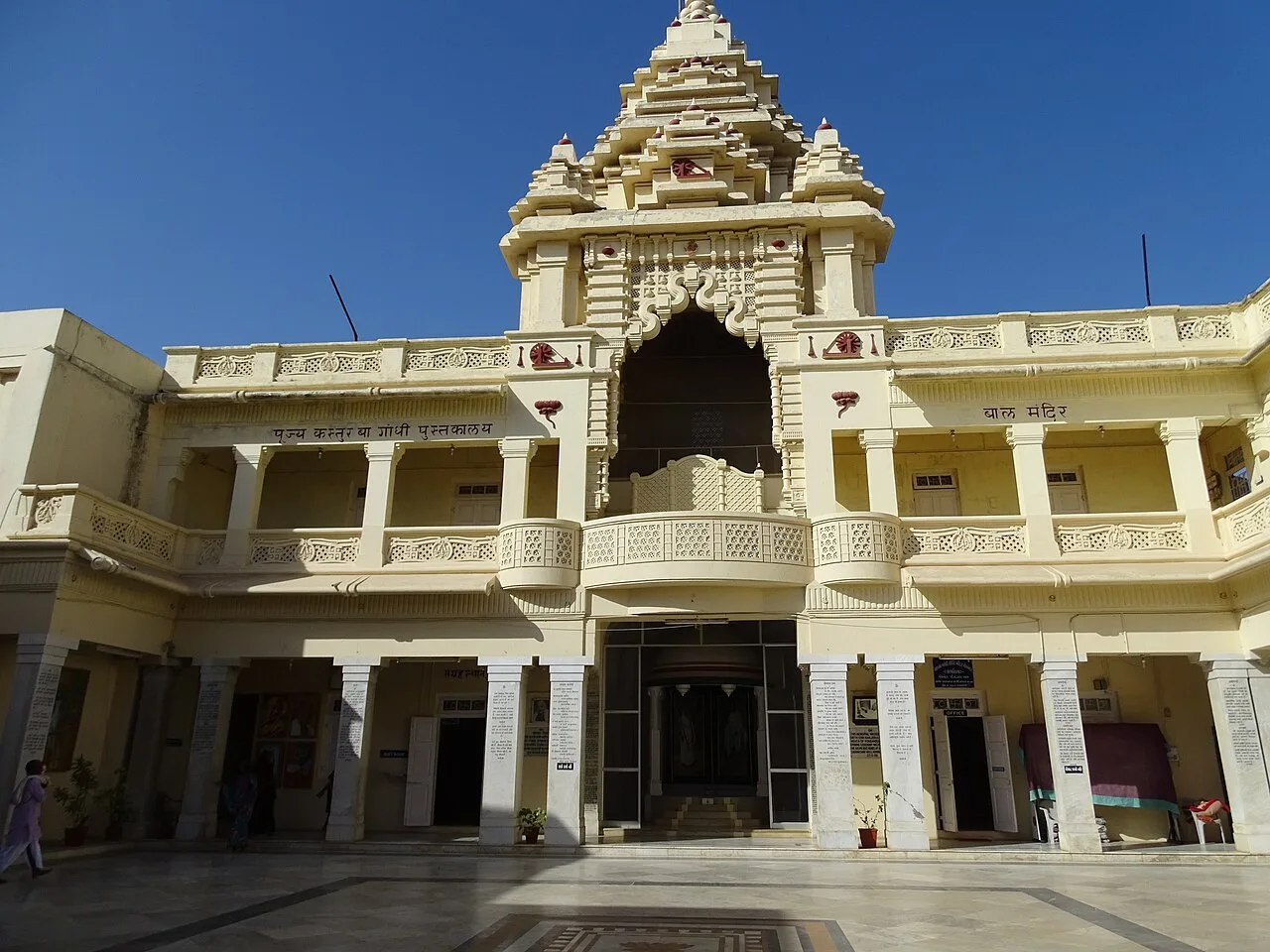
Porbandar district lies on Gujarat’s Arabian Sea coast in the Saurashtra region, where sandy shores, rocky stretches and coastal wetlands meet a largely dry hinterland. Its principal city, Porbandar, has a long maritime trading history and remains closely connected to fishing and seafaring. It is best known as the birthplace of Mohandas Karamchand Gandhi. Kirti Mandir, a modest museum and memorial associated with his birthplace, commemorates both Gandhi and Kasturba Gandhi. The city’s Sudama Temple adds a devotional dimension to its identity. Beyond these landmarks, the district’s character emerges through its working waterfront, older neighbourhoods and the everyday rhythms of coastal Saurashtra.
Porbandar district occupies a distinctive stretch of Gujarat’s Arabian Sea coast in Saurashtra, linking a historic port city with fishing communities, coastal wetlands and a dry inland region. Travellers come chiefly for Porbandar’s association with Mohandas Karamchand Gandhi, born here in 1869, and for Kirti Mandir, the memorial at his birthplace that also commemorates Kasturba Gandhi. The city’s maritime past and working waterfront give context to its present-day coastal life, while Sudama Temple reflects its devotional traditions. Porbandar is a useful stop for understanding the quieter, everyday character of coastal Saurashtra beyond the region’s larger urban centres.
Porbandar’s history is shaped by its position on the Arabian Sea, which supported maritime trade and fishing as well as links with other ports. The Jethwa Rajputs ruled parts of western Saurashtra, and Porbandar developed as the capital of their princely state in the eighteenth century. Under British paramountcy, the state retained its local ruler while operating within the political framework of colonial India. Mohandas Karamchand Gandhi was born in Porbandar in 1869; his father served as a senior official in the princely administration. After independence, Porbandar joined the Union of India and became part of the Saurashtra state in 1948. Saurashtra was incorporated into Bombay State in 1956, and Porbandar became part of Gujarat when the state was formed in 1960. The present Porbandar district was created in 1997 from territory that had been part of Junagadh district. Its port, coastal settlements and fishing economy continue to shape local life.
Food in Porbandar draws on the vegetarian traditions of Saurashtra and Gujarat, although its coastal communities also eat fish. Gujarati thalis commonly bring together rotli, vegetables, dal or kadhi, rice and accompaniments. Across the wider Kathiawar region, bajra rotla, garlic chutney and dishes such as sev tameta are familiar choices, often with a more robust chilli flavour than Gujarat’s lightly sweet stereotype suggests. Dhokla, thepla and fafda-jalebi make convenient snacks or breakfasts, while undhiyu is associated with winter. Ask small eateries what has been freshly prepared, as many work with a limited daily menu.
Porbandar shares in the wider craft traditions of Saurashtra and Gujarat rather than being defined by a single signature handicraft. Bandhani, the region’s tie-dyed textile tradition, appears in saris, dupattas and dress fabrics, with patterns created by tying tiny sections before dyeing. Embroidery and beadwork are also associated with Saurashtra, especially in decorative textiles and household pieces. Local shops can be places to browse these regional styles, but goods may come from elsewhere in Gujarat. Ask about the place of production and whether an item is handmade before treating it as a Porbandar-made souvenir.
Navratri, usually in autumn, is marked with devotional events and community dancing across Gujarat, including Porbandar. Janmashtami, observed in the monsoon season, is celebrated in temples and homes. The Madhavpur Ghed fair, held in the spring season, is a notable regional event in the district, associated with the traditional marriage of Krishna and Rukmini. These occasions can bring larger crowds to local venues and increase demand for rooms, especially around the fair and major holiday periods. Visitors planning to travel during a festival should arrange accommodation ahead and check local event information.
Elsewhere in Gujarat
The district runs from the Arabian Sea coast into a dry Saurashtra hinterland. Its shoreline includes sandy beaches, rocky sections, fishing areas and coastal wetlands; inland, the terrain is mostly open and semi-arid, with the Barda hills providing a more elevated landscape. Seasonal watercourses and wetlands are sensitive to monsoon conditions. These varied settings make road travel the practical way to explore beyond Porbandar city, while coastal weather, tides and wet-season conditions can affect access and outdoor plans. Rural services may be limited, so travellers should plan fuel, water and onward transport in advance.
Porbandar has a generally dry, warm climate. Summers, broadly from March to June, can be hot, so plan outdoor visits for cooler parts of the day and carry sun protection. The monsoon, usually from June into September, brings humid conditions and occasional heavy rain that can affect rural roads and coastal plans. Winter, from roughly November to February, is generally the most comfortable season for sightseeing. These cooler months are usually the best time to visit. Pack light clothing, a hat and sunscreen year-round; add a light layer for winter evenings and a rain jacket or quick-drying clothes during the monsoon.
Porbandar railway station is the main rail arrival point for the city. Porbandar Airport is nearby, but scheduled passenger services should not be assumed; confirm availability before planning a flight. Rajkot International Airport is another option for reaching the wider Saurashtra region, followed by a road transfer. Roads connect Porbandar with Rajkot, Junagadh, Dwarka and other regional centres, with GSRTC buses and private road transport offering onward connections. Within the city, auto-rickshaws and taxis are practical for reaching Kirti Mandir and other sights; some central areas can be explored on foot. Check current services locally.
Porbandar city is the district’s main transport hub, with auto-rickshaws and taxis useful for reaching Kirti Mandir and other central areas. Some parts of the city can be covered on foot. GSRTC buses connect Porbandar with regional centres and district towns, while private buses and shared road transport may serve some routes; availability varies. Taxis or a hired vehicle offer more flexibility for rural and coastal travel, where public transport can be less frequent. Roads link Porbandar with places including Junagadh, Rajkot and Dwarka. Confirm current services locally, especially for onward travel outside the city.
2 days: Kirti Mandir; sleep in Porbandar each night. 3 days: Kirti Mandir; sleep in Porbandar each night.
Porbandar city is the most practical base for a short visit, with access to Kirti Mandir, transport links and everyday services. It offers hotels and guesthouses across a range of styles, along with some homestay options. Travellers heading farther into the district can ask locally about accommodation in smaller towns, where choices may be limited. Dharamshalas or government-run lodging may be available in some places, but facilities and access vary; confirm arrangements before setting out. For rural trips, returning to Porbandar for the night is often the simplest plan.
Use sun protection and carry drinking water, particularly during hot weather or rural outings; choose sealed or reliably treated water. Coastal conditions can change, so avoid swimming at unfamiliar beaches and stay clear of working harbour areas and rough surf. Drive cautiously on rural roads, especially during monsoon rain, and check conditions before travelling. Keep a respectful distance from wildlife in natural areas and follow local forest guidance. Mobile connectivity and services may be less reliable outside Porbandar city. No special permit should be assumed for ordinary city sightseeing; for protected or restricted areas, confirm current entry rules with official authorities before visiting.
- Junagadhabout 91 km
- Jamnagarabout 95 km
- Devbhoomi Dwarkaabout 97 km
- Gir Somnathabout 118 km
- Rajkotabout 144 km
- Diu · Dadra and Nagar Haveli and Daman and Diuabout 177 km
- Kutchabout 225 km
Straight-line distance between the centres of each district's destinations; road distance is longer.
Q: How many days should I spend in Porbandar district? A: One or two days can cover Kirti Mandir and a brief city visit. Allow longer if you plan rural or coastal travel. Q: When is the best time to visit? A: The cooler months, broadly November to February, are generally most comfortable. Monsoon travel can be affected by rain. Q: Where is the best base? A: Porbandar city is the most practical base for transport, services and visiting Kirti Mandir. Q: How do I get to Porbandar? A: The city is served by rail and road. Confirm whether Porbandar Airport has scheduled passenger flights before relying on it; Rajkot is another regional air option with onward road travel. Q: Is Porbandar suitable for families or elderly travellers? A: Yes, a short city visit can suit many families and older visitors. Arrange transport for longer outings, check accessibility at individual sites and avoid strenuous outdoor plans in hot weather.
This page draws on our 1 destination guides for Porbandar and is updated as our team checks it.
Be the first to share photos, stories, advice or a helpful contact for Porbandar.
Loading…