
District · Gujarat
Patan
Patan is a historic town in northern Gujarat and a useful base for exploring the region’s architecture and craft traditions.
Patan lies in the dry northern plains of Gujarat, where settled farmland and town life meet a landscape shaped by seasonal rivers and limited rainfall. The historic city, once known as Anahilapataka or Anhilwad, was founded by the Chavda ruler Vanraj and later became a major capital under the Chaulukya, or Solanki, dynasty. Its monuments recall that period: Rani ki Vav is a celebrated stepwell, while Sahasralinga Tank preserves the remains of a medieval waterwork. Today, Patan is both a working regional town and a destination for visitors interested in Gujarat’s history, architecture and textile traditions. Its old streets and monumental sites offer a sense of a place shaped by water, trade and successive kingdoms.
Patan is a historic town in northern Gujarat and a useful base for exploring the region’s architecture and craft traditions. It is best known for Rani ki Vav, a UNESCO World Heritage Site, and the surviving remains of Sahasralinga Tank, both linked to the city’s medieval past. Patan is also associated with Patan Patola, a finely patterned double-ikat silk textile tradition. Together, its monuments, working town streets and textile heritage offer a concentrated introduction to the history and cultural life of north Gujarat.
Patan, historically known as Anahilapataka or Anhilwad, is traditionally credited with an 8th-century foundation by Vanraj Chavda. It became a major political centre under the Chaulukya, or Solanki, dynasty, especially from the 10th to the 13th centuries. Rani ki Vav and Sahasralinga Tank reflect the city’s importance and the role of water management during this era. Later, the region passed through the hands of the Vaghelas and successive powers, including the Delhi Sultanate, Gujarat Sultanate and Mughals. In the colonial period, north Gujarat was governed through changing British Indian and princely-state arrangements. After independence, Patan became part of Bombay State and then Gujarat when the state was formed in 1960. The present Patan district was established in 2000 from areas previously administered within neighbouring districts. The historic city remains the district’s principal cultural centre, while its wider area includes towns and villages with agricultural and trading connections.
2 destination guides
Rani ki Vav
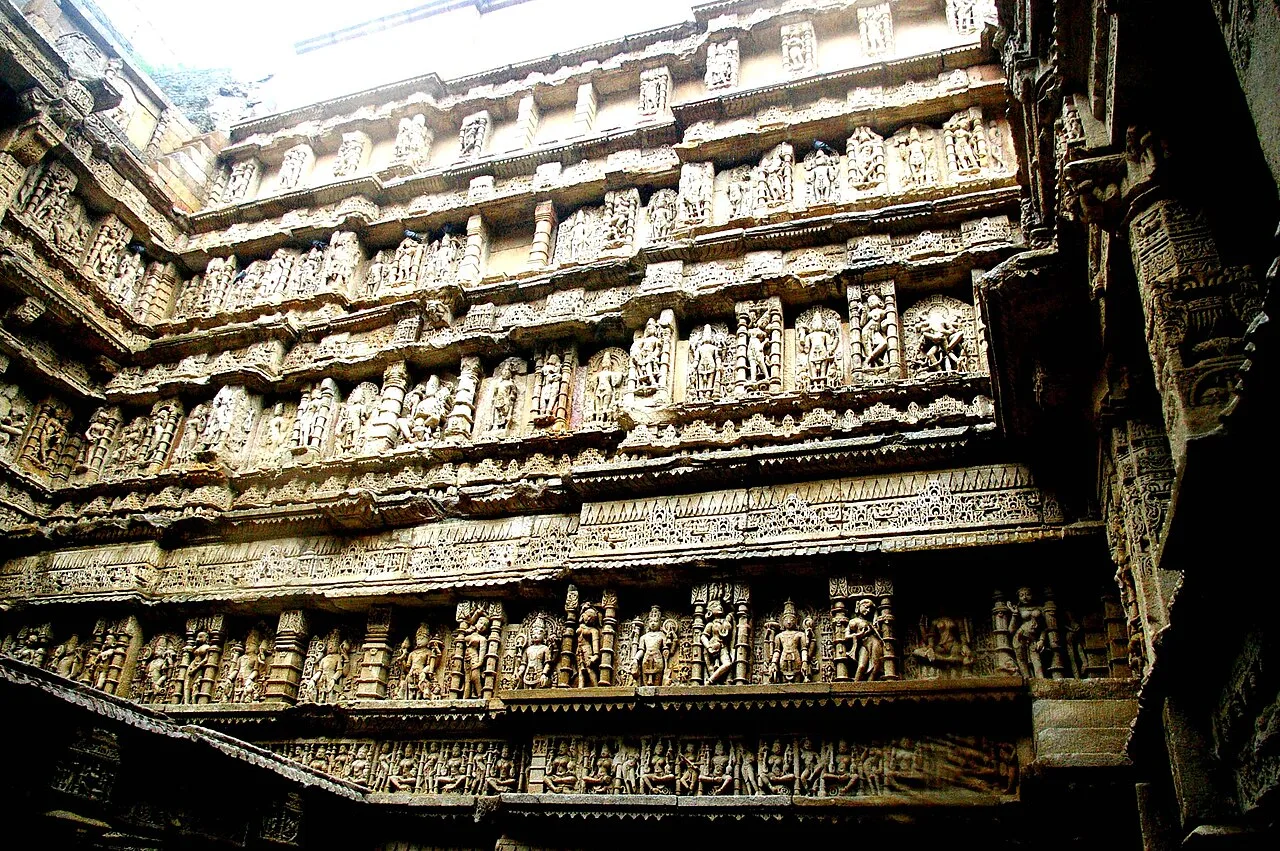
Rani ki Vav is a stepwell in Patan, Gujarat, notable for its tiered underground design and extensive sculpture, which reflect the monument’s religious and architectural significance.
Sahasralinga Tank
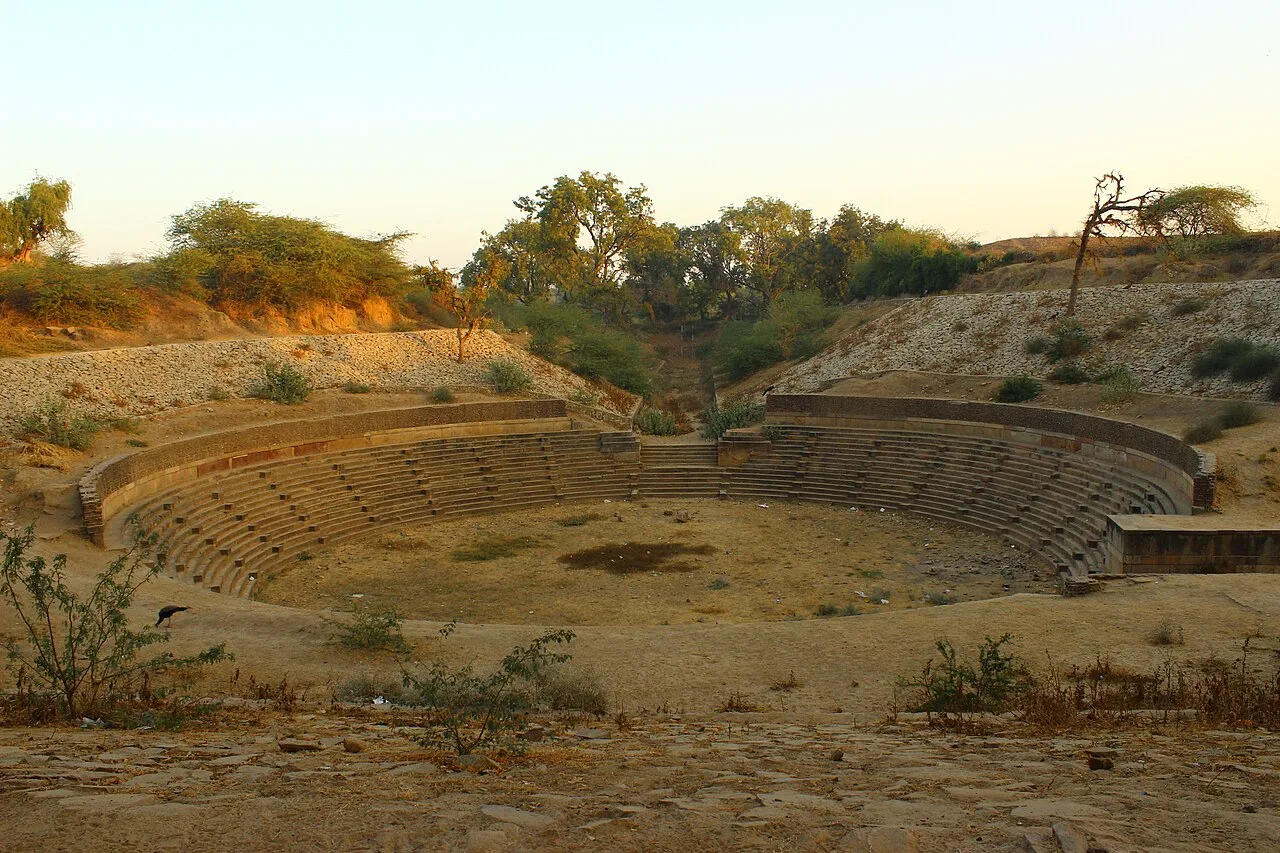
Sahasralinga Tank is a medieval, human-made reservoir in Gujarat’s Patan district, commissioned under Chaulukya rule. Visitors come to see this historic site, which is protected as a national monument.
Patan’s food reflects the wider Gujarati tradition, with many vegetarian dishes and a balance of savoury, tangy and gently sweet flavours. Common choices across the region include dhokla, khandvi, thepla, kadhi-khichdi and Gujarati thali meals; fafda with jalebi is a familiar snack pairing. Seasonal undhiyu is especially associated with winter in Gujarat. Sweets such as mohanthal and shrikhand are also popular. Menus and availability vary between eateries, so ask what has been prepared fresh that day. Patan is not known for a single defining dish, but its local meals are a good introduction to northern Gujarat’s food culture.
Patan is especially renowned for Patan Patola, a complex double-ikat silk textile in which both the warp and weft threads are resist-dyed so their patterns align in the finished cloth. The technique demands careful planning and highly skilled weaving, and Patola has long been valued for its precision and vivid designs. The craft is strongly associated with the Salvi weaving community and remains an important part of the town’s cultural identity. Gujarat has many other textile and craft traditions, but Patan Patola is the district’s best-known and most distinctive contribution to the region’s handloom heritage.
Navratri, usually in autumn, is widely observed across Gujarat with devotional gatherings, music and garba dancing; celebrations can make town centres busier and accommodation harder to find. Uttarayan, the January kite festival, and Diwali, generally in autumn, are also celebrated locally. Holi is observed in spring. These are regional celebrations rather than events unique to Patan, and the scale varies between communities. Travel during major festival periods may involve busier roads and family gatherings, so visitors should check local conditions and arrange rooms ahead where possible.
Elsewhere in Gujarat
Patan district lies in the dry northern plains of Gujarat. Much of the terrain is level or gently undulating agricultural land, with settlements and fields shaped by limited rainfall and seasonal watercourses. The Saraswati river is associated with Patan, while water availability across the wider district varies by season. The district’s western and northern reaches approach the arid margins of the Little Rann region. There are no major hill ranges or extensive forests to plan around. The open terrain generally supports road travel, though heat, dust and changing conditions on rural roads can affect journeys.
Patan has a generally hot, dry climate. Summer, from roughly March into June, can bring intense heat, so sightseeing is more comfortable early or later in the day. The monsoon usually falls in summer, bringing some relief but also occasional wet roads and interruptions to rural travel. Winter, from around November to February, is usually the most comfortable season for walking around monuments and town streets. The cooler months are generally the best time to visit. Pack sun protection, a hat and light clothing; in winter, carry a light layer for cooler mornings and evenings. During the monsoon, include rain protection and suitable footwear.
Patan is served by Patan railway station, while Sardar Vallabhbhai Patel International Airport in Ahmedabad is the nearest major airport. Ahmedabad and Mehsana are useful gateways for onward road travel; buses and private vehicles connect Patan with towns across northern Gujarat. Within Patan, auto-rickshaws and local taxis can help visitors reach sites such as Rani ki Vav and Sahasralinga Tank, though availability may vary. The historic attractions are within the town area, but visitors should allow time for local traffic and confirm the best last-mile option on arrival. Check current transport services locally before travelling.
Patan railway station and road connections make the town a practical base for visiting its historic sites. Rani ki Vav and Sahasralinga Tank are within the town area; auto-rickshaws and local taxis can help with last-mile travel, though availability may vary. Local buses and shared vehicles serve routes between Patan and other towns in the district and northern Gujarat, but services may be less frequent in rural areas. For flexible travel beyond the town, visitors can arrange a taxi or private vehicle. Confirm current services locally and allow extra time for traffic or road conditions.
2 days: Rani ki Vav → Sahasralinga Tank; sleep in Patan on the night between days. 3 days: Sahasralinga Tank → Rani ki Vav; sleep in Patan each night, allowing an unhurried day for the sites and town.
Patan is the most practical base for both suggested circuits, keeping the district’s listed historic sites within reach. The town generally offers hotels and guesthouses, with simpler lodgings and dharamshalas also possible; availability and facilities vary. Visitors seeking a broader choice of accommodation may consider larger nearby regional centres, but should allow for the onward road journey. Homestays or government lodges may be available in the wider region, though visitors should verify current options before relying on them. Book ahead during busy festival periods.
Carry drinking water and sun protection, especially in hot weather, and avoid prolonged outdoor sightseeing during the strongest daytime heat. Use care on steps and uneven surfaces at historic sites; the stepwell may be difficult for visitors with limited mobility. Rural roads can be narrow or affected by rain, so allow for changing conditions and use a reliable local driver if needed. Mobile connectivity may be weaker outside towns. Keep valuables secure in crowds and follow site instructions. No special permit is generally required for the listed town attractions, but confirm current access requirements with official sources before travel.
- Mehsanaabout 36 km
- Gandhinagarabout 91 km
- Banaskanthaabout 92 km
- Sirohi · Rajasthanabout 103 km
- Ahmedabadabout 105 km
- Surendranagarabout 118 km
- Sabarkanthaabout 120 km
- Khedaabout 164 km
Straight-line distance between the centres of each district's destinations; road distance is longer.
Q: How many days should I spend in Patan district? A: Two days are enough for the listed historic sites at a measured pace; a third day allows more time in town. Q: When is the best time to visit? A: The cooler months, generally November to February, are most comfortable for sightseeing. Q: Where is the best base? A: Patan town is the most convenient base for Rani ki Vav and Sahasralinga Tank. Q: How do I get to Patan? A: Patan has a railway station and road connections; Ahmedabad is the nearest major air gateway, with onward travel by road. Q: Is Patan suitable for families and elderly travellers? A: Yes, though the stepwell’s stairs and uneven historic surfaces may be challenging; plan breaks and check accessibility needs in advance.
This page draws on our 2 destination guides for Patan and is updated as our team checks it.
Be the first to share photos, stories, advice or a helpful contact for Patan.
Loading…