
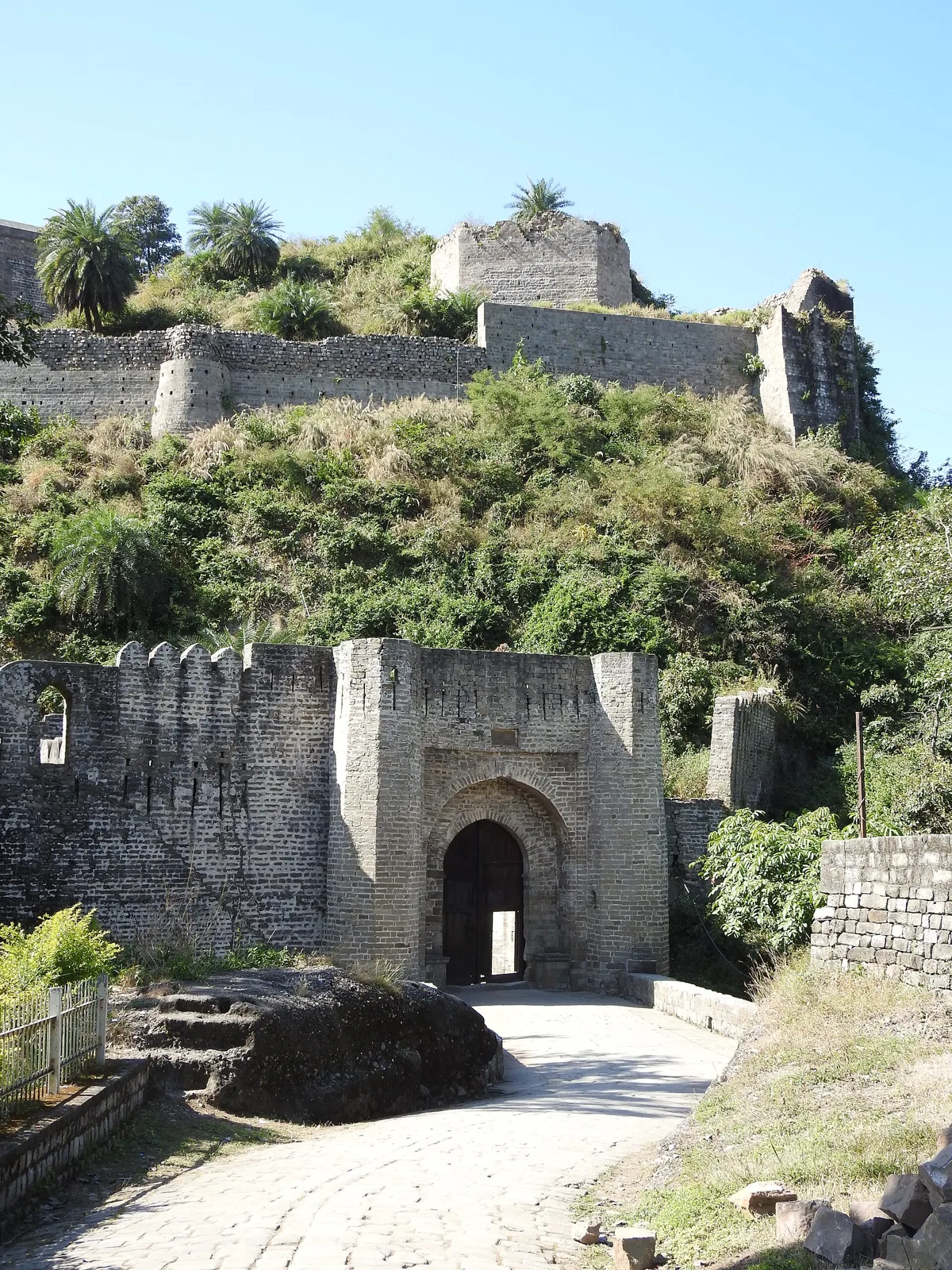
Kangra Fort
A historic stronghold in Kangra district, Himachal Pradesh, Kangra Fort is associated with Indian mythology and a long recorded past, attracting visitors interested in the region’s heritage.
Key facts · verified by Ghumoopedia editors
- Type of place
- Heritage monument
- Best time to visit
- March to June and October to November for most hill towns; May to October for Lahaul-Spiti and high passes
- Nearest railway station
- Kangra (narrow gauge) · about 5 km (straight line)
- Verified
- 21 Nov 2026
Plan a trip from Kangra Fort — a day-by-day route through places nearby.
The fort occupies a small hillock in Kangra district, between the Manjhi and Banganga rivers and near the foothills of the Dhauladhar range. Nagarkot and Kot Kangra are also names for the stronghold. It is considered the largest fort in the Indian Himalayas and the oldest in the Himalayan region. The Archaeological Survey of India protects the site. The fort features in Indian mythology, and historical references to it extend across roughly 4,000 years. These associations draw visitors interested in the area’s past. Himachal's hill towns blend Hindu temple traditions, Tibetan Buddhist monasteries and village devta (local deity) customs, with fairs and festivals tied to the farming calendar. Altitude decides the weather: the Shivalik foothills are mild, Shimla and Manali are cool with winter snow, and Lahaul-Spiti is a cold desert closed by snow for months. The July–September monsoon brings landslides and road closures in the hills. The usual best time to visit is March to June and October to November for most hill towns; May to October for Lahaul-Spiti and high passes. Timings, fees and access arrangements must be confirmed locally. For official information, see Himachal Pradesh Tourism at https://himachaltourism.gov.in.
Why it matters
Kangra Fort is an important landmark of Kangra district and a prominent reminder of the region’s long political and cultural history. Traditionally associated with the Katoch rulers, it overlooks the meeting of the Banganga and Manjhi rivers in the Dhauladhar foothills. The Archaeological Survey of India protects the monument; visitors should check current access arrangements with the managing authority. The fort is sometimes described in local and popular accounts as among the oldest in the Himalayas, though its precise origins are uncertain. Its strategic setting and successive periods of rule make it significant to the history of the western Himalayan region, as well as a major heritage stop for visitors to Kangra.
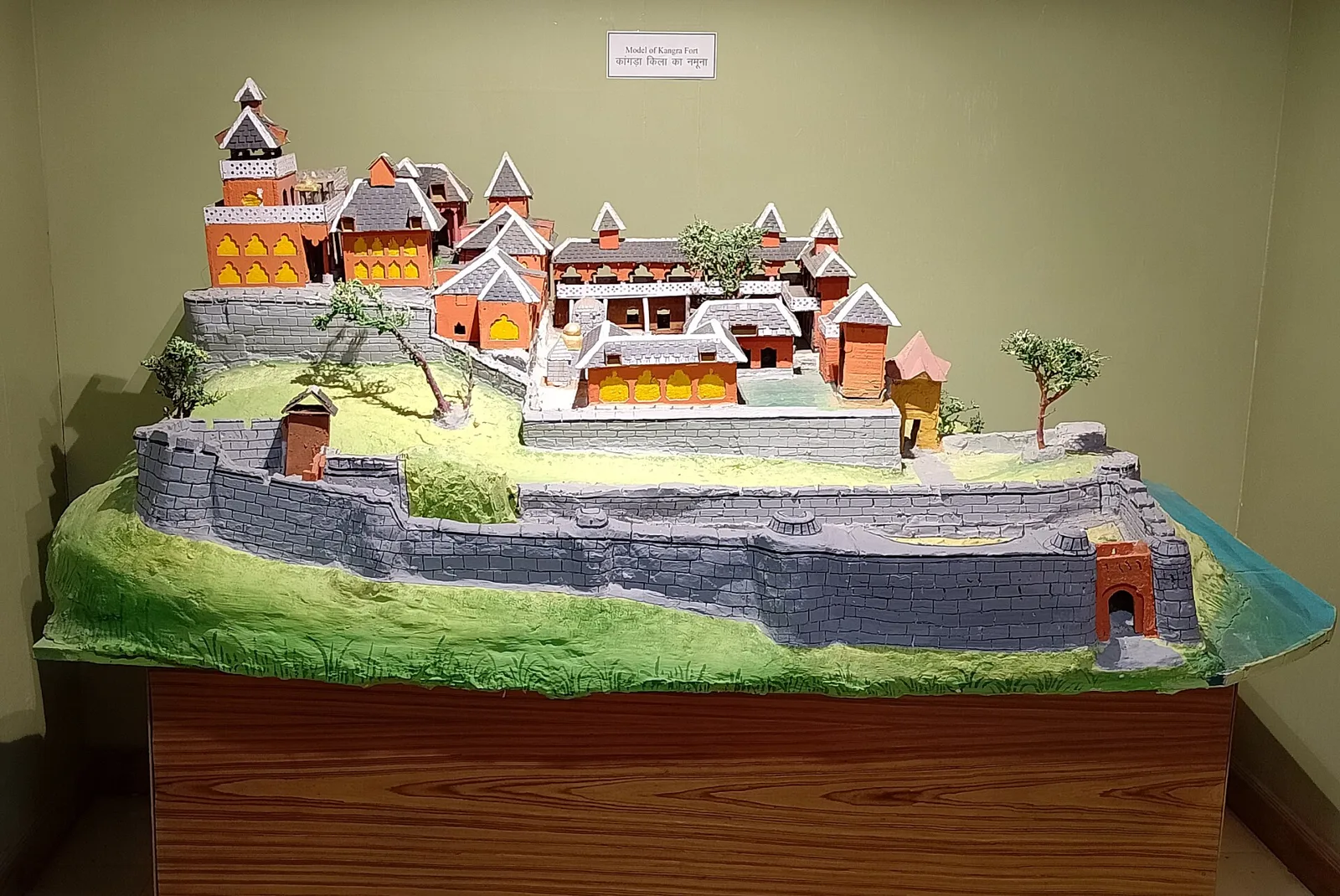
The fort’s exact founding date is not established. It is traditionally linked to the Katoch dynasty, whose rulers held power in the Kangra region over many centuries. Some historians associate the area with the ancient Trigarta kingdom, but connections between ancient references and the surviving fort should be treated cautiously. Kangra Fort drew attention from successive powers because of its strong position and the wealth of the surrounding region. Mahmud of Ghazni attacked it in 1009. Mughal campaigns followed, and Emperor Jahangir’s forces brought the fort under Mughal control in 1620. It later passed into Sikh hands under Maharaja Ranjit Singh in the early nineteenth century. Following the First Anglo-Sikh War, it came under British control in 1846. A major earthquake in 1905 severely damaged the fort and its structures. The Archaeological Survey of India now protects the site and undertakes conservation. What visitors see is therefore a layered ruin rather than a single, intact building from one period; the surviving gateways, walls, temple remains and other structures reflect successive changes and damage.
Origin stories & folklore
According to local tradition, the fort is associated with the ancient Katoch rulers and the kingdom of Trigarta, a name known from epic and historical accounts. Popular descriptions sometimes connect the site’s past with the Mahabharata, but these associations do not establish the date of the surviving fort. The name Nagarkot is also used in historical and local references to Kangra. Stories of the fort’s wealth and of repeated attempts to capture it form part of its popular memory. Treat these narratives as tradition rather than verified accounts; interpretation boards or an authorised guide can help distinguish documented events from folklore.
Architecture & design
The fort occupies a steep-sided hillock near the meeting of the Banganga and Manjhi rivers, with the surrounding terrain adding to its defensive position. Its long stone ramparts follow the contours of the hill, and the approach passes through a sequence of gateways. The surviving entrance structures include named gates such as Ahani and Amiri; names and access routes may be clarified by local interpretation. Within the enclosure are remains of palaces, courtyards and temples, including shrines associated with Ambika Devi and Lakshmi Narayan. Stone construction, thick walls and narrow passages reflect the practical demands of a hilltop stronghold. Earthquake damage, conflict and weathering have left much of the complex in ruins, so visitors should expect uneven surfaces and incomplete structures rather than a fully preserved palace. The layout rewards a slow visit, with views across the valley between sections of wall and gateways.
Important objects & sculptures
Look for the stonework around the gateways, surviving carved details and the remains of temple structures within the fort. The Ambika Devi and Lakshmi Narayan shrines are among the religious features visitors may encounter; their condition and access can vary. Some inscriptions and architectural fragments have historical value, but not every surface is clearly legible or explained on site. The fort is primarily an archaeological ruin, not a large museum collection, so do not expect extensive displays of movable objects. Read the interpretation boards where available, and avoid touching, climbing on or removing stones and fragments.
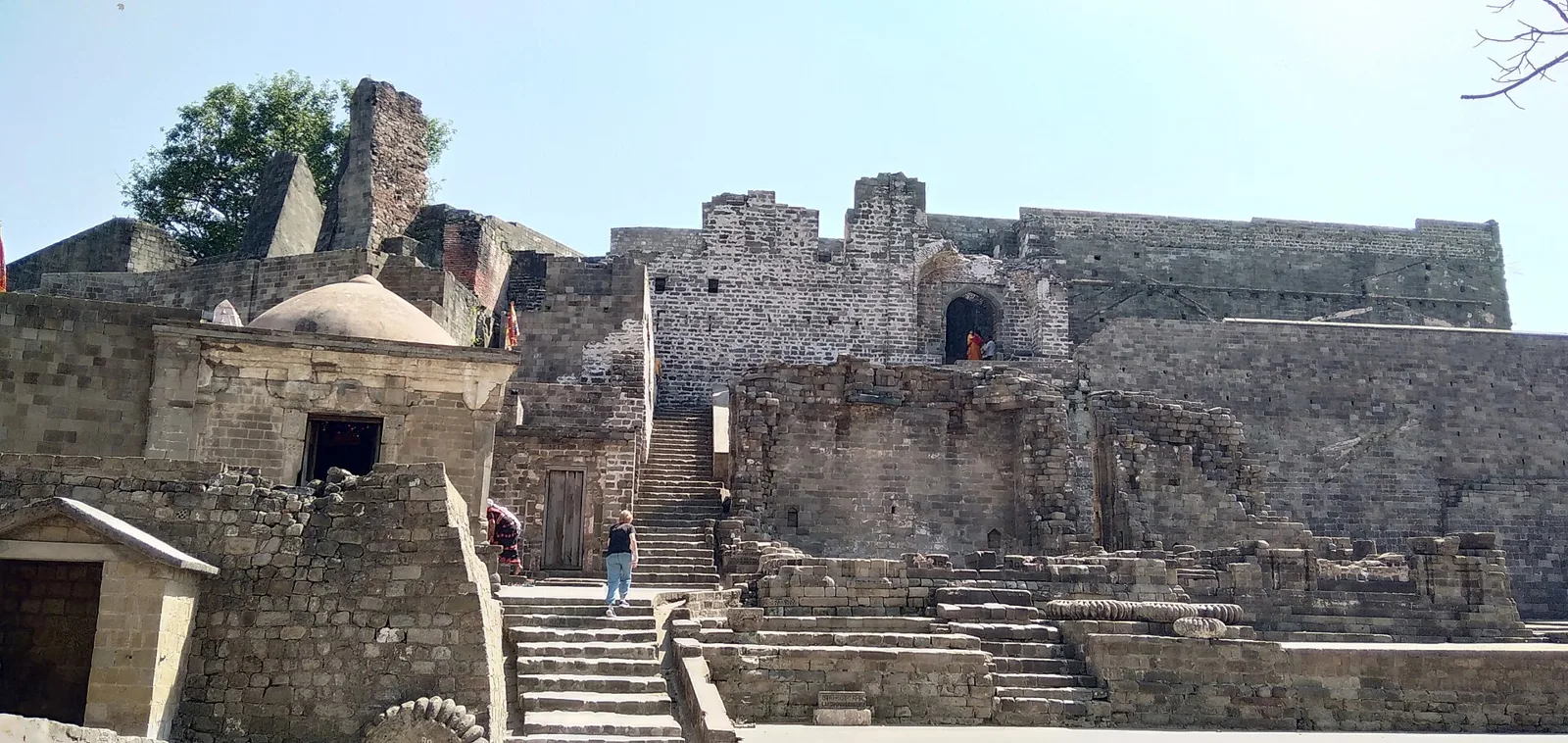
Explore Kangra Fort slowly and read the interpretation boards or hire an authorised guide to understand its history. Check opening days and ticket counters in advance, as many monuments and museums close on one weekday and on public holidays. A comfortable itinerary is one main visit in the morning, a local meal at midday and a short nearby stop before an afternoon return. Use the district list on this site to find other places in Kangra, but check the actual road route and its condition before combining stops. If a festival or fair is on, local roads and stays can be busy — and the experience can be unforgettable. Leave no litter: many sites are protected by the communities around them.
Suggested itineraries
Half day: Reach the fort by taxi or local transport; spend about 2–3 hours exploring the gateways, ramparts and temple remains at an unhurried pace. Full day: Visit the fort in the morning for about 2–3 hours; have a meal in Kangra town; spend the afternoon at Brajeshwari Devi Temple and explore the town market. Gentler option: View the fort’s setting from accessible areas near the entrance, take frequent rests, and shorten the visit rather than attempting every path or stairway.
Kangra Fort stands within a living cultural landscape shaped by Hindu temple traditions, regional languages and village customs. Kangri and Hindi are widely heard in the district, alongside other local Pahari varieties. Nearby religious sites remain places of worship, so visitors may see offerings, prayer and customary observances alongside heritage tourism. The wider region is known for Kangra miniature painting and Kangra tea, though these are broader district traditions rather than activities confined to the fort. Dress and behaviour are generally informal, but modest clothing and respectful conduct are appropriate around shrines and worshippers. Ask before photographing people or religious activity.
Festivals & events
Navratri, observed in spring and autumn, is an important time for worship at temples in Kangra town, including the Brajeshwari Devi Temple. Religious gatherings and local fairs in the district may bring more visitors and traffic to town, though celebrations are not necessarily held inside the fort. Festival dates follow the lunar calendar and vary from year to year. If travelling during a major observance, allow extra time for road movement and expect busier temple areas, markets and accommodation. Confirm locally which events are taking place during your visit.
Local food in Himachal Pradesh includes siddu (steamed stuffed bread), madra, dham (the traditional festive meal), chha gosht, trout from mountain streams, babru and fresh apples and apricots in season. Ask what is fresh that day; many small eateries cook a limited daily menu. Vegetarian travellers eat very well across this region, and most towns also have simple non-vegetarian dhabas. Remote sites may have no restaurant at all. Carry water and snacks, eat a proper breakfast before long drives, and ask your accommodation for a packed lunch if you are heading out early. Try a home-cooked or dhaba meal when you can — it is often the best food on the route. Choose busy, clean places and carry your packaging back to town.
Shopping & local experiences
Kangra town markets are a practical place to look for locally made goods, everyday items and snacks. Kangra miniature paintings are a recognised regional art tradition; seek out reputable sellers and ask about the work’s origin. Kangra tea, grown in the district, can make a suitable local purchase. Food stalls and small eateries in town may offer regional dishes, but menus and availability vary. There may be few shopping options inside the fort itself. Avoid buying artefacts or old-looking stones that could have been removed from heritage sites.
March to June and October to November for most hill towns; May to October for Lahaul-Spiti and high passes
The nearest principal railway station by straight-line distance is Kangra (narrow gauge), roughly 5 km away. The nearest operating airport by straight-line distance is Gaggal Airport, Kangra (Dharamshala), roughly 10 km away. These figures are calculated from map coordinates — hill roads wind a lot, so actual road distance and travel time are usually much longer. Chandigarh, Kalka and Pathankot are the main rail gateways for the hills, and the Kalka–Shimla toy train is itself a heritage journey. For the final leg, Himachal Road Transport Corporation (HRTC) buses and shared taxis link district towns; shared taxis usually leave early in the morning. A private taxi gives more flexibility for remote sites. When comparing train, bus and flight, count the complete door-to-door time: a flight saves the most time only if the onward road transfer is short, while an overnight train plus a road journey can save a hotel night. Book your return before you leave, because seats fill quickly on weekends and holidays. Current train numbers, timings, return services and fares are not listed here; check IRCTC and NTES for trains and the airline's own schedule for flights. No permit is needed for Indian visitors to most of Himachal Pradesh. Some stretches near the international border in Kinnaur and Lahaul-Spiti may have check posts, and foreign nationals should check current registration rules for border areas before travel.
Confirm onward and return timings on IRCTC / NTES, the state bus operator or your airline before travel. A dash means current timings or fares have not been verified.
Getting around
Kangra town is the usual local base for reaching the fort. Taxis and, where available, auto-rickshaws can take visitors towards the entrance; check locally about the drop-off point and vehicle access. Local buses serve routes in the district, but the final approach may still require a taxi or a walk. Inside the complex, movement is on foot over uneven paths and steps. If driving, ask locally where parking is permitted and avoid blocking the narrow approach. Arrange a return ride in advance if relying on a taxi, particularly outside busy periods.
Hours, tickets & permissions
Entry is subject to the site’s current rules, which may include a ticket, restrictions around protected areas, and separate conditions for photography or commercial filming. Carry identification if requested, and follow notices at the entrance. Dress requirements may apply at shrine areas, where visitors should behave respectfully. Opening days, access to individual sections, ticket arrangements and any camera fee can change, so confirm current hours and fees with the Archaeological Survey of India or the local site authority before travelling.
Facilities
Facilities within the historic enclosure may be limited. Toilets, drinking water, refreshments and seating are not guaranteed at every point, so check locally and carry water, especially in warm weather. Food options and shops are more likely in Kangra town than inside the fort. Parking arrangements can vary with site access and visitor levels. Guides or interpretation may be available, but availability should be confirmed before relying on a guided visit. ATMs are generally easier to find in town; carry a suitable payment option for small local purchases.
Accessibility
The fort’s hilltop setting, sloping approach, uneven stone surfaces and numerous steps make it challenging for visitors with limited mobility. Routes may include narrow passages and steep sections, and there is no assurance that wheelchair-accessible routes, ramps or lifts are available. Strollers may be difficult to use beyond smoother approach areas. Shade and places to rest can be limited, so take breaks and avoid rushing. Older visitors or anyone with balance, heart or breathing concerns may prefer a shorter visit and should assess conditions at the entrance. A companion can be helpful on rougher sections.
No permit is needed for Indian visitors to most of Himachal Pradesh. Some stretches near the international border in Kinnaur and Lahaul-Spiti may have check posts, and foreign nationals should check current registration rules for border areas before travel. Carry a photo ID at all times and save the emergency number 112 and your accommodation's contact offline. Heat in summer and dense fog in winter are the main weather risks; carry water and allow extra travel time on foggy December–January mornings. Respect community rules, private property and posted instructions. Check official advisories for the region before travel, and follow local guidance if access changes.
Photography
Morning or late-afternoon light can bring out the texture of the stonework and provide clear views across the valley; conditions and access vary. Personal photography is subject to current site rules, and a fee or restriction may apply, so check notices before using a camera. Do not use a drone without confirming the applicable permissions and airspace rules. Avoid climbing on walls for a photograph, and ask permission before photographing worshippers, local residents or religious observances. Keep pathways clear and protect fragile remains.
Choose a stay by the full journey to Kangra Fort, not just the district name. Main towns in Kangra usually offer hotels, state tourism lodges and guesthouses with better transport, meals and medical access, while village homestays offer a closer connection to local life. In the plains, check fans or air-conditioning in summer and heating in the December–January cold wave. Book in advance for weekends, festival dates and the peak season (March to June and October to November for most hill towns; May to October for Lahaul-Spiti and high passes). Confirm the exact location, meals included, check-in time and cancellation terms in writing. Many homestays accept payment on arrival; avoid sending money to unverified contacts. Mobile network and digital payments can be unreliable in remote areas, so carry some cash.
In Kangra town, the Brajeshwari Devi Temple is a major religious site and a natural companion to a fort visit. Other attractions in Kangra district include Masroor Rock Cut Temple, known for its rock-cut temple complex, and Chamunda Devi Temple. Dharamshala and McLeod Ganj offer additional cultural and visitor experiences farther along the hill roads. These stops are not all close to one another, and mountain routes can make travel slower than a map suggests. Check road conditions and choose a combination that fits the day rather than trying to cover the whole district.
For couples, Kangra Fort rewards a slow pace: arrive early for soft light and fewer crowds, share a local meal and keep the evening free. Public displays of affection can be frowned upon in conservative communities and at religious sites, so be discreet. A homestay or a small heritage hotel can make the trip memorable — confirm privacy, hot water and transport back. Keep a buffer in your itinerary, because weather and traffic can delay plans in Himachal Pradesh.
Q: How much time should I allow for Kangra Fort? A: Allow about two to three hours for a relaxed visit; visitors who explore only the main areas may need less. Q: When is a good season to visit? A: March to June and October to November are generally comfortable periods for visiting Himachal’s lower hill towns. Check weather and road conditions before setting out. Q: Is entry ticketed, and what are the hours? A: Entry rules, fees and opening arrangements can change. Confirm current details with the Archaeological Survey of India or the local site authority. Q: Is the fort suitable for children and elderly visitors? A: Families can visit, but uneven paths and steps require care. Older visitors or anyone with limited mobility may prefer a shorter route and frequent rests. Q: Where can I stay nearby? A: Kangra town and the wider Dharamshala area offer visitor accommodation. Choose based on your route and confirm availability locally.
Be the first to share photos, stories, advice or a helpful contact for Kangra Fort.
Loading…