
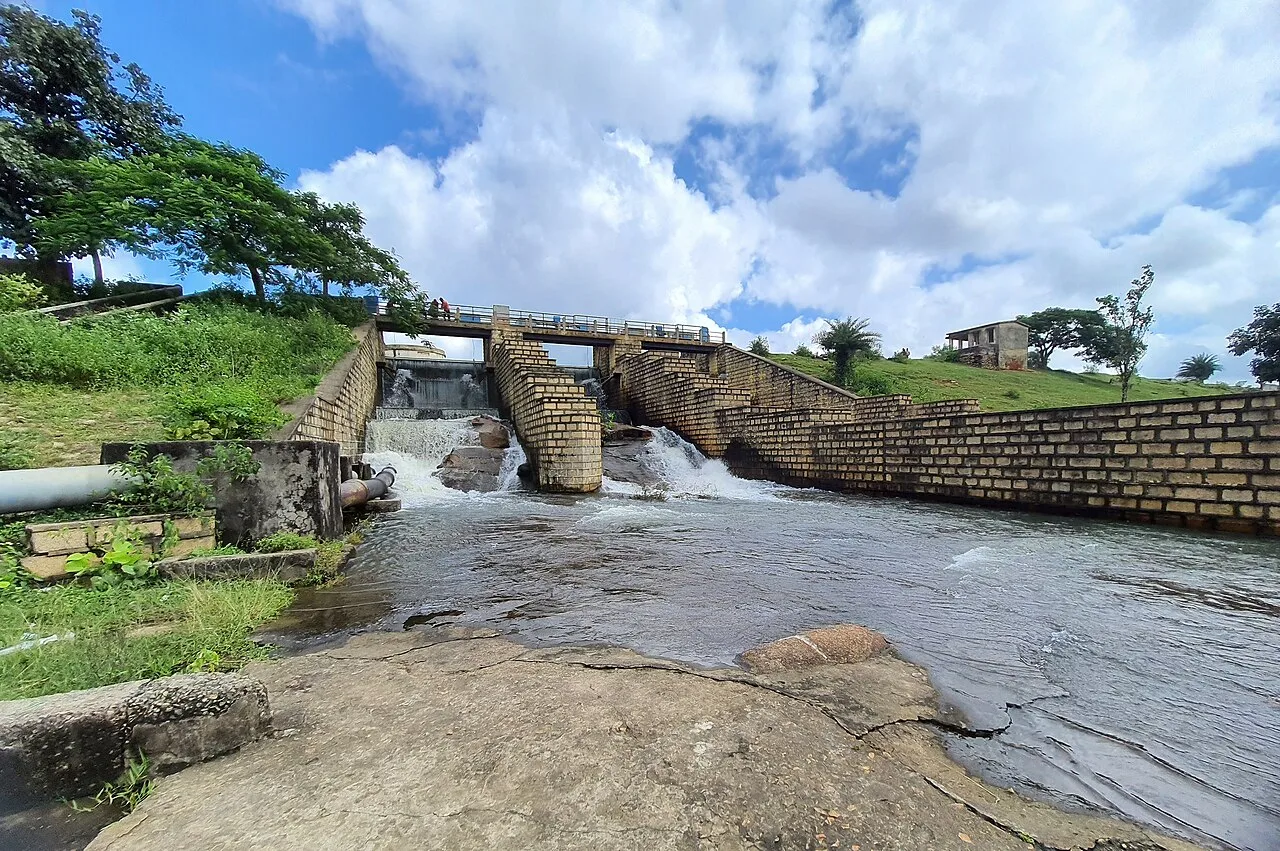
Khandoli Dam
Khandoli Dam is a reservoir in Giridih district, Jharkhand, where visitors come to see the site at the base of Khandoli Hill.
Key facts · verified by Ghumoopedia editors
- Type of place
- Natural attraction
- Best time to visit
- October to February for sightseeing; July to September for waterfalls at full flow (expect slippery paths)
- Nearest railway station
- Giridih · about 10 km (straight line)
- Nearest airport
- Deoghar Airport · about 45 km (straight line)
- Verified
- 21 Nov 2026
Plan a trip from Khandoli Dam — a day-by-day route through places nearby.
In Jharkhand’s Giridih district, the dam lies about ten kilometres north-east of Giridih town, on the route towards Bengabad. The Khandoli site is also a tourist destination, set at the base of Khandoli Hill. Water from the reservoir supplies Giridih city, serving more than one lakh residents. The lake thus has a practical role for the city as well as drawing visitors to the area. After decades without desilting, the urban development department has recently made plans to remove silt from Khandoli Lake. Jharkhand is the land of forests, waterfalls and Adivasi communities such as the Santhal, Ho and Munda, with major pilgrimages at Baidyanath Dham (Deoghar) and Shikharji (Parasnath). Jharkhand has hot summers from March to June, a monsoon from June to September when the waterfalls are at their fullest, and cool winters from November to February; the Netarhat plateau stays pleasant for much of the year. The usual best time to visit is October to February for sightseeing; July to September for waterfalls at full flow (expect slippery paths). Timings, fees and access arrangements must be confirmed locally. For official information, see Jharkhand Tourism at https://www.jharkhandtourism.gov.in.
Why it matters
Khandoli Dam is a reservoir and local recreation spot in Giridih district, around 10 km north-east of Giridih town towards Bengabad. Its importance is both practical and local: the existing guide reports that its reservoir supplies water to more than one lakh residents of Giridih city. At the foot of Khandoli Hill, the lake and surrounding landscape also draw visitors seeking a quiet outdoor stop. The urban development department has made plans to desilt the lake after decades; visitors should check locally for updates on the work. No UNESCO, Archaeological Survey of India or other formal heritage designation is established in the available information.
Khandoli Dam is a working water-storage site as well as a visitor destination, but reliable published details about its construction date, builders and original engineering design are limited. It is therefore better not to assign it a particular century or a named construction authority without confirmation from local records. Its relationship with Giridih has become especially significant through the reservoir’s reported role in supplying water to more than one lakh city residents. The dam is also associated with Khandoli Hill, at whose foot the lake has developed as a place for local outings. Over time, the reservoir and its setting have attracted visitors in addition to serving a civic purpose. The existing guide reports that the urban development department has planned to desilt Khandoli lake after decades. This is a plan, not confirmation that desilting has been completed. For a fuller account of the dam’s construction, maintenance and water-management history, consult the relevant district or urban development authority and local records.
Origin stories & folklore
No well-documented origin legend specific to Khandoli Dam can be confirmed from the available information. The dam is a constructed reservoir, so visitors should distinguish accounts about the lake’s engineering or water supply from folklore about the nearby hill. Local people may share stories connected with Khandoli Hill or the surrounding landscape, but versions can vary and should be treated as oral tradition rather than established history. Ask respectfully before recording or repeating a story, and avoid presenting an unverified account as fact.
Spend unhurried time at Khandoli Dam: walk the marked paths, use official viewpoints and ask locally whether a guide, entry ticket or forest permission is needed. Enjoy the water from safe, marked points; rocks near falls are slippery and currents are dangerous, especially in the monsoon — never swim below a waterfall. Wildlife sightings are never guaranteed — patience and quiet improve your chances. A comfortable itinerary is one main visit in the morning, a local meal at midday and a short nearby stop before an afternoon return. Use the district list on this site to find other places in Giridih, but check the route and its condition before combining stops. If a festival or fair is on — such as the Shravani Mela at Deoghar or Sarhul — roads and stays can be busy, and the experience can be unforgettable. Leave no litter: many sites are protected by the communities around them.
Suggested itineraries
Half day: Travel from Giridih to Khandoli Dam; spend about one to two hours at permitted viewpoints and paths; pause for a local refreshment stop; return to town. Full day: Visit Khandoli Dam in the morning; allow time for a relaxed meal in or near Giridih; choose one nearby stop such as Usri Falls if routes and conditions are suitable; return before dark. Gentler option: Arrange a vehicle close to an authorised viewpoint, enjoy a short visit on the firmest accessible path, and avoid steep or uneven sections.
Khandoli is visited as a local outdoor destination, rather than being known chiefly for a particular performance or ritual tradition. In Giridih district and the wider Jharkhand region, languages in use include Hindi and regional languages such as Khortha and Santhali; which language a visitor hears will vary by person and community. The region is home to Adivasi communities, including Santhal, Ho and Munda people, each with distinct traditions. Visitors may encounter regional foods, music and festive gatherings in towns or villages, but should not assume these are performed at the dam. Ask before photographing people or cultural events.
Local communities
Giridih district is home to Adivasi communities including Santhal, Ho and Munda people, alongside other local residents. The dam is also closely connected to the wider urban community through its reported role in supplying water to Giridih city. Livelihoods in the district vary and may include farming, trade, services and work in nearby towns; no single occupation should be assumed for residents around the reservoir. Treat the lake as both a public landscape and an important water resource. Be considerate of local users, do not leave litter, and seek permission before photographing individuals or private property.
Festivals & events
No major festival or fair is specifically documented as being held at Khandoli Dam. In the wider region, Sarhul is observed in spring by many Adivasi communities, with practices varying between communities and places. The Shravani Mela is a major pilgrimage period in Deoghar, rather than a Khandoli event; travel across the region can become busier during this season. Festival dates follow local and religious calendars and change from year to year. If planning a visit during a regional celebration, check road conditions and accommodation availability, and be respectful of any local customs.
Local food in Jharkhand includes dhuska, rugra (bamboo shoot and mushroom dishes), handia (rice beer, offered by tribal communities), litti, arsa roti, pittha, chilka roti and mahua-based preparations. Ask what is fresh that day; many small eateries cook a limited daily menu. Vegetarian travellers eat very well across this region, and most towns also have non-vegetarian options. Remote sites may have no restaurant at all. Carry water and snacks, eat a proper breakfast before long drives, and ask your accommodation for a packed lunch if you are heading out early. Try a home-cooked or dhaba meal when you can — it is often the best food on the route. Choose busy, clean places, drink sealed or filtered water, and carry your packaging back with you.
Shopping & local experiences
There is no confirmed specialist souvenir market at Khandoli Dam, so visitors should not expect a formal craft-shopping area beside the reservoir. For everyday shopping and regional food, look in Giridih town and ask locally about markets and locally made items. Jharkhand crafts and products vary by place and community; buy directly from makers or reputable sellers where possible, and do not assume an item represents a particular Adivasi community without checking. Try local snacks or a meal in town, and carry reusable containers to reduce waste at the lake.
The reservoir lies at the foot of Khandoli Hill in Giridih district, giving the site a combination of open water and a hilly setting. The lake is a dam reservoir, not a natural lake, and it also serves a civic water-supply purpose. The appearance of the water and surrounding vegetation changes with the seasons; monsoon rains can make paths and exposed surfaces slippery. Local vegetation and birdlife may be observed around the water and nearby slopes, but species and sightings vary, and wildlife encounters are never guaranteed. Keep a respectful distance from animals, avoid disturbing nesting or feeding areas, and do not enter the water unless local authorities explicitly identify a safe, permitted area.
October to February for sightseeing; July to September for waterfalls at full flow (expect slippery paths)
The nearest principal railway station by straight-line distance is Giridih, roughly 10 km away. The nearest operating airport by straight-line distance is Deoghar Airport, roughly 45 km away. These figures are calculated from map coordinates — actual road distance is longer. Ranchi, Dhanbad, Tatanagar (Jamshedpur), Bokaro and Gomoh are the main rail gateways, and Ranchi, Deoghar and Durgapur have airports. For the final leg, Jharkhand State Transport buses, private buses and shared Sumo and Bolero jeeps link district towns; shared jeeps usually leave early in the morning. A private taxi gives more flexibility for remote sites. When comparing train, bus and flight, count the complete door-to-door time: a flight saves the most time only if the onward road transfer is short, while an overnight train can save a hotel night. Book your return before you leave, because seats fill quickly on weekends, festivals and holidays. Current train numbers, timings, return services and fares are not listed here; check IRCTC and NTES for trains and the airline's own schedule for flights. No permit is needed to visit Jharkhand. Some forest and mining areas have check posts, and a few interior pockets are affected by Left-wing extremism — check current advisories with your host or the district administration before travelling to remote areas, and avoid travelling on isolated roads after dark.
Confirm onward and return timings on IRCTC / NTES, the state bus operator or your airline before travel. A dash means current timings or fares have not been verified.
Getting around
From Giridih, visitors can arrange a local taxi or auto-rickshaw for the road journey towards Khandoli and Bengabad; confirm with the driver that the destination is the dam. Local buses or shared vehicles may serve parts of the route, but availability and the final approach should be checked locally. Walking is suitable only for exploring short, safe sections after arrival, not as a substitute for checking the route from town. Ask about permitted parking and keep access clear for local residents and service vehicles. Do not assume boats operate on the reservoir; use one only if an authorised operator confirms it is available and safe.
Hours, tickets & permissions
Entry arrangements can depend on the area visited and any current management or maintenance work. A ticket, camera fee, guide, forest permission or other entry rule should not be assumed either way; confirm locally before setting out. Check current visiting hours and any applicable fees with the managing authority or local officials, as these details may change. Follow signs and staff instructions, especially near the reservoir, work areas and restricted sections. Do not enter closed or unsafe areas.
Facilities
Facilities at the dam may be limited and can change. Toilets, drinking water, food stalls, parking and guide services are not assured at the reservoir itself, so check locally and carry drinking water and any essentials. Giridih town is the more reliable place to look for meals, shops, cash services and other visitor needs. An ATM should not be assumed near the site. Ask where parking is permitted, take litter back with you, and do not rely on facilities being open during maintenance or other restrictions.
Accessibility
The approach and visitor areas may include uneven ground, unpaved paths or slopes, and conditions can become slippery during the monsoon. Walking distances and the state of paths vary, so check the current situation before visiting. Wheelchair and stroller access cannot be confirmed, and visitors should not assume that ramps, handrails or accessible toilets are available. Older visitors or anyone with limited mobility may find it easier to travel by vehicle to a permitted viewpoint and keep the visit short. Wear stable footwear, take breaks, and avoid steep or wet surfaces.
No permit is needed to visit Jharkhand. Some forest and mining areas have check posts, and a few interior pockets are affected by Left-wing extremism — check current advisories with your host or the district administration before travelling to remote areas, and avoid travelling on isolated roads after dark. Carry a photo ID at all times and save the emergency number 112 and your accommodation's contact offline. Heat in summer and fog in winter are the main weather risks; carry water and allow extra travel time on foggy December–January mornings. Waterfalls are dangerous in the monsoon: keep behind barriers, never enter the water near a fall, and leave the area if the water level rises suddenly. Follow local guidance if access changes.
Photography
Soft morning or late-afternoon light can suit views of the reservoir and Khandoli Hill; conditions vary with weather and season. Photograph only from permitted, stable viewpoints and do not approach the water’s edge for a better composition. Check locally whether camera restrictions apply, and do not fly a drone without confirming current rules and permissions with the relevant authority. Ask people before taking their portraits, and avoid photographing private spaces or any ritual activity without consent. Keep equipment and visitors clear of service or maintenance areas.
Choose a stay by the full journey to Khandoli Dam, not just the district name. Ranchi, Jamshedpur and Deoghar offer the widest choice; forest rest houses near the sanctuaries must be booked through the forest department. In summer, check air-conditioning or coolers; in December and January, check hot water. Book in advance for weekends, festivals and the peak season (October to February for sightseeing; July to September for waterfalls at full flow (expect slippery paths)). Confirm the exact location, meals included, check-in time and cancellation terms in writing. Avoid sending money to unverified contacts or touts at stations. Carry some cash, as card and digital payments can be unreliable in remote areas.
Khandoli Hill is the immediate landscape feature associated with the dam. Usri Falls, another known natural attraction in Giridih district, may be considered for a separate stop if road and weather conditions allow. Giridih town offers a practical base for meals and onward travel. Madhuban, in Giridih district, is an important Jain pilgrimage centre associated with the approach to Shikharji on Parasnath Hill; it is a distinct destination and should be planned as a separate outing. Confirm routes, access conditions and any visitor rules before combining stops, particularly during the monsoon.
For couples, Khandoli Dam rewards a slow pace: arrive early for soft light and fewer crowds, share a local meal and keep the evening free. A waterfall viewpoint after the monsoon or a sunset from a hill temple makes the trip memorable. Public displays of affection can be frowned upon in conservative communities and at religious sites, so be discreet. Keep a buffer in your itinerary, because weather and road conditions can delay plans.
Q: How much time should I allow for Khandoli Dam? A: A short visit can fit into a half-day outing from Giridih; allow extra time if you plan to explore the surroundings or add another stop. Q: When is a good season to visit? A: October to February is generally suitable for sightseeing. Monsoon scenery can be appealing, but paths may be slippery and conditions should be checked. Q: Is there an entry ticket or set visiting schedule? A: Check with the managing authority or local officials before travelling. Q: Is the site suitable for children and elderly visitors? A: It can be a short outdoor visit, but uneven or slippery ground and proximity to water require care. Stay on permitted paths and supervise children closely. Q: Where can I stay nearby? A: Giridih town is the practical base for looking for accommodation. Confirm availability and suitability directly before your trip.
Be the first to share photos, stories, advice or a helpful contact for Khandoli Dam.
Loading…