
Lalbagh Botanical Garden
A historic garden in Bengaluru, Lalbagh is known for its plant collections, public parkland and flower displays, while also providing habitat for urban wildlife.
Key facts · verified by Ghumoopedia editors
- Type of place
- Natural attraction
- Best time to visit
- October to February; June to September for monsoon greenery in the Western Ghats
- Nearest railway station
- KSR Bengaluru City Junction · about 4 km (straight line)
- Verified
- 21 Nov 2026
Plan a trip from Lalbagh Botanical Garden — a day-by-day route through places nearby.
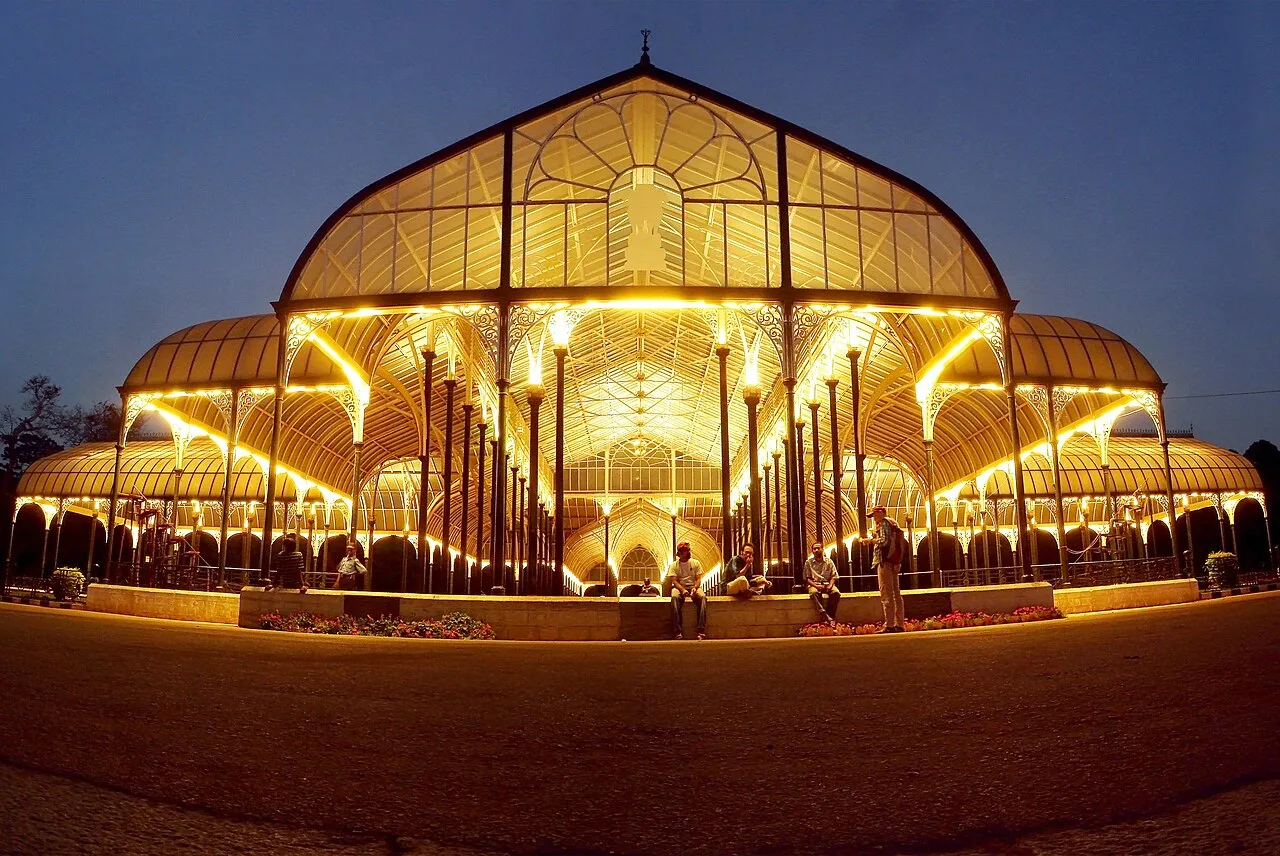
Lalbagh lies in Bengaluru Urban district, Karnataka. Its origins go back to 1760, when Hyder Ali established the grounds under the Mysore Sultanate. A succession of British superintendents later oversaw the garden until Indian independence. Lalbagh played a role in introducing and propagating numerous plants, from ornamental varieties to species grown for economic value. The grounds also became a shared outdoor space for recreation. Alongside plant cultivation, they provided a public setting for leisure. The glass house at the garden’s centre dates to 1890 and is used for flower shows. Today, two such displays take place around the Republic Day week (26 January) and Independence Day week (15 August). Together with Cubbon Park, Lalbagh contributes to Bengaluru’s urban green spaces and provides a home for many wild birds and other animals. A lake borders a sizeable rock within the garden; a watchtower was erected there during Kempegowda II’s rule. Karnataka holds the boulder-strewn ruins of Hampi, the Hoysala temple jewels of Belur and Halebidu, the Chalukyan monuments of Badami, Aihole and Pattadakal, the palaces of Mysuru, the coffee hills of Coorg and Chikkamagaluru, the temple-and-beach town of Gokarna and the tiger forests of Bandipur and Nagarhole. Bengaluru and the plateau are mild most of the year; the coast is hot and humid; the Malnad hills (Coorg, Chikkamagaluru, Agumbe) get very heavy monsoon rain from June to September. October to February is pleasant almost everywhere. The usual best time to visit is October to February; June to September for monsoon greenery in the Western Ghats. Timings, fees and access arrangements must be confirmed locally. For official information, see Karnataka Tourism at https://karnatakatourism.org.
Why it matters
Lalbagh Botanical Garden is a major public green space and horticultural landmark in Bengaluru, Karnataka. Founded under Hyder Ali in 1760, it has served both as a place for recreation and as a centre for cultivating ornamental and economically useful plants. Its central Glass House is the setting for the garden’s well-known flower shows, held around Republic Day and Independence Day. Together with Cubbon Park, Lalbagh provides valuable open space and habitat within a densely developed city. The garden is managed by the Government of Karnataka’s horticulture authorities. It is an important state and city attraction; visitors should not assume that it carries a particular UNESCO or Archaeological Survey of India designation.
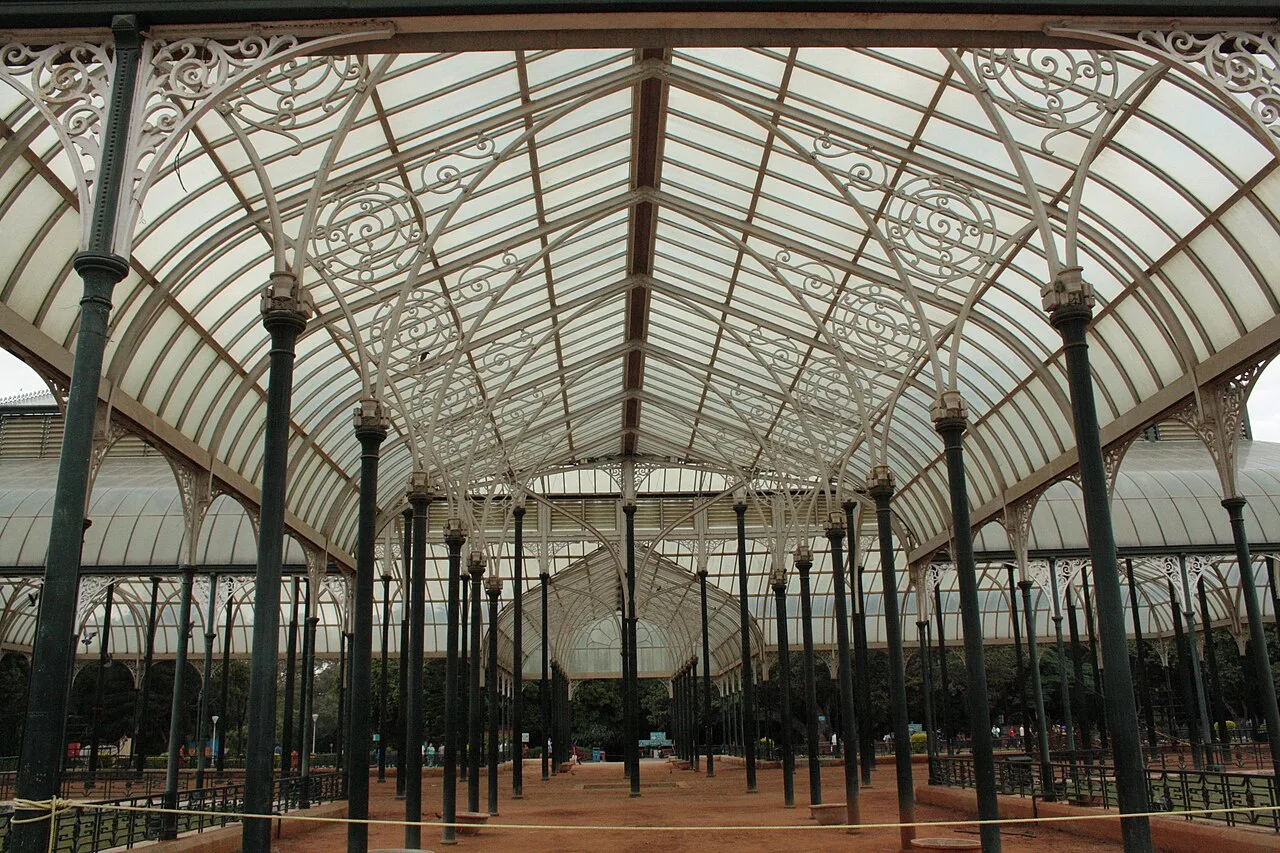
Hyder Ali began Lalbagh in 1760, during the Sultanate of Mysore, as a garden in Bengaluru. His son Tipu Sultan continued its development, including the cultivation of plants obtained through exchanges and introductions from other regions. The garden’s early collections helped establish a horticultural tradition that continued under later administrations. After the British took control of Mysore, Lalbagh was managed by successive British superintendents. During this period it developed as a botanical garden, with plant collections that included ornamental species and plants of economic value. The central Glass House, dating from 1890, became a prominent feature and a venue for public flower exhibitions. The garden also remained a social space for walking and recreation. After Indian Independence, Lalbagh continued under state horticultural management. Its seasonal flower shows now coincide with the weeks of Republic Day and Independence Day. The garden’s lake and a prominent large rock are enduring features; a watchtower on the rock is traditionally associated with Kempegowda II, an early ruler of Bengaluru. Lalbagh’s role today combines plant display, public recreation, conservation and city heritage.
Origin stories & folklore
There is no single widely documented founding legend for Lalbagh. The name is commonly explained as meaning “red garden,” but this is a translation rather than a folklore account. According to local tradition, the watchtower on the large rock within the garden is one of the boundary towers associated with Kempegowda II’s historic limits for Bengaluru. The tower and its elevated position have helped sustain that story, though visitors should treat the association as tradition rather than a proven account of the garden’s founding. The rock itself is a striking natural landmark, and its long presence in the landscape predates the garden.
Explore Lalbagh Botanical Garden slowly and read the interpretation boards, use the official audio guide where available or hire an authorised guide to understand its history. Check opening days, ticket counters and camera rules in advance; many monuments and museums close on one weekday and on some public holidays. Early morning gives softer light, cooler air and smaller crowds. A comfortable itinerary is one main visit in the morning, a local meal at midday and a short nearby stop before an afternoon return. Use the district list on this site to find other places in Bengaluru Urban, but check the route and its condition before combining stops. If a festival is on — such as Mysuru Dasara, the Hampi Utsav, the Kambala buffalo races on the coast or the Karaga in Bengaluru — roads and stays can be busy, and the experience can be unforgettable. Leave no litter: many sites are protected by the communities around them.
Suggested itineraries
Half day: Enter in the morning; walk through the main garden and plant collections (1–2 hours); visit the Glass House and lake area (about 1 hour); see the rock and watchtower if comfortable with the route (about 1 hour). Full day: Explore the garden at an unhurried pace (2–3 hours); take a break for a nearby meal; visit the Glass House, lake and rock area (1–2 hours); finish with a nearby Bengaluru museum or market, allowing time for travel. Gentler option: Choose a convenient entrance, enjoy a short, flat-path walk and a seated rest near the main garden areas; skip the rock and watchtower if steps, slopes or longer walks are difficult.
Lalbagh is part of everyday Bengaluru life as well as its horticultural heritage. Residents come to walk, exercise, enjoy the lake and see changing plant displays; families and school groups visit to learn about trees and gardens. The flower shows around Republic Day and Independence Day bring floral displays and a festive public atmosphere. Kannada is widely spoken locally, alongside English, Hindi, Tamil, Telugu and other languages used in the city. Bengaluru’s wider cultural calendar includes classical music, theatre and dance, though these should not be assumed to be regular events inside Lalbagh. Visitors can help preserve its shared character by keeping to paths and leaving plants undisturbed.
Local communities
Lalbagh is connected with Bengaluru’s residents, horticulture workers, gardeners, researchers, students, vendors and visitors. Garden staff maintain living collections and public spaces, while horticultural specialists and learners use the garden as a place to observe plants. Nearby neighbourhoods contribute to the garden’s daily use as a recreation area. Local food and retail businesses serve visitors outside the grounds. The garden’s public character brings together people from across the city, including families and school groups. Visitors should respect workers’ instructions, avoid damaging plants and use designated areas for eating or other activities.
Festivals & events
The garden’s most prominent recurring events are its flower shows, usually held around Republic Day in January and Independence Day in August. These displays can draw large crowds, so expect busier paths and allow extra time for entry and movement. Bengaluru Karaga, generally celebrated in the spring, is a major city festival, but it is not a Lalbagh event; processions and related city activity may affect travel in Bengaluru. Bengaluru also hosts cultural programmes and seasonal celebrations at venues across the city. Check local announcements before visiting during major events, as access arrangements and traffic can change.
Local food in Karnataka includes bisi bele bath, Mysore masala dosa, ragi mudde with sambar, Coorg's pandi (pork) curry, Mangalorean fish curry with neer dosa, Davangere benne dosa, Dharwad pedha and filter coffee everywhere. Ask what is fresh that day; many small eateries cook a limited daily menu. Vegetarian travellers eat very well across the state; the coast is the place for seafood, and Coorg has its own distinctive cuisine. Don't miss a tiffin breakfast of idli, vada and filter coffee. Remote sites may have no restaurant at all. Carry water and snacks, eat a proper breakfast before long drives, and ask your accommodation for a packed lunch if you are heading out early. Try a home-cooked or local thali meal when you can — it is often the best food on the route. Choose busy, clean places, drink sealed or filtered water, and carry your packaging back with you.
Shopping & local experiences
Lalbagh is primarily a garden, not a dedicated shopping destination. Around the garden and elsewhere in Bengaluru, visitors can look for nursery plants, gardening supplies, locally made crafts, textiles and food products, while checking any plant transport or collection rules before buying. KR Market is known for its busy flower and produce trade, though it is a separate city visit. Bengaluru’s cafés and eateries offer opportunities to try local dishes and snacks. Buy from established sellers, avoid purchasing protected wildlife or plant products, and take reusable bags where practical.
Lalbagh is a landscaped botanical garden with lawns, mature trees, ornamental plantings, flower beds and a lake. Its large rock outcrop is a distinctive geological feature in the urban setting, with the historic watchtower above it. The garden’s plant collections include species grown for their ornamental qualities as well as plants of practical or economic value. The lake and tree cover provide habitat for urban wildlife. Visitors may notice common city birds, including water-associated and garden species, but sightings vary and are never guaranteed. As a green refuge within Bengaluru, Lalbagh supports nature appreciation and outdoor recreation; stay on paths and do not feed wildlife or pick plants.
October to February; June to September for monsoon greenery in the Western Ghats
The nearest principal railway station by straight-line distance is KSR Bengaluru City Junction, roughly 4 km away. The nearest operating airport by straight-line distance is Kempegowda International Airport, Bengaluru, roughly 30 km away. These figures are calculated from map coordinates — actual road distance is longer. Bengaluru is the hub for the south and centre; Hubballi and Belagavi serve the north; Mangaluru serves the coast; Mysuru is the gateway to Coorg, and Hosapete is the railhead for Hampi. KSRTC buses connect the district towns, and the coast is served by the Konkan Railway with frequent buses from Mangaluru and Udupi. For Hampi, take a train or bus to Hosapete and an autorickshaw for the last 13 km. When comparing train, bus and flight, count the complete door-to-door time: a flight saves the most time only if the onward road transfer is short, while an overnight train can save a hotel night. Book your return before you leave, because seats fill quickly on weekends, festivals and holidays. Current train numbers, timings, return services and fares are not listed here; check IRCTC and NTES for trains and the airline's own schedule for flights. No permit is needed to visit Karnataka. Tiger safaris in Bandipur, Nagarhole and the Kali Tiger Reserve must be booked in advance through the forest department or authorised lodges — weekend slots sell out. Treks in Kudremukh National Park and some Western Ghat peaks need forest entry permission. Hampi's monuments have ASI entry tickets; the core zone is best seen with a bicycle, moped or autorickshaw for the day.
Confirm onward and return timings on IRCTC / NTES, the state bus operator or your airline before travel. A dash means current timings or fares have not been verified.
Getting around
Within Lalbagh, walking is the main way to get around; the grounds are extensive, so allow time between entrances and features. Bengaluru Metro’s Green Line serves Lalbagh station, which can be useful for reaching the garden; confirm the best entrance and current station access for your route. City buses, auto-rickshaws and app-based or metered taxis serve the surrounding area. Parking availability near the gates can be limited, especially during flower shows, so public transport may be more convenient. Agree on a drop-off point with your driver and follow signs and staff guidance at the entrances.
Hours, tickets & permissions
Entry is subject to the garden’s current rules, which may include a ticket, separate charges or restrictions for particular activities such as photography. Rules can differ for events and flower shows. Keep to public areas, follow notices and staff directions, and do not remove plants or disturb wildlife. Carry identification if requested by the managing authority, and check current entry arrangements, opening hours and fees with the garden or Karnataka’s horticulture authorities before setting out. Do not assume that every gate or facility is open on the same terms.
Facilities
Facilities within the garden typically include paths, seating and public toilets, but availability and upkeep can vary by entrance and season. Drinking-water points and small food or refreshment options may be available; check locally and carry water, especially on warm days. Parking is available around some entrances but can be constrained during busy events. Guides or interpretation resources may be available, though arrangements should be confirmed in advance. ATMs, restaurants and other services can be found in the surrounding city rather than relied upon inside the garden.
Accessibility
Lalbagh is a large garden, and a visit can involve considerable walking. Some paths are broad and relatively level, but surfaces, slopes and path conditions vary; the rock and watchtower area involves an uneven approach and steps and may not suit everyone. Shade from trees is available along some routes, though not consistently across the grounds. Wheelchair and stroller access may be practical on selected paths, but visitors should confirm gate access and current conditions rather than assume the entire garden is accessible. Elderly visitors may find it helpful to plan a short route, take rests and visit during cooler parts of the day.
No permit is needed to visit Karnataka. Tiger safaris in Bandipur, Nagarhole and the Kali Tiger Reserve must be booked in advance through the forest department or authorised lodges — weekend slots sell out. Treks in Kudremukh National Park and some Western Ghat peaks need forest entry permission. Hampi's monuments have ASI entry tickets; the core zone is best seen with a bicycle, moped or autorickshaw for the day. Carry a photo ID at all times and save the emergency number 112 and your accommodation's contact offline. Heat in summer and heavy rain in the monsoon are the main weather risks; carry water, avoid midday sun and allow extra time when roads flood. Watch your belongings in crowds and on public transport, and follow posted instructions.
Photography
Soft morning light is often pleasant for photographing trees, flower beds, the Glass House and the lake, while seasonal flower shows provide colourful displays but can be crowded. The rock and watchtower offer a distinctive garden viewpoint; take care on uneven ground and steps. Ordinary personal photography may be allowed, but rules can vary, especially during events or for professional equipment, so check notices and ask staff. Do not fly a drone without confirming applicable permissions and restrictions. Photograph other visitors respectfully and avoid blocking paths or disturbing ceremonies and garden work.
Choose a stay by the full journey to Lalbagh Botanical Garden, not just the district name. Bengaluru, Mysuru and Mangaluru offer the widest choice; Hampi has guesthouses on both banks of the Tungabhadra, Coorg has plantation homestays and resorts, and the forest lodges at Bandipur and Nagarhole book out early. In summer, check air-conditioning; in the monsoon, check that the property is accessible if roads flood. Book in advance for weekends, festivals and the peak season (October to February; June to September for monsoon greenery in the Western Ghats). Confirm the exact location, meals included, check-in time and cancellation terms in writing. Avoid sending money to unverified contacts or touts at stations. Carry some cash, as card and digital payments can be unreliable in remote areas.
Within Bengaluru Urban district, Cubbon Park and the Karnataka Government Museum are possible additions for visitors interested in city green space and collections. Bengaluru Palace and the Vidhana Soudha area are other well-known city landmarks, though travel time depends on traffic. KR Market offers a busy local market experience, while Basavanagudi’s Bull Temple and surrounding neighbourhood are another cultural outing. These are separate stops rather than part of Lalbagh, so check routes and opening arrangements before combining them. On a short visit, choose one nearby destination rather than trying to cross the city between stops.
For couples, Lalbagh Botanical Garden rewards a slow pace: arrive early for soft light and fewer crowds, share a local meal and keep the evening free. A sunset over Hampi's boulders, a coffee-estate walk in Coorg or a quiet evening on a Gokarna beach makes the trip memorable. Public displays of affection can be frowned upon in conservative communities and at religious sites, so be discreet. Keep a buffer in your itinerary, because weather and road conditions can delay plans.
Q: How much time should I allow for Lalbagh? A: A few hours suits a focused visit; allow longer if you want to explore the grounds slowly or attend a flower show. Q: When is a good season to visit? A: October to February is generally pleasant in Bengaluru. The flower shows around January and August are special but can be crowded. Q: Is there an entry fee, and do I need to check rules? A: Entry conditions and any fees can change. Confirm current arrangements with the managing authority before visiting. Q: Is Lalbagh suitable for children and elderly visitors? A: It can suit both, but the grounds are large. Choose a shorter route, rest as needed and note that the rock and tower area has steps and uneven ground. Q: Where can I stay nearby? A: Bengaluru has accommodation across a range of neighbourhoods. Choose lodging based on your transport plans and verify the route to the garden.
Be the first to share photos, stories, advice or a helpful contact for Lalbagh Botanical Garden.
Loading…