
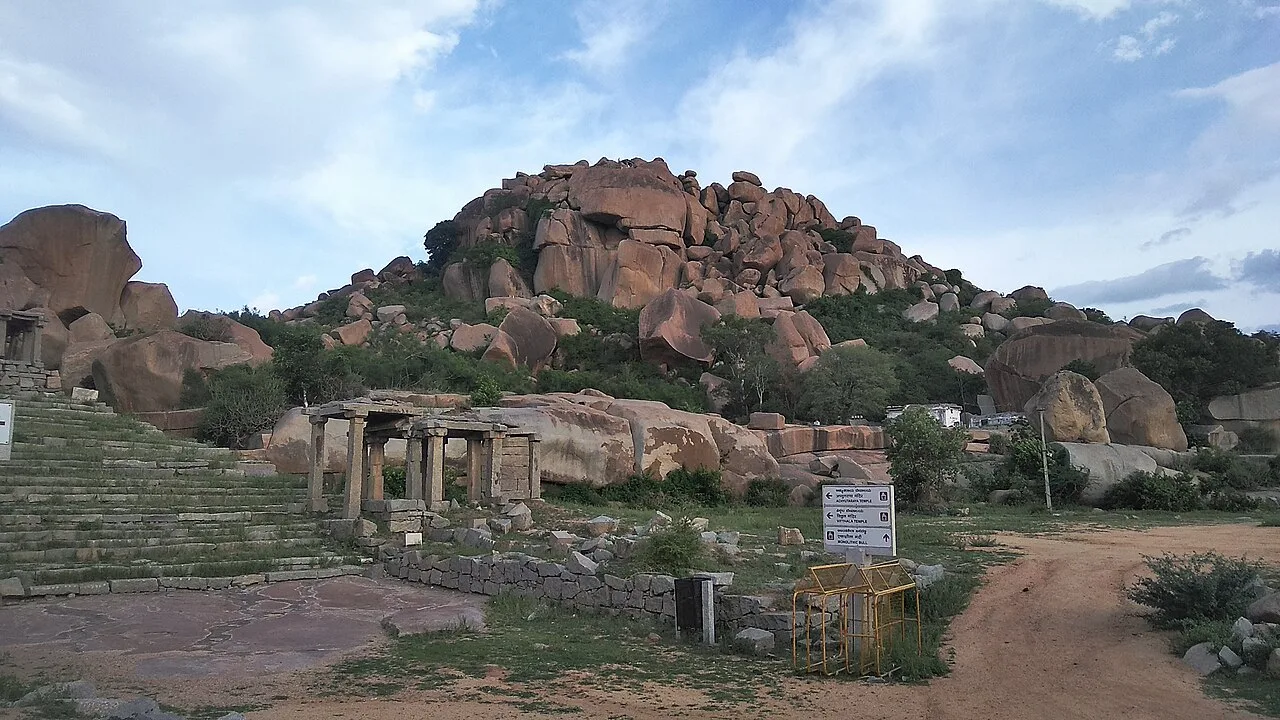
Matanga Hill
In Hampi, Karnataka’s Vijayanagara district, Matanga Hill is a rocky rise associated with the Ramayana and the former Vijayanagara capital. Visitors explore its religious associations and place in the region’s history.
Key facts · verified by Ghumoopedia editors
- Type of place
- Natural attraction
- Best time to visit
- October to February; June to September for monsoon greenery in the Western Ghats
- Nearest railway station
- Hosapete Junction (for Hampi) · about 10 km (straight line)
- Verified
- 21 Nov 2026
Plan a trip from Matanga Hill — a day-by-day route through places nearby.
Located in southern India, the hill is part of Hampi’s rocky landscape. Rishyamuka Parvata is another name linked to Matanga Hill. Hindu tradition regards the area as sacred and connects it with the Ramayana. This association is one reason visitors take an interest in the hill. The surrounding hills formed a natural boundary around Hampi, also called Vijayanagara, which was the capital of the empire that shared its name. Their protection from attacks from beyond the region helped shape the site’s choice: the Sangama brothers established Vijayanagara there. Karnataka holds the boulder-strewn ruins of Hampi, the Hoysala temple jewels of Belur and Halebidu, the Chalukyan monuments of Badami, Aihole and Pattadakal, the palaces of Mysuru, the coffee hills of Coorg and Chikkamagaluru, the temple-and-beach town of Gokarna and the tiger forests of Bandipur and Nagarhole. Bengaluru and the plateau are mild most of the year; the coast is hot and humid; the Malnad hills (Coorg, Chikkamagaluru, Agumbe) get very heavy monsoon rain from June to September. October to February is pleasant almost everywhere. The usual best time to visit is October to February; June to September for monsoon greenery in the Western Ghats. Timings, fees and access arrangements must be confirmed locally. For official information, see Karnataka Tourism at https://karnatakatourism.org.
Why it matters
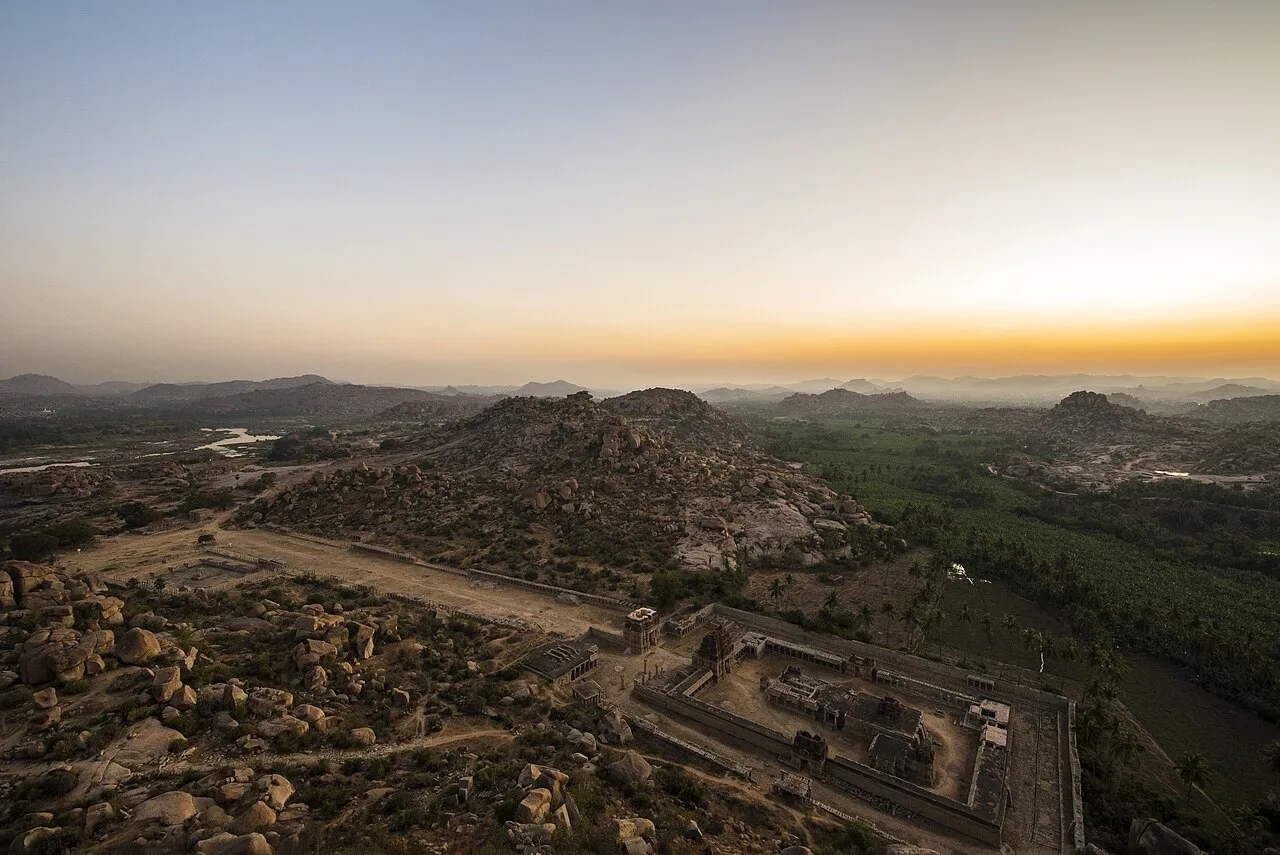
Matanga Hill is a prominent natural landmark in the Hampi landscape of Vijayanagara district, Karnataka. Its rocky summit offers a broad view across the boulder-strewn terrain and historic remains of the former Vijayanagara capital. The hill range also formed part of the natural setting around the city and is commonly described as a defensive boundary. The wider Group of Monuments at Hampi is a UNESCO World Heritage property, inscribed in 1986; that recognition applies to the heritage property, not necessarily to Matanga Hill as a separately listed monument. The hill is also associated in local belief with the Ramayana. Visitors should treat the landscape as both a natural place and part of a sensitive archaeological setting.
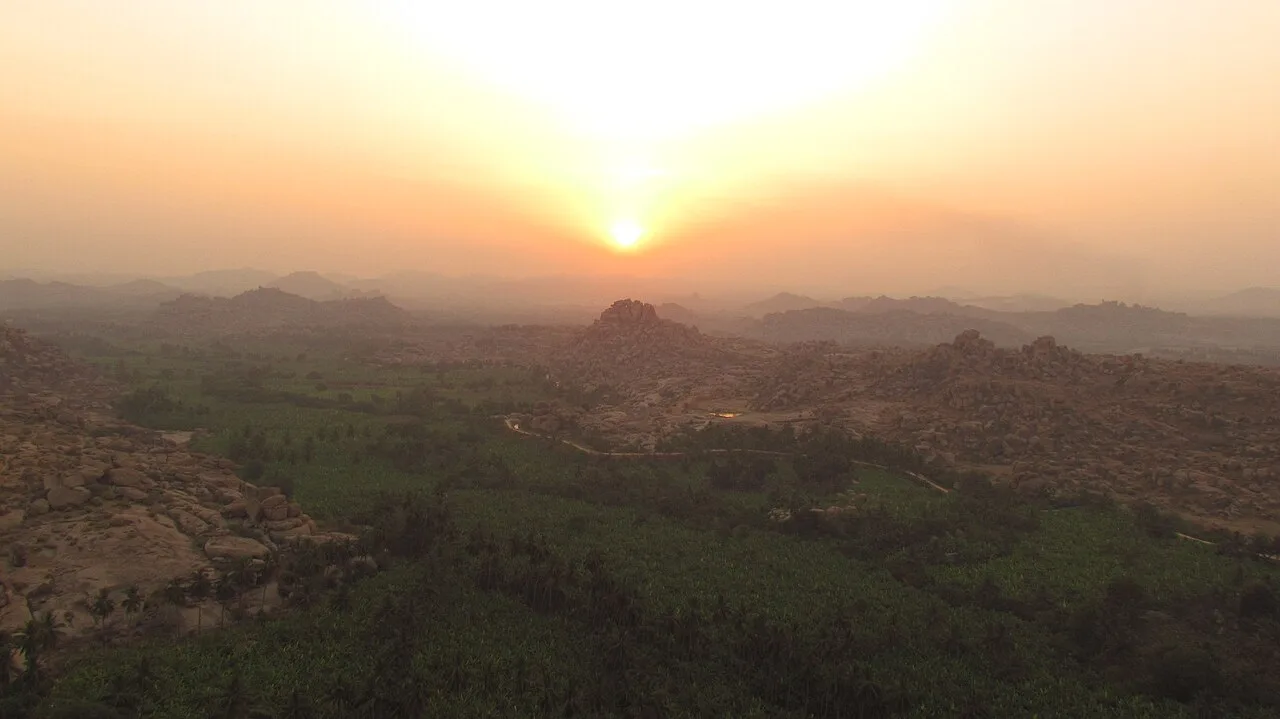
Matanga Hill is a natural granite formation; it was not built as a monument. Its historical importance comes from its place in the landscape of Vijayanagara, the capital of an empire founded in the 14th century. The city is traditionally associated with the Sangama brothers, Harihara and Bukka. The surrounding rocky hills and river helped shape the settlement’s setting and are often described as contributing to its natural defences, though the precise strategic decisions behind the city’s location should not be reduced to one factor. Vijayanagara grew into a major political and commercial centre, with temples, ceremonial spaces, markets and water-management works spread across the landscape. After the empire’s defeat in the Battle of Talikota in 1565, the capital was extensively damaged and largely abandoned as a political centre. Matanga Hill remained a landmark amid the ruins and continues to serve as a viewpoint over the archaeological landscape. The Group of Monuments at Hampi is now recognised by UNESCO as a World Heritage property. Conservation and visitor management apply across this sensitive area; check local notices and follow any restrictions on paths or access.
Origin stories & folklore
According to local tradition, Matanga Hill is connected with the Ramayana and is sometimes identified with Rishyamuka Parvata. The epic’s story places the exiled prince Sugriva and his followers in the region; Rama and Lakshmana are said to have met Sugriva here while searching for Sita. Hanuman is also associated with the surrounding landscape in local retellings. These identifications are part of religious tradition and folklore, rather than claims established by archaeological evidence. The hill’s sacred associations may be meaningful to visitors and local worshippers. Treat shrines and devotional activity respectfully, and do not assume that every rock formation or site has a confirmed epic-era identity.
Spend unhurried time at Matanga Hill: walk the marked paths, use official viewpoints and ask locally whether a guide, entry ticket or forest permission is needed. Weather can change quickly in the hills, so carry a rain layer even on a clear morning. A comfortable itinerary is one main visit in the morning, a local meal at midday and a short nearby stop before an afternoon return. Use the district list on this site to find other places in Vijayanagara, but check the route and its condition before combining stops. If a festival is on — such as Mysuru Dasara, the Hampi Utsav, the Kambala buffalo races on the coast or the Karaga in Bengaluru — roads and stays can be busy, and the experience can be unforgettable. Leave no litter: many sites are protected by the communities around them.
Suggested itineraries
Half day: Reach the hill base; take a gradual walk to an accessible viewpoint and back (allow 2–3 hours); have a meal in Hampi village. Full day: Visit Matanga Hill in the cooler part of the day (2–3 hours); pause for a meal; explore Virupaksha Temple and Hemakuta Hill (2–3 hours); finish with another nearby Hampi heritage stop. Gentler option: Skip the summit climb; enjoy a short, level-area visit around Hampi village or a nearby viewpoint, with vehicle transfers between stops where available.
Hampi’s cultural life brings together pilgrimage, heritage tourism and everyday activity in the surrounding villages. Kannada is widely spoken, and visitors may also hear Telugu, Hindi and English. At temples and religious sites, customs can include removing footwear where requested, dressing modestly and following instructions around worship. Folk music, dance and other performances are featured during some local and regional celebrations, especially cultural events in Hampi. These performances are not necessarily part of daily life at Matanga Hill itself. The landscape’s Ramayana associations remain present in local storytelling and devotional practice, alongside interest in Vijayanagara history and archaeology.
Local communities
Residents of Hampi and nearby villages are closely connected to the landscape through farming, small businesses, guiding, transport, hospitality and heritage-related work. Agriculture in the wider region includes crops suited to the local climate and access to water; livelihoods vary between villages and seasons. Tourism supports guesthouses, food stalls, shops, guides and autorickshaw services, while conservation rules shape how people use parts of the historic area. Kannada is central to local life, with other languages used in visitor services. Be considerate when photographing residents, private homes or worship, and ask before taking portraits.
Festivals & events
Hampi Utsav, also known as Vijaya Utsav, is a cultural festival associated with Hampi and may feature performances and heritage programming. Its schedule and programme can vary, so confirm locally before planning around it. Religious observances at nearby temples, including celebrations connected with Virupaksha Temple, can also bring additional visitors. These events are not necessarily held on Matanga Hill. Festival periods may mean busier roads, fuller accommodation and more activity around Hampi’s main sites. Keep clear of processions and worship areas, and follow any temporary access or conservation instructions.
Local food in Karnataka includes bisi bele bath, Mysore masala dosa, ragi mudde with sambar, Coorg's pandi (pork) curry, Mangalorean fish curry with neer dosa, Davangere benne dosa, Dharwad pedha and filter coffee everywhere. Ask what is fresh that day; many small eateries cook a limited daily menu. Vegetarian travellers eat very well across the state; the coast is the place for seafood, and Coorg has its own distinctive cuisine. Don't miss a tiffin breakfast of idli, vada and filter coffee. Remote sites may have no restaurant at all. Carry water and snacks, eat a proper breakfast before long drives, and ask your accommodation for a packed lunch if you are heading out early. Try a home-cooked or local thali meal when you can — it is often the best food on the route. Choose busy, clean places, drink sealed or filtered water, and carry your packaging back with you.
Shopping & local experiences
Hampi village and nearby markets have small shops and stalls selling souvenirs, textiles, jewellery, snacks and locally made craft items; selection and quality vary. Look for goods made by local artisans and ask about materials and origin rather than assuming an item is traditional or locally produced. Food stops around Hampi offer regional meals and refreshments, with choices changing by season and business. Avoid buying objects presented as archaeological finds or removing stones, plants or other material from the heritage landscape.
Matanga Hill is a rugged, boulder-strewn granite hill within the dry landscape of Hampi. Exposed rock, scrub and scattered trees characterise the surroundings, while the Tungabhadra River and cultivated areas lie nearby. Vegetation changes with the seasons: the landscape is generally drier in hotter months and greener after rain. Birds and small reptiles inhabit the wider rocky and scrubland environment, but wildlife sightings are never guaranteed. Shade can be limited on exposed parts of the hill, and loose or uneven rock calls for sturdy footwear. Avoid disturbing animals, plants or rock features, and carry out all litter.
October to February; June to September for monsoon greenery in the Western Ghats
The nearest principal railway station by straight-line distance is Hosapete Junction (for Hampi), roughly 10 km away. The nearest operating airport by straight-line distance is Jindal Vijayanagar Airport, Toranagallu (for Hampi), roughly 24 km away. These figures are calculated from map coordinates — actual road distance is longer. Bengaluru is the hub for the south and centre; Hubballi and Belagavi serve the north; Mangaluru serves the coast; Mysuru is the gateway to Coorg, and Hosapete is the railhead for Hampi. KSRTC buses connect the district towns, and the coast is served by the Konkan Railway with frequent buses from Mangaluru and Udupi. For Hampi, take a train or bus to Hosapete and an autorickshaw for the last 13 km. When comparing train, bus and flight, count the complete door-to-door time: a flight saves the most time only if the onward road transfer is short, while an overnight train can save a hotel night. Book your return before you leave, because seats fill quickly on weekends, festivals and holidays. Current train numbers, timings, return services and fares are not listed here; check IRCTC and NTES for trains and the airline's own schedule for flights. No permit is needed to visit Karnataka. Tiger safaris in Bandipur, Nagarhole and the Kali Tiger Reserve must be booked in advance through the forest department or authorised lodges — weekend slots sell out. Treks in Kudremukh National Park and some Western Ghat peaks need forest entry permission. Hampi's monuments have ASI entry tickets; the core zone is best seen with a bicycle, moped or autorickshaw for the day.
Confirm onward and return timings on IRCTC / NTES, the state bus operator or your airline before travel. A dash means current timings or fares have not been verified.
Getting around
For Hampi, many visitors arrive through Hosapete and continue by autorickshaw, taxi or other local transfer. Within the Hampi area, local buses and hired vehicles may serve some routes, but coverage and convenience vary. Ask locally about the best drop-off point for Matanga Hill and whether parking is available nearby; do not assume a vehicle can reach the summit. The final approach is on foot over uneven ground. Agree on a clear pick-up plan with your driver, especially if visiting at a quieter time, and check route conditions before combining distant sites.
Hours, tickets & permissions
Access arrangements can vary with conservation work, weather, safety conditions or local management. Check current access, entry rules and any restrictions with the relevant site or heritage authority before setting out. Do not assume that a ticket, guide, camera permission or forest permission is either required or unnecessary; confirm locally. Follow posted notices, stay on permitted routes and respect any requests around shrines or protected remains. Confirm current visiting hours and fees with the managing authority, as these can change.
Facilities
Facilities directly on the hill may be limited, and visitors should not count on toilets, drinking water, food stalls, seating or shade along the climb. Hampi village and nearby visitor areas usually offer food, basic shops and some accommodation; broader services, ATMs and transport choices are more readily found in Hosapete. Guides may be available locally, but check their credentials and agree on the route before starting. Confirm parking, toilets and water access locally, and carry enough drinking water for the walk without leaving bottles or litter behind.
Accessibility
The route to Matanga Hill is rocky and uneven, with a steep climb in places and sections that may involve steps or scrambling. Surfaces can be slippery after rain, and shade is limited. The summit route is generally unsuitable for wheelchairs and strollers, and may be difficult for visitors with limited mobility, balance concerns or some health conditions. There is no reliable assurance of ramps, handrails or resting facilities. Less mobile visitors can enjoy views and nearby heritage areas from easier-to-reach locations in Hampi, using local transport where available. Consider the weather, footwear and return route before setting out.
No permit is needed to visit Karnataka. Tiger safaris in Bandipur, Nagarhole and the Kali Tiger Reserve must be booked in advance through the forest department or authorised lodges — weekend slots sell out. Treks in Kudremukh National Park and some Western Ghat peaks need forest entry permission. Hampi's monuments have ASI entry tickets; the core zone is best seen with a bicycle, moped or autorickshaw for the day. Carry a photo ID at all times and save the emergency number 112 and your accommodation's contact offline. Heat in summer and heavy rain in the monsoon are the main weather risks; carry water, avoid midday sun and allow extra time when roads flood. Stay on marked paths, keep away from cliff edges and fast water, and never approach wild animals.
Photography
Early morning or late afternoon often gives softer light over the boulder landscape and Hampi ruins. From the hill, choose stable, permitted viewpoints and avoid climbing fragile structures or edging onto exposed rocks. Photography is generally part of ordinary sightseeing, but follow signs and any restrictions at temples, shrines or protected areas. Drone use may be subject to aviation and heritage rules; check current permissions rather than assuming it is allowed. Ask before photographing residents, worshippers or ceremonies, and avoid disrupting religious observances.
Choose a stay by the full journey to Matanga Hill, not just the district name. Bengaluru, Mysuru and Mangaluru offer the widest choice; Hampi has guesthouses on both banks of the Tungabhadra, Coorg has plantation homestays and resorts, and the forest lodges at Bandipur and Nagarhole book out early. In summer, check air-conditioning; in the monsoon, check that the property is accessible if roads flood. Book in advance for weekends, festivals and the peak season (October to February; June to September for monsoon greenery in the Western Ghats). Confirm the exact location, meals included, check-in time and cancellation terms in writing. Avoid sending money to unverified contacts or touts at stations. Carry some cash, as card and digital payments can be unreliable in remote areas.
Matanga Hill is within the Hampi heritage landscape, so it can be combined with Virupaksha Temple, Hemakuta Hill and the riverside areas near Hampi village. Other well-known sites include the Achyutaraya Temple, Vittala Temple and its stone chariot, the Queen’s Bath, the Lotus Mahal and the Elephant Stables. These places are spread across the area, so check road access and allow time for transfers rather than treating them as one short walk. Hosapete is the nearest major town for additional services and transport connections.
For couples, Matanga Hill rewards a slow pace: arrive early for soft light and fewer crowds, share a local meal and keep the evening free. A sunset over Hampi's boulders, a coffee-estate walk in Coorg or a quiet evening on a Gokarna beach makes the trip memorable. Public displays of affection can be frowned upon in conservative communities and at religious sites, so be discreet. Keep a buffer in your itinerary, because weather and road conditions can delay plans.
Q: How much time should I allow for Matanga Hill? A: Allow a few hours for the climb, time at a viewpoint and the return walk; add more time if combining it with other Hampi sites. Q: When is a good season to visit? A: October to February is generally pleasant in Karnataka. Rainy-season conditions can make rocky paths slippery, so check locally before going. Q: Is there an entry ticket or permit? A: Requirements can change. Confirm current entry, permission and fee rules with the relevant site or heritage authority. Q: Is the hill suitable for children or elderly visitors? A: The uneven, steep route can be tiring and is not suitable for everyone. Assess fitness and conditions; easier viewpoints nearby may be preferable. Q: Where can I stay nearby? A: Hampi village has visitor accommodation, while Hosapete offers a wider range of services. Check availability and transport arrangements before travelling.
Be the first to share photos, stories, advice or a helpful contact for Matanga Hill.
Loading…