
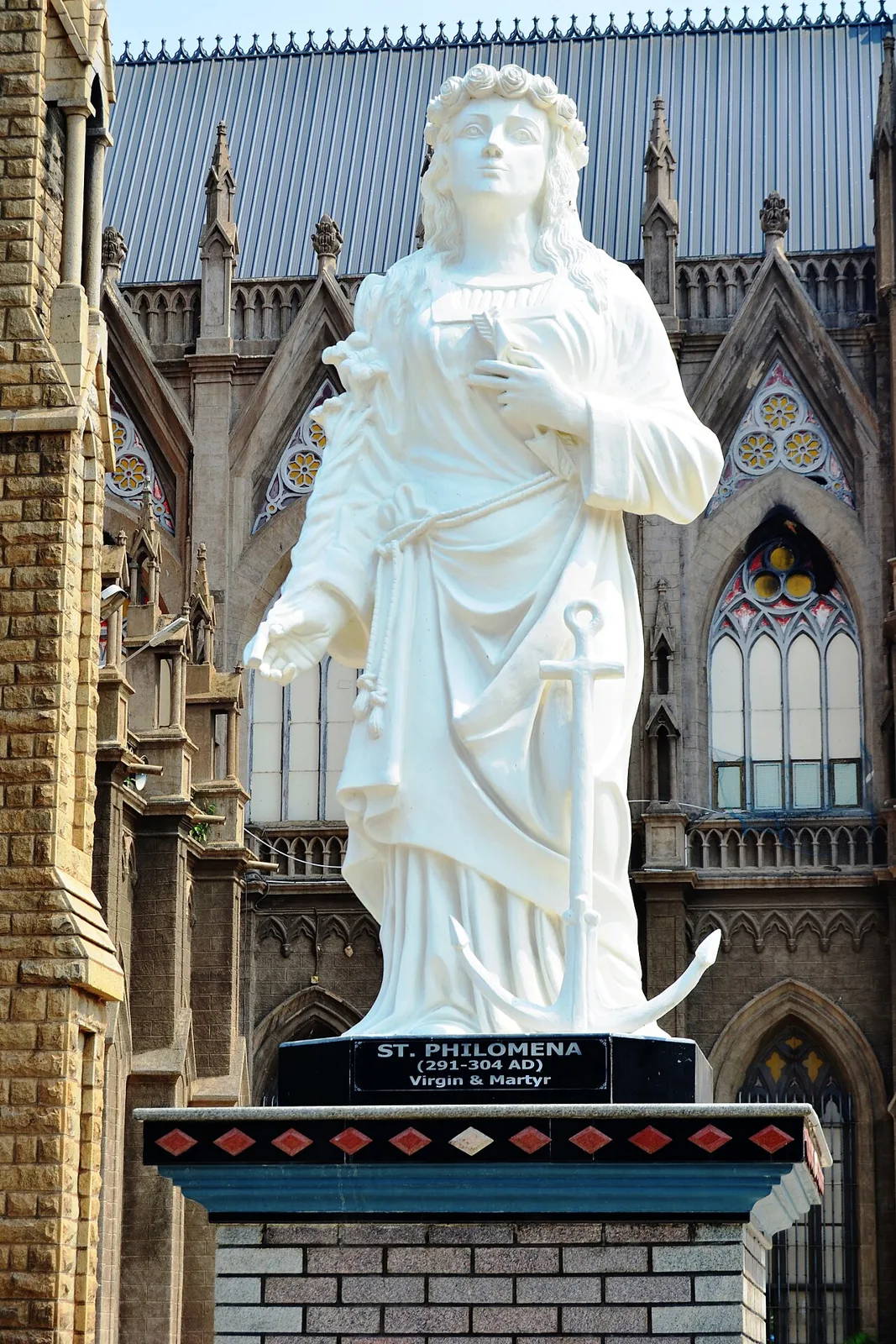
St. Philomena's Cathedral
In Mysuru district, Karnataka, this Catholic cathedral serves the Diocese of Mysore. Visitors come to see its Neo-Gothic design, influenced by Cologne Cathedral in Germany.
Key facts · verified by Ghumoopedia editors
- Type of place
- Temple / pilgrimage site
- Best time to visit
- October to February; June to September for monsoon greenery in the Western Ghats
- Nearest railway station
- Mysuru Junction · about 2 km (straight line)
- Nearest airport
- Mysuru Airport · about 2 km (straight line)
- Verified
- 21 Nov 2026
Plan a trip from St. Philomena's Cathedral — a day-by-day route through places nearby.
St. Philomena's Cathedral is located in Mysuru district, Karnataka. Its formal name is the Cathedral of St. Joseph and St. Philomena, while St. Joseph's Cathedral is another name for it. The church belongs to the Catholic tradition and serves the Diocese of Mysore in India. The building is Neo-Gothic in design, with Cologne Cathedral in Germany providing architectural inspiration. It was constructed in 1936, during the rule of Maharaja Krishnaraja Wadiyar IV. The cathedral is considered one of Asia's tallest churches. Its scale and architectural style are among the features visitors can see at the site. Karnataka holds the boulder-strewn ruins of Hampi, the Hoysala temple jewels of Belur and Halebidu, the Chalukyan monuments of Badami, Aihole and Pattadakal, the palaces of Mysuru, the coffee hills of Coorg and Chikkamagaluru, the temple-and-beach town of Gokarna and the tiger forests of Bandipur and Nagarhole. Bengaluru and the plateau are mild most of the year; the coast is hot and humid; the Malnad hills (Coorg, Chikkamagaluru, Agumbe) get very heavy monsoon rain from June to September. October to February is pleasant almost everywhere. The usual best time to visit is October to February; June to September for monsoon greenery in the Western Ghats. Timings, fees and access arrangements must be confirmed locally. For official information, see Karnataka Tourism at https://karnatakatourism.org.
Why it matters
St. Philomena’s Cathedral, officially the Cathedral of St. Joseph and St. Philomena and also known as St. Joseph’s Cathedral, is the cathedral of the Catholic Diocese of Mysore. It is an active place of worship and an important Christian landmark in Mysuru, reflecting the city’s religious and architectural history. Its Neo-Gothic design and prominent twin spires make it recognisable within the city, while its dedication connects local Catholic devotion with the veneration of St. Philomena and St. Joseph. The cathedral was built during the reign of Maharaja Krishnaraja Wadiyar IV and is associated with Mysuru’s early twentieth-century development. It is not presented here as a UNESCO World Heritage Site or an ASI-protected monument; visitors should consult the relevant authorities for current heritage status.
Catholic worship in Mysuru predates the present cathedral. An earlier church is traditionally associated with the city’s nineteenth-century Catholic community, but details of its beginnings and development should be checked against diocesan records. The present St. Philomena’s Cathedral was constructed in 1936 during the reign of Maharaja Krishnaraja Wadiyar IV. Its development reflects the growth of the Catholic community and the establishment of Mysuru as an important religious centre in the region. The building was inspired by the Cologne Cathedral in Germany and designed in a Neo-Gothic style, then widely used for large churches. Dedicated to St. Joseph and St. Philomena, it serves as the cathedral of the Diocese of Mysore. It has remained an active church rather than solely a historic attraction, so worship and pastoral activities continue alongside visitor interest. Accounts sometimes describe the building as one of Asia’s tallest churches; such comparisons depend on how height is measured. For detailed information about its architects, construction phases, and later repairs, the cathedral or diocesan authorities are the best sources.
Origin stories & folklore
St. Philomena is the subject of a Catholic devotional tradition connected with early Christian remains discovered in a Roman catacomb in the nineteenth century. Accounts of her life, martyrdom, and miraculous intercessions have circulated among devotees, though historical details are uncertain and are treated differently by church authorities and scholars. At Mysuru’s cathedral, visitors may encounter local expressions of devotion to the saint, including prayer and offerings. These are matters of religious belief, not verifiable accounts of the cathedral’s construction. The church’s dedication to St. Joseph as well as St. Philomena is part of its official identity. Ask church staff about the stories and devotional practices associated with the site, and approach them as living faith traditions rather than established historical facts.
Architecture & design
The cathedral is a large Neo-Gothic church, a style characterised by pointed arches, vertical emphasis, and tall window openings. Its design was inspired by Cologne Cathedral in Germany. The exterior is especially known for its twin spires, which rise above the surrounding streets and give the building a distinctive skyline. Inside, a long central nave leads towards the sanctuary, with side aisles and high ceilings contributing to a sense of height. Pointed arches and stained-glass windows are among the features to notice; some windows depict scenes from the life of Jesus. The church is built using masonry, with finished surfaces and decorative details suited to its Gothic revival design. Visitors should view the interior quietly and from areas open to the public, since parts of the building may be reserved for worship or church activities. Its scale and layout are best appreciated by taking time to look both along the nave and up towards the windows and roof.
Important objects & sculptures
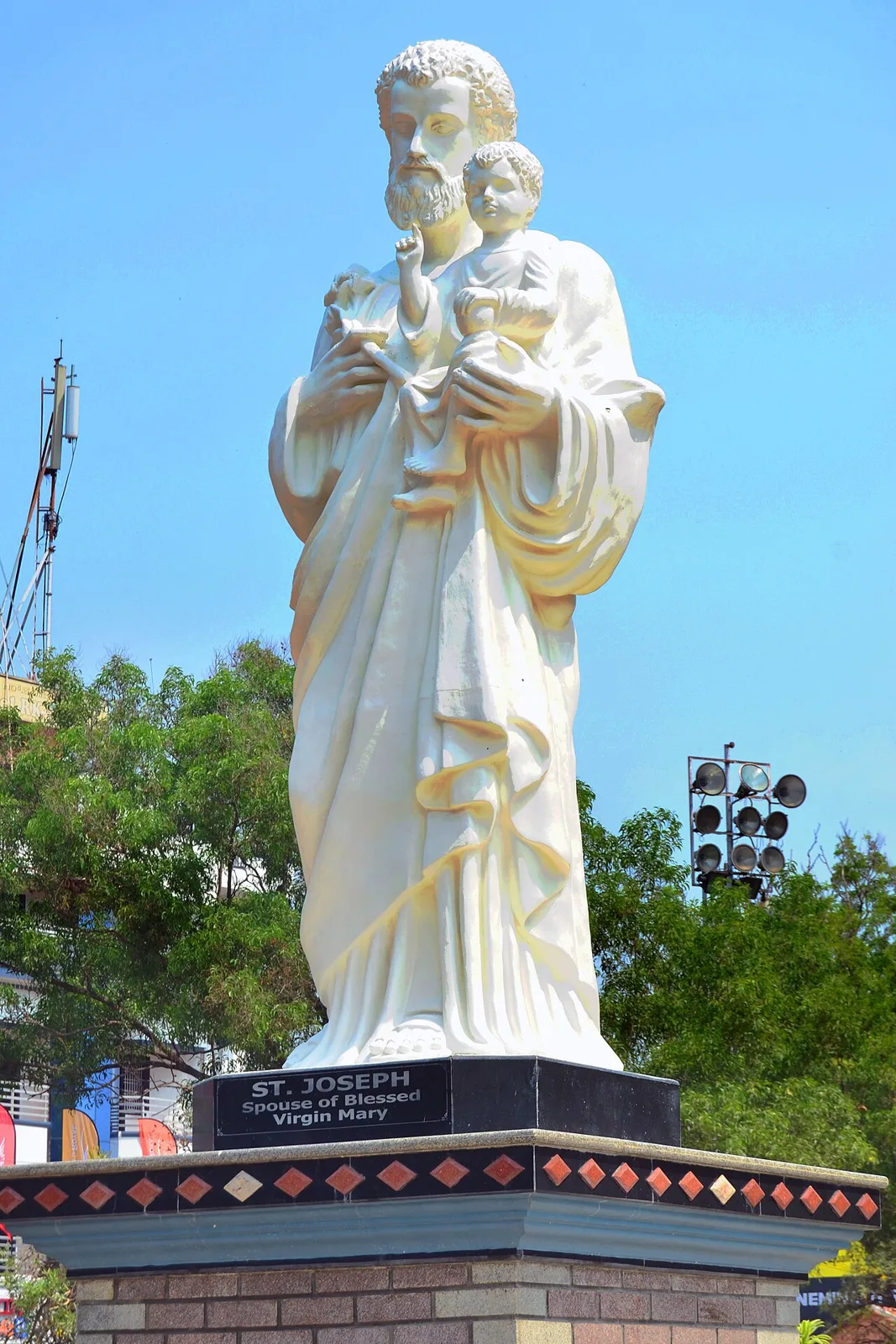
Look for the stained-glass windows, which bring colour into the high interior and include biblical scenes. The sanctuary and altar are central to Catholic worship; their arrangement may change for services or particular seasons. Statues and devotional images associated with Jesus, Mary, St. Joseph, and St. Philomena may be visible, though access and display can vary. Some accounts refer to a lower chapel or devotional space connected with St. Philomena; ask church staff what is open rather than entering restricted areas. The building is not chiefly a museum collection, and its furnishings serve an active congregation. Avoid touching religious objects, climbing for a closer view, or interrupting prayer to inspect details.
Religious significance
This is a Roman Catholic cathedral dedicated to St. Joseph and St. Philomena and serves as the seat of the Diocese of Mysore. For worshippers, it is a place for Mass, prayer, sacraments, and community gatherings, not simply an architectural attraction. Catholic services follow the liturgical calendar, with readings, prayers, music, and the Eucharist forming central parts of worship. Devotion to St. Philomena and St. Joseph may be expressed through private prayer and visits to their images. Visitors of any faith are generally welcome to observe respectfully where permitted, but should avoid walking through a service or treating the sanctuary as a viewing area. Mass schedules and access arrangements can change; check with the parish or cathedral before planning a visit around worship.
Visit St. Philomena's Cathedral with time to observe daily prayers and rituals respectfully. These churches are active places of worship: dress modestly, keep voices low and check mass timings before visiting; photography may be restricted inside. Ask caretakers which areas are open to visitors, and beware of unofficial 'guides' or agents offering quick darshan for a fee. A comfortable itinerary is one main visit in the morning, a local meal at midday and a short nearby stop before an afternoon return. Use the district list on this site to find other places in Mysuru, but check the route and its condition before combining stops. If a festival is on — such as Mysuru Dasara, the Hampi Utsav, the Kambala buffalo races on the coast or the Karaga in Bengaluru — roads and stays can be busy, and the experience can be unforgettable. Leave no litter: many sites are protected by the communities around them.
Suggested itineraries
Half day: Cathedral visit and quiet interior viewing (about 1–1.5 hours), followed by a nearby meal and a short walk through central Mysuru. Full day: Cathedral (about 1–1.5 hours), Mysore Palace (about 2 hours), lunch, Devaraja Market (about 1 hour), then Jaganmohan Palace or Mysuru Zoo (allow 1.5–2 hours; check access and closing arrangements). Gentler option: Arrange a drop-off close to the cathedral, rest between short periods of viewing, and choose one nearby attraction with seating rather than a packed city circuit.
The cathedral is part of Mysuru’s diverse religious and cultural life, and remains a gathering place for local Catholic families. English and Kannada may be used in church and community settings, alongside other languages spoken by residents and visitors. Catholic worship often includes hymns, choral singing, and seasonal decoration, though the programme varies by service and occasion. Congregants may dress formally or modestly for worship; visitors should do likewise. The cathedral also draws people interested in Mysuru’s architecture and history, so quiet observation helps preserve the distinction between sightseeing and prayer. Ask before photographing worshippers or joining a devotional activity, and follow the guidance of church staff.
Festivals & events
Christmas in December and Easter, whose season varies each year, are important periods in the Catholic calendar and may bring larger congregations and special services. The feast associated with St. Philomena is observed in August in some Catholic traditions; confirm any local celebration with the cathedral, as arrangements can vary. St. Joseph’s feast is observed in March in the Catholic calendar, though local observances should be checked. Nearby Mysuru Dasara, usually held in September or October, brings major crowds to the city and can affect traffic and accommodation. Visitors attending during religious services or city festivals should allow extra time, dress respectfully, and follow crowd-management directions.
Local food in Karnataka includes bisi bele bath, Mysore masala dosa, ragi mudde with sambar, Coorg's pandi (pork) curry, Mangalorean fish curry with neer dosa, Davangere benne dosa, Dharwad pedha and filter coffee everywhere. Ask what is fresh that day; many small eateries cook a limited daily menu. Vegetarian travellers eat very well across the state; the coast is the place for seafood, and Coorg has its own distinctive cuisine. Don't miss a tiffin breakfast of idli, vada and filter coffee. Remote sites may have no restaurant at all. Carry water and snacks, eat a proper breakfast before long drives, and ask your accommodation for a packed lunch if you are heading out early. If prasad is offered, accept it according to local custom. Choose busy, clean places, drink sealed or filtered water, and carry your packaging back with you.
Shopping & local experiences
Devaraja Market is a well-known place to browse flowers, produce, spices, and everyday goods, while central Mysuru shops sell regional food and souvenirs. Visitors may look for Mysore silk, sandalwood products, incense, and Mysore pak, but buy from reputable sellers and check product labelling and authenticity. These goods are associated with the wider city and region rather than being specific to the cathedral. Be considerate around market stalls, ask before photographing vendors, and carry purchases in reusable bags where possible.
October to February; June to September for monsoon greenery in the Western Ghats
The nearest principal railway station by straight-line distance is Mysuru Junction, roughly 2 km away. The nearest operating airport by straight-line distance is Mysuru Airport, roughly 2 km away. These figures are calculated from map coordinates — actual road distance is longer. Bengaluru is the hub for the south and centre; Hubballi and Belagavi serve the north; Mangaluru serves the coast; Mysuru is the gateway to Coorg, and Hosapete is the railhead for Hampi. KSRTC buses connect the district towns, and the coast is served by the Konkan Railway with frequent buses from Mangaluru and Udupi. For Hampi, take a train or bus to Hosapete and an autorickshaw for the last 13 km. When comparing train, bus and flight, count the complete door-to-door time: a flight saves the most time only if the onward road transfer is short, while an overnight train can save a hotel night. Book your return before you leave, because seats fill quickly on weekends, festivals and holidays. Current train numbers, timings, return services and fares are not listed here; check IRCTC and NTES for trains and the airline's own schedule for flights. No permit is needed to visit Karnataka. Tiger safaris in Bandipur, Nagarhole and the Kali Tiger Reserve must be booked in advance through the forest department or authorised lodges — weekend slots sell out. Treks in Kudremukh National Park and some Western Ghat peaks need forest entry permission. Hampi's monuments have ASI entry tickets; the core zone is best seen with a bicycle, moped or autorickshaw for the day.
Confirm onward and return timings on IRCTC / NTES, the state bus operator or your airline before travel. A dash means current timings or fares have not been verified.
Getting around
Mysuru Junction is the main railway station for arriving visitors, and autos and taxis can connect it with the cathedral and central Mysuru. Local buses serve parts of the city; check the route locally, as stops and services may not be directly at the entrance. If staying in the central area, walking may be practical, but account for traffic, heat, and uneven pavements. Taxis or autos are useful for combining the cathedral with other city sights. Parking availability near the church can vary, particularly during services and festivals, so follow local parking signs and avoid blocking entrances.
Hours, tickets & permissions
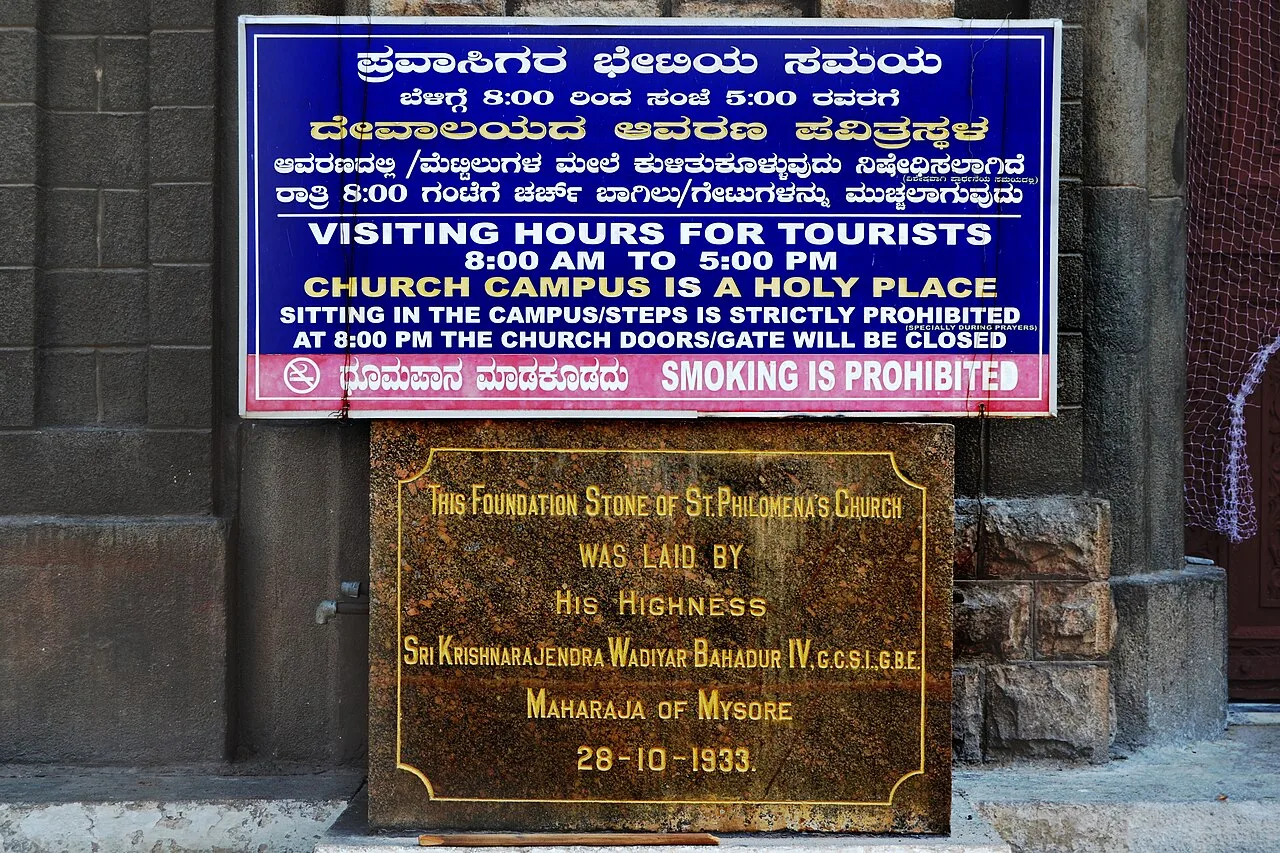
The cathedral is an active place of worship, so visitor access may depend on services, parish activities, and areas reserved for prayer. Entry rules can differ for worshippers, general visitors, and groups; tickets, permits, camera charges, or identification requirements should not be assumed. Dress modestly and follow any instructions posted at the entrance. Confirm current visiting hours, fees if any, service schedules, and access arrangements directly with the cathedral or Diocese of Mysore before travelling, since these details can change.
Facilities
Facilities at the cathedral may include a church office or caretaker, seating for worship, and basic visitor guidance; availability can vary during services. Toilets, drinking water, food outlets, and parking may be available nearby rather than within the church grounds, so check locally. Central Mysuru has restaurants, shops, banks, and ATMs, but do not assume they are open at every hour. Guided tours are not guaranteed; ask church staff for appropriate information and avoid unsolicited offers. Carry water in a reusable bottle and dispose of waste responsibly.
Accessibility
The church is in an urban setting, where traffic, kerbs, and uneven pavements can make the approach difficult. Interior access may involve steps or thresholds, and the availability of step-free routes should be confirmed with the cathedral before visiting; do not assume ramps or lifts are present. The nave offers space to pause, but access to side areas or lower levels may be restricted or require stairs. Older visitors and people with limited mobility may prefer a drop-off near the entrance, assistance from a companion, and a shorter visit outside busy service periods. Strollers may be manageable in accessible areas, but narrow passages and crowds can be challenging. Shade and seating outside may be limited.
No permit is needed to visit Karnataka. Tiger safaris in Bandipur, Nagarhole and the Kali Tiger Reserve must be booked in advance through the forest department or authorised lodges — weekend slots sell out. Treks in Kudremukh National Park and some Western Ghat peaks need forest entry permission. Hampi's monuments have ASI entry tickets; the core zone is best seen with a bicycle, moped or autorickshaw for the day. Carry a photo ID at all times and save the emergency number 112 and your accommodation's contact offline. Heat in summer and heavy rain in the monsoon are the main weather risks; carry water, avoid midday sun and allow extra time when roads flood. Watch your belongings in crowds and on public transport, and follow posted instructions.
Visitor rules
Dress modestly, keep voices low, and give priority to worshippers and services. Follow signs and staff directions, and do not enter the sanctuary, sacristy, lower chapel, or other restricted spaces unless invited. Avoid touching altars, statues, furnishings, or devotional objects. Remove footwear only if church staff or a posted notice specifically requests it. Food, smoking, littering, and disruptive behaviour are inappropriate inside. Plastic restrictions may apply locally; carry waste out if bins are unavailable. Ask before taking photographs, particularly during prayer or services, and respect any areas where photography is prohibited.
Photography
The cathedral’s exterior and twin spires can be photographed from public areas around the building; morning or late-afternoon light may bring out its architectural details. Interior photography rules can change, and cameras may be restricted during services or in devotional spaces, so ask staff before taking pictures. Do not use flash if it could disturb worshippers or damage sensitive objects. Avoid photographing people at prayer without consent. Drone use requires compliance with Indian aviation rules and any local restrictions; do not fly over the church or crowds without the necessary permissions.
Choose a stay by the full journey to St. Philomena's Cathedral, not just the district name. Bengaluru, Mysuru and Mangaluru offer the widest choice; Hampi has guesthouses on both banks of the Tungabhadra, Coorg has plantation homestays and resorts, and the forest lodges at Bandipur and Nagarhole book out early. In summer, check air-conditioning; in the monsoon, check that the property is accessible if roads flood. Book in advance for weekends, festivals and the peak season (October to February; June to September for monsoon greenery in the Western Ghats). Confirm the exact location, meals included, check-in time and cancellation terms in writing. Avoid sending money to unverified contacts or touts at stations. Carry some cash, as card and digital payments can be unreliable in remote areas.
Within Mysuru, visitors can combine the cathedral with Mysore Palace, Devaraja Market, Jaganmohan Palace, and Mysuru Zoo, subject to each site’s current access arrangements. Karanji Lake is another city attraction for a separate stop. These places are not all within easy walking distance of one another, so check routes and allow for city traffic. For a longer excursion, Srirangapatna is a nearby historic town with sites including the Ranganathaswamy Temple and Daria Daulat Bagh. Avoid trying to fit too many stops into a short visit, especially during Mysuru Dasara or other busy periods.
For couples, St. Philomena's Cathedral rewards a slow pace: arrive early for soft light and fewer crowds, share a local meal and keep the evening free. A sunset over Hampi's boulders, a coffee-estate walk in Coorg or a quiet evening on a Gokarna beach makes the trip memorable. Public displays of affection can be frowned upon in conservative communities and at religious sites, so be discreet. Keep a buffer in your itinerary, because weather and road conditions can delay plans.
Q: How much time should I allow for a visit? A: About an hour to an hour and a half is a reasonable visit for viewing the exterior and interior, allowing more time if you attend a service. Q: When is the best season to visit? A: October to February is generally pleasant in Mysuru. The cathedral can be visited through the year, but check local conditions and festival crowds. Q: Is entry free, and do I need to book? A: Entry and visitor arrangements can change. Confirm any fees, booking requirements, and visiting access with the cathedral before travelling. Q: Is the cathedral suitable for children and older visitors? A: Families are welcome to visit respectfully. Uneven approaches, steps, and crowds may be challenging for some visitors; confirm access needs in advance. Q: Where can I stay nearby? A: Mysuru has accommodation across central and other city neighbourhoods. Choose lodging based on your transport needs and verify current availability directly with the provider.
Be the first to share photos, stories, advice or a helpful contact for St. Philomena's Cathedral.
Loading…