
Anamudi
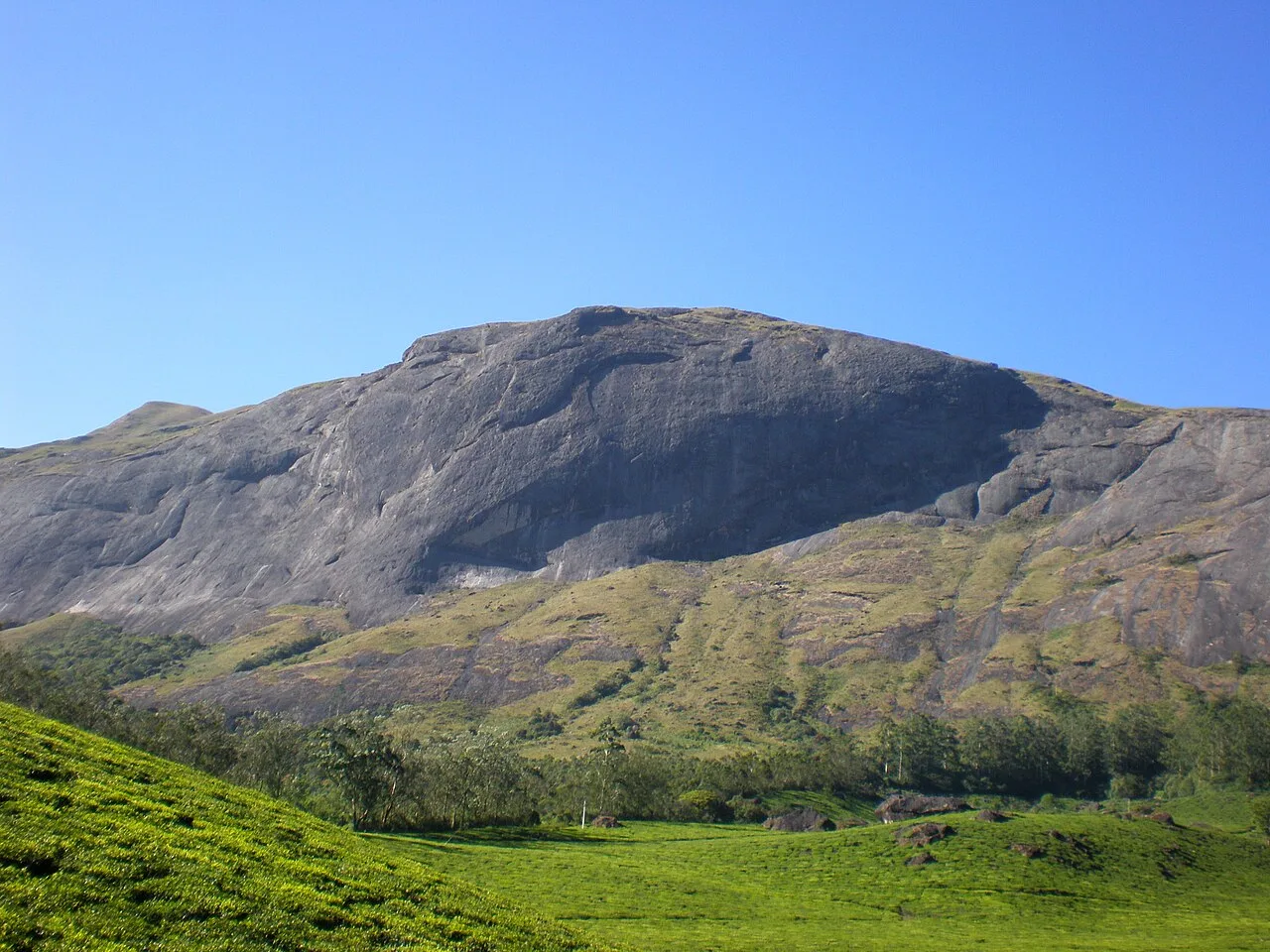
Anamudi is a mountain in Kerala, spanning Idukki and Ernakulam districts. Visitors are drawn to its distinction as the tallest summit in the Western Ghats and South India.
Key facts · verified by Ghumoopedia editors
- Type of place
- Natural attraction
- Best time to visit
- September to March; June to August for monsoon Ayurveda and green landscapes
- Nearest railway station
- Angamaly · about 74 km (straight line)
- Nearest airport
- Cochin International Airport · about 72 km (straight line)
- Verified
- 21 Nov 2026
Plan a trip from Anamudi — a day-by-day route through places nearby.
Anamudi is a mountain in Kerala, situated across Idukki and Ernakulam districts. It is also described as lying in Idukki district. Its elevation is 2,695 metres (8,842 feet), making it the highest point in the Western Ghats and South India. The mountain’s height is its defining distinction. It stands above every other peak in the Western Ghats and across southern India, a status that gives visitors a reason to seek it out. Anamudi’s location in Kerala and its exceptional elevation together identify what sets the mountain apart. Kerala packs a lot into a narrow strip: the backwaters and houseboats of Alappuzha and Kumarakom, the tea hills of Munnar and the spice forests of Thekkady, the beaches of Kovalam, Varkala and Bekal, the colonial and Jewish heritage of Fort Kochi, and living art forms — Kathakali, Theyyam, Mohiniyattam and temple festivals with caparisoned elephants. Kerala is warm and humid at sea level all year. The southwest monsoon from June to September brings very heavy rain, and the northeast monsoon adds showers in October and November; the hill stations of Munnar, Wayanad and Vagamon are cool year-round and cold on winter nights. The usual best time to visit is September to March; June to August for monsoon Ayurveda and green landscapes. Timings, fees and access arrangements must be confirmed locally. For official information, see Kerala Tourism at https://www.keralatourism.org.
Why it matters
Anamudi, at 2,695 m (8,842 ft), is the highest peak in the Western Ghats and in South India. It lies in Kerala’s Idukki highlands, in the area of Eravikulam National Park, and is a prominent landmark of the Munnar mountain landscape. Its elevation, montane habitats and association with the park make it important to regional conservation and nature tourism. The peak is also known for its connection to the Nilgiri tahr, a threatened mountain ungulate protected in the park. Visitors should distinguish the mountain’s prominence from access to its summit: public visits are generally limited to authorised park routes and viewpoints. Anamudi itself is not an ASI monument; check current conservation and access information with Kerala’s Forest and Wildlife Department.
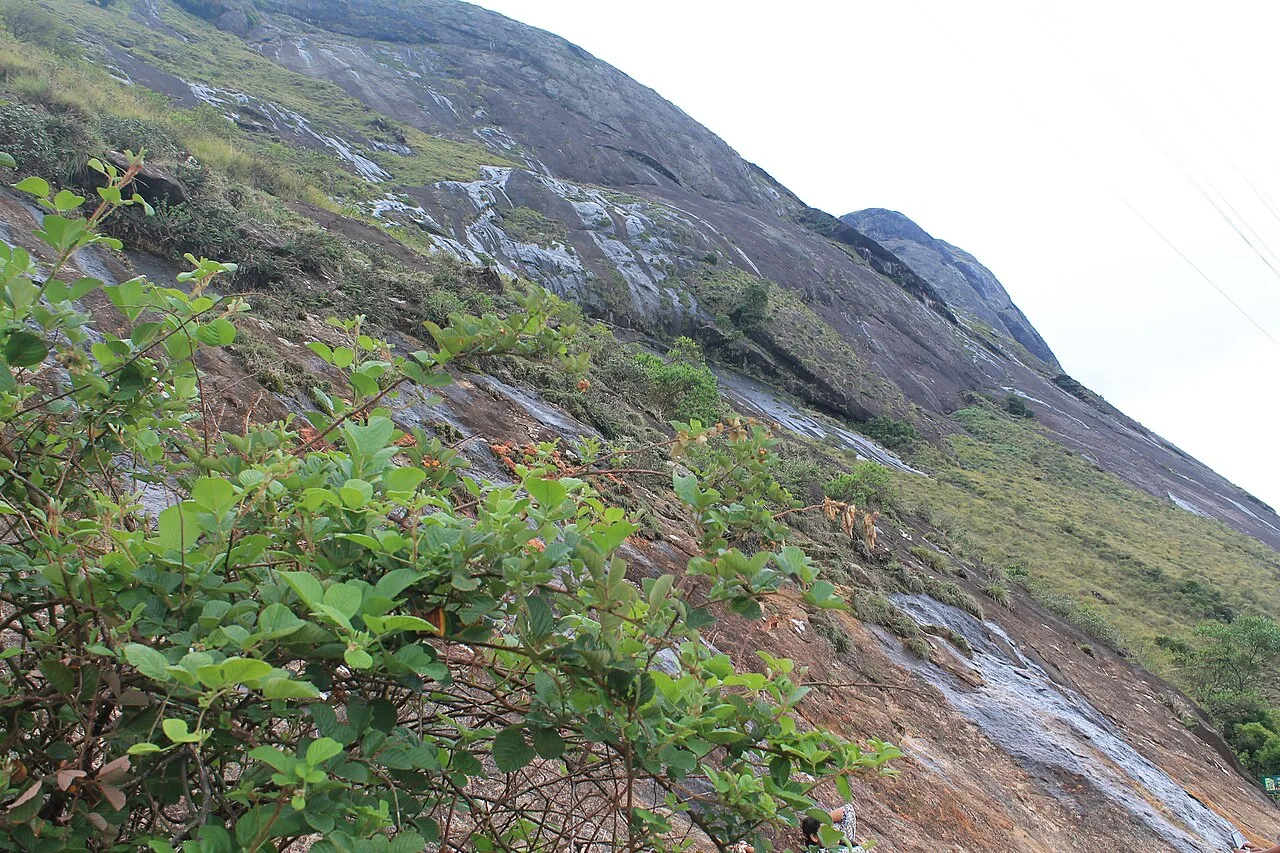
Anamudi is a natural mountain, not a built monument, and there is no documented builder or founding date. It forms part of the Western Ghats, a long mountain system shaped by geological processes over immense spans of time; a more precise account of the peak’s formation is not needed to explain its present landscape. The high ranges around Munnar have long been home to Indigenous communities and have also supported pastoral and forest-based livelihoods. During the colonial period, plantation development transformed parts of the region, especially around Munnar, while leaving the steepest and ecologically distinctive areas comparatively less developed. In the twentieth century, concern for the high-range habitats and wildlife led to formal protection of the Eravikulam area. Eravikulam was declared a national park in 1978 and is managed by Kerala’s Forest and Wildlife Department. Conservation work today focuses on protecting its grassland and shola habitats and wildlife, including the Nilgiri tahr. The peak’s visitable areas are managed under park and forest rules; public access to the summit should not be assumed. There is no known restoration of the mountain as a monument, though habitat protection and management continue.
Origin stories & folklore
There is no single, widely documented legend about Anamudi that can be confidently presented as established local folklore. The name is commonly explained from Malayalam words associated with an elephant and its head or forehead; some descriptions relate this to the mountain’s shape. This is best treated as a popular interpretation of the name rather than a verified origin story. As in many mountain regions, local knowledge of weather, paths, plants and wildlife has been passed on through generations, but visitors should not assume that all such knowledge is public or appropriate to seek out. Respect local guidance and park rules, and avoid presenting unverified stories as fact.
Spend unhurried time at Anamudi: walk the marked paths, use official viewpoints and ask locally whether a guide, entry ticket or forest permission is needed. Mist can roll in within minutes in the hills, so carry a rain layer and start back before the light fades. A comfortable itinerary is one main visit in the morning, a local meal at midday and a short nearby stop before an afternoon return. Use the district list on this site to find other places in Idukki, but check the route and its condition before combining stops. If a festival is on — such as Onam, Thrissur Pooram, the Nehru Trophy snake-boat race on Punnamada Lake, the Theyyam season in Kannur and Kasaragod, or the Attukal Pongala — roads and stays can be busy, and the experience can be unforgettable. Leave no litter: many sites are protected by the communities around them.
Suggested itineraries
Half day: Travel from Munnar to the authorised Eravikulam visitor area; spend about 2–3 hours on permitted paths and viewpoints; return to Munnar for a meal. Full day: Visit the park in the morning for about 3–4 hours; have lunch in Munnar; spend 1–2 hours at the Tea Museum or another nearby Munnar stop before returning. Gentler option: Choose the least strenuous viewpoint or visitor area currently open, allow extra time for rests, and skip any steep or uneven walking.
The cultural life of the surrounding high ranges reflects Kerala’s Malayalam-speaking communities, Tamil-speaking residents and Indigenous communities of the Idukki region. Munnar’s plantation history has also shaped local food, work and settlement patterns. Visitors may encounter temple observances, church celebrations and seasonal community gatherings in nearby towns, alongside everyday traditions such as tea drinking and regional home cooking. Kathakali, Mohiniyattam and other Kerala art forms are part of the wider state’s cultural life, but they are not regular performances at Anamudi itself. Dress practically for a cool, changeable mountain climate, and ask before photographing people, ceremonies or private community spaces.
Local communities
The wider Idukki highlands are home to Indigenous communities, including Muthuvan and Mannan communities, as well as residents whose livelihoods are connected with tea and other plantation work, tourism, farming and local services. These communities have varied histories and should not be treated as a single group or as attractions. Anamudi lies in a protected landscape, so visitors should follow park staff instructions and avoid entering settlements or culturally significant places without invitation. Buying food or services from local businesses can support livelihoods; do so respectfully and do not seek access to restricted knowledge or customary areas.
Festivals & events
Anamudi itself is a protected natural site rather than a festival venue. In nearby towns and villages, Onam, usually celebrated during the Malayalam month of Chingam, and Vishu in spring are observed with family and community gatherings. Local temple festivals and church feasts take place at different times of year, with schedules varying by community. These occasions can bring extra traffic and demand for accommodation in the Munnar area. Confirm local arrangements before travelling, keep clear of processions and ceremonies unless invited, and do not expect a festival to be held at the mountain or inside the park.
Local food in Kerala includes appam with stew, puttu with kadala curry, idiyappam, the vegetarian sadya served on a banana leaf, Kerala parotta with beef or chicken fry, Malabar biryani and pathiri in the north, karimeen pollichathu (pearl-spot fish in banana leaf), toddy-shop fish curry, banana chips and many kinds of payasam. Ask what is fresh that day; many small eateries cook a limited daily menu. Coconut oil and coconut are used in most dishes; ask for less spice if needed. Toddy shops serve some of the best fish curry in Kerala, and a full sadya is the highlight of Onam. Remote sites may have no restaurant at all. Carry water and snacks, eat a proper breakfast before long drives, and ask your accommodation for a packed lunch if you are heading out early. Try a home-cooked or local thali meal when you can — it is often the best food on the route. Choose clean places, drink sealed or filtered water, and carry your packaging back with you.
Shopping & local experiences
Munnar has shops and markets where visitors can look for locally sold tea, spices and packaged food products. Availability and origin vary, so check labels and buy from reputable sellers. Small businesses may also stock practical items for cool or rainy weather. There is no need to buy souvenirs at the mountain itself, and visitors should not collect plants, stones or wildlife products from the protected landscape. For a more direct local experience, consider a meal or tea stop at a locally run business in Munnar. Ask before photographing vendors or their stalls.
Anamudi rises above a mosaic of high-altitude grassland and shola, the patches of montane evergreen forest characteristic of the Western Ghats. The surrounding Eravikulam landscape includes steep slopes, valleys and streams, with conditions that can change quickly as cloud and mist move across the hills. Its habitats support distinctive plants and wildlife, including the Nilgiri tahr; the park is also noted for other high-range species and birdlife. Sightings are never guaranteed, and visitors should watch quietly from permitted areas rather than approach or feed animals. Neelakurinji, a flowering shrub associated with parts of the high ranges, flowers periodically, but its appearance and timing should not be assumed for a particular visit. Stay on authorised routes to limit disturbance and erosion.
September to March; June to August for monsoon Ayurveda and green landscapes
The nearest principal railway station by straight-line distance is Angamaly, roughly 74 km away. The nearest operating airport by straight-line distance is Cochin International Airport, roughly 72 km away. These figures are calculated from map coordinates — actual road distance is longer. Thiruvananthapuram, Kollam, Kottayam, Ernakulam, Thrissur, Shoranur, Kozhikode and Kannur are the main rail stops along the coast line; Kochi, Thiruvananthapuram, Kozhikode and Kannur have international airports. For the final leg, KSRTC buses (from ordinary to air-conditioned Swift services), fast private buses, metered autos, app cabs and the Water Transport Department's public ferries in the backwaters link the towns. Distances look short on the map, but hill roads and town traffic are slow, so allow extra time. When comparing train, bus and flight, count the complete door-to-door time: a flight saves the most time only if the onward road transfer is short, while an overnight train can save a hotel night. Kerala's coastal rail line is busy, so reserve trains early; KSRTC buses are frequent and often quicker to hill stations. Book your return before you leave, because seats fill quickly on weekends, festivals and holidays. Current train numbers, timings, return services and fares are not listed here; check IRCTC and NTES for trains and the airline's own schedule for flights. No permit is needed to visit Kerala. Several major temples, including Sree Padmanabhaswamy in Thiruvananthapuram and Guruvayur, admit only Hindus and enforce a strict dress code — men wear a mundu (dhoti) and remove shirts, women wear a saree or long skirt. Forest activities in Periyar, Eravikulam, Silent Valley, Parambikulam and Thattekad must be booked with the Kerala Forest Department, and Eravikulam National Park usually closes in February and March for the Nilgiri tahr calving season.
Confirm onward and return timings on IRCTC / NTES, the state bus operator or your airline before travel. A dash means current timings or fares have not been verified.
Getting around
Munnar is the usual base for reaching the park area. Local buses connect Munnar with some nearby settlements, while taxis and hired cars offer more flexible access; confirm the drop-off and vehicle rules with the park before travel. Private vehicles may not be allowed on every visitor route, and park-operated transport may be used when available under current rules. Parking arrangements can be busy during popular periods, so follow staff directions and do not leave a vehicle on narrow roads. Walking is limited to authorised paths. There are no visitor boat routes to Anamudi; boats belong to nearby water attractions, not the mountain.
Hours, tickets & permissions
Access is governed by the rules of Eravikulam National Park and the relevant forest authorities. Depending on current arrangements, visitors may need an entry ticket, to use designated transport or to obtain separate permission for activities such as trekking. Reaching a viewpoint does not mean the summit is open to visitors; summit access may be restricted. Identification, camera rules and limits on where visitors may walk can also apply. Confirm current opening arrangements, permitted routes, entry requirements and any fees with the park or Kerala Forest and Wildlife Department before setting out. Do not rely on informal claims about access.
Facilities
Facilities are concentrated at the park’s visitor area and in Munnar, rather than along the mountain paths. Toilets, drinking-water arrangements, visitor information and parking may be available at designated park facilities, but provision can vary; check locally and carry water in a reusable bottle. Food options are more dependable in Munnar than on the trail. Guides or staff assistance may be available for authorised activities, subject to current rules. ATMs, shops, pharmacies and a wider choice of meals are generally easier to find in town. Do not expect facilities on the summit or remote paths.
Accessibility
The high-altitude setting, uneven ground and changing weather make Anamudi unsuitable for assuming step-free access. Visitor routes may involve slopes, rough surfaces or walking, and the distance and difficulty depend on which areas are open. Wheelchair and stroller access cannot be guaranteed; check directly with park staff about the current visitor facilities and route conditions before travelling. Older visitors or anyone with limited mobility may prefer a short, level viewpoint visit if available, with a companion and time to rest. Cold, mist, rain and thinner air than at sea level can add to fatigue. Avoid continuing if the path or weather feels unsafe.
No permit is needed to visit Kerala. Several major temples, including Sree Padmanabhaswamy in Thiruvananthapuram and Guruvayur, admit only Hindus and enforce a strict dress code — men wear a mundu (dhoti) and remove shirts, women wear a saree or long skirt. Forest activities in Periyar, Eravikulam, Silent Valley, Parambikulam and Thattekad must be booked with the Kerala Forest Department, and Eravikulam National Park usually closes in February and March for the Nilgiri tahr calving season. Carry a photo ID at all times and save the emergency number 112 and your accommodation's contact offline. Hill roads are narrow and winding with sudden fog; avoid driving after dark and watch for landslides in the monsoon. Stay on marked paths, keep away from cliff edges and fast water, and never approach wild animals.
Photography
Clear mornings can offer the best chance of seeing the surrounding ridges before cloud and mist build, though conditions are unpredictable. Use only authorised viewpoints and paths; views may be obscured at any time. Photography is generally suitable in public visitor areas, but check park rules for camera restrictions or fees and follow staff instructions. Do not use drones unless the relevant authorities explicitly permit them. Keep a respectful distance from wildlife, never use flash to disturb animals, and ask permission before photographing people, homes or ceremonies. A rain cover and protection for camera equipment are useful in this changeable mountain climate.
Choose a stay by the full journey to Anamudi, not just the district name. Hill stations in Kerala fill up on long weekends; many resorts are far from town on narrow roads, so check the final approach before booking. Nights in the hills are cool all year — check hot water and blankets. Book in advance for weekends, festivals and the peak season (September to March; June to August for monsoon Ayurveda and green landscapes). Confirm the exact location, meals included, check-in time and cancellation terms in writing. Avoid sending money to unverified contacts or touts at stations. Carry some cash, as card and digital payments can be unreliable in remote areas.
Munnar is the most practical nearby town for meals, accommodation and other visits. Eravikulam National Park is the protected landscape associated with Anamudi, though routes and access are controlled. Other established attractions in the wider Munnar area include the Tea Museum, Mattupetty Dam, Kundala Lake and Top Station. These places are reached by hill roads, so combining several stops can take longer than map distances suggest. Check local road and site conditions, and avoid treating a view of Anamudi as permission to enter restricted areas. Idukki’s attractions are spread across a large, mountainous district; plan a separate day for distant sites.
For couples, Anamudi rewards a slow pace: arrive early for soft light and fewer crowds, share a local meal and keep the evening free. An overnight houseboat on Vembanad, a sunset on the Varkala cliffs or a misty morning walk through Munnar's tea estates makes the trip memorable. Public displays of affection can be frowned upon in conservative communities and at religious sites, so be discreet. Keep a buffer in your itinerary, because weather and road conditions can delay plans.
Q: How much time should I allow for Anamudi? A: Allow at least half a day from Munnar for the journey and authorised visitor areas. Walking time depends on current access and conditions. Q: When is a good season to visit? A: September to March is generally a comfortable period for travel in Kerala’s hills. Weather can change at any time, and monsoon months are especially wet. Q: Can visitors go to the summit, and is entry required? A: Do not assume the summit is open. Access is controlled by park and forest rules; confirm permitted routes, tickets and any permissions with the authorities. Q: Is the visit suitable for children or elderly visitors? A: It can suit visitors who are comfortable with hill travel, but paths and weather may be challenging. Choose a short authorised viewpoint visit and assess mobility needs beforehand. Q: Where can I stay nearby? A: Munnar has the widest choice of accommodation in the area. Book and check road conditions in advance during busy periods.
Be the first to share photos, stories, advice or a helpful contact for Anamudi.
Loading…