
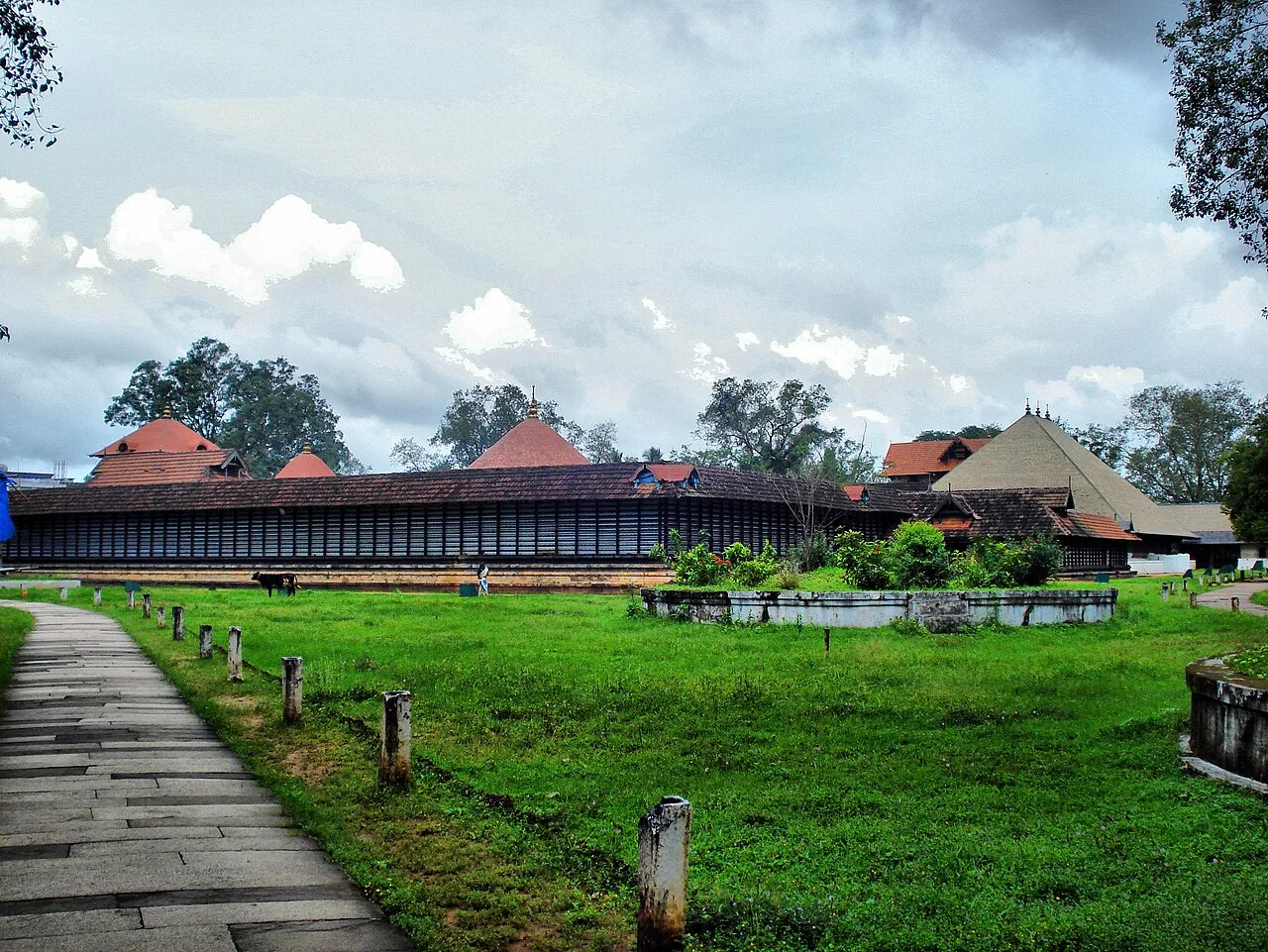
Vadakkunnathan Temple
Vadakkunnathan Temple is an ancient Shiva shrine in Thrissur, Kerala. Visitors come to see its traditional architecture and murals, and its grounds host the Thrissur Pooram festival.
Key facts · verified by Ghumoopedia editors
- Type of place
- Temple / pilgrimage site
- Best time to visit
- September to March; June to August for monsoon Ayurveda and green landscapes
- Nearest railway station
- Thrissur · about 1 km (straight line)
- Nearest airport
- Cochin International Airport · about 46 km (straight line)
- Verified
- 21 Nov 2026
Plan a trip from Vadakkunnathan Temple — a day-by-day route through places nearby.
Located in Thrissur, Kerala, Vadakkunnathan Temple is an old place of Hindu worship dedicated to Shiva. A monumental tower stands on each of its four sides, and the complex includes a koothambalam. Wooden scenes are carved into the shrines and the koothambalam. These features make the temple a notable example of Kerala’s classical architectural tradition. Murals inside the temple depict episodes from the Mahabharata. India has declared the temple and its murals a National Monument under the AMASR Act. Local tradition holds that Parashurama, Vishnu’s sixth avatar, built the temple first. It is also regarded as the earliest of 108 Shiva temples in ancient Kerala established by Parashurama. The Shiva Temple Stotra names it Shrimad-Dakshina Kailasam, meaning Kailash of the South. Thekkinkadu Maidan surrounds the temple and is the main venue for Thrissur Pooram. In 2012, the Archaeological Survey of India recommended 14 sites in Kerala, including Vadakkunnathan Temple and palaces, for inclusion on the UNESCO World Heritage list. Kerala packs a lot into a narrow strip: the backwaters and houseboats of Alappuzha and Kumarakom, the tea hills of Munnar and the spice forests of Thekkady, the beaches of Kovalam, Varkala and Bekal, the colonial and Jewish heritage of Fort Kochi, and living art forms — Kathakali, Theyyam, Mohiniyattam and temple festivals with caparisoned elephants. Kerala is warm and humid at sea level all year. The southwest monsoon from June to September brings very heavy rain, and the northeast monsoon adds showers in October and November; the hill stations of Munnar, Wayanad and Vagamon are cool year-round and cold on winter nights. The usual best time to visit is September to March; June to August for monsoon Ayurveda and green landscapes. Timings, fees and access arrangements must be confirmed locally. For official information, see Kerala Tourism at https://www.keralatourism.org.
Why it matters
Vadakkunnathan Temple is a major Shaiva place of worship in Thrissur and an important example of Kerala temple architecture. Its central location and relationship with Thekkinkadu Maidan make it a defining landmark in the city. The maidan is the principal setting for Thrissur Pooram, one of Kerala’s best-known temple festivals. In 2012, the Archaeological Survey of India recommended the temple, among other Kerala sites, for consideration for UNESCO World Heritage status; this was a recommendation, not a UNESCO listing. Worship, heritage and public festival life remain closely connected here.
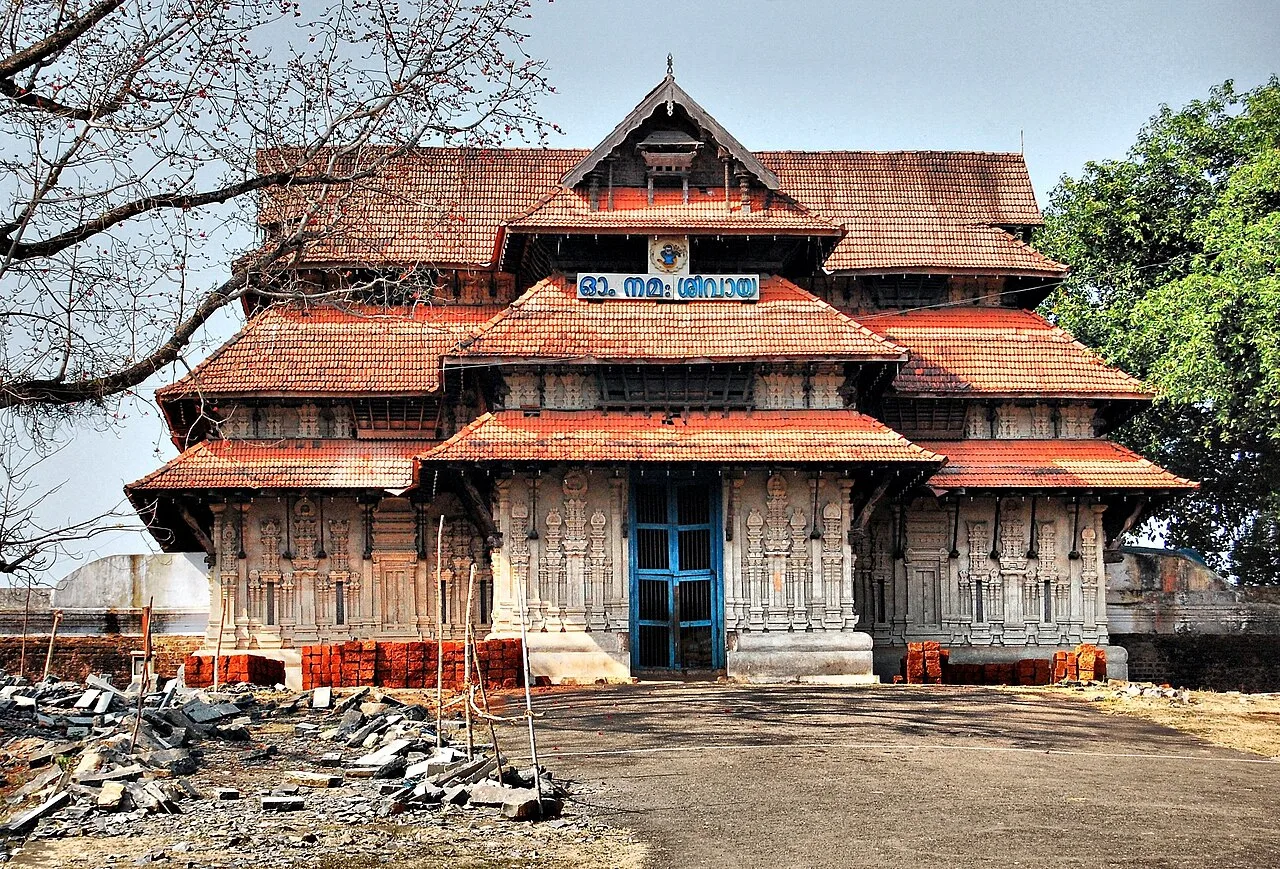
It is traditionally associated with Parashurama, while the site’s long-standing importance is reflected in its place among Kerala’s ancient Shiva temples and in devotional references to it as Shrimad-Dakshina Kailasam. The temple developed as a major religious centre in Thrissur, with shrines and a traditional performance hall forming part of a substantial walled complex. Its architecture and murals represent Kerala’s regional building and artistic traditions. The temple has remained an active place of worship rather than a solely archaeological monument. The Archaeological Survey of India has recommended it for possible UNESCO World Heritage consideration, but it is not a UNESCO World Heritage site. The Cochin Devaswom Board is associated with its administration; visitors should check locally for current conservation work, access arrangements and management information.
Origin stories & folklore
According to local tradition, Vadakkunnathan Temple was the first temple built by Parashurama, the sixth avatar of Vishnu. The story belongs to a broader Kerala foundation legend in which Parashurama creates the land and establishes places of worship. It is a religious tradition, not a verified account of the temple’s construction date. The temple is also traditionally counted as the first among 108 Shiva temples established by Parashurama in ancient Kerala. In the Shiva Temple Stotra, it is referred to as Shrimad-Dakshina Kailasam, commonly understood as “Kailash of the South.” These beliefs help explain the site’s spiritual standing for devotees and should be understood as part of living Hindu tradition.
Architecture & design
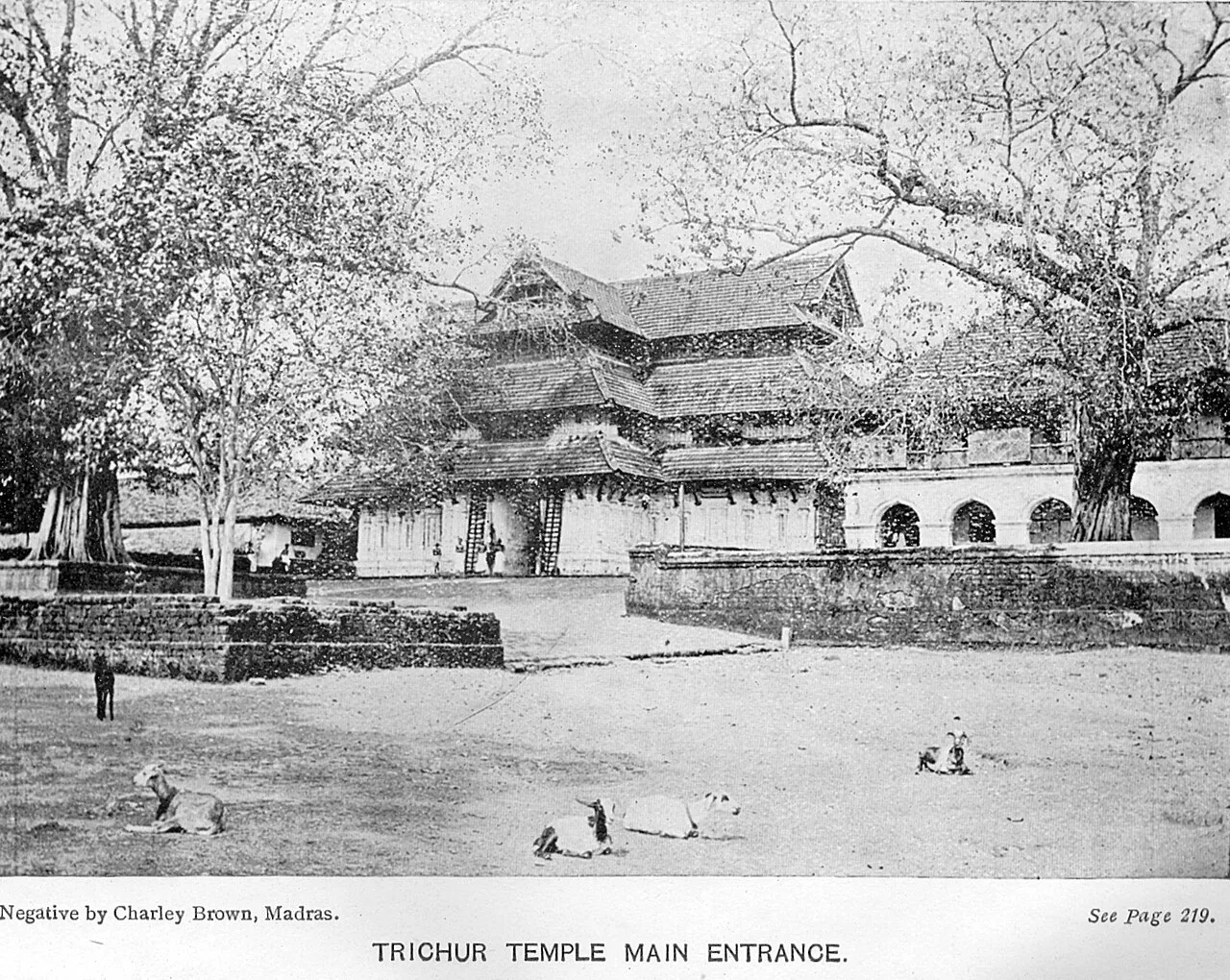
Vadakkunnathan Temple is a prominent example of Kerala’s traditional temple architecture. The complex is set within a large, enclosed compound, with a monumental tower at each of its four sides. Within the grounds are shrines and a koothambalam, a traditional hall associated with temple performance. The buildings use regional forms and materials, including timber and laterite or other locally used masonry; construction details vary across the complex. Sloping tiled roofs help shed the region’s heavy rain, while deep eaves provide shelter to parts of the buildings and walkways. The layout brings together ritual spaces, shrines and halls rather than presenting a single isolated structure. Mural paintings depicting episodes from the Mahabharata are among the temple’s notable features. Carved wooden details appear on the shrines and koothambalam. Access to individual structures may be restricted during worship or conservation work.
Important objects & sculptures
Look for the temple’s mural paintings, which depict scenes from the Mahabharata and are an important part of its artistic heritage. The temple’s shrines and koothambalam also display carved wooden details and narrative vignettes; observe these from areas open to visitors rather than entering restricted spaces. The principal shrine is dedicated to Shiva as Vadakkunnathan. The deity and ritual objects are part of active worship, not a museum collection, and viewing may be limited by ceremonies or access rules. The temple complex also contains other shrines, but their details and visitor access can vary. Ask temple staff or consult posted notices before approaching any shrine, mural or carved feature.
Religious significance
Vadakkunnathan Temple is dedicated to Shiva, worshipped here as Vadakkunnathan. For devotees, it is an important Shaiva pilgrimage site and a place for prayer, offerings and participation in daily rites. Its devotional title, Shrimad-Dakshina Kailasam, links it symbolically with Mount Kailash, Shiva’s sacred abode. Rituals take place according to temple custom, and the inner shrines are active sacred spaces rather than visitor attractions. Visitors who are not participating in worship should keep a respectful distance, follow instructions from temple staff and avoid interrupting prayers. Entry eligibility can be subject to temple rules, including community-based restrictions; confirm the current policy before travelling. Customs may differ between shrines and during festivals.
Visit Vadakkunnathan Temple with time to observe daily prayers and rituals respectfully. Follow the posted rules on footwear, photography, phones, head covering and dress, and avoid interrupting worshippers; popular shrines may have separate queues and mobile-phone deposit counters. Beware of unofficial agents offering quick darshan for a fee. A comfortable itinerary is one main visit in the morning, a local meal at midday and a short nearby stop before an afternoon return. Use the district list on this site to find other places in Thrissur, but check the route and its condition before combining stops. If a festival is on — such as Onam, Thrissur Pooram, the Nehru Trophy snake-boat race on Punnamada Lake, the Theyyam season in Kannur and Kasaragod, or the Attukal Pongala — roads and stays can be busy, and the experience can be unforgettable. Leave no litter: many sites are protected by the communities around them.
Suggested itineraries
Half day: Allow about 2–3 hours for arrival, a respectful temple visit and time to observe the exterior architecture; have a nearby meal before leaving. Full day: Spend the morning at the temple, take a local lunch, then visit Shakthan Thampuran Palace and the Thrissur Zoo and State Museum, allowing time for road conditions and opening arrangements. Gentler option: Use a taxi or auto for the approach, keep the visit to accessible outer areas, take seated breaks and choose one nearby stop rather than combining several.
The temple is part of Thrissur’s living cultural landscape, where daily worship coexists with public festivals and performance traditions. The koothambalam reflects Kerala’s history of presenting ritual and classical arts in temple settings, though performances and access are not guaranteed on a visit. Malayalam is the main local language; English is also commonly understood in visitor-facing settings. During major events, traditional percussion, decorated elephants and processional customs may be visible around the temple and maidan. Dress modestly and follow local guidance on footwear, conduct and entry. The city’s food, markets and public life offer further ways to encounter contemporary Kerala culture beyond the temple precinct.
Festivals & events
Thrissur Pooram, usually held in April or May, is the major festival associated with Vadakkunnathan Temple and Thekkinkadu Maidan. It brings processions, percussion ensembles and large crowds to the city; road access and accommodation can be particularly busy. Festival activities and access to the temple precinct may differ from ordinary days, so check current arrangements before visiting. Onam, generally observed in August or September, is celebrated across Kerala and may add to seasonal travel demand, though it is not the temple’s signature festival. Festival dates follow the local calendar and change from year to year. Visitors seeking a quiet temple visit should avoid peak event periods.
Local food in Kerala includes appam with stew, puttu with kadala curry, idiyappam, the vegetarian sadya served on a banana leaf, Kerala parotta with beef or chicken fry, Malabar biryani and pathiri in the north, karimeen pollichathu (pearl-spot fish in banana leaf), toddy-shop fish curry, banana chips and many kinds of payasam. Ask what is fresh that day; many small eateries cook a limited daily menu. Coconut oil and coconut are used in most dishes; ask for less spice if needed. Toddy shops serve some of the best fish curry in Kerala, and a full sadya is the highlight of Onam. Remote sites may have no restaurant at all. Carry water and snacks, eat a proper breakfast before long drives, and ask your accommodation for a packed lunch if you are heading out early. If prasad is offered, accept it according to local custom. Choose clean places, drink sealed or filtered water, and carry your packaging back with you.
Shopping & local experiences
Central Thrissur has shops and markets where visitors can look for everyday Kerala goods, textiles, snacks and festival-related items. Small devotional offerings or souvenirs may be available near the temple, but availability and rules about bringing items into the precinct vary. Kerala crafts, including woodwork and handloom products, can be found through local retailers; check provenance and quality rather than assuming an item is made nearby. For a food experience, try a local vegetarian meal or Kerala snacks at an establishment in town. Keep purchases modest and avoid disposable packaging where possible.
September to March; June to August for monsoon Ayurveda and green landscapes
The nearest principal railway station by straight-line distance is Thrissur, roughly 1 km away. The nearest operating airport by straight-line distance is Cochin International Airport, roughly 46 km away. These figures are calculated from map coordinates — actual road distance is longer. Thiruvananthapuram, Kollam, Kottayam, Ernakulam, Thrissur, Shoranur, Kozhikode and Kannur are the main rail stops along the coast line; Kochi, Thiruvananthapuram, Kozhikode and Kannur have international airports. For the final leg, KSRTC buses (from ordinary to air-conditioned Swift services), fast private buses, metered autos, app cabs and the Water Transport Department's public ferries in the backwaters link the towns. Distances look short on the map, but road and town traffic are slow, so allow extra time. When comparing train, bus and flight, count the complete door-to-door time: a flight saves the most time only if the onward road transfer is short, while an overnight train can save a hotel night. Kerala's coastal rail line is busy, so reserve trains early; KSRTC buses are frequent and often quicker to hill stations. Book your return before you leave, because seats fill quickly on weekends, festivals and holidays. Current train numbers, timings, return services and fares are not listed here; check IRCTC and NTES for trains and the airline's own schedule for flights. No permit is needed to visit Kerala. Several major temples, including Sree Padmanabhaswamy in Thiruvananthapuram and Guruvayur, admit only Hindus and enforce a strict dress code — men wear a mundu (dhoti) and remove shirts, women wear a saree or long skirt. Forest activities in Periyar, Eravikulam, Silent Valley, Parambikulam and Thattekad must be booked with the Kerala Forest Department, and Eravikulam National Park usually closes in February and March for the Nilgiri tahr calving season.
Confirm onward and return timings on IRCTC / NTES, the state bus operator or your airline before travel. A dash means current timings or fares have not been verified.
Getting around
Thrissur railway station is the nearest principal rail stop, and the temple is within the central city; the actual road journey depends on the route and traffic. Metered auto-rickshaws, app-based cabs where available, taxis and local buses can help with the final leg. Walking from nearby central areas is possible, but allow extra time for traffic, heat and the temple’s large grounds. Parking availability around Thekkinkadu Maidan can vary, especially during festivals, so check locally and follow temporary restrictions. Kerala’s backwater ferries are not relevant to reaching this city-centre site.
Hours, tickets & permissions
Entry is governed by temple schedules, worship, special ceremonies and any temporary restrictions. Darshan arrangements, access to particular shrines, visitor eligibility, footwear rules and permitted belongings may differ by day or occasion. Tickets, permits, camera permissions and identity requirements should not be assumed; check with the temple’s managing authority before setting out. Confirm current opening hours and any applicable fees directly with the authority, as these arrangements can change. During festivals or conservation work, entry routes and public access may be adjusted.
Facilities
Facilities within the temple precinct may be limited or governed by worship rules. Toilets, drinking water, food, shops and ATMs are usually easier to find in central Thrissur nearby; check locally for the closest options and whether they are open. Parking around the maidan may be available but can be restricted or crowded during events. Do not assume that guides, cloakrooms, phone-deposit counters or assistance services are available on every visit. Ask temple staff about current facilities and keep personal belongings secure.
Accessibility
The grounds are extensive, and reaching a shrine may involve walking over uneven paving, thresholds or other surfaces; some areas may have steps. Visitors are generally expected to remove footwear in designated places, which can make hot or wet ground uncomfortable. Shade and seating vary across the complex, and festival crowds can make movement difficult. Wheelchair and stroller access should not be assumed, as routes and interior access may be constrained by the historic layout and worship rules. Older visitors or anyone with limited mobility may prefer a shorter visit, assistance from a companion and a locally confirmed route to the areas open to them.
No permit is needed to visit Kerala. Several major temples, including Sree Padmanabhaswamy in Thiruvananthapuram and Guruvayur, admit only Hindus and enforce a strict dress code — men wear a mundu (dhoti) and remove shirts, women wear a saree or long skirt. Forest activities in Periyar, Eravikulam, Silent Valley, Parambikulam and Thattekad must be booked with the Kerala Forest Department, and Eravikulam National Park usually closes in February and March for the Nilgiri tahr calving season. Carry a photo ID at all times and save the emergency number 112 and your accommodation's contact offline. Watch your belongings in crowds and on public transport, and follow posted instructions.
Visitor rules
Follow signs and directions from temple staff, remove footwear where instructed and dress modestly. Entry to inner areas may be limited by temple policy, including rules about who may enter; check before arrival rather than relying on assumptions. Do not cross barriers, touch ritual objects or interrupt worship. Keep the grounds clean and avoid bringing or leaving plastic where prohibited. Phones and other belongings may be subject to restrictions or deposit arrangements, which should be confirmed locally. Respect queues and give worshippers space, especially during ceremonies and festivals.
Photography
Photography rules can differ between the outer grounds, shrines and active worship areas; do not assume that cameras or phones are permitted inside. Check posted notices or ask temple staff before taking pictures, and never photograph people or ceremonies in a way that intrudes on worship. The exterior architecture and maidan are best viewed in softer morning or late-afternoon light, subject to access and weather. Drone use may be restricted by aviation rules, security conditions or temple policy; do not fly one without explicit permission. Avoid flash near paintings and sacred spaces.
Choose a stay by the full journey to Vadakkunnathan Temple, not just the district name. Kerala Tourism's classified homestays are good value and a way to taste home cooking; beach towns have everything from hostels to Ayurveda resorts. In summer, check air-conditioning and backup power; in the monsoon, check that the property is accessible if roads flood. Book in advance for weekends, festivals and the peak season (September to March; June to August for monsoon Ayurveda and green landscapes). Confirm the exact location, meals included, check-in time and cancellation terms in writing. Avoid sending money to unverified contacts or touts at stations. Carry some cash, as card and digital payments can be unreliable in remote areas.
Within Thrissur city, Shakthan Thampuran Palace offers a historical visit, while the Thrissur Zoo and State Museum provide a nearby museum and animal collection. Thekkinkadu Maidan itself is closely linked to the temple and is the main setting for Thrissur Pooram. For a longer district excursion, Guruvayur is known for its Krishna temple, and Kerala Kalamandalam at Cheruthuruthy is associated with Kerala performing arts. These destinations require separate travel planning; traffic and event conditions can affect journey times. Check each site’s current access and opening arrangements before combining stops.
For couples, Vadakkunnathan Temple rewards a slow pace: arrive early for soft light and fewer crowds, share a local meal and keep the evening free. An overnight houseboat on Vembanad, a sunset on the Varkala cliffs or a misty morning walk through Munnar's tea estates makes the trip memorable. Public displays of affection can be frowned upon in conservative communities and at religious sites, so be discreet. Keep a buffer in your itinerary, because weather and road conditions can delay plans.
Q: How much time should I allow for a visit? A: Allow a few hours for the temple and its grounds; festival crowds or ceremonies may require more time. Q: When is a good season to visit? A: September to March is generally comfortable for travel in Kerala. Thrissur Pooram, usually in April or May, is atmospheric but very crowded. Q: Is there an entry fee, and who may enter? A: Confirm current fees, if any, and visitor eligibility with the temple authority. Entry rules can include restrictions on access to sacred areas. Q: Can children and older visitors visit? A: Yes, subject to temple rules. The grounds involve walking and may have uneven surfaces, so plan breaks and assistance as needed. Q: Where can I stay nearby? A: Thrissur city has a range of accommodation. Book ahead during Thrissur Pooram and confirm location and transport arrangements.
Be the first to share photos, stories, advice or a helpful contact for Vadakkunnathan Temple.
Loading…