
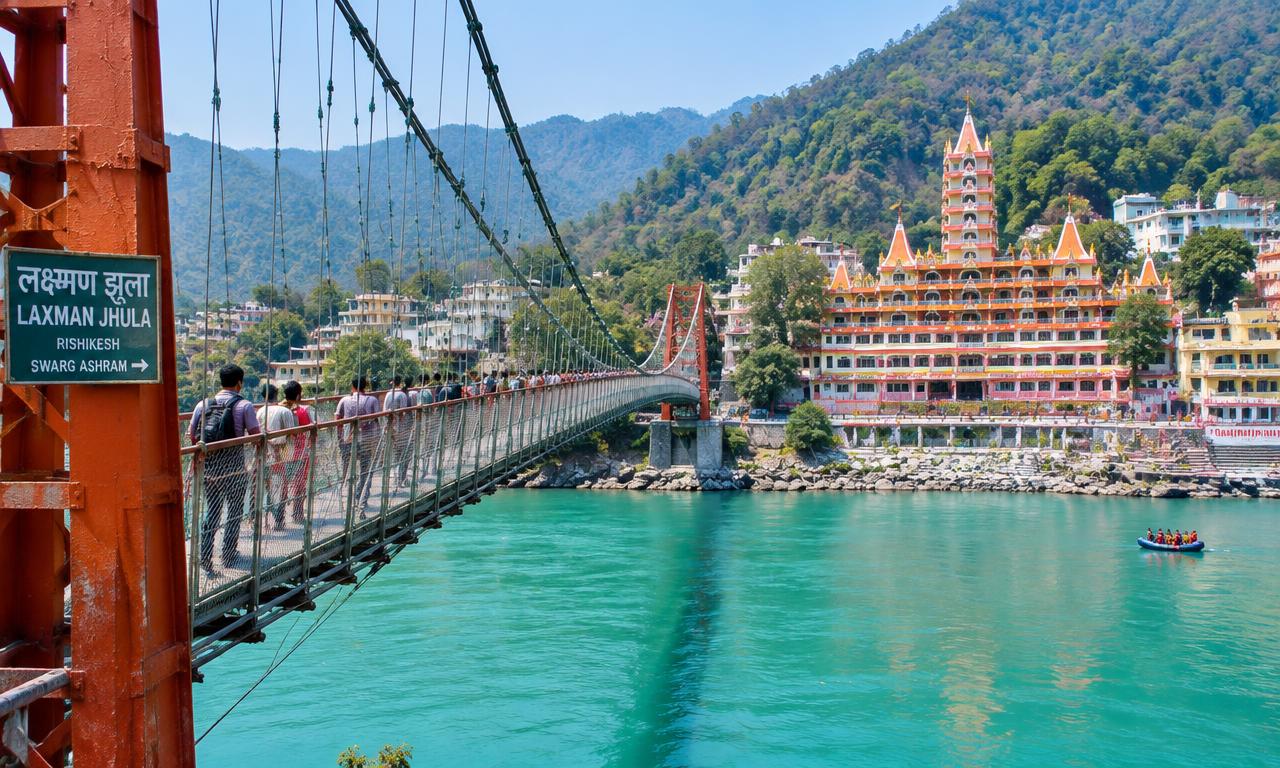
Laxman Jhula & Tapovan
Laxman Jhula and Tapovan are a Rishikesh visitor district centred on an iron suspension bridge and the 13-storey Trayambakeshwar temple, with cafés and yoga schools drawing travellers.
Key facts · verified by Ghumoopedia editors
- Type of place
- Temple / pilgrimage site
- Best time to visit
- October–April
- Altitude
- 350 m
- Verified
- 21 Nov 2026
Plan a trip from Laxman Jhula & Tapovan — a day-by-day route through places nearby.
On the slopes above the Ganga, this part of Rishikesh brings together yoga schools, guesthouses, cafés and narrow streets. The hillside lanes look towards the river and make the area a gathering point for travellers. Tapovan lies mostly on the river’s western bank. Near the eastern end of the historic bridge, streets have temples, shops and places to stay beside the water. The iron crossing and the 13-storey Trayambakeshwar temple are prominent features of the area. Accommodation listed under the Laxman Jhula name may be on either bank, so check its exact position on a map before booking. The historic suspension bridge has been closed to public use for safety reasons; do not assume it is a usable crossing. Replacement-bridge access and other crossing arrangements can change, so confirm the current situation locally before planning walking routes or transfers. Come for yoga, river views, vegetarian food and access to rafting and nearby waterfalls rather than a conventional nightlife scene. Busy roads, construction, steep lanes and frequent scooter traffic can make the area less peaceful than photographs suggest. October–November and February–March are generally pleasant; summer afternoons can be hot, and the monsoon brings slippery paths and river restrictions. Allow two to four nights, with unhurried mornings and buffer time for traffic, especially on weekends and holidays.
Why it matters
Laxman Jhula and Tapovan are a well-known Rishikesh hub for pilgrimage, yoga study and Ganga-side travel. The historic iron suspension bridge became a recognisable local landmark, while Trayambakeshwar Temple draws visitors and worshippers to the eastern bank. Tapovan, mainly on the western side, is known for yoga schools, guesthouses and cafés. Together, the area offers access to river scenery and religious institutions, though it is also a busy neighbourhood with steep lanes and traffic. The bridge is closed to public use for safety reasons; it should be viewed as a landmark, not treated as a crossing. No UNESCO or ASI-protected status is asserted here; check with relevant authorities for current heritage designations.
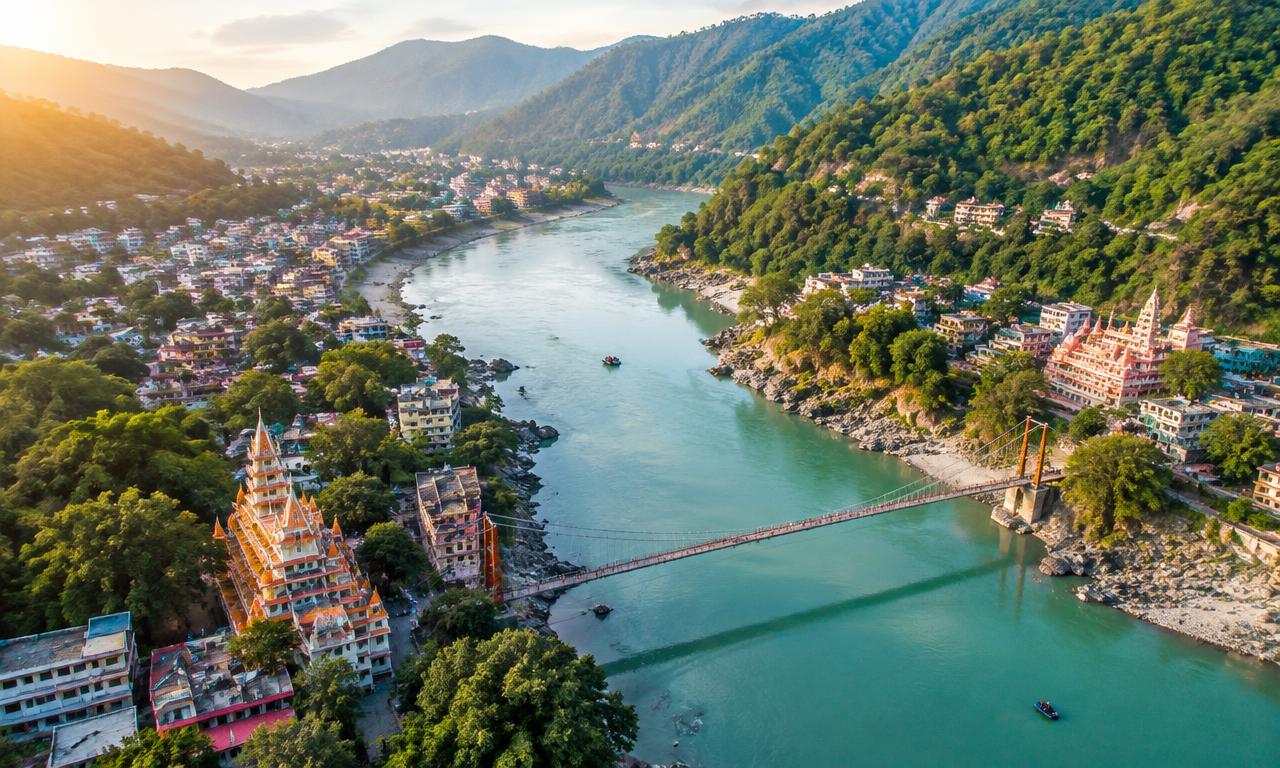
The name Laxman Jhula is linked by tradition to Lakshmana, the brother of Rama, and to a crossing of the Ganga at this location. A rope or jute-rope crossing is often described in local accounts, but such stories should not be taken as a documented construction history. The historic iron suspension bridge replaced earlier, less permanent means of crossing and became an important link between settlements on opposite banks. Accounts commonly place its construction in the early twentieth century, but details of builders and dates should be verified against reliable local records. The bridge later became a prominent landmark for pilgrims and travellers moving through Rishikesh. Its familiar name and setting remain part of the area’s identity, even though it has been closed to public use for safety reasons. Access arrangements and replacement-bridge infrastructure have changed over time, so the bridge’s closure should not be confused with a guaranteed alternative route. Tapovan has also changed from a quieter riverside and hillside area into a dense visitor district, with yoga centres, lodging, shops and cafés alongside religious activity.
Origin stories & folklore
According to local tradition, Lakshmana crossed the Ganga at this place using a bridge made of jute ropes, giving the later crossing its name. The story connects the landscape to the Ramayana and is one reason many pilgrims regard the area as spiritually meaningful. It is a faith tradition, not a verified account of the iron bridge’s engineering history. Rishikesh more broadly is associated with sages, meditation and sacred visits to the Ganga; stories about individual saints and hermitages are often passed on orally. Visitors can appreciate these beliefs respectfully without assuming that every local story has a single documented version.
Architecture & design
The historic Laxman Jhula is an iron suspension bridge spanning the Ganga, with a narrow deck supported from towers and suspended by cables. Its lightweight form and elevated position made it a distinctive landmark against the river and hills. It is closed to public use for safety reasons, so visitors should not enter it or assume it provides a route across the river. Trayambakeshwar Temple, also known as Tera Manzil Temple, is a tall, multi-storey religious building on the eastern bank. Its stacked levels, shrines and balconies create a vertical profile visible from the surrounding lanes and river approaches. The temple is commonly identified by its thirteen-storey form; architectural details and access to individual levels can vary with current management. The nearby built environment is a mix of temple structures, shops, guesthouses and newer construction, set among steep roads and close-set hillside buildings.
Important objects & sculptures
At Trayambakeshwar Temple, visitors may encounter images and shrines associated with Shiva and other Hindu deities on different levels. The arrangement and access to particular shrines can vary, so follow signs and local instructions rather than assuming every floor is open for worship. The temple’s vertical sequence of shrines is itself a notable feature. The historic suspension bridge is best appreciated from public viewpoints; its ironwork and cables are visible from nearby approaches, but it is closed to visitors. This is an active religious and neighbourhood setting rather than a museum collection, and no particular inscription or curated display should be expected. Ask before closely photographing religious objects or worshippers.
Religious significance
Trayambakeshwar Temple is a Hindu place of worship commonly associated with Shiva, while the surrounding area is part of the wider pilgrimage landscape of Rishikesh and the Ganga. Worshippers may visit shrines, offer prayers and observe customary acts of devotion; practices differ by person and occasion. The name Laxman Jhula also carries religious significance through its association in local tradition with Lakshmana. The bridge itself is a landmark, not a temple, and is closed to public use. Nearby Ganga aarti ceremonies take place at other venues, including Parmarth Niketan and Triveni Ghat; these are separate destinations. Visitors should treat worship spaces as active religious environments and follow guidance from temple staff and devotees.
- Join a drop-in yoga class before committing to a course. Ask about teaching style, class size, instructor experience and modifications for injuries; advanced postures are not a requirement. - Explore the Laxman Jhula market lanes and visit Trayambakeshwar Temple on the eastern bank if accessible. Expect stairs, remove shoes where required and ask before photographing worshippers. - Attend an evening Ganga aarti at Parmarth Niketan or Triveni Ghat. These are separate destinations; confirm the day’s timing and your return transport, especially if staying across the river. - Book rafting through an established operator that explains route difficulty, eligibility, equipment and rescue arrangements. Operations depend on river conditions and official permissions; verify availability locally. - Visit Neer Garh Waterfall with suitable shoes and water. Check trail access, entry charges and rainfall conditions before leaving. - Make time for a riverside café, an early walk or the Beatles Ashram farther south, checking current opening hours and admission charges.
Suggested itineraries
Half day: Explore accessible market lanes, view the closed Laxman Jhula from a public approach, visit Trayambakeshwar Temple if open (allow about 1–2 hours), then pause at a riverside café. Full day: Begin with an unhurried walk and breakfast, visit the temple and market lanes (about 2–3 hours), take a break, then choose Neer Garh Waterfall or the Beatles Ashram farther south; finish with Ganga aarti at Parmarth Niketan or Triveni Ghat, allowing extra time for transfers. Gentler option: Use a taxi to an accessible drop-off, spend a short visit at the temple entrance or a public river viewpoint, and rest at a nearby café; avoid steep lanes and confirm access before travelling.
The area brings together pilgrimage, yoga study and everyday neighbourhood life. Hindi is widely used, and visitors may also hear Garhwali and English, among other languages. Yoga classes range from introductory sessions to more intensive study; ask about the teaching approach and suitability before joining. Temple visits, devotional music and Ganga-side prayer are part of the wider local religious scene, while cafés and small shops serve residents and travellers. Dress is generally casual in the streets, but modest clothing is considerate in temples. Tapovan is busy and commercial in places, so it may feel less secluded than images of a quiet retreat suggest.
Festivals & events
Shivratri is an important occasion for Shiva worship and may bring additional visitors to temples in the area. Ganga Dussehra and other Hindu observances are marked in the wider Rishikesh region, with activity at riverfront sites. The International Yoga Festival is held at Parmarth Niketan, a separate venue, and can increase visitor numbers in Rishikesh. Holi and Diwali are observed locally, though celebrations vary by neighbourhood and institution. Festival periods and pilgrimage seasons can mean crowded lanes, heavier traffic and changes to access. Check locally for event arrangements and whether a particular temple or crossing is affected.
Expect predominantly vegetarian food: North Indian thalis, South Indian breakfasts, bakery items, Tibetan-style dishes and international café menus. Tapovan’s main-road eateries can offer better value than river-view cafés; inspect menus before ordering. Ask whether prices include taxes and whether “vegan” dishes contain ghee, butter or curd. Choose busy kitchens, freshly cooked meals and filtered or sealed drinking water. Carry snacks for early excursions. Rishikesh is a pilgrimage town with restrictions on alcohol and non-vegetarian food; do not assume either will be available.
Shopping & local experiences
The lanes have small shops selling religious offerings, prayer items, beads, clothing, yoga accessories and everyday travel goods. Souvenirs may include locally marketed crafts and devotional images; check materials and provenance rather than assuming an item is handmade locally. Cafés and restaurants offer vegetarian meals, snacks, tea and sweets, with menus varying by business. Markets can be crowded, and walking space is limited in places. Compare quality, ask about ingredients if you have dietary needs, and carry reusable bags where practical.
October–April
Fly into Dehradun’s Jolly Grant Airport, roughly 20–25 km from Tapovan; a taxi commonly takes 45–90 minutes, depending on traffic. Confirm the fare and whether your accommodation is directly accessible by car. Rail options include Yog Nagari Rishikesh and Rishikesh stations; Haridwar offers additional connections. Check the actual arrival station, since names and transfer distances differ. From Haridwar, allow roughly one to two hours by road, longer during peak pilgrimage traffic. Buses generally arrive in central Rishikesh, requiring an onward auto-rickshaw, shared vehicle or taxi. Agree the destination and price before boarding. Within Tapovan, walk where practical, but expect gradients and narrow roads. Crossing to the opposite bank may require a significant detour; verify usable bridges and vehicle access locally.
Getting around
On arrival in Tapovan or near Laxman Jhula, walking is practical for short trips but involves steep lanes, uneven surfaces and traffic. Auto-rickshaws and taxis can reach accessible road points; confirm the drop-off location, as some accommodation is on lanes cars cannot enter. Local buses generally serve central Rishikesh rather than every narrow lane. Parking is limited in busy areas, so ask your accommodation about suitable drop-off and parking arrangements. Do not plan a walking route across the closed historic bridge. Crossing arrangements and usable alternatives can change, so check locally before setting out.
Hours, tickets & permissions
Entry arrangements differ between the temple, market lanes and public viewpoints; the historic bridge is closed to public use. Some religious areas may have visitor protocols, restricted sections or separate arrangements for worshippers. Tickets, permits, camera rules, dress expectations and any applicable fees can change and should be checked with the managing authority or locally before visiting. Confirm current opening hours and entry conditions directly with the relevant temple or site authority; do not rely on old online listings.
Facilities
Tapovan and the Laxman Jhula approaches have cafés, restaurants, small shops and guesthouses. Toilets and drinking water may be available at individual businesses or religious sites, but provision is not consistent; check locally and carry water. ATMs and broader services are more readily found in busier parts of Rishikesh than on every lane. Parking and vehicle access are limited near narrow approaches. Guided services may be offered by local operators, but verify credentials and what is included. Facilities inside the temple depend on current management and visitor access.
Accessibility
The neighbourhood has steep gradients, stairs, narrow lanes, uneven paving and frequent scooter traffic. Reaching the temple’s upper levels involves stairs, and the historic bridge is closed to public use. Wheelchair and stroller access is therefore difficult and should not be assumed; there may be no continuous step-free route. Older visitors or anyone with limited mobility may find even short walks tiring. Shade varies by lane, and exposed approaches can be hot. Consider a taxi to the nearest accessible point, take breaks, and ask the temple or accommodation about current entry conditions before setting out.
The Ganga has powerful currents: do not swim independently or approach exposed rocks for photographs. Follow rafting guides and avoid operators that dismiss safety questions. During monsoon rain, skip waterfall gullies and check road conditions. Walk defensively around scooters; paths can be uneven, poorly lit or slippery. Keep food away from monkeys and do not feed them. Dress respectfully at temples and ghats, and ask before photographing ceremonies. Carry essential medicines and travel insurance covering planned adventure activities. India’s emergency number is 112; save your accommodation’s contact and location offline.
Visitor rules
Follow signs and instructions from temple staff, and remove footwear where requested. Wear clothing that is respectful of an active place of worship; avoid entering areas marked for worshippers or staff only. Do not attempt to access or cross the closed historic bridge, climb barriers or enter construction areas. Keep noise low during prayer, do not litter, and use bins where available; reduce single-use plastic. Ask before photographing people, ceremonies or temple interiors, and respect any restrictions. Follow local safety instructions around the river, especially when water levels or conditions are hazardous.
Photography
The bridge and river are often best photographed in softer morning or late-afternoon light from publicly accessible viewpoints on either bank. The bridge is closed to public use, so photograph it from outside and do not climb barriers or seek access to its deck. Views from the lanes and river approaches can be attractive, but traffic and buildings may obstruct sightlines. Photography inside temples may be restricted; ask before taking pictures. Be discreet around worshippers and ceremonies. Drone use may require permissions and can be restricted near religious sites, crowds or public infrastructure; check applicable rules before flying.
Choose central Tapovan for yoga schools, cafés and relatively convenient road access, but ask about traffic and construction noise. Uphill properties may offer views while requiring steep walks. Eastern-bank stays can feel atmospheric, but transfers depend on road and bridge access. Before paying, confirm the exact location, last vehicle-accessible point, porter arrangements, stairs, hot water, air-conditioning or heating, and cancellation policy. Ashrams may impose meal schedules, dress rules and curfews. Compare recent reviews and verify current rates, especially around holidays and yoga events.
Within Rishikesh, visitors can combine the area with Parmarth Niketan, known for its Ganga aarti and yoga activities, or Triveni Ghat, another major riverfront worship site. The Beatles Ashram, also known as the Maharishi Mahesh Yogi Ashram, lies farther south; confirm current access and admission arrangements. Neer Garh Waterfall is a popular outing from the Tapovan area, subject to trail and weather conditions. Central Rishikesh has additional markets and riverfront sites. Haridwar is another pilgrimage destination in the region, but allow for road traffic and check transfer arrangements before planning a same-day visit.
Pick a room with a genuine river-facing balcony rather than relying on a property’s “river view” label; ask for recent photographs and noise details. Combine a morning yoga class with a café breakfast and an evening aarti. Reserve weekends ahead and arrange return transport before a late dinner across the river. Carry identification and confirm the property’s couple check-in policy before paying, particularly if booking an independent guesthouse or ashram.
Q: How much time should I allow for Laxman Jhula and Tapovan? A: A half day suits the temple, market lanes and river viewpoints; allow more time if adding a nearby outing. Q: When is a comfortable season to visit? A: October–November and February–March are generally pleasant. Summer afternoons can be hot, while monsoon paths may be slippery and river activities restricted. Q: Can I cross the historic Laxman Jhula bridge? A: No. It is closed to public use for safety reasons. Check locally for current alternative crossing arrangements. Q: Is the area suitable for children or elderly visitors? A: Families can visit, but steep lanes, stairs, uneven surfaces and traffic require care. Visitors with limited mobility should plan a short, vehicle-assisted visit and confirm access. Q: Can I stay near Laxman Jhula or Tapovan? A: Yes. Guesthouses and other accommodation are common, but listings using the same area name may be on different riverbanks. Check the exact map pin and vehicle access before booking.
Be the first to share photos, stories, advice or a helpful contact for Laxman Jhula & Tapovan.
Loading…