
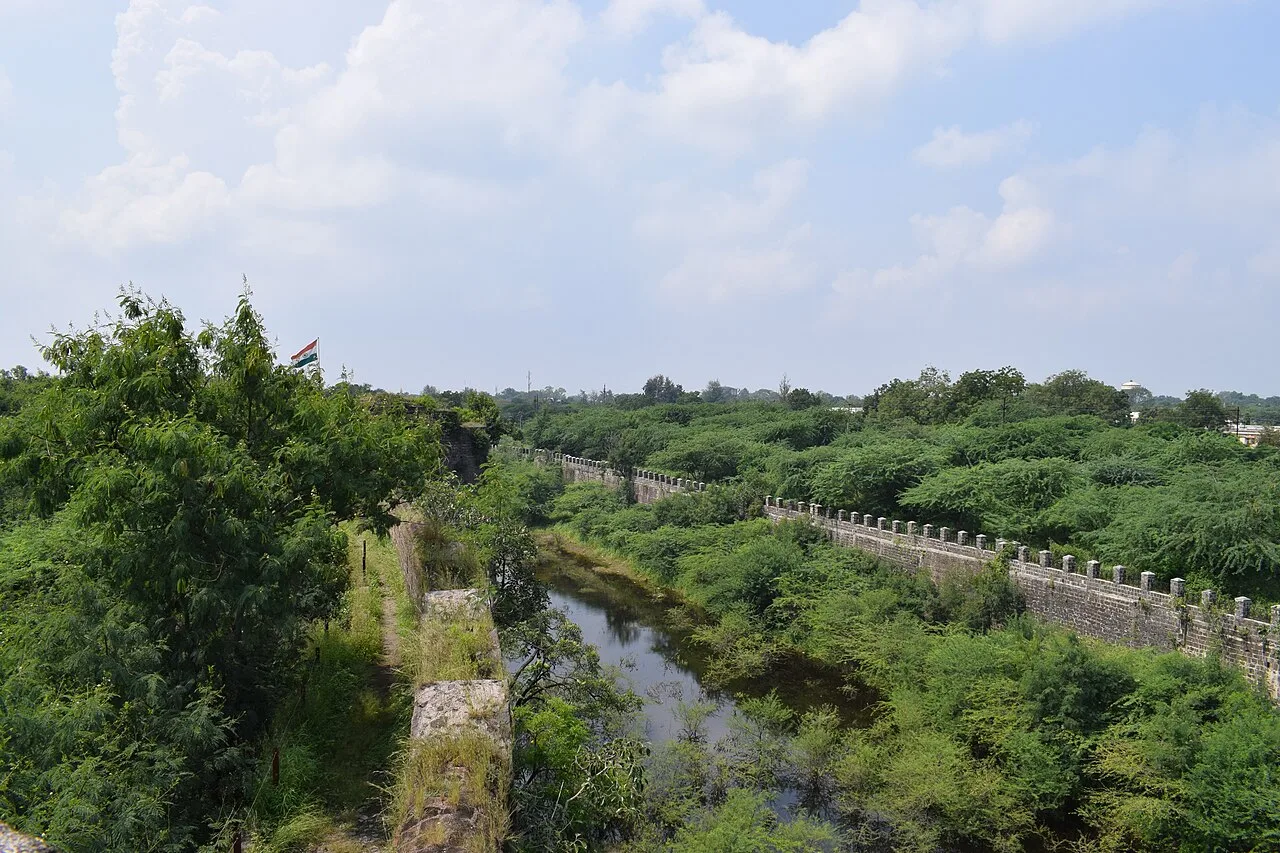
Ahmednagar Fort
Ahmednagar Fort, in Maharashtra, is a historic stronghold associated with the Ahmednagar Sultanate, the 1803 Anglo-Maratha conflict and imprisonment under British rule, making it a point of historical interest.
Key facts · verified by Ghumoopedia editors
- Type of place
- Heritage monument
- Best time to visit
- October to March; June to September for green monsoon landscapes on the Ghats (expect closures)
- Nearest railway station
- Ahmednagar · about 5 km (straight line)
- Nearest airport
- Shirdi Airport · about 75 km (straight line)
- Verified
- 21 Nov 2026
Plan a trip from Ahmednagar Fort — a day-by-day route through places nearby.
The fort stands near Ahmednagar, in Maharashtra’s Ahilyanagar district, close to Bhingar Nala. It once served as the headquarters of the Ahmednagar Sultanate, linking the site to the sultanate’s rule. British forces captured the stronghold in 1803 during the Second Anglo-Maratha War. In the period of British rule, it was used as a prison. Responsibility for the fort now lies with the Armoured Corps of the Indian Army. Its recorded roles include a Sultanate headquarters, a site taken during the war and a place of imprisonment under British rule. Maharashtra spans Mumbai's Gothic and Art Deco skyline, the rock-cut cave temples of Ajanta, Ellora, Karla and Elephanta, the hill forts of Chhatrapati Shivaji Maharaj, the Konkan's sea forts and beaches, and the great pilgrimages of Pandharpur, Shirdi and the Jyotirlingas. The coast is hot and humid most of the year with very heavy monsoon rain from June to September; the Western Ghats hill stations are cool and misty in the monsoon and pleasant in winter; the Deccan and Vidarbha are dry, with harsh summers above 40°C in Nagpur and Chandrapur. The usual best time to visit is October to March; June to September for green monsoon landscapes on the Ghats (expect closures). Timings, fees and access arrangements must be confirmed locally. For official information, see Maharashtra Tourism at https://www.maharashtratourism.gov.in.
Why it matters
Ahmednagar Fort, also known as Ahmadnagar Qila, is a major military landmark in Ahilyanagar, Maharashtra. It served as the headquarters of the Ahmednagar Sultanate and later became part of the region’s changing Mughal, Maratha and British history. Its best-known modern association is with the imprisonment of Indian political leaders during the British Raj, including Jawaharlal Nehru, who wrote parts of The Discovery of India while detained here. The fort remains significant as a working military site: it is administered by the Armoured Corps of the Indian Army, so public access may be limited. Do not assume it is an unrestricted museum or that it has UNESCO or ASI recognition.
The fort is associated with the rise of the Ahmednagar Sultanate, founded by Ahmad Nizam Shah I in the late fifteenth century. It became a political and military centre for the Nizam Shahi rulers. During the Mughal campaigns in the Deccan, the fort was besieged in the late sixteenth century. Chand Bibi, regent of the sultanate, is remembered for leading its defence; the Mughals took the fort in 1600. Control of the Deccan shifted over subsequent centuries, including periods of Maratha influence. British forces captured the fort in 1803 during the Second Anglo-Maratha War. Under British rule it was used as a prison. During the 1942 Quit India period, several leaders of the Indian National Congress were detained there. Jawaharlal Nehru later described his imprisonment and work on The Discovery of India in the fort. The site is now under the administration of the Armoured Corps of the Indian Army. Because it remains a military establishment, public routes and access to historic rooms may change; check locally rather than assuming all parts are open.
Origin stories & folklore
The fort’s best-known story centres on Chand Bibi. Her defence of Ahmednagar against Mughal forces is part of recorded history, but local retellings also remember her as a courageous guardian of the fort. These accounts may blend historical memory with legend, and details can vary. There is no single widely established supernatural origin story that visitors should treat as fact. The fort’s name and beginnings are more reliably explained through the history of Ahmad Nizam Shah I and the Ahmednagar Sultanate. Visitors can ask an authorised guide about local versions of Chand Bibi’s story while keeping a distinction between documented events and oral tradition.
Architecture & design
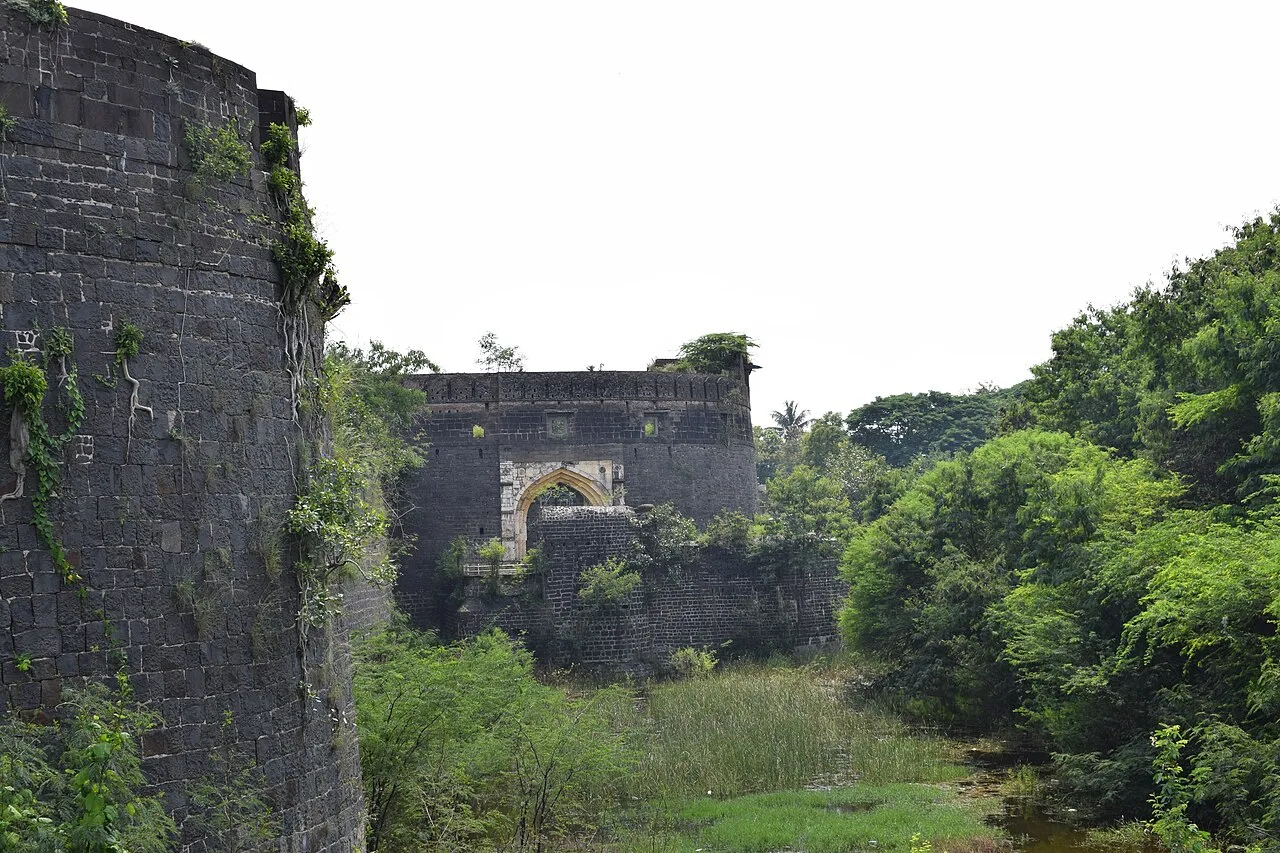
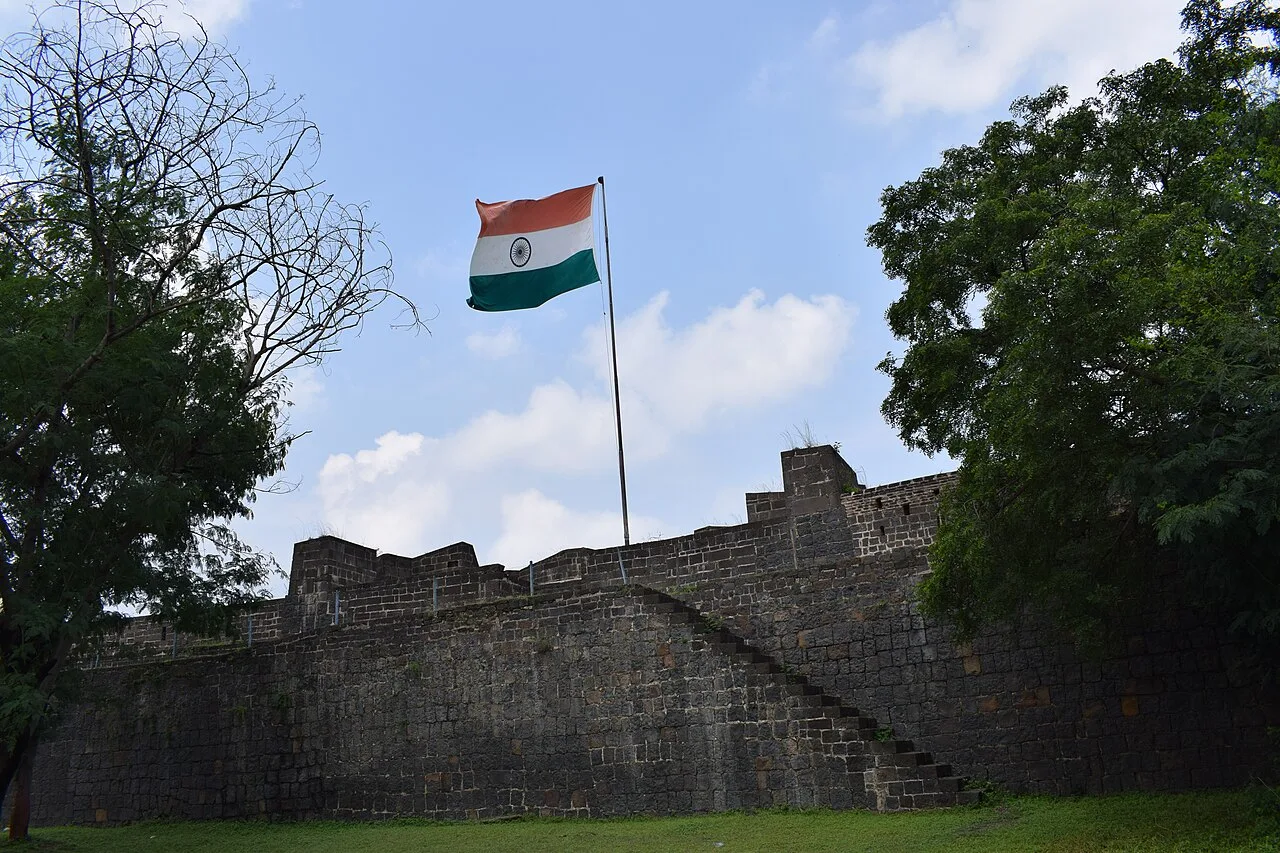
Ahmednagar Fort is a Deccan military fortification, built for defence and control rather than ceremonial display. Its substantial stone-and-masonry perimeter, rounded defensive form and projecting bastions reflect the need to protect the walls and cover approaches. Historical descriptions also note a moat around the fort, an additional obstacle to attackers. The layout centres on a broad enclosed military precinct reached through guarded entrances; internal areas have served changing administrative, military and prison functions. The fort’s scale and defensive planning are more notable than surface decoration. Later use and repairs mean that the fabric visitors see may include changes from different periods, rather than a single untouched construction phase. Since the site remains under Army administration, visitors may be limited to an approved route and should follow instructions about restricted buildings and areas.
Important objects & sculptures
The fort is best approached as a historic structure, not as a public gallery with a guaranteed collection. Look for the bastioned walls, defensive approaches and surviving masonry, which help explain its military role. If access is permitted, interpretation may point out rooms associated with the British-era imprisonment of Indian political leaders, including Jawaharlal Nehru. Their historical importance comes from their use and documented associations rather than from an assumed display of personal belongings. Do not expect sculptures, idols or a regular collection of artefacts to be available for viewing. Displays and access can change under military administration, so ask the authorised guide or site staff what is open on the day.
Explore Ahmednagar Fort slowly and read the interpretation boards, use the official audio guide where available or hire an authorised guide to understand its history. Hill forts involve steep climbs on uneven stone steps; start early, carry water and descend well before dark. Early morning gives softer light, cooler air and smaller crowds. A comfortable itinerary is one main visit in the morning, a local meal at midday and a short nearby stop before an afternoon return. Use the district list on this site to find other places in Ahilyanagar, but check the route and its condition before combining stops. If a festival is on — such as Ganeshotsav, Gudi Padwa or the Ashadhi Wari to Pandharpur — roads and stays can be busy, and the experience can be unforgettable. Leave no litter: many sites are protected by the communities around them.
Suggested itineraries
Half day: Check entry arrangements, visit the approved fort route with a guide or interpretation boards (about 1–2 hours), then have a meal in the city and allow time for the return journey. Full day: Visit the fort in the morning (about 1–2 hours), take a relaxed lunch in Ahilyanagar, then choose one nearby stop such as Salabat Khan II’s tomb or Meherabad, allowing travel time between visits. Gentler option: Arrange a vehicle close to the permitted entrance, explore only the accessible sections at an unhurried pace, and take breaks as needed; confirm surfaces and access restrictions in advance.
The fort sits within Ahilyanagar’s living urban and regional culture. Marathi is widely used locally, alongside Hindi and other languages heard in the city. The fort itself is a military site, not a regular venue for performances or public cultural programmes, so visitors should not expect music or dance events inside. Across the district, devotional practices, local markets and family visits to temples and pilgrimage centres remain part of everyday life. Ganeshotsav and Gudi Padwa are observed in the wider region, while nearby pilgrimage towns draw visitors throughout the year. Dress respectfully, follow security directions and ask before photographing people, guards or religious activity.
Festivals & events
Ganeshotsav, usually in the monsoon season, and Gudi Padwa, around the Marathi New Year in spring, are observed across Ahilyanagar. Nearby Shirdi also attracts large numbers of pilgrims during religious observances such as Ram Navami, Guru Purnima and Vijayadashami. These festivals are not necessarily held at the fort, and no regular fort fair should be assumed. Festival periods can mean busier roads, fuller accommodation and more visitors at nearby pilgrimage sites. Check local travel conditions before combining the fort with a visit to Shirdi or another religious centre.
Local food in Maharashtra includes vada pav, misal pav, pav bhaji, poha, puran poli, modak at Ganesh Chaturthi, Kolhapuri mutton with tambda and pandhra rassa, Malvani fish curry and sol kadhi on the Konkan coast, and Nagpur oranges and saoji food in Vidarbha. Ask what is fresh that day; many small eateries cook a limited daily menu. Vegetarian travellers eat well across the state, and most towns also have fish and meat dishes. Remote sites may have no restaurant at all. Carry water and snacks, eat a proper breakfast before long drives, and ask your accommodation for a packed lunch if you are heading out early. Try a home-cooked or local thali meal when you can — it is often the best food on the route. Choose busy, clean places, drink sealed or filtered water, and carry your packaging back with you.
Shopping & local experiences
In Ahilyanagar city, browse general markets for locally made goods, household items and regional snacks rather than expecting a dedicated fort souvenir shop. Availability of crafts and keepsakes changes, so ask local shopkeepers about products made in the district and buy from established sellers. A meal in the city is a practical way to sample everyday Maharashtrian food; ask about local specialities and seasonal offerings. Carry drinking water for the visit, as refreshments inside the military site may not be available. Avoid removing stones, fragments or any material from the fort.
October to March; June to September for green monsoon landscapes on the Ghats (expect closures)
The nearest principal railway station by straight-line distance is Ahmednagar, roughly 5 km away. The nearest operating airport by straight-line distance is Shirdi Airport, roughly 75 km away. These figures are calculated from map coordinates — actual road distance is longer. Mumbai and Pune are the main rail and air gateways in the west, Chhatrapati Sambhajinagar (Aurangabad) for Ajanta and Ellora, Nagpur for Vidarbha and the tiger reserves, and the Konkan Railway serves the coast down to Sindhudurg. For the final leg, Maharashtra State Road Transport Corporation (MSRTC) buses, including Shivneri and Shivshahi coaches, private sleeper buses and shared jeeps and autos link district towns. A private taxi gives more flexibility for remote sites. When comparing train, bus and flight, count the complete door-to-door time: a flight saves the most time only if the onward road transfer is short, while an overnight train can save a hotel night. Book your return before you leave, because seats fill quickly on weekends, festivals and holidays. Current train numbers, timings, return services and fares are not listed here; check IRCTC and NTES for trains and the airline's own schedule for flights. No permit is needed to visit Maharashtra. Tiger safaris in Tadoba, Pench and Melghat must be booked in advance through the official online portals. Many hill forts are popular monsoon treks: since several accidents, some districts restrict access to waterfalls, forts and ghats during heavy rain — check current district orders before setting out. Ganeshotsav (August–September) brings very large crowds to Mumbai and Pune.
Confirm onward and return timings on IRCTC / NTES, the state bus operator or your airline before travel. A dash means current timings or fares have not been verified.
Getting around
Ahmednagar railway station and the city’s bus and road connections provide the usual arrival points; the fort is reached from within the urban area by road. Auto-rickshaws and taxis are practical for the final leg, while local buses may serve routes nearby, so check locally for the most suitable stop. Walking is possible from nearby areas but may be uncomfortable in heat or on busy roads. Ask the driver where visitors are currently permitted to enter, as access arrangements can change. Confirm parking availability at the entrance rather than assuming it is provided.
Hours, tickets & permissions
Entry is subject to the rules of the Indian Army, which administers the fort. Public access may require permission, an identity document or compliance with security screening; some areas may be closed. Ticketing, camera rules and visitor routes can vary, and access should not be assumed on a particular day. Confirm current entry arrangements, hours and any fees with the managing authority before travelling. Follow instructions from security staff and do not attempt to enter restricted military areas.
Facilities
Facilities inside the fort may be limited because it is an active military establishment. Toilets, drinking water, seating, food stalls and visitor parking are not guaranteed; check locally and plan to use services in the city if needed. Guides or interpretation boards may be available on an approved visitor route, but their availability can vary. Shops, restaurants, accommodation and ATMs are more likely to be found in Ahilyanagar than within the fort. Carry water, particularly in hot weather, and take any rubbish back out with you.
Accessibility
The fort is a large historic defensive complex, and visiting may involve walking over uneven surfaces, crossing thresholds or negotiating steps. The amount of walking depends on the route currently permitted. Shade and seating may be limited, and exposed stone can become uncomfortable in hot weather. Wheelchair and stroller access should not be assumed; contact the managing authority in advance to ask about the entrance, surfaces and accessible areas. Older visitors or anyone with limited mobility may prefer a short visit with a companion and a vehicle arranged close to the permitted entrance. Follow staff directions if sections are closed.
No permit is needed to visit Maharashtra. Tiger safaris in Tadoba, Pench and Melghat must be booked in advance through the official online portals. Many hill forts are popular monsoon treks: since several accidents, some districts restrict access to waterfalls, forts and ghats during heavy rain — check current district orders before setting out. Ganeshotsav (August–September) brings very large crowds to Mumbai and Pune. Carry a photo ID at all times and save the emergency number 112 and your accommodation's contact offline. Heat in summer and heavy rain in the monsoon are the main weather risks; carry water, avoid midday sun and allow extra time when roads flood. On forts, keep away from unfenced edges, especially in mist or rain, and do not climb after dark.
Photography
Soft morning light can make the masonry easier to photograph and is generally more comfortable for walking. Ask staff whether photography is allowed before taking out a camera or phone; military security rules may prohibit images in some or all areas. Do not photograph guards, security equipment or restricted spaces without explicit permission. Drone use should be avoided unless the relevant authorities have granted permission in writing. Be considerate of other visitors and ask consent before photographing people. Respect any posted restrictions and instructions from site staff.
Choose a stay by the full journey to Ahmednagar Fort, not just the district name. Mumbai, Pune, Nashik and Chhatrapati Sambhajinagar offer the widest choice; hill stations and Konkan beaches have resorts and family homestays, and MTDC resorts are reliable value. In summer, check air-conditioning; in the monsoon, check that the property is accessible if roads flood. Book in advance for weekends, festivals and the peak season (October to March; June to September for green monsoon landscapes on the Ghats (expect closures)). Confirm the exact location, meals included, check-in time and cancellation terms in writing. Avoid sending money to unverified contacts or touts at stations. Carry some cash, as card and digital payments can be unreliable in remote areas.
Within the wider Ahilyanagar district, Shirdi is a major pilgrimage destination, and Shani Shingnapur is known for its temple and devotional tradition. Meherabad, associated with Meher Baba, is another regional place of interest. Near Ahilyanagar city, Salabat Khan II’s tomb is a notable historic monument, often locally called Chand Bibi Mahal. These sites can require separate travel planning, so check road conditions and opening arrangements before combining them with the fort. The fort’s own access restrictions may make it sensible to confirm entry first and plan other stops around it.
For couples, Ahmednagar Fort rewards a slow pace: arrive early for soft light and fewer crowds, share a local meal and keep the evening free. Sunset on Marine Drive, a misty monsoon morning in Mahabaleshwar or a quiet Konkan beach makes the trip memorable. Public displays of affection can be frowned upon in conservative communities and at religious sites, so be discreet. Keep a buffer in your itinerary, because weather and road conditions can delay plans.
Q: How much time should I allow for the fort? A: Allow roughly one to two hours for an approved visit, with extra time for entry checks and travel. Access to the full site is not guaranteed. Q: When is a comfortable season to visit? A: October to March is generally more comfortable for outdoor visits. Summers can be very hot; check conditions before travelling. Q: Can anyone enter the fort, and is there an entry fee? A: The fort is administered by the Indian Army, so entry may require permission and security checks. Confirm current access and any fees with the managing authority. Q: Is the fort suitable for children or elderly visitors? A: It can involve uneven ground and walking, and shade may be limited. Keep children with an adult and assess mobility needs before setting out. Q: Where can I stay nearby? A: Ahilyanagar city has accommodation options; Shirdi is another regional base. Check availability and travel arrangements locally.
Be the first to share photos, stories, advice or a helpful contact for Ahmednagar Fort.
Loading…