
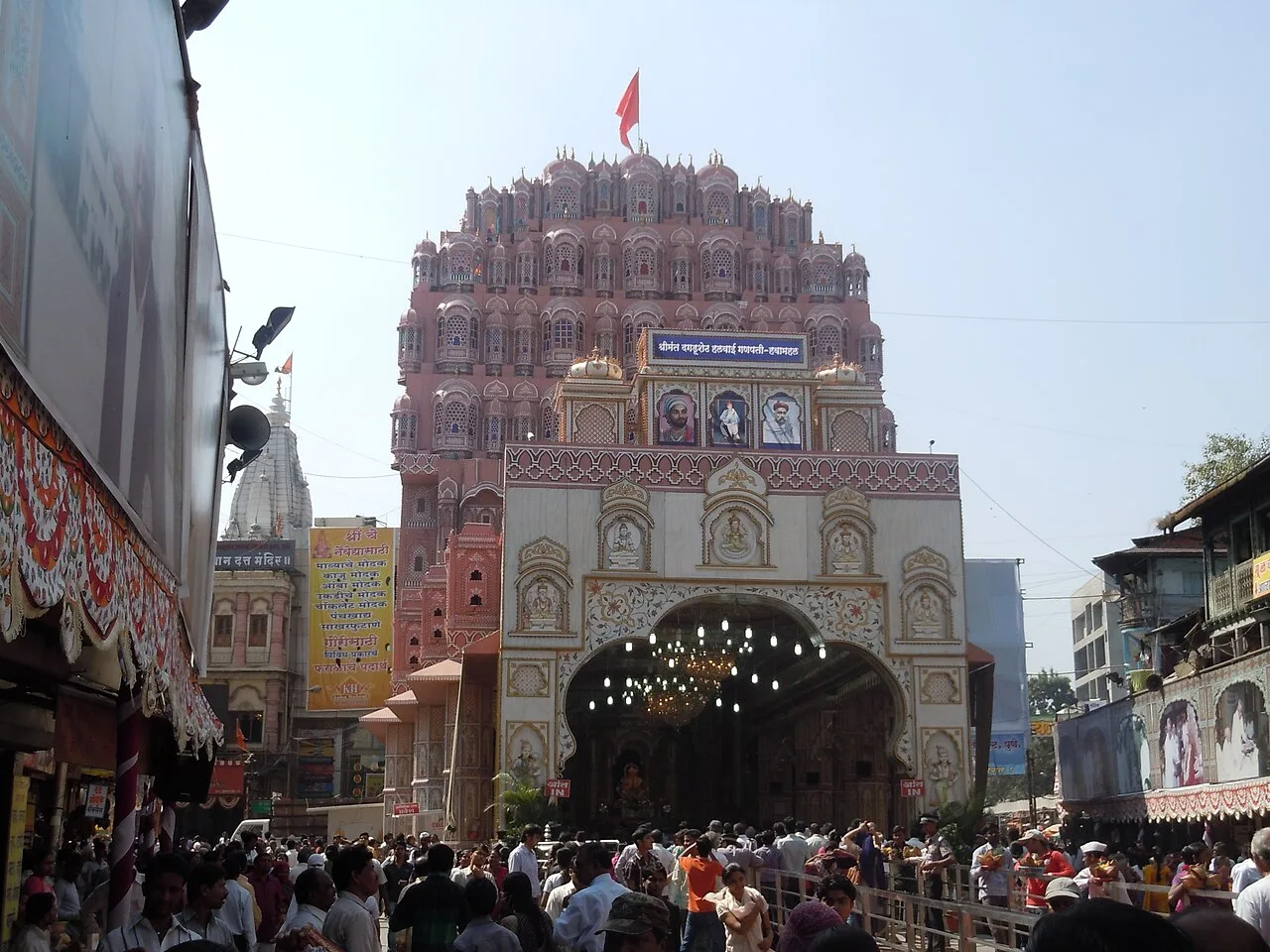
Dagadusheth Halwai Ganapati Temple
In Pune, Maharashtra, Dagadusheth Halwai Ganapati Temple honours Ganesha and draws devotees throughout the year, especially for the annual ten-day public Ganeshotsav celebration.
Key facts · verified by Ghumoopedia editors
- Type of place
- Temple / pilgrimage site
- Best time to visit
- October to March; June to September for green monsoon landscapes on the Ghats (expect closures)
- Nearest railway station
- Pune Junction · about 5 km (straight line)
- Nearest airport
- Pune Airport · about 10 km (straight line)
- Verified
- 21 Nov 2026
Plan a trip from Dagadusheth Halwai Ganapati Temple — a day-by-day route through places nearby.
Dagadusheth Halwai Ganapati Temple is located in Pune, within Maharashtra’s Pune district. It is a place of worship for followers of Ganesha, also known as Ganapati. More than 100,000 devotees visit over the course of a year. Many devotees come during the annual Ganeshotsav, a public festival lasting ten days. The temple’s principal Ganesha idol has insurance cover worth ₹10 million (US$110,000). In 2026, the temple celebrated the 134th year of its Ganeshotsav. Visitors come throughout the year, with the festival providing a particular occasion to visit. Maharashtra spans Mumbai's Gothic and Art Deco skyline, the rock-cut cave temples of Ajanta, Ellora, Karla and Elephanta, the hill forts of Chhatrapati Shivaji Maharaj, the Konkan's sea forts and beaches, and the great pilgrimages of Pandharpur, Shirdi and the Jyotirlingas. The coast is hot and humid most of the year with very heavy monsoon rain from June to September; the Western Ghats hill stations are cool and misty in the monsoon and pleasant in winter; the Deccan and Vidarbha are dry, with harsh summers above 40°C in Nagpur and Chandrapur. The usual best time to visit is October to March; June to September for green monsoon landscapes on the Ghats (expect closures). Timings, fees and access arrangements must be confirmed locally. For official information, see Maharashtra Tourism at https://www.maharashtratourism.gov.in.
Why it matters
Dagadusheth Halwai Ganapati Temple is a prominent urban shrine to Ganesha in Pune and an important focus of worship for residents and visitors. The temple’s annual public Ganeshotsav draws particularly large crowds, reflecting Pune’s long-standing role in Maharashtra’s Ganesh festival traditions. The shrine is also associated with the growth of public Ganesh worship in the city. Its importance is principally religious and civic; no UNESCO designation or Archaeological Survey of India protection is established for this temple. The managing trust reports that more than one hundred thousand devotees visit in a year, with attendance increasing during the festival. For worshippers, it is both a place for darshan and a gathering point within Pune’s historic city area.
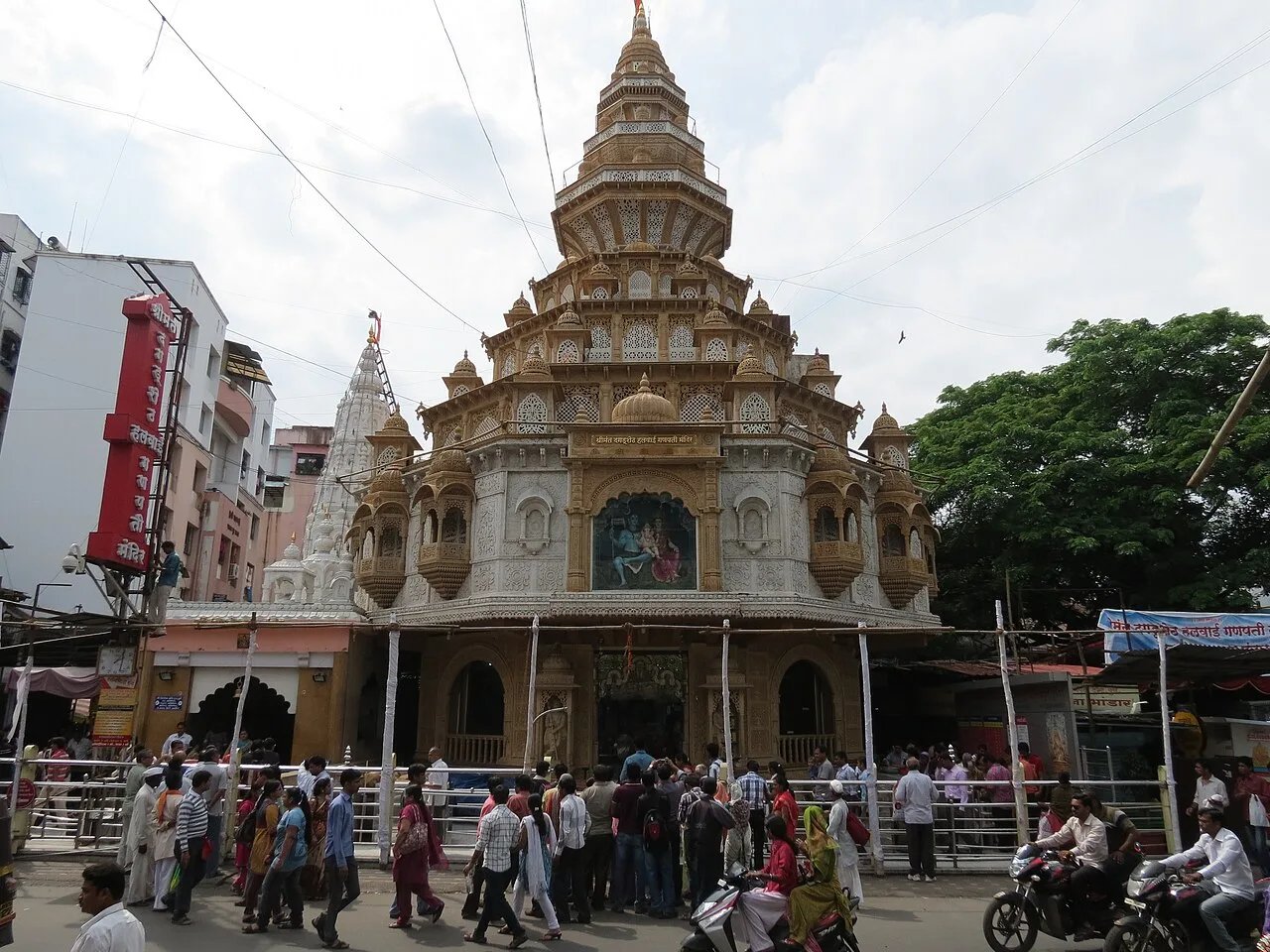
The temple’s origins are associated with Dagadusheth Halwai, a sweet-maker and businessman in Pune, and his wife, Lakshmibai. Accounts of the shrine’s beginnings commonly connect their devotion to a personal bereavement during an epidemic; details are also preserved through local tradition. The temple became closely linked with the public celebration of Ganeshotsav in Pune. The public festival gained wider prominence in the late nineteenth century, when Lokmanya Bal Gangadhar Tilak encouraged community celebrations as a means of bringing people together. Accounts associate Tilak with the temple and its festival, although the shrine’s own origins and the development of the wider public festival are distinct parts of the story. The temple has remained an active place of worship as Pune expanded around it. Its annual ten-day Ganeshotsav continues to bring devotees into the surrounding neighbourhood. The present-day temple and its arrangements reflect ongoing maintenance and management for worship and large gatherings; visitors should consult the temple authorities for reliable information about recent works or changes. The temple’s festival was described as marking its 134th year in 2026.
Origin stories & folklore
According to local tradition, Dagadusheth Halwai and Lakshmibai turned to devotion after the death of their son during an epidemic. Some accounts say that guidance from a spiritual teacher encouraged them to establish a Ganesha image as a focus for worship and consolation. Stories vary in their details, so these accounts are best understood as religious memory rather than independently verified history. The temple’s continuing reputation is also shaped by devotees’ beliefs that prayer to Ganesha brings blessings, removes obstacles and supports new beginnings. Visitors may encounter offerings and personal prayers expressing these hopes. Such beliefs are part of living Hindu practice and are not claims that can be measured or guaranteed.
Architecture & design
The temple stands within Pune’s dense, historic urban fabric, where streets and commercial activity surround an active place of worship. It is a functioning shrine rather than a large freestanding monument with extensive grounds. The focus is the sanctum containing the main Ganesha idol, with spaces for devotees to approach, offer prayers and take darshan. An interior hall and managed queue arrangements accommodate worshippers, especially during busy periods. The shrine’s appearance is strongly shaped by the richly decorated deity and devotional offerings; visitors should not assume that all ornamentation or finishes are historic. The temple has been maintained and adapted for continuing worship and large festival gatherings. Its urban setting can make the approach crowded, and the route through the temple may change according to attendance or religious events. Follow staff directions and posted signs rather than entering closed or worship-only areas.
Important objects & sculptures
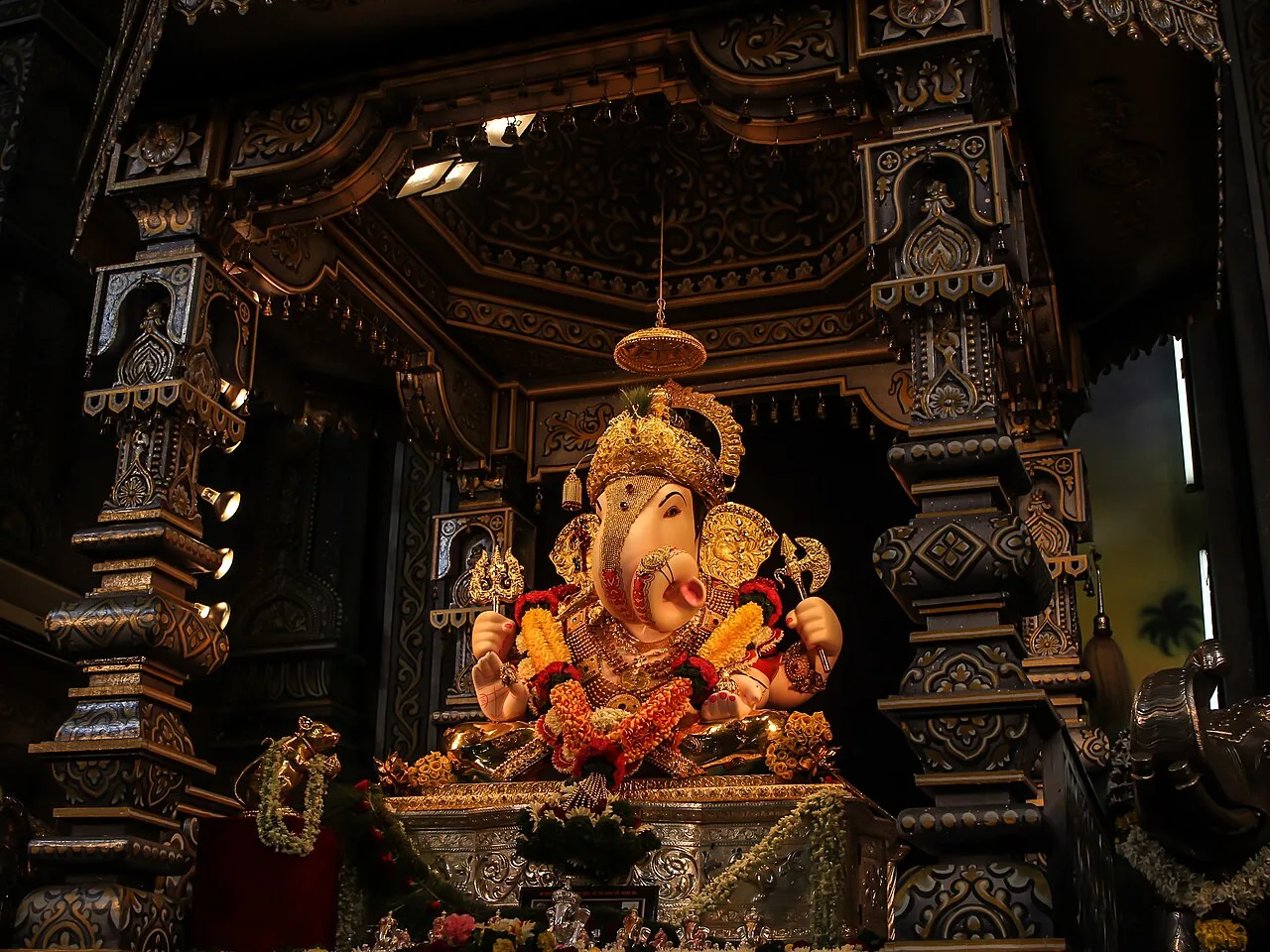
The principal object of devotion is the temple’s large Ganesha idol, the focus of darshan and daily worship. It is widely noted for its elaborate adornment, including gold ornaments, which may be arranged or changed for different occasions. The temple guide states that the main idol is insured; this does not make its decoration a museum display, and access is governed by worship and crowd arrangements. Visitors can observe offerings and ritual items from permitted areas, but should not touch the idol or objects used in worship. The shrine is an active religious space, not a collections museum, and there is no need to expect a formal gallery of inscriptions or archaeological exhibits. Ask temple staff before viewing any area beyond the public route.
Religious significance
The temple is dedicated to Ganesha, also known as Ganapati, a widely worshipped Hindu deity associated with wisdom, auspicious beginnings and the removal of obstacles. Devotees come for darshan, personal prayer and offerings, and the shrine hosts daily worship and aarti. Practices and access to particular parts of the temple may vary with the service, festival or crowd conditions. Many visitors pray before an important undertaking or seek blessings for family and work. The temple’s annual Ganeshotsav is a major expression of public devotion as well as a period of intensified worship. Visitors who are not participating in the rituals are welcome to observe respectfully where permitted, keeping clear of worshippers and following instructions from temple staff.
Visit Dagadusheth Halwai Ganapati Temple with time to observe daily prayers and rituals respectfully. Follow the posted rules on footwear, photography, phones, head covering and dress, and avoid interrupting worshippers; popular temples may have separate queues, dress codes or mobile-phone deposit counters. Ask caretakers which areas are open to visitors, and beware of unofficial 'guides' or agents offering quick darshan for a fee. A comfortable itinerary is one main visit in the morning, a local meal at midday and a short nearby stop before an afternoon return. Use the district list on this site to find other places in Pune, but check the route and its condition before combining stops. If a festival is on — such as Ganeshotsav, Gudi Padwa or the Ashadhi Wari to Pandharpur — roads and stays can be busy, and the experience can be unforgettable. Leave no litter: many sites are protected by the communities around them.
Suggested itineraries
Half day: Allow about 1–2 hours for the temple and darshan; have a nearby meal, then spend 1–2 hours at Shaniwar Wada or a nearby old-city market. Full day: Visit the temple in the morning; explore Shaniwar Wada and Lal Mahal; pause for lunch; visit Raja Dinkar Kelkar Museum or continue to Saras Baug, allowing time for travel between stops. Gentler option: Arrange a nearby drop-off, visit the temple at a quieter period confirmed locally, take seated breaks and choose just one nearby attraction; ask staff about the least demanding visitor route.
The temple is part of Pune’s living religious and neighbourhood culture, where worship takes place amid the activity of the old city. Marathi is widely used locally, and visitors may also hear Hindi and other languages. Devotees commonly arrive with offerings, join queues and observe aarti; customs and access can differ during crowded services. Ganeshotsav brings devotional music, public participation and festival decoration to the temple and surrounding streets. Dress is generally modest, and removing footwear before entering worship areas is customary where indicated. Ask before photographing people, and avoid treating worshippers or ceremonies as staged attractions. The temple is an active place of prayer, so quiet observation and cooperation with local directions are appreciated.
Festivals & events
The main annual event is Ganeshotsav, the ten-day public festival held around the Hindu month of Bhadrapada, usually in August or September. The temple attracts many devotees during this period, and queues, traffic restrictions and pressure on nearby streets can increase substantially. Ganesha-related observances such as Ganesh Jayanti may also bring special worship, though arrangements vary from year to year. Pune celebrates other festivals across the city, but they should not be assumed to involve special temple events. If visiting during a major observance, check current arrangements with the temple or local authorities, allow extra time and follow crowd-control instructions.
Local food in Maharashtra includes vada pav, misal pav, pav bhaji, poha, puran poli, modak at Ganesh Chaturthi, Kolhapuri mutton with tambda and pandhra rassa, Malvani fish curry and sol kadhi on the Konkan coast, and Nagpur oranges and saoji food in Vidarbha. Ask what is fresh that day; many small eateries cook a limited daily menu. Vegetarian travellers eat well across the state, and most towns also have fish and meat dishes. Remote sites may have no restaurant at all. Carry water and snacks, eat a proper breakfast before long drives, and ask your accommodation for a packed lunch if you are heading out early. If prasad or langar is offered, accept it according to local custom. Choose busy, clean places, drink sealed or filtered water, and carry your packaging back with you.
Shopping & local experiences
The central neighbourhood has small shops and market streets where visitors may find flowers, coconuts and other customary offerings, along with devotional images and everyday souvenirs. Tulshibaug is a nearby market area known for a broad mix of goods; compare quality and check whether an item is suitable to carry home. Pune’s food shops and eateries offer local snacks and sweets, though menus and availability vary. Buy offerings from legitimate vendors, avoid blocking the footpath and dispose of packaging responsibly. Ask before photographing vendors or their stalls.
October to March; June to September for green monsoon landscapes on the Ghats (expect closures)
The nearest principal railway station by straight-line distance is Pune Junction, roughly 5 km away. The nearest operating airport by straight-line distance is Pune Airport, roughly 10 km away. These figures are calculated from map coordinates — actual road distance is longer. Mumbai and Pune are the main rail and air gateways in the west, Chhatrapati Sambhajinagar (Aurangabad) for Ajanta and Ellora, Nagpur for Vidarbha and the tiger reserves, and the Konkan Railway serves the coast down to Sindhudurg. For the final leg, Maharashtra State Road Transport Corporation (MSRTC) buses, including Shivneri and Shivshahi coaches, private sleeper buses and shared jeeps and autos link district towns. A private taxi gives more flexibility for remote sites. When comparing train, bus and flight, count the complete door-to-door time: a flight saves the most time only if the onward road transfer is short, while an overnight train can save a hotel night. Book your return before you leave, because seats fill quickly on weekends, festivals and holidays. Current train numbers, timings, return services and fares are not listed here; check IRCTC and NTES for trains and the airline's own schedule for flights. No permit is needed to visit Maharashtra. Tiger safaris in Tadoba, Pench and Melghat must be booked in advance through the official online portals. Many hill forts are popular monsoon treks: since several accidents, some districts restrict access to waterfalls, forts and ghats during heavy rain — check current district orders before setting out. Ganeshotsav (August–September) brings very large crowds to Mumbai and Pune.
Confirm onward and return timings on IRCTC / NTES, the state bus operator or your airline before travel. A dash means current timings or fares have not been verified.
Getting around
The temple is in central Pune, where streets can be busy and parking limited. Auto-rickshaws and taxis can bring visitors close, but the final approach may be easier on foot if traffic is congested or roads are restricted. Pune’s city buses serve the wider central area; check the current route and stop locally. Pune Junction is the nearest principal railway station by straight-line distance, though the road journey is longer and varies with traffic. If driving, use lawful public parking where available rather than blocking narrow streets. During Ganeshotsav, expect diversions and consider walking from a suitable drop-off point.
Hours, tickets & permissions
Entry arrangements, worship access and any visitor restrictions can change for services, festivals, security or crowd management. Confirm current opening hours, entry conditions and any fees or donation arrangements directly with the temple’s managing authority before travelling; do not rely on old online listings. The temple may regulate queues and access to particular areas, and special arrangements can apply during Ganeshotsav. Follow posted directions on footwear, bags, phones and photography. Carry identification if requested by local security, but do not assume that a particular document is routinely required.
Facilities
Facilities inside the temple may be limited or managed according to crowd conditions. Toilets, drinking water, food shops, pharmacies and other everyday services are generally easier to find in the surrounding central Pune neighbourhood; check locally for their locations and current availability. Nearby streets have eateries and small shops, but congestion can make access slower during festivals. Parking is not guaranteed at the temple itself, and visitors should seek lawful public parking. ATMs and accommodation are available elsewhere in the city. Guides or helpers may offer assistance, but use temple staff for official information and avoid unofficial offers promising priority darshan.
Accessibility
The temple is in a dense city setting, and the approach may involve uneven or crowded pavements, traffic and a walk from a vehicle drop-off. Queues can require standing, particularly during festivals. The internal route, thresholds and access to worship areas may vary; wheelchair access, ramps or seating should not be assumed without checking directly with the temple. Strollers may be difficult to manoeuvre in tight crowds. Older visitors and people with limited mobility may find a quieter visit easier, and can ask staff about available assistance or a less demanding route. Shade and places to rest along the approach are not assured.
No permit is needed to visit Maharashtra. Tiger safaris in Tadoba, Pench and Melghat must be booked in advance through the official online portals. Many hill forts are popular monsoon treks: since several accidents, some districts restrict access to waterfalls, forts and ghats during heavy rain — check current district orders before setting out. Ganeshotsav (August–September) brings very large crowds to Mumbai and Pune. Carry a photo ID at all times and save the emergency number 112 and your accommodation's contact offline. Heat in summer and heavy rain in the monsoon are the main weather risks; carry water, avoid midday sun and allow extra time when roads flood. Watch your belongings in crowds and on public transport, and follow posted instructions.
Visitor rules
Follow signs and instructions from temple staff, remove footwear wherever directed and dress modestly for a place of worship. Keep voices low, do not interrupt prayers or enter restricted areas, and avoid touching the idol or ritual objects. Photography and mobile-phone use may be limited; ask before taking pictures and comply with any deposit or security arrangements. Do not litter, leave offerings outside designated places or bring prohibited items into the shrine. During festivals, cooperate with queue and crowd-control measures. Avoid paying unofficial agents who claim they can arrange quick darshan.
Photography
Photography rules can vary by area and occasion, so check signs and ask temple staff before taking pictures. Photography may be restricted near the sanctum or during worship; never assume that a phone camera is permitted. If allowed, a visit outside the busiest periods may offer a calmer view of the temple entrance and surrounding streets. Do not photograph worshippers, children or ritual moments without consent, and never obstruct queues for a picture. Drone use over a crowded religious site and central urban neighbourhood may be restricted or unsafe; do not fly one without the necessary permissions.
Choose a stay by the full journey to Dagadusheth Halwai Ganapati Temple, not just the district name. Mumbai, Pune, Nashik and Chhatrapati Sambhajinagar offer the widest choice; hill stations and Konkan beaches have resorts and family homestays, and MTDC resorts are reliable value. In summer, check air-conditioning; in the monsoon, check that the property is accessible if roads flood. Book in advance for weekends, festivals and the peak season (October to March; June to September for green monsoon landscapes on the Ghats (expect closures)). Confirm the exact location, meals included, check-in time and cancellation terms in writing. Avoid sending money to unverified contacts or touts at stations. Carry some cash, as card and digital payments can be unreliable in remote areas.
Shaniwar Wada, the historic fortification and palace complex, is a well-known nearby Pune attraction. Lal Mahal is another central city landmark associated with Chhatrapati Shivaji Maharaj’s early life. Visitors interested in art and material culture can consider Raja Dinkar Kelkar Museum, while Saras Baug offers a garden setting and a Ganapati shrine farther across the city. Tulshibaug is known for its busy market streets and temple area. These sites are in Pune, but travel times depend on traffic, road closures and walking conditions. Check current access arrangements, especially during Ganeshotsav, before combining several stops.
For couples, Dagadusheth Halwai Ganapati Temple rewards a slow pace: arrive early for soft light and fewer crowds, share a local meal and keep the evening free. Sunset on Marine Drive, a misty monsoon morning in Mahabaleshwar or a quiet Konkan beach makes the trip memorable. Public displays of affection can be frowned upon in conservative communities and at religious sites, so be discreet. Keep a buffer in your itinerary, because weather and road conditions can delay plans.
Q: How much time should I allow for a visit? A: Allow around one to two hours for the temple, with extra time during festivals or busy periods. Q: When is a comfortable season to visit? A: October to March is generally a pleasant period for Pune; festival dates can bring much larger crowds. Q: Is entry ticketed, and can anyone visit? A: Entry arrangements can change. Confirm current conditions with the temple authority and follow worship-area rules. Q: Is the temple suitable for children and elderly visitors? A: Families are welcome, but queues and crowded streets can be tiring. Consider a quieter visit and check mobility arrangements in advance. Q: Can I stay near the temple? A: Pune has accommodation across the city. Choose a location based on your transport needs and confirm access during festival periods.
Be the first to share photos, stories, advice or a helpful contact for Dagadusheth Halwai Ganapati Temple.
Loading…