
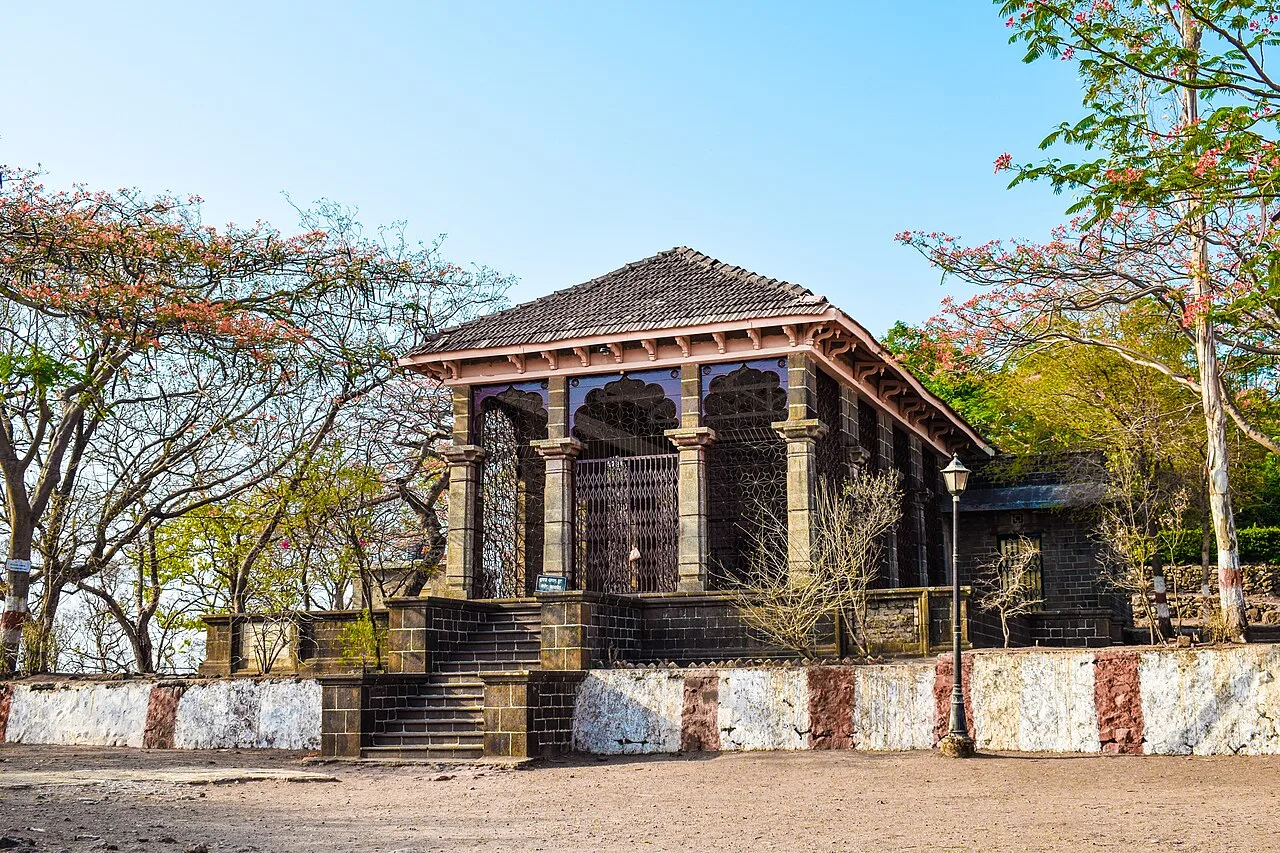
Shivneri Fort
Shivneri Fort, also called Killa, is an ancient stronghold near Junnar in Maharashtra’s Pune district. People visit for its historical connection as the birthplace of Chatrapati Shivaji Maharaj, founder of the Maratha Kingdom.
Key facts · verified by Ghumoopedia editors
- Type of place
- Heritage monument
- Best time to visit
- October to March; June to September for green monsoon landscapes on the Ghats (expect closures)
- Nearest railway station
- Neral (Matheran toy train) · about 60 km (straight line)
- Nearest airport
- Pune Airport · about 70 km (straight line)
- Verified
- 21 Nov 2026
Plan a trip from Shivneri Fort — a day-by-day route through places nearby.
Shivneri Fort, known by the alternative name Killa, is an ancient military stronghold in Pune district, Maharashtra, near Junnar. Its role as a fortification defines its historic character, while its location places it close to the town of Junnar. The site is closely linked with Chatrapati Shivaji Maharaj, who was born there and founded the Maratha Kingdom. This connection gives the fort importance beyond its identity as a military structure. Shivneri brings together these two aspects: an old defensive fortification and the birthplace of the founder of the Maratha Kingdom. Its location near Junnar, within Pune district, is another part of its identity. Maharashtra spans Mumbai's Gothic and Art Deco skyline, the rock-cut cave temples of Ajanta, Ellora, Karla and Elephanta, the hill forts of Chhatrapati Shivaji Maharaj, the Konkan's sea forts and beaches, and the great pilgrimages of Pandharpur, Shirdi and the Jyotirlingas. The coast is hot and humid most of the year with very heavy monsoon rain from June to September; the Western Ghats hill stations are cool and misty in the monsoon and pleasant in winter; the Deccan and Vidarbha are dry, with harsh summers above 40°C in Nagpur and Chandrapur. The usual best time to visit is October to March; June to September for green monsoon landscapes on the Ghats (expect closures). Timings, fees and access arrangements must be confirmed locally. For official information, see Maharashtra Tourism at https://www.maharashtratourism.gov.in.
Why it matters
Shivneri Fort is a hill fort near Junnar in Pune district, Maharashtra, best known as the birthplace of Chhatrapati Shivaji Maharaj, founder of the Maratha kingdom. Its location above the historic town of Junnar also reflects the region’s long importance as a route through the Western Ghats. For Maharashtra, the fort is a major place of Maratha memory; locally, it is both a heritage landmark and a destination for visitors and pilgrims. Its identity is tied to the fort, the Shivai Devi temple and the birthplace memorial. This account does not assert a UNESCO inscription or a particular statutory protection category; visitors should check current conservation and access information with the relevant authorities.
Shivneri stands above Junnar, a settlement associated with old trade routes and archaeological remains. The fort’s early history is not fully documented in accessible accounts, and its present form reflects several periods of control and fortification rather than a single builder. It was part of the Deccan’s changing political landscape, passing through the hands of regional powers, including the Bahmani and Ahmadnagar Sultanates. The Ahmadnagar Nizam Shahi period is especially relevant to Shivaji’s family history: his father, Shahaji Bhonsle, served the Nizam Shahi state, and Jijabai was at Shivneri when Shivaji was born there, traditionally dated to 1630. The fort’s strong position and water arrangements made it a defensible stronghold. In the seventeenth century, control of forts across the Deccan shifted repeatedly among the Marathas, Mughals and other powers; Shivneri did not remain the centre of Shivaji’s expanding state. It later came under British control during the wider conquest of Maratha territories in the early nineteenth century. Today, the fort is visited as a historic site and birthplace memorial. Conservation and visitor arrangements may change, so current management details should be checked locally.
Origin stories & folklore
According to local tradition, Jijabai prayed to the goddess Shivai for a child while staying at Shivneri. The child born there was named Shivaji in honour of the goddess, and the fort’s name is also commonly connected with Shivai Devi. The story is central to the fort’s identity, though it is best understood as a devotional tradition rather than a claim that can be independently verified in every detail. Visitors can see the Shivai Devi temple as part of a visit to the hill. The birthplace memorial and surrounding fort landscape are likewise associated with stories of Shivaji’s childhood and Jijabai’s influence. Local guides may share versions that vary in detail.
Architecture & design
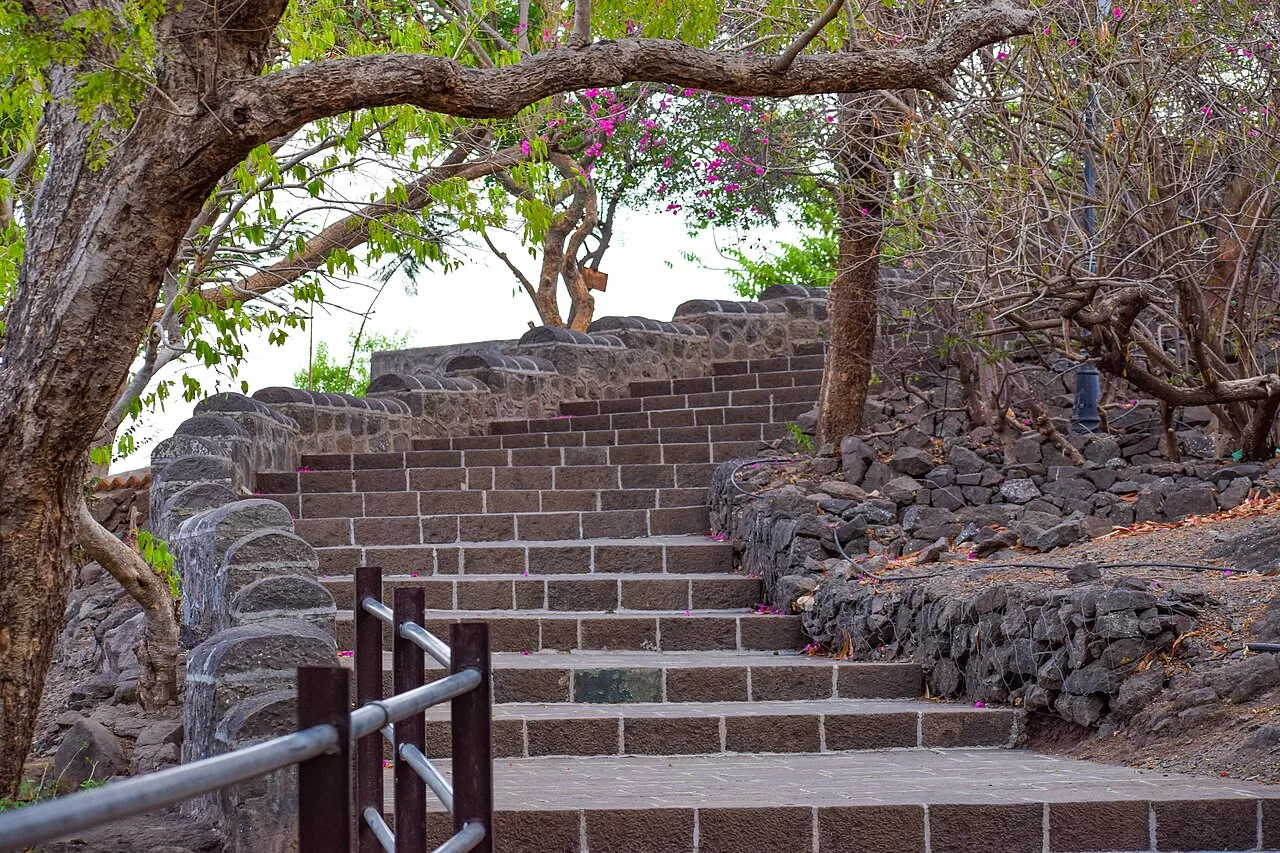
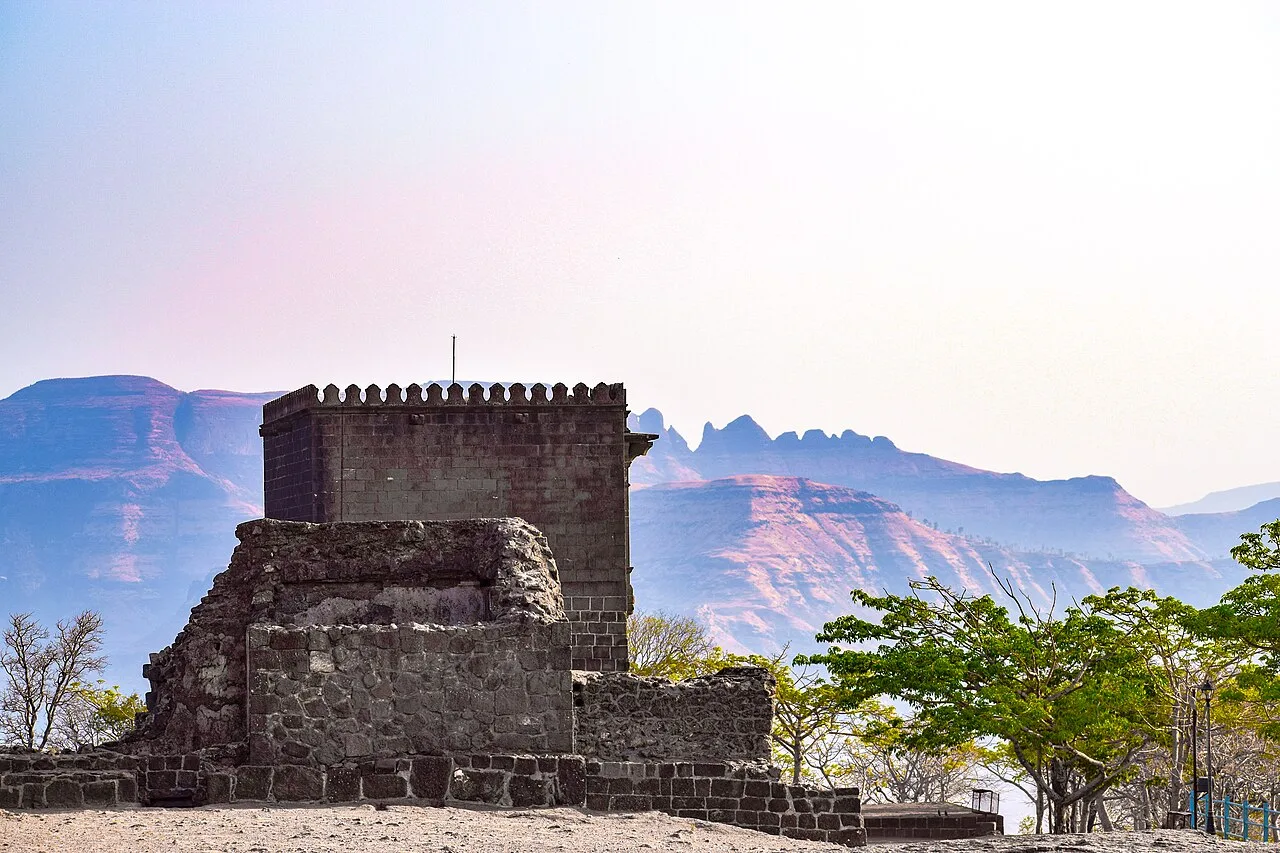
Shivneri occupies a steep, roughly triangular hill above Junnar. Its defensive layout uses the natural slopes as barriers, with stone fortifications and a long approach that passes through a sequence of gateways. The gates, commonly described as seven in number, made entry difficult and helped control movement into the fort; names and descriptions may vary between accounts and on-site interpretation. Within the enclosure are remains and structures associated with the fort’s military and residential use, including water-storage features. The Ganga-Jamuna water tanks are notable examples of the importance of storing water on a hilltop stronghold. Visitors also encounter the Shivai Devi temple and the birthplace memorial, which has become a focus of remembrance. The climb follows stone steps and uneven paths, and the fort’s walls and gateways are integrated with the rugged terrain rather than arranged as a formal palace complex. Weathering, repairs and later memorial works contribute to the site’s present appearance.
Important objects & sculptures
Look for the Shivai Devi temple and its devotional image, which connect the fort to the local tradition about Jijabai and Shivaji’s name. The birthplace memorial, including the figures of Jijabai and the young Shivaji, is another prominent focus for visitors; treat it as a commemorative display rather than an untouched historic interior. The Ganga-Jamuna tanks are worth observing for their practical role in storing water within a hill fort. Gateways, dressed stonework and surviving sections of the defensive walls also offer clues to how entry and movement were controlled. Interpretation boards, where present, can help identify features. Do not assume that every visible stone or structure has been dated or formally identified; on-site explanations and published accounts may differ.
Explore Shivneri Fort slowly and read the interpretation boards, use the official audio guide where available or hire an authorised guide to understand its history. Hill forts involve steep climbs on uneven stone steps; start early, carry water and descend well before dark. Early morning gives softer light, cooler air and smaller crowds. A comfortable itinerary is one main visit in the morning, a local meal at midday and a short nearby stop before an afternoon return. Use the district list on this site to find other places in Pune, but check the route and its condition before combining stops. If a festival is on — such as Ganeshotsav, Gudi Padwa or the Ashadhi Wari to Pandharpur — roads and stays can be busy, and the experience can be unforgettable. Leave no litter: many sites are protected by the communities around them.
Suggested itineraries
Half day: Reach the fort early, allow about 2–3 hours for the climb and main features, then visit the Shivai Devi temple and birthplace memorial before returning to Junnar. Full day: Spend about 3–4 hours exploring Shivneri at an unhurried pace, have a local meal in Junnar, then visit Lenyadri caves or another nearby stop if road and weather conditions allow. Gentler option: View the fort from its lower approach, visit accessible areas only, and spend time in Junnar; avoid the full ascent if steps or slopes are unsuitable.
Shivneri is a place of historical remembrance as well as a trekking destination. Visitors often come to honour Chhatrapati Shivaji Maharaj, while worshippers visit the Shivai Devi temple. Marathi is the principal language of the surrounding Junnar area; Hindi and English may also be understood by some guides and tourism workers. Regional food and everyday customs are those of rural Maharashtra, and respectful conduct at the temple and memorial is expected. Shivaji’s legacy is expressed through public commemorations, local storytelling and educational visits. Walking groups, families and school parties share the approach, so keeping pathways clear and taking litter away helps preserve the site and the experience for others.
Festivals & events
Shivaji Jayanti, celebrated in February, is an important occasion for commemorating Shivaji Maharaj and may bring increased visitor numbers to Shivneri and Junnar. Celebrations and observances can vary by year and organiser; confirm locally whether events are planned at the fort. Devotees also visit the Shivai Devi temple, with activity shaped by the Hindu festival calendar. Ganeshotsav, generally observed in late summer or early autumn, is prominent across Maharashtra and can affect travel in the wider region, though it is not necessarily a fort-specific event. During major observances, expect busier roads, longer waits and more demand for local services; leave extra time and follow event or site instructions.
Local food in Maharashtra includes vada pav, misal pav, pav bhaji, poha, puran poli, modak at Ganesh Chaturthi, Kolhapuri mutton with tambda and pandhra rassa, Malvani fish curry and sol kadhi on the Konkan coast, and Nagpur oranges and saoji food in Vidarbha. Ask what is fresh that day; many small eateries cook a limited daily menu. Vegetarian travellers eat well across the state, and most towns also have fish and meat dishes. Remote sites may have no restaurant at all. Carry water and snacks, eat a proper breakfast before long drives, and ask your accommodation for a packed lunch if you are heading out early. Try a home-cooked or local thali meal when you can — it is often the best food on the route. Choose busy, clean places, drink sealed or filtered water, and carry your packaging back with you.
Shopping & local experiences
Junnar’s local markets are the most practical place to look for everyday goods, seasonal produce and simple refreshments before or after the climb. Small stalls near visitor approaches may sell snacks or devotional items, but their stock is not guaranteed. Ask locally about regional foods and seasonal produce rather than expecting a dedicated souvenir market. Shivaji-themed keepsakes may be available, but check their provenance and avoid buying objects presented as historic artefacts. For a low-impact visit, choose locally made goods where identifiable, carry reusable water containers and avoid leaving packaging at the fort.
October to March; June to September for green monsoon landscapes on the Ghats (expect closures)
The nearest principal railway station by straight-line distance is Neral (Matheran toy train), roughly 60 km away. The nearest operating airport by straight-line distance is Pune Airport, roughly 70 km away. These figures are calculated from map coordinates — actual road distance is longer. Mumbai and Pune are the main rail and air gateways in the west, Chhatrapati Sambhajinagar (Aurangabad) for Ajanta and Ellora, Nagpur for Vidarbha and the tiger reserves, and the Konkan Railway serves the coast down to Sindhudurg. For the final leg, Maharashtra State Road Transport Corporation (MSRTC) buses, including Shivneri and Shivshahi coaches, private sleeper buses and shared jeeps and autos link district towns. A private taxi gives more flexibility for remote sites. When comparing train, bus and flight, count the complete door-to-door time: a flight saves the most time only if the onward road transfer is short, while an overnight train can save a hotel night. Book your return before you leave, because seats fill quickly on weekends, festivals and holidays. Current train numbers, timings, return services and fares are not listed here; check IRCTC and NTES for trains and the airline's own schedule for flights. No permit is needed to visit Maharashtra. Tiger safaris in Tadoba, Pench and Melghat must be booked in advance through the official online portals. Many hill forts are popular monsoon treks: since several accidents, some districts restrict access to waterfalls, forts and ghats during heavy rain — check current district orders before setting out. Ganeshotsav (August–September) brings very large crowds to Mumbai and Pune.
Confirm onward and return timings on IRCTC / NTES, the state bus operator or your airline before travel. A dash means current timings or fares have not been verified.
Getting around
Junnar is the nearest town for local services and onward travel to the fort. From town, visitors commonly use a private taxi, hired vehicle or local auto-rickshaw for the road journey to the fort’s approach; availability can vary, so arrange the return trip in advance when practical. Local buses may serve parts of the area, but they may not take visitors directly to the entrance. Parking is generally sought near the approach, though space and access conditions should be checked locally. The final exploration is on foot, with a steep climb through gateways and uneven paths. There is no need for boats or a special internal vehicle route.
Hours, tickets & permissions
Entry arrangements can depend on the managing authority, conservation work, weather and local conditions. Tickets, permissions, photography rules or restrictions on particular areas may apply, and requirements can change. Carry identification if requested by the authority, follow notices at the entrance and do not cross barriers or enter closed structures. Dress respectfully, especially when visiting the temple, and ask before photographing worshippers or ceremonies. Confirm current opening arrangements and any fees with the managing authority or a reliable local source before setting out; do not rely on old listings.
Facilities
Facilities on the hill may be basic and can vary with season and visitor activity. Toilets, drinking water, refreshments and small stalls may be available around the approach or in Junnar, but do not assume that all are open or stocked. Carry water and snacks, especially if walking the full route. Parking arrangements and authorised guide availability should be checked locally. Junnar has more options for food and everyday services than the fort itself; ATMs and medical assistance are more dependable in town than on the hill. Take rubbish back with you and use designated facilities.
Accessibility
The route into Shivneri involves a substantial uphill walk, steep sections, stone steps and uneven surfaces. Some paths may be exposed to sun or become slippery in wet weather, and shade can be limited. The full climb is not generally suitable for wheelchair users or most strollers, and there should be no assumption of ramps, lifts or step-free access. Older visitors and anyone with limited balance, joint pain or heart or breathing concerns should assess the route carefully and consider stopping at a lower point. Start with adequate water, wear secure footwear and avoid pushing on if conditions or fatigue make the descent unsafe.
No permit is needed to visit Maharashtra. Tiger safaris in Tadoba, Pench and Melghat must be booked in advance through the official online portals. Many hill forts are popular monsoon treks: since several accidents, some districts restrict access to waterfalls, forts and ghats during heavy rain — check current district orders before setting out. Ganeshotsav (August–September) brings very large crowds to Mumbai and Pune. Carry a photo ID at all times and save the emergency number 112 and your accommodation's contact offline. Heat in summer and heavy rain in the monsoon are the main weather risks; carry water, avoid midday sun and allow extra time when roads flood. On forts, keep away from unfenced edges, especially in mist or rain, and do not climb after dark.
Photography
Early morning usually offers cooler conditions, softer light and fewer people; the fort walls, gateways and views over Junnar provide varied compositions. Photography is commonly practised in outdoor areas, but follow posted restrictions and ask before photographing worshippers, ceremonies or local residents. Avoid blocking narrow steps while taking pictures. Drone use may be restricted by aviation rules, security requirements or site management; obtain all required permissions and do not fly simply because the area appears open. Protect the structures and avoid climbing on fragile walls for a viewpoint.
Choose a stay by the full journey to Shivneri Fort, not just the district name. Mumbai, Pune, Nashik and Chhatrapati Sambhajinagar offer the widest choice; hill stations and Konkan beaches have resorts and family homestays, and MTDC resorts are reliable value. In summer, check air-conditioning; in the monsoon, check that the property is accessible if roads flood. Book in advance for weekends, festivals and the peak season (October to March; June to September for green monsoon landscapes on the Ghats (expect closures)). Confirm the exact location, meals included, check-in time and cancellation terms in writing. Avoid sending money to unverified contacts or touts at stations. Carry some cash, as card and digital payments can be unreliable in remote areas.
Lenyadri Caves, near Junnar, are a group of Buddhist rock-cut caves and an important Ashtavinayak pilgrimage site; they make a useful nearby combination for visitors with time and suitable mobility. The Manmodi Caves, also in the Junnar area, offer further rock-cut heritage to explore. Naneghat is a historic mountain pass known for its ancient route and inscriptions, though access and road conditions should be checked before planning a visit. Malshej Ghat is another regional landscape stop, especially scenic in the monsoon, when weather can also make travel difficult. Choose one or two additions rather than trying to cover every site in a single day.
For couples, Shivneri Fort rewards a slow pace: arrive early for soft light and fewer crowds, share a local meal and keep the evening free. Sunset on Marine Drive, a misty monsoon morning in Mahabaleshwar or a quiet Konkan beach makes the trip memorable. Public displays of affection can be frowned upon in conservative communities and at religious sites, so be discreet. Keep a buffer in your itinerary, because weather and road conditions can delay plans.
Q: How much time should I allow for Shivneri Fort? A: Allow several hours for the climb and main features; add time for rests, a guide or nearby sites. Q: When is a good season to visit? A: October to March is generally comfortable. The monsoon can bring green scenery but also slippery paths and travel disruption. Q: Is entry free, and do I need permission? A: Entry rules and any fees can change. Check current requirements with the managing authority before visiting. Q: Can children or elderly visitors climb the fort? A: Children used to walking may manage with close supervision. The steep, uneven climb can be difficult for older visitors or anyone with limited mobility. Q: Where can I stay nearby? A: Junnar is the most convenient base for local services and accommodation; confirm availability in advance, especially during busy events.
Be the first to share photos, stories, advice or a helpful contact for Shivneri Fort.
Loading…