
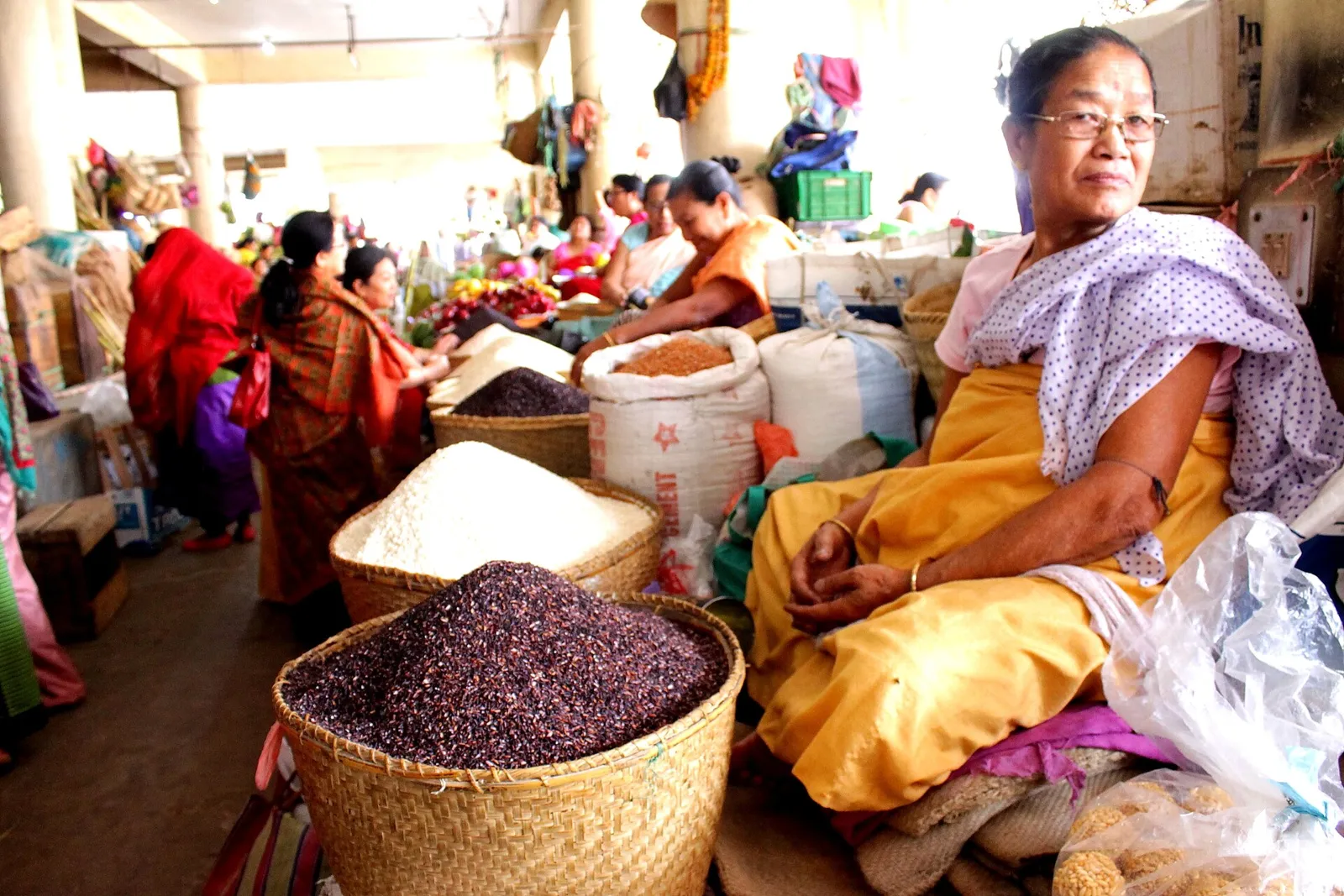
Ima Market
In central Imphal, Ima Market is a marketplace run exclusively by women, also known as Nupi Keithel and Khwairamband Keithel. Visitors come to see its many sellers and wide selection of goods.
Key facts · verified by Ghumoopedia editors
- Type of place
- Food / craft destination
- Best time to visit
- October to March
- Nearest railway station
- Jiribam · about 80 km (straight line)
- Nearest airport
- Imphal International Airport · about 5 km (straight line)
- Verified
- 21 Nov 2026
Plan a trip from Ima Market — a day-by-day route through places nearby.
Located in Imphal West district, Manipur, the market is called Nupi Keithel, meaning Women's Market, and Khwairamband Keithel, meaning Khwairamband Market. Only women work as vendors here. Around 5,000–6,000 women sell goods, including vegetables, fruit, textiles, toys, fish, spices and utensils. The market brings together a varied selection of everyday products. Ima Market is a popular stop for tourists in Manipur and is known as Asia's largest market operated entirely by women. Visitors can explore its many sellers and the range of goods they offer. Manipur is known for Manipuri classical dance, the Meitei, Naga and Kuki-Zo communities, polo’s historic roots and the women-run Ima Keithel market. The Imphal valley has mild summers and cool winters; hill districts are colder. The monsoon brings heavy rain from June to September. The usual best time to visit is October to March. Days are short in Northeast India: the sun can set before 5 pm in winter, so plan to reach and leave Ima Market in daylight. Timings, fees and access arrangements must be confirmed locally. For official information, see Manipur Tourism at https://manipurtourism.gov.in.
Why it matters
Ima Market, also called Nupi Keithel or Khwairamband Keithel, is a central market in Imphal West and an important part of everyday life in Manipur’s capital. Its distinctive feature is that its stalls are run by women; the existing guide estimates around 5,000–6,000 women vendors. People come to buy and sell food, household goods, textiles and other items, while visitors can observe a busy local marketplace. The market is widely described as one of Asia’s largest women-run markets, though this distinction is not presented here as an official ranking. No UNESCO or Archaeological Survey of India designation is confirmed for the market; check with Manipur Tourism for current heritage information.
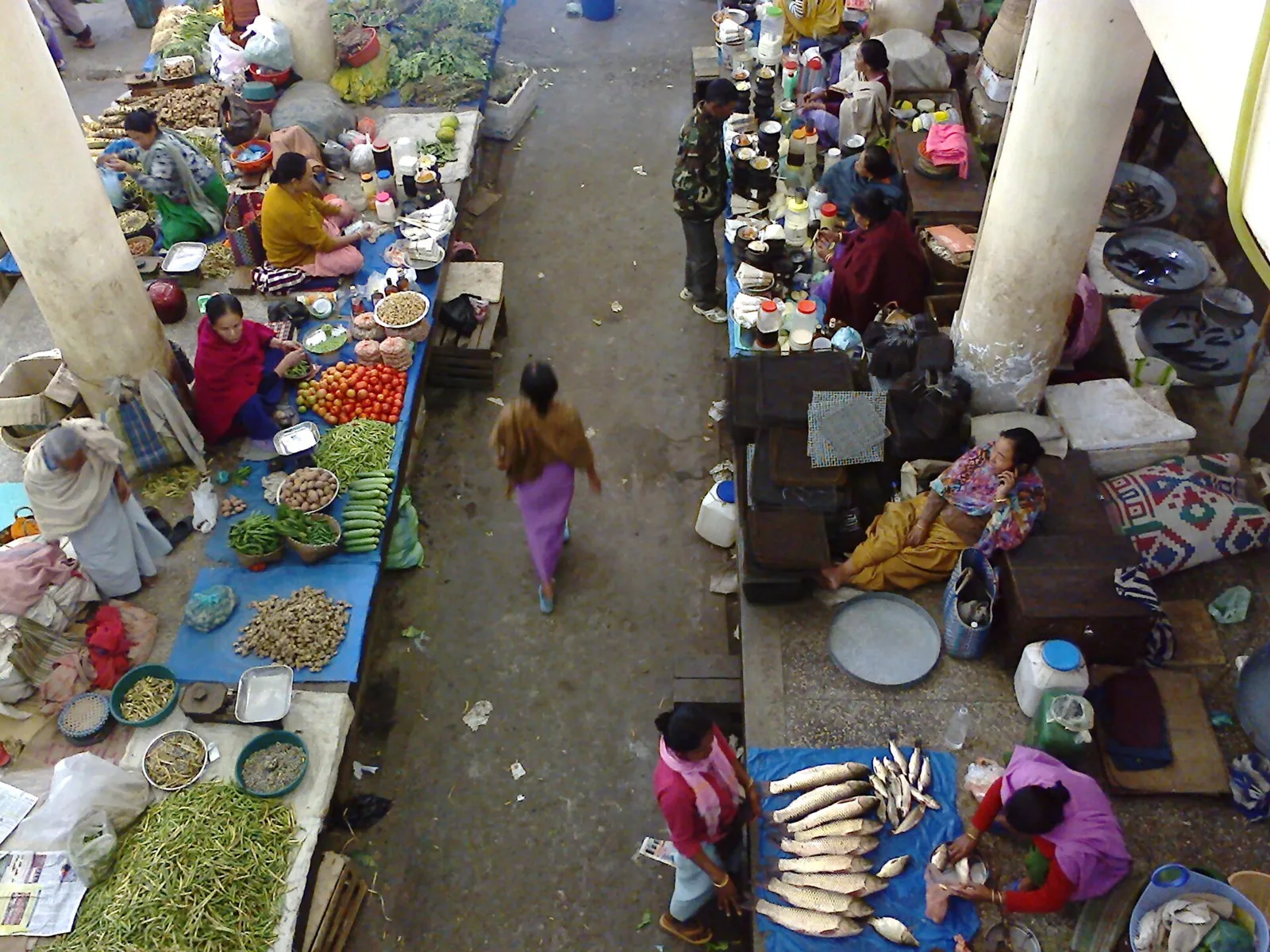
The market’s origins are often described as several centuries old. Local and historical accounts commonly connect the growth of women’s trading in the Imphal valley with periods when men were required to undertake military or other state service, leaving women to manage household livelihoods and commerce. This context helps explain the enduring role of women traders, but it does not establish a single founding date or builder for the market. Over time, trading in the centre of Imphal developed into the market known by the names Nupi Keithel and Khwairamband Keithel. It has adapted to the changing city and to the needs of vendors and customers, with market activity now spread across substantial built market spaces as well as the surrounding streets. The market remains a place for daily trade rather than only a historic display: vendors sell produce, fish, textiles, spices, utensils and other goods. Available general accounts do not establish one definitive construction or restoration chronology, so specific dates for buildings or rebuilding should be checked with local authorities rather than assumed.
Use Ima Market as a base to understand local life: walk through the market area, visit community-run attractions and ask your host about nearby viewpoints and short excursions. Always ask before photographing people, homes or ceremonies. A comfortable itinerary is one main visit in the morning, a local meal at midday and a short nearby stop before an afternoon return. Use the district list on this site to find other places in Imphal West, but check the actual road route and its condition before combining stops. If a festival is on, local roads and stays can be busy — and the experience can be unforgettable. Leave no litter: many sites in Manipur are protected by the communities who own them.
Suggested itineraries
Half day: Spend 1–2 hours exploring the market at an unhurried pace, take a meal nearby, then allow 1–2 hours for Kangla Fort or another nearby city attraction. Full day: Visit Ima Market for 2–3 hours, pause for a local lunch, then spend 2–3 hours at Kangla Fort and the Manipur State Museum; leave time for a relaxed city meal. Gentler option: Choose one market section, take seated breaks, and use a taxi between the market and one nearby attraction.
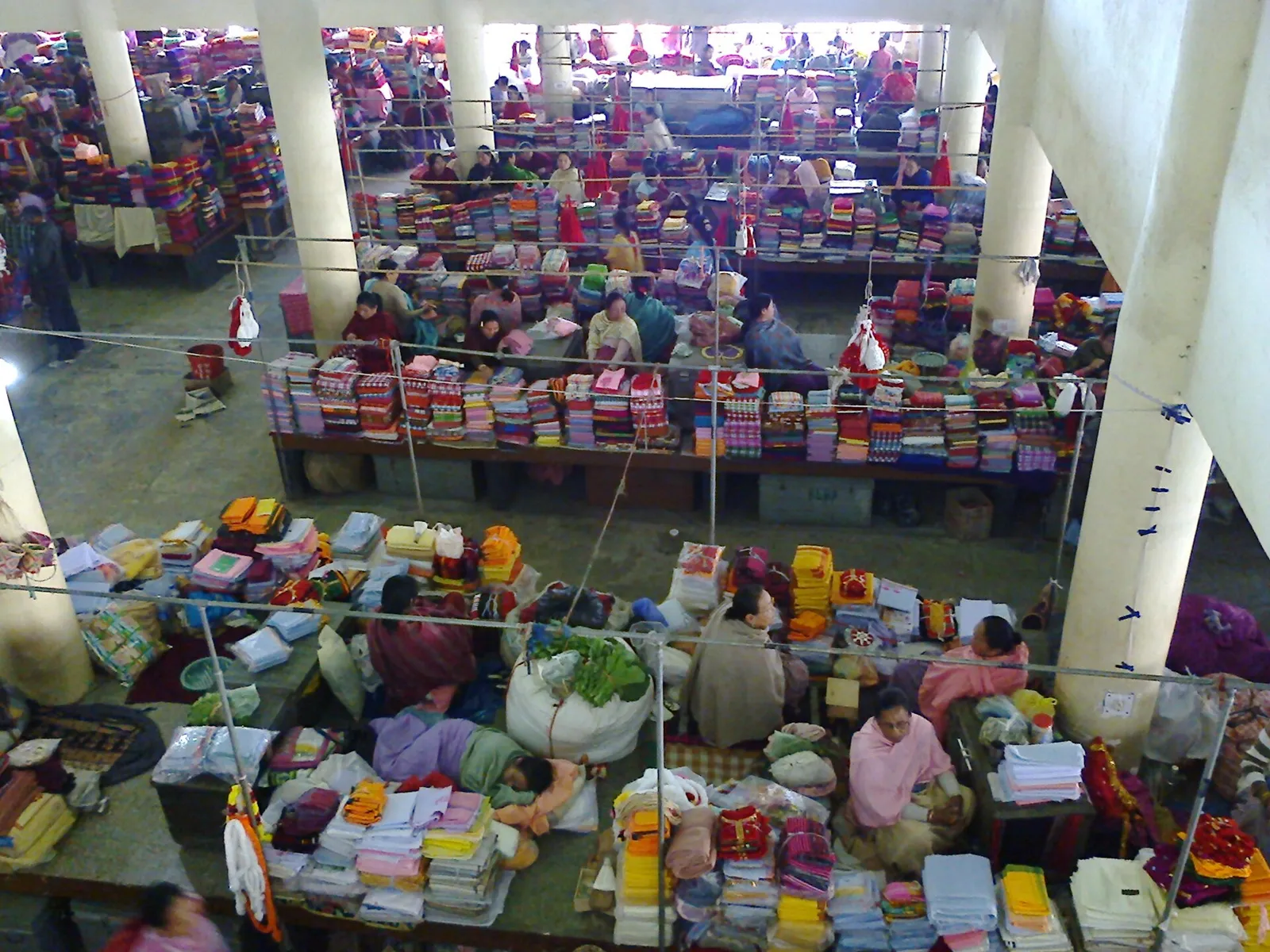
The market is a living setting for everyday exchange, with vendors and customers negotiating, sharing news and buying ingredients and household goods. Meiteilon, also known as Manipuri, is widely spoken in the valley; visitors may also hear other languages used by residents and traders. Products reflect local foodways and craft traditions, including regional vegetables, fish, spices and woven textiles. The market is part of a wider Manipuri cultural landscape known for classical dance, music and distinctive clothing, but performances are not a regular feature of the market itself. Ask before photographing conversations, individuals or private activities, and follow any instructions from vendors.
Local communities
Women vendors are central to Ima Market’s identity and livelihoods, and the market includes traders selling food, textiles, household goods and other products. Many vendors are from the Meitei community, which is prominent in the Imphal valley; the city and state are also home to Naga, Kuki-Zo and other communities. The market serves residents as well as visitors, connecting producers, sellers and customers in the urban economy. Avoid treating vendors as attractions: ask before taking portraits, respect a refusal, and make purchases through ordinary, respectful interaction. Do not assume that every stallholder or customer shares the same language, background or experience.
Festivals & events
Imphal’s seasonal festivals can make the city livelier and busier, although they are not necessarily held inside Ima Market. Yaoshang, usually celebrated around February or March, is a major festival in Manipur. Ningol Chakouba, generally in autumn, is associated with family visits and meals. Lai Haraoba observances take place at different times depending on local tradition. The Sangai Festival is a state-level cultural event usually held in November, with activities at designated venues. During festival periods, traffic, accommodation demand and crowds may increase; check local announcements before planning a visit.
Local food in Manipur includes eromba (fermented fish and vegetable mash), singju salad, kangshoi stew, and chak-hao kheer made with Manipur’s black rice. Ask what is fresh that day; many small eateries cook a limited daily menu. Pork, beef, fish and fermented ingredients are common in tribal cuisines, so vegetarian travellers should explain their needs clearly — rice, dal, vegetables and eggs are usually possible in towns. Remote sites may have no restaurant at all. Carry water and snacks, eat a proper breakfast before long drives, and ask your accommodation for a packed lunch if you are heading out early. Try a homestay-cooked meal when you can — it is often the best food in the hills. Choose busy, clean places and carry your packaging back to town.
Shopping & local experiences
Stalls sell everyday goods including vegetables, fruits, fish, spices, utensils and textiles. Look for locally used ingredients and woven items, and ask vendors about the material, origin and care of a craft or textile before buying. The market is primarily a place of trade, so shop respectfully and avoid handling goods without permission. Food stalls and nearby eateries offer a chance to try local dishes; ask about ingredients if you have dietary needs. Carry purchases in reusable bags where practical, and keep food and packaging litter out of the market.
October to March
The nearest principal railway station by straight-line distance is Jiribam, roughly 80 km away. The nearest operating airport by straight-line distance is Imphal International Airport, roughly 5 km away. These figures are calculated from map coordinates — hill roads in Manipur wind a lot, so actual road distance and travel time are usually much longer. Guwahati is the main rail and air hub for the region, and most long-distance journeys connect through it. For the final leg, Manipur State Transport and shared taxis from Imphal link district towns; shared taxis usually leave early in the morning and depart only when full. A private taxi gives more flexibility for remote sites. When comparing train, bus and flight, count the complete door-to-door time: a flight saves the most time only if the onward road transfer is short, while an overnight train to Guwahati plus a road journey can save a hotel night. Book your return before you leave, because seats on shared vehicles and the few daily flights fill quickly. Current train numbers, timings, return services and fares are not listed here; check IRCTC and NTES for trains and the airline’s own schedule for flights. Indian visitors who are not residents of Manipur need an Inner Line Permit, applied for through Manipur’s official ILP system. Foreign nationals should check the current Protected Area Permit and registration rules before travel.
Confirm onward and return timings on IRCTC / NTES, the state bus operator or your airline before travel. A dash means current timings or fares have not been verified.
Getting around
The market is in central Imphal and can usually be reached by auto-rickshaw or taxi from other parts of the city. Local buses may serve routes through the urban area; confirm the stop and service locally. Walking is practical for nearby sights, but streets and market approaches can be busy, so allow time to cross roads and keep belongings secure. Parking may be limited near the market, especially when trade is busy; ask your driver about a suitable drop-off and pick-up point. For travel beyond Imphal, arrange onward transport separately and check road conditions.
Hours, tickets & permissions
Ima Market is a working public marketplace, and access may depend on which sections are trading, local management decisions or special events. Do not assume that every stall or part of the complex is open whenever you arrive. General entry requirements, photography rules and any event-specific restrictions can change; confirm current arrangements with market management or local authorities before travelling. Ask locally about any fees or rules that apply to a particular event or facility, rather than relying on outdated information.
Facilities
The market and surrounding commercial area usually have food stalls and small shops, with a range of places to eat nearby. Toilets, drinking-water access, seating and accessible facilities may vary by section, so check locally before relying on them. ATMs and other city services are available in Imphal, but may not be inside the market complex. Parking can be difficult close to busy entrances. There may not be a dedicated visitor-guide service on site; a local guide or your accommodation can help with orientation. Carry water and keep rubbish with you until you find a bin.
Accessibility
Expect a busy urban environment, with crowds, narrow aisles and changing walking conditions between market sections. Some areas may be covered, but shade, seating and clear routes are not assured throughout. Floors and approaches can be uneven or obstructed by people and goods. Wheelchair and stroller access may therefore be difficult, and facilities such as ramps or accessible toilets should not be assumed. Older visitors or anyone with limited mobility may prefer a short visit, quieter conditions and assistance from a companion. Arrange a nearby drop-off and take breaks as needed.
Indian visitors who are not residents of Manipur need an Inner Line Permit, applied for through Manipur’s official ILP system. Foreign nationals should check the current Protected Area Permit and registration rules before travel. Carry a printed and digital copy of your permit and a photo ID at all times; checkpoints are common. Save the emergency number 112 and your accommodation’s contact offline. Heat, humidity and sudden downpours are the main weather risks; carry water and rain protection. Respect community rules, private property and posted instructions. Avoid hill road travel after dark and during heavy rain, when landslides are more likely. Check official advisories for the region before travel, and follow local guidance if access changes.
Photography
Daylight is generally useful for seeing goods and market activity, but crowded aisles can make it difficult to find a clear view. There is no single designated viewpoint; photograph from public circulation areas without blocking vendors or customers. Ask permission before photographing people, especially close-up portraits, and respect refusals. Check locally before photographing inside particular sections or during events. Do not use a drone without confirming current aviation rules and any local restrictions; do not fly over crowds. Avoid photographing private activities or treating vendors’ work as a staged scene.
Choose a stay by the full journey to Ima Market, not just the district name. Main towns in Imphal West usually offer hotels, state tourism lodges and homestays with better transport, meals and medical access, while village homestays offer a closer connection to local life. In the plains and valleys, check fans or air-conditioning and mosquito nets in summer. Book in advance for weekends, festival dates and the peak season (October to March). Confirm the exact location, meals included, check-in time and cancellation terms in writing. Many homestays accept payment on arrival; avoid sending money to unverified contacts. Mobile network and digital payments can be unreliable in remote areas, so carry some cash.
Kangla Fort, a historic site in central Imphal, is a natural companion visit; check current visitor access locally. The Manipur State Museum offers context on the state’s history and cultural heritage. Shri Shri Govindajee Temple is another notable Imphal attraction; observe any visitor rules and customs there. These places can be combined with Ima Market as a city outing, but traffic and opening arrangements may affect the order. For other destinations farther from central Imphal, check the actual road route and conditions before adding them to the same day.
For couples, Ima Market rewards a slow pace: arrive early for soft light and fewer crowds, share a local meal and keep the evening free. Public displays of affection can be frowned upon in conservative communities and at religious sites, so be discreet. A homestay can make the trip memorable — confirm privacy, hot water and transport back. Keep a buffer day in your itinerary, because weather and road closures can delay plans in Manipur.
Q: How much time should I allow for Ima Market? A: Allow a couple of hours for a relaxed walk and browsing; add time for a meal or nearby attractions. Q: When is a good season to visit? A: October to March is generally a comfortable period in Imphal. The monsoon season can bring heavy rain. Q: Is there an entry ticket or permit? A: Confirm current entry arrangements with market management or local authorities; event-specific rules may differ. Q: Is it suitable for children and older visitors? A: Families can visit, but busy aisles and uneven or obstructed routes may be challenging. Keep children close and plan breaks. Q: Where can I stay nearby? A: Imphal has accommodation options. Choose a place based on your transport needs and confirm availability and location before booking.
Be the first to share photos, stories, advice or a helpful contact for Ima Market.
Loading…