
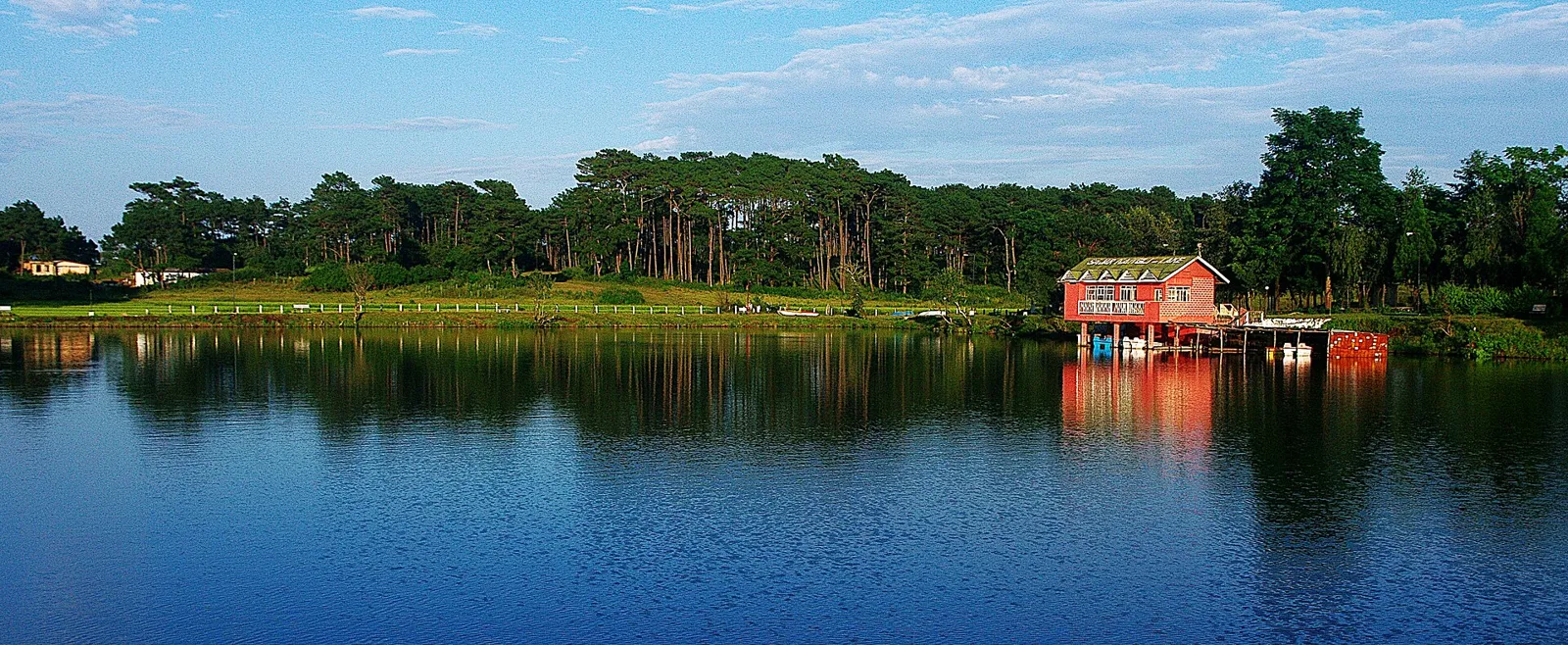
Thadlaskein Lake
Thadlaskein Lake, also called Pung Sajar Nangli, is a historic artificial lake in Meghalaya. Visitors can see the lake and hear the folktale of its creation by Sajar Nangli and his followers.
Key facts · verified by Ghumoopedia editors
- Type of place
- Natural attraction
- Best time to visit
- October to May; the monsoon is dramatic for waterfalls but roads and treks become slippery
- Nearest railway station
- Chaparmukh Junction · about 85 km (straight line)
- Nearest airport
- Shillong Airport (Umroi) · about 30 km (straight line)
- Verified
- 21 Nov 2026
Plan a trip from Thadlaskein Lake — a day-by-day route through places nearby.
Thadlaskein Lake lies in Meghalaya’s West Jaintia Hills district, beside Mukhla, a small village. National Highway 6 passes by the lake. This artificial waterbody is associated with local history and is also known as Pung Sajar Nangli. A folktale places the lake’s creation in the Middle Ages. It tells of Sajar Nangli, a young man, and his followers, who dug out the lake. The story offers a traditional account of how this man-made feature came into being. The Khasi, Jaintia and Garo communities follow matrilineal traditions, and community councils manage much of the land visitors pass through. Meghalaya is among the wettest places on earth: Sohra and Mawsynram receive extreme monsoon rainfall. Shillong is cool all year, and fog can close viewpoints at any season. The usual best time to visit is October to May; the monsoon is dramatic for waterfalls but roads and treks become slippery. Days are short in Northeast India: the sun can set before 5 pm in winter, so plan to reach and leave Thadlaskein Lake in daylight. Timings, fees and access arrangements must be confirmed locally. For official information, see Meghalaya Tourism at https://www.meghalayatourism.in.
Why it matters
Thadlaskein Lake is a locally important historic waterside destination in West Jaintia Hills, Meghalaya. It is also known as Pung Sajar Nangli. The lake is man-made, and its origin is associated with a story about Sajar Nangli and his followers. Its position beside National Highway 6 and near Mukhla makes it a familiar stop for people travelling through the district. The lake offers visitors a place to pause and learn about local tradition as well as enjoy the surrounding landscape.
Thadlaskein Lake is described as a man-made historical lake in West Jaintia Hills. According to the commonly repeated account, a young man named Sajar Nangli and his followers dug the lake. The story places the event in the middle ages, but this should be understood as traditional dating rather than a verified construction year. The lake is also called Pung Sajar Nangli, a name that preserves the association with the tale. Today it lies beside National Highway 6 near Mukhla and is visited as a local historical and natural attraction. For details about its history, upkeep and community management, ask locally and respect any guidance from the people responsible for the site.
Origin stories & folklore
According to local tradition, Thadlaskein Lake was dug by Sajar Nangli and his followers. The story is commonly placed in the middle ages, though no verified year is given here. The lake’s alternate name, Pung Sajar Nangli, keeps the young man’s name connected with the place. The account is an origin legend, not a confirmed historical record of the lake’s construction. Versions and details may differ among tellers, so visitors should receive local explanations respectfully and avoid presenting one version as definitive. The story gives the lake a human and historical dimension beyond its setting beside the highway.
Spend unhurried time at Thadlaskein Lake: walk the marked paths, use official viewpoints and ask locally whether a guide, entry ticket or permit is needed. Admire the water from safe points rather than climbing wet rocks or swimming in unknown currents. Wildlife sightings are never guaranteed — patience and quiet improve your chances. A comfortable itinerary is one main visit in the morning, a local meal at midday and a short nearby stop before an afternoon return. Use the district list on this site to find other places in West Jaintia Hills, but check the actual road route and its condition before combining stops. If a festival is on, local roads and stays can be busy — and the experience can be unforgettable. Leave no litter: many sites in Meghalaya are protected by the communities who own them.
Suggested itineraries
Half day: Arrive in daylight; spend 1–2 hours walking accessible paths and viewing the lake; take a relaxed break nearby before returning. Full day: Visit the lake in the morning; have a local meal; continue to Jowai or another confirmed nearby stop; return with enough daylight for the road journey. Gentler option: Arrange a vehicle drop-off near an accessible viewpoint, enjoy a short visit with rests, and skip uneven or wet paths.
The lake sits in a region shaped by Khasi-Jaintia, especially Pnar, cultural traditions. Khasi and Jaintia communities are known for matrilineal customs, though practices and family arrangements vary. Pnar and other local languages are part of everyday life, alongside Khasi, English and languages used for wider communication. Community ties, oral histories, music and dance remain important across the region. Visitors may encounter local customs during a village visit or festival, but the lake itself should not be assumed to host ceremonies. Ask before photographing people, homes or cultural activities, and follow local advice about access and behaviour.
Local communities
Pnar and other Jaintia communities are closely connected with the wider West Jaintia Hills landscape. The lake is near Mukhla, and community councils and local people have an important role in managing land in Meghalaya. Livelihoods in the district include farming, small businesses, transport and services for visitors, though work varies from place to place. The lake’s traditional story forms part of local heritage, but it should not be treated as a substitute for community perspectives. Be considerate on village roads and ask before entering land, taking photographs or collecting plants.
Festivals & events
The Jaintia Hills are known for Behdienkhlam, a major Pnar festival generally held during the monsoon season, usually in July, particularly around Jowai. It is a regional cultural event rather than a festival that visitors should assume takes place at Thadlaskein Lake. Other community observances and local gatherings may occur at different times of year. Festival periods can bring larger crowds, busy roads and greater demand for transport or accommodation in nearby towns. Confirm event arrangements locally, follow community guidance and do not enter restricted areas or photograph rituals without permission.
Local food in Meghalaya includes jadoh (rice cooked with meat), dohneiiong (pork with black sesame), tungrymbai (fermented soybean), pumaloi and Garo dishes such as kapa. Ask what is fresh that day; many small eateries cook a limited daily menu. Pork, beef, fish and fermented ingredients are common in tribal cuisines, so vegetarian travellers should explain their needs clearly — rice, dal, vegetables and eggs are usually possible in towns. Remote sites may have no restaurant at all. Carry water and snacks, eat a proper breakfast before long drives, and ask your accommodation for a packed lunch if you are heading out early. Try a homestay-cooked meal when you can — it is often the best food in the hills. Choose busy, clean places and carry your packaging back to town.
Shopping & local experiences
There may be few or no dedicated souvenir shops at the lake, so check locally rather than expecting a particular stall. In nearby towns, visitors can look for locally made textiles, woven goods and everyday crafts, while availability varies. Markets are useful places to experience regional produce and food shopping; ask before photographing vendors or their goods. Try a local meal or snack where available, and choose businesses that welcome visitors. Avoid buying plants, wildlife products or items whose origin or legality is unclear, and take all packaging away from the lake.
Thadlaskein is a man-made lake set within the green, hilly landscape of West Jaintia Hills. Its open water and surrounding vegetation provide a contrast to the nearby highway and village setting. The wider region has a wet climate, with especially heavy monsoon rain; conditions around the lake can therefore change seasonally, and paths or banks may become slippery. Trees and other vegetation around the water offer habitat for common local wildlife, and visitors may notice birds, but sightings are not guaranteed. Keep to safe public paths and viewpoints, avoid disturbing wildlife, and do not swim or climb wet banks. Leave no litter and follow local instructions about access to the water’s edge.
October to May; the monsoon is dramatic for waterfalls but roads and treks become slippery
The nearest principal railway station by straight-line distance is Chaparmukh Junction, roughly 85 km away. The nearest operating airport by straight-line distance is Shillong Airport (Umroi), roughly 30 km away. These figures are calculated from map coordinates — hill roads in Meghalaya wind a lot, so actual road distance and travel time are usually much longer. Guwahati is the main rail and air hub for the region, and most long-distance journeys connect through it. For the final leg, Meghalaya Transport Corporation (MTC) and shared taxis from Shillong’s Police Bazaar and Anjalee terminals link district towns; shared taxis usually leave early in the morning and depart only when full. A private taxi gives more flexibility for remote sites. When comparing train, bus and flight, count the complete door-to-door time: a flight saves the most time only if the onward road transfer is short, while an overnight train to Guwahati plus a road journey can save a hotel night. Book your return before you leave, because seats on shared vehicles and the few daily flights fill quickly. Current train numbers, timings, return services and fares are not listed here; check IRCTC and NTES for trains and the airline’s own schedule for flights. No Inner Line Permit is needed for Indian visitors to Meghalaya. Many villages, caves, waterfalls and living root bridges charge a small community entry or parking fee, and some sites have their own visitor rules.
Confirm onward and return timings on IRCTC / NTES, the state bus operator or your airline before travel. A dash means current timings or fares have not been verified.
Getting around
The lake is beside National Highway 6 near Mukhla, making a taxi or private vehicle a practical way to reach it. Shared taxis and Meghalaya Transport Corporation services connect towns in the region, but confirm the route and onward arrangements locally; shared vehicles may wait until full. From the drop-off point, visitors may be able to reach viewing areas on foot, depending on current access. Do not assume that autos, local buses, parking or boat services are available at the lake. Ask where vehicles may stop, and check road conditions before combining the visit with other places.
Hours, tickets & permissions
Entry arrangements may depend on current local management. A ticket, permission, guide or other access rule may apply, while facilities and restrictions can change. Do not assume that every path or part of the shore is open to visitors. Confirm current opening arrangements, any fees and any camera or visitor rules with the managing authority or locally before setting out. Follow notices and community guidance, and plan to arrive and leave in daylight, particularly in winter when days are shorter.
Facilities
Facilities at the lake may be limited or may change. Toilets, drinking water, food stalls, parking and guide services should not be assumed to be available on site; check locally before relying on them. Mukhla and larger nearby towns may offer basic food or services, but opening and availability vary. Carry drinking water, any essential medication and rubbish to take away. ATMs and broader visitor services are more likely in larger towns than at the lakeside. Ask locally about suitable stopping areas and any community-managed facilities.
Accessibility
The lake’s shore and paths may include uneven ground, slopes or wet surfaces, especially during and after rain. Walking distances and conditions can vary with the access point and current management. Do not assume there are paved paths, handrails, ramps or accessible toilets. Wheelchair and stroller access may be difficult beyond a vehicle stopping area; confirm the approach locally before travelling. Older visitors or anyone with limited mobility may prefer a brief visit from the easiest available viewpoint, with a companion and time to rest. Avoid slippery banks and steps, and turn back if conditions feel unsafe.
No Inner Line Permit is needed for Indian visitors to Meghalaya. Many villages, caves, waterfalls and living root bridges charge a small community entry or parking fee, and some sites have their own visitor rules. Carry a photo ID at all times; checkpoints are common. Save the emergency number 112 and your accommodation’s contact offline. Heat, humidity and sudden downpours are the main weather risks; carry water and rain protection. Stay on marked paths, keep away from cliff edges and fast water, and never approach wild animals. Avoid hill road travel after dark and during heavy rain, when landslides are more likely. Check official advisories for the region before travel, and follow local guidance if access changes.
Photography
Morning or late-afternoon light can give the water and surrounding greenery softer tones, though fog and cloud may affect visibility. Use public paths and designated or locally approved viewpoints rather than climbing banks for a better angle. Check locally whether photography restrictions or a camera fee apply. Drone use can be subject to aviation rules and local permission; do not fly without confirming both. Ask permission before photographing residents, private property or community activities, and avoid interrupting any ceremony. Keep equipment and tripods clear of paths and other visitors.
Choose a stay by the full journey to Thadlaskein Lake, not just the district name. Main towns in West Jaintia Hills usually offer hotels, state tourism lodges and homestays with better transport, meals and medical access, while village homestays offer a closer connection to local life. In the plains and valleys, check fans or air-conditioning and mosquito nets in summer. Book in advance for weekends, festival dates and the peak season (October to May; the monsoon is dramatic for waterfalls but roads and treks become slippery). Confirm the exact location, meals included, check-in time and cancellation terms in writing. Many homestays accept payment on arrival; avoid sending money to unverified contacts. Mobile network and digital payments can be unreliable in remote areas, so carry some cash.
Mukhla is the nearest village mentioned in local descriptions of the lake. Jowai, the principal town of West Jaintia Hills, can be considered for food, services and a wider look at the district, subject to road conditions. Nartiang, known for its monoliths, and Krang Suri Falls are other established West Jaintia Hills attractions that may be combined as separate stops, but they are not immediate lakeside walks. Check actual routes, travel conditions and access arrangements before planning a circuit. Avoid trying to fit several distant stops into a short visit.
For couples, Thadlaskein Lake rewards a slow pace: arrive early for soft light and fewer crowds, share a local meal and keep the evening free. Public displays of affection can be frowned upon in conservative communities and at religious sites, so be discreet. A homestay can make the trip memorable — confirm privacy, hot water and transport back. Keep a buffer day in your itinerary, because weather and road closures can delay plans in Meghalaya.
Q: How much time should I allow for Thadlaskein Lake? A: A short visit can take a couple of hours, with extra time needed for travel, a relaxed walk or nearby stops. Q: When is a good season to visit? A: October to May is generally a more comfortable period; monsoon scenery can be dramatic, but rain may make roads and paths slippery. Q: Is there an entry ticket or permit? A: Current rules can change. Check with the local managing authority before visiting rather than assuming entry is free or unrestricted. Q: Is the lake suitable for children and elderly visitors? A: It can be a pleasant short stop, but uneven or wet ground may be difficult. Keep children away from the water’s edge and choose the easiest viewpoint. Q: Can I stay near the lake? A: Do not assume there is accommodation at the lakeside. Look for a suitable stay in a nearby town and confirm availability and transport locally.
Be the first to share photos, stories, advice or a helpful contact for Thadlaskein Lake.
Loading…