
Neer Garh Waterfall
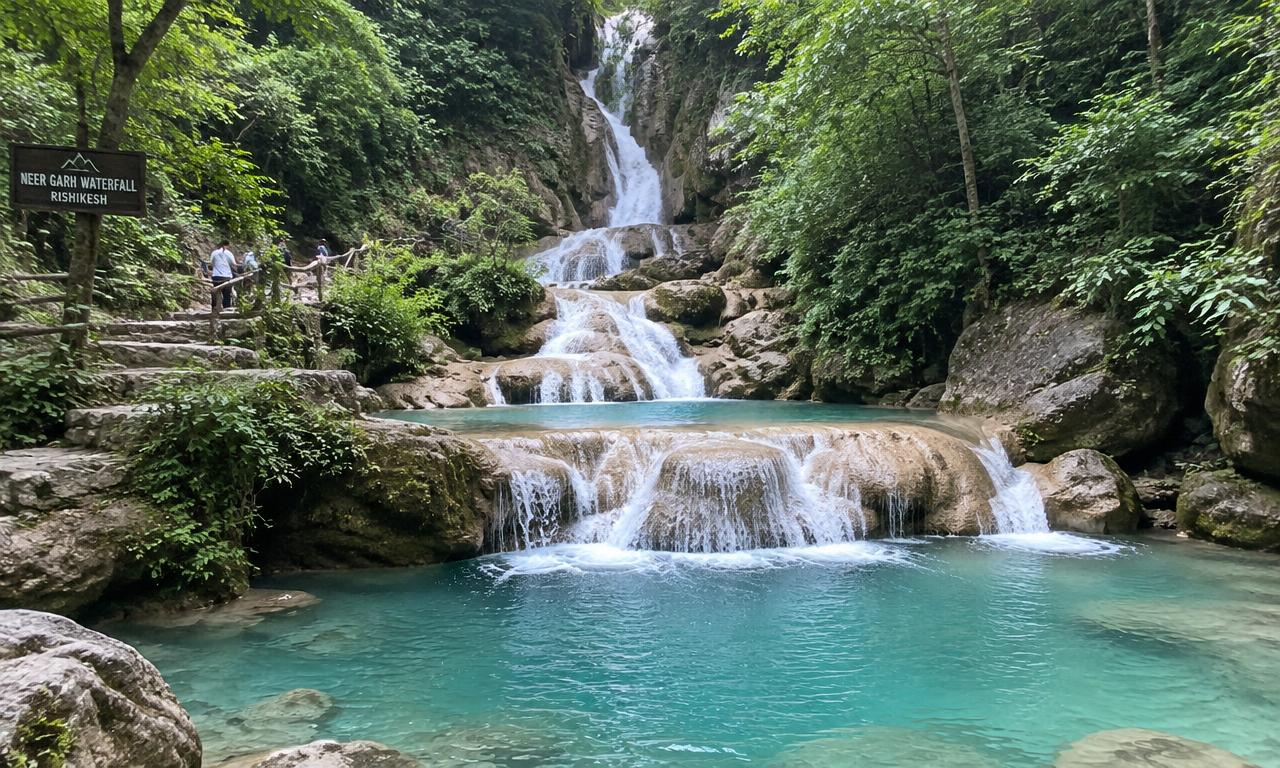
Neer Garh Waterfall, also known as Neer Gaddu, is a multi-level cascade near Rishikesh. Visitors come for its wooded setting, rocky flow and pools reached by walking uphill.
Key facts · verified by Ghumoopedia editors
- Type of place
- Natural attraction
- Best time to visit
- September–June
- Altitude
- 600 m
- Verified
- 21 Nov 2026
Plan a trip from Neer Garh Waterfall — a day-by-day route through places nearby.
Beyond Tapovan’s main visitor area, the waterfall lies beside the Badrinath highway on a slope near Rishikesh. Reaching it involves a short climb, making the approach part of the visit rather than arrival at a developed attraction. Water flows over several rocky tiers, with natural pools and places to pause along the way. Trees and forested ground surround the cascades, setting them apart from a large, built-up sightseeing complex. Weather, upkeep and local restrictions can affect access to different sections. Conditions may determine which levels visitors are able to reach. Allow roughly two to three hours for transport from Tapovan, walking, photographs and an unhurried break; longer if you explore an open upper section. The climb can feel strenuous in heat, and the path includes uneven stones, steps and slippery patches. This is not a step-free attraction. For many travellers, the most comfortable visits are on clear mornings outside the monsoon. Flow varies seasonally: drier months may mean a smaller cascade, while heavy rain can make the stream and trail dangerous. Weekends and holidays can be busy, especially around the easiest pools. Treat it as a nature outing, carry your own essentials and check access conditions locally before setting off.
Why it matters
Neer Garh Waterfall, also known as Neer Gaddu, is a small natural attraction on the forested hillside beyond Tapovan, near Rishikesh. Its local importance lies in offering residents and visitors a nature outing close to the town, with cascades and pools reached by an uphill walk from the Badrinath road. It is not a major pilgrimage centre or a built sightseeing complex, and its accessible sections can change with weather and local restrictions. No UNESCO status, Archaeological Survey of India protection or other formal heritage designation is established for the waterfall. Its appeal is primarily scenic and recreational, and visitors should treat the stream and surrounding slopes as a sensitive natural setting rather than a managed swimming facility.
There is no widely available, well-documented written history that identifies a builder, founding date or major historical event associated with Neer Garh Waterfall. It is a natural feature rather than a constructed monument. The cascades and pools have been shaped by flowing water, seasonal runoff and erosion along the hillside; their appearance and volume change with rainfall and dry conditions. The names Neer Garh and Neer Gaddu are both used for the attraction, but a precise, documented account of how the name originated is not readily established. The wider Rishikesh area has long been associated with pilgrimage and, more recently, yoga and outdoor tourism, while Tapovan has developed services for visitors. In that context, the waterfall has become a locally known excursion reached from the Badrinath road. Available information does not establish when visitor access first developed, nor is a formal restoration programme documented. Paths, steps, access arrangements and open sections may be maintained or altered over time. For current information, rely on notices at the approach and guidance from staff or knowledgeable local residents rather than assuming that older descriptions reflect present conditions.
Origin stories & folklore
No widely documented origin legend specific to Neer Garh Waterfall can be confidently identified. As with many streams and waterfalls in the Himalayan foothills, visitors may encounter local beliefs that associate flowing water and forest settings with spiritual calm or the presence of sacred natural forces. Such beliefs should be understood as personal or local tradition, not as a verified account of the waterfall's origin. The nearby Rishikesh region has a strong religious and pilgrimage identity, but that does not mean every natural feature has a recorded myth attached to it. Visitors should avoid repeating unverified stories as established history, and should respect any local guidance about access, bathing or conduct near the water.
- Walk slowly through the wooded approach, pausing at safe viewpoints to enjoy the stream and surrounding hillside. Do not assume every visible side path is an official route. - Photograph the cascades from dry, stable ground. Morning visits can offer a quieter atmosphere, but shaded rocks may remain wet. Keep phones and cameras away from spray, and avoid stepping backwards for a picture. - Continue towards higher cascades only if the route is open and conditions are suitable. Ask staff or a knowledgeable local which sections are currently accessible; turn back before fatigue makes the descent difficult. - Sit beside the water and enjoy a relaxed break without entering the stream. If bathing is permitted, assess conditions first: pool depth, current and submerged rocks are unpredictable, and lifeguards may not be present. - Combine the outing with a leisurely meal in Tapovan afterwards. Leave enough daylight for the walk back rather than squeezing in several distant attractions.
Suggested itineraries
Half day: Travel from Tapovan to the approach; walk uphill to an accessible cascade; pause for photographs and a quiet break; return before tiring (allow roughly two to three hours overall, depending on transport and pace). Full day: Visit the waterfall in the morning; return to Tapovan for a leisurely meal; spend the afternoon around Ram Jhula or the riverside areas of Rishikesh, allowing time for traffic and rest. Gentler option: Skip the uphill trail and enjoy a relaxed outing at an accessible café or riverside area in Tapovan or Rishikesh; ask locally about step-free access at any chosen venue.
The waterfall is visited mainly as a short nature excursion, rather than as a venue for organised performances or ritual gatherings. In nearby Rishikesh and Tapovan, yoga, pilgrimage, ashram life and visitor-oriented cafés shape much of the public-facing cultural atmosphere. Hindi is widely used, and Garhwali is part of the wider regional linguistic heritage; English is also common in tourism businesses. Everyday dress is varied, though practical clothing and secure footwear suit the steep, damp approach. There is no established regular music or dance programme at the falls. Visitors can be considerate by keeping noise low, carrying litter out and following any local instructions around the stream.
Local communities
Residents of the Rishikesh and Tapovan area, including people with connections to the wider Garhwal region, are linked to the waterfall through local travel, maintenance and visitor services. Nearby livelihoods include transport, food and accommodation businesses, guiding and other tourism work, alongside varied urban and regional occupations. The waterfall is not a basis for assuming that all local residents share one community identity or tradition. Visitors should ask before photographing workers or other people, follow access guidance from staff and local residents, and avoid treating informal advice as permission to enter closed or unsafe areas.
Festivals & events
Neer Garh Waterfall is not known as the site of a regular festival or fair. In Rishikesh, religious observances connected with the Ganga, including Ganga Dussehra in the warmer months, and celebrations such as Holi in spring and Diwali in autumn can bring larger crowds to town and riverside areas. Yoga events also take place in Rishikesh, with programmes and venues varying by year. These occasions may increase demand for transport and accommodation, but they do not necessarily involve the waterfall itself. Check local event information before travelling, and expect busier roads and public areas during major observances.
Small stalls may operate near the approach or along accessible sections, offering tea, packaged snacks or simple cooked food, but opening and stock are not guaranteed. Carry drinking water and a light snack, particularly for an early visit. Do not drink untreated waterfall water. For a fuller meal, return to Tapovan, where cafés and restaurants offer Indian meals and traveller-oriented menus. Confirm dietary requirements directly, choose freshly cooked food and carry all wrappers back out. Verify stall prices before ordering.
Shopping & local experiences
There is no major shopping complex at the waterfall, and stalls at the approach may be limited or absent. Tapovan and Rishikesh offer small shops and markets where visitors can look for locally made items, devotional goods, yoga-related products, clothing and simple souvenirs. Availability and local origins vary, so ask sellers about a product rather than assuming it was made nearby. Food experiences in the area include cafés and restaurants serving a range of vegetarian and other dishes; choices vary by venue. Buy essentials before walking to the falls, carry reusable containers where practical and avoid leaving packaging along the trail.
The attraction lies on a wooded hillside in the Himalayan foothills, where a stream descends through several rocky levels and forms natural pools. Water flow is seasonal: the cascade may be reduced in drier weather, while heavy rain can make the stream, rocks and trail hazardous. The approach passes through forested vegetation typical of the foothills, with shrubs, trees and undergrowth; species can vary with elevation and season. Birds and small wildlife may be present, but sightings are never assured. Stay on the recognised route where open, do not disturb wildlife or remove plants, and take litter back with you. Avoid entering pools or standing beneath unstable rock faces, particularly after rain.
September–June
From Tapovan, take a taxi, auto-rickshaw where available, or rented scooter towards the waterfall approach off the Rishikesh–Badrinath road. The road journey is roughly 5–7 km, depending on your starting point and the approach used; confirm the map pin with your driver. From central Rishikesh, allow extra time for traffic. Ask whether your fare includes waiting and return transport, since finding a vehicle at the trail entrance may be difficult. Parking and ticket arrangements can change; verify charges locally and carry small cash. From the entrance area, expect an uphill walk, often around 15–30 minutes to a lower cascade, with longer climbs to higher sections. Current trail conditions and your fitness matter more than distance. Wear grippy shoes rather than flip-flops.
Getting around
From Tapovan, visitors commonly reach the approach by taxi, auto-rickshaw where available, or rented scooter, travelling along the Rishikesh–Badrinath road. Confirm the map pin and agree whether the driver will wait or return, as a vehicle may not be readily available at the trail entrance. Parking arrangements can vary, so check locally and avoid obstructing the road. From the approach, continue on foot uphill; uneven steps and wet stones require care. Local buses may serve parts of the wider road corridor, but do not assume they stop at the trail entrance. Boats are not a means of reaching the waterfall.
Hours, tickets & permissions
Access arrangements may include local entry controls, a ticket or other site rules, but these can change and should not be assumed. There is no dependable universal information here about current opening periods, fees, camera rules, permits, identification requirements or dress rules. Confirm current hours and any charges with the managing authority or staff at the approach before setting out. Also check whether the trail and upper cascades are open, especially after heavy rain or during maintenance. Carry small cash in case local arrangements require it, but verify accepted payment methods locally.
Facilities
Facilities at the waterfall approach are limited and may change. Toilets, drinking water, food stalls, guides and dependable parking should not be assumed to be available on site; check locally before relying on them. Carry water, snacks, any personal medication and small essentials from Tapovan or Rishikesh, and take rubbish back with you. Cafés, restaurants, shops and other services are more readily found in nearby Tapovan and Rishikesh. ATMs are not something to count on at the trail entrance. Ask locally about current entry arrangements and any facilities operating on the day.
Accessibility
The waterfall is not a step-free attraction. Reaching the cascades involves an uphill walk over uneven ground, stones and steps, with possible slippery patches and exposed sections. The lower cascade may take around 15–30 minutes on foot from the entrance area, while higher sections require more climbing; conditions and individual pace vary. Shade is available along parts of the wooded approach, but heat can still make the climb strenuous. The route is generally unsuitable for wheelchairs and strollers. Older visitors or anyone with balance, mobility or heart concerns should assess the climb carefully, consider stopping at the entrance area, and avoid continuing when tired or in wet conditions.
Check the weather and local access advice on the day. Avoid visiting during heavy rain or immediately after intense rainfall; upstream rain can rapidly increase flow even if your location is dry. Respect closures and barriers. Wear shoes with good traction, keep both hands available on difficult sections and never jump into pools. Avoid alcohol before walking or entering water. Mobile reception may be unreliable, so share your plan beforehand. Carry basic first aid and any prescribed medicines. Leave before darkness and save India's emergency number, 112, for urgent assistance.
Photography
Photographs of the cascades and wooded approach are best made from stable, dry ground; morning can feel quieter, though shaded rocks may remain wet. There may be no formal restrictions on ordinary handheld photography, but confirm any local rules at the entrance. Do not step backwards near the stream or climb onto slippery rocks for a viewpoint, and protect equipment from spray. Drone use may be restricted by local rules or aviation requirements, so check before flying and do not assume it is permitted. Ask before photographing people, and be especially respectful if any ritual or private activity is taking place.
Tapovan is a convenient base for combining the waterfall with cafés, yoga classes and other Rishikesh outings. Options range from hostel dormitories to guesthouses and hotels. Check recent reviews for cleanliness, noise and access: some properties involve steep lanes or steps. For easier vehicle access, choose accommodation near a motorable road rather than relying on a river-view description. Ask about parking, hot water and early transport arrangements. Room rates fluctuate around weekends, holidays and busy travel periods; confirm the total price before booking.
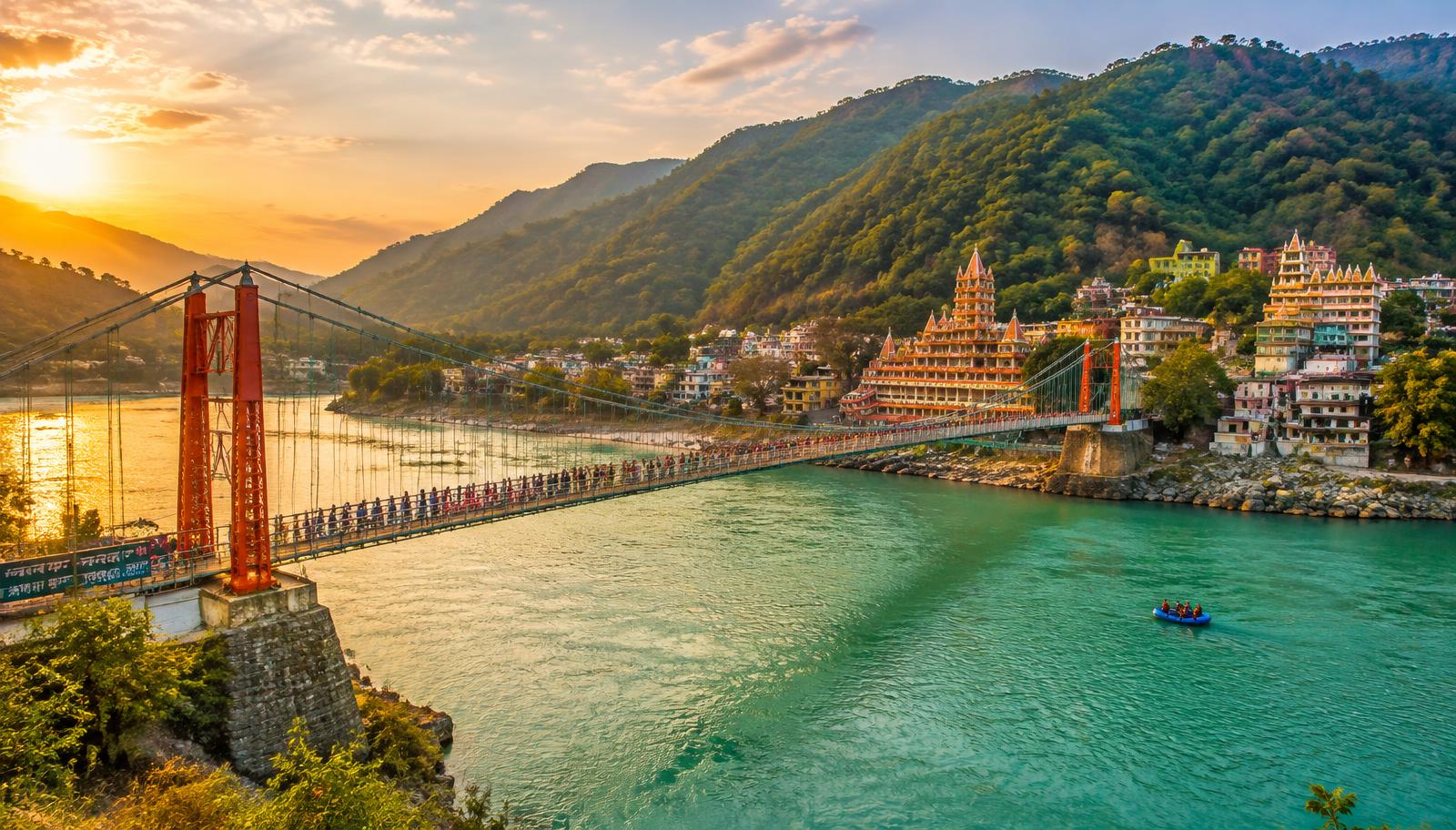
Tapovan is the closest visitor hub, with places to eat and stay. In Rishikesh, Ram Jhula and Triveni Ghat are well-known riverside areas, while the Beatles Ashram, also known as the former Maharishi Mahesh Yogi Ashram, is a separate attraction. These places can be combined with the waterfall if access, traffic and daylight allow. Shivpuri, north of Rishikesh, is associated with outdoor activities including rafting, which depends on season and operating conditions. These are not all within walking distance of the waterfall; arrange transport and check current access at each site rather than trying to fit too many stops into a short outing.
Choose a clear weekday morning for a potentially quieter visit, but do not expect privacy at popular pools. Agree on a comfortable turnaround point rather than pushing higher for photographs. Pack water, a small towel and a waterproof pouch if entering permitted bathing areas. Ask before photographing other visitors. A waterfall walk followed by lunch in Tapovan makes a manageable half-day plan. Arrange return transport beforehand, especially if you want an unhurried outing.
Q: How much time should I allow for Neer Garh Waterfall? A: Allow roughly two to three hours for transport from Tapovan, the walk, photographs and a break. Exploring higher sections can take longer. Q: When is a good season to visit? A: Clear mornings outside the monsoon are often more comfortable. Flow varies, and heavy rain can make the trail and stream dangerous; check conditions locally. Q: Is there an entry fee or do I need a permit? A: Entry arrangements can change. Confirm any fee, permit or other rule with staff or the managing authority before visiting. Q: Is the waterfall suitable for children or elderly visitors? A: The uphill route has uneven stones, steps and slippery patches. Children need close supervision; older visitors should assess their mobility and may prefer not to climb. Q: Where can I stay nearby? A: Tapovan and Rishikesh have visitor accommodation. Choose a place that suits your needs and confirm access and availability directly.
Be the first to share photos, stories, advice or a helpful contact for Neer Garh Waterfall.
Loading…