
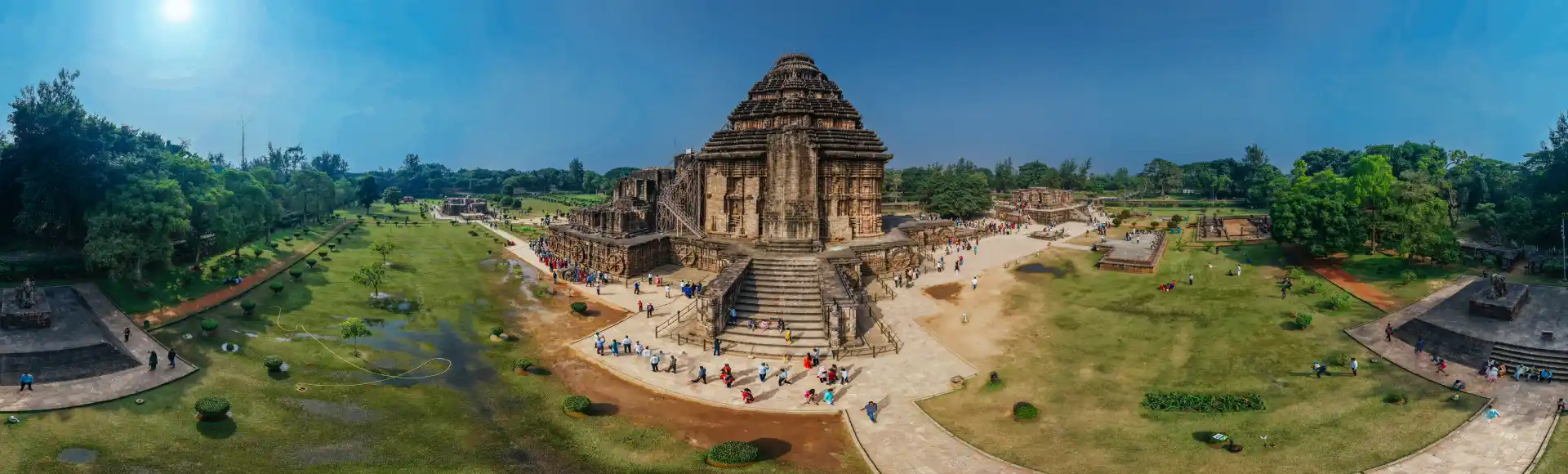
Konark Sun Temple
Konark’s Sun Temple is a thirteenth-century stone monument in Odisha, shaped as Surya’s chariot. Visitors come to see its Kalinga design, carvings and cultural associations, including a dance festival.
Key facts · verified by Ghumoopedia editors
- Type of place
- Temple / pilgrimage site
- Best time to visit
- October – February
- Verified
- 21 Nov 2026
Plan a trip from Konark Sun Temple — a day-by-day route through places nearby.
At Konark, in Puri, Odisha, the Sun Temple takes the form of a vast stone vehicle associated with Surya. It was built in the thirteenth century under King Narasimha Deva I, ruler of the Eastern Ganga dynasty. Sibei Samantaray is identified as its principal designer. The chariot image depicts the Sun God travelling across the sky. Its 24 carved stone wheels serve as sundials, while seven horses are represented pulling the vehicle. The horses stand for the rainbow’s colours and the days of the week. Across the monument, sculptures show mythological subjects, music, acts of devotion and everyday life. The structure and its ornamentation reflect the Kalinga style of architecture. Recognised as a UNESCO World Heritage Site, the temple draws people interested in its history, carved detail and religious meaning. At the Konark Dance Festival, artists perform Indian classical dance with the monument as their backdrop. The temple combines a religious subject with a distinctive architectural form and a broad visual record of human activities. Plan your visit around October – February. The official suggested visit duration is 2–3 hours; treat this as time at the attraction, not the complete journey from your hotel. Odisha’s coast and plains can be hot and humid, while southern hill districts may feel cooler after sunset. Heavy monsoon rain can affect road travel and access to outdoor sites. Check the local forecast before setting out, and keep a flexible alternative for bad weather. Official destination reference: https://odishatourism.gov.in/en/places/konark-sun-temple
Why it matters
Konark Sun Temple is one of Odisha’s most important monuments and a major expression of the region’s medieval art, religious history and Kalinga architectural tradition. Dedicated to Surya, the Sun God, it is widely known for its monumental chariot design and extensive stone sculpture. UNESCO inscribed the temple on the World Heritage List in 1984, recognising its cultural significance. The Archaeological Survey of India (ASI) protects and manages the monument. For visitors, it is both a historic site and a place connected with continuing Surya devotion and pilgrimage traditions in the surrounding region. Its setting near the Bay of Bengal also links the temple to the cultural landscape of Odisha’s coast.
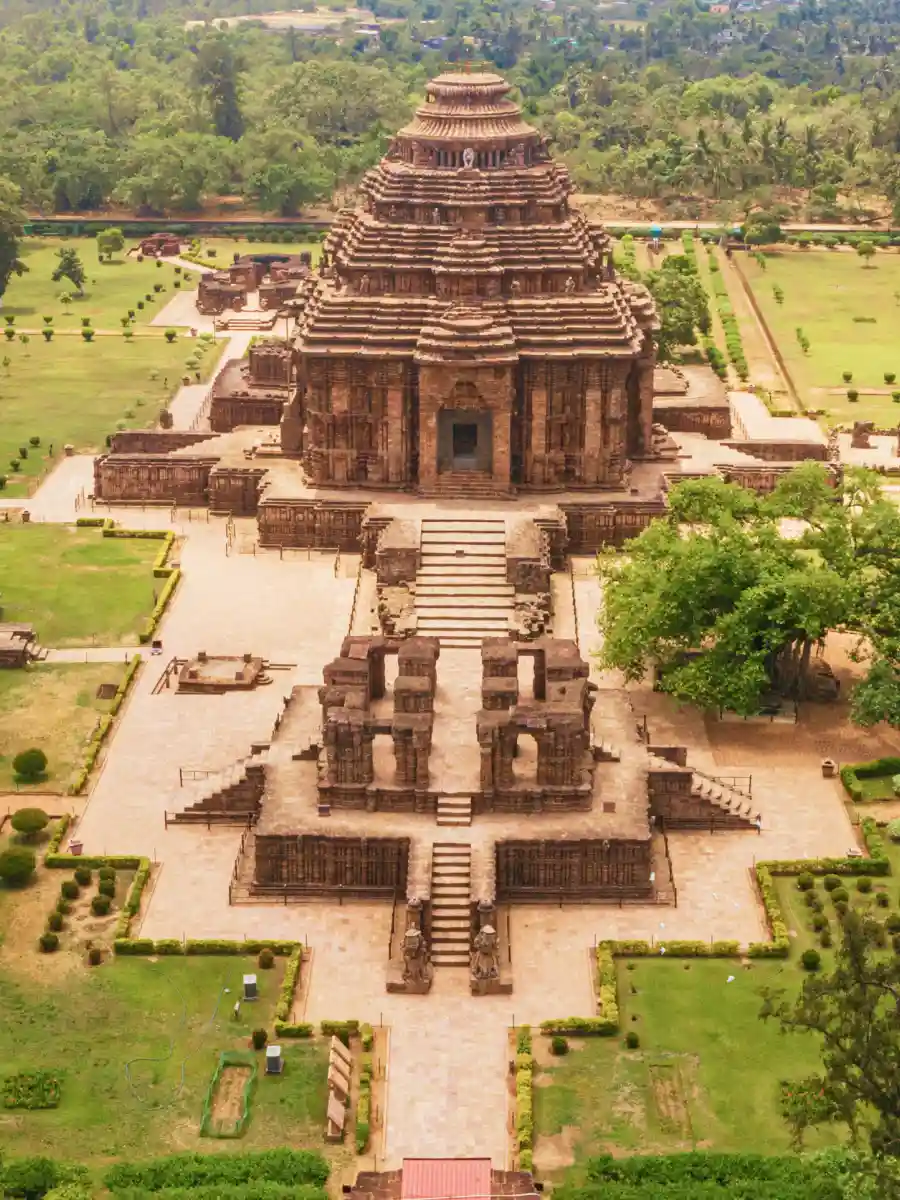
The temple was built in the 13th century under King Narasimhadeva I of the Eastern Ganga dynasty. It was conceived as a monumental shrine to Surya, the Sun God, and is traditionally dated to around the middle of that century. Its scale and sculptural programme reflect the resources and artistic skill of the kingdom at the time. The main sanctuary tower, or deul, later collapsed; the reasons and timing of its collapse are not settled. The audience hall, known as the jagamohana, remains the most prominent surviving structure, alongside other parts of the complex. European sailors referred to the monument as the “Black Pagoda,” a name associated with its dark appearance and coastal setting. Over time, the temple ceased to function as a complete active shrine and became an important historical monument. The ASI has undertaken conservation work, and the site is now protected as a monument. UNESCO added Konark to its World Heritage List in 1984. The temple’s surviving fabric, sculptures and records continue to inform research into Eastern Ganga history and medieval temple building.
Origin stories & folklore
According to local tradition, Samba, son of Krishna, was afflicted with leprosy and came to the coast near Konark to seek healing through devotion to Surya. After worship and penance, he was said to have been cured, and the story is associated with the sacred bathing traditions of Chandrabhaga. Some tellings connect Samba with the establishment of a Surya shrine in the area, though this is a religious legend rather than a verified account of the surviving temple’s construction. The monument’s image as Surya’s stone chariot has also inspired stories of a divine vehicle travelling across the sky. These traditions are part of the region’s devotional memory and should be understood separately from the documented history of the 13th-century temple.
Architecture & design
Konark is a major example of Kalinga temple architecture, built principally in stone and conceived as Surya’s colossal chariot. The original complex included a sanctuary and an audience hall; the sanctuary’s soaring tower has collapsed, while the jagamohana remains a dominant feature. Twenty-four large carved wheels line the chariot form, and seven stone horses are shown drawing it. The wheels’ spokes and details can be read as a calendar or sundial, although visitors should not assume every interpretation is certain. Carved surfaces cover much of the monument, with figures, animals, foliage and scenes from religious and everyday life. The design combines monumental mass with intricate detail. Changes in height, projecting forms and deeply cut sculpture create shifting patterns of light and shadow across the stone through the day.
Important objects & sculptures
Look closely at the monumental wheels, whose carved spokes, hubs and surrounding motifs reward careful viewing. The stone horses and elephants are among the most recognisable sculptural elements. Surya appears in large carved images on the temple, shown with attributes including lotus flowers; details of dress and posture are worth observing. The walls also carry figures of musicians, dancers, celestial beings, animals and scenes of daily life, as well as erotic imagery that forms part of the monument’s broader sculptural programme. Carvings are weathered and some sections are damaged, so follow barriers and do not touch or climb on them. On-site interpretation can help distinguish surviving architectural elements from reconstructions and popular explanations.
Religious significance
The temple is dedicated to Surya, the Hindu Sun God, who is associated with light, health and the passage of time. Its chariot form represents the Sun’s movement across the sky, and the carved Surya images are central to its religious meaning. Konark is now principally visited as a protected historic monument rather than as a fully functioning temple; visitors should not expect regular worship in the main shrine. Surya devotion remains important in the wider region, and Chandrabhaga is associated with pilgrimage and ritual bathing, especially around Magha Saptami. Local beliefs and practices vary, so visitors should observe respectfully, avoid interrupting worship where it occurs, and follow site guidance about access to any sacred or restricted areas.
Begin with the main attraction at Konark Sun Temple and leave time to understand its setting in Puri. Approach the shrine respectfully, follow the posted entry requirements and allow time for queues. Ask attendants about photography, footwear storage and the permitted route. Religious practice is part of daily life here; avoid interrupting worship or assuming that every visitor can enter every part of the complex. Keep a simple itinerary: arrive in daylight, enjoy the main visit, take a shaded meal break, then decide whether one nearby stop fits your return plan. Use the district index to find nearby places, but check the actual road route before combining them. Reserve a little time for photographs from permitted public viewpoints and avoid blocking paths while taking pictures.
Suggested itineraries
Half day: Allow about 2–3 hours for the temple complex, including the main structures, carved wheels and interpretation; take a shaded break, then visit one nearby stop if your return plan allows. Full day: Spend 2–3 hours at the temple, pause for lunch, then visit Chandrabhaga beach and, if time and transport permit, Ramachandi Temple before returning. Gentler option: Focus on the main accessible viewpoints and interpretation, take frequent seated breaks, and arrange a vehicle between stops rather than adding a longer walk.
Konark’s cultural life is closely associated with Odisha’s classical dance and music traditions, especially Odissi, as well as the temple’s carved depictions of performers. The annual dance festival brings artists and audiences to the area, while local craft and food traditions reflect coastal Odisha. Odia is the principal local language; Hindi and English may also be understood in visitor-facing settings, though this varies. Dress is generally practical for a warm coastal climate, with modest clothing advisable at religious places. Customs differ between the archaeological monument and nearby places of worship, so follow local guidance and ask before photographing people or religious activity.
Festivals & events
The Konark Dance Festival is usually held in December at an open-air venue near the temple, with performances of Odissi and other Indian classical dance forms. It can bring substantial evening crowds, so allow extra time for local movement and check event arrangements before travelling. Chandrabhaga Mela, associated with Magha Saptami, usually falls in January or February and draws pilgrims for ritual bathing near Chandrabhaga beach and Surya worship. The mela can make the coastal area especially busy. Festival programmes and arrangements can change from year to year; confirm current details locally.
For a visit to Konark Sun Temple, plan food around your base in Puri and do not assume that a remote entrance has a full restaurant. Odisha offers rice-based meals, dalma, vegetable preparations and sweets such as chhena poda. Availability varies by district and outlet; ask what is freshly prepared rather than expecting every local dish at every stop. Choose busy, clean establishments and tell staff about allergies, spice preferences or dietary restrictions before ordering. Carry sealed drinking water and a small snack if you are travelling beyond a town. In hot weather, take regular water breaks instead of waiting until you feel exhausted. If a temple offers food or prasad, follow the local serving rules and confirm what ingredients it contains. Do not treat ritual food as a guaranteed restaurant meal. Keep all packaging with you until you find an appropriate waste bin.
Shopping & local experiences
Look for Odisha handloom textiles, palm-leaf work, stone or wood craft, and appliqué pieces associated with the wider region; verify materials and workmanship before buying. Small souvenir shops operate around the visitor area, while a broader selection may be found in nearby towns or on a planned trip to Pipili. Local snacks and Odia meals are worth trying at eateries in Konark or along the route, subject to availability. Buy respectfully from local sellers, check whether an item is genuinely handmade, and avoid purchasing fragments or objects claimed to come from the protected monument.
October – February
Start by choosing a practical overnight base in or near Puri, rather than assuming every attraction has its own railway station. Odisha Tourism lists this rail access: Nearest railway station – Puri / Bhubaneswar. The listed air access is: Nearest airport – Biju Patnaik International Airport, Bhubaneswar. Road access: Accessible by road via Puri & Bhubaneswar. Compare train, bus and flight options door to door. Rail can suit overnight journeys and travellers who prefer to avoid a long drive. A bus may be useful between district towns, but the last service may finish before your visit ends. A flight only saves time if airport transfers, check-in and the final road leg are included. Reserve the return leg before departure and allow time for traffic, meals and weather. Check IRCTC and NTES for trains, OSRTC for buses, and the airline’s own schedule for flights. Do not rely on an unconfirmed connection or assume taxis will wait at a remote site.
Confirm onward and return timings on IRCTC / NTES, the state bus operator or your airline before travel. A dash means current timings or fares have not been verified.
Getting around
Within Konark, visitors can generally reach the temple by taxi, auto-rickshaw or local bus, while the compact town centre is manageable on foot for some travellers. Local bus services may not suit every return plan, so confirm availability before relying on them. The monument has a visitor parking area; follow signs and staff directions on arrival. Taxis are useful for combining the temple with nearby coastal stops, but agree on the route and return arrangements in advance. From Puri or Bhubaneswar, plan the road journey separately and allow for traffic and weather.
Hours, tickets & permissions
Entry is subject to the monument’s current ticketing and visitor rules, which may include separate requirements for different visitor categories or photography equipment. Do not assume that every structure or section is open to visitors; barriers and conservation closures may apply. There may be rules on bags, tripods, professional photography or identification, and these can change. Check current hours, entry conditions and fees with the ASI or the official site information before travelling. Arrive with enough daylight for the visit and allow time for security checks and walking around the complex.
Facilities
The monument usually has visitor parking, toilets and basic visitor information, but availability and condition can vary. Drinking water and food options may be available near the entrance or in Konark town; carry water, particularly in warm weather, and check locally for open eateries. Guides may be available, though it is sensible to confirm their credentials and language before beginning. ATMs and broader services are more likely in town than within the monument grounds. Bring essential medication and supplies, and do not assume that every facility will be open during bad weather or quieter periods.
Accessibility
Expect a substantial amount of walking across an open archaeological complex, with uneven stone surfaces, gravel, thresholds and steps in some areas. The main structures are large and cannot all be approached equally closely; barriers protect fragile sections. Shade and places to rest may be limited, especially in exposed areas, so plan breaks and avoid the hottest part of the day when possible. Wheelchair and stroller access may be restricted by surface conditions and level changes; confirm the current route and assistance options with site staff before visiting. Older visitors or anyone with limited mobility may prefer a shorter route and a companion.
At Konark Sun Temple, local access rules take priority over any suggested itinerary. Reconfirm opening arrangements, entry eligibility, permits and weather restrictions shortly before arrival. Keep the emergency number 112 available and save your accommodation’s contact details offline. A map pin identifies a general location, not an assurance that the approach road or walking path is safe. Ask local staff which entrance visitors should use. Dress respectfully and follow shrine-specific rules. Entry restrictions may depend on religious practice, and photography or phones may be prohibited. Use official counters where available and agree on any guide service before accepting it. Carry only necessary valuables, keep rubbish out of the site, and leave enough daylight for the return journey.
Visitor rules
Follow posted ASI instructions, barriers and staff directions, and do not climb, lean on or touch fragile carvings. Dress respectfully, particularly if combining the visit with a nearby place of worship. Keep footwear and belongings within the designated arrangements, and do not enter closed or restricted areas. Avoid littering; rules on plastics and food inside the monument may apply, so check signs and carry waste out if appropriate. Keep voices moderate, do not disturb worshippers or other visitors, and ask before photographing people. Photography restrictions can apply to equipment or particular areas.
Photography
The carved surfaces can look especially detailed in softer morning or late-afternoon light, while changing shadows reveal the relief of the wheels and figures. Use public paths and viewpoints, and do not block routes or cross barriers for a photograph. Personal photography is generally permitted in many visitor areas, but restrictions on cameras, tripods or specific sections may apply; confirm signs and current rules on arrival. Drone use should not be assumed to be allowed and may require official permission. Photograph worshippers and local residents only with their consent, and avoid interrupting religious activity.
Choose accommodation by the complete journey to Konark Sun Temple, not by the district name alone. A room in a well-connected town in Puri may offer easier transport, meals and medical access than a property advertised as being close to the attraction. Check the exact location, recent guest feedback, reception hours and cancellation terms. Ask how you will reach the site and return after the visit, especially if you are not driving. A centrally located stay can make early sightseeing and an evening return easier. Confirm whether the approach road is accessible to your vehicle and whether lifts are available. Book only through a trusted accommodation channel, avoid sending payments to an unverified personal contact, and keep written confirmation of the services included.
Chandrabhaga beach, near Konark, is associated with coastal walks and pilgrimage traditions, including the Magha Saptami gathering. Ramachandi Temple stands in the nearby coastal area and can be combined with the Sun Temple if road conditions and transport allow. Puri offers the Jagannath Temple area and other town attractions, while Pipili is known for appliqué craft and may suit a wider Odisha itinerary. These stops are not all within walking distance of the monument. Check the actual road route and return transport before combining them, particularly during festivals or heavy rain.
For couples visiting Konark Sun Temple, keep the day relaxed: one main visit, a meal break and a return transfer arranged in advance. Choose public viewpoints for photographs and respect religious or community expectations around behaviour and clothing. Confirm the accommodation’s check-in requirements before booking. Avoid secluded paths after dark and do not trade a safe return plan for a late photograph. A quieter weekday may suit you, but opening and access arrangements still need local confirmation.
Q: How much time should I allow for the temple? A: The suggested visit is about 2–3 hours at the attraction; transport to and from your base needs additional time. Q: When is the best season to visit? A: October to February is generally a more comfortable period. Check the forecast, as coastal weather can still be humid or rainy. Q: Is there an entry ticket? A: Entry requirements and fees may apply and can change. Confirm current information with the ASI or official site information before visiting. Q: Is the site suitable for children and elderly visitors? A: Families can visit, but expect walking on uneven surfaces and limited shade. Older visitors or anyone with mobility needs may prefer a shorter route and frequent rests. Q: Where should I stay nearby? A: Puri is a practical overnight base, with accommodation also available in or near Konark. Check current availability and plan the road transfer separately.
Be the first to share photos, stories, advice or a helpful contact for Konark Sun Temple.
Loading…