
Raghurajpur Craft Village
Raghurajpur is an Odisha village near Puri known for its working craft traditions, particularly Pattachitra. Visitors explore the artists’ work, painted homes and Gotipua dance culture.
Key facts · verified by Ghumoopedia editors
- Type of place
- Heritage monument
- Best time to visit
- October – March
- Verified
- 21 Nov 2026
Plan a trip from Raghurajpur Craft Village — a day-by-day route through places nearby.
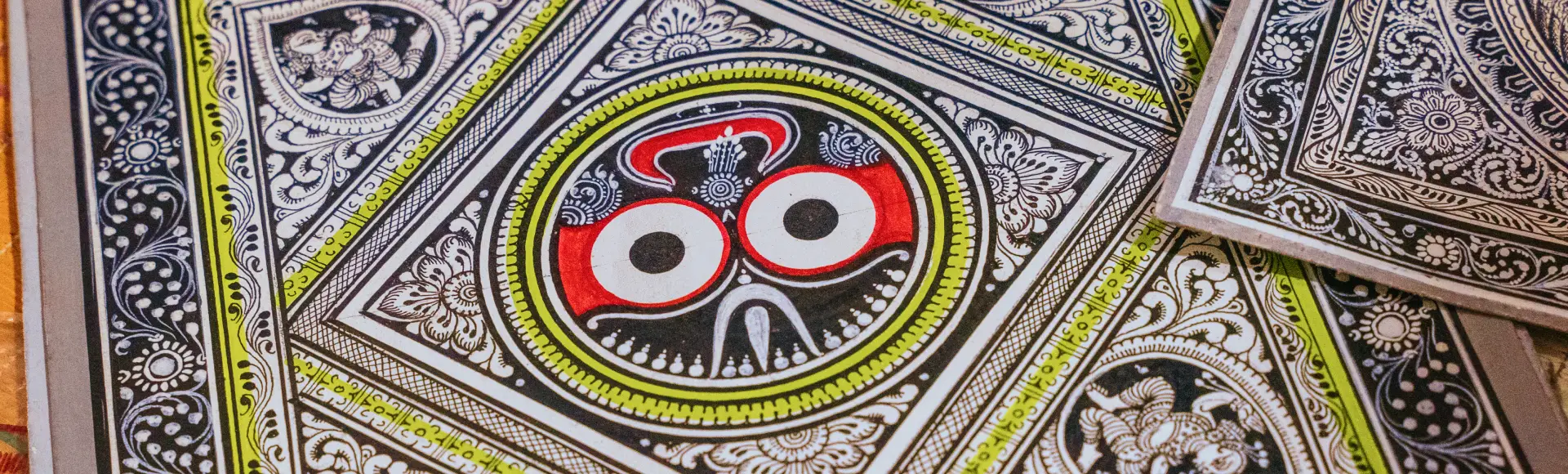
About 14 km from Puri, Raghurajpur is a village in Odisha where craft remains part of everyday life. It has recognition as the country’s first heritage craft village, and visitors come to see its artistic traditions at work. Pattachitra is especially associated with the settlement: the paintings feature fine detail, mythological stories and vivid hues made with natural colours. Artisans here have earned recognition in India and abroad. Nearly every household takes part in a traditional art or craft, giving the lanes the character of a place where making is woven into daily life. Alongside Pattachitra, local makers produce palm-leaf engravings, known as Tala Pattachitra, as well as carved stone pieces, wooden toys and masks. The outside walls of homes carry painted scenes from Hindu stories, adding another layer of visual art to a walk around the village. Gotipua, a traditional dance form, is also part of Raghurajpur’s cultural life. Performances are arranged for visitors from time to time, offering a chance to encounter Odisha’s performing arts as well as its craft practices. Raghurajpur is the birthplace of Odissi dancer Padma Vibhushan Kelucharan Mohapatra and Gotipua dancer Padma Shri Guru Maguni Charan Das. Visitors can follow the narrow lanes, meet the artists and observe how artworks are made. They may also buy handmade pieces from the people who create them, helping sustain local livelihoods. The village offers an experience set apart from urban activity, while its community-based work in keeping artistic practices alive makes it significant to those interested in Odisha’s culture. Plan your visit around October – March. The official suggested visit duration is 2–3 hours; treat this as time at the attraction, not the complete journey from your hotel. Odisha’s coast and plains can be hot and humid, while southern hill districts may feel cooler after sunset. Heavy monsoon rain can affect road travel and access to outdoor sites. Check the local forecast before setting out, and keep a flexible alternative for bad weather. Official destination reference: https://odishatourism.gov.in/en/places/raghurajpur-craft-village
Why it matters
Raghurajpur is a living craft village near Puri, known for Pattachitra painting and other hereditary arts. Odisha tourism descriptions present it as India’s first heritage crafts village; this recognition refers to its identity as a community of practicing artisans, rather than to a single protected monument. Many households continue to make and sell traditional works, giving visitors a chance to see artistic knowledge maintained in everyday village life. The village is also associated with Gotipua dance and is the birthplace of Odissi dancer Kelucharan Mohapatra and Gotipua dancer Guru Maguni Charan Das. Its importance is therefore both local and regional: it connects Odisha’s visual and performing arts with the cultural life of Puri.
Raghurajpur’s artistic history is rooted in the Chitrakar community and in the wider religious and cultural life of Puri. Families have traditionally passed painting and craft skills between generations. Pattachitra, the village’s best-known art, is closely associated with Jagannath traditions and the temple town of Puri; palm-leaf engraving and other crafts also form part of the local repertoire. The precise beginnings of the village’s craft practices are not securely dated, so they are best understood as inherited traditions rather than tied to a single founding year or builder. In more recent times, Raghurajpur has been promoted as a heritage crafts village, bringing visitors directly into contact with working artisans. The village is also remembered for its contribution to dance: Odissi maestro Kelucharan Mohapatra and Gotipua guru Maguni Charan Das were born here. Unlike a palace or temple, Raghurajpur has no single restoration history. Its continuity depends chiefly on residents maintaining homes, workshops and artistic skills while adapting to changing markets and tourism.
Origin stories & folklore
There is no widely documented founding legend for Raghurajpur itself. Local artistic tradition is instead often connected with Lord Jagannath and the sacred culture of Puri. Pattachitra paintings are associated with depictions of Jagannath, Balabhadra and Subhadra, and with the ritual life of the temple. In accounts of the Anasara period, when the deities are not available for public viewing, painted images known as Anasara Patti are traditionally used in their place. This is a religious and artistic tradition, not evidence of a specific village-origin story. Visitors can ask local artists how family histories and devotional themes inform their work.
Architecture & design
Raghurajpur is a lived-in village rather than a designed monumental complex. Its modest homes and workshops follow narrow lanes, with household spaces often serving both domestic and artistic purposes. Many facades are painted with colourful murals, including figures and scenes drawn from Hindu mythology; the paintings give the streets a distinctive visual character. Building materials and finishes vary from house to house, reflecting upkeep and changing needs rather than a single architectural plan. Courtyards and work areas allow artisans to paint, prepare materials and display finished pieces. There is no central temple-like structure or formal visitor route that defines the village. The experience comes from walking through its residential lanes and noticing how art is integrated into everyday surroundings. Visitors should remember that homes and workshops are private working spaces, even when their exteriors are decorated.
Important objects & sculptures
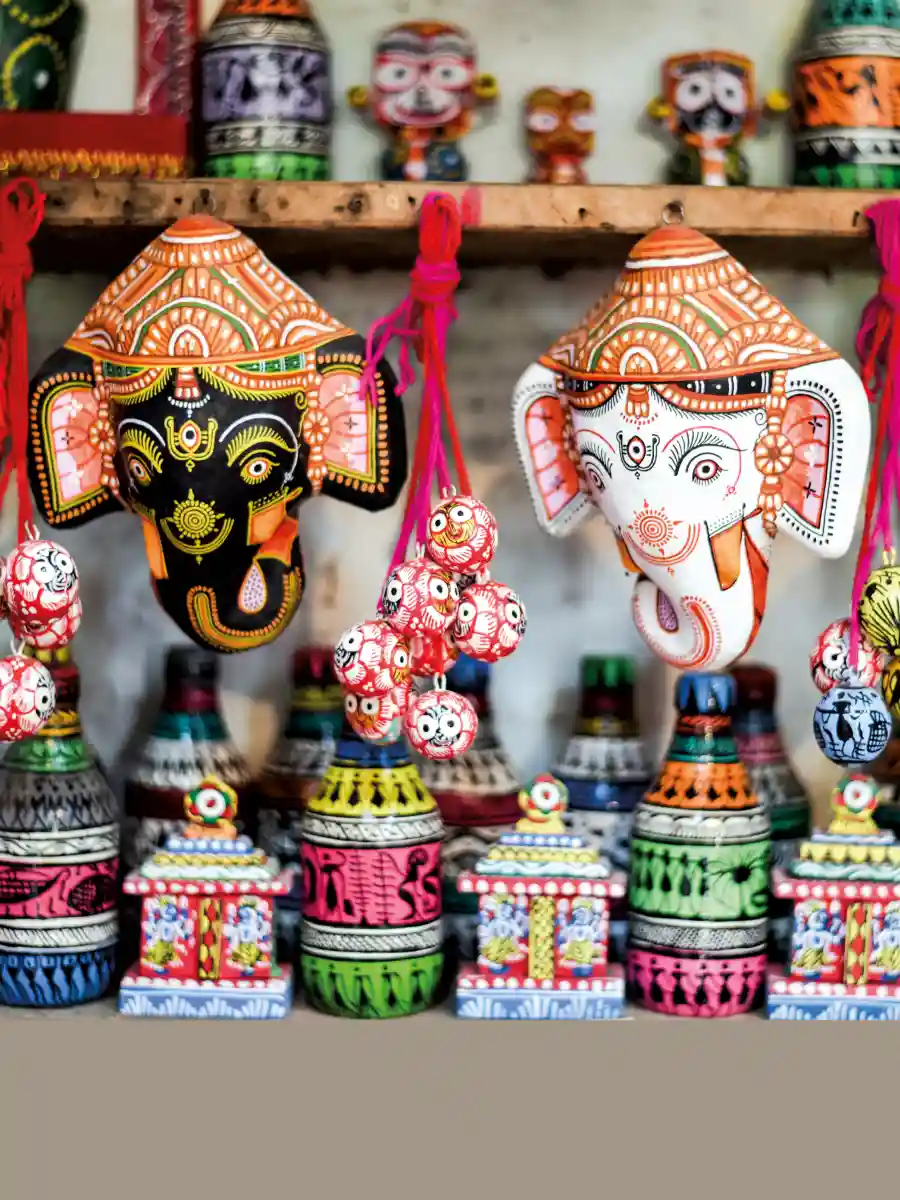
Look for Pattachitra paintings, usually distinguished by fine outlines, detailed patterning and mythological subjects, as well as palm-leaf engravings known as Tala Pattachitra. Artisans may also make wooden toys, masks and stone carvings. Designs featuring Jagannath and other figures from Hindu stories are common, though subjects and styles vary by maker. Painted house walls are another notable feature: murals can show deities, episodes from mythology or decorative motifs. These are contemporary parts of a living village, not a museum collection with a fixed display. Ask an artisan before handling works or entering a workshop, and check whether a demonstration is included or carries a charge.
Begin with the main attraction at Raghurajpur Craft Village and leave time to understand its setting in Puri. Look for interpretation boards, guided visits or opportunities to meet local makers. Ask before photographing people or their work. A village workshop is a working space, not a staged performance; agree on any demonstration charge and avoid pressuring artisans for free access. Keep a simple itinerary: arrive in daylight, enjoy the main visit, take a shaded meal break, then decide whether one nearby stop fits your return plan. Use the district index to find nearby places, but check the actual road route before combining them. Reserve a little time for photographs from permitted public viewpoints and avoid blocking paths while taking pictures.
Suggested itineraries
Half day: Travel from Puri; spend about 2–3 hours walking the lanes, viewing murals and meeting artisans with permission; take a break before returning. Full day: Visit Raghurajpur in the morning; allow about 2–3 hours for the village; have a meal in or near Puri; then visit the Jagannath Temple area or Puri’s seafront, allowing time for local conditions and access rules. Gentler option: Arrange a vehicle drop-off near the village lanes, focus on a short, level walk and one accessible workshop, and take seated breaks; confirm the route and surfaces in advance.
Art remains part of daily life in Raghurajpur, where many households are involved in traditional crafts. Pattachitra and palm-leaf work are commonly learned within families, while visitors may meet artists at home workshops and see works in progress. The village is also associated with Gotipua, a dance tradition performed by boys and known as an important precursor to Odissi. Performances for visitors are occasional, not guaranteed. Odia is the principal local language; some artisans and guides may also communicate in Hindi or English. Treat workshops as workplaces: ask permission before entering, photographing people or handling art, and agree on terms before a demonstration.
Festivals & events
Puri’s major religious calendar can bring increased activity to the wider area. The annual Ratha Yatra, usually in the early summer, is the best-known festival in nearby Puri and draws very large crowds; travel and accommodation can be busier than usual. Dola Purnima, generally around late winter or early spring, is another seasonal celebration in Odisha. Raghurajpur’s craft traditions are connected to Jagannath culture, but visitors should not assume that a particular fair or dance performance will be taking place in the village. Ask locally about community events, and allow extra time when visiting during major Puri festivals.
For a visit to Raghurajpur Craft Village, plan food around your base in Puri and do not assume that a remote entrance has a full restaurant. Odisha offers rice-based meals, dalma, vegetable preparations and sweets such as chhena poda. Availability varies by district and outlet; ask what is freshly prepared rather than expecting every local dish at every stop. Choose busy, clean establishments and tell staff about allergies, spice preferences or dietary restrictions before ordering. Carry sealed drinking water and a small snack if you are travelling beyond a town. In hot weather, take regular water breaks instead of waiting until you feel exhausted. For early starts, arrange breakfast in advance and ask your accommodation whether a packed meal is practical. Keep all packaging with you until you find an appropriate waste bin.
Shopping & local experiences
Artisan households and workshops sell Pattachitra paintings, palm-leaf engravings, masks, wooden toys and other handmade work. Buying directly from the maker can support local livelihoods; ask about the materials, technique and care requirements, and handle pieces gently. Styles and prices vary by artist, so compare thoughtfully and agree on a price before a purchase or commissioned work. Carry cash as a backup, since payment options may vary. Puri offers additional shops and food choices, but avoid presenting mass-produced items as village-made. Ask before photographing an artwork you may wish to commission.
October – March
Start by choosing a practical overnight base in or near Puri, rather than assuming every attraction has its own railway station. Odisha Tourism lists this rail access: Nearest railway station – Puri/Bhubaneswar. The listed air access is: Nearest airport – Biju Patnaik International Airport, Bhubaneswar. Road access: Accessible by road via Puri/Bhubaneswar. Compare train, bus and flight options door to door. Rail can suit overnight journeys and travellers who prefer to avoid a long drive. A bus may be useful between district towns, but the last service may finish before your visit ends. A flight only saves time if airport transfers, check-in and the final road leg are included. Reserve the return leg before departure and allow time for traffic, meals and weather. Check IRCTC and NTES for trains, OSRTC for buses, and the airline’s own schedule for flights. Do not rely on an unconfirmed connection or assume taxis will wait at a remote site.
Confirm onward and return timings on IRCTC / NTES, the state bus operator or your airline before travel. A dash means current timings or fares have not been verified.
Getting around
From Puri, visitors can arrange a taxi or auto-rickshaw for the road journey to the village; confirm that the driver will wait or arrange a clear return plan. Local buses may serve parts of the wider area, but check the route and return options locally rather than relying on a fixed service. Once in Raghurajpur, the usual way to explore is on foot along narrow village lanes. Parking and drop-off arrangements can vary, so avoid blocking residents’ access. If combining the visit with another attraction, check the road route and allow for traffic and weather.
Hours, tickets & permissions
Raghurajpur is a residential village, not a single ticketed monument with one entrance. Access to lanes and individual workshops can depend on household availability, and a guided visit or craft demonstration may have separate arrangements. There may not be a uniform entry rule, camera fee or dress code for the whole village. Be respectful around homes and places of worship, and ask before entering private spaces. Confirm current access, any fees and the availability of guides or demonstrations with local organizers or the relevant tourism authority before setting out.
Facilities
Facilities are modest and can vary. Small shops or household workshops may offer drinking water or refreshments, but carry water and do not assume food outlets or public toilets will be available inside the village. More dining, accommodation, banking and medical options are found in Puri. Parking may be informal; check locally where a vehicle can wait without obstructing residents. Guides or arranged craft demonstrations may be available through local contacts, but availability is not guaranteed. Ask about any demonstration charge before it begins.
Accessibility
The village is explored mainly on foot, along narrow lanes that may have uneven surfaces, thresholds or obstructions. Shade can be limited in exposed stretches, so plan rests and carry water, especially in warm weather. There is no reliable basis to assume continuous step-free access, ramps or accessible toilets. Wheelchair and stroller users may find some lanes and workshop entrances difficult; contact a local organizer in advance to discuss a shorter route and vehicle drop-off. Older visitors may prefer a brief visit with seated breaks and assistance on uneven ground. Avoid blocking lanes while stopping to rest or take photographs.
At Raghurajpur Craft Village, local access rules take priority over any suggested itinerary. Reconfirm opening arrangements, entry eligibility, permits and weather restrictions shortly before arrival. Keep the emergency number 112 available and save your accommodation’s contact details offline. A map pin identifies a general location, not an assurance that the approach road or walking path is safe. Ask local staff which entrance visitors should use. Respect conservation barriers, residential boundaries and instructions from staff. Ask permission for portraits and avoid sharing identifiable images of local residents without consent. Carry only necessary valuables, keep rubbish out of the site, and leave enough daylight for the return journey.
Photography
Soft morning or late-afternoon light can bring out the painted house fronts and craft details; ask locally which lanes or viewpoints are suitable. Photography in public lanes is generally less intrusive than taking pictures inside a home or workshop, but always ask before photographing people, children, unfinished work or private spaces. Do not touch artworks without permission. Drone use may require authorization and can intrude on residents’ privacy, so do not fly one without checking applicable rules and obtaining consent. Avoid obstructing paths or interrupting work for a photograph.
Choose accommodation by the complete journey to Raghurajpur Craft Village, not by the district name alone. A room in a well-connected town in Puri may offer easier transport, meals and medical access than a property advertised as being close to the attraction. Check the exact location, recent guest feedback, reception hours and cancellation terms. Ask how you will reach the site and return after the visit, especially if you are not driving. A centrally located stay can make early sightseeing and an evening return easier. Confirm whether the approach road is accessible to your vehicle and whether lifts are available. Book only through a trusted accommodation channel, avoid sending payments to an unverified personal contact, and keep written confirmation of the services included.
Puri is the most practical nearby base and offers the Jagannath Temple area, Gundicha Temple and the seafront; temple access rules can differ for visitors, so check before planning. The Sudarshan Crafts Museum in Puri is another option for those interested in regional craft traditions. Konark’s Sun Temple is a well-known heritage site in the wider Puri district and can be considered as a separate road excursion, subject to route and time. Do not combine distant stops without checking actual travel conditions. Raghurajpur itself is best paired with a Puri visit rather than treated as a quick stop on an overly crowded itinerary.
For couples visiting Raghurajpur Craft Village, keep the day relaxed: one main visit, a meal break and a return transfer arranged in advance. Choose public viewpoints for photographs and respect religious or community expectations around behaviour and clothing. Confirm the accommodation’s check-in requirements before booking. Avoid secluded paths after dark and do not trade a safe return plan for a late photograph. A quieter weekday may suit you, but opening and access arrangements still need local confirmation.
Q: How much time should I allow for Raghurajpur? A: The suggested visit is about 2–3 hours at the village; allow extra time for travel from Puri and any stops. Q: What is the best season to visit? A: October to March is generally a more comfortable period. Check the forecast, as heat, humidity and monsoon rain can affect a visit. Q: Is there an entry ticket? A: The village is not a single ticketed monument. Workshop visits or demonstrations may have separate arrangements, so confirm locally. Q: Is the village suitable for children and elderly visitors? A: It can be a rewarding visit, but lanes and workshop entrances may be uneven or narrow. Keep children close and plan rests or a shorter route. Q: Where should I stay? A: Puri is the practical overnight base, with a wider choice of accommodation and services than the village.
Be the first to share photos, stories, advice or a helpful contact for Raghurajpur Craft Village.
Loading…