
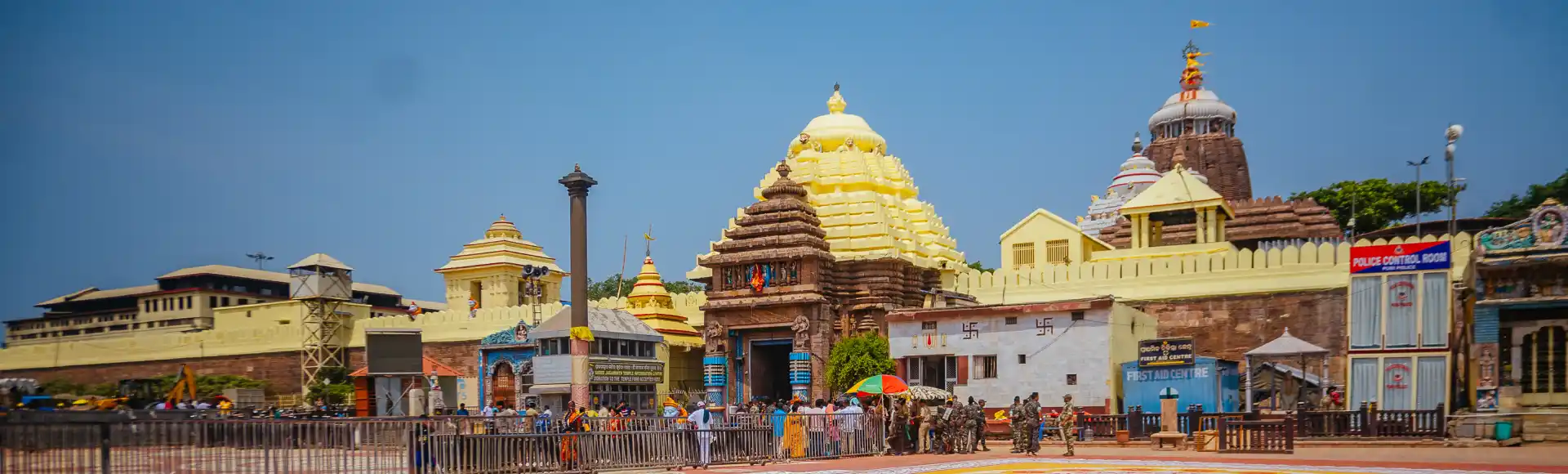
Shree Jagannath Temple
This historic Puri temple honours Jagannath, Balabhadra and Subhadra. Visitors come to worship, see its Kalinga architecture and take part in traditions central to Odisha’s religious life.
Key facts · verified by Ghumoopedia editors
- Type of place
- Temple / pilgrimage site
- Best time to visit
- October – March
- Verified
- 21 Nov 2026
Plan a trip from Shree Jagannath Temple — a day-by-day route through places nearby.
Shree Jagannath Temple, known locally as Shree Mandira, stands in Puri, Odisha, and dates from the 12th century. King Anantavarman Chodaganga Deva is credited with its construction in the Kalinga architectural tradition. For almost a millennium, the complex has been woven into Odisha’s worship, culture and community life. It is also among Hindu Char Dham pilgrimage sites. The three principal figures are Lord Jagannath, Lord Balabhadra and Devi Subhadra. Made of sacred neem, known as Daru, these wooden images are renewed in Nabakalebara, a ritual conducted every 12 to 19 years for centuries. The central tower stands 65 metres high. Its main components follow a Kalinga layout: Vimana, the sanctum; Jagamohan, the assembly hall; Natyamandira, the dance hall; and Bhoga Mandapa, the offering hall. Singhadwara, or Lion Gate, is the entrance, opening onto a place where temple traditions continue. The kitchen prepares Mahaprasad daily in earthen pots for thousands of devotees. At the summit, the flag may seem to fly against the wind; turbulent air from pressure differences around the tower explains this. The Sudarshan Chakra appears to face viewers from various positions. Plan your visit around October – March. The official suggested visit duration is 2–3 hours; treat this as time at the attraction, not the complete journey from your hotel. Odisha’s coast and plains can be hot and humid, while southern hill districts may feel cooler after sunset. Heavy monsoon rain can affect road travel and access to outdoor sites. Check the local forecast before setting out, and keep a flexible alternative for bad weather. Official destination reference: https://odishatourism.gov.in/en/places/shree-jagannath-temple
Why it matters
Shree Jagannath Temple, known locally as Shree Mandira, is a major centre of worship in Puri and an enduring focus of Odia religious and cultural life. It is one of the four sacred Char Dham pilgrimage destinations in Hindu tradition, alongside Badrinath, Dwarka and Rameswaram. Devotees come to worship Jagannath, Balabhadra and Subhadra, while the temple’s rituals, food traditions and annual Rath Yatra connect it closely to the wider community. Odisha Tourism presents the temple as a leading religious and heritage destination. Its importance rests not only on its medieval architecture but also on the continuous practice of living traditions. Do not assume that every part of the complex is open to every visitor.
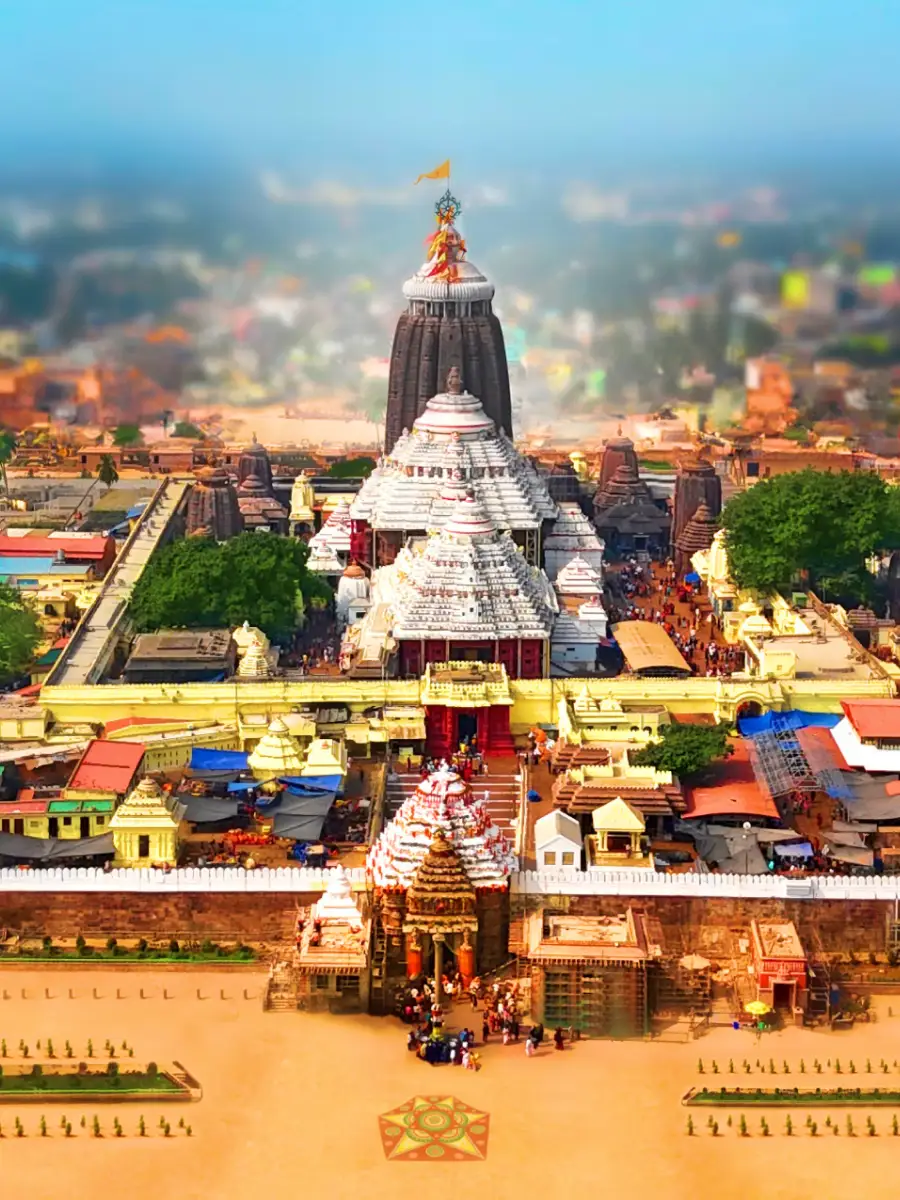
The main temple is traditionally dated to the 12th century and associated with Anantavarman Chodaganga Deva of the Eastern Ganga dynasty. Work is understood to have continued under later rulers, including Anangabhima III, as the temple developed into a major royal and pilgrimage centre. Its Kalinga-style complex grew through successive periods of patronage, repair and ritual change; the present site reflects more than one phase of building rather than a single construction campaign. Later Gajapati rulers also held important ceremonial roles in Jagannath worship and continue to be associated with the Rath Yatra tradition. The temple and its traditions experienced periods of disruption and restoration over the centuries, though accounts of particular episodes can vary. The wooden images are renewed through Nabakalebara, a ritual replacement carried out when calendrical conditions call for it; the interval is not fixed to a simple cycle and is often described as roughly 12 to 19 years. Today, the complex is administered under Odisha’s temple-management framework, while daily worship and customary service communities remain central to its life.
Origin stories & folklore
According to local tradition, King Indradyumna sought an image of Vishnu after hearing of the mysterious deity Nilamadhava, worshipped in a forest by the tribal chief Visvavasu. The king’s emissary Vidyapati is said to have found the hidden shrine, after which Nilamadhava disappeared. A divine instruction then led to the making of the wooden forms of Jagannath, Balabhadra and Subhadra. In a popular account, a divine carpenter began carving the images on the condition that he not be disturbed. When the king opened the workshop before the work was complete, the figures remained without fully formed hands and feet. Devotees understand their distinctive forms as sacred, not unfinished in a lesser sense.
Architecture & design
The temple is a major example of Kalinga architecture, organised around a high curving tower above the sanctum. The complex’s principal sequence comprises the Vimana (sanctum), Jagamohan (assembly hall), Natyamandira (dance hall) and Bhoga Mandapa (offering hall). The main shikhara rises about 65 metres, according to the destination guide, and dominates Puri’s skyline. The structures are built principally of stone, with sculpted exterior surfaces and monumental gateways, including the Singhadwara, or Lion Gate. The temple’s plan supports worship, gathering and offerings in distinct spaces. A large kitchen prepares Mahaprasad using earthen pots, a longstanding practical and ritual tradition. The flag and wheel at the summit are prominent landmarks; airflow around the tower can influence how the flag appears to move, rather than requiring a supernatural explanation.
Important objects & sculptures
Look for the temple’s sculpted stone surfaces, gateway figures and the sequence of halls, especially from permitted public viewpoints. The Lion Gate is a notable landmark, while the large wheel at the summit is widely known as the Nilachakra. The principal sacred images are wooden forms of Jagannath, Balabhadra and Subhadra, traditionally made from neem wood and renewed in Nabakalebara; access to view them is subject to temple entry rules and worship arrangements. The forms are deliberately distinctive, with large faces and simplified limbs. Visitors should not expect an unrestricted museum-style display: much of the complex is an active place of worship, and access to inner areas may be limited.
Religious significance
The temple is dedicated to Jagannath, a form of Vishnu or Krishna in Hindu traditions, with Balabhadra and Subhadra enshrined alongside him. For devotees, Jagannath is both a universal deity and a deeply local presence in Odisha’s spiritual life. Daily worship follows established ritual schedules, and offerings include Mahaprasad, prepared in the temple kitchen and shared as sacred food. The deities’ wooden forms are renewed through Nabakalebara when the ritual calendar requires it, expressing renewal and continuity. Worshippers may come for darshan, prayers, offerings or festival observances. Practices and access are governed by temple custom; visitors should follow attendants’ directions and avoid treating ceremonies as performances.
Begin with the main attraction at Shree Jagannath Temple and leave time to understand its setting in Puri. Approach the shrine respectfully, follow the posted entry requirements and allow time for queues. Ask attendants about photography, footwear storage and the permitted route. Religious practice is part of daily life here; avoid interrupting worship or assuming that every visitor can enter every part of the complex. Keep a simple itinerary: arrive in daylight, enjoy the main visit, take a shaded meal break, then decide whether one nearby stop fits your return plan. Use the district index to find nearby places, but check the actual road route before combining them. Reserve a little time for photographs from permitted public viewpoints and avoid blocking paths while taking pictures.
Suggested itineraries
Half day: Arrive in daylight; allow about 2–3 hours for the temple visit, queues and the surrounding setting; take a meal break; add one nearby Puri stop if time and local access allow. Full day: Visit the temple in the morning; take a shaded rest and meal; explore Narendra Tank or Gundicha Temple; finish with a visit to Puri beach, allowing time for local traffic and return travel. Gentler option: Choose one temple visit with frequent seated breaks, avoid festival days and combine it with a nearby meal rather than adding several stops.
The temple remains part of everyday life in Puri, not simply a monument. Odia is widely heard, alongside Hindi and other languages used by pilgrims and visitors. Ritual music, devotional singing and the cultural heritage of Odissi dance are closely associated with the broader Jagannath tradition, though performances are not guaranteed at the temple during a visit. Pilgrims often wear modest traditional or contemporary clothing and participate in darshan, offerings and shared food customs. The temple kitchen and Mahaprasad have a special place in local identity. Around festival periods, devotional processions, decorated chariots and large gatherings bring religious practice into the streets of Puri.
Festivals & events
Rath Yatra, usually held in June or July, is the temple’s best-known festival, when the deities travel in great wooden chariots towards Gundicha Temple. It draws very large crowds and can bring road closures and access controls. Snana Purnima, generally in June, and the summer Chandan Yatra, usually in April or May, are also important observances. Nabakalebara is an occasional major ritual rather than an annual festival, and it attracts exceptional interest when it takes place. Festival seasons are spiritually significant but can make movement, accommodation and darshan more challenging; check local arrangements before planning.
For a visit to Shree Jagannath Temple, plan food around your base in Puri and do not assume that a remote entrance has a full restaurant. Odisha offers rice-based meals, dalma, vegetable preparations and sweets such as chhena poda. Availability varies by district and outlet; ask what is freshly prepared rather than expecting every local dish at every stop. Choose busy, clean establishments and tell staff about allergies, spice preferences or dietary restrictions before ordering. Carry sealed drinking water and a small snack if you are travelling beyond a town. In hot weather, take regular water breaks instead of waiting until you feel exhausted. If a temple offers food or prasad, follow the local serving rules and confirm what ingredients it contains. Do not treat ritual food as a guaranteed restaurant meal. Keep all packaging with you until you find an appropriate waste bin.
Shopping & local experiences
Look for Pattachitra paintings and palm-leaf engravings from the Puri region, as well as appliqué textiles associated with Pipili. Raghurajpur is a recognised craft village for traditional painting and related arts. Puri’s markets also sell devotional images, conch-shell items, textiles and souvenirs; compare workmanship and ask about materials before buying. Mahaprasad is a distinctive local food experience for visitors permitted to access the relevant temple areas; follow temple directions on purchase and handling. Choose established sellers for crafts, and avoid buying items made from protected wildlife or other restricted materials.
October – March
Start by choosing a practical overnight base in or near Puri, rather than assuming every attraction has its own railway station. Odisha Tourism lists this rail access: Nearest railway station – Puri. The listed air access is: Nearest airport – Biju Patnaik International Airport, Bhubaneswar. Road access: Accessible by road via Bhubaneswar & Konark. Compare train, bus and flight options door to door. Rail can suit overnight journeys and travellers who prefer to avoid a long drive. A bus may be useful between district towns, but the last service may finish before your visit ends. A flight only saves time if airport transfers, check-in and the final road leg are included. Reserve the return leg before departure and allow time for traffic, meals and weather. Check IRCTC and NTES for trains, OSRTC for buses, and the airline’s own schedule for flights. Do not rely on an unconfirmed connection or assume taxis will wait at a remote site.
Confirm onward and return timings on IRCTC / NTES, the state bus operator or your airline before travel. A dash means current timings or fares have not been verified.
Getting around
Puri is compact enough for some visitors to walk between central locations, but traffic and crowds around the temple can make the final approach slow. Auto-rickshaws and cycle-rickshaws are common for local trips; taxis can be useful for journeys farther across town or onward to nearby attractions. Local buses serve broader routes, but confirm the route and return options on arrival. Ask locally where vehicles may stop and park, since access near the temple can be restricted or congested. Boats are not a practical way to reach the temple. Keep a return option in mind, especially during festivals or bad weather.
Hours, tickets & permissions
Entry is controlled by temple rules, security procedures and religious eligibility; non-Hindus are generally not admitted to the temple precincts. Dress expectations, footwear arrangements, permitted routes and restrictions on cameras or other belongings may apply. Special access or services, where offered, should be confirmed with the temple authority. Do not rely on old online listings for current hours, entry arrangements or fees. Confirm current hours and any applicable fees directly with the managing authority before setting out, and allow extra time for queues or festival-related controls.
Facilities
Facilities within an active temple complex are subject to its rules and may not be arranged like those at a visitor museum. Toilets, drinking water points, footwear storage and food options are usually available in the wider temple area or nearby, but check locally for access and current conditions. Mahaprasad is an important food experience for eligible visitors; follow directions on where it may be obtained and eaten. Puri has shops, eateries, ATMs and accommodation beyond the immediate shrine area. Guides or assistance may be available locally, but confirm credentials and arrangements before engaging anyone. Parking availability near the temple can be limited or controlled.
Accessibility
The complex is large, busy and includes stone paving, thresholds, steps and narrow or crowded passages. Queues and standing for darshan can add to the physical effort, while shade may be limited in exposed areas. Do not assume that every inner space has step-free access, ramps or lifts; ask the temple authority about current arrangements before travelling. Wheelchair and stroller access may be difficult, particularly during crowded periods, and access to the sanctum is governed by temple rules. Older visitors may find an off-peak visit, a companion and planned rest breaks helpful. The temple’s entry policy also limits who may enter the precincts.
At Shree Jagannath Temple, local access rules take priority over any suggested itinerary. Reconfirm opening arrangements, entry eligibility, permits and weather restrictions shortly before arrival. Keep the emergency number 112 available and save your accommodation’s contact details offline. A map pin identifies a general location, not an assurance that the approach road or walking path is safe. Ask local staff which entrance visitors should use. Dress respectfully and follow shrine-specific rules. Entry restrictions may depend on religious practice, and photography or phones may be prohibited. Use official counters where available and agree on any guide service before accepting it. Carry only necessary valuables, keep rubbish out of the site, and leave enough daylight for the return journey.
Visitor rules
Wear respectful, modest clothing and follow the temple’s directions on dress, footwear and entry. Non-Hindus are generally not permitted inside the temple precincts; confirm current policy with the managing authority if uncertain. Photography is prohibited within the temple premises, and cameras, phones or other belongings may be subject to security restrictions. Do not enter cordoned or ritual areas, touch sacred objects, interrupt worship or obstruct processions. Follow instructions about offerings and food, and avoid littering or bringing restricted items, including plastic where prohibited. Be patient in queues and ask before assisting or photographing other people.
Photography
Photography is prohibited inside the temple premises, so do not take cameras or phones beyond security if they are restricted. Visitors can look for exterior views from permitted public areas around the complex, particularly in softer morning or late-afternoon light. Ask locally which viewpoints and approaches are currently open, and do not block streets, gates or pedestrian paths for a photograph. Drone use near the temple should not be assumed to be permitted; aviation, security and local restrictions may apply. Avoid photographing worshippers, ceremonies or security arrangements without permission, and respect signs and staff instructions.
Choose accommodation by the complete journey to Shree Jagannath Temple, not by the district name alone. A room in a well-connected town in Puri may offer easier transport, meals and medical access than a property advertised as being close to the attraction. Check the exact location, recent guest feedback, reception hours and cancellation terms. Ask how you will reach the site and return after the visit, especially if you are not driving. A centrally located stay can make early sightseeing and an evening return easier. Confirm whether the approach road is accessible to your vehicle and whether lifts are available. Book only through a trusted accommodation channel, avoid sending payments to an unverified personal contact, and keep written confirmation of the services included.
Within Puri, visitors may consider Gundicha Temple, closely associated with Rath Yatra, and Narendra Tank, an important ritual water body. Puri beach offers a coastal contrast to the temple visit, though sea conditions and local safety advice should be checked. Raghurajpur, in Puri district, is known for traditional crafts including Pattachitra painting. Pipili is associated with appliqué work and can be considered on a road journey between Puri and Bhubaneswar. The Konark Sun Temple is a notable nearby-town excursion, but allow for road travel and check the route before combining it with a temple visit. Avoid overloading a day, especially during festival traffic.
For couples visiting Shree Jagannath Temple, keep the day relaxed: one main visit, a meal break and a return transfer arranged in advance. Choose public viewpoints for photographs and respect religious or community expectations around behaviour and clothing. Confirm the accommodation’s check-in requirements before booking. Avoid secluded paths after dark and do not trade a safe return plan for a late photograph. A quieter weekday may suit you, but opening and access arrangements still need local confirmation.
Q: How much time should I allow for the temple? A: The official suggested visit duration is about 2–3 hours at the attraction. Queues, security and festival crowds can extend the visit. Q: When is a good season to visit? A: October to March is generally a comfortable period. Puri can be hot and humid, and monsoon rain may affect travel. Q: Can every visitor enter the temple? A: No. Non-Hindus are generally not admitted to the temple precincts. Confirm current entry rules with the temple authority. Q: Is the visit suitable for children or older visitors? A: It can be, but crowds, queues, steps and standing may be tiring. Plan breaks and avoid peak festival periods if mobility is a concern. Q: Where should I stay? A: Puri is the practical overnight base, with a range of accommodation in town. Choose a location that suits your mobility and transport needs, and check local access conditions.
Be the first to share photos, stories, advice or a helpful contact for Shree Jagannath Temple.
Loading…