
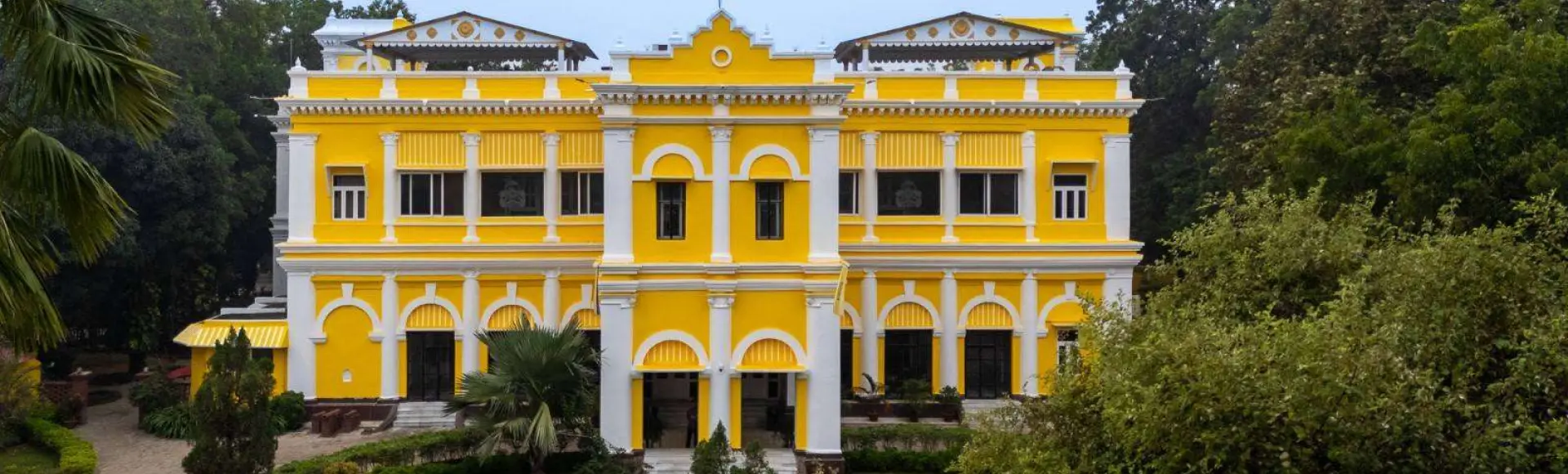
The Belgadia Palace
In Baripada, Belgadia Palace is an eighteenth-century heritage residence associated with the Bhanja dynasty. Visitors come to see its Victorian architecture and explore its links to Mayurbhanj’s royal history.
Key facts · verified by Ghumoopedia editors
- Type of place
- Heritage monument
- Best time to visit
- Throughout the year
- Verified
- 21 Nov 2026
Plan a trip from The Belgadia Palace — a day-by-day route through places nearby.
Located in Baripada, in Odisha’s Mayurbhanj district, Belgadia Palace is an eighteenth-century property among hills and green scenery. Its architecture follows Victorian forms. Interior details include a wooden staircase, teak fittings, chandeliers and arched windows. A portion now welcomes guests as a heritage homestay. The palace’s history is tied to the Bhanja dynasty, whose rule helped establish Mayurbhanj as a place of artistic, architectural and cultural accomplishment. Maharaja Ram Chandra Bhanjdeo had the palace built for his wife, Sucharu Devi, as a loving gesture. She was a social reformer and an advocate for women’s rights. The royal family has restored part of the residence for use as a homestay. This work keeps its history present and supports Mayurbhanj’s cultural traditions through tourism intended to be sustainable. Plan your visit around Throughout the year. The official suggested visit duration is 1–2 Days; treat this as time at the attraction, not the complete journey from your hotel. Odisha’s coast and plains can be hot and humid, while southern hill districts may feel cooler after sunset. Heavy monsoon rain can affect road travel and access to outdoor sites. Check the local forecast before setting out, and keep a flexible alternative for bad weather. Official destination reference: https://odishatourism.gov.in/en/places/the-belgadia-palace-2
Why it matters
The Belgadia Palace is a heritage landmark in Baripada, associated with the Bhanja dynasty and the history of Mayurbhanj. Its regional importance lies in its connection to the former royal household and its distinctive Victorian-influenced architecture. Odisha Tourism lists it under the state’s heritage property/ancient heritage category and presents it as a boutique heritage homestay, where part of the palace has been adapted for visitors. The property also offers a setting for learning about Mayurbhanj’s cultural traditions and royal legacy. It is not identified here as a UNESCO World Heritage Site or an ASI-protected monument; check with the managing authority for its current protection and visitor-access status.
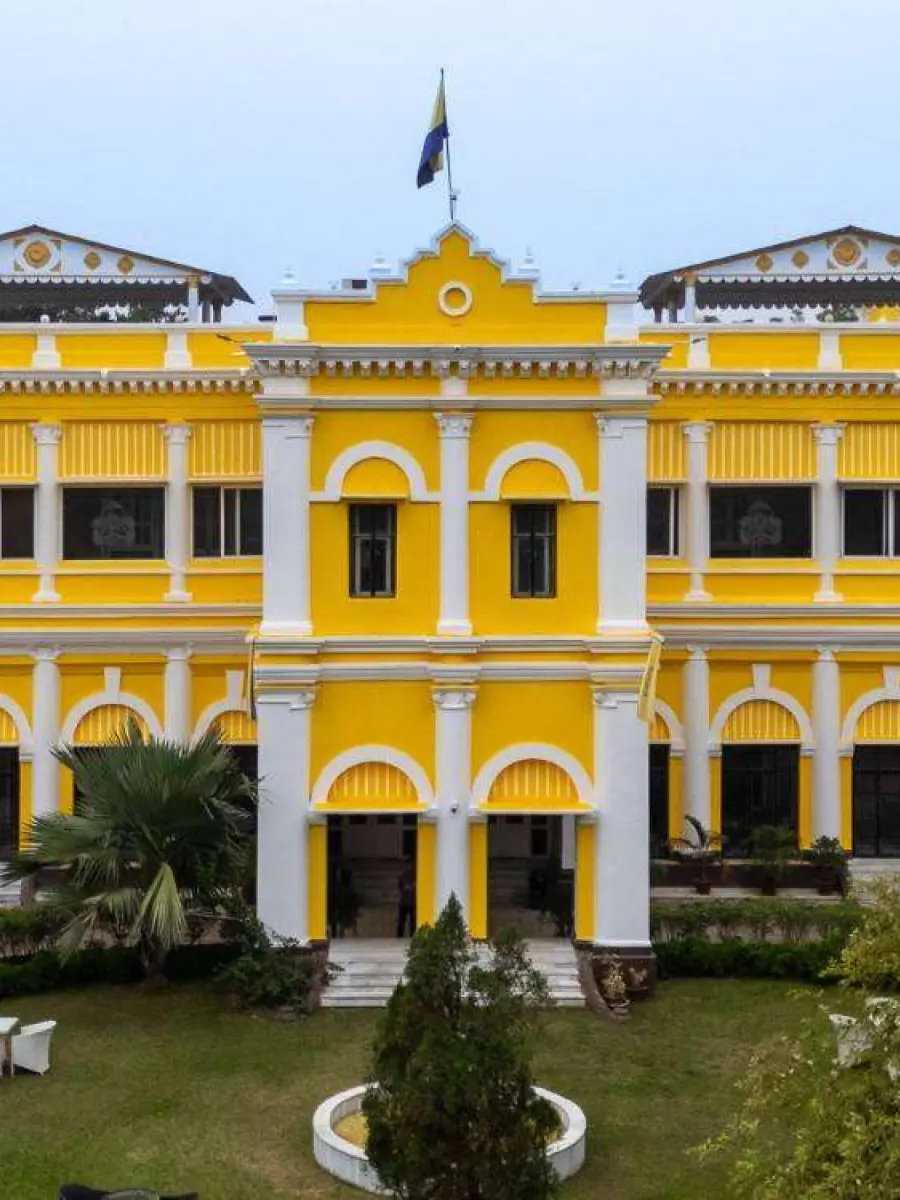
The Belgadia Palace is closely linked to the Bhanja dynasty, whose rulers shaped Mayurbhanj’s political and cultural history. The destination account describes the palace as an 18th-century residence and attributes its construction to Maharaja Ram Chandra Bhanjdeo. It says the palace was built as a symbol of affection for his wife, Sucharu Devi, remembered as a social reformer and advocate for women’s rights. The palace therefore carries both a royal association and a story connected with progressive ideals. Exact construction dates and details of later alterations are not stated consistently in the available visitor information, so it is best not to assign a precise building year. The Bhanja court’s patronage helped foster art, architecture and cultural life in the region. In more recent years, the royal family has restored part of the property for use as a heritage homestay. This reuse keeps the building in active use while presenting aspects of Mayurbhanj’s heritage to visitors. Confirm which rooms and areas are open before planning a visit, as access may depend on the homestay’s arrangements.
Origin stories & folklore
The palace’s best-known origin story is presented as a historical account rather than a supernatural legend: it was built by Maharaja Ram Chandra Bhanjdeo as an expression of love for Sucharu Devi. Her reputation as a social reformer gives the story a further dimension beyond royal romance. No widely documented local tale of ghosts, hidden treasure or miraculous events is established in the visitor information for the palace, so such stories should not be repeated as fact. Visitors may hear other family or community accounts locally; treat them as oral tradition and ask who tells the story and how it has been passed down.
Architecture & design
The palace is known for Victorian-influenced design, interpreted within the royal architectural history of Mayurbhanj. Visitor descriptions draw attention to its arched windows, chandeliers, teakwood interiors and grand wooden staircase. These features give the interiors a formal, domestic character rather than the appearance of a temple complex or fort. The palace’s layout includes rooms and circulation spaces suited to a royal residence, though the precise plan and the portions open to visitors can vary. Timber, including teakwood elements, is prominent in the interiors; the available information does not provide a verified inventory of all construction materials or structural techniques. Its combination of European-influenced details and a regional royal setting is a central part of its architectural interest. Look closely at permitted interior details and ask before entering private or guest areas.
Important objects & sculptures
No verified catalogue of sculptures, idols, inscriptions or museum collections is provided for Belgadia Palace. The most consistently noted features for visitors are architectural and decorative: the grand wooden staircase, teakwood interiors, chandeliers and arched windows. These are better treated as parts of the building than as individually documented collection objects. If rooms are open during your visit, ask the host or guide whether any furnishings, portraits or family objects have a known history and whether they may be viewed. Do not assume that private household items are on display or available to photograph.
Begin with the main attraction at The Belgadia Palace and leave time to understand its setting in Mayurbhanj. Look for interpretation boards, guided visits or opportunities to meet local makers. Ask before photographing people or their work. A village workshop is a working space, not a staged performance; agree on any demonstration charge and avoid pressuring artisans for free access. Keep a simple itinerary: arrive in daylight, enjoy the main visit, take a shaded meal break, then decide whether one nearby stop fits your return plan. Use the district index to find nearby places, but check the actual road route before combining them. Reserve a little time for photographs from permitted public viewpoints and avoid blocking paths while taking pictures.
Suggested itineraries
Half day: Arrive in daylight; allow 1–2 hours for an arranged palace visit and its architectural details; take a shaded break; leave time for the return journey. Full day: Spend 2–3 hours at the palace by prior arrangement; pause for a meal; use the afternoon for a relaxed Baripada town visit or a locally confirmed nearby stop, allowing for road conditions. Gentler option: Arrange vehicle drop-off as close as permitted, focus on accessible rooms or viewpoints confirmed by the host, take seated breaks, and skip extra stops.
The palace is connected with the Bhanja royal heritage and with Mayurbhanj’s wider cultural life. Mayurbhanj Chhau, a distinctive masked dance tradition, is associated with the district, though a performance should not be expected at the palace unless one has been arranged. Odia is widely used in the region; other languages may also be heard in this culturally diverse district. A heritage stay can offer informal opportunities to learn about local customs and food, but these depend on the hosts and season. Ask before photographing residents, staff, performers or their work, and approach cultural practices as living traditions rather than staged attractions.
Festivals & events
Mayurbhanj’s festival calendar includes regional observances such as Durga Puja and Makar Sankranti, as well as religious celebrations in Baripada and nearby communities. Mayurbhanj Chhau performances and related cultural events may be presented at festivals or special programmes, but they are not guaranteed at the palace. Dates follow local and religious calendars and vary from year to year. Festival periods can bring busier roads, crowded markets and greater demand for accommodation in Baripada. Check local announcements before travelling, and allow extra time if combining the palace with a town event.
For a visit to The Belgadia Palace, plan food around your base in Mayurbhanj and do not assume that a remote entrance has a full restaurant. Odisha offers rice-based meals, dalma, vegetable preparations and sweets such as chhena poda. Availability varies by district and outlet; ask what is freshly prepared rather than expecting every local dish at every stop. Choose busy, clean establishments and tell staff about allergies, spice preferences or dietary restrictions before ordering. Carry sealed drinking water and a small snack if you are travelling beyond a town. In hot weather, take regular water breaks instead of waiting until you feel exhausted. For early starts, arrange breakfast in advance and ask your accommodation whether a packed meal is practical. Keep all packaging with you until you find an appropriate waste bin.
Shopping & local experiences
Baripada’s markets are the most practical places to look for everyday supplies and locally made items. Mayurbhanj is associated with crafts and cultural traditions, including the materials and artistry linked with Chhau, but availability varies; ask locally about authentic makers rather than assuming the palace sells souvenirs. Look for regional snacks or foods in town and ask vendors about ingredients if you have dietary needs. Buy directly from artisans when possible, agree on the price before a custom demonstration or purchase, and ask before photographing makers or their work.
Throughout the year
Start by choosing a practical overnight base in or near Mayurbhanj, rather than assuming every attraction has its own railway station. Odisha Tourism lists this rail access: Baripada (4 km). The listed air access is: Bhubaneswar (258 km). Road access: Baripada (1 km). Compare train, bus and flight options door to door. Rail can suit overnight journeys and travellers who prefer to avoid a long drive. A bus may be useful between district towns, but the last service may finish before your visit ends. A flight only saves time if airport transfers, check-in and the final road leg are included. Reserve the return leg before departure and allow time for traffic, meals and weather. Check IRCTC and NTES for trains, OSRTC for buses, and the airline’s own schedule for flights. Do not rely on an unconfirmed connection or assume taxis will wait at a remote site.
Confirm onward and return timings on IRCTC / NTES, the state bus operator or your airline before travel. A dash means current timings or fares have not been verified.
Getting around
Baripada is the practical base for reaching the palace. Odisha Tourism lists Baripada as the nearby road and rail access point; arrange the final leg locally rather than assuming a direct public service to the entrance. Auto-rickshaws and local taxis may be options in town; confirm the destination and return plan with the driver before setting out. Local buses can help with travel between district centres but may not suit a flexible palace visit. Ask the property about vehicle access and parking, and walk only where the route is safe and permitted. Do not rely on a late return service without checking locally.
Hours, tickets & permissions
Entry arrangements may differ between a heritage-homestay guest and a visitor seeking a tour, and some rooms may be private or occupied. Tickets, advance booking, photography permissions, identification requirements and any special access rules should be confirmed with the managing authority or palace hosts before arrival. Do not assume the grounds are freely open as a public monument. Confirm current visiting hours and fees directly with the managing authority, since these details can change and are not stated here.
Facilities
Facilities depend on whether you are staying at the heritage homestay or visiting by arrangement. The property may provide guest facilities such as toilets and meals for residents; day visitors should check access in advance. In Baripada, visitors can look for food, drinking water, shops and cash services, but availability and opening status vary. Ask the palace about parking, guided visits and accessible toilets before travelling. Carry drinking water and any personal necessities, especially if combining the visit with a longer drive or an out-of-town excursion.
Accessibility
The palace is a historic building, so visitors should expect thresholds, stairs and uneven surfaces rather than modern step-free access throughout. Its notable grand wooden staircase may make upper-floor rooms difficult or impossible for some visitors to reach. The actual walking distance and which rooms are open depend on the visit arrangement; ask the host about steps, seating, toilets and vehicle drop-off before booking. Shade and rest opportunities may be available, but should be confirmed. Wheelchair and stroller suitability cannot be guaranteed. Older visitors or anyone with limited mobility may prefer a short, ground-floor-focused visit with a companion.
At The Belgadia Palace, local access rules take priority over any suggested itinerary. Reconfirm opening arrangements, entry eligibility, permits and weather restrictions shortly before arrival. Keep the emergency number 112 available and save your accommodation’s contact details offline. A map pin identifies a general location, not an assurance that the approach road or walking path is safe. Ask local staff which entrance visitors should use. Respect conservation barriers, residential boundaries and instructions from staff. Ask permission for portraits and avoid sharing identifiable images of local residents without consent. Carry only necessary valuables, keep rubbish out of the site, and leave enough daylight for the return journey.
Photography
Ask the host or managing authority which rooms and areas may be photographed; private guest spaces and family objects may be off limits. Soft morning or late-afternoon light can bring out the palace’s exterior details, but permitted viewpoints depend on access. Avoid blocking entrances and paths while taking pictures. Always ask permission before photographing staff, residents or visitors. Drone use may require permissions and can raise privacy and safety concerns; do not fly one without checking applicable rules and obtaining consent. Be especially discreet during any private ceremony or cultural activity.
Choose accommodation by the complete journey to The Belgadia Palace, not by the district name alone. A room in a well-connected town in Mayurbhanj may offer easier transport, meals and medical access than a property advertised as being close to the attraction. Check the exact location, recent guest feedback, reception hours and cancellation terms. Ask how you will reach the site and return after the visit, especially if you are not driving. A centrally located stay can make early sightseeing and an evening return easier. Confirm whether the approach road is accessible to your vehicle and whether lifts are available. Book only through a trusted accommodation channel, avoid sending payments to an unverified personal contact, and keep written confirmation of the services included.
Baripada is the nearest town for food, services and local markets. Other recognised Mayurbhanj attractions include Similipal National Park, known for its forest landscapes, and Khiching, associated with the Kichakeswari Temple and archaeological remains. Devkund is another known waterfall destination in the district. These places are not immediate palace-side stops and may require substantial road travel, advance planning or locally applicable permissions; do not combine them on a tight schedule. Check current access, weather and road conditions before choosing an excursion, especially for forest areas and waterfalls.
For couples visiting The Belgadia Palace, keep the day relaxed: one main visit, a meal break and a return transfer arranged in advance. Choose public viewpoints for photographs and respect religious or community expectations around behaviour and clothing. Confirm the accommodation’s check-in requirements before booking. Avoid secluded paths after dark and do not trade a safe return plan for a late photograph. A quieter weekday may suit you, but opening and access arrangements still need local confirmation.
Q: How much time should I allow for Belgadia Palace? A: Odisha Tourism suggests 1–2 days at the attraction. For a shorter visit, arrange access in advance and allow additional time for travel. Q: When is a good season to visit? A: The destination is planned for visits throughout the year. Check the local forecast, as heavy monsoon rain can affect roads and nearby excursions. Q: Can I enter without booking, and is there an entry fee? A: Access may depend on homestay and tour arrangements. Q: Is the palace suitable for children and elderly visitors? A: Families may enjoy the historic interiors, but supervise children and ask about stairs, uneven surfaces, seating and step-free access before visiting. Q: Where can I stay nearby? A: The palace operates as a heritage homestay, subject to availability and its booking arrangements. Baripada is another practical base; confirm accommodation directly.
Be the first to share photos, stories, advice or a helpful contact for The Belgadia Palace.
Loading…