
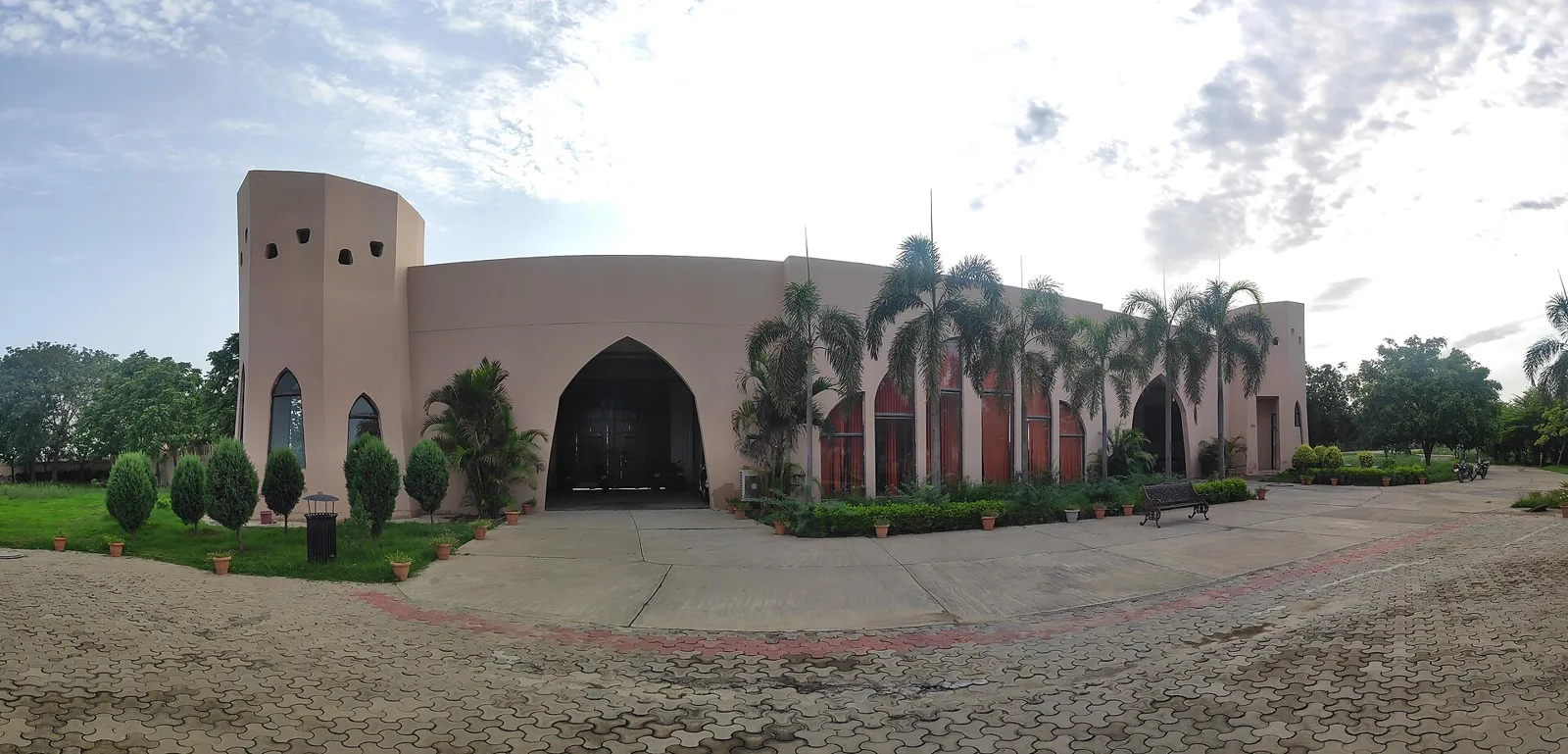
Fateh Burj
Fateh Burj is a 100-metre victory monument at Chappar Chiri in Punjab’s Mohali district. People visit to see a tower commemorating the Sikh Misls and Banda Singh Bahadur’s decisive battle.
Key facts · verified by Ghumoopedia editors
- Type of place
- Community & living culture
- Best time to visit
- October to March
- Nearest railway station
- Chandigarh Junction · about 15 km (straight line)
- Verified
- 21 Nov 2026
Plan a trip from Fateh Burj — a day-by-day route through places nearby.
Fateh Burj stands in the historic village of Chappar Chiri, within Mohali district, Punjab. Located on Banda Singh Bahadur Road just outside Mohali, it was completed in 2011 and reaches 328 feet (100 metres). It is India’s tallest victory tower. The monument honours the establishment of the Sikh Misls across much of Punjab in 1711. Chappar Chiri is linked to the decisive battle in which Banda Singh Bahadur defeated Wazir Khan, who commanded the Mughal army. A highly respected Sikh warrior, Banda Singh Bahadur is commemorated here. The site lies 140 kilometres from Amritsar and 20 kilometres from Sirhind. Punjab's identity is shaped by Sikh heritage, gurdwara traditions of seva and langar, Bhangra and Giddha, and a strong farming culture. Punjab has hot summers from April to June, a monsoon from July to September, and cold, foggy winters from December to February. Winter fog can delay trains and flights. The usual best time to visit is October to March. Timings, fees and access arrangements must be confirmed locally. For official information, see Punjab Tourism at https://punjabtourism.gov.in.
Why it matters
Fateh Burj, meaning “Victory Tower,” is a memorial at Chappar Chiri in Mohali district, Punjab. It commemorates Banda Singh Bahadur’s decisive victory over Mughal commander Wazir Khan in the battle associated with Chappar Chiri and the growth of Sikh political authority in the region. Public accounts describe the tower as completed in 2011 and 100 metres (328 feet) tall. Its importance is regional as a place of remembrance for Sikh history and the communities connected with it, as well as a landmark in the Mohali area. The available guide does not establish UNESCO or Archaeological Survey of India protection; visitors should not assume either designation.
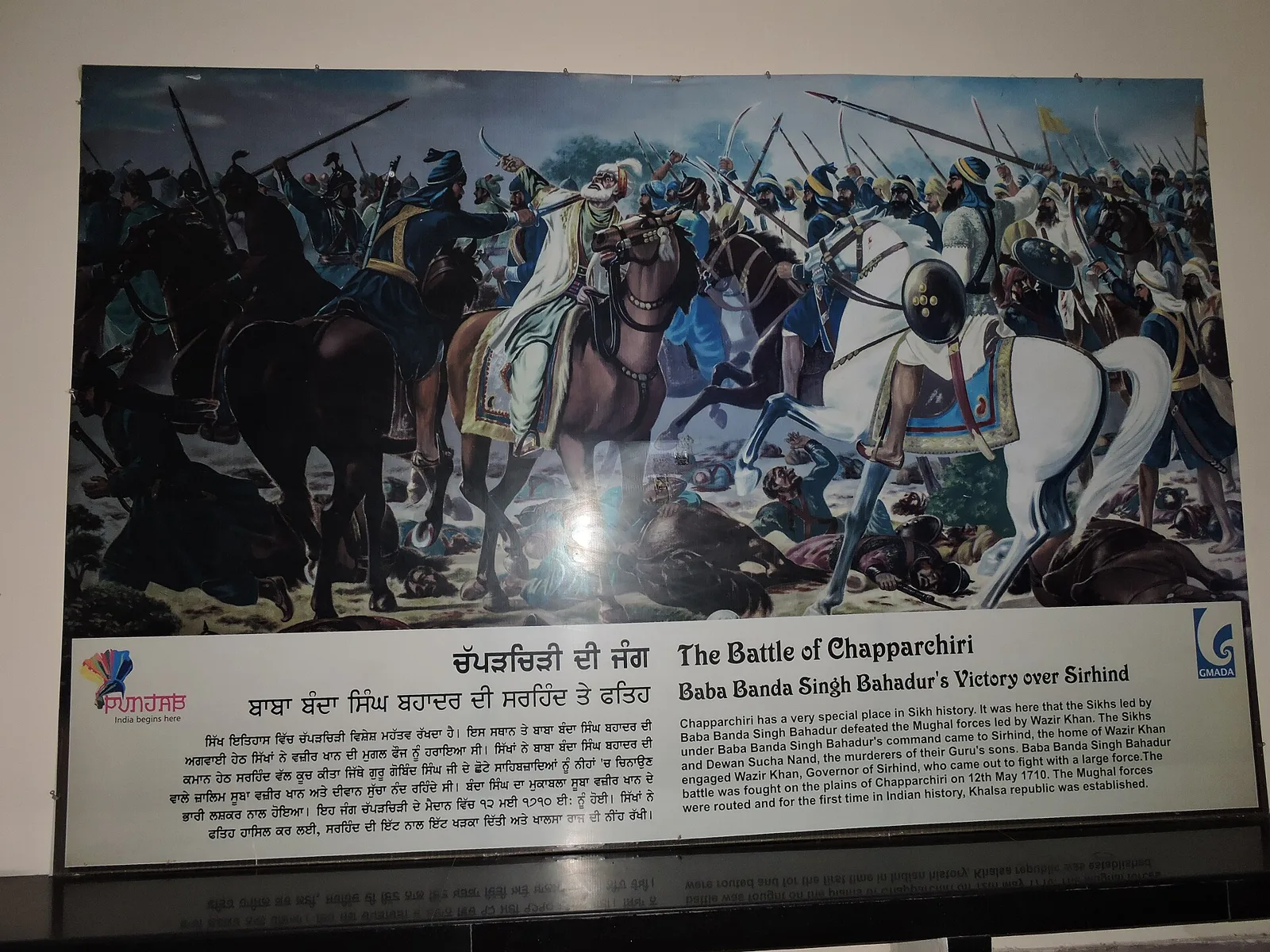
Chappar Chiri is remembered for the battle in which Banda Singh Bahadur defeated Wazir Khan, the Mughal governor and commander associated with Sirhind. The encounter is generally dated to 1710. Its outcome opened the way for Banda Singh Bahadur’s forces to take Sirhind and became a consequential episode in Sikh political history. The site’s public account also links the memorial to the establishment of Sikh Misls across much of Punjab in 1711. Fateh Burj itself is a modern memorial rather than a surviving structure from the battle. It was completed in 2011 and was built to commemorate the victory and its historical legacy. At 100 metres (328 feet), public descriptions identify it as India’s tallest victory tower. Its name, “Victory Tower,” makes that commemorative purpose explicit. The memorial has made Chappar Chiri a more visible destination for visitors interested in Sikh history and heritage. The available guide does not document a major restoration campaign or provide a detailed construction history; current maintenance and access arrangements should be checked locally.
Origin stories & folklore
No distinct origin legend for the tower is firmly documented in the available guide. The strongest local memory is historical: accounts of Banda Singh Bahadur’s victory at Chappar Chiri are retold as a story of courage, resistance and the establishment of Sikh authority. In community remembrance, Banda Singh Bahadur is honoured as a revered Sikh warrior, and the tower serves as a visible marker of that legacy. These are historical and devotional interpretations, not a separate supernatural tale. Visitors can ask an authorised guide about local oral accounts while distinguishing them from the documented history of the battle.
Explore Fateh Burj slowly and read the interpretation boards or hire an authorised guide to understand its history. Check opening days and ticket counters in advance, as many monuments and museums close on one weekday and on public holidays. A comfortable itinerary is one main visit in the morning, a local meal at midday and a short nearby stop before an afternoon return. Use the district list on this site to find other places in Mohali, but check the actual road route and its condition before combining stops. If a festival or fair is on, local roads and stays can be busy — and the experience can be unforgettable. Leave no litter: many sites are protected by the communities around them.
Suggested itineraries
Half day: Allow about 1–2 hours to explore Fateh Burj, read the interpretation material or join an authorised guide, and take a quiet break; have a meal in Mohali or nearby before returning. Full day: Spend about 2 hours at Fateh Burj, pause for a local Punjabi meal, then visit a selected heritage stop in Sirhind or Mohali and return with time for the road journey. Gentler option: Focus on the memorial’s accessible ground-level areas, take seated breaks and arrange a taxi between stops; confirm step-free access before setting out.
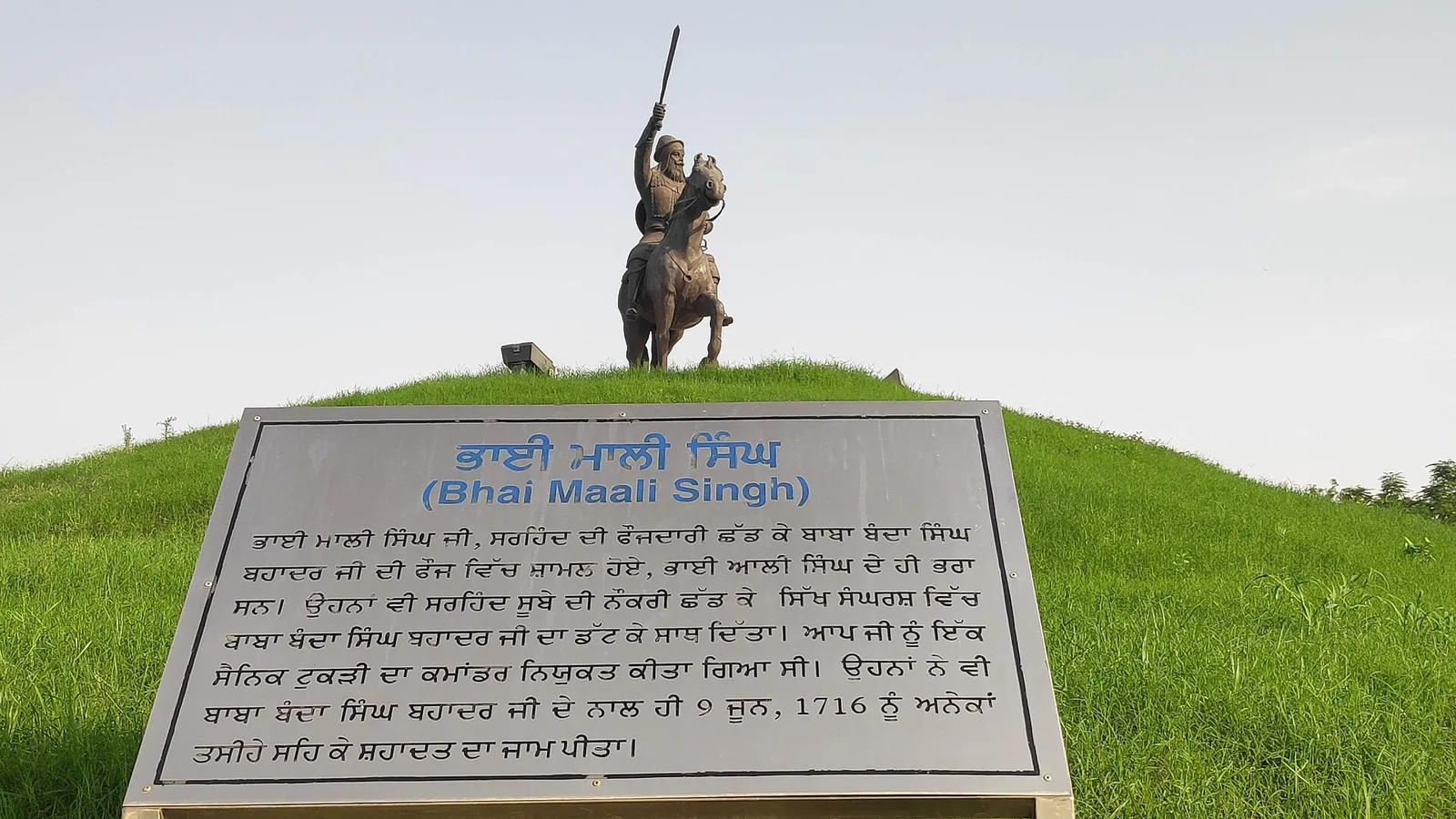
The memorial is encountered within the wider living culture of Punjab, where Sikh heritage, gurdwara traditions and community service are prominent. Seva, or voluntary service, and langar, the shared community meal, are important practices at gurdwaras; visitors should follow the customs of any gurdwara they visit separately. Punjabi is widely spoken in the region, alongside Hindi and English in visitor-facing settings. Bhangra and Giddha are well-known Punjabi dance traditions, while Punjabi folk music and poetry often reflect farming life and regional history. Everyday dress varies; visitors will see both contemporary clothing and traditional Punjabi attire. The tower itself is a memorial, not a performance venue.
Local communities
The place is connected to Sikh communities who remember Banda Singh Bahadur and the history of Chappar Chiri, as well as residents of the surrounding villages and Mohali district. The wider region includes farming communities, reflecting Punjab’s strong agricultural economy, alongside people working in town services, transport, education and commerce. Visitors should treat local residents as neighbours rather than attractions and ask permission before photographing individuals. Gurdwara communities nearby may welcome visitors according to their own customs, but religious spaces and practices should be approached respectfully and without assuming access to restricted areas.
Festivals & events
Vaisakhi, usually celebrated in spring, is an important Sikh and Punjabi festival, and Gurpurabs honouring Sikh Gurus are observed at gurdwaras across the region. Seasonal fairs and community events may take place in nearby towns, but the available guide does not confirm a regular festival hosted at Fateh Burj itself. Event calendars vary by year and locality, so check with local authorities or gurdwaras before planning around a gathering. On festival days, roads, parking and nearby food or accommodation may be busier than usual; allow extra time and follow any crowd-management directions.
Local food in Punjab includes sarson da saag with makki di roti, Amritsari kulcha, chole bhature, lassi, tandoori dishes, pinni and jalebi; langar at gurdwaras serves a free vegetarian meal to all. Ask what is fresh that day; many small eateries cook a limited daily menu. Vegetarian travellers eat very well across this region, and most towns also have simple non-vegetarian dhabas. Remote sites may have no restaurant at all. Carry water and snacks, eat a proper breakfast before long drives, and ask your accommodation for a packed lunch if you are heading out early. Try a home-cooked or dhaba meal when you can — it is often the best food on the route. Choose busy, clean places and carry your packaging back to town.
Shopping & local experiences
There is no specific craft market confirmed at Fateh Burj. For souvenirs, look in established shops in Mohali or nearby towns for Punjabi textiles, phulkari embroidery, books on Sikh history and locally made goods; check the origin and quality before buying. Food is a practical way to experience regional cooking: seek out Punjabi dishes at restaurants in the surrounding towns, and ask about ingredients if you have dietary needs. If purchasing religious objects, treat them respectfully and buy from reputable sellers. Avoid taking plants, stones or other material from the memorial grounds.
Fateh Burj stands in the plains of Punjab, in a settled rural-urban landscape where village roads and cultivated fields form much of the surrounding scene. The memorial is not described in the available guide as a forest, wetland or wildlife reserve, and no particular water body or nature trail is confirmed on site. Depending on season and land use, visitors may see common field-edge plants and birds, but sightings are never assured. Summer heat can make exposed areas uncomfortable, while winter fog may reduce visibility and affect journeys. Stay on public paths, avoid entering farmland without permission and take litter away, especially where there are no convenient bins.
October to March
The nearest principal railway station by straight-line distance is Chandigarh Junction, roughly 15 km away. The nearest operating airport by straight-line distance is Shaheed Bhagat Singh International Airport, Chandigarh, roughly 10 km away. These figures are calculated from map coordinates — actual road distance may differ. Delhi, Chandigarh and Amritsar are the main rail and air hubs, and most long-distance journeys connect through them. For the final leg, Punjab Roadways, PEPSU Road Transport (PRTC) and private Volvo coaches link district towns; shared taxis usually leave early in the morning. A private taxi gives more flexibility for remote sites. When comparing train, bus and flight, count the complete door-to-door time: a flight saves the most time only if the onward road transfer is short, while an overnight train plus a road journey can save a hotel night. Book your return before you leave, because seats fill quickly on weekends and holidays. Current train numbers, timings, return services and fares are not listed here; check IRCTC and NTES for trains and the airline's own schedule for flights. No permit is needed to visit Punjab. The Wagah–Attari border ceremony needs a same-day security check, and the Kartarpur Corridor to Pakistan requires advance online registration and a passport.
Confirm onward and return timings on IRCTC / NTES, the state bus operator or your airline before travel. A dash means current timings or fares have not been verified.
Getting around
The memorial lies at Chappar Chiri on Banda Singh Bahadur Road, outside Mohali. Taxis or app-based cabs from Mohali or Chandigarh can provide a flexible final connection; confirm the return plan, as availability may be limited around the village. Local buses and shared transport may serve nearby towns, but routes and stopping points should be checked locally. Auto-rickshaws can be useful for shorter connections where available. If driving, use designated parking if provided and do not block village roads. The grounds can be explored on foot, but distances between the entrance, tower and interpretation areas should be assessed on arrival.
Hours, tickets & permissions
Entry arrangements may depend on the site authority and can change for maintenance, public events or security. Tickets, any camera permissions, access to particular parts of the memorial and rules for groups should be confirmed locally before travelling. Do not assume that the tower’s upper levels are open to visitors. Carry identification if requested by staff, and follow instructions at the entrance.
Facilities
Facilities at the memorial may vary, so check locally for toilets, drinking water, seating, shade, parking and food stalls. Mohali and nearby settlements are more reliable places to look for restaurants, shops, ATMs and other services. Guided interpretation may be available, but arrange an authorised guide through a recognised source rather than relying on an unverified offer. Carry water and any essential medicines, particularly in hot weather. Do not assume that every facility is open or that card payments are accepted on site.
Accessibility
The memorial grounds may involve outdoor walking on paved or uneven surfaces, and the amount of walking can depend on which areas are open. Access to the tower’s upper levels, including any stairs, should be confirmed before arrival; do not assume a lift or ramp is available. Shade and seating may be limited in exposed areas. Wheelchair users, visitors with strollers and people with reduced mobility should contact the site authority about the entrance route, surfaces and accessible toilets before travelling. Older visitors may find a shorter ground-level visit more comfortable, with rest breaks and a vehicle drop-off if permitted.
No permit is needed to visit Punjab. The Wagah–Attari border ceremony needs a same-day security check, and the Kartarpur Corridor to Pakistan requires advance online registration and a passport. Carry a photo ID at all times and save the emergency number 112 and your accommodation's contact offline. Heat in summer and dense fog in winter are the main weather risks; carry water and allow extra travel time on foggy December–January mornings. Respect community rules, private property and posted instructions. Check official advisories for the region before travel, and follow local guidance if access changes.
Visitor rules
Follow signs and staff directions, remain in areas open to visitors and do not climb barriers or enter service spaces. Wear comfortable, weather-appropriate clothing and footwear; if visiting a gurdwara nearby, follow that institution’s dress and head-covering customs. Dispose of litter responsibly and avoid single-use plastic where possible. Keep noise low around commemorative or religious spaces, and do not damage structures or interpretation panels. Photography may be subject to site-specific restrictions, so check before using equipment. Ask before photographing local people, and respect any event-related crowd controls.
Photography
Soft morning or late-afternoon light can bring out the tower’s form and the open landscape, while midday sun may be harsh, especially in summer. Look for viewpoints from public areas around the memorial and avoid blocking paths or other visitors. Personal photography may be allowed, but confirm any restrictions on cameras, tripods or interior areas with staff. Do not fly a drone without checking current aviation rules and obtaining any permissions required by the site authority. Ask consent before photographing people, and be especially considerate near religious observances or private property.
Choose a stay by the full journey to Fateh Burj, not just the district name. Main towns in Mohali usually offer hotels, state tourism lodges and guesthouses with better transport, meals and medical access, while village homestays offer a closer connection to local life. In the plains, check fans or air-conditioning in summer and heating in the December–January cold wave. Book in advance for weekends, festival dates and the peak season (October to March). Confirm the exact location, meals included, check-in time and cancellation terms in writing. Many homestays accept payment on arrival; avoid sending money to unverified contacts. Mobile network and digital payments can be unreliable in remote areas, so carry some cash.
For a wider heritage visit, consider Sirhind, where Gurudwara Fatehgarh Sahib, Aam Khas Bagh and Rauza Sharif are established places of interest. In Mohali, Gurudwara Amb Sahib is a well-known Sikh site. These visits have different religious and historical contexts, so check their individual access customs and opening arrangements before combining them. Road conditions and travel times vary; choose stops based on the actual route rather than assuming that every place is a short walk from Fateh Burj. Leave sufficient time for the return journey.
For couples, Fateh Burj rewards a slow pace: arrive early for soft light and fewer crowds, share a local meal and keep the evening free. Public displays of affection can be frowned upon in conservative communities and at religious sites, so be discreet. A homestay or a small heritage hotel can make the trip memorable — confirm privacy, hot water and transport back. Keep a buffer in your itinerary, because weather and traffic can delay plans in Punjab.
Q: How much time should I allow for Fateh Burj? A: Allow roughly one to two hours for the memorial, with extra time for travel, interpretation or a guided visit. Q: When is a comfortable season to visit? A: October to March is generally the most comfortable period. Summers can be very hot, and winter fog may affect travel. Q: Is there an entry fee, and when is it open? A: Check with the site authority before travelling. Q: Is the site suitable for children and older visitors? A: Families can visit, but outdoor walking, heat and possible steps may be a concern. Confirm access and facilities, and plan rest breaks. Q: Where should I stay nearby? A: Mohali and Chandigarh offer a wider choice of accommodation. Check current availability and choose based on your onward route.
Be the first to share photos, stories, advice or a helpful contact for Fateh Burj.
Loading…