
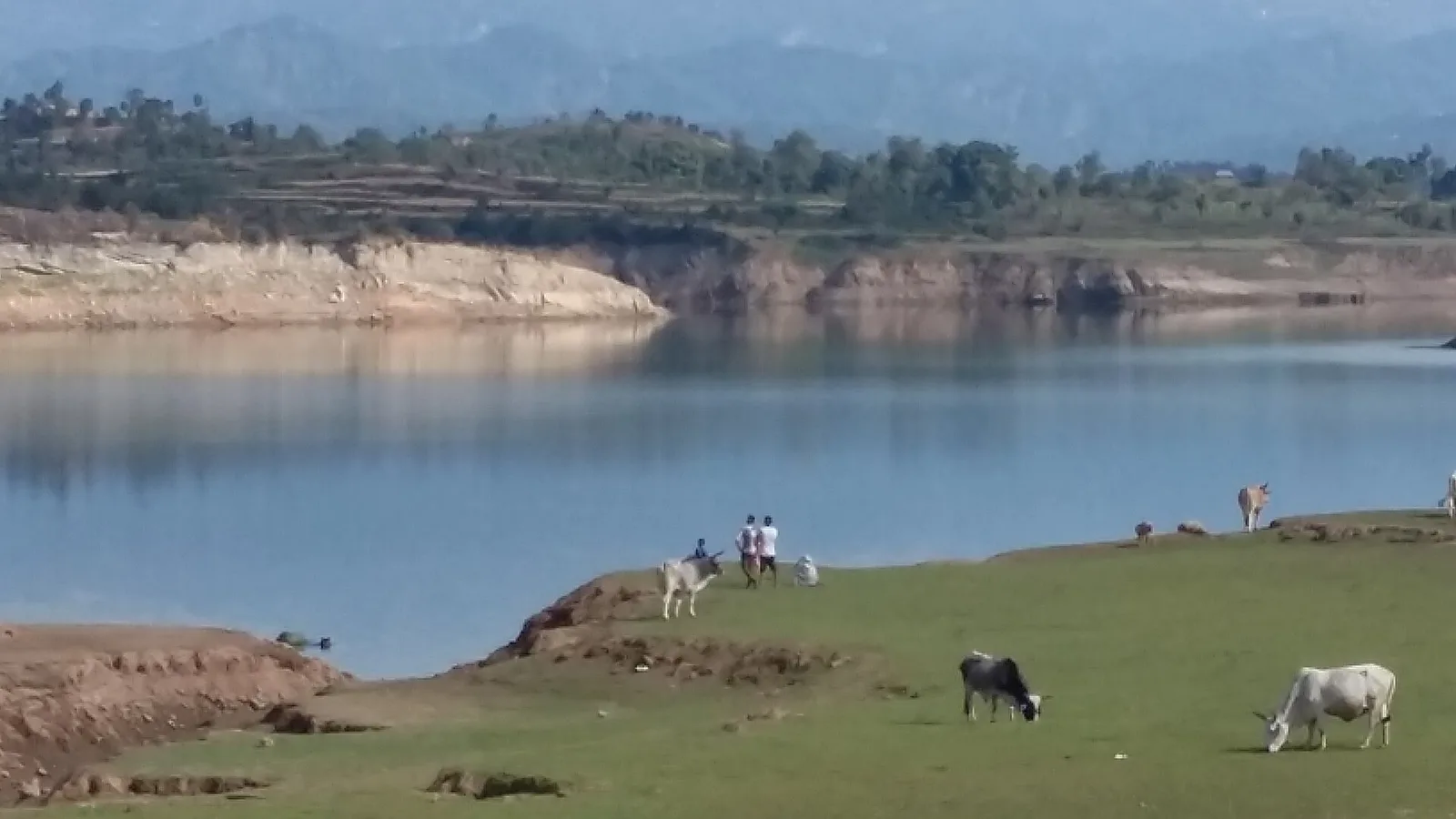
Ranjit Sagar Dam
Ranjit Sagar Dam, also called Thein Dam, is a hydroelectric and irrigation project on the Ravi River. Visitors come to see its large dam and reservoir, which extends across Punjab and Jammu and Kashmir.
Key facts · verified by Ghumoopedia editors
- Type of place
- Natural attraction
- Best time to visit
- October to March
- Nearest railway station
- Pathankot Junction · about 20 km (straight line)
- Nearest airport
- Pathankot Airport · about 25 km (straight line)
- Verified
- 21 Nov 2026
Plan a trip from Ranjit Sagar Dam — a day-by-day route through places nearby.
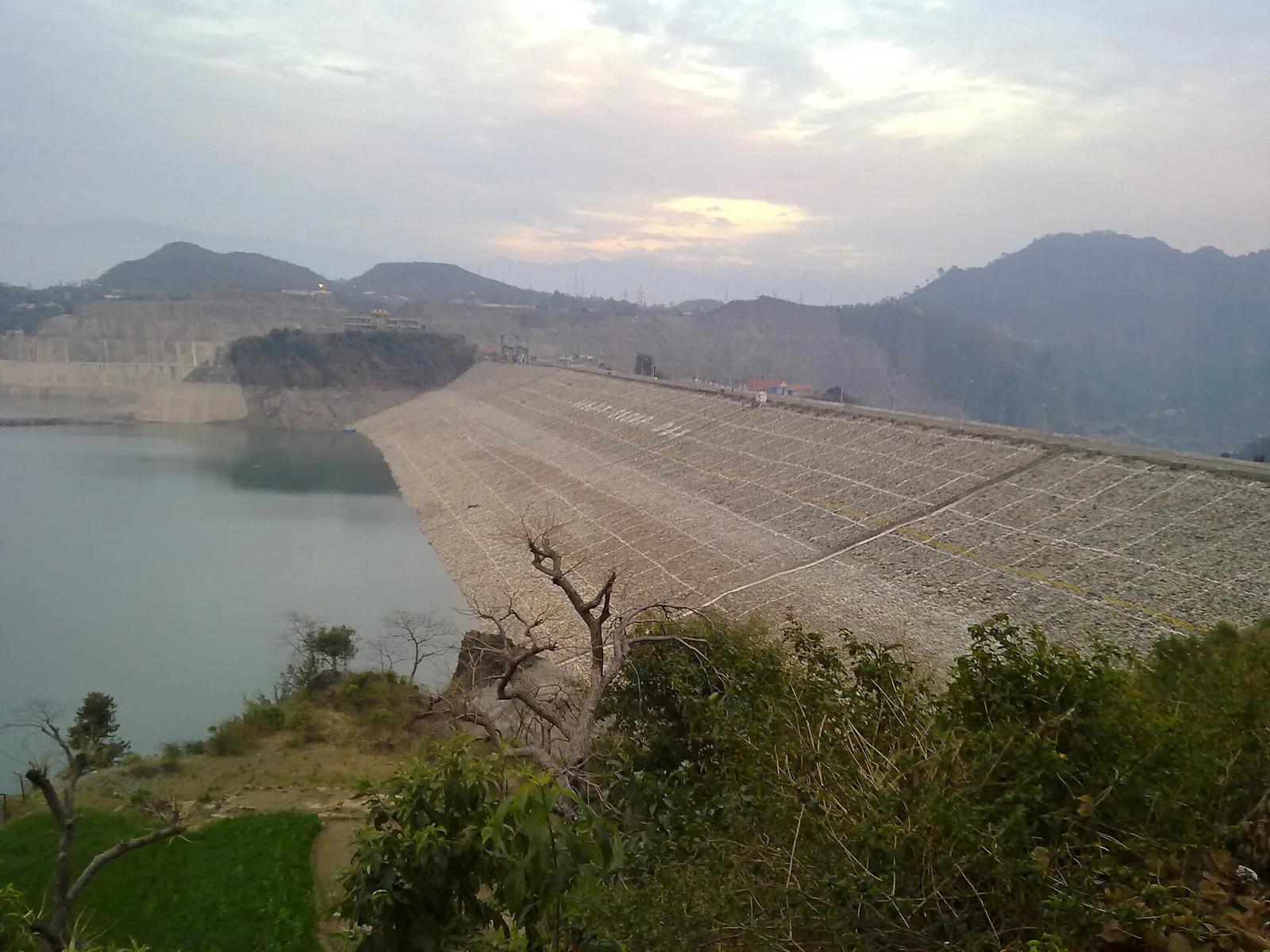
In Pathankot district, Punjab, the Ranjit Sagar project spans the Ravi River near the boundary with Jammu and Kashmir. It is also known as Thein Dam and lies above the Madhopur Barrage at Madhopur. As much as 60 per cent of its reservoir is within Jammu and Kashmir. The dam is about 30 kilometres from Pathankot and a similar distance from Kathua, on the Jammu and Kashmir side. Shahpur Kandi Township is the settlement associated with the project site. The Punjab Irrigation Department developed the scheme for irrigation as well as electricity generation. With an installed capacity of 600 megawatts, it is Punjab’s biggest hydroelectric dam. It is also counted among India’s tallest earth-fill dams, and its penstock pipes have the country’s largest diameter. Feasibility work started in 1953, followed by geotechnical investigations that continued until 1980. Building work began in 1981; the generators entered service in 2000, and the project was completed in March 2001. The project has been the subject of disputes between the Punjab and Jammu and Kashmir governments. Their concerns have included water and power allocation, local employment, compensation and the acquisition of land. Jammu and Kashmir presented these matters at the Northern Zonal Council meeting in Chandigarh on 12 May 2017. After that meeting, the Union Ministry of Home Affairs directed that barrages be built to give the two states equal rights over the dam. The proposed structures are intended to help provide irrigation to the Samba and Kathua districts. Punjab had also agreed to share electricity generated by the project, but Jammu and Kashmir’s earlier claims remained unresolved, with a settlement still pending. Punjab's identity is shaped by Sikh heritage, gurdwara traditions of seva and langar, Bhangra and Giddha, and a strong farming culture. Punjab has hot summers from April to June, a monsoon from July to September, and cold, foggy winters from December to February. Winter fog can delay trains and flights. The usual best time to visit is October to March. Timings, fees and access arrangements must be confirmed locally. For official information, see Punjab Tourism at https://punjabtourism.gov.in.
Why it matters
Ranjit Sagar Dam, also called Thein Dam, is a major water and power project on the Ravi River, on the boundary between Punjab and Jammu and Kashmir. Project information describes it as a multipurpose scheme serving irrigation as well as electricity generation. Its installed generating capacity is 600 megawatts, making it a significant part of Punjab’s power infrastructure. The reservoir extends across the state boundary, with a large share lying in Jammu and Kashmir, so water and electricity arrangements have involved both governments. The dam is also an engineering landmark: the project is described as an earth-fill dam with large-diameter penstock pipes. No UNESCO or ASI heritage designation is known for the site.
Plans for the Ranjit Sagar hydroelectric project began with feasibility studies in 1953, followed by geotechnical investigations that continued until 1980. The Punjab Irrigation Department undertook the project on the Ravi River, upstream of Madhopur Barrage. Construction began in 1981. The generating units were commissioned in 2000, and the project was completed in March 2001. It was designed to provide both irrigation water and hydroelectric power; its installed capacity is 600 megawatts. The dam and reservoir are associated with Shahpur Kandi Township, while the reservoir crosses into Jammu and Kashmir. The project’s operation has also been shaped by intergovernmental discussions about water use, electricity sharing, employment, compensation and land acquisition. In 2017, Jammu and Kashmir raised these matters at a Northern Zonal Council meeting in Chandigarh. The Union Ministry of Home Affairs subsequently mandated construction of barrages intended to support equal rights over the dam and irrigation in Samba and Kathua districts. For current project status, consult the relevant government departments.
Origin stories & folklore
No well-documented origin legend specific to Ranjit Sagar Dam is known. The dam is a modern engineering project, so visitors should distinguish its documented construction history from folklore about the wider Ravi region. As with many rivers in northern India, local stories and family memories may connect the river with journeys, farming, changing seasons or life beside the water. Such accounts can vary between communities and should be understood as local tradition rather than as verified history of the dam. If residents share a story, ask how they would like it represented and avoid presenting an individual account as a belief held by everyone.
Spend unhurried time at Ranjit Sagar Dam: walk the marked paths, use official viewpoints and ask locally whether a guide, entry ticket or permit is needed. Admire the water from safe points rather than climbing wet rocks or entering unknown currents. Wildlife sightings are never guaranteed — patience and quiet improve your chances. A comfortable itinerary is one main visit in the morning, a local meal at midday and a short nearby stop before an afternoon return. Use the district list on this site to find other places in Pathankot, but check the actual road route and its condition before combining stops. If a festival or fair is on, local roads and stays can be busy — and the experience can be unforgettable. Leave no litter: many sites are protected by the communities around them.
Suggested itineraries
Half day: Travel from Pathankot; check access with local authorities; spend time at an open viewpoint and take a short walk on an approved path; return to town for a meal. Full day: Start from Pathankot; visit an authorised dam viewpoint; pause for a meal in town; add Shahpur Kandi Fort or another nearby attraction if road conditions and opening arrangements allow; return before evening. Gentler option: Arrange a vehicle to an accessible, authorised viewpoint, keep walking to a minimum and take seated breaks; skip uneven paths and restricted areas.
The area reflects the cultural mix of the Pathankot region and the neighbouring Jammu belt. Punjabi is widely used in Punjab, while Hindi and Dogri may also be heard in the wider border region. Sikh heritage, gurdwara traditions of seva and langar, and Punjabi farming culture are important parts of local life. Bhangra and Giddha are familiar Punjabi dance forms, especially at celebrations, though they are not performances visitors should expect at the dam. Everyday customs are shaped by work, family gatherings and seasonal observances. Dress is generally practical for the weather and terrain; visitors should dress respectfully when entering religious places nearby.
Local communities
People connected with the reservoir include residents of Shahpur Kandi Township and nearby villages, farmers in the river basin, and workers involved in water management, power generation and related services. The project also affects communities across the Punjab–Jammu and Kashmir boundary, including people concerned with irrigation, land acquisition, compensation, employment and the sharing of electricity. These interests have been discussed between the two governments. Visitors should remember that the reservoir is part of a working infrastructure project, not simply a recreation site, and should follow local instructions and avoid photographing people without permission.
Festivals & events
There is no widely documented annual festival held specifically at Ranjit Sagar Dam. In the surrounding region, Baisakhi in spring, Lohri in winter and Sikh Gurpurabs are observed, while Hindu festivals such as Navratri may bring activity to nearby temples. Dates follow religious calendars and vary each year. Celebrations are generally centred on communities and places of worship rather than the dam itself. Local roads, markets and accommodation may be busier around major observances, so check locally before planning a visit. Visitors should be considerate at religious gatherings and follow any site-specific guidance.
Local food in Punjab includes sarson da saag with makki di roti, Amritsari kulcha, chole bhature, lassi, tandoori dishes, pinni and jalebi; langar at gurdwaras serves a free vegetarian meal to all. Ask what is fresh that day; many small eateries cook a limited daily menu. Vegetarian travellers eat very well across this region, and most towns also have simple non-vegetarian dhabas. Remote sites may have no restaurant at all. Carry water and snacks, eat a proper breakfast before long drives, and ask your accommodation for a packed lunch if you are heading out early. Try a home-cooked or dhaba meal when you can — it is often the best food on the route. Choose busy, clean places and carry your packaging back to town.
Shopping & local experiences
Pathankot’s town markets are the most practical place to look for everyday supplies, locally prepared snacks and Punjabi food. Visitors may find seasonal produce and regional sweets, though availability varies. The dam itself should not be expected to have a regular souvenir market or craft stalls. Ask locally about reputable shops rather than buying items made from protected wildlife or natural materials. If visiting gurdwaras nearby, follow their customs and do not treat religious objects as souvenirs. Carry reusable water containers where practical and take packaging waste back to a suitable bin.
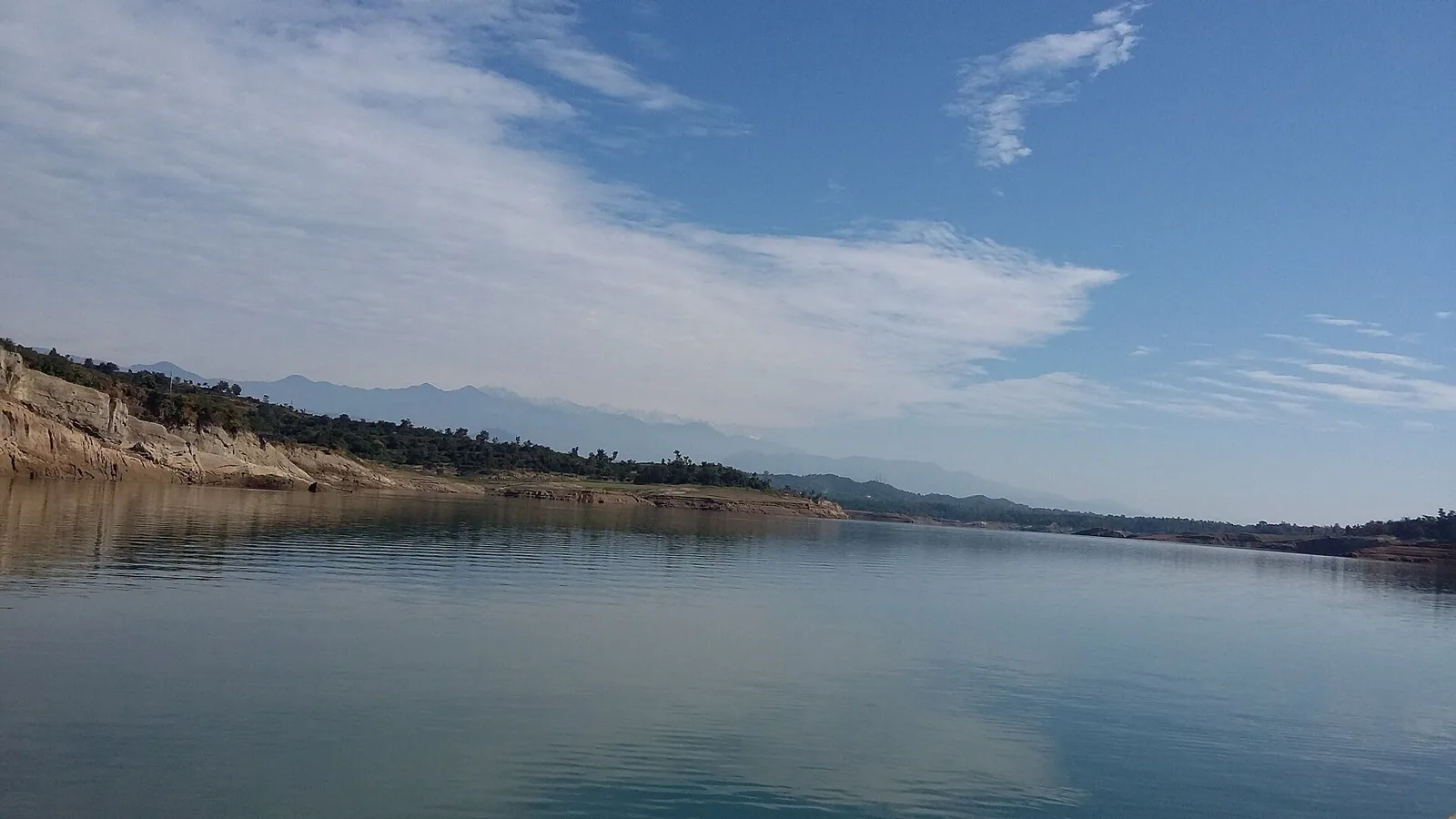
The dam holds back the Ravi River to form a large reservoir shared across the Punjab–Jammu and Kashmir boundary. Water, wooded and cultivated margins, and the surrounding upland landscape create changing views through the seasons. The water level and exposed shore can vary with reservoir operations and rainfall, so shoreline conditions should not be assumed to be stable. Birds may be present around the water and nearby vegetation, but sightings are never guaranteed and should be enjoyed from a distance. The reservoir is managed infrastructure: currents, steep or slippery banks and restricted areas can pose hazards. Do not enter the water, climb barriers or approach operational structures.
October to March
The nearest principal railway station by straight-line distance is Pathankot Junction, roughly 20 km away. The nearest operating airport by straight-line distance is Pathankot Airport, roughly 25 km away. These figures are calculated from map coordinates — actual road distance may differ. Delhi, Chandigarh and Amritsar are the main rail and air hubs, and most long-distance journeys connect through them. For the final leg, Punjab Roadways, PEPSU Road Transport (PRTC) and private Volvo coaches link district towns; shared taxis usually leave early in the morning. A private taxi gives more flexibility for remote sites. When comparing train, bus and flight, count the complete door-to-door time: a flight saves the most time only if the onward road transfer is short, while an overnight train plus a road journey can save a hotel night. Book your return before you leave, because seats fill quickly on weekends and holidays. Current train numbers, timings, return services and fares are not listed here; check IRCTC and NTES for trains and the airline's own schedule for flights. No permit is needed to visit Punjab. The Wagah–Attari border ceremony needs a same-day security check, and the Kartarpur Corridor to Pakistan requires advance online registration and a passport.
Confirm onward and return timings on IRCTC / NTES, the state bus operator or your airline before travel. A dash means current timings or fares have not been verified.
Getting around
Pathankot is a practical arrival point, but the final journey to the dam is best checked against current road conditions and access restrictions. Taxis or a locally arranged private vehicle offer flexibility; ask the driver to confirm which viewpoint or public access point is open. Local buses may serve towns in the wider area, but service to the dam itself should not be assumed. Auto-rickshaws are more useful within town than for the full rural approach. Walking is suitable only for short, permitted stretches, as distances between viewpoints can be substantial. Check parking arrangements locally and avoid leaving vehicles where they obstruct project roads.
Hours, tickets & permissions
Access arrangements can depend on dam operations, security requirements and the particular viewpoint or approach road. Some areas may be restricted, and permission, identification or a guide may be required; an open public viewpoint should not be assumed. Ticketing and camera rules can also change. Confirm current entry conditions, hours and any fees with the department managing the project or with local authorities before travelling. Follow signs and staff instructions, and do not cross barriers or enter the power station, dam works or other controlled areas.
Facilities
Facilities at the dam should not be taken for granted because access is connected to an operating infrastructure site. Toilets, drinking water, food stalls, guides and public parking may be limited or unavailable at a particular access point; check locally before setting out. Pathankot is more likely to offer food, shops, cash services and other visitor needs than the dam area. Carry drinking water and any essentials, take rubbish back with you, and do not rely on finding an ATM or a staffed visitor centre at the site.
Accessibility
The suitability of a visit depends on which access point is open. Viewpoints and paths may involve uneven ground, slopes, steps or a walk from parking, and there is no reliable information confirming wheelchair ramps or step-free facilities. Surfaces can become slippery near water or after rain. Wheelchair users, visitors with strollers and people with limited mobility should check the route and parking directly with local authorities before travelling, and avoid assuming that the dam crest is accessible. Older visitors may find a vehicle-based visit to an authorised viewpoint more comfortable than walking around the reservoir. Shade and seating may be limited.
No permit is needed to visit Punjab. The Wagah–Attari border ceremony needs a same-day security check, and the Kartarpur Corridor to Pakistan requires advance online registration and a passport. Carry a photo ID at all times and save the emergency number 112 and your accommodation's contact offline. Heat in summer and dense fog in winter are the main weather risks; carry water and allow extra travel time on foggy December–January mornings. Stay on marked paths, keep away from cliff edges and fast water, and never approach wild animals. Check official advisories for the region before travel, and follow local guidance if access changes.
Photography
The reservoir can be attractive in soft morning or late-afternoon light, with reflections and changing colours in the water. Use only public, authorised viewpoints and remain behind barriers; the most dramatic-looking position may be unsafe or restricted. Photography rules can differ around operational areas, so ask staff or check signs before taking pictures. Drone use may be restricted for security or safety reasons and should not be attempted without explicit permission from the relevant authority. Ask before photographing residents or workers, and be especially considerate around religious places and gatherings.
Choose a stay by the full journey to Ranjit Sagar Dam, not just the district name. Main towns in Pathankot usually offer hotels, state tourism lodges and guesthouses with better transport, meals and medical access, while village homestays offer a closer connection to local life. In the plains, check fans or air-conditioning in summer and heating in the December–January cold wave. Book in advance for weekends, festival dates and the peak season (October to March). Confirm the exact location, meals included, check-in time and cancellation terms in writing. Many homestays accept payment on arrival; avoid sending money to unverified contacts. Mobile network and digital payments can be unreliable in remote areas, so carry some cash.
Pathankot town can provide meals and services before or after a dam visit. Shahpur Kandi Fort is a nearby historic landmark worth checking for current access. In the wider Pathankot area, visitors may consider Mukteshwar Temple and Kathgarh Temple, both religious sites; confirm routes and local conditions before combining them with the dam. Madhopur Barrage is another water-management landmark in the region, but it is not necessarily open as a visitor attraction. These stops are not all immediately beside one another, so check actual road routes rather than planning by map proximity alone.
For couples, Ranjit Sagar Dam rewards a slow pace: arrive early for soft light and fewer crowds, share a local meal and keep the evening free. Public displays of affection can be frowned upon in conservative communities and at religious sites, so be discreet. A homestay or a small heritage hotel can make the trip memorable — confirm privacy, hot water and transport back. Keep a buffer in your itinerary, because weather and traffic can delay plans in Punjab.
Q: How much time should I allow for a visit? A: A half day can suit a viewpoint visit from Pathankot, while a full day allows for a nearby stop. Allow extra time for road conditions and access checks. Q: When is a good season to visit? A: October to March is generally comfortable for travel in Punjab. Check weather and road conditions, especially during monsoon rains and winter fog. Q: Is entry guaranteed, and do I need a ticket or permit? A: No. Access can depend on security and dam operations. Confirm current permissions, rules and any fees with the managing authority before travelling. Q: Is the site suitable for children and older visitors? A: A vehicle-based visit to an authorised viewpoint may suit many visitors, but water edges and uneven ground require care. Keep children close and avoid strenuous paths if mobility is limited. Q: Where can I stay nearby? A: Pathankot is a practical base with more accommodation and services than the dam area. Check availability and the road route before booking.
Be the first to share photos, stories, advice or a helpful contact for Ranjit Sagar Dam.
Loading…