
Sanghol
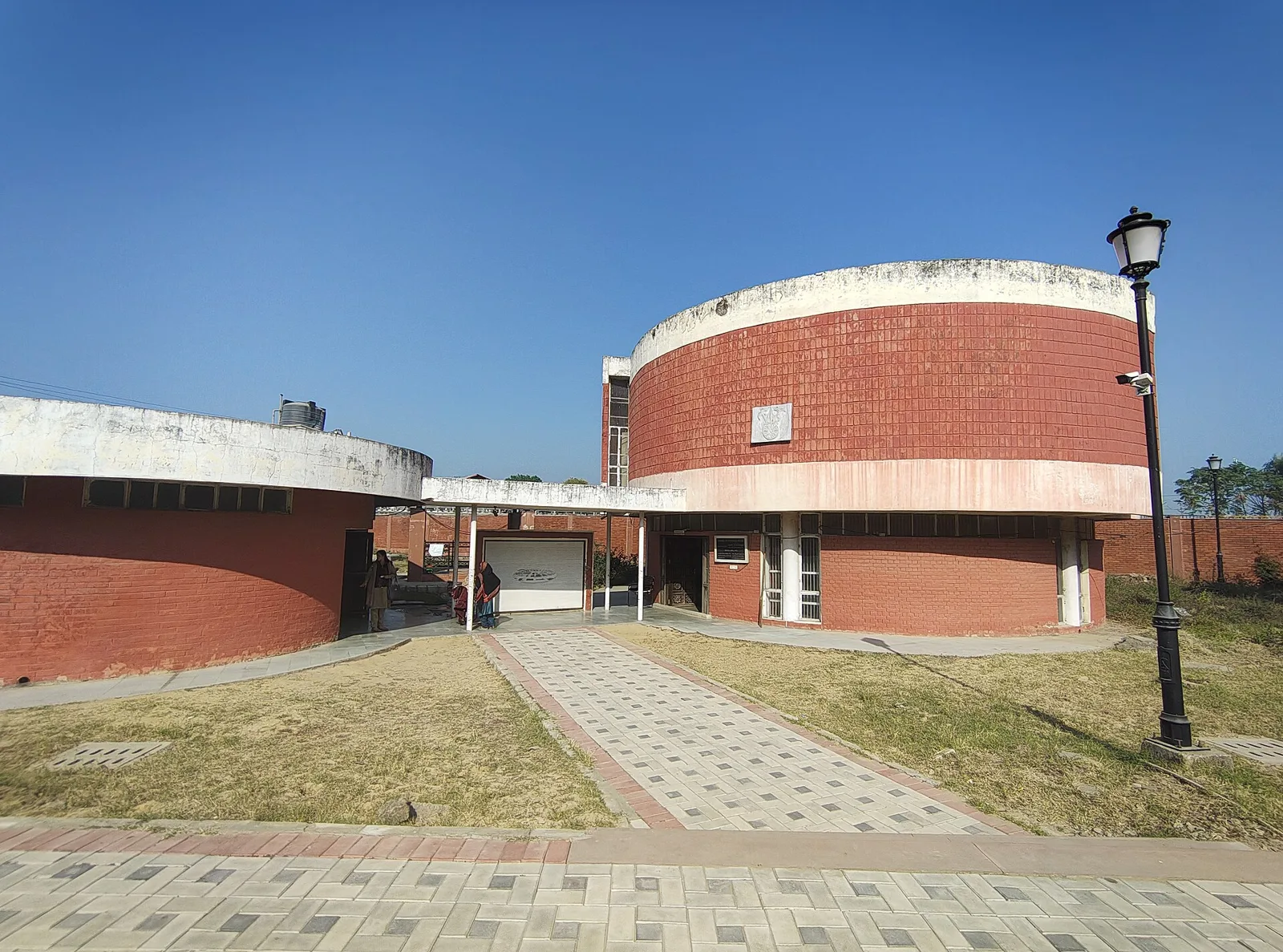
Sanghol, also called Uchha Pind Sanghol, is a village in Punjab’s Fatehgarh Sahib district with roots in the Harappan civilisation. Visitors come to see its excavated Buddhist and Kushan remains and the museum collections.
Key facts · verified by Ghumoopedia editors
- Type of place
- Temple / pilgrimage site
- Best time to visit
- October to March
- Nearest railway station
- Rupnagar (Ropar) · about 25 km (straight line)
- Verified
- 21 Nov 2026
Plan a trip from Sanghol — a day-by-day route through places nearby.
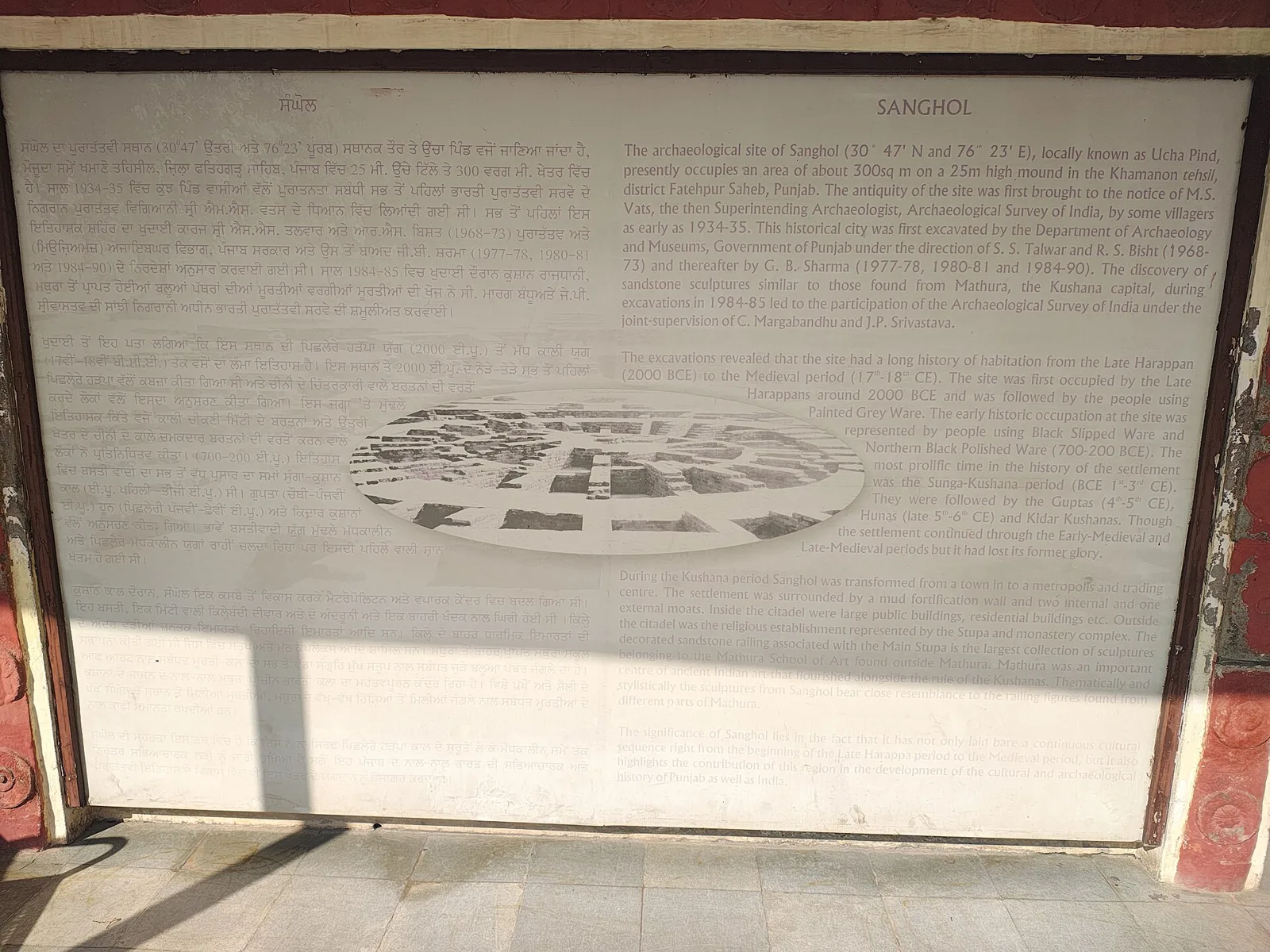
Located in Fatehgarh Sahib district, Punjab, Sanghol is an ancient settlement associated with the Harappan civilisation. The village, called Uchha Pind Sanghol as well, stands on a mound and is said to cover 200 km. It lies about 40 km from Chandigarh, along the route towards Ludhiana, and around 10 km from Dholewal. Bathan Khurd, Bathan Kalaan and Khamanon are neighbouring villages. The site is important for archaeology. Finds from excavations include coins and seals connected with Toramana and Mihirakula, described as figures from Central Asia. A Buddhist stupa was uncovered in 1968. In February 1985, Punjab’s Directorate of Archaeology excavated 117 carved stone pieces here: 69 pillars, 35 crossbars, along with figures and figurines. Scholars classify these works as Kushan sculptures of the Mathura school, dating to the first and second centuries AD. The carved remains are kept at Sanghol Museum, and some pieces have occasionally appeared in special displays at museums in different parts of the world. Gold has reportedly been found beneath the village, with local belief linking it to an earlier Sikh kingdom; this has been associated with recent economic growth. Further growth is anticipated in connection with a Chandigarh road now being built. Punjab's identity is shaped by Sikh heritage, gurdwara traditions of seva and langar, Bhangra and Giddha, and a strong farming culture. Punjab has hot summers from April to June, a monsoon from July to September, and cold, foggy winters from December to February. Winter fog can delay trains and flights. The usual best time to visit is October to March. Timings, fees and access arrangements must be confirmed locally. For official information, see Punjab Tourism at https://punjabtourism.gov.in.
Why it matters
Sanghol is an important archaeological village in Fatehgarh Sahib district, Punjab, known for evidence of ancient settlement and for a Buddhist stupa and sculptural finds. The excavated material connects the site with wider artistic and political histories of northern India, including Kushan-period sculpture associated by scholars with the Mathura school. Coins and seals linked to Toramana and Mihirakula have also been reported from the area. Many of the best-known carved finds are displayed at Sanghol Museum. The village is sometimes called Uchha Pind Sanghol.
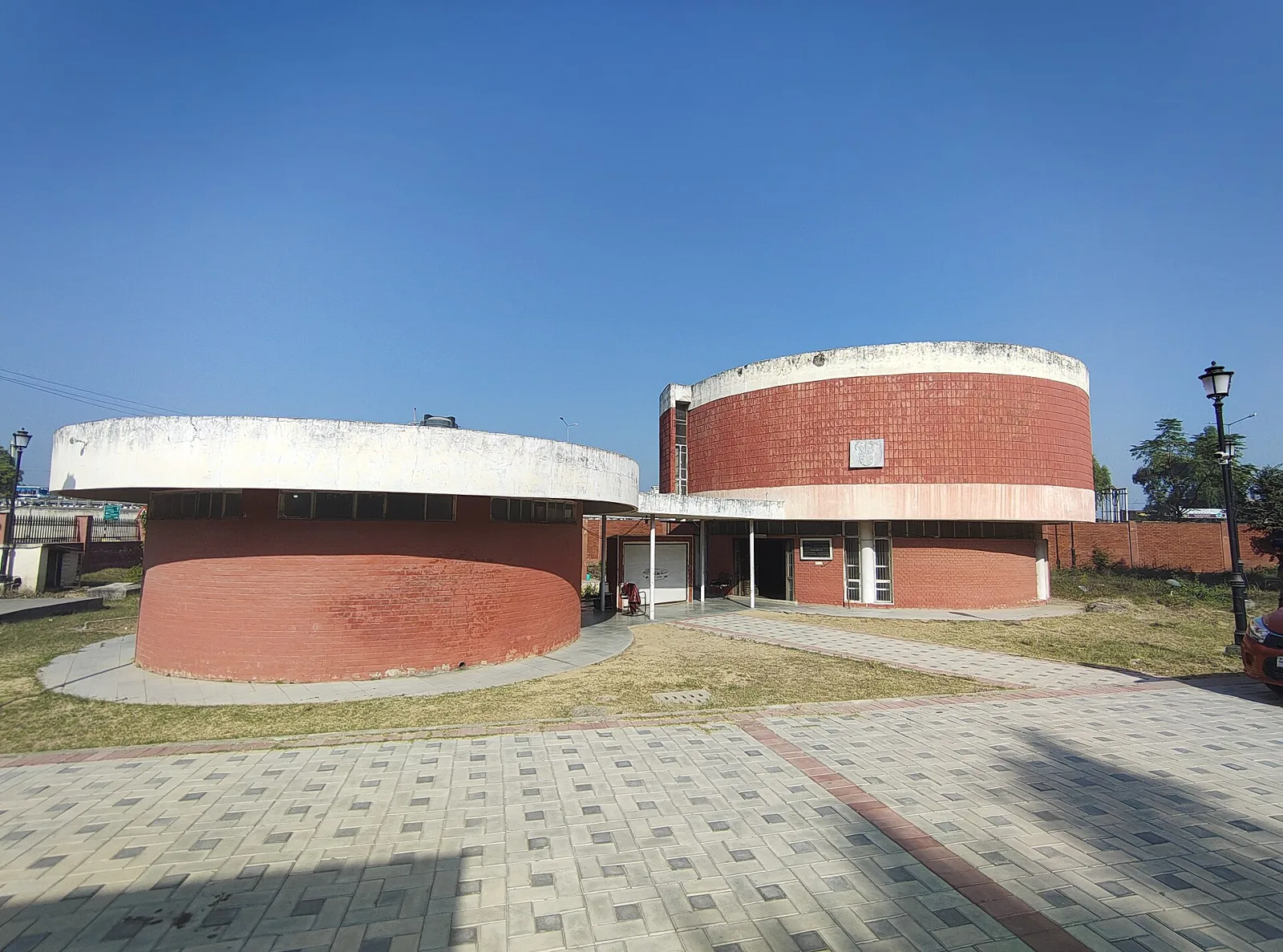
Sanghol is a long-inhabited settlement in the Punjab plains. Published accounts describe its history as reaching back to the Harappan civilisation, although individual archaeological layers and their dates should be understood through specialist interpretation rather than assumed from the village’s name alone. Excavations have revealed material from different periods, including coins and seals associated with Toramana and Mihirakula, rulers linked to central Asian political movements in the region. A Buddhist stupa was excavated at Sanghol in 1968. In February 1985, experts from the Directorate of Archaeology, Punjab, excavated 117 carved stone pieces, including 69 pillars and 35 crossbars, as well as figures and figurines. Scholars have identified the sculptures as belonging to the Kushan period and the Mathura artistic tradition, generally placing them in the first and second centuries CE. Many of these finds are held at Sanghol Museum, where selected pieces may be presented in exhibitions. The settlement itself, known also as Uchha Pind Sanghol, stands on a mound. The available guide does not provide a detailed account of later building phases or restoration, so visitors should consult museum interpretation for updates and archaeological context.
Origin stories & folklore
No single, well-documented origin legend for Sanghol is established. Local stories should therefore be treated as oral tradition rather than archaeological evidence. The guide mentions a belief that gold found beneath village land may derive from an old Sikh kingdom; this is a local claim, not a confirmed account of the site’s history. Sanghol’s better-supported story comes from excavations, including the Buddhist stupa and carved stonework. Visitors interested in oral histories can ask residents respectfully, while distinguishing community memory and belief from findings interpreted by archaeologists.
Architecture & design
Sanghol is an archaeological landscape rather than a single, intact temple building. The excavated Buddhist stupa is a central feature of its ancient religious history, though visitors should rely on on-site interpretation to understand what remains visible and what has been reconstructed or conserved. The village occupies a raised mound, and the site’s buried layers reflect successive occupation. The best-known architectural fragments are carved stone elements recovered in 1985: pillars, crossbars and sculptural pieces. Their forms and workmanship have been associated by scholars with Kushan-period art of the Mathura school. These fragments once belonged to architectural settings, but they should not be read as a complete standing structure today. The surviving and displayed material offers clues to stone carving, decorative arrangements and the scale of ancient religious architecture. Ask museum staff or consult interpretation boards for details on materials, original placement and conservation, since excavation areas and displays may change.
Important objects & sculptures
Look for the carved stone collection associated with the 1985 excavation: the reported group includes 69 pillars, 35 crossbars and other figures and figurines, forming part of a total of 117 pieces. Scholars have described the sculptures as Kushan-period work related to the Mathura school. The finds are housed at Sanghol Museum, though display arrangements can change and selected objects may travel for exhibitions. Coins and seals associated with Toramana and Mihirakula have also been reported from Sanghol. Check labels for object histories and avoid assuming that every piece on display was found in the same excavation or remains at the museum permanently.
Religious significance
Sanghol’s religious significance is primarily archaeological. The excavated Buddhist stupa points to a Buddhist presence in the area in antiquity, while the carved architectural fragments offer evidence of religious art and worship in their historical setting. The site is not described as a functioning Hindu temple or as a regular pilgrimage centre with an established daily worship schedule. Visitors should approach it as a protected heritage place and follow any instructions from staff. Punjab’s living religious landscape includes Sikh gurdwara traditions of seva and langar, but these should not be mistaken for specific practices at the Sanghol archaeological site. For the interpretation of Buddhist remains, use museum material or guidance from qualified heritage staff.
Explore Sanghol slowly and read the interpretation boards or hire an authorised guide to understand its history. Check opening days and ticket counters in advance, as many monuments and museums close on one weekday and on public holidays. A comfortable itinerary is one main visit in the morning, a local meal at midday and a short nearby stop before an afternoon return. Use the district list on this site to find other places in Fatehgarh Sahib, but check the actual road route and its condition before combining stops. If a festival or fair is on, local roads and stays can be busy — and the experience can be unforgettable. Leave no litter: many sites are protected by the communities around them.
Suggested itineraries
Half day: Allow about 2–3 hours for the archaeological site and museum, including time to read interpretation and take a break. Full day: Spend the morning at the Sanghol site and museum (about 3 hours), have a local meal, then visit Sirhind or Fatehgarh Sahib (about 2–3 hours), checking road conditions before setting out. Gentler option: Visit the museum first, take seated breaks, and see only the accessible sections of the site; arrange a vehicle close to the entrance if permitted.
Sanghol is a Punjabi village where local life is shaped by farming, family and community ties, alongside the work of preserving and presenting its archaeological heritage. Punjabi is widely spoken in the region; visitors may also encounter Hindi and English in travel or museum settings. Across Punjab, Bhangra and Giddha, folk music and seasonal agricultural customs remain important cultural expressions, though they are not necessarily performed at Sanghol itself. Sikh traditions of seva and langar are significant across the state. Ask before photographing residents, and treat the village as a lived-in community rather than only a heritage backdrop.
Festivals & events
Across Punjab, seasonal celebrations such as Lohri in winter and Vaisakhi in spring may bring community gatherings, but local observance varies. Nearby Sikh religious centres, including those in the Fatehgarh Sahib–Sirhind area, draw visitors for important observances; the Shaheedi Jor Mela is associated with Fatehgarh Sahib and is generally held in December. During major gatherings, roads and accommodation in the wider area can become busy. Confirm event arrangements locally and do not assume that celebrations take place within the Sanghol site or museum.
Local food in Punjab includes sarson da saag with makki di roti, Amritsari kulcha, chole bhature, lassi, tandoori dishes, pinni and jalebi; langar at gurdwaras serves a free vegetarian meal to all. Ask what is fresh that day; many small eateries cook a limited daily menu. Vegetarian travellers eat very well across this region, and most towns also have simple non-vegetarian dhabas. Remote sites may have no restaurant at all. Carry water and snacks, eat a proper breakfast before long drives, and ask your accommodation for a packed lunch if you are heading out early. Try a home-cooked or dhaba meal when you can — it is often the best food on the route. Choose busy, clean places and carry your packaging back to town.
Shopping & local experiences
Sanghol is not known as a major craft-shopping destination. Look for everyday Punjabi foods and locally available seasonal produce in nearby towns rather than expecting a dedicated souvenir market at the site. Museum publications or permitted educational material may be available, but check with staff. Do not buy or collect antiquities, carved fragments or objects claimed to come from the excavations. For a local food experience, ask residents or your driver about reputable nearby places serving Punjabi meals, and be mindful that options at the village itself may be limited.
October to March
The nearest principal railway station by straight-line distance is Rupnagar (Ropar), roughly 25 km away. The nearest operating airport by straight-line distance is Shaheed Bhagat Singh International Airport, Chandigarh, roughly 40 km away. These figures are calculated from map coordinates — actual road distance may differ. Delhi, Chandigarh and Amritsar are the main rail and air hubs, and most long-distance journeys connect through them. For the final leg, Punjab Roadways, PEPSU Road Transport (PRTC) and private Volvo coaches link district towns; shared taxis usually leave early in the morning. A private taxi gives more flexibility for remote sites. When comparing train, bus and flight, count the complete door-to-door time: a flight saves the most time only if the onward road transfer is short, while an overnight train plus a road journey can save a hotel night. Book your return before you leave, because seats fill quickly on weekends and holidays. Current train numbers, timings, return services and fares are not listed here; check IRCTC and NTES for trains and the airline's own schedule for flights. No permit is needed to visit Punjab. The Wagah–Attari border ceremony needs a same-day security check, and the Kartarpur Corridor to Pakistan requires advance online registration and a passport.
Confirm onward and return timings on IRCTC / NTES, the state bus operator or your airline before travel. A dash means current timings or fares have not been verified.
Getting around
Sanghol is a village destination, so plan the last part of the journey in advance. Taxis or a pre-arranged private vehicle offer flexibility between the site, museum and nearby towns. Local buses may serve the wider area, but onward connections and service frequency should be checked locally. Auto-rickshaws may be available in larger nearby settlements rather than reliably at the site itself. Walking is practical between nearby attractions only if routes, surfaces and distances suit your group. Ask about designated parking on arrival and avoid blocking village lanes or access for residents.
Hours, tickets & permissions
Entry arrangements may differ between the archaeological site and Sanghol Museum. Tickets, camera permissions, restricted areas and closures may apply, and rules can change for conservation or special exhibitions. There is no verified current schedule or fee information here. Confirm opening days, current hours and any entry or photography charges with the managing archaeology or museum authority before travelling. Carry identification if requested by the authority, and follow instructions at the entrance.
Facilities
Facilities at the archaeological site and museum may be limited and can vary. Toilets, drinking water, refreshments, parking and guide services should be checked locally rather than assumed. Carry water and any personal supplies you need, especially if visiting in warm weather. More food, shops and routine services are likely to be easier to find in nearby towns than at the site. Ask museum or site staff about current visitor services, authorised guides and places to eat before beginning your visit.
Accessibility
The site includes archaeological ground and may have uneven surfaces, exposed areas or loose material. Shade may be limited outdoors, so plan rests and bring sun protection. Wheelchair and stroller access may be difficult across uneven terrain, and visitors with mobility concerns should contact the managing authority before travelling. Older visitors may find a shorter visit focused on the museum more comfortable. Avoid entering cordoned-off areas or walking over fragile remains.
No permit is needed to visit Punjab. The Wagah–Attari border ceremony needs a same-day security check, and the Kartarpur Corridor to Pakistan requires advance online registration and a passport. Carry a photo ID at all times and save the emergency number 112 and your accommodation's contact offline. Heat in summer and dense fog in winter are the main weather risks; carry water and allow extra travel time on foggy December–January mornings. Respect community rules, private property and posted instructions. Check official advisories for the region before travel, and follow local guidance if access changes.
Visitor rules
Follow posted instructions and stay on visitor paths; archaeological remains can be fragile even when they appear solid. Do not touch, climb on, remove or rearrange stones or objects. Wear comfortable, weather-appropriate clothing and footwear suited to uneven ground. No particular dress code is confirmed for the archaeological site, but be considerate in nearby religious settings. Photography may be restricted in some areas or galleries, so check signs and ask staff. Do not use flash where prohibited, leave litter or use single-use plastic carelessly, and keep noise low around other visitors and village residents.
Photography
Soft morning or late-afternoon light can help show the texture of carved stone and the contours of the mound, though conditions and access vary. Ask staff whether photography is allowed inside the museum and whether any camera restrictions apply; do not photograph objects marked as restricted. Avoid placing people or equipment on fragile remains for a viewpoint. Drone use may require permission and can be restricted around heritage sites or village areas, so do not fly without checking applicable rules. Ask residents before taking their portraits and avoid interrupting worship or community activities.
Choose a stay by the full journey to Sanghol, not just the district name. Main towns in Fatehgarh Sahib usually offer hotels, state tourism lodges and guesthouses with better transport, meals and medical access, while village homestays offer a closer connection to local life. In the plains, check fans or air-conditioning in summer and heating in the December–January cold wave. Book in advance for weekends, festival dates and the peak season (October to March). Confirm the exact location, meals included, check-in time and cancellation terms in writing. Many homestays accept payment on arrival; avoid sending money to unverified contacts. Mobile network and digital payments can be unreliable in remote areas, so carry some cash.
For a wider heritage day, consider Sirhind and Fatehgarh Sahib, both in the district area. Aam Khas Bagh in Sirhind is a historic garden complex, and Rauza Sharif is a notable religious site there. Gurdwara Fatehgarh Sahib is an important Sikh pilgrimage destination. These places provide a different historical and religious context from Sanghol’s archaeological remains. Check current access, opening arrangements and the actual road route before combining stops; travel time can vary with road conditions and local events.
For couples, Sanghol rewards a slow pace: arrive early for soft light and fewer crowds, share a local meal and keep the evening free. Public displays of affection can be frowned upon in conservative communities and at religious sites, so be discreet. A homestay or a small heritage hotel can make the trip memorable — confirm privacy, hot water and transport back. Keep a buffer in your itinerary, because weather and traffic can delay plans in Punjab.
Q: How much time should I allow for Sanghol? A: Allow a few hours for the archaeological site and museum; add time if you plan to visit nearby Sirhind or Fatehgarh Sahib. Q: When is a comfortable season to visit? A: October to March is generally the most comfortable period in Punjab. Summers can be very hot, and winter fog can affect travel. Q: Is there an entry fee, and when is it open? A: Confirm entry rules, closures and any camera charges with the managing authority before travelling. Q: Is the visit suitable for children and elderly visitors? A: The museum can offer a gentler visit, but outdoor archaeological ground may be uneven. Keep children supervised and plan rests for older visitors. Q: Can I stay near the site? A: Accommodation options at Sanghol itself may be limited. Check locally and consider lodging in a nearby town, confirming transport arrangements in advance.
Be the first to share photos, stories, advice or a helpful contact for Sanghol.
Loading…