
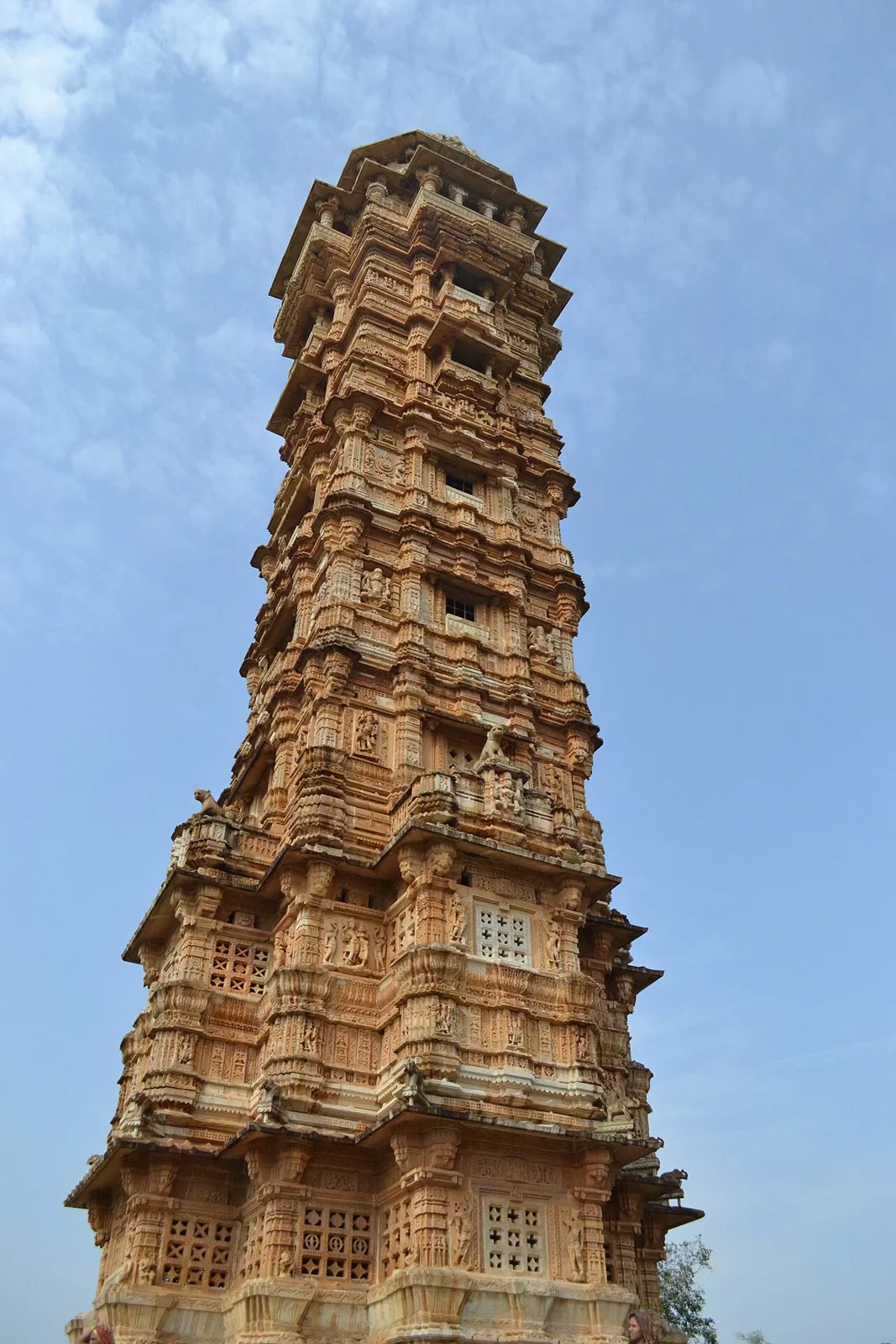
Vijaya Stambha
Vijaya Stambha is a victory tower in Chittor Fort, Chittorgarh district, Rajasthan. Visitors come to see its Rajput architecture and its association with Rana Kumbha’s 1448 triumph.
Key facts · verified by Ghumoopedia editors
- Type of place
- Heritage monument
- Best time to visit
- October to March
- Nearest railway station
- Chittaurgarh Junction · about 5 km (straight line)
- Verified
- 21 Nov 2026
Plan a trip from Vijaya Stambha — a day-by-day route through places nearby.
Inside Chittor Fort in Chittorgarh district, Rajasthan, Vijaya Stambha commemorates a Rajput victory. Rana Kumbha, the Hindu Rajput ruler of Mewar, commissioned the tower in 1448 CE. It marks his success at the Battle of Sarangpur against the forces of the Sultanate of Malwa, commanded by Mahmud Khilji. The monument is dedicated to Vishnu, a Hindu god. Colonel James Todd ranked the structure among the finest works of Hindu Rajput design and considered it better than Qutub Minar. Rajasthan is the land of Rajput forts and palaces, painted havelis, desert folk music, puppetry and colourful fairs such as the Pushkar camel fair. Rajasthan is very hot from April to June — often above 45 °C in the desert — with a short monsoon in July–September. Winter days are pleasant and nights are cold, especially in the Thar Desert. Mount Abu is the state's only hill station and stays cooler. The usual best time to visit is October to March. Timings, fees and access arrangements must be confirmed locally. For official information, see Rajasthan Tourism at https://www.tourism.rajasthan.gov.in.
Why it matters
Vijaya Stambha, or the Tower of Victory, is a landmark of Chittor Fort and an important expression of Mewar’s Rajput history and religious art. Rana Kumbha commissioned it to commemorate a victory over the Sultanate of Malwa associated with Sultan Mahmud Khilji; it is dedicated to Vishnu. The tower is also part of the historic landscape of Chittor Fort, which is included in the UNESCO World Heritage property Hill Forts of Rajasthan. UNESCO recognition applies to the fort property, not as a separate listing for the tower alone. Rajasthan Tourism describes the monument as a notable attraction in Chittorgarh. Its carved surfaces make it significant both as a memorial and as a record of medieval Hindu iconography.
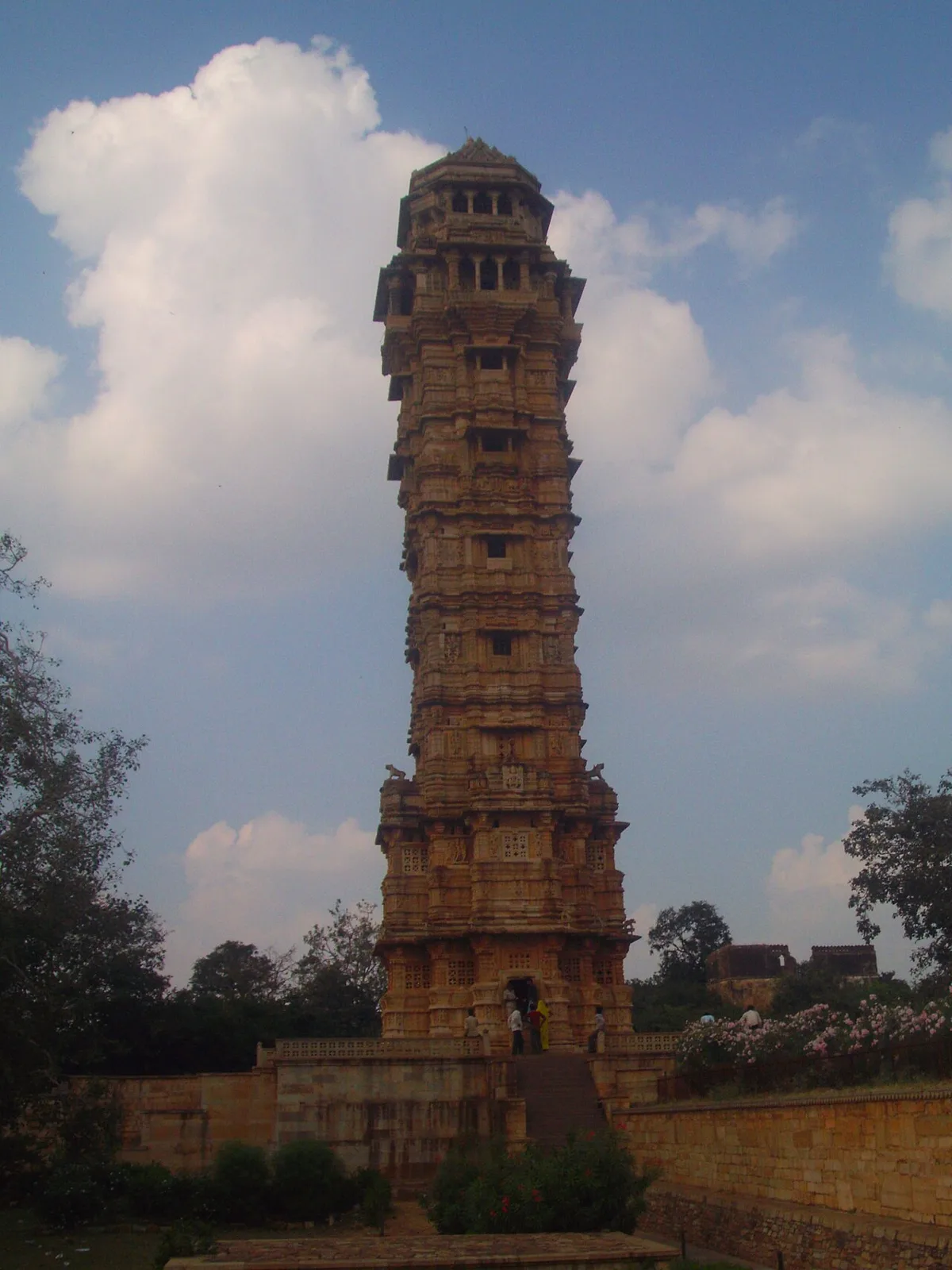
Vijaya Stambha was commissioned by Rana Kumbha, ruler of Mewar, and is traditionally dated to 1448 CE. It commemorates a victory over the Malwa Sultanate under Mahmud Khilji, associated in historical accounts with the Battle of Sarangpur. The tower’s dedication to Vishnu gave the political memorial a religious dimension. Inscriptions and sculptural details connect it to the courtly and devotional culture of fifteenth-century Mewar; an inscription is understood to name the architect Jaita and members of his family. The monument stands within Chittor Fort, whose history spans successive periods of Rajput rule, conflict and changing political control. Chittor was besieged more than once, and the fort’s monuments have experienced the effects of weather, conflict and long-term exposure. Vijaya Stambha remains an important surviving structure within the fort complex. The fort is part of the UNESCO-listed Hill Forts of Rajasthan, inscribed in 2013. Conservation and visitor management are undertaken within the wider heritage setting; for current restoration work or access restrictions, consult the responsible heritage authorities. Historical accounts differ in their details, so the tower’s commemorative purpose is best understood alongside the fort’s broader history.
Origin stories & folklore
Local memory chiefly presents Vijaya Stambha as Rana Kumbha’s enduring monument to victory and devotion to Vishnu. This account reflects the tower’s commemorative purpose, although the precise details of medieval campaigns may vary among historical sources. Chittor Fort is also associated with powerful stories of Rajput courage, sacrifice and jauhar, including traditions tied to its sieges. These stories form part of the region’s cultural memory, but they should not be treated as evidence for the tower’s construction unless supported by inscriptions or historical records. Visitors may encounter different retellings from guides and residents; listening respectfully while distinguishing folklore from documented history helps preserve both.
Architecture & design
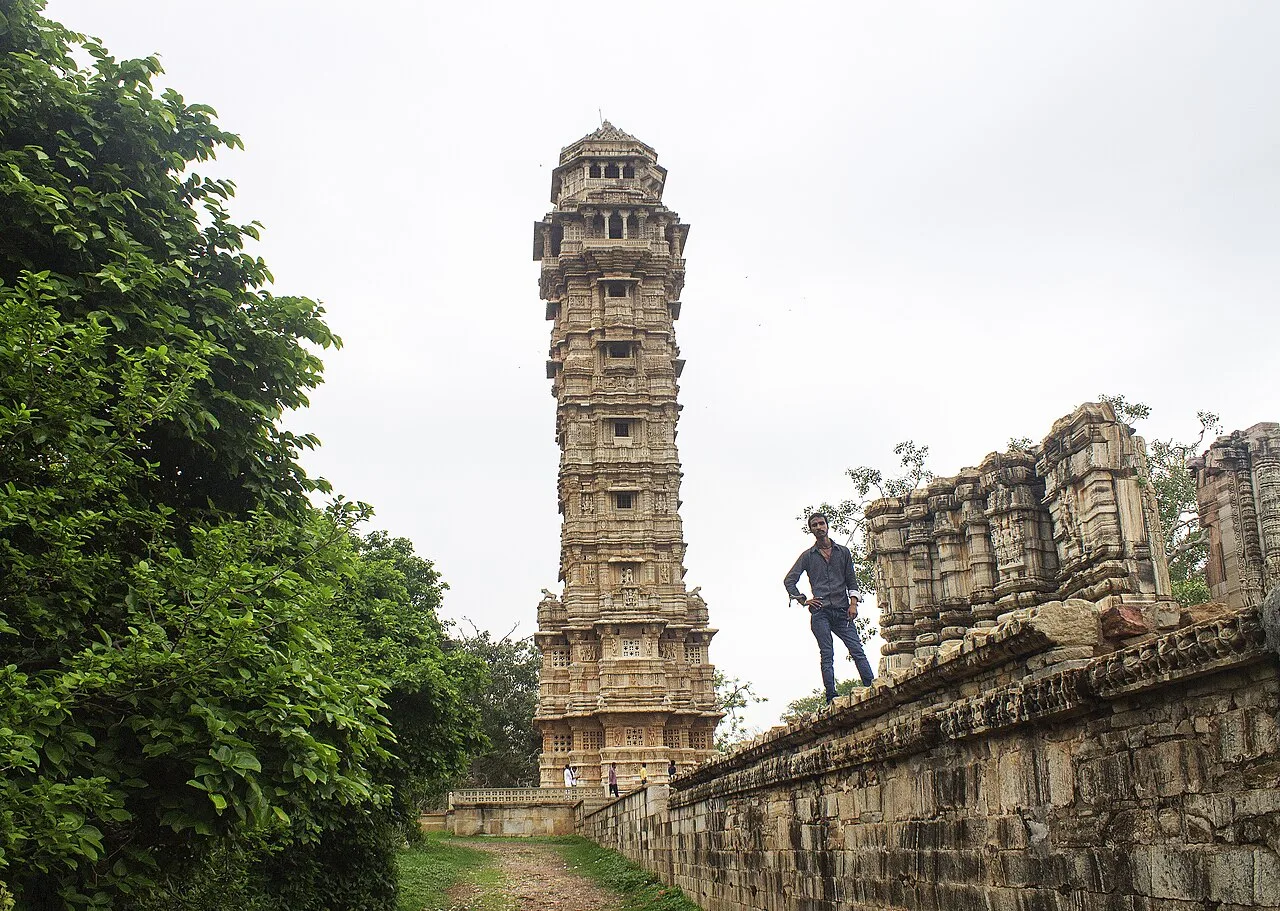
The tower is a tall, nine-storeyed structure in the Rajput style, rising within the fort precinct. It is built primarily of stone, with finely worked surfaces that combine architectural elements and dense figurative carving. Its tiered form narrows upward, and balconies, projecting details and openings articulate the exterior. A stairway runs through the interior, linking the levels; the steep, confined ascent is part of the experience but may not suit every visitor. Carved bands and niches cover much of the tower, creating a vertical sequence of images and inscriptions. The structure’s design makes it both a victory monument visible across the fort and a close-up work of religious and courtly art. Its construction required careful planning to support a tall masonry building while accommodating internal circulation and exterior ornament. From different sides, the tower’s changing profiles and shadows reveal the depth of its carving. Explore from ground level as well as from a distance, and do not climb or touch restricted surfaces.
Important objects & sculptures
Look for carved representations of Hindu deities, including forms associated with Vishnu, as well as figures, ornamental motifs and inscriptions across the tower’s storeys. The imagery is arranged in architectural niches and bands, so details are easiest to notice by moving around the base and looking carefully rather than trying to take in the whole surface at once. Inscriptions are important evidence for the monument’s patronage and building history; their script and condition may make them difficult to read without interpretation. Do not assume every figure has a securely identified name: an authorised guide or reliable interpretive material can help explain the iconography.
Explore Vijaya Stambha slowly and read the interpretation boards, use the official audio guide where available or hire an authorised guide to understand its history. Check opening days, ticket counters and camera rules in advance; many monuments and museums close on one weekday and on some public holidays. Early morning gives softer light, cooler air and smaller crowds. A comfortable itinerary is one main visit in the morning, a local meal at midday and a short nearby stop before an afternoon return. Use the district list on this site to find other places in Chittorgarh, but check the route and its condition before combining stops. If a festival or fair is on, roads and stays can be busy — and the experience can be unforgettable. Leave no litter: many sites are protected by the communities around them.
Suggested itineraries
Half day: Allow about 3–4 hours to enter Chittor Fort, visit Vijaya Stambha slowly, read available interpretation, and see one nearby fort landmark before returning. Full day: Allow about 6–8 hours for Vijaya Stambha, other major fort sites such as Kirti Stambha and Rana Kumbha Palace, a meal break, and a further stop such as Padmini Palace; confirm access and travel time locally. Gentler option: Spend about 2–3 hours around the accessible approach and ground-level viewpoints of Vijaya Stambha, with seated breaks; skip the internal stair climb and arrange vehicle transfers between stops where permitted.
The tower is part of Chittor Fort, a living symbol of Mewar’s history and a place where regional memory, pilgrimage and heritage tourism meet. Hindi and Rajasthani are widely heard in the area, alongside other languages spoken by visitors and guides. Local cultural life includes Rajasthani folk music and dance traditions, colourful dress, devotional practice and storytelling about the fort. These traditions are encountered across the district rather than performed continuously at the monument. Treat the site as a heritage place: follow signs, avoid touching carvings, and be considerate if local visitors are praying or commemorating historical events.
Festivals & events
The fort and Chittorgarh district host or attract visitors during local religious and heritage observances. Jauhar Mela, generally held in the late-winter period, commemorates the fort’s history and can bring larger crowds to the fort precinct. Gangaur, usually observed in spring, and Teej, generally associated with the monsoon season, are important Rajasthani festivals celebrated in the region, though activities are not necessarily centred on Vijaya Stambha. Festival arrangements and locations can change. Expect busier roads, parking areas and accommodation during major observances, and check locally before planning a quiet visit.
Local food in Rajasthan includes dal baati churma, gatte ki sabzi, ker sangri, laal maas, pyaaz kachori, mirchi vada, ghewar, mawa kachori and chaach (spiced buttermilk). Ask what is fresh that day; many small eateries cook a limited daily menu. Vegetarian travellers eat very well across this region, and most towns also have non-vegetarian options. Remote sites may have no restaurant at all. Carry water and snacks, eat a proper breakfast before long drives, and ask your accommodation for a packed lunch if you are heading out early. Try a home-cooked or dhaba meal when you can — it is often the best food on the route. Choose busy, clean places and carry your packaging back with you.
Shopping & local experiences
In Chittorgarh city, look for Rajasthani textiles, block-printed fabrics, embroidered items, small handicrafts and locally made souvenirs. Availability and authenticity vary, so compare items and ask about materials and workmanship. Food shops and eateries offer regional meals and snacks; ask locally about seasonal or traditional specialities. Purchases inside or near the fort may be limited, and vendors may not accept digital payment reliably, so plan accordingly. Avoid buying fragments, carved stone or anything presented as an antiquity from the protected site.
October to March
The nearest principal railway station by straight-line distance is Chittaurgarh Junction, roughly 5 km away. The nearest operating airport by straight-line distance is Maharana Pratap Airport, Udaipur, roughly 80 km away. These figures are calculated from map coordinates — actual road distance is longer. Jaipur, Ajmer, Jodhpur, Udaipur and Kota are the main rail hubs, and Jaipur, Udaipur and Jodhpur have the most flights; Delhi is the usual gateway for the north-east of the state. For the final leg, Rajasthan State Road Transport Corporation (RSRTC) buses and private coaches link district towns; shared taxis usually leave early in the morning. A private taxi gives more flexibility for remote sites. When comparing train, bus and flight, count the complete door-to-door time: a flight saves the most time only if the onward road transfer is short, while an overnight train can save a hotel night. Book your return before you leave, because seats fill quickly on weekends, festivals and holidays. Current train numbers, timings, return services and fares are not listed here; check IRCTC and NTES for trains and the airline's own schedule for flights. No permit is needed to visit Rajasthan. Land close to the international border west of Jaisalmer and Barmer is restricted beyond certain points: places such as Tanot can be visited, but border outposts need Border Security Force permission. Forts and palaces charge entry and camera fees, and tiger-reserve safaris must be booked through the official forest department portal.
Confirm onward and return timings on IRCTC / NTES, the state bus operator or your airline before travel. A dash means current timings or fares have not been verified.
Getting around
Chittaurgarh Junction is the principal rail arrival point for the city, and taxis or auto-rickshaws can usually be found for the onward journey to Chittor Fort. Local buses and shared vehicles may serve parts of the city, but their routes and frequency should be checked on arrival. Within the fort, distances between monuments can be substantial and the road is uneven in places; walking is practical for some stops, while a local taxi can reduce the amount of walking. Confirm where vehicles may park and enter, as access can be restricted around heritage areas.
Hours, tickets & permissions
Entry to Vijaya Stambha is subject to the rules for Chittor Fort and any current conservation or security restrictions. A fort-entry ticket may apply, and separate charges or rules for cameras, guides or particular areas can vary. Carry identification if requested and follow posted instructions; do not assume that all interiors or levels are open. Confirm current opening hours, fees, closures and camera rules with the managing authority or Rajasthan Tourism before travelling. Public holidays, maintenance and special events may affect access.
Facilities
Facilities within the fort precinct may include toilets, water points, parking areas, food sellers or small eateries, and authorised or locally available guides, but provision and operating status can vary. Carry drinking water and any essential medication, particularly in hot weather, and do not rely on finding an ATM inside the fort. More services are available in Chittorgarh city. Check locally for the nearest functioning toilets, permitted parking, guide arrangements and food options before beginning a longer walk through the fort.
Accessibility
The fort covers a large area, with uneven surfaces, slopes and distances between monuments. Vijaya Stambha has an internal staircase and multiple levels; the narrow, steep climb is unsuitable for many visitors with limited mobility, and there is no basis to assume a lift or step-free route to the upper floors. Ground-level viewing may be possible, but access paths and surfaces can still be challenging for wheelchairs and strollers. Shade is limited in exposed areas. Older visitors should plan frequent rests, travel with assistance if needed and check current access conditions before setting out.
No permit is needed to visit Rajasthan. Land close to the international border west of Jaisalmer and Barmer is restricted beyond certain points: places such as Tanot can be visited, but border outposts need Border Security Force permission. Forts and palaces charge entry and camera fees, and tiger-reserve safaris must be booked through the official forest department portal. Carry a photo ID at all times and save the emergency number 112 and your accommodation's contact offline. Heat in summer and fog in winter are the main weather risks; carry water and allow extra travel time on foggy December–January mornings. Respect community rules, private property and posted instructions. Follow local guidance if access changes.
Photography
Early morning or late afternoon usually offers softer light for the tower’s carved surfaces and views across the fort. Photograph the monument from several ground-level angles to show its height and detail. Photography is commonly permitted in open areas, but restrictions, camera charges or rules for interior spaces may apply; check posted notices and current entry conditions. Do not use a drone without the required permissions and confirmation that flying is allowed. Avoid touching carvings, obstructing other visitors or photographing people engaged in prayer or private observances without consent.
Choose a stay by the full journey to Vijaya Stambha, not just the district name. Heritage havelis, fort hotels, state tourism (RTDC) hotels and desert camps offer distinctive stays; check that a desert camp is licensed and has proper toilets. In summer, check air-conditioning or coolers; in December and January, check heating and hot water. Book in advance for weekends, festivals and the peak season (October to March). Confirm the exact location, meals included, check-in time and cancellation terms in writing. Avoid sending money to unverified contacts or touts at stations. Carry some cash, as card and digital payments can be unreliable in remote areas.
Within Chittor Fort, visitors can combine Vijaya Stambha with Kirti Stambha, Rana Kumbha Palace, Padmini Palace, the fort’s temples and its historic gates, subject to current access. The fort itself is a large site, so allow for walking or vehicle transfers between stops. Chittorgarh city offers additional services and places to eat. Menal, known for its temple complex and seasonal waterfall setting, is another attraction in Chittorgarh district, but it is an outing beyond the fort and requires separate route planning. Check road conditions and opening arrangements before combining distant stops.
For couples, Vijaya Stambha rewards a slow pace: arrive early for soft light and fewer crowds, share a local meal and keep the evening free. A heritage hotel or a lakeside sunset makes the trip memorable. Public displays of affection can be frowned upon in conservative communities and at religious sites, so be discreet. Keep a buffer in your itinerary, because weather and traffic can delay plans.
Q: How much time should I allow for Vijaya Stambha? A: Allow at least an hour to view the tower carefully; a visit to other parts of Chittor Fort requires several more hours. Q: When is the best season to visit? A: October to March is generally more comfortable. Summer heat can be intense, so plan carefully and carry water. Q: Is there an entry ticket? A: Entry rules and any applicable charges are set for the fort and can change. Confirm current details with the managing authority before visiting. Q: Is the tower suitable for children and elderly visitors? A: The ground-level visit may suit many visitors, but the internal stairs are steep and confined. Supervise children and avoid the climb if mobility or balance is a concern. Q: Where can I stay nearby? A: Chittorgarh city has accommodation options. Check current availability and choose lodging based on your transport needs and plans for the fort.
Be the first to share photos, stories, advice or a helpful contact for Vijaya Stambha.
Loading…