
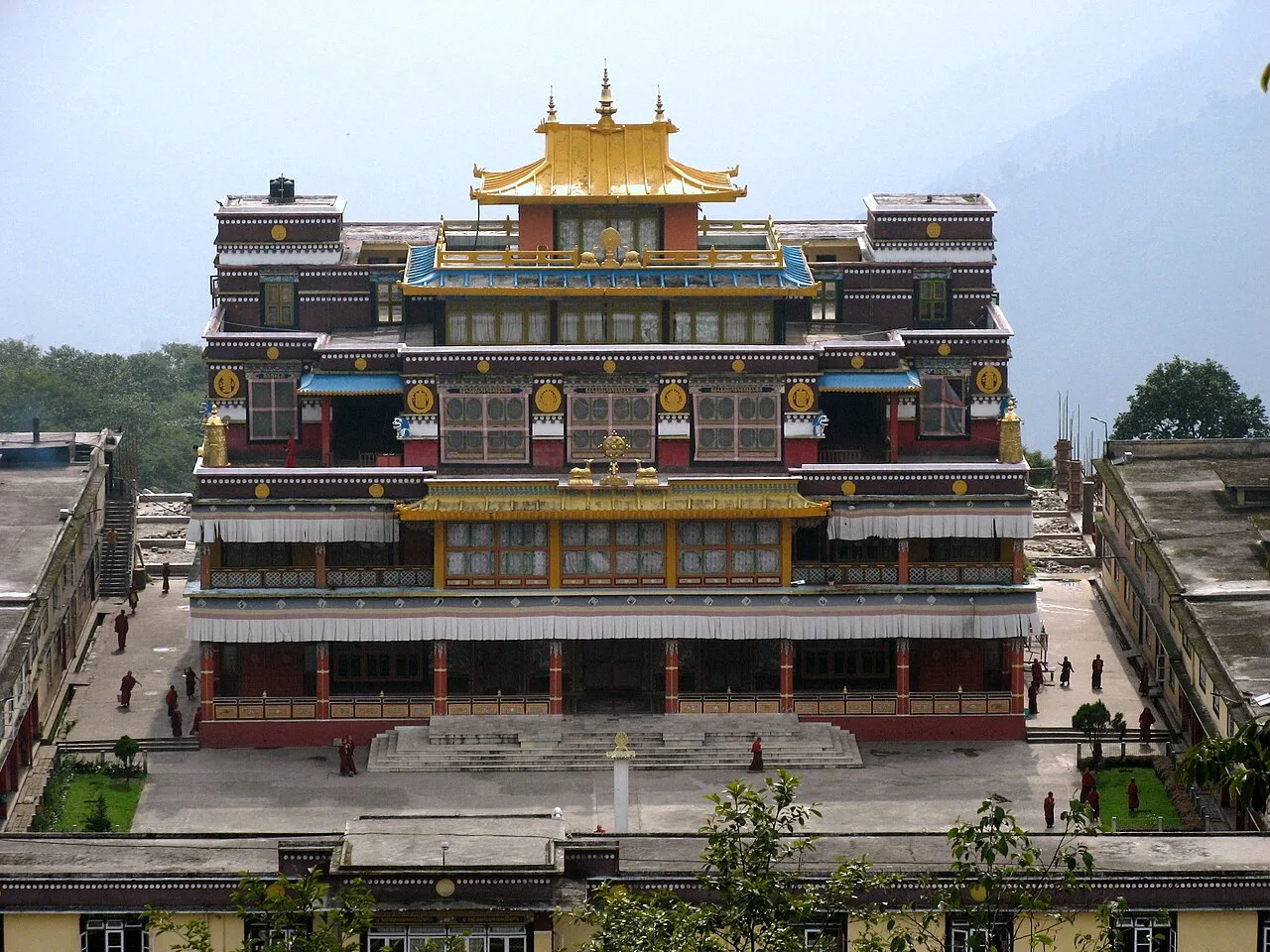
Ralang Monastery
In Namchi district in southern Sikkim, Ralang Monastery is a Buddhist institution of the Kagyu tradition. Visitors come to view its extensive holdings of paintings and thangkas.
Key facts · verified by Ghumoopedia editors
- Type of place
- Temple / pilgrimage site
- Best time to visit
- March to May and October to December; avoid the June–September monsoon
- Nearest railway station
- Siliguri Junction · about 69 km (straight line)
- Nearest airport
- Pakyong Airport (limited, weather-dependent flights) · about 27 km (straight line)
- Verified
- 21 Nov 2026
Plan a trip from Ralang Monastery — a day-by-day route through places nearby.
Ralang Monastery, also known as New Ralang Monastery, stands in Namchi district in southern Sikkim. Ralong Palchen Choling is another name for the same monastery. It is a Buddhist religious site belonging to the Kagyu school of Tibetan Buddhism. The monastery is six kilometres from Ravangla, in the north-eastern Indian state of Sikkim. Its location is in the state’s southern region. An extensive group of paintings and thangkas is held at the monastery. These works are among its notable features, alongside its identity as a Kagyu Buddhist monastery. Sikkim is a small Himalayan state wrapped around Kangchenjunga, the world's third-highest peak, with Buddhist monasteries such as Rumtek, Pemayangtse and Tashiding, Lepcha, Bhutia and Nepali communities, high-altitude lakes like Tsomgo and Gurudongmar, rhododendron valleys at Yumthang and Varsey, and a strong commitment to organic farming and clean, plastic-light tourism. Weather depends on altitude: Gangtok and Pelling are mild in spring and autumn and cold in winter, while North Sikkim and Nathu La lie under snow from December to March. The monsoon (June to September) brings heavy rain and frequent landslides. Spring is rhododendron season; October and November give the clearest views of Kangchenjunga. The usual best time to visit is March to May and October to December; avoid the June–September monsoon. Timings, fees and access arrangements must be confirmed locally. For official information, see Sikkim Tourism at https://www.sikkimtourism.gov.in.
Why it matters
Ralang Monastery, also called Ralong Palchen Choling, is a living Kagyu monastery in Namchi district and an important centre of Tibetan Buddhist practice in southern Sikkim. Its location near Ravangla makes it a meaningful stop for residents, pilgrims and visitors exploring the region’s Buddhist heritage. The monastery is known for its collection of paintings and thangkas, as well as for religious observances and festivals associated with the Kagyu tradition. It forms part of Sikkim’s wider network of monasteries, which serve religious communities and preserve local traditions. No UNESCO World Heritage or Archaeological Survey of India protected-site designation is asserted here; visitors should consult official sources for current heritage status.
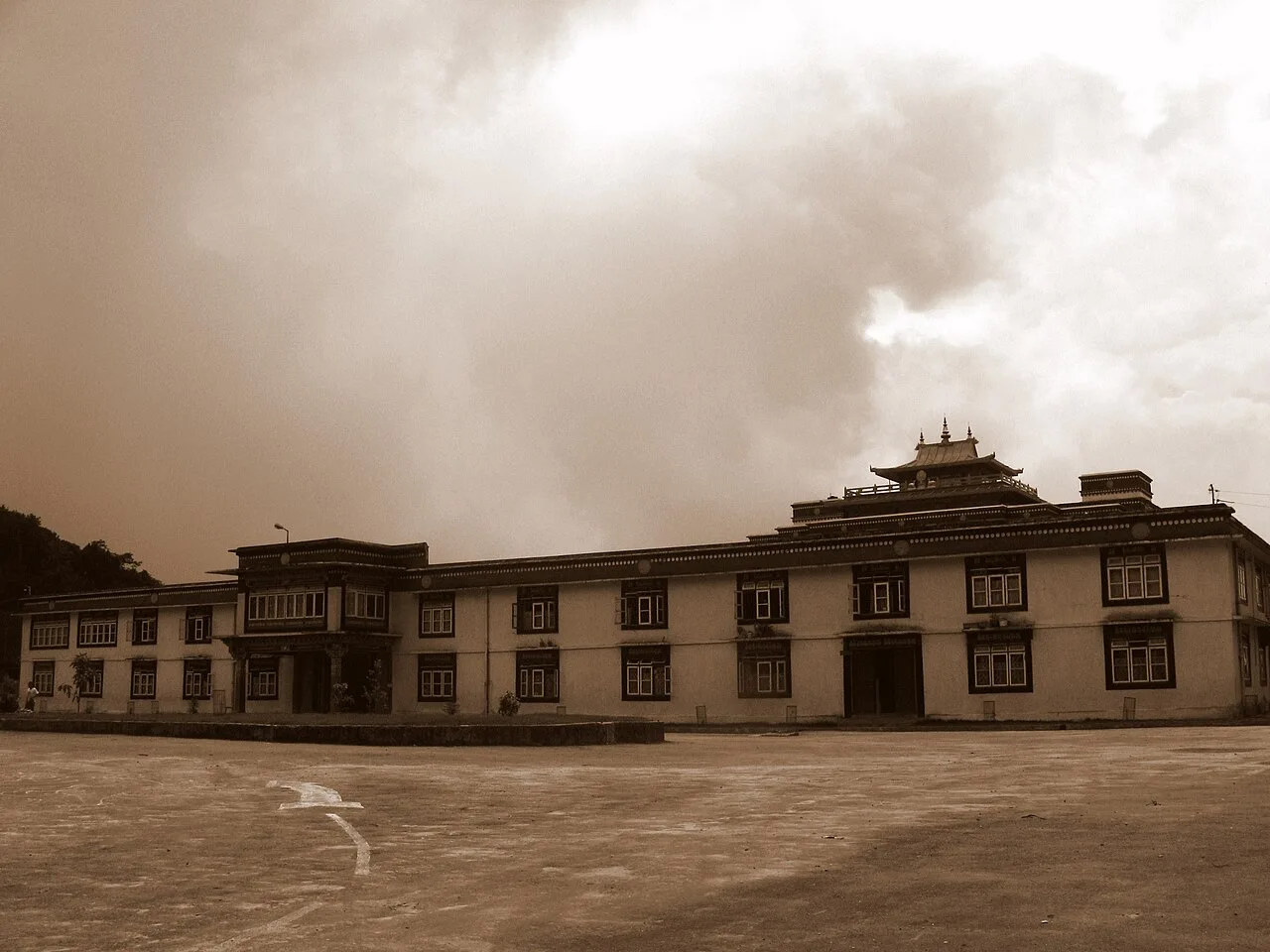
Accounts of Ralang’s history connect the monastery’s early origins with the royal and Buddhist history of Sikkim. It is commonly said to have been founded in the eighteenth century, traditionally dated to 1768, after the fourth Chogyal of Sikkim returned from a pilgrimage to Tibet. Details of this account are part of local and religious tradition, and should not be treated as a fully documented construction record. The original monastery is generally distinguished from the present, newer Ralang Monastery, known as Ralong Palchen Choling. The newer complex is commonly dated to 1995 and is associated with the Kagyu school of Tibetan Buddhism. It developed as a major monastic centre in the Ravangla area, serving monks and the surrounding Buddhist community. The monastery’s holdings include paintings and thangkas, reflecting its role as a place of worship and religious learning as well as a repository of Buddhist art. Published summaries offer limited detail about individual builders, later repair campaigns or precise building phases; visitors seeking archival history should ask the monastery or a local heritage authority.
Origin stories & folklore
Local accounts connect Ralang’s founding with a Chogyal’s pilgrimage to Tibet and the blessings he received there. In one version of the story, grains or seeds scattered during the return journey are said to have reached the Ralang area, marking it as a suitable place for a monastery. Details differ between retellings, so this is best understood as a religious origin story rather than a verified account of construction. For devotees, such traditions express the sacred relationship between Sikkim’s royal history, Buddhist teachers and the landscape. Visitors can ask locally whether a version is associated with particular ceremonies, while respecting that these stories are part of living religious belief.
Architecture & design
Ralang Monastery is a Tibetan Buddhist monastic complex associated with the Kagyu tradition. Its main prayer hall is the focus for worship and communal religious activity, with supporting spaces used by the monastic community. As at many Himalayan monasteries, visitors may encounter brightly coloured religious decoration and painted imagery, but access to individual rooms can be restricted. The monastery is particularly noted for its collection of paintings and thangkas. Publicly available descriptions do not establish a detailed architectural plan, structural materials or specific engineering features, so these should not be assumed. The setting is mountainous, and the buildings are approached from the surrounding settlement by local roads and paths. Follow signs or guidance on site rather than entering courtyards or rooms that appear closed.
Important objects & sculptures
The monastery is noted for an extensive collection of paintings and thangkas—religious images painted or embroidered on cloth and used in Tibetan Buddhist practice. Look for these respectfully where they are displayed, but do not assume every image or room is open to visitors. Prayer-hall images and ritual furnishings may also be present; their identities and significance are best explained by a monk or an authorised local guide. Do not touch paintings, altar objects, offerings or ritual instruments. Some works may be brought out only for particular observances, and displays can change. Ask before photographing any collection, especially when it is inside a prayer hall or being used in a ceremony.
Religious significance
Ralang is a Kagyu monastery, part of Tibetan Buddhism, and functions as a place of worship and monastic practice. Monks and visiting devotees may gather for prayers, offerings and other observances; the particular schedule can vary. For worshippers, the monastery is not simply a historic building but a living religious institution connected to teachers, teachings and community life. Visitors are welcome to observe where permitted, quietly and without interrupting prayer. Circumambulate stupas and prayer structures clockwise when doing so, and follow any directions from monastery staff or monks. Remove footwear before entering a prayer hall if required, and avoid pointing your feet toward an altar or sacred image.
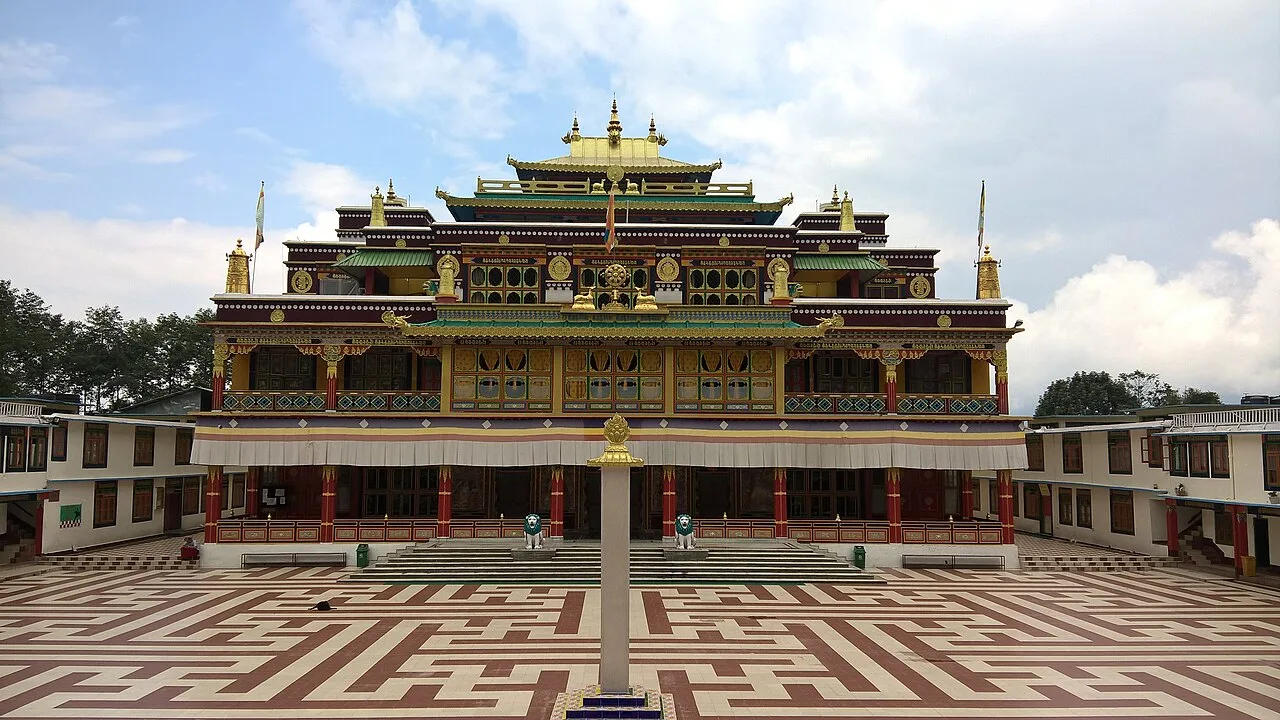
Visit Ralang Monastery with time to observe daily prayers and rituals respectfully. Walk clockwise around stupas, prayer wheels and chortens, remove shoes and hats before entering prayer halls, never point your feet at the altar, and ask before photographing monks or the interior; morning and evening prayers are the most atmospheric time to visit. Beware of unofficial 'guides' or agents offering quick darshan for a fee. A comfortable itinerary is one main visit in the morning, a local meal at midday and a short nearby stop before an afternoon return. In the mountains, mornings are clearest; clouds often roll in by noon, so start early for views of Kangchenjunga. Use the district list on this site to find other places in Namchi, but check the route and its condition before combining stops. If a festival is on — such as Losar (Tibetan New Year), Saga Dawa, Pang Lhabsol, Losoong, Bumchu at Tashiding, Dasain and Tihar or the Gangtok winter carnival — roads and stays can be busy, and the experience can be unforgettable. Leave no litter: Sikkim restricts plastic and packaged water in many tourist areas, so carry a refillable bottle.
Suggested itineraries
Half day: From Ravangla, travel to Ralang Monastery; allow about 1–2 hours to observe the grounds and permitted prayer spaces; return to Ravangla for a meal. Full day: Visit Ralang Monastery in the morning; have a meal in or near Ravangla; continue to Buddha Park (Tathagata Tsal) and return to your base, allowing for mountain-road conditions. Gentler option: Arrange a vehicle close to the monastery entrance, limit the visit to accessible areas, and rest in Ravangla rather than adding another stop.
Monastic life and Buddhist observances shape the cultural atmosphere at Ralang. Visitors may encounter prayer, the sound of ritual instruments or communal gatherings, though these are not guaranteed on every visit. The wider area includes Sikkimese communities with varied languages and customs; Nepali, Bhutia and Lepcha traditions are part of the region’s broader cultural setting. Monks’ robes and religious art reflect the monastery’s Buddhist identity. Dress modestly, speak quietly and allow worshippers space. Cultural performances or masked dances may be associated with festival periods, but should not be expected as a daily attraction. Ask before photographing people, particularly monks and worshippers.
Festivals & events
Ralang is associated with Buddhist festival observances, including Pang Lhabsol and the Kagyu tradition’s Kagyed dances, though programmes and arrangements can vary by year. Pang Lhabsol is generally observed in late summer, while Kagyed ceremonies are commonly held toward the end of the year. These occasions can bring worshippers and visitors to the monastery and may make local roads and accommodation busier. Confirm locally whether a public celebration is planned and which areas visitors may enter. Festival dates follow religious calendars and can shift; do not rely on a fixed date without checking with the monastery or Sikkim Tourism.
Local food in Sikkim includes momos, thukpa and thenthuk noodle soups, phagshapa (pork with radish), gundruk and sinki fermented greens, sel roti, churpi (yak cheese), chhurpi soup, local tea from Temi and warm tongba millet brew in the hills. Ask what is fresh that day; many small eateries cook a limited daily menu. Most food is mild compared with the plains, with plenty of vegetarian options; local chilli pastes made from dalle khursani are extremely hot, so try a little first. Hot soups and butter tea help at altitude. Remote sites may have no restaurant at all. Carry water and snacks, eat a proper breakfast before long drives, and ask your accommodation for a packed lunch if you are heading out early. If prasad is offered, accept it according to local custom. Choose busy, clean places, drink sealed or filtered water, and carry your packaging back with you.
Shopping & local experiences
Ravangla is the most practical nearby place to look for everyday goods, snacks and locally made souvenirs. Visitors may find Buddhist-themed keepsakes, prayer items or regional handicrafts, but availability and authenticity vary; buy respectfully and avoid treating consecrated objects as ordinary décor. Sikkimese tea and locally produced foods can make suitable souvenirs where sold. Ask about the origin of handmade items and support local businesses. Carry a reusable bag and avoid plastic packaging where possible. The monastery itself should be treated as a religious site, not assumed to have a gift shop.
March to May and October to December; avoid the June–September monsoon
The nearest principal railway station by straight-line distance is Siliguri Junction, roughly 69 km away. The nearest operating airport by straight-line distance is Pakyong Airport (limited, weather-dependent flights), roughly 27 km away. These figures are calculated from map coordinates — actual road distance is longer, and mountain roads mean even short distances can take hours. Most travellers arrive at Bagdogra Airport or New Jalpaiguri (NJP) railway station near Siliguri in West Bengal, about 4–5 hours' drive from Gangtok; Pakyong Airport near Gangtok has limited, weather-dependent flights. Shared jeeps and reserved taxis run from Siliguri to Gangtok, Namchi, Ravangla and Pelling. From Siliguri or Bagdogra, take a shared jeep, SNT bus or reserved taxi; within Sikkim, shared jeeps leave from the town taxi stands in the morning and fill up early, while reserved taxis give flexibility for monasteries and viewpoints. When comparing train, bus and flight, count the complete door-to-door time: a flight saves the most time only if the onward road transfer is short, while an overnight train can save a hotel night. For Sikkim, flying into Bagdogra saves the most time from distant cities, while a train to NJP is cheaper; either way the road journey up the Teesta valley takes most of a day, so do not plan sightseeing on arrival. Book your return before you leave, because seats fill quickly on weekends, festivals and holidays. Current train numbers, timings, return services and fares are not listed here; check IRCTC and NTES for trains and the airline's own schedule for flights. Indian travellers need no permit for Gangtok, Pelling, Namchi and Ravangla, but a Protected Area Permit — arranged through a registered Sikkim tour operator or taxi association with photo ID and passport photos — is mandatory for Tsomgo Lake, Nathu La, North Sikkim (Lachung, Lachen, Yumthang, Zero Point and Gurudongmar), Zuluk and the Dzongri–Goecha La trek. Foreign nationals need a free Restricted Area Permit, issued online or at the Rangpo and Melli checkposts, and cannot visit Nathu La; some areas allow foreigners only in groups. Nathu La is open on limited days each week and closes after snowfall, and landslides can shut any road at short notice.
Confirm onward and return timings on IRCTC / NTES, the state bus operator or your airline before travel. A dash means current timings or fares have not been verified.
Getting around
Ravangla is the usual nearby base for reaching Ralang Monastery. Local taxis or a reserved vehicle can generally be arranged for the last leg; shared transport availability depends on the day and local demand. Ask your driver to confirm the drop-off point and return arrangements before leaving Ravangla. Roads are mountainous, and walking from a road stop may involve uneven ground or an uphill approach. Parking availability near the monastery should be checked locally, particularly during festivals. Do not rely on local buses for the final stretch without confirming their route and service on the day.
Hours, tickets & permissions
Entry arrangements can depend on prayers, ceremonies, monastic activities and areas open to visitors. Do not assume that every building or collection is accessible, or that entry is always unrestricted. Tickets, camera charges, identity checks or other conditions may change, so confirm current requirements with the monastery or the relevant local tourism authority before setting out. Dress modestly and be prepared to remove footwear before entering designated prayer spaces. Check current visiting hours and any fees locally; no fixed schedule or price is provided here.
Facilities
Facilities within the monastery may be limited and are primarily for religious and monastic use. Toilets, drinking water, food and parking may be available nearby, but provision and access can vary; check locally and do not expect a visitor centre or staffed guide desk. Ravangla is the more practical place to look for meals and everyday services. ATMs and shops are more likely in larger nearby settlements than at the monastery itself. Carry water in a refillable bottle and take all rubbish back with you. If you want a guide, arrange one through a reliable local source rather than accepting unsolicited offers.
Accessibility
The monastery is in a mountainous setting, and the approach may include uneven paths, slopes, steps or raised thresholds. The exact route and access within buildings can vary, and wheelchair ramps or lifts should not be assumed. Visitors with limited mobility, older travellers and families with strollers should check the approach and current conditions locally before travelling. A vehicle may reduce the distance walked, but may not remove the need to negotiate uneven ground. Allow time to move slowly and rest, and avoid visiting during heavy rain when paths may be slippery. Assistance from a companion may be useful.
Indian travellers need no permit for Gangtok, Pelling, Namchi and Ravangla, but a Protected Area Permit — arranged through a registered Sikkim tour operator or taxi association with photo ID and passport photos — is mandatory for Tsomgo Lake, Nathu La, North Sikkim (Lachung, Lachen, Yumthang, Zero Point and Gurudongmar), Zuluk and the Dzongri–Goecha La trek. Foreign nationals need a free Restricted Area Permit, issued online or at the Rangpo and Melli checkposts, and cannot visit Nathu La; some areas allow foreigners only in groups. Nathu La is open on limited days each week and closes after snowfall, and landslides can shut any road at short notice. Carry a photo ID at all times and save the emergency number 112 and your accommodation's contact offline. Mountain roads are narrow and prone to landslides, especially from June to September; travel in daylight, use experienced local drivers, and keep a spare day in your plan for road closures. Watch your belongings in crowds and on public transport, and follow posted instructions.
Visitor rules
Dress modestly and behave quietly, especially near prayer halls and during ceremonies. Remove shoes before entering spaces where required; do not point your feet toward altars or sacred images. Walk clockwise around stupas and prayer wheels, and do not touch ritual objects, offerings, artwork or prayer furnishings. Follow signs and staff instructions, and stay out of closed or monastic-only areas. Ask before photographing people, interiors or religious activities. Sikkim restricts plastic and packaged water in many tourist areas, so carry a refillable bottle and take rubbish away. Do not pay unofficial agents promising special or expedited access.
Photography
Ask permission before photographing monks, worshippers, prayer halls or ritual objects; some interiors or ceremonies may be off limits. The monastery’s paintings and thangkas deserve particular care, and photography may be restricted to protect them or avoid disturbing worship. Outdoor views are often clearest earlier in the day, though mountain weather can change quickly. Keep your camera use discreet and avoid flash unless explicitly permitted. Do not fly a drone without checking applicable permissions and local rules; never fly it over people, ceremonies or monastic spaces. Respect a refusal without argument.
Choose a stay by the full journey to Ralang Monastery, not just the district name. Gangtok has the widest choice, from homestays to boutique hotels along MG Marg; Pelling hotels face Kangchenjunga, and village homestays in Yuksom, Aritar, Okhrey and Dzongu offer a quieter, local experience. In summer, check air-conditioning; in the monsoon, check that the property is accessible if roads flood. Book in advance for weekends, festivals and the peak season (March to May and October to December; avoid the June–September monsoon). Confirm the exact location, meals included, check-in time and cancellation terms in writing. Avoid sending money to unverified contacts or touts at stations. Carry some cash, as card and digital payments can be unreliable in remote areas.
Ravangla is the closest useful town for services and a base for exploring the area. Buddha Park, also known as Tathagata Tsal, is a prominent nearby religious and visitor attraction. The historic old Ralang Monastery is another site associated with the area; confirm access and directions locally before adding it to a route. Elsewhere in Namchi district, visitors may consider Char Dham (Siddhesvara Dham) and Samdruptse, subject to road conditions and available time. Temi Tea Garden is another recognised regional stop. These places are spread across mountain roads, so check routes before combining them in one day.
For couples, Ralang Monastery rewards a slow pace: arrive early for soft light and fewer crowds, share a local meal and keep the evening free. Sunrise over Kangchenjunga from Pelling or Tashi View Point, a stroll on MG Marg in the evening or a quiet homestay night in a village makes the trip memorable. Public displays of affection can be frowned upon in conservative communities and at religious sites, so be discreet. Keep a buffer in your itinerary, because weather and road conditions can delay plans.
Q: How much time should I allow for a visit? A: Allow about one to two hours at the monastery, with extra time for the journey and any prayers or ceremonies. Q: When is a good season to visit? A: Spring and autumn are generally comfortable travel seasons in Sikkim; avoid relying on clear roads during the June–September monsoon. Q: Is there an entry fee? A: Current entry and camera rules can change. Confirm requirements with the monastery or local tourism authority before visiting. Q: Is it suitable for children and elderly visitors? A: It can be, but the approach may involve slopes, steps and uneven ground. Check conditions and mobility needs locally. Q: Where should I stay nearby? A: Ravangla is a practical nearby base with accommodation and services; confirm current availability before travel.
Be the first to share photos, stories, advice or a helpful contact for Ralang Monastery.
Loading…